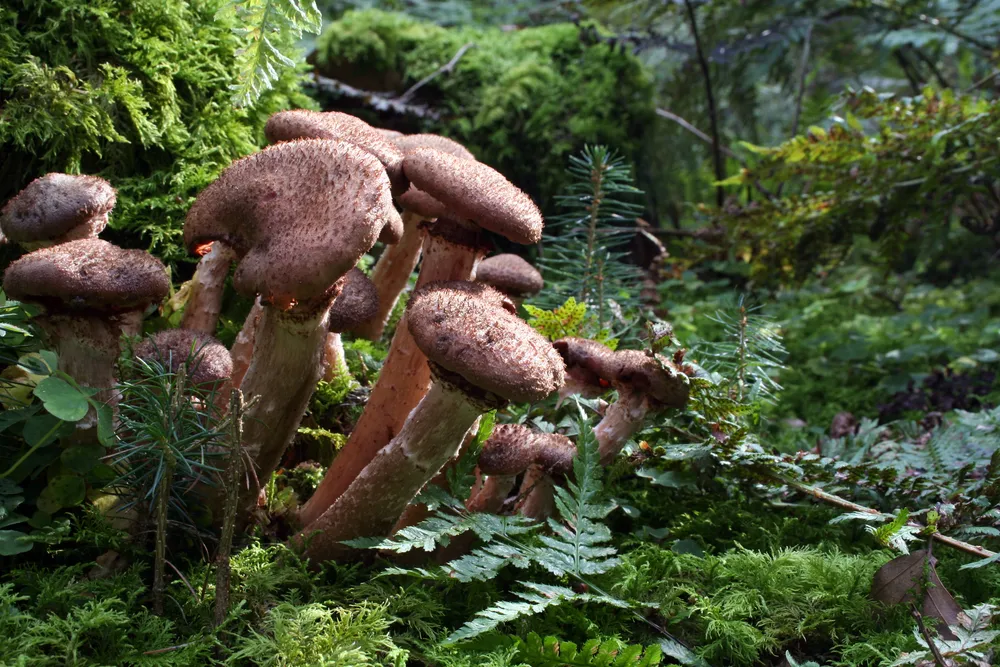
Honey fungusArmillaria mellea
Expert-verifiedUpdated August 15, 2026
Passport
- Edibility
- Conditionally edible
- Season
- Aug — Nov
- Hymenophore
- Gilled
- Cap color
- Yellow
- Size
- Medium (5–15 cm)
- Smell
- Pleasant, mushroomy
- Reviewed
- Yes ✓
Quick answers
Where to look?
Deciduous forest, Mixed forest, Conifer forest
When does it appear?
Aug — Nov
Active months: August, September, October, November.
How to recognize it? Three signs
- Cap color: Yellow, Brown, Rusty
- Cap shape: Convex, Flat
- Smell: Pleasant, mushroomy
Fruiting season
August – November
Description
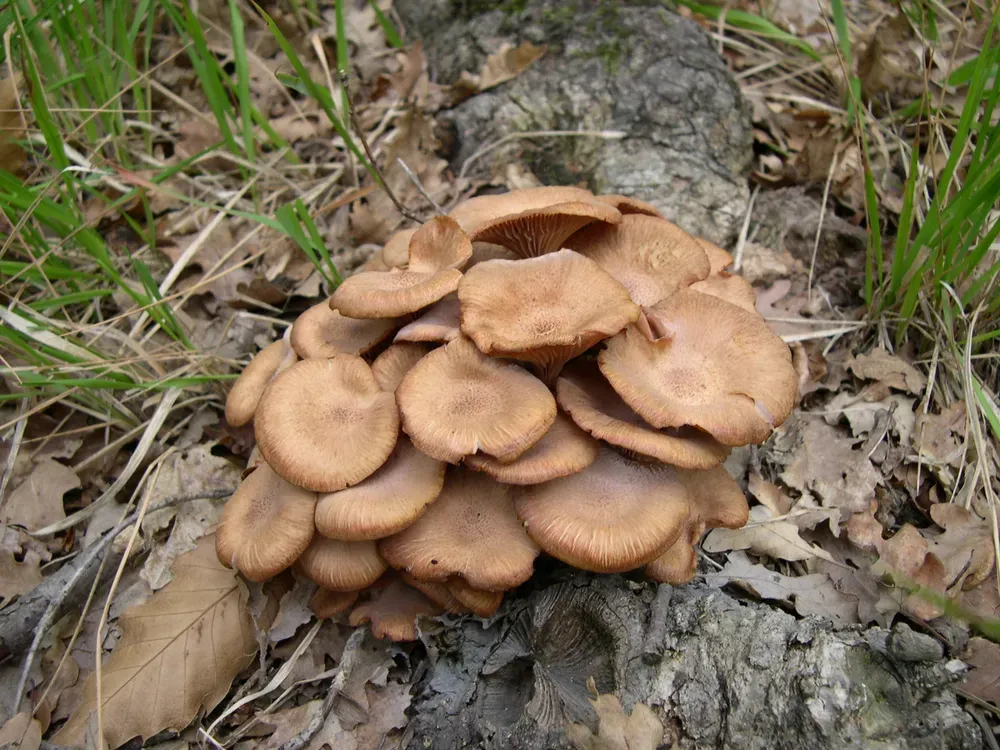
Honey fungus (Armillaria mellea) is the symphony of late autumn, when the forest has already shed its leaves and the air smells of damp wood. Its Ukrainian folk name comes from the word for “stump”: this species forms dense clusters at the base of old trees and on stumps, sometimes covering a felled trunk from root to cut with a honey-golden layer of fruiting bodies.
Unlike many mycorrhizal mushrooms, honey fungus is both a parasite and a saprotroph. It feeds on the wood of living, weakened trees, entering the trunk through black mycelial cords (rhizomorphs), and finishes decomposing wood that is already dead. In nature it is an important forest sanitizer, but in an orchard it becomes a scourge — it can wipe out an entire fruit nursery in 3–4 seasons.
In Ukraine, the honey fungus season runs from late August until the first lasting frosts, peaking in September–October. The mushroom is conditionally edible: delicious pickled and salted, but it must be boiled for 20 minutes first, otherwise it causes stomach upsets.
Cap
The honey fungus cap is 3–12 cm across. In young mushrooms it is spherical-convex with an inrolled margin; with age it becomes flat and spreading, with a small bump in the middle.
The color varies from honey-yellow and ochre-brown to dark brown with an olive tinge — it depends on the host tree species. The surface is covered with characteristic small dark scales, especially dense in the center. In wet weather the cap is slightly slimy; in dry weather it is dry and matte.
Hymenophore
The hymenophore has gills. The gills are moderately crowded, thin, attached to the stem by a short tooth or running slightly down it.
In young mushrooms the color is creamy white; with age it darkens to a dirty ochre, often with rusty spore stains. In young mushrooms the veil (velum) covers the hymenophore like a membrane and later remains on the stem as a characteristic white ring — an important diagnostic feature.
Stem
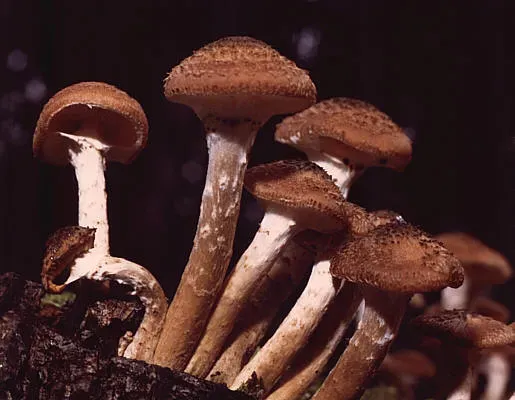
The honey fungus stem is slender and tall: 6–15 cm tall, 0.8–2 cm thick. Cylindrical, often slightly curved, a little wider at the base. The upper part is whitish-yellow, darkening to rusty brown toward the base.
The surface is fibrous, covered with small brown scales in the lower part. The ring is the main identifying feature: white, membranous, well-developed, located in the upper third of the stem. There is no volva.
Flesh
Flesh thin, white, noticeably fibrous in the stem. It doesn't change color when cut — it stays consistently white or cream. In the cap the flesh is softer and juicy; in the stem it is toughish and often hollow in old specimens.
The raw flesh tastes astringent and bitterish — which is exactly why honey fungus must be boiled before eating. After cooking the bitterness disappears and the flesh takes on a pleasant mushroomy flavor.
Smell
Fresh honey fungus smells pleasant, light, typically mushroomy — with barely noticeable notes of damp wood and moss. It has none of the sharp sourish or chemical tinges found in false honey fungi — an important safety difference.
The aroma doesn't change when cut. Dried, the mushroom keeps a light mushroomy smell, but because of its high moisture content and thin cap, honey fungus is rarely dried — it is more often pickled or salted.
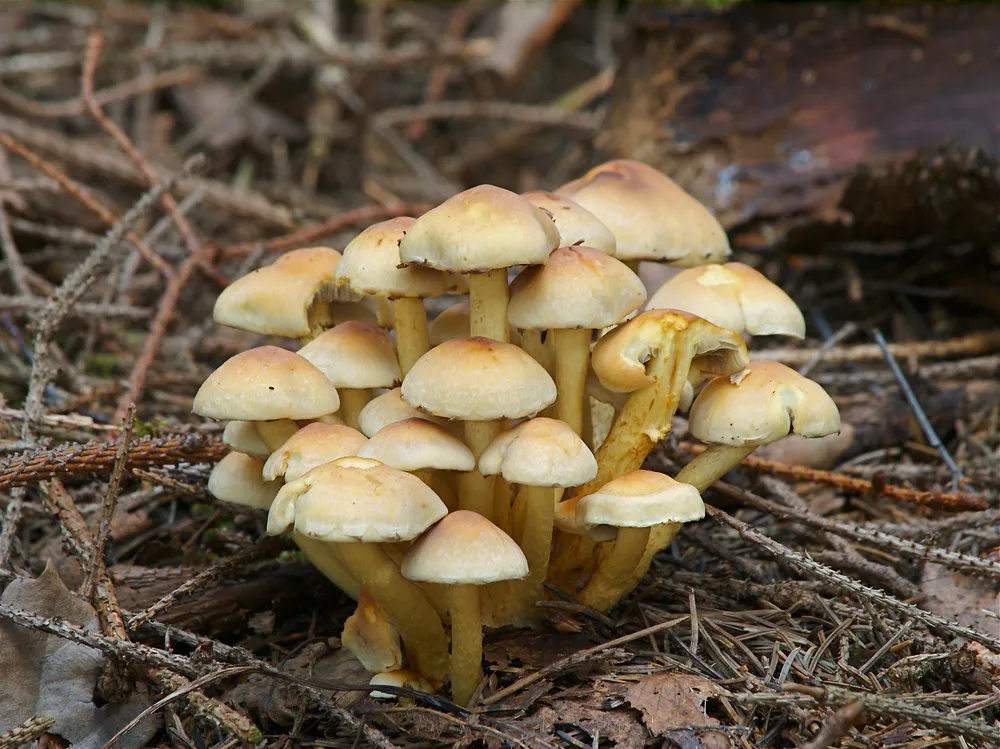
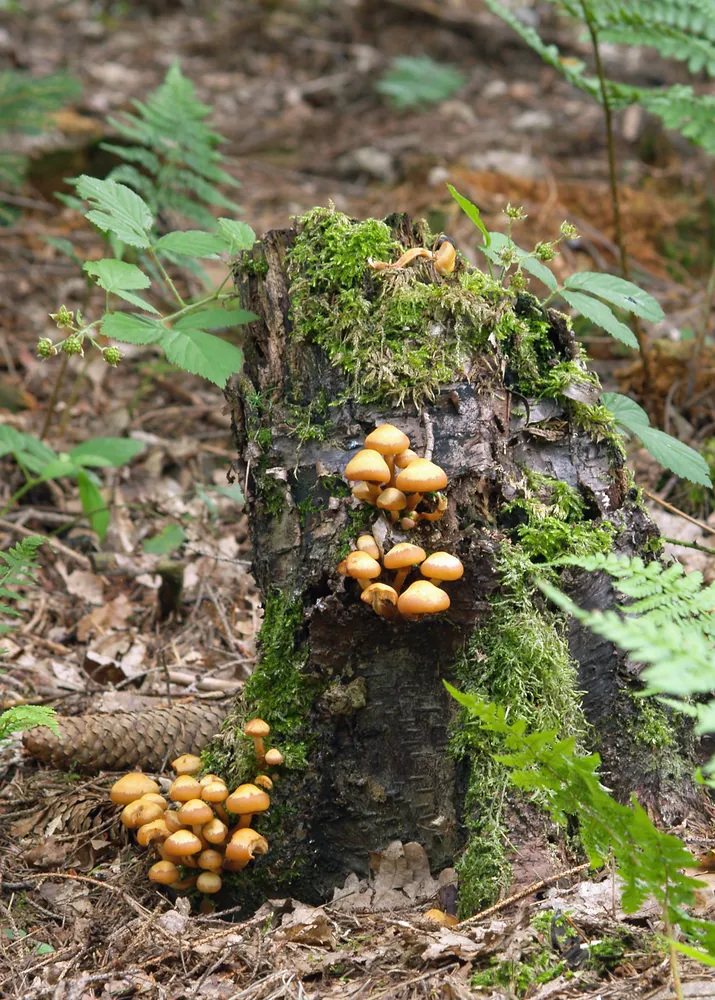
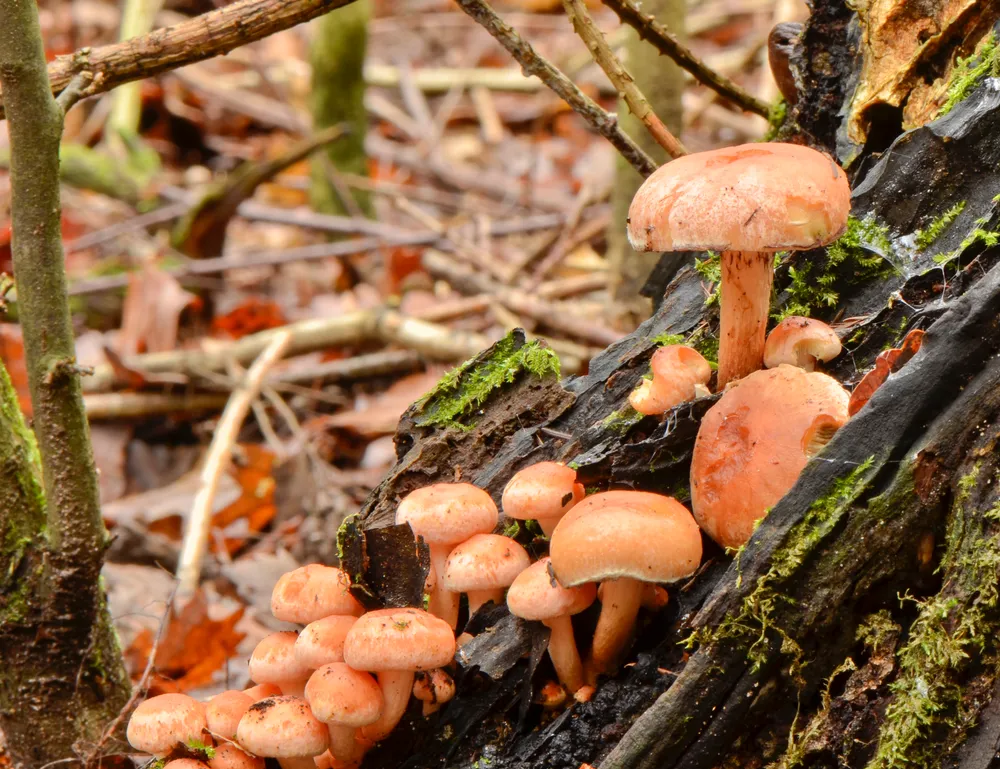
Lookalikes
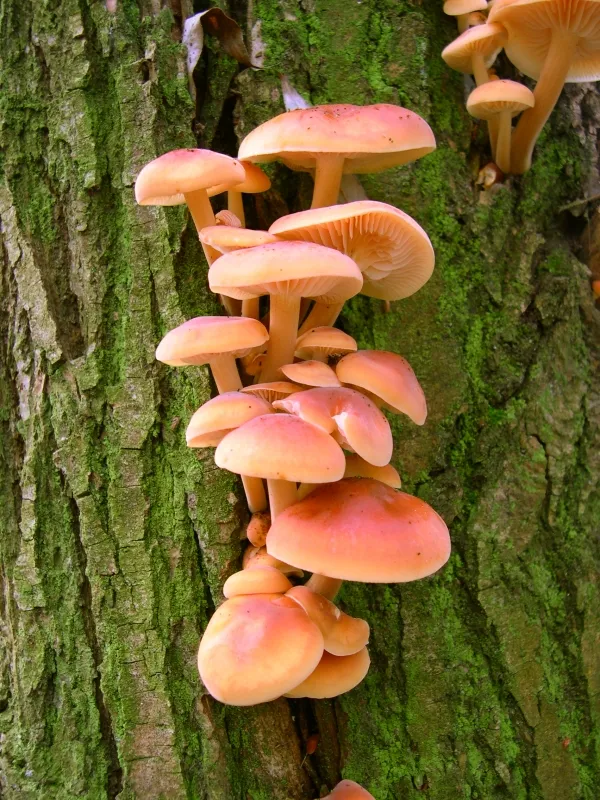
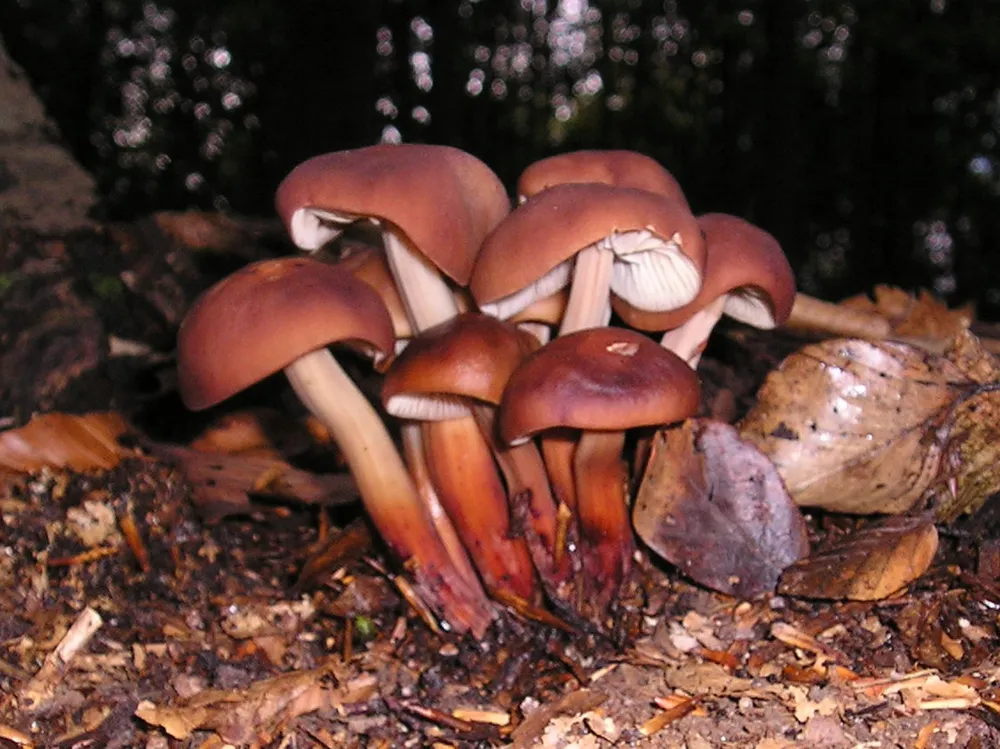
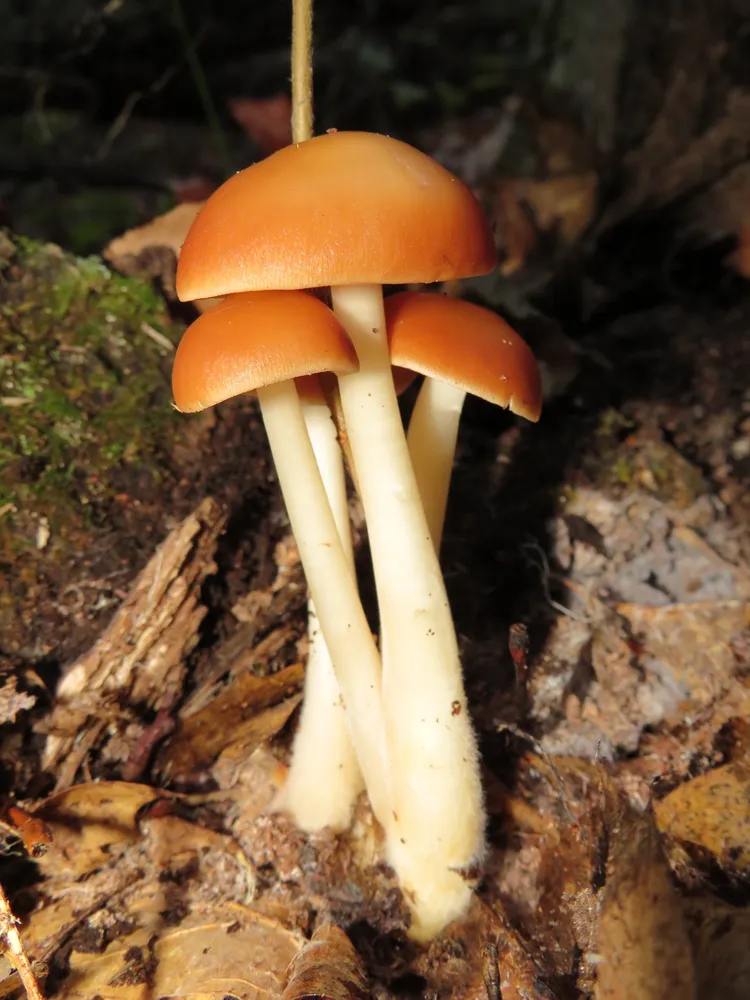

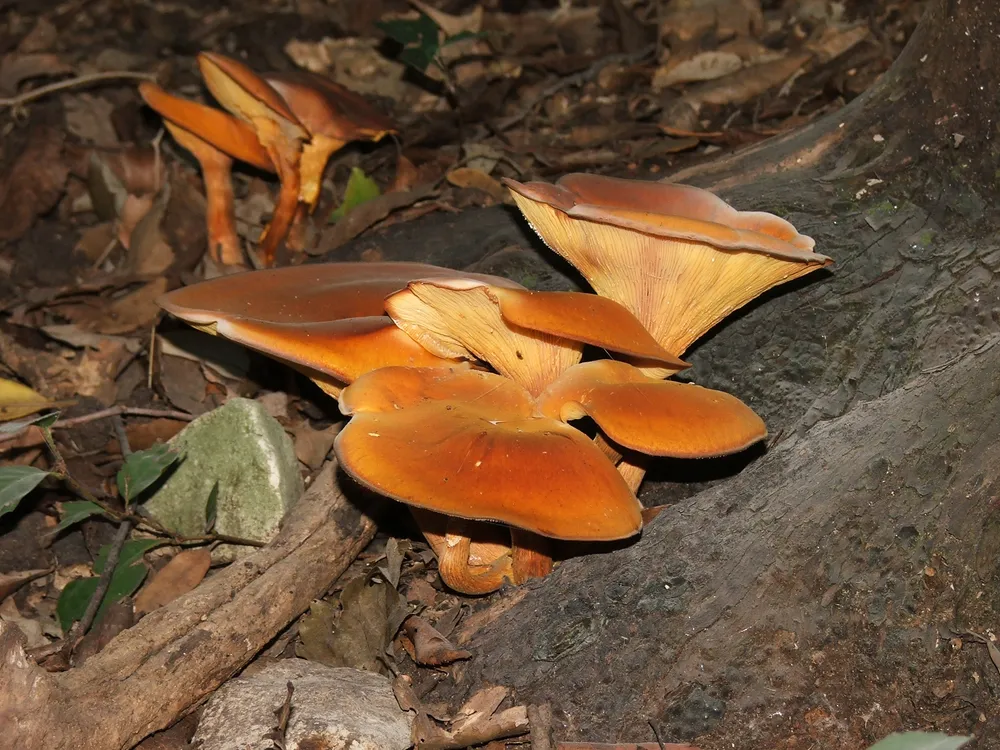
_Ricken_185798.webp)
Related species
Mushrooms of the same genus and habitat — to study side by side and never mix up.
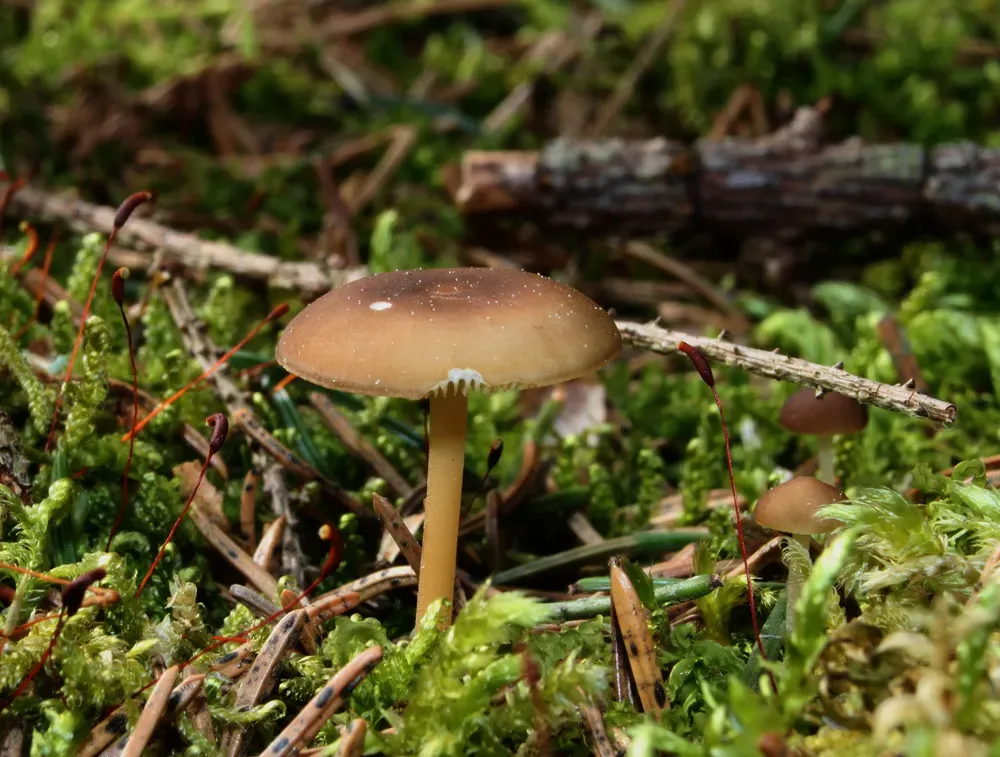
Sprucecone cap
Strobilurus esculentus
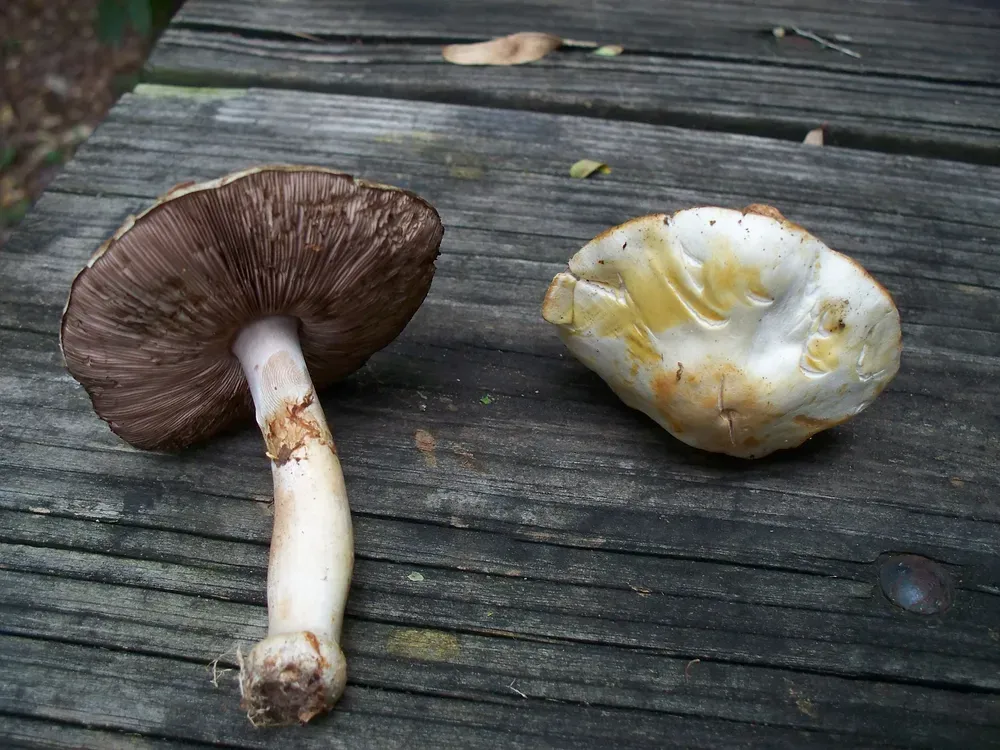
Agaricus abruptibulbus
Agaricus haemorrhoidarius
Agaricus haemorroidarius
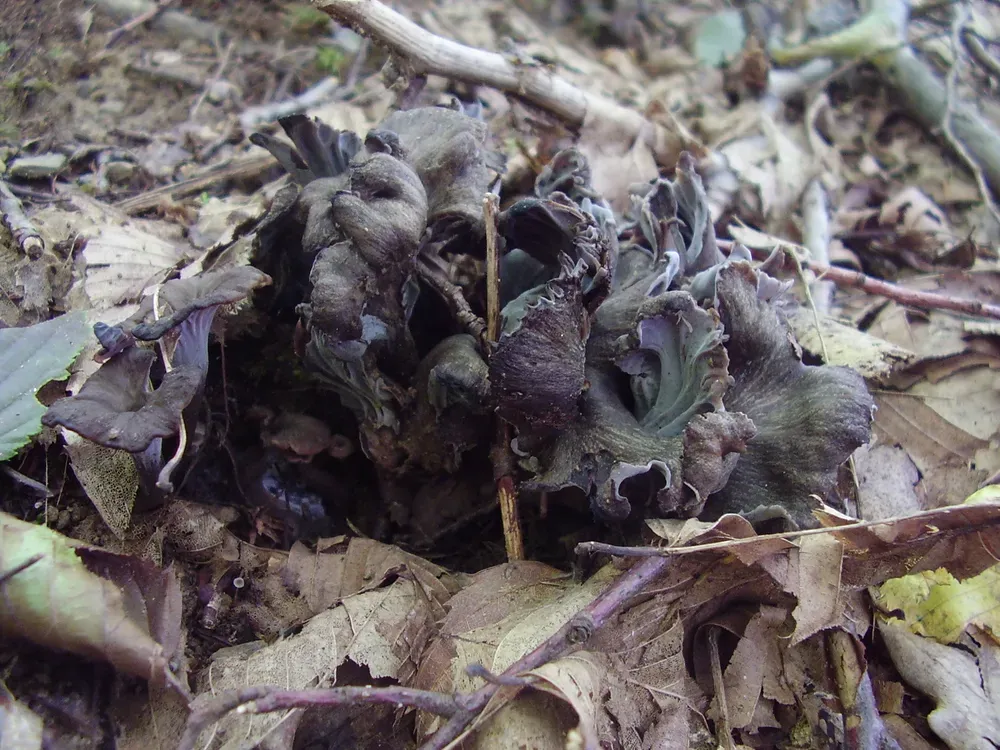
Ashen chanterelle
Cantharellus cinereus
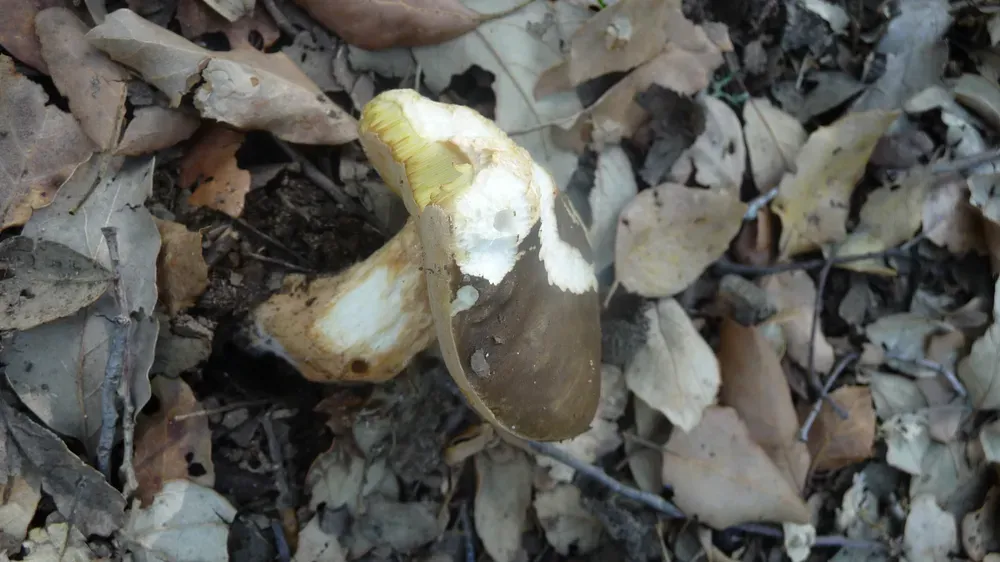
Blushing bolete
Leccinum roseofractum
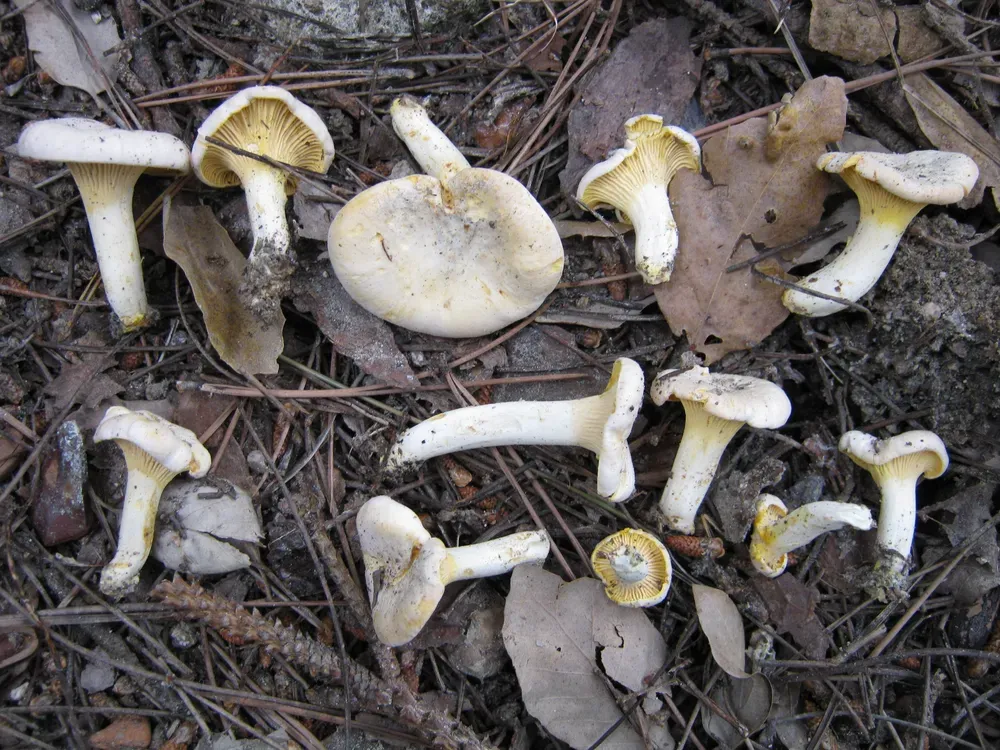
Cantharellus pallens
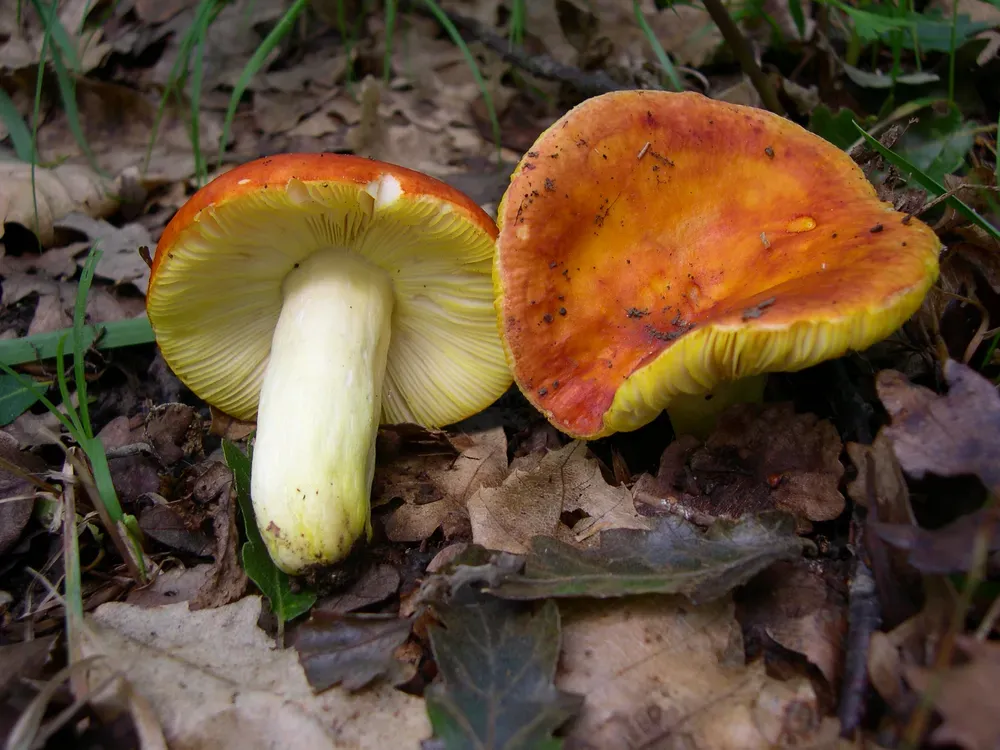
Gilded brittlegill
Russula aurea
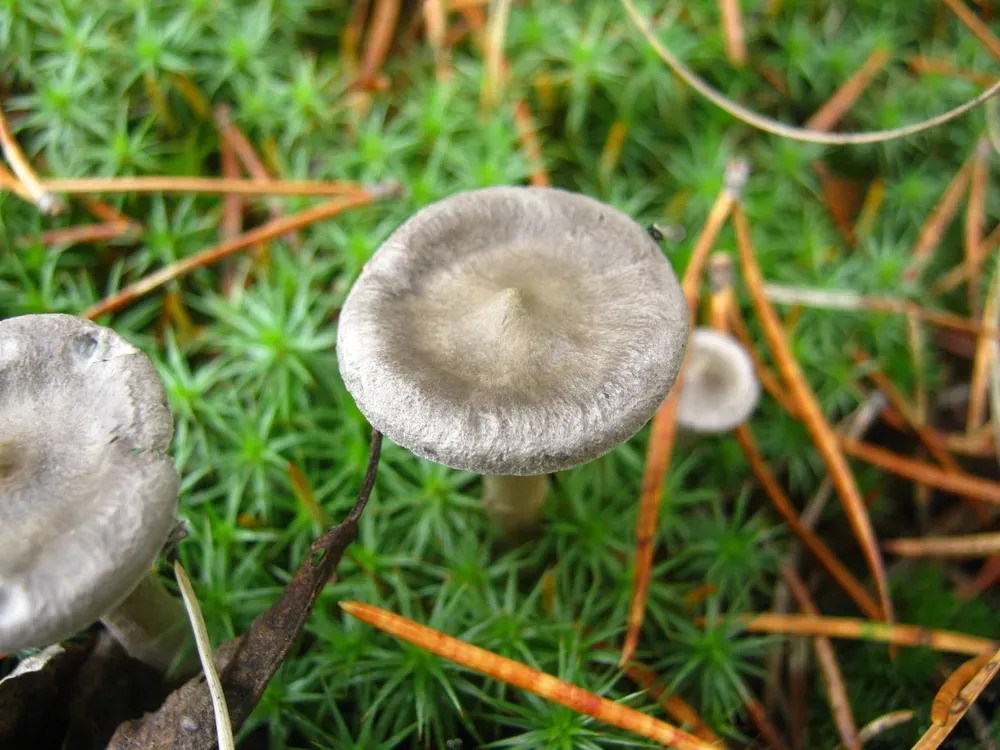
Grayling
Cantharellula umbonata
Related reading
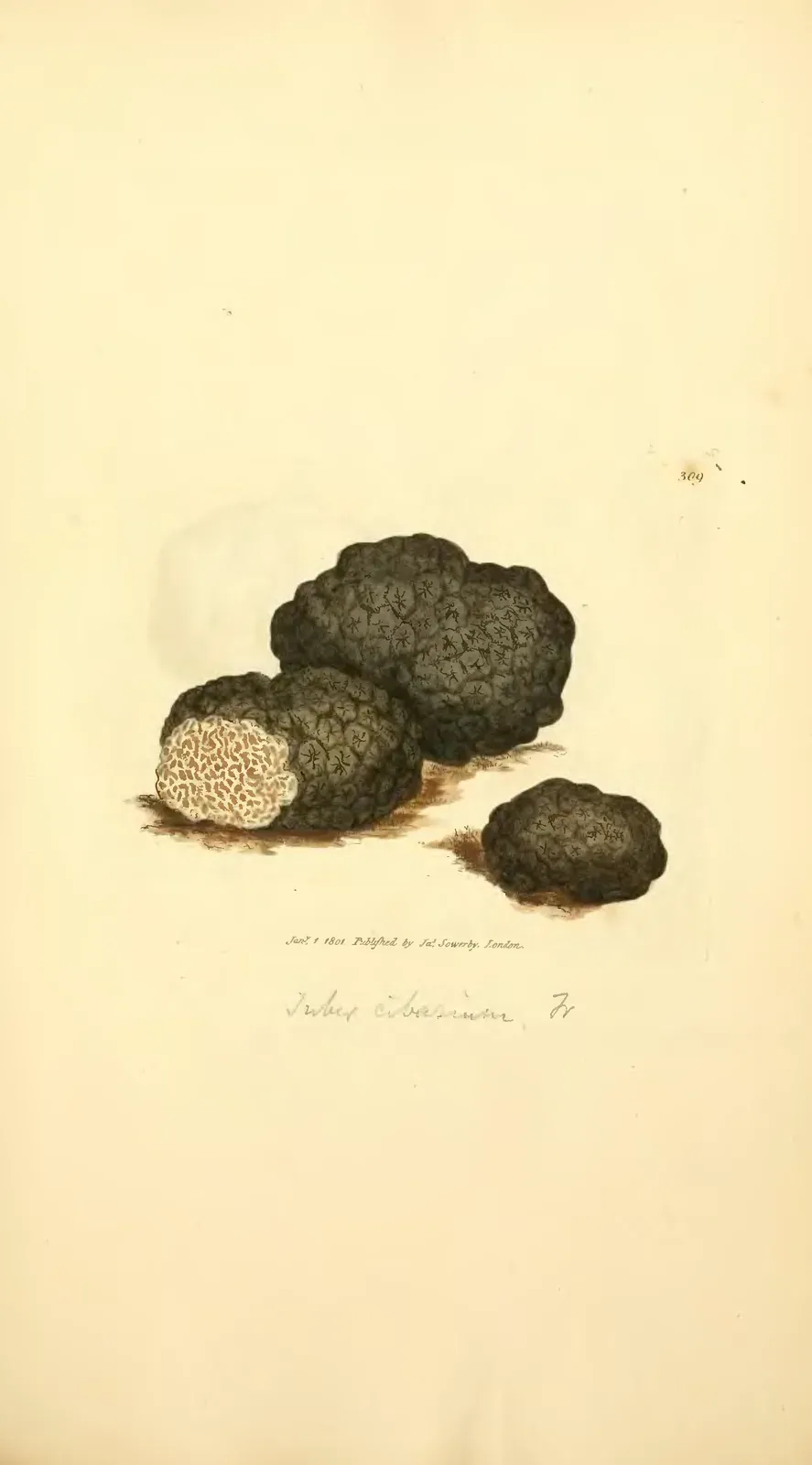 How to identify
Truffles in Ukraine: do they grow here, and where to look
Truffles aren't just a French delicacy. Several species grow in Ukraine too. Here's which ones, where they occ…
August 24, 2026·2 min Science & taxonomy
Chanterelles: medicinal properties and health benefits
Chanterelles are credited with plenty of health-giving properties. Here's what really makes them valuable, wha…
August 23, 2026·2 min_25-12-2020_(d.j.b.)_01.webp) Science & taxonomy
Science & taxonomyOyster mushrooms: health benefits and risks
Oyster mushrooms are an affordable, nutritious mushroom rich in protein and fiber. Here's why they're good for…
August 23, 2026·2 min
Frequently asked questions
Why must honey fungus always be boiled?
Fresh honey fungus contains a bitter substance that causes severe digestive upset when eaten raw or undercooked. Always boil it for 15–20 minutes in salted water, then pour the water off — and only after that fry, pickle or salt it.
How much honey fungus can you eat at once?
Honey fungus is conditionally edible, so even after proper preparation you shouldn't eat more than 100–150 g per serving. It is hard to digest because of its dense chitinous walls. People with gastrointestinal conditions are better off avoiding it altogether.
Which trees does honey fungus grow on?
Honey fungus parasitizes living, weakened trees and decomposes dead wood. It is most often found on birches, oaks, aspens and orchard fruit trees. Sometimes it also grows on conifers — pines and spruces. Look for clusters at the base of trunks, on stumps and even on buried roots in the grass.
Why does honey fungus grow in big families?
It comes down to how the mycelium is built: one mushroom is linked to the others through black rhizomorph cords into a single organized network under the bark or in the soil. That's why 50–100 fruiting bodies can grow from one tree or stump at the same time.
When is the peak of the honey fungus season?
The main flush of honey fungus comes in September–October, when night temperatures drop to +5…+10 °C and daytime temperatures hold at around +15 °C. The first scattered mushrooms may appear in late August, the last ones until the first lasting frosts in November.
How does rain affect the honey fungus harvest?
Honey fungus needs high air humidity (90–100 %) and warmed-up wood. The best time is 5–7 days after prolonged autumn rain. In a dry autumn there will be few mushrooms even in the usual spots.
How do you tell true honey fungus from false?
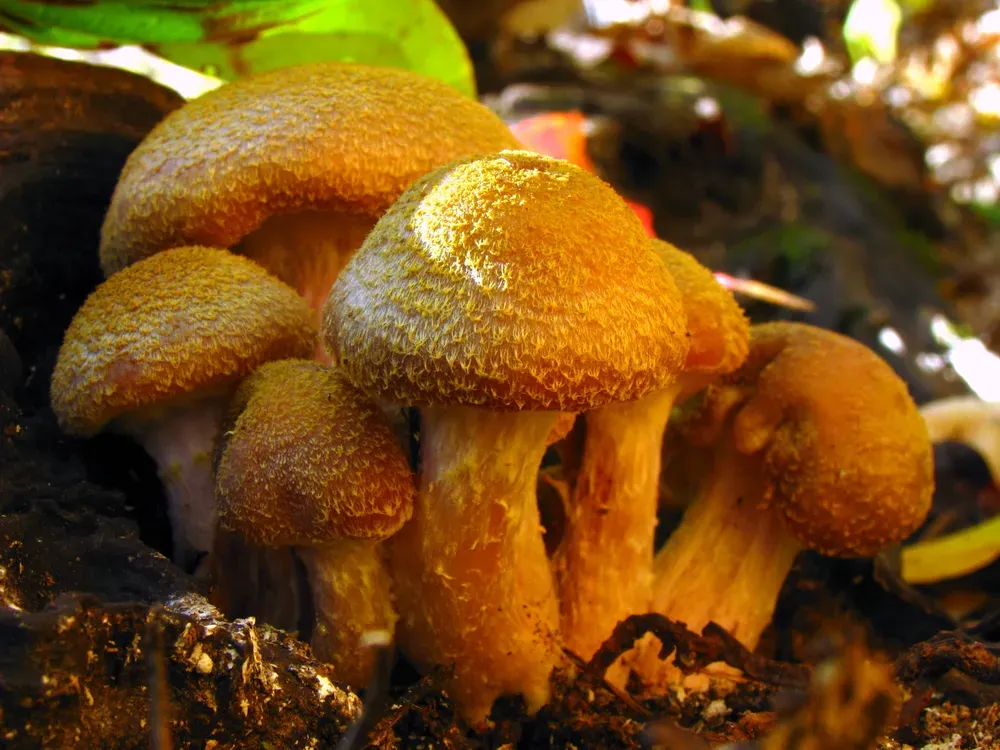
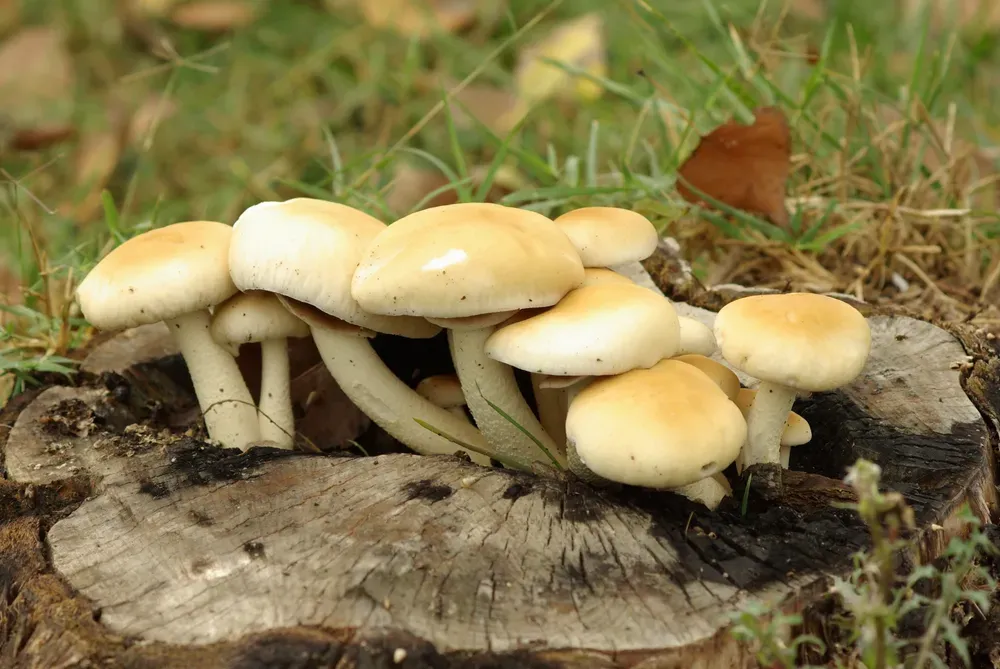
The most important thing is the ring on the stem: in true honey fungus it is white, membranous and clearly visible in the upper third of the stem. The sulphur tuft (Hypholoma fasciculare) has no ring at all; its gills are sulphur-yellow at first, then greenish-black, and its flesh is bitter with a sourish smell.
Can honey fungus be confused with the funeral bell?
The funeral bell (Galerina marginata) is a deadly poisonous mushroom that resembles a small honey fungus: it grows on rotting stumps and also has a ring. The differences: the funeral bell is much smaller (cap 1–4 cm), its gills are rusty brown from the start (not white), and its stem is thinner and always hollow. When in doubt, leave it.
Is Honey fungus edible or poisonous?
Does Honey fungus have gills or pores?
What does the cap of Honey fungus look like?
What does the stem of Honey fungus look like?
Sources
- [1]Атлас грибів України, Зеров Д.К. (1979)
- [2]GBIF