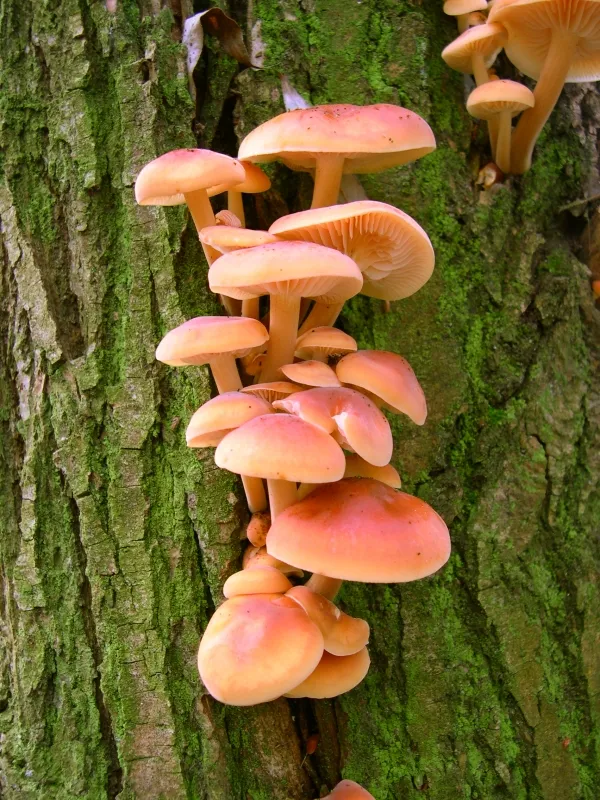
Velvet shankFlammulina velutipes
Expert-verifiedUpdated October 3, 2026
Passport
- Edibility
- Edible
- Season
- Jan — Dec
- Hymenophore
- Gilled
- Cap color
- Yellow
- Size
- Small (up to 5 cm)
- Smell
- Pleasant
- Reviewed
- Yes ✓
Quick answers
Where to look?
Deciduous forest, Mixed forest
When does it appear?
Jan — Dec
Active months: January, February, March, October, November, December.
How to recognize it? Three signs
- Cap color: Yellow, Orange, Brown
- Cap shape: Convex
- Smell: Pleasant
Fruiting season
January, February, March, October, November, December
Description
The velvet shank, also called the winter mushroom or Flammulina, is a true marvel among fungi. It's the only noticeable edible species in our forests that fruits in winter, at subzero temperatures, on the bare trunks of deciduous trees. Its yellow-orange slimy cap on a thin, dark brown velvety stem is easy to spot against the snow. Cut it, and within a couple of hours it thaws out, springy and ready for the pan. In Japanese and Korean cooking this very species (only cultivated in the dark) is the famous “enokitake”: long, thin white mushrooms in soups and salads.
It's a good edible mushroom, prized precisely because it appears when nothing else is growing — from November to March, with several flushes during thaws. The flesh is tender, with a delicate pleasant flavor; the caps are springy and hold their shape beautifully. Good for frying, pickling and adding to soups. Pick only the caps — the stems are too fibrous to eat. Safe for beginners: in winter there are practically no dangerous look-alikes, whereas in a warm-season flush similar species can be confused with the poisonous funeral bell.
In Ukraine it is widespread throughout the forest and forest-steppe zones. It grows on trunks, stumps and fallen logs of deciduous trees — mainly alder, poplar, willow, aspen and beech, less often oak. Season: October-March, peaking in December-February during thaws.
Cap
Cap 2-8 cm, hemispherical at first, then convex-expanded to flat. Color yellow-orange, honey-yellow, darker in the center and paler toward the edge. In wet weather it is slimy and shiny; in dry weather, somewhat matte. The cap skin peels off easily.
Hymenophore
Gilled hymenophore. Gills crowded, thin, adnate or slightly decurrent. Whitish to cream, turning yellowish with age. Spore print white — an important diagnostic feature for telling it apart from the poisonous funeral bell (whose spore print is rusty brown).
Stem
Stem 3-7 cm tall, 0.3-0.8 cm thick, slender, cylindrical, often curved, hollow inside. A telltale feature — a velvety dark brown surface, especially lower down (the upper part is paler, yellowish). There is no ring — this is the crucial difference from the funeral bell.
Flesh
The flesh is thin and yellowish in the cap, fibrous and springy in the stem. It doesn't change color when cut. It has a pleasant mild flavor.
Smell
Faint, pleasant mushroomy smell. Taste mild and delicate.
Lookalikes
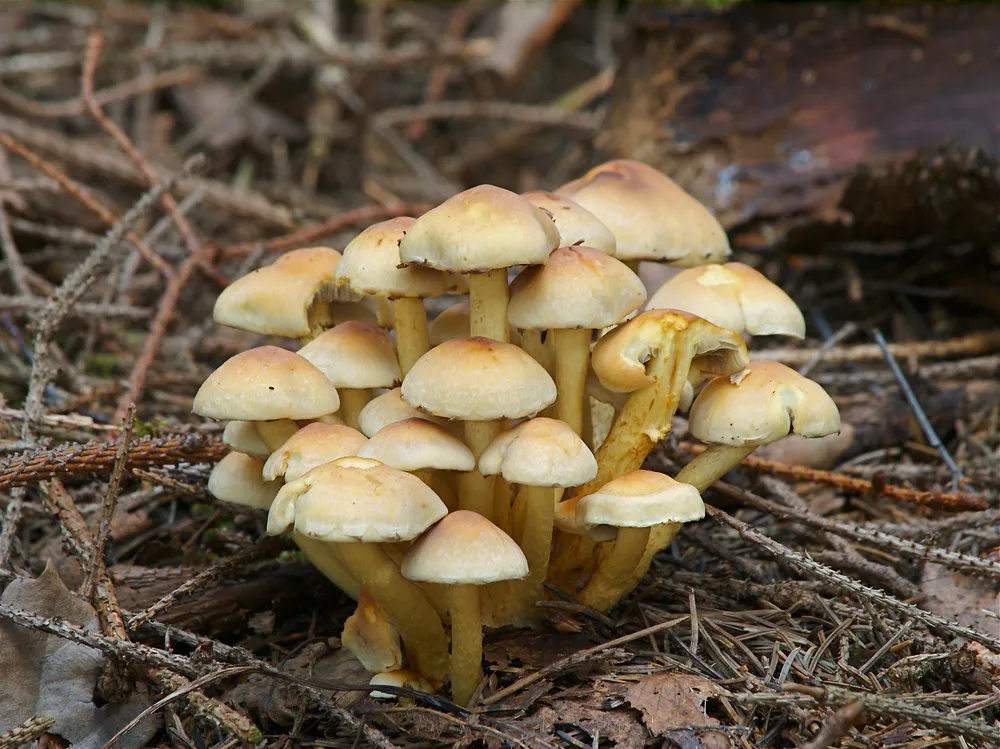
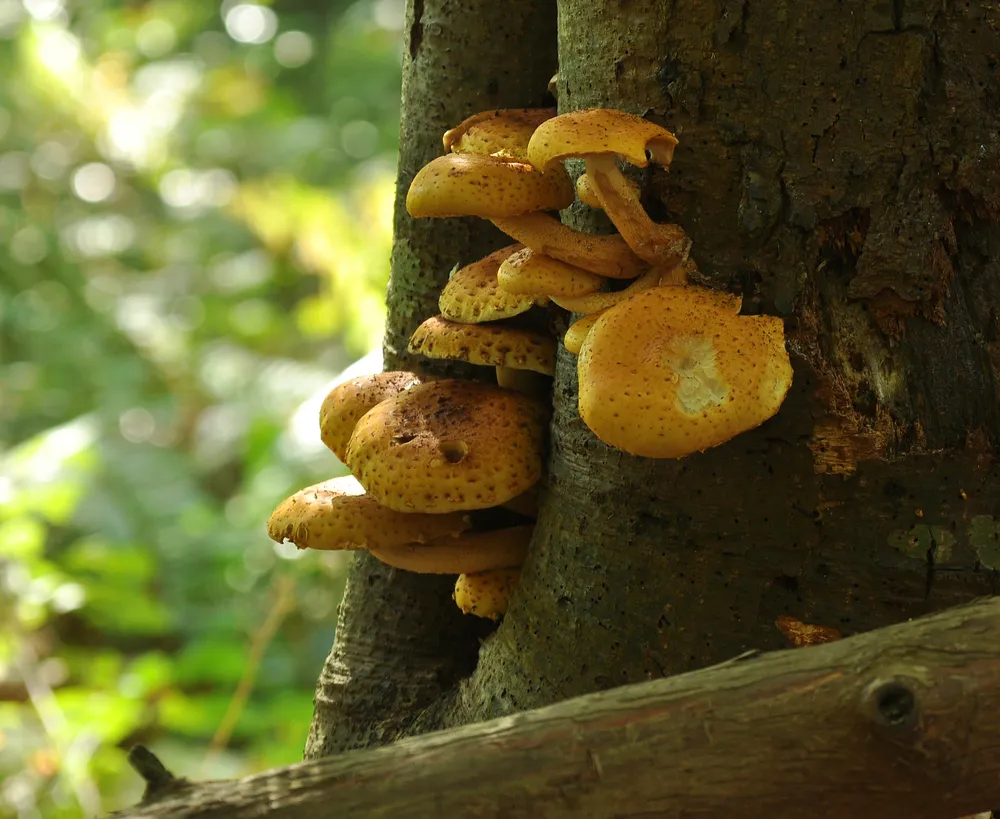
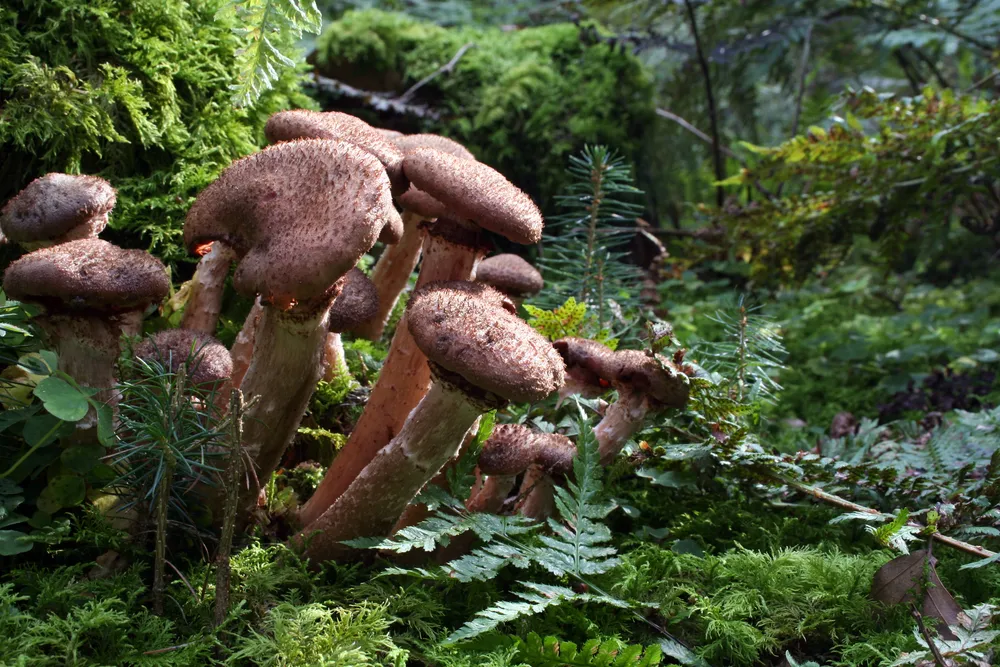
Related species
Mushrooms of the same genus and habitat — to study side by side and never mix up.
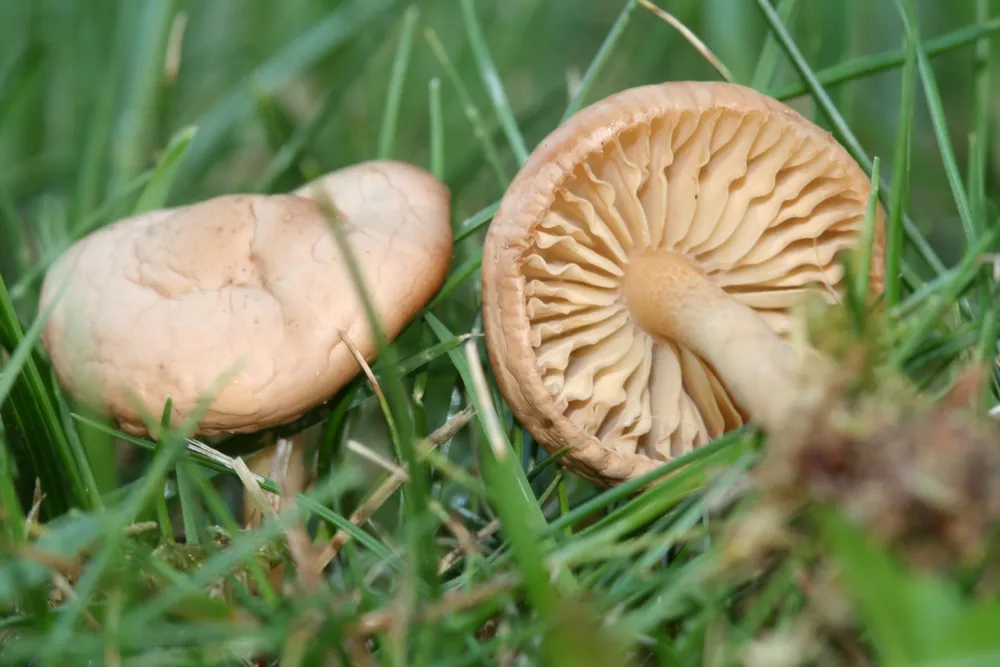
Fairy ring champignon
Marasmius oreades
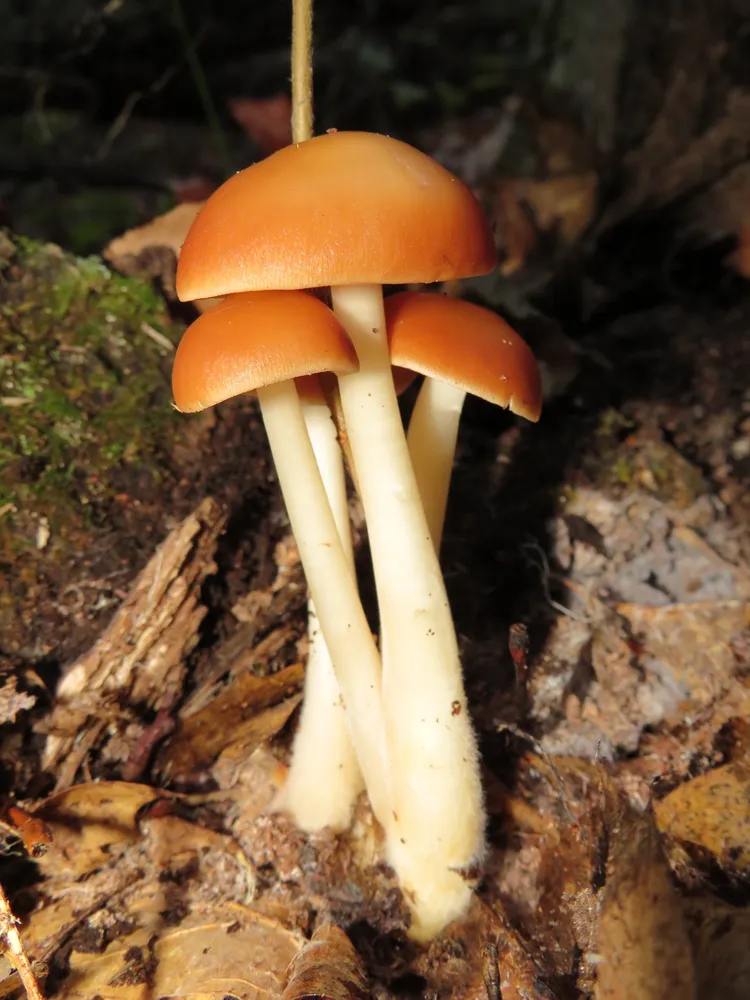
Russet toughshank
Gymnopus dryophilus
_Singer_172533.webp)
Baeospora myriadophylla
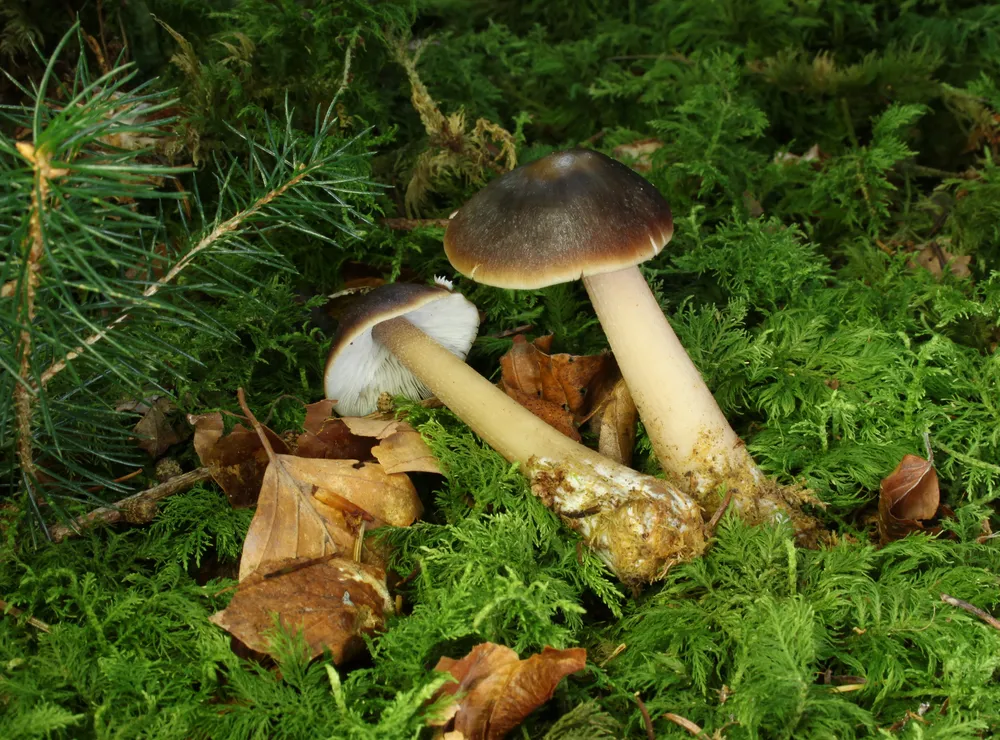
Butter cap
Rhodocollybia butyracea
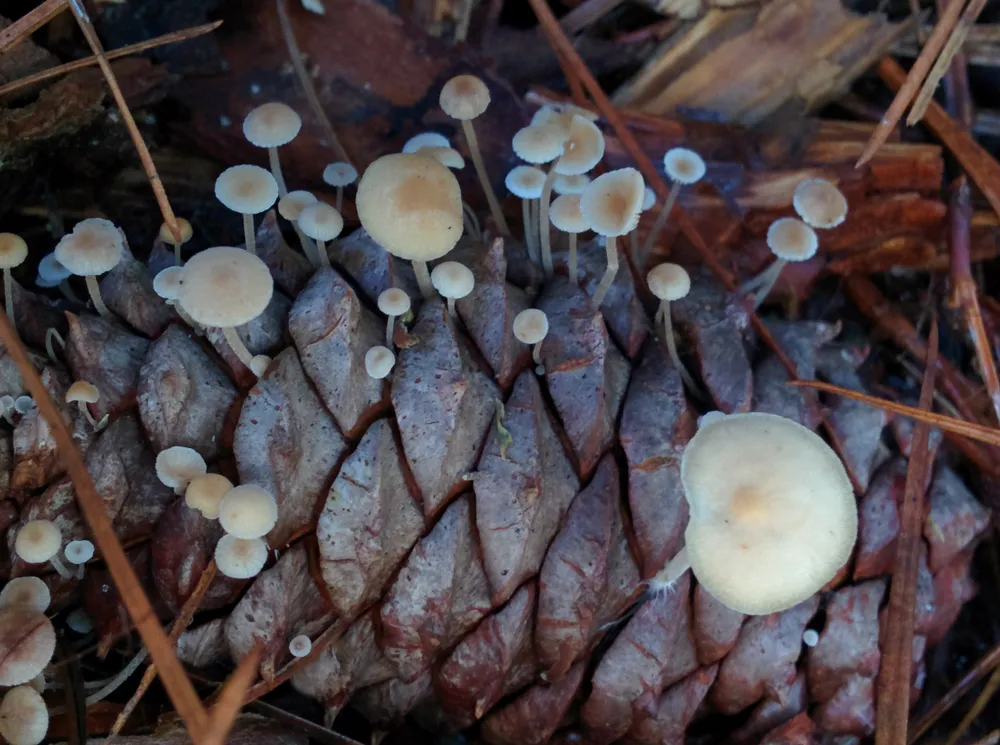
Conifercone cap
Baeospora myosura
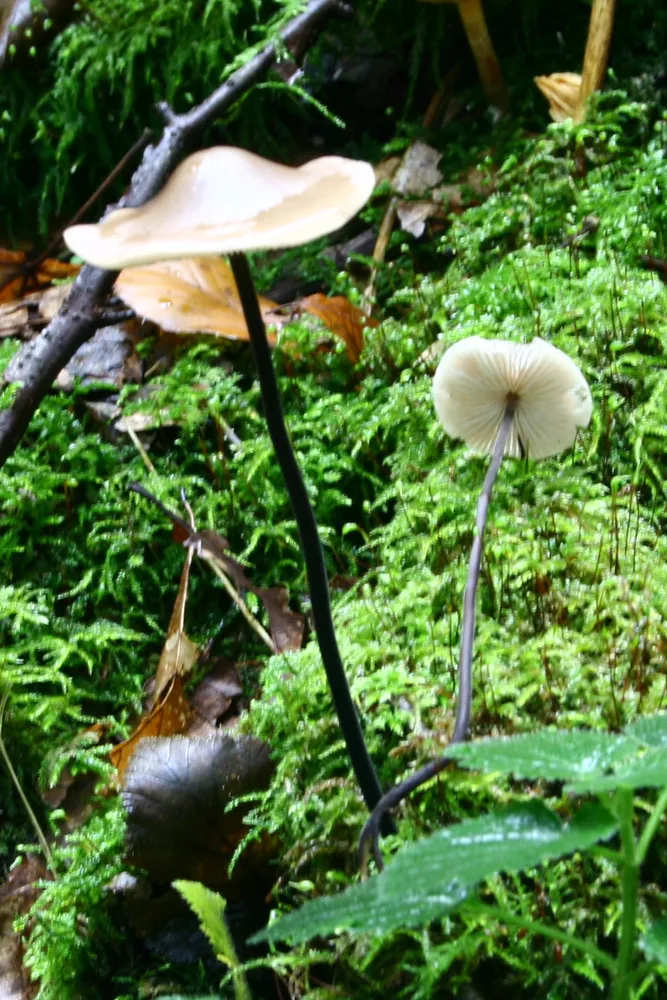
Mycetinis prasiosmus
Marasmius prasiosmus
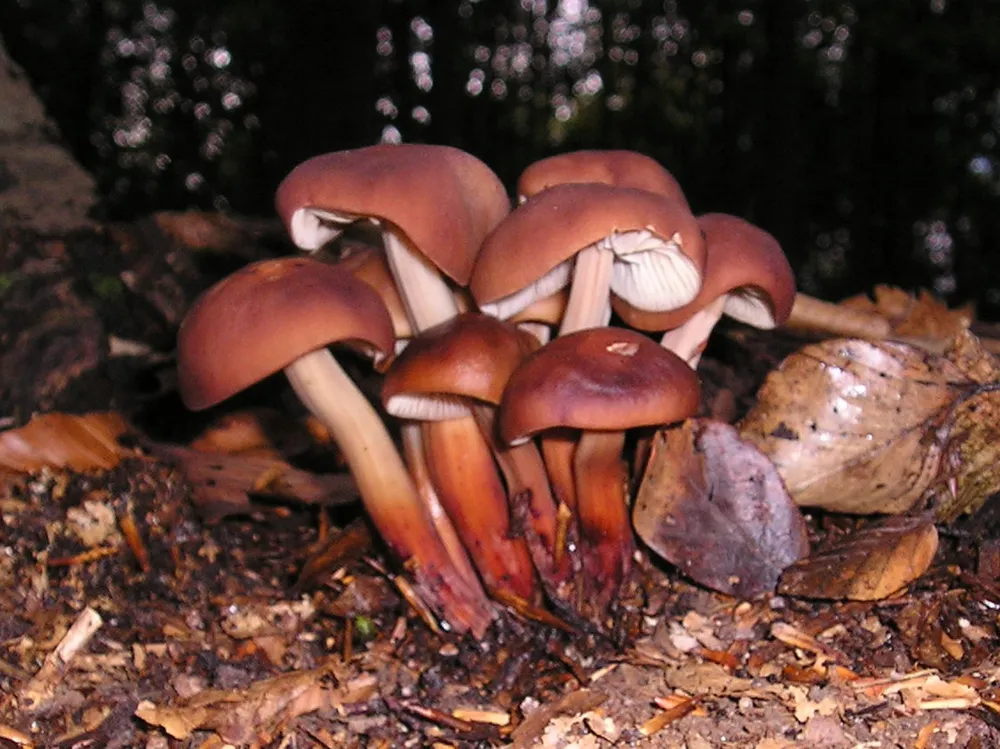
Spindle toughshank
Gymnopus fusipes
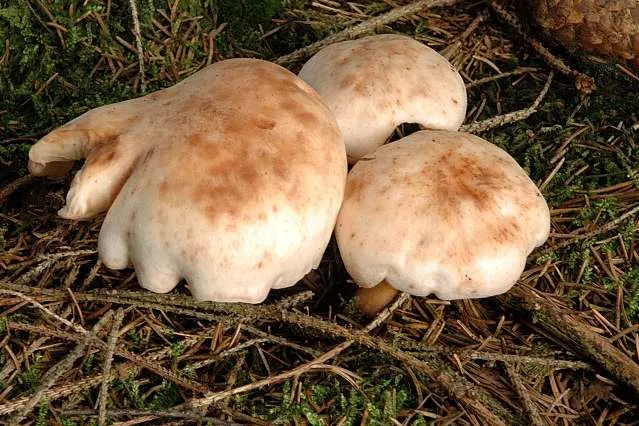
Spotted toughshank
Rhodocollybia maculata
Related reading
_25-12-2020_(d.j.b.)_01.webp) Science & taxonomy
Science & taxonomyOyster mushrooms: health benefits and risks
Oyster mushrooms are an affordable, nutritious mushroom rich in protein and fiber. Here's why they're good for…
August 23, 2026·2 min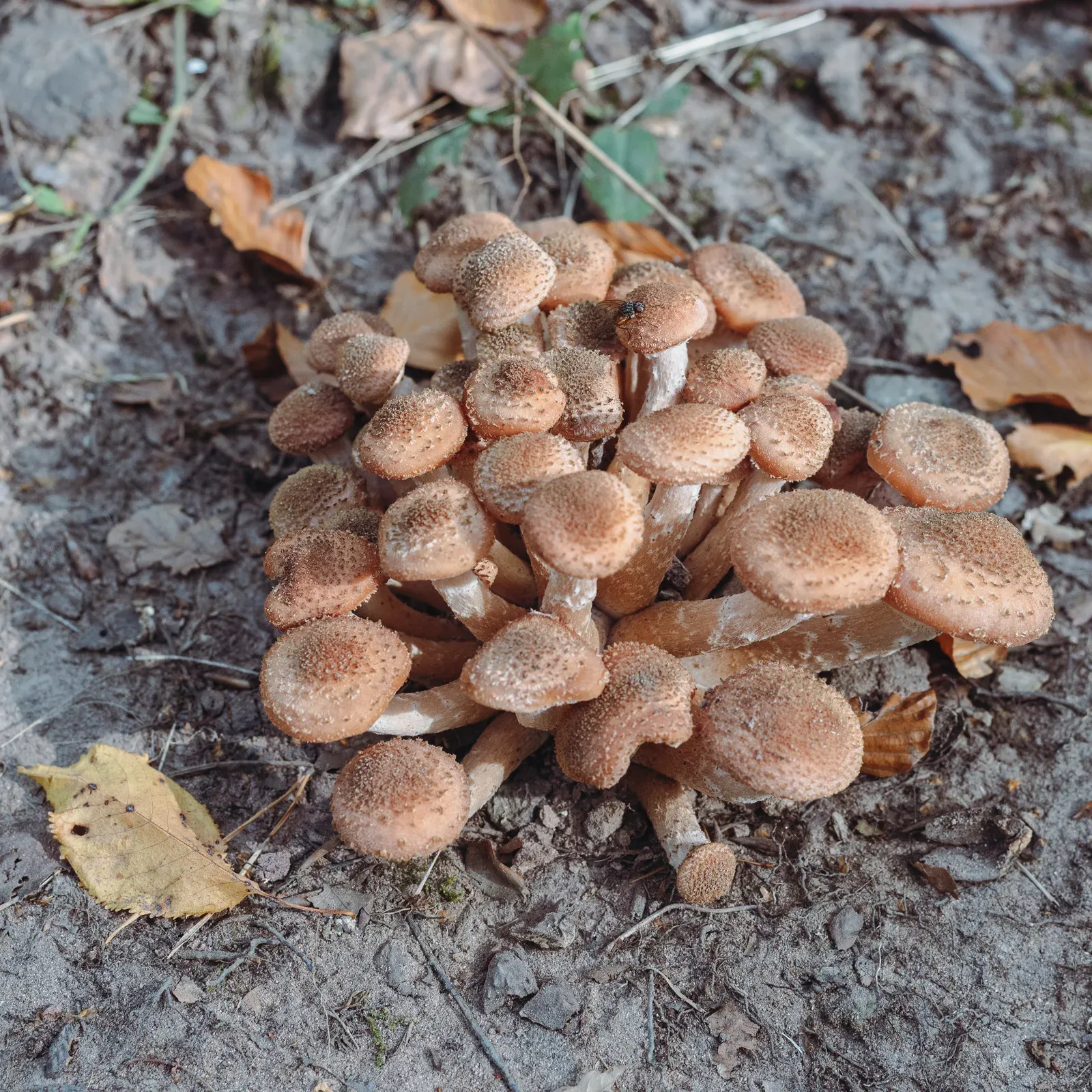 Science & taxonomy
Honey fungus: health benefits and risks
Honey fungus is a nourishing autumn mushroom, rich in protein and minerals. Here's why honey fungus is good fo…
August 20, 2026·2 min How to identify
Edible mushrooms that grow on trees and stumps
Plenty of mushrooms grow on trunks and stumps, and some of them are delicious. Here's which tree mushrooms are…
August 13, 2026·2 min
Frequently asked questions
Is it safe to eat?
Yes, it's a good edible mushroom. In winter it's especially safe, because at subzero temperatures there are practically no poisonous look-alikes. In summer and autumn it can be confused with the funeral bell (Galerina marginata) — the critical check: the funeral bell has a ring on its stem and its spore print is rusty brown; the velvet shank has no ring, and its spore print is white.
Can you pick it from under the snow?
Yes, that's its main specialty. Mushrooms that sprouted in November and froze stay whole and edible for weeks. Cut them, warm them up at home, and cook. During a thaw the mushroom comes back to life and keeps growing. Freezing and thawing don't spoil it.
How should you cook it?
Peel the tough slimy skin off the cap (optional) and slice the caps. You can fry them straight away for 10-15 min, or boil for 5-7 min and then fry or stew. Pickled velvet shank is good. The stems are too fibrous — better leave them, or dry them for mushroom powder.
Where should you look for it?
On trunks, stumps and fallen logs of deciduous trees — mainly alder, poplar, willow, aspen and beech, less often oak. It loves weakened or freshly dead trees. It often grows in groups and clusters of 5-30 fruiting bodies, in floodplain forests, along riverbanks and in old parks with poplar avenues.
In which regions of Ukraine does it grow?
Throughout the forest and forest-steppe zones: the Carpathians, Prykarpattia, Polissia, and the Western, Right-Bank and Left-Bank Forest-Steppe. In the steppe it grows in floodplains and in parks with old poplars. One of the most common winter mushrooms.
When should you look for it?
October-March. It's the only noticeable edible mushroom that actively fruits in winter. Peak: November-February, with several flushes during thaws. Warm days of +5°C and above bring a new flush. In hard frosts the mushrooms sleep but don't spoil — they thaw and keep growing.
Does it appear in summer?
No, the velvet shank doesn't fruit in summer. It needs cool, damp conditions. The season starts at the end of October (the first frosts) and lasts until March (the first steadily warm days). From April to September the mushroom “sleeps” as mycelium inside the trunk.
What is it confused with?
The most dangerous mix-up is with the poisonous funeral bell (Galerina marginata). Two key differences: (1) ring — the funeral bell has a thin ring on its stem, while the velvet shank has none; (2) spore print — the funeral bell's is rusty brown, the velvet shank's is white. The funeral bell doesn't fruit in winter, so the risk is minimal then. In summer and autumn, check both features.
How do you make a spore print?
Take a mature mushroom, cut off the stem and lay the cap gill side (hymenophore) down on clean paper. Cover it with a glass (so it doesn't dry out). After 2-6 hours lift the cap — the paper will show a colored deposit of spores. The velvet shank's is white. The funeral bell's is rusty brown. This is a standard technique for telling similar mushrooms apart, and every forager should have it in their toolkit.
Is Velvet shank edible or poisonous?
Does Velvet shank have gills or pores?
What does the cap of Velvet shank look like?
Sources
- [1]Вікіпедія (українська)
- [2]Атлас грибів України, Зеров Д.К. (1979)
- [3]MycoBank Database
- [4]Index Fungorum
- [5]GBIF
- [6]iNaturalist Ukraine