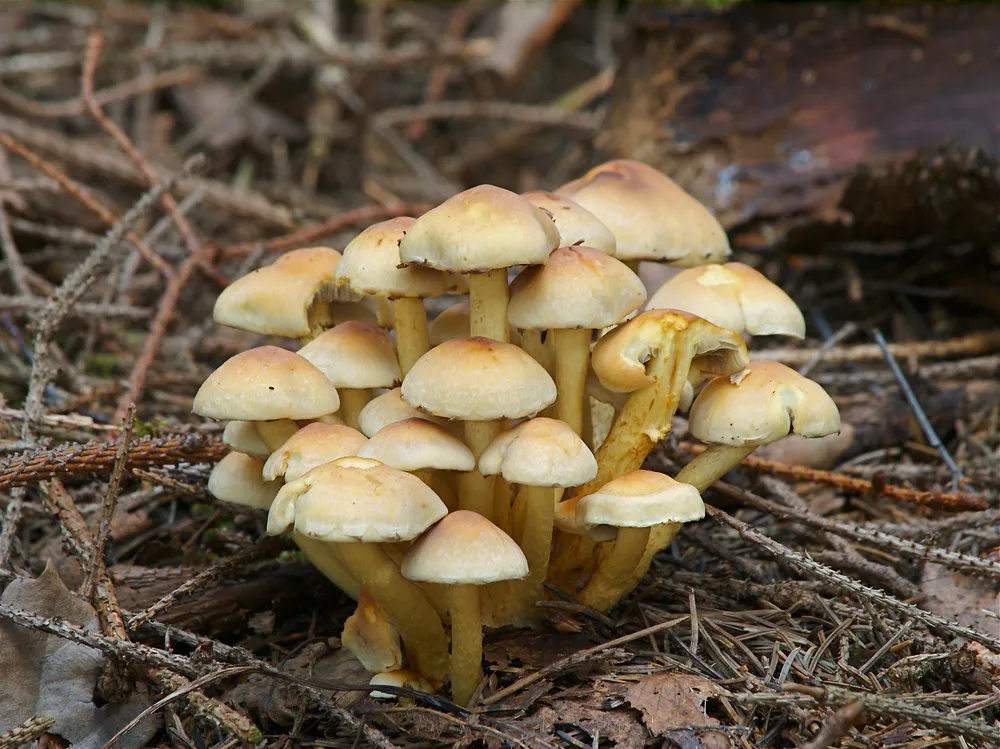
Sulphur tuftHypholoma fasciculare
Expert-verifiedUpdated October 3, 2026
Passport
- Edibility
- Poisonous
- Season
- May — Nov
- Hymenophore
- Gilled
- Cap color
- Yellow
- Size
- Small (up to 5 cm)
- Smell
- Unpleasant
- Reviewed
- Yes ✓
POISONOUS
Eating it causes poisoning. Do not pick it unless you have identified it with certainty.
Contains fasciculol: causes severe poisoning with liver damage. Symptoms within 5–10 h.
If you suspect poisoning, call an ambulance immediately: 112 (the European emergency number) or your local emergency number
Quick answers
Where to look?
Deciduous forest, Mixed forest, Conifer forest
When does it appear?
May — Nov
Active months: May, June, July, August, September, October, November.
How to recognize it? Three signs
- Cap color: Yellow, Olive
- Cap shape: Convex, Flat
- Smell: Unpleasant
Fruiting season
May – November
Description
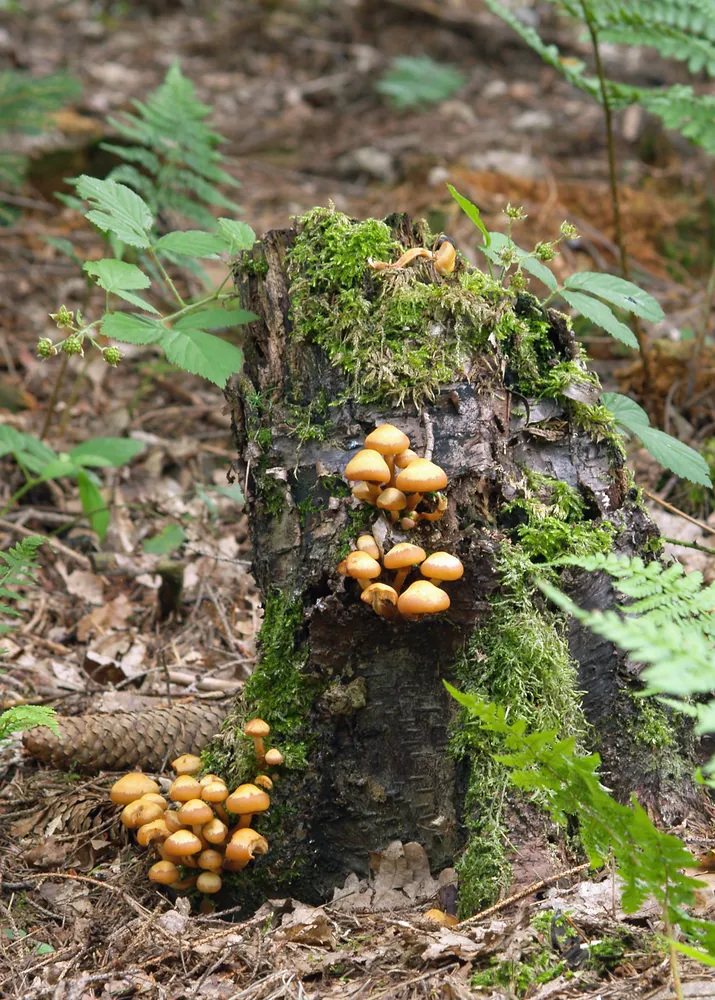
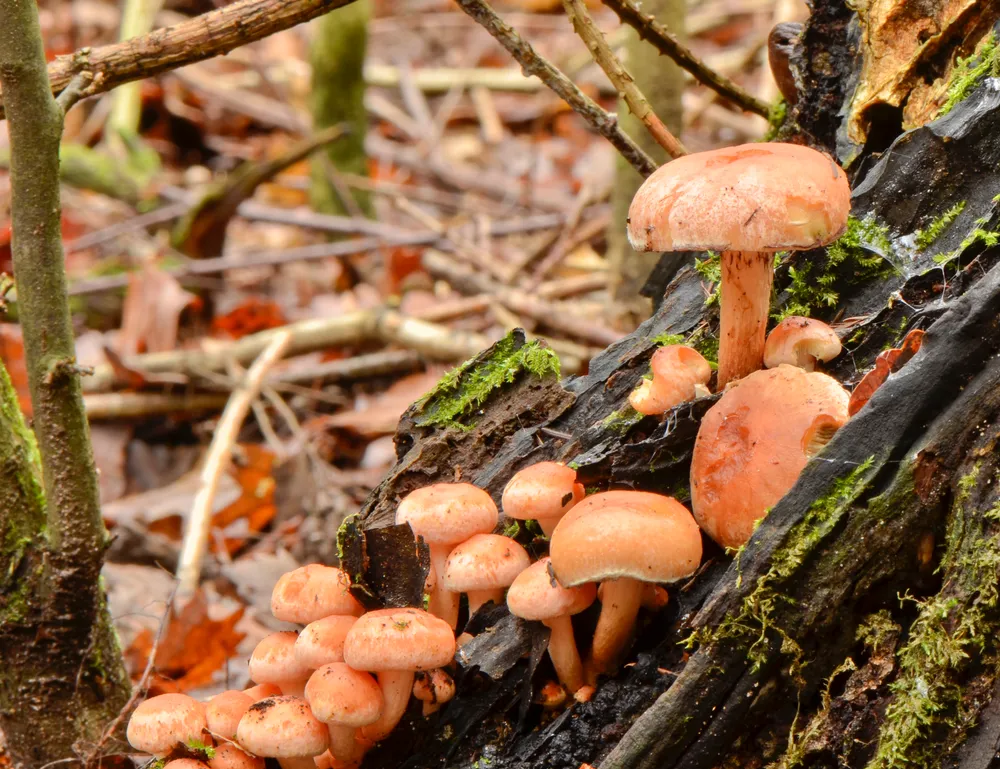
The sulphur tuft (Hypholoma fasciculare) is one of the most common poisonous mushrooms of the forest zone, growing in large numbers on stumps and wood in big clusters. Because it resembles the edible honey fungus, it is a frequent cause of poisoning.
The mushroom breaks down the wood of broadleaf and conifer trees throughout the warm season — from spring to November. The clusters can be very large, which makes it "spectacularly" tempting to pick.
Poisonous. Contains fasciculol toxins, which cause severe gastrointestinal upset and damage to the nervous system.
Cap
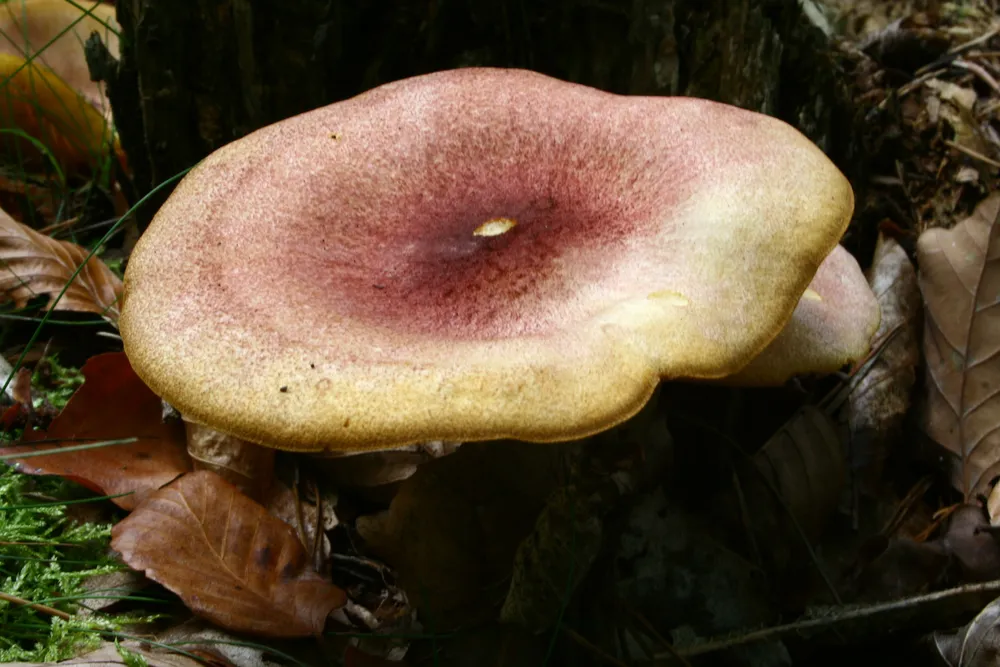
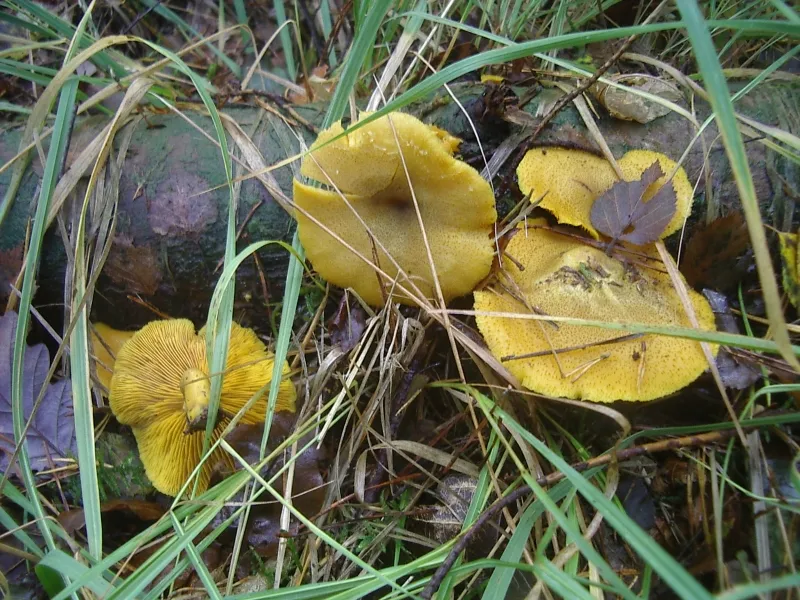
Cap 2–7 cm across, conical or bell-shaped in young mushrooms, then flattened. Sulphur yellow or egg-yolk yellow, often orange-brown in the center. Surface smooth, moist, without scales. Margin uneven, in young mushrooms joined to the stem by a cobwebby veil.
Hymenophore
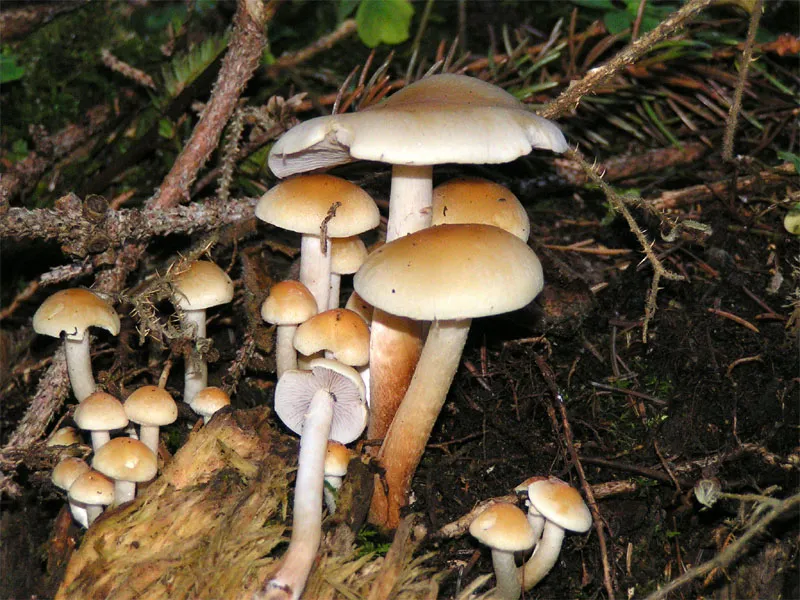
Gills crowded, yellow or yellow-green at first, then darkening to gray-green or brownish olive — this is the key feature that distinguishes it from the edible honey fungus (whose gills are whitish or cream). Spore print purplish brown.
Stem
Stem thin, 4–10 cm tall, 0.4–0.8 cm thick, yellowish in the upper part, brownish or rusty below, fibrous. No ring, or a faint fibrous ring that soon disappears — the lack of a distinct ring sets it apart from honey fungus.
Flesh
Flesh yellowish, thin, bitter-tasting — strong bitterness is typical of all false honey fungi and is a reliable diagnostic signal. The bitterness does not go away even with boiling.
Smell
Smell unpleasant, earthy or moldy, in some mushrooms faintly rotten. It differs from the pleasant mushroomy smell of edible honey fungus, which is one more helpful feature.
Lookalikes
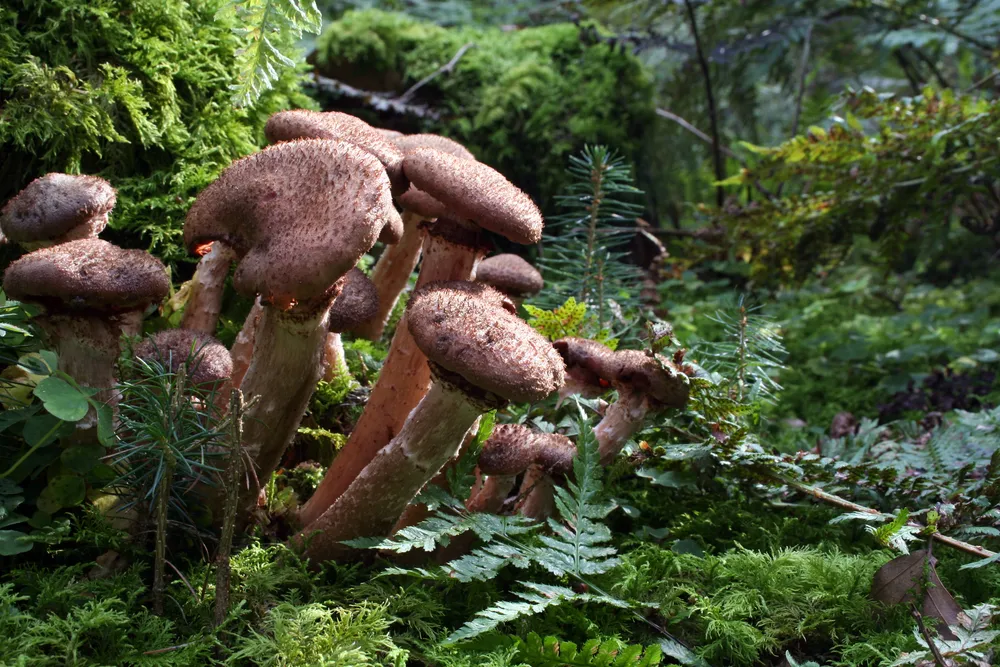
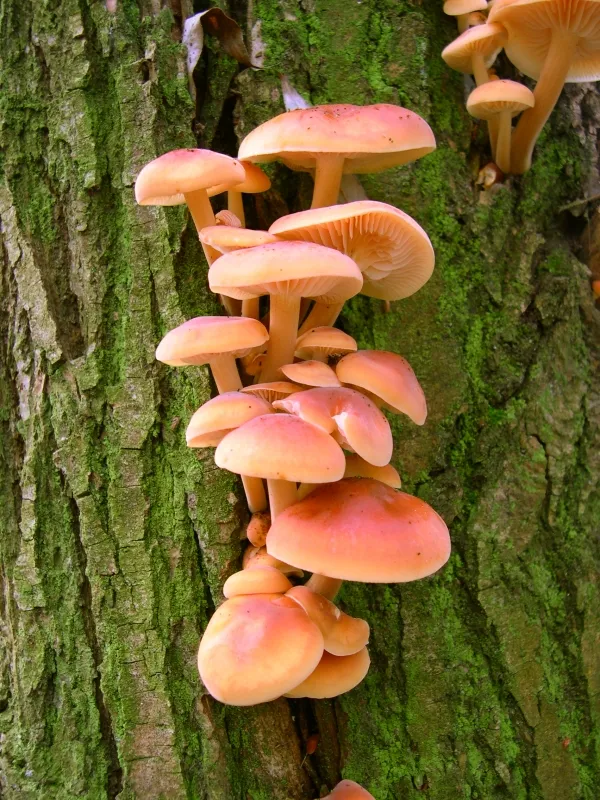
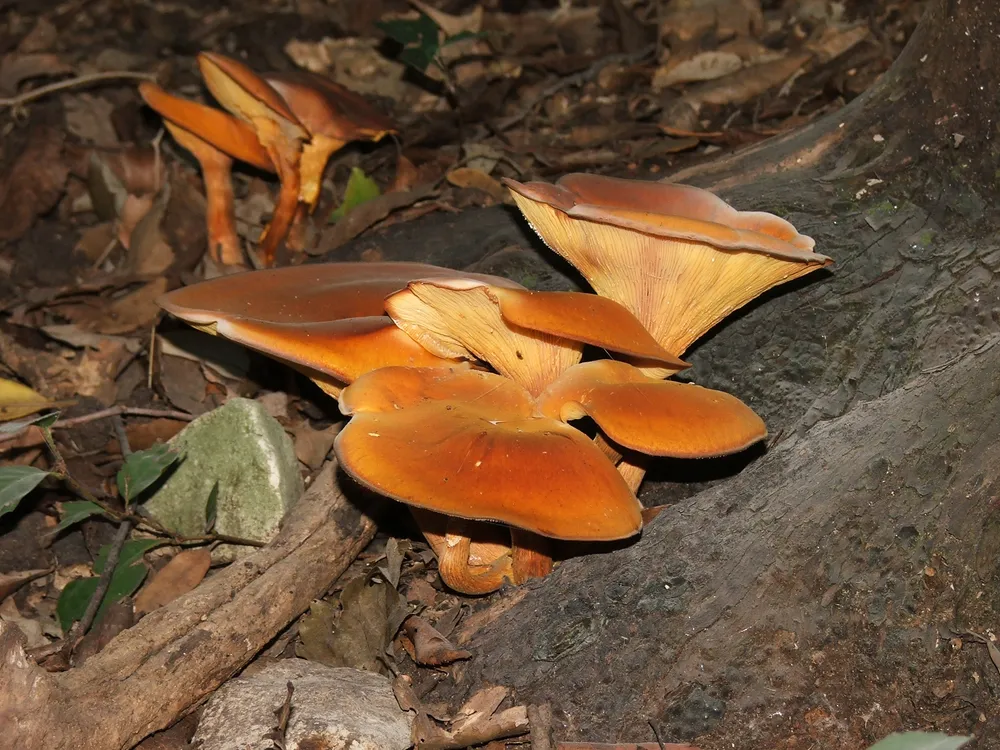
Related species
Mushrooms of the same genus and habitat — to study side by side and never mix up.
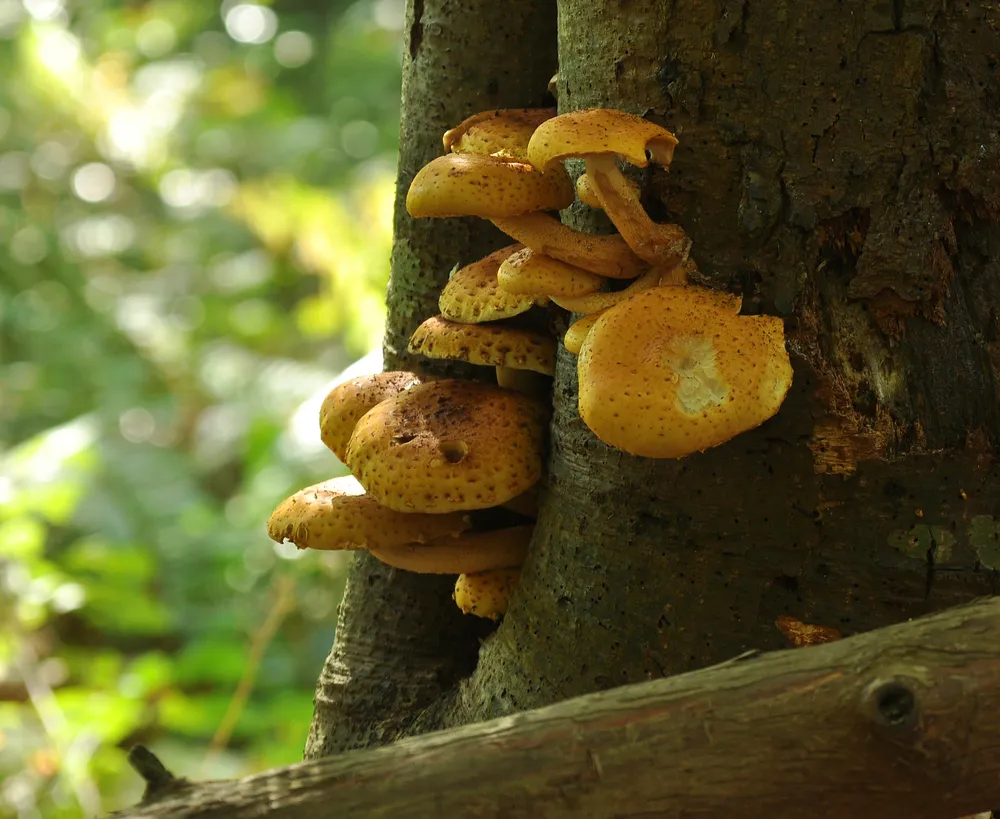
Golden scalycap
Pholiota aurivella
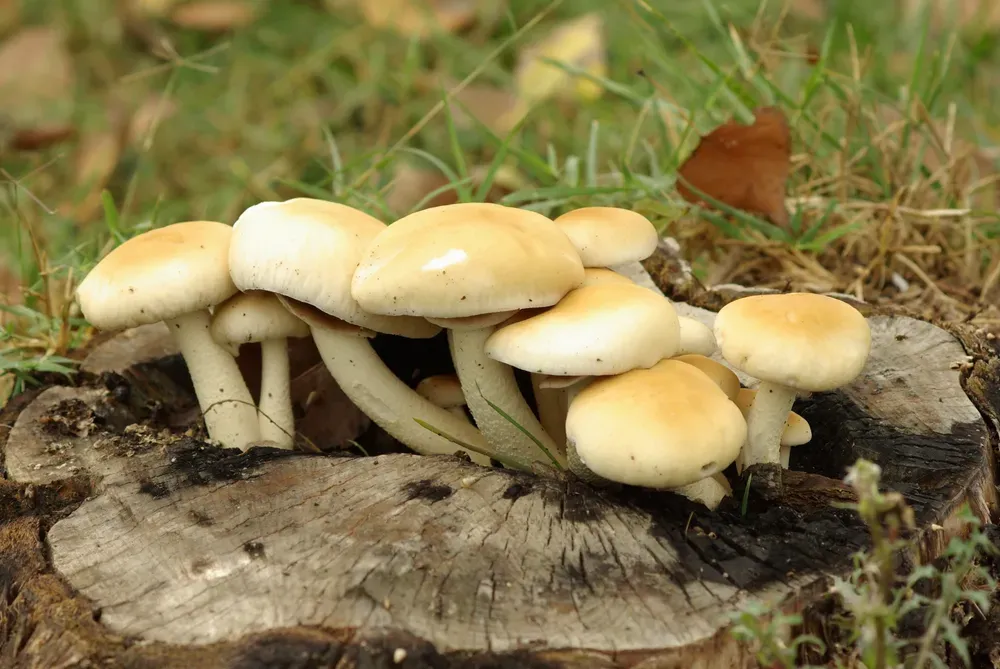
Poplar fieldcap
Cyclocybe aegerita

Agrocybe arvalis
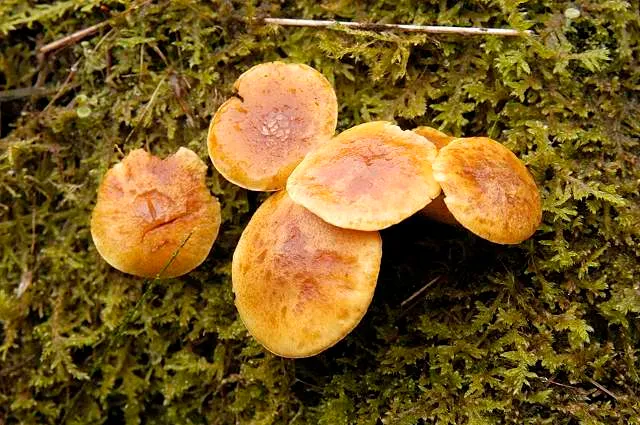
Slender pholiota
Pholiota spumosa
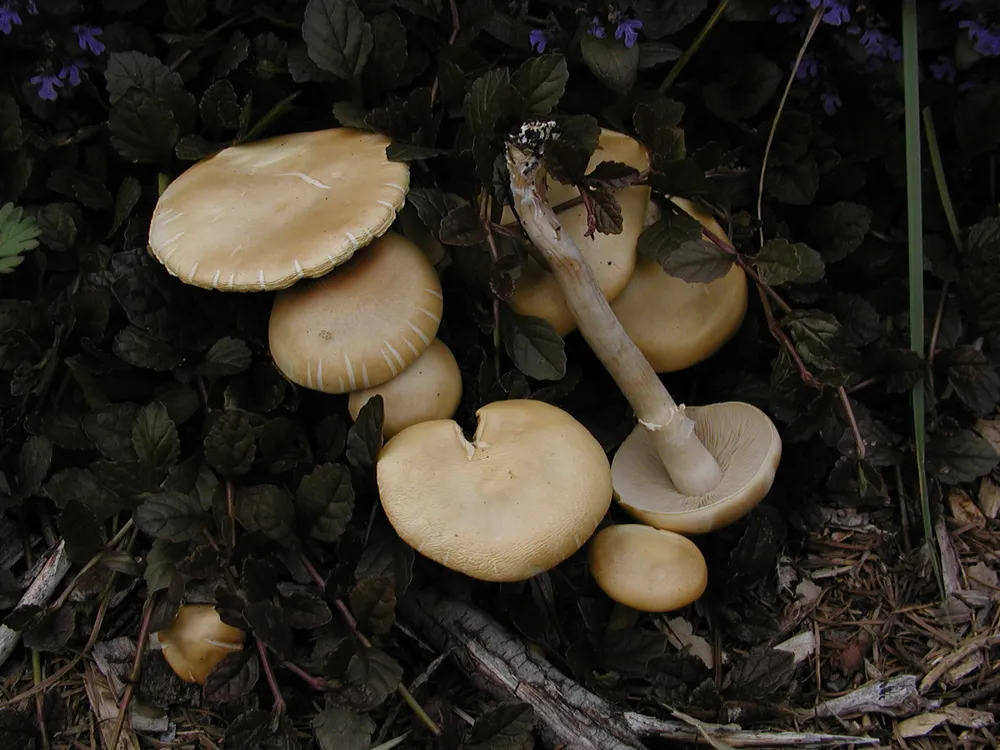
Spring fieldcap
Agrocybe praecox
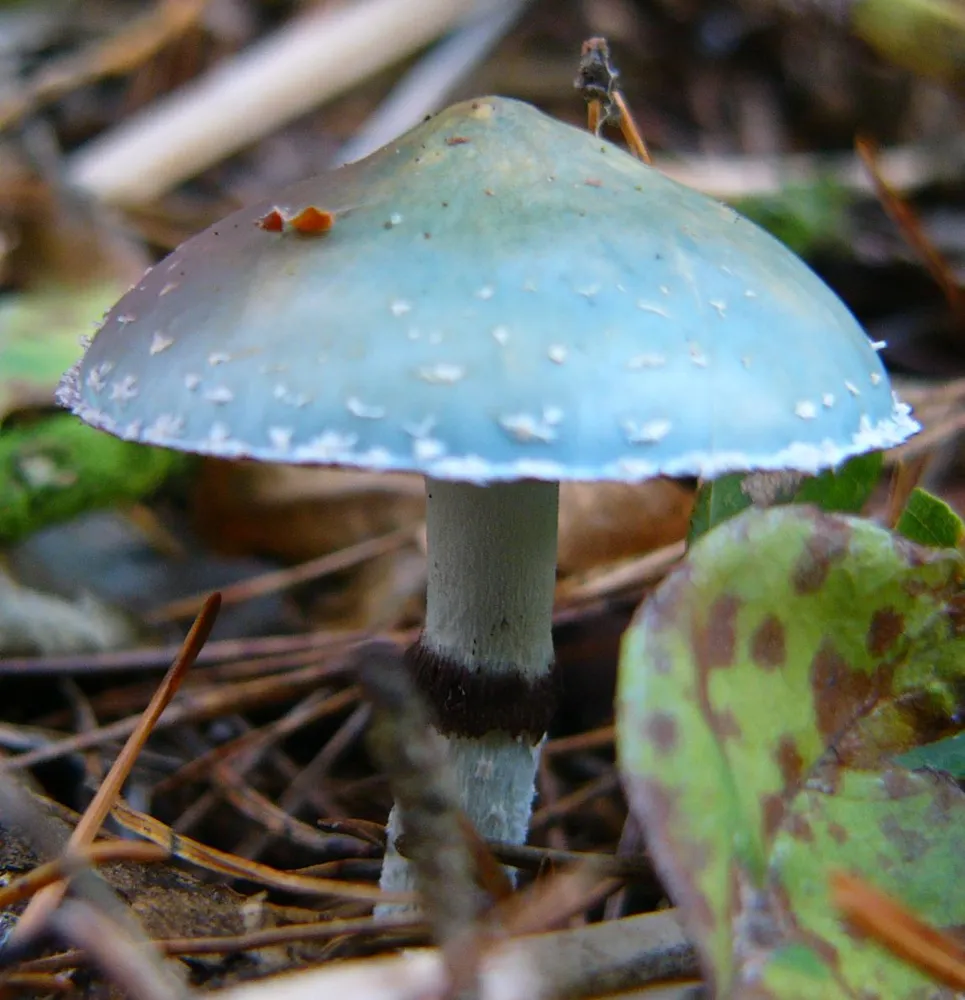
Verdigris agaric
Stropharia aeruginosa
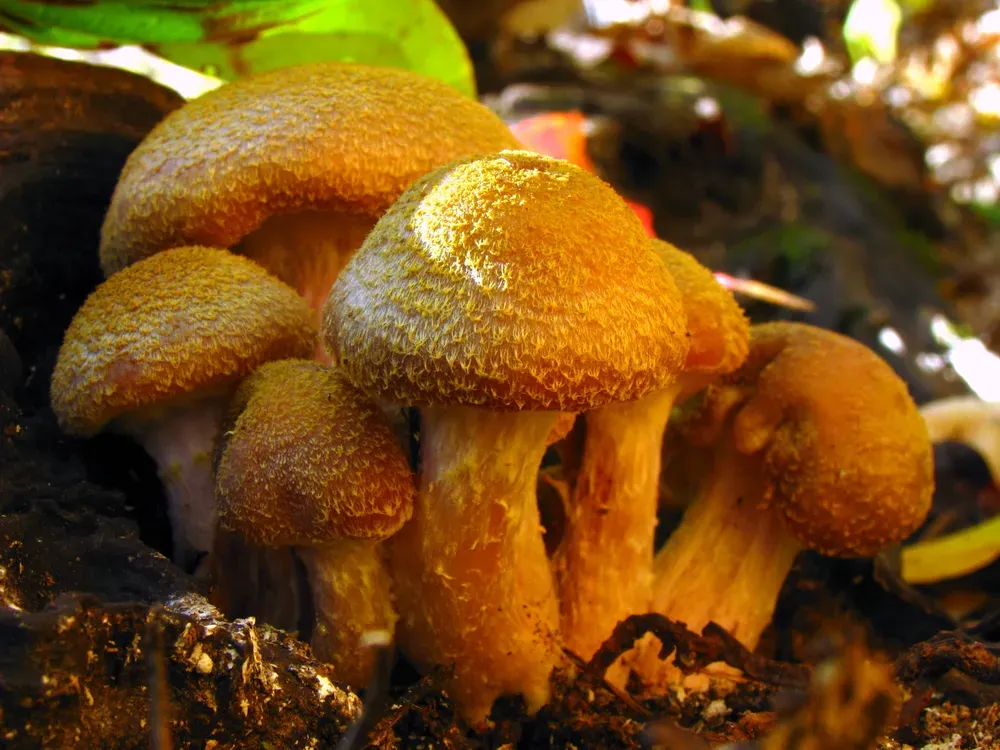
Bulbous honey fungus
Armillaria gallica
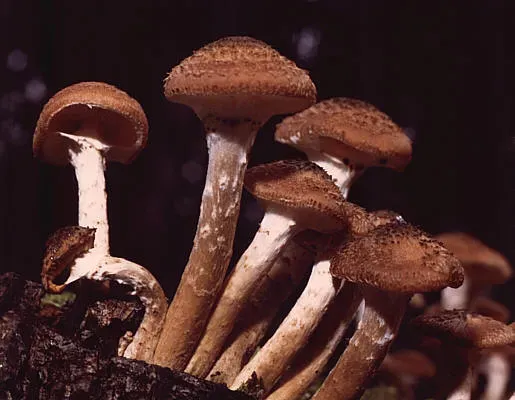
Dark honey fungus
Armillaria ostoyae
Related reading
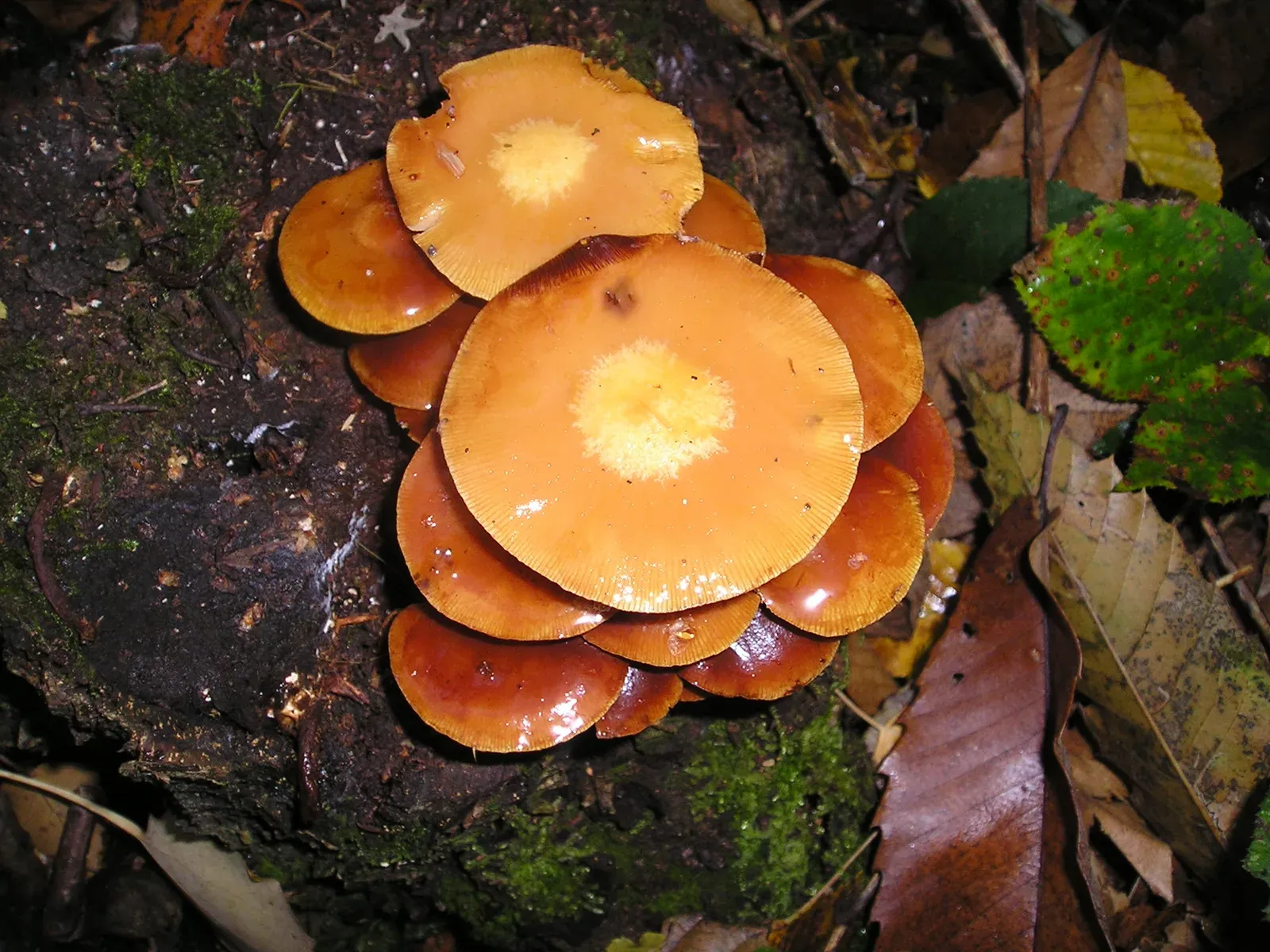 How to identify
Types of honey fungus in Ukraine: a complete guide
There's more than one kind of honey fungus: there are summer, autumn, meadow and even winter ones. Here are th…
June 10, 2026·3 min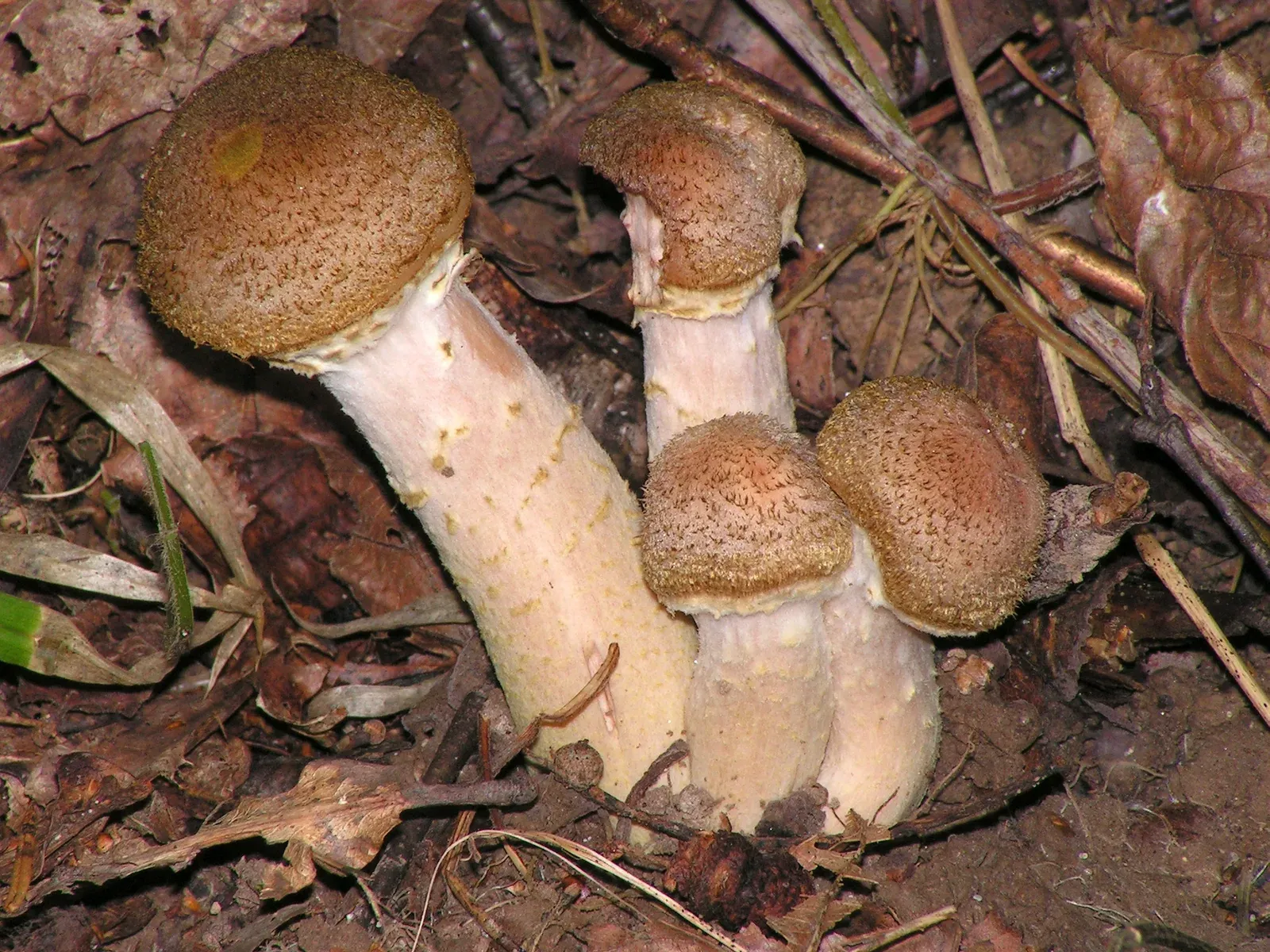 Where & when to forage
Honey fungus, the star of golden autumn
When the weather turns cold, the forest fills with honey fungus. Here's what honey fungus looks like, where an…
June 10, 2026·3 min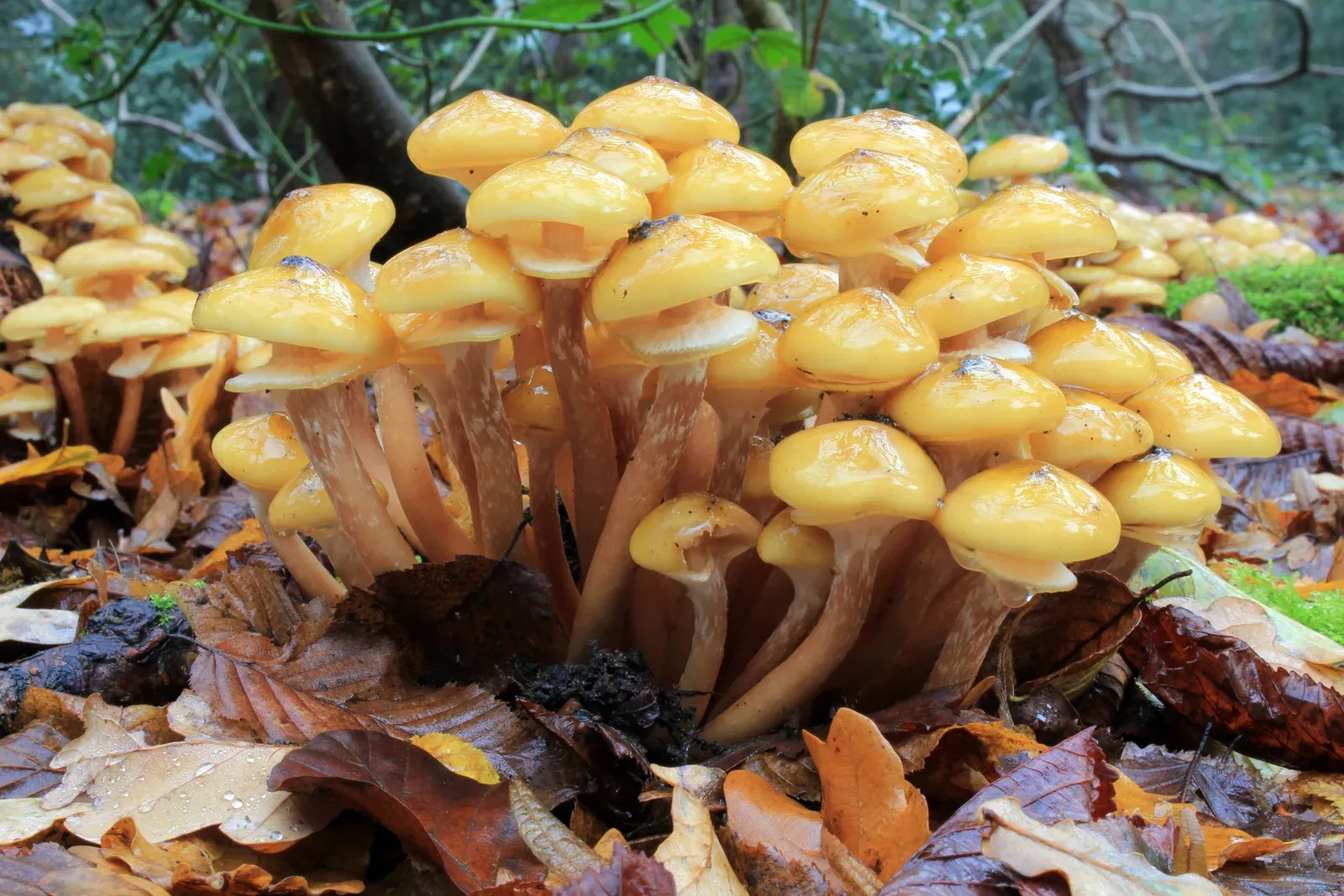 Safety
False honey fungus: how to tell it from the real thing
In autumn, stumps host both tasty honey fungus and its poisonous lookalikes. Here's how to reliably tell real…
June 7, 2026·3 min
Frequently asked questions
Is Sulphur tuft edible or poisonous?
Does Sulphur tuft have gills or pores?
What does the cap of Sulphur tuft look like?
What does the stem of Sulphur tuft look like?
What do Sulphur tuft smell and taste like?
Where does Sulphur tuft grow?
Which trees does Sulphur tuft grow under?
When should you pick Sulphur tuft?
What can Sulphur tuft be confused with?
Why is Sulphur tuft dangerous?
What is the scientific name of Sulphur tuft?
Sources
- [1]Атлас грибів України, Зеров Д.К. (1979)
- [2]GBIF