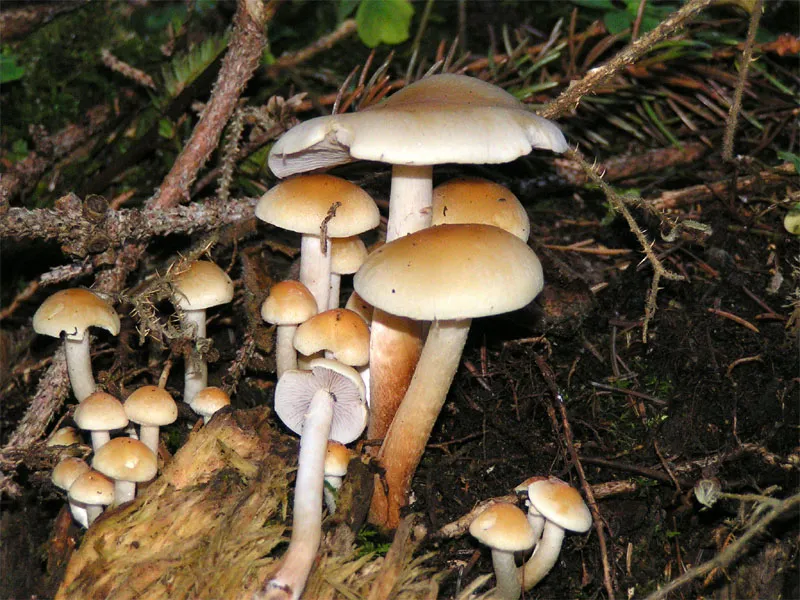
Conifer tuftHypholoma capnoides
Expert-verifiedUpdated October 3, 2026
Passport
- Edibility
- Edible
- Season
- Aug — Nov
- Hymenophore
- Gilled
- Cap color
- Yellow
- Size
- Small (up to 5 cm)
- Smell
- Pleasant
- Reviewed
- Yes ✓
Quick answers
Where to look?
Conifer forest, Mixed forest
When does it appear?
Aug — Nov
Active months: August, September, October, November.
How to recognize it? Three signs
- Cap color: Yellow, Orange, Brown
- Cap shape: Convex
- Smell: Pleasant
Fruiting season
August – November
Description
Conifer tuft (Hypholoma capnoides), known in folk speech as the "pine honey fungus", is a real find for an attentive forager: an edible and tasty relative of the poisonous sulphur tuft that grows in clusters on conifer stumps. Its Ukrainian name is a bit confusing but useful: "false" means it was once considered inedible by association with its toxic relative, and "gray-gilled" refers to the gray or gray-lilac color of the mature gills (its toxic sibling has sulfur-yellow gills — and that is the main diagnostic difference).
Edible, very tasty. The flesh is meaty, with a fragrant mushroom flavor and no bitterness. It suits everything: frying, pickling, drying, freezing. In the spruce and pine forests of the Carpathians and Polissia it is a mass late-autumn mushroom that closes the season after the honey fungus is gone. An important caution: pick it only if you are 100% sure you can tell it from the sulphur tuft, which grows right next to it on the same stumps and is poisonous: it causes severe gastroenteritis, and fatal cases have rarely been described. The key is the gill color of a mature mushroom: in the conifer tuft they are gray-lilac, in the sulphur tuft bright sulfur yellow.
In Ukraine it is common in conifer and mixed forests: the Carpathians, the Carpathian foothills, Polissia, and in places in the forest-steppe in pine plantations. A saprotroph on conifer stumps — pine, spruce, less often larch. The season runs August — November, peaking in October-November. It often grows in huge clusters of 10-50 fruiting bodies on a single stump, especially abundantly in damp, cool autumns.
Cap
Cap 3-7 cm across, hemispherical with an inrolled margin when young, becoming convex with a low umbo over time. Color ocher yellow to yellowish brown, darker toward the center to orange-brown, the margin paler. Surface smooth, slightly sticky in wet weather. The cap skin does not peel.
Hymenophore
Gilled hymenophore — the gills are attached to the stem, moderately crowded. When young they are grayish white, becoming with age gray-lilac, ash gray, purplish gray as the spores ripen. They never turn bright sulfur yellow — this is what fundamentally sets this species apart from the poisonous sulphur tuft. Spore print dark purple-brown to blackish brown.
Stem
Stem 4-8 cm tall, 0.5-1 cm thick, cylindrical, often curved. Color ocher yellow at the top, darkening with age to rusty brown toward the base. Surface with fine lengthwise fibers. Ring faint or absent — young specimens may have a thin fibrous ring zone. Several stems are often fused at the base into a cluster.
Flesh
Flesh meaty in the cap, yellowish, more fibrous in the stem. When cut it does not change color. Smell and taste pleasantly mushroomy, without bitterness. This is another diagnostic feature against the sulphur tuft, whose flesh is bitter.
Smell
Pleasantly mushroomy, with no distinctive notes and no bitterness.
›Scientific synonyms (1)
Agaricus capnoides Fr. (1818)
Lookalikes
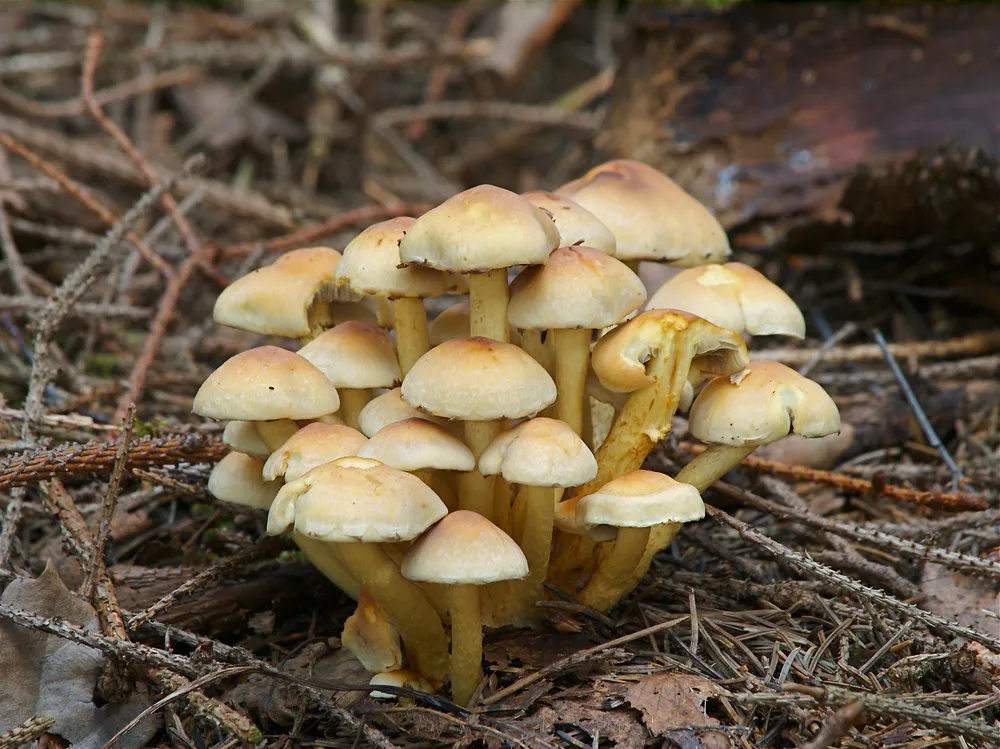
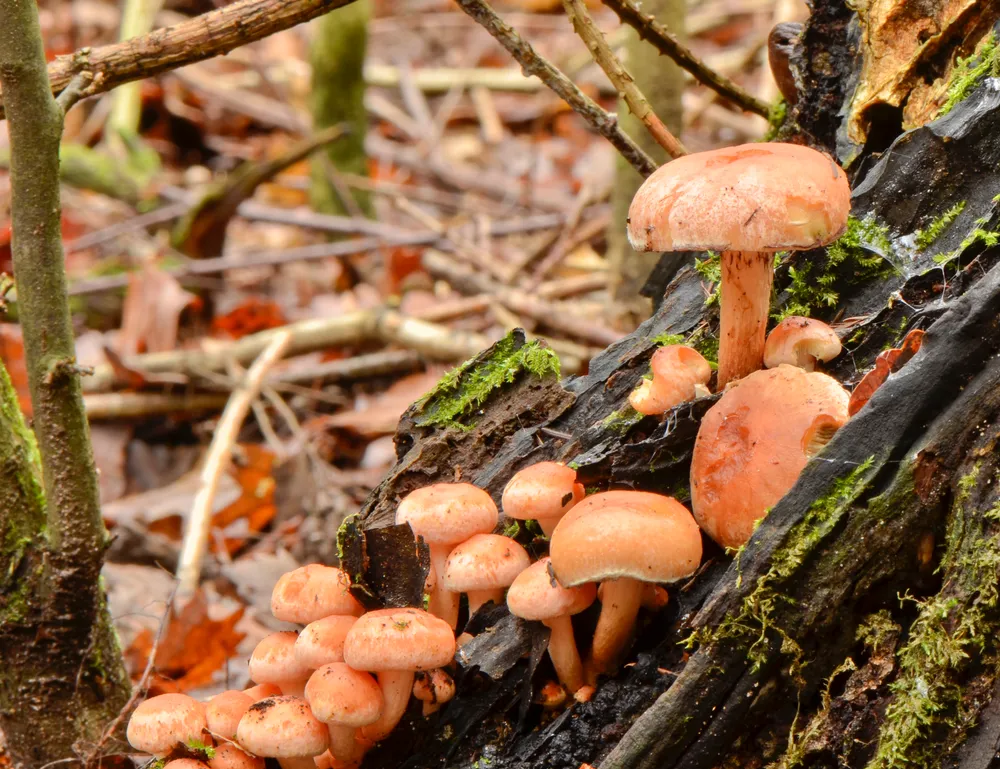
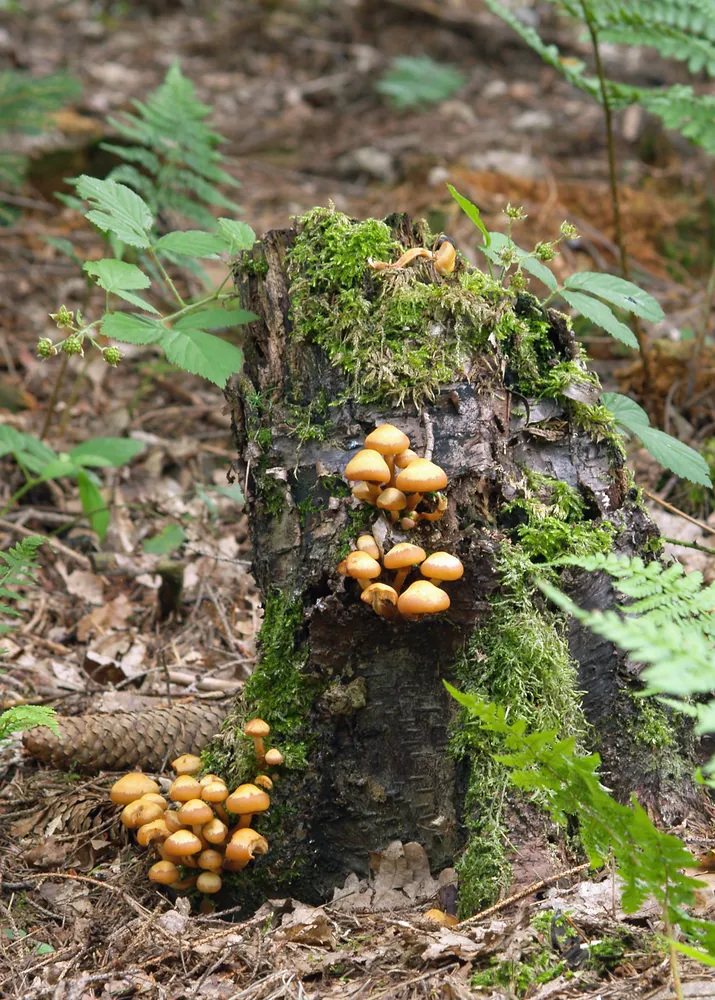
Related species
Mushrooms of the same genus and habitat — to study side by side and never mix up.
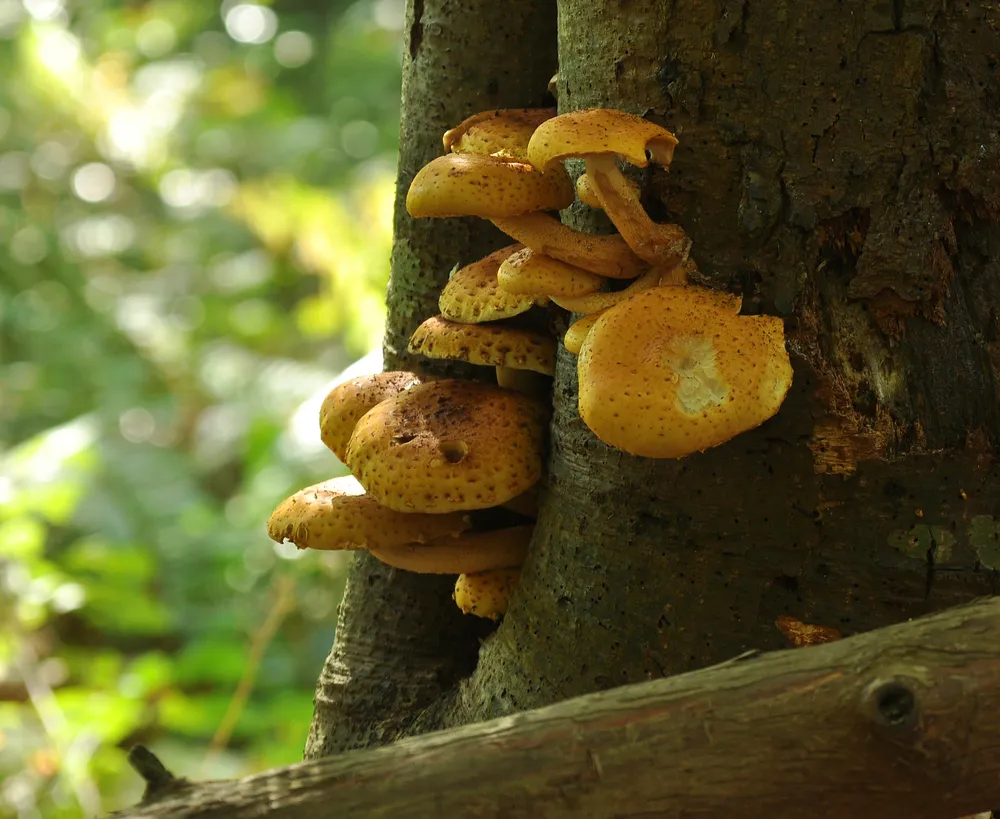
Golden scalycap
Pholiota aurivella
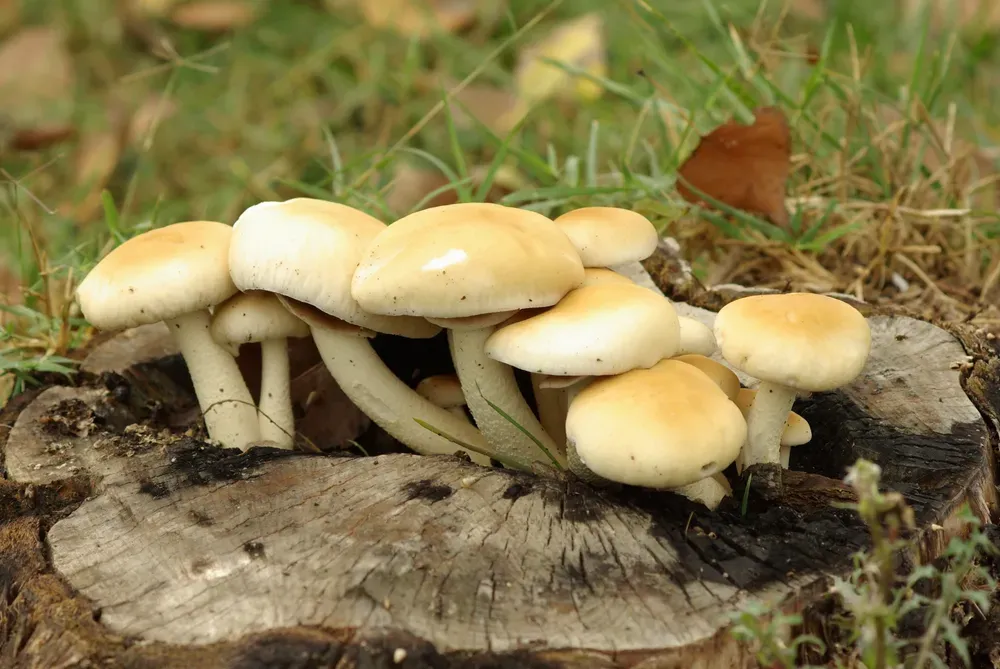
Poplar fieldcap
Cyclocybe aegerita

Agrocybe arvalis
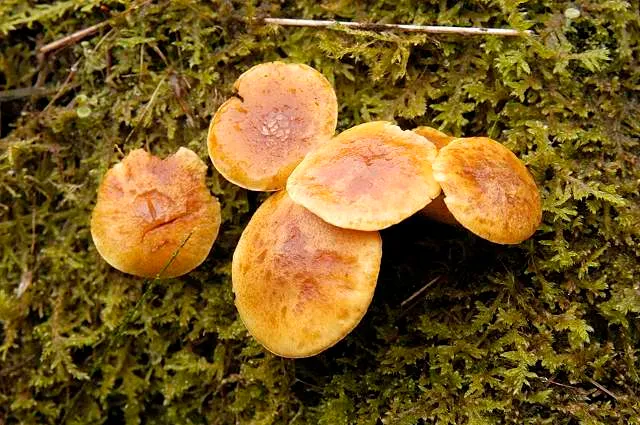
Slender pholiota
Pholiota spumosa
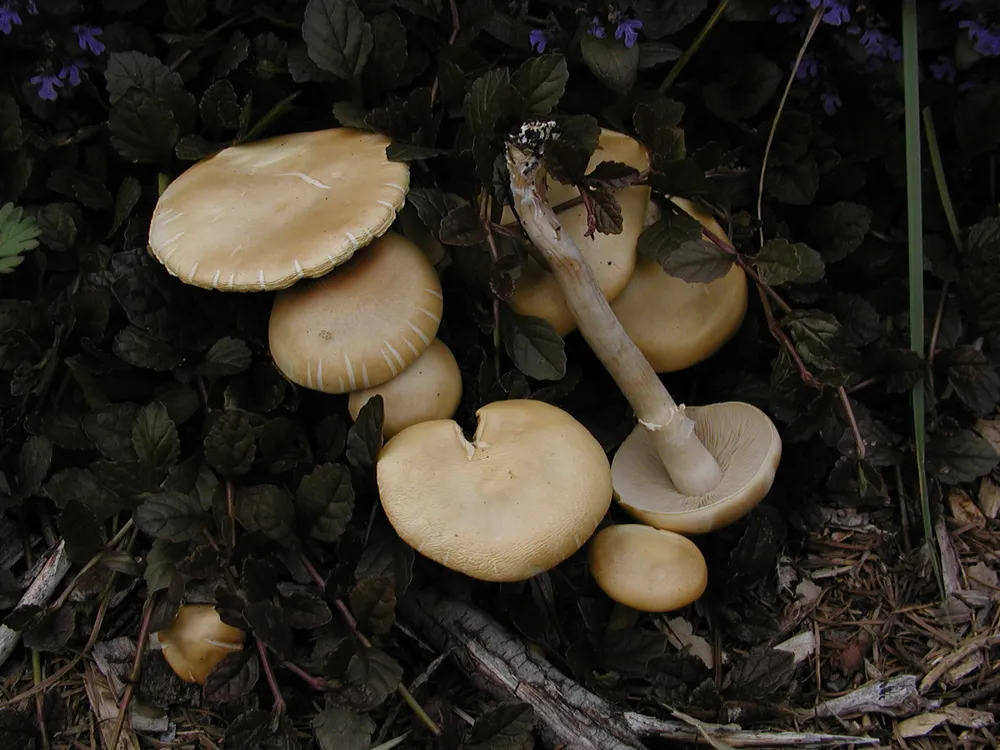
Spring fieldcap
Agrocybe praecox
Verdigris agaric
Stropharia aeruginosa
Bulbous honey fungus
Armillaria gallica
Dark honey fungus
Armillaria ostoyae
Related reading
Frequently asked questions
Is it safe to eat?
Yes, without restrictions — provided it is reliably identified. The main danger is confusing it with the sulphur tuft (Hypholoma fasciculare), which is poisonous. Check: the gills of a mature mushroom are gray-lilac, the spore print is purple-brown. If the gills are bright yellow — DON'T pick it. And don't taste-test it: the deadly funeral bell can grow on the same stumps, and taste tells you nothing about its toxins.
How do you tell it from the sulphur tuft?
Three critical features. (1) Gill color of a mature mushroom: in the conifer tuft — gray-lilac, ash gray. In the sulphur tuft — bright sulfur yellow. This is the most reliable difference. (2) Cap color: don't taste-test (the deadly funeral bell can grow nearby, and taste tells you nothing about its toxins). Conifer tuft — yellow-ocher, with no greenish tint. Sulphur tuft — sulfur yellow with a greenish tint. (3) Where it grows: conifer tuft — mostly on conifer stumps (pine, spruce). Sulphur tuft — on broadleaf stumps (oak, birch, poplar). All three features together — practically zero chance of a mistake.
What happens if you accidentally eat sulphur tuft?
After 1-6 hours: nausea, repeated vomiting, abdominal pain, diarrhea, headache. In severe cases — seizures, muscle weakness. Symptoms last 12-24 hours. Fatal cases are rarely described, but the poisonings are severe, especially for children. Treatment is symptomatic — an ambulance, activated charcoal, IV fluids.
Where should you look for it?
On stumps, fallen wood and roots of conifers — pine, spruce, larch, fir. It loves old stumps 5-15 years old, especially in damp spots. Crucially: the host wood is conifer. If you find a similar mushroom on an oak stump, it's sulphur tuft — don't pick it.
Which regions of Ukraine is it found in?
Mostly in the forest zone: the Carpathians (especially in spruce forests), the Carpathian foothills, Polissia (pine wildwoods), and in places the forest-steppe in planted pine stands. In the steppe — in pine shelterbelts.
When should you look for it?
August — November, peaking in October-November. It closes the mushroom season — often fruiting after the first light frosts, when all other mushrooms are gone. In a warm year — into December.
Which other mushrooms is it confused with?
With brick tuft (Hypholoma lateritium) — also a relative, with an orange-brick cap, moderately bitter taste, inedible/mildly toxic. The conifer tuft's cap is yellow-ocher (not brick-colored), and its flesh is not bitter. With funeral bell (Galerina marginata) — deadly poisonous! The funeral bell has a membranous ring or a distinct ring zone on the stem — this is the key feature; its spore print is rusty brown, not purple-brown. When in doubt, leave it.
How do you cook it?
Fry them with onions and potatoes — the classic late-autumn way. Pickle them after boiling for 10 minutes with bay leaves — in winter you'll open a real treasure. Dry them — they dry worse than the sheathed woodtuft, as the flesh is thicker and a bit tough. Freeze them — always boil them for 10 minutes first.
Is Conifer tuft edible or poisonous?
Does Conifer tuft have gills or pores?
What does the cap of Conifer tuft look like?
What does the stem of Conifer tuft look like?
Sources
- [1]Вікіпедія (українська)
- [2]Атлас грибів України, Зеров Д.К. (1979)
- [3]MycoBank Database
- [4]Index Fungorum
- [5]GBIF
- [6]iNaturalist Ukraine