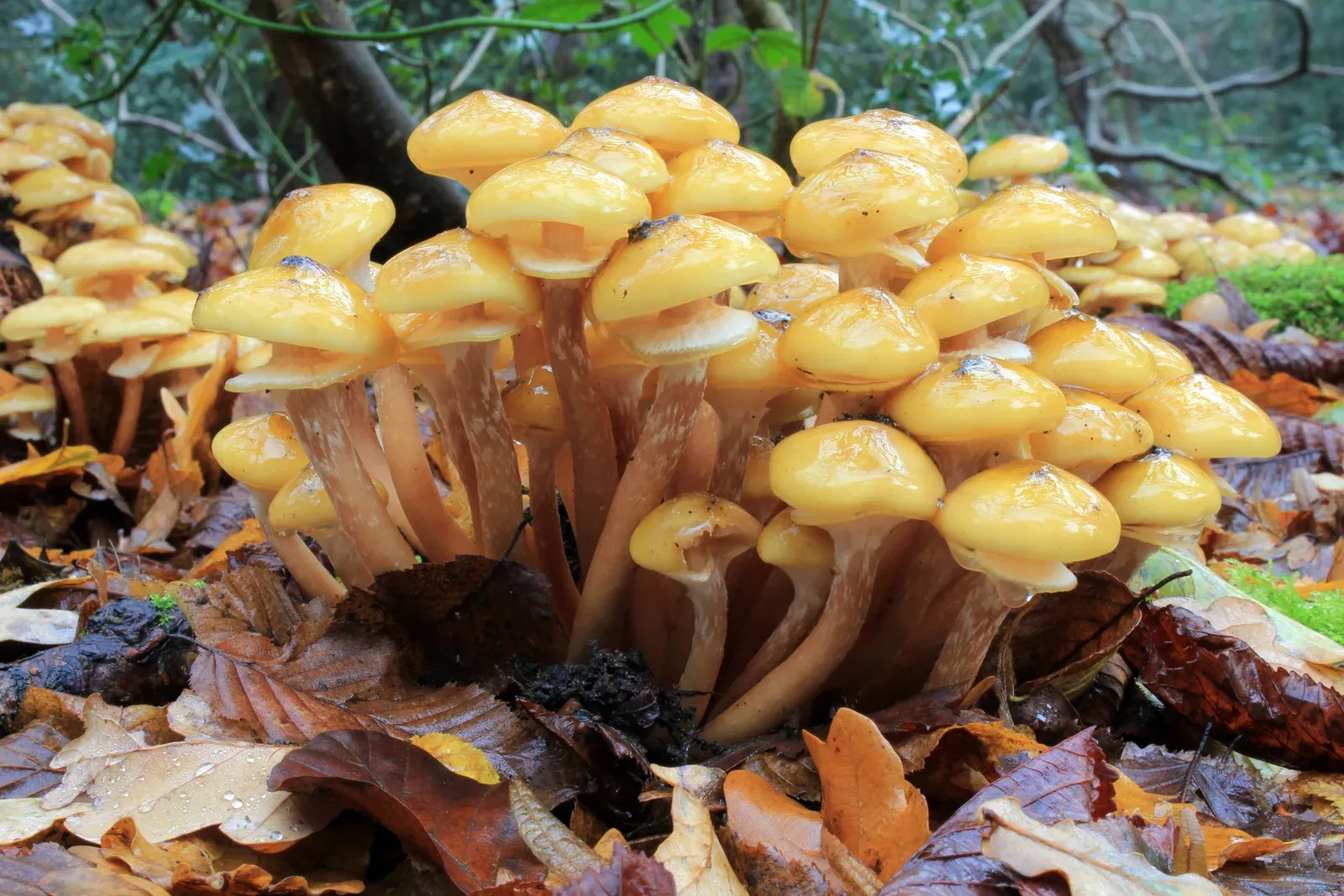
Honey fungus grows in friendly clusters on stumps and roots, and in autumn people gather it by the basketful. But danger lurks on those very stumps: right next to real honey fungus, its poisonous lookalikes, the so-called false honey fungus, pop up too. Luckily, telling them apart isn't hard if you know a few consistent features.
Let's look at how real honey fungus differs from false, what to check first and why these features are worth checking every time.
What false honey fungus is
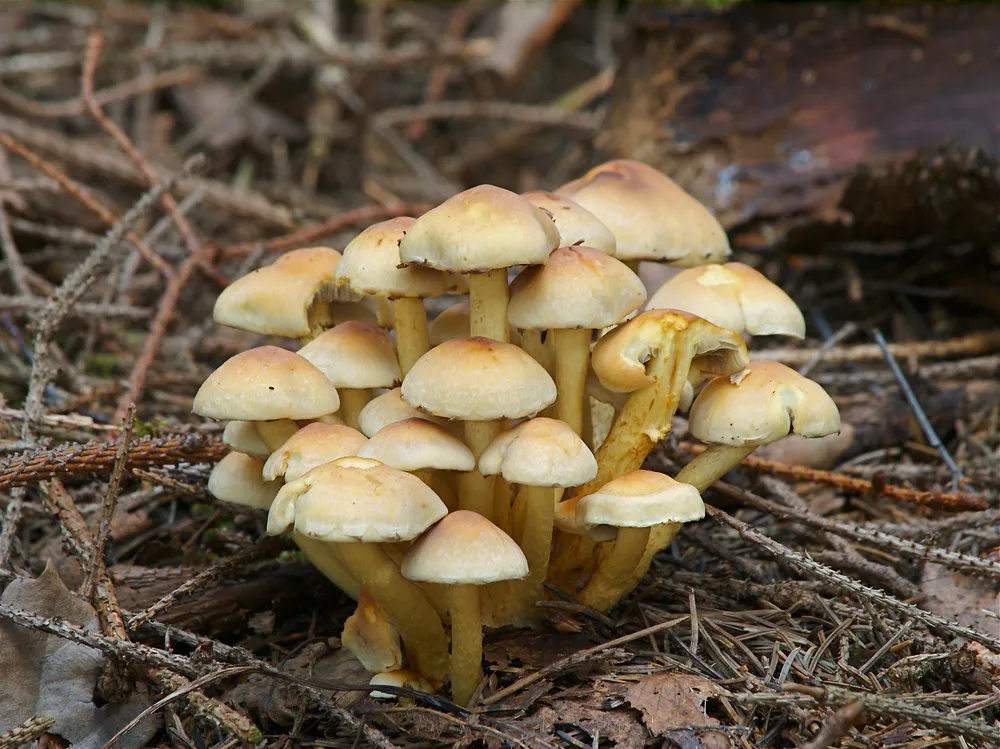
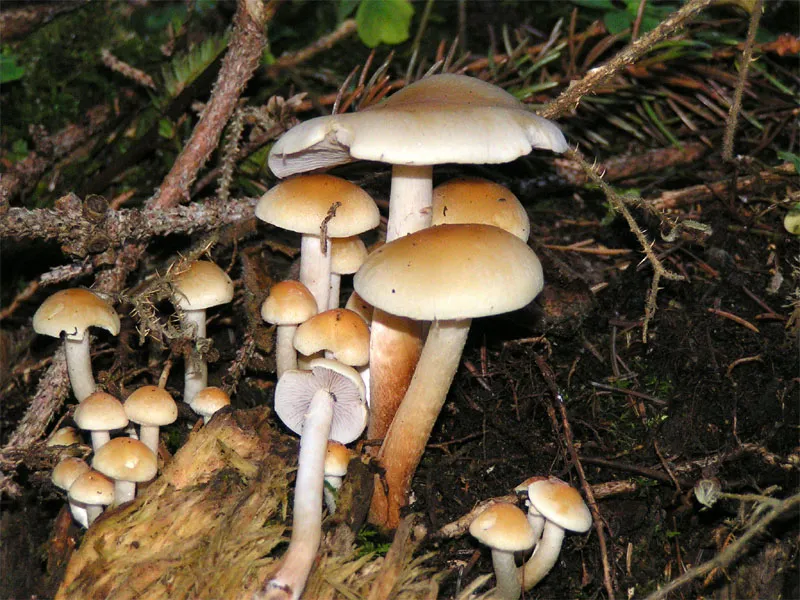
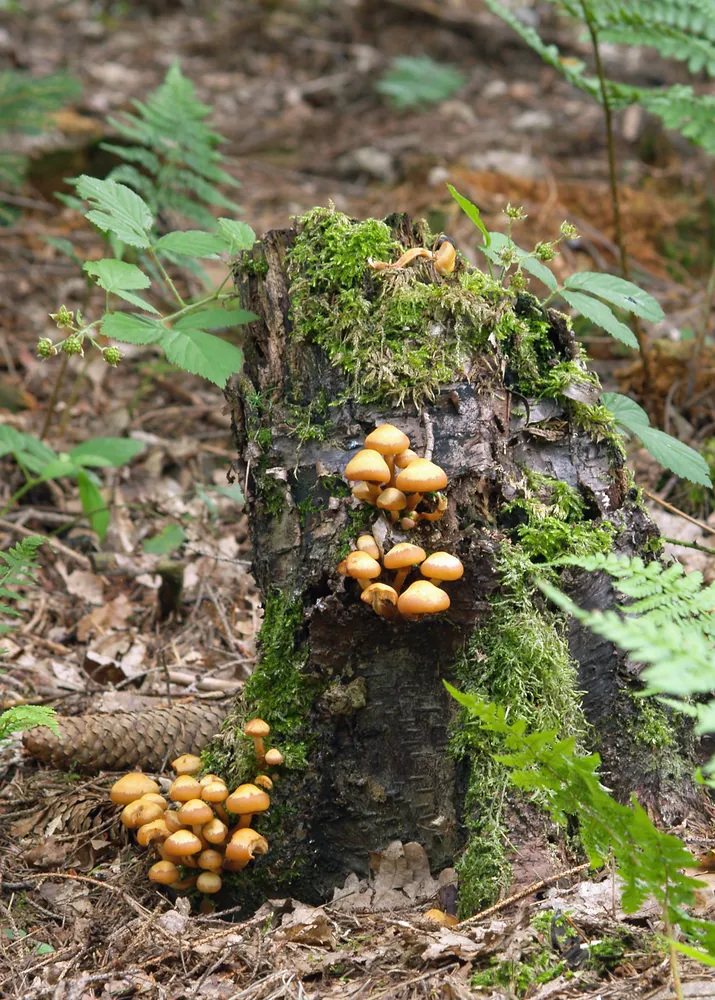
False honey fungus is the name for several species that also grow in clusters on wood and from a distance look like real honey fungus. The best known of them are sulphur tuft and conifer tuft.
Sulphur tuft is poisonous, with bitter flesh and a bright yellow, greenish tinge. Conifer tuft is less dangerous, but it isn't edible either. Both masquerade as good honey fungus, which is why people pick them by mistake.
The good news is that real honey fungus has several features its lookalikes lack. Check them, and a mistake is all but ruled out.
Key features of real honey fungus
Keep three main differences in mind, and you'll spot a lookalike right away.
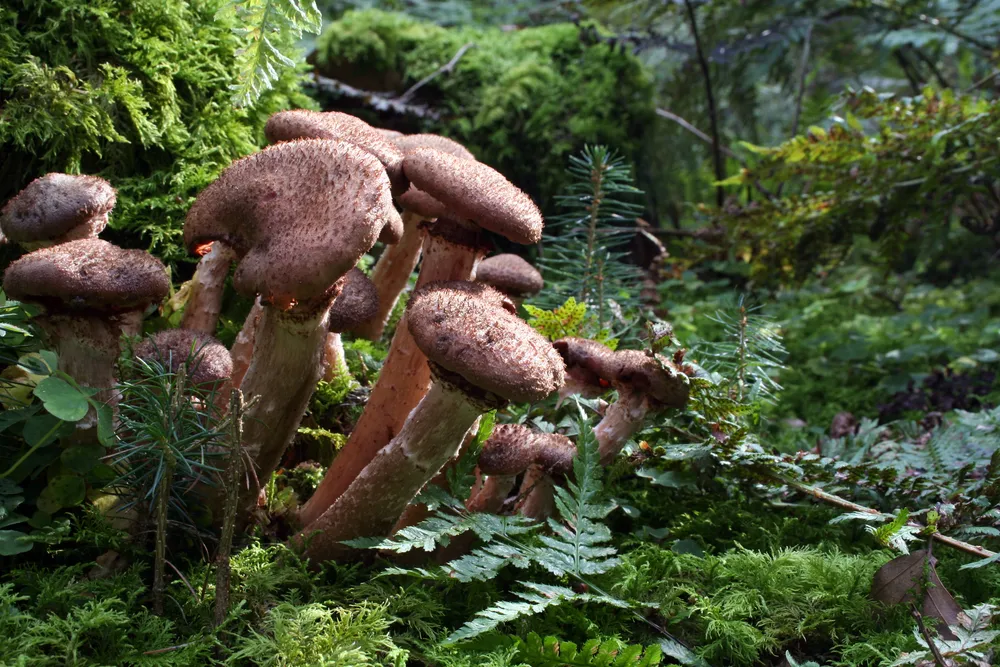
- Ring on the stem. Real honey fungus has a membranous ring on the stem, like a little skirt. False lookalikes have none, or it's barely visible.
- Gill color. In real honey fungus the gills are pale, creamy or slightly brownish. In sulphur tuft they're greenish yellow, in conifer tuft grayish violet.
- Scales on the cap. The cap of real honey fungus is covered in small dark scales, especially in the center. The lookalikes' caps are usually smooth and even.
If a mushroom has a ring, pale gills and scales on the cap, you're most likely looking at real honey fungus.
What to check first
The quickest and most reliable check is the ring on the stem.
- First, look at the stem. A membranous ring, good. None, be on your guard.
- Then at the gills. Pale is a good sign, bright yellow or gray-violet is a reason to pass.
- Finally, at the cap. Scales confirm real honey fungus, a smooth bright cap is a sign of the lookalike.
- Taste for bitterness carefully. Sulphur tuft is very bitter, but you may only taste a raw tip and spit it out immediately.
This three-step check takes seconds and saves you from a mistake.
Why you need to check every time
False honey fungus grows mixed in with the real thing, on the same stumps and at the same time. So you can't glance at a cluster once and take the whole lot.
Young mushrooms are especially tricky: their features are still faint, the ring is thin and the scales are tiny. So inspect each honey fungus individually and set doubtful ones aside.
In summer, stumps also host the sheathed woodtuft, another good mushroom with its own set of lookalikes. We cover the whole family in a separate guide to honey fungus species. And if poisoning does happen, follow our first aid guide.
Sources
- “Field Guide to the Fungi of Ukraine” (Kyiv, Naukova Dumka publishing house).
- Armillaria mellea on GBIF, the global biodiversity database.
- Hypholoma fasciculare on MycoBank, the international fungal nomenclature database.
- Hypholoma fasciculare on Wikipedia.
Frequently asked questions
How do you tell real honey fungus from false?
By three features: real honey fungus has a membranous ring on the stem, pale creamy gills and small scales on the cap. The lookalikes have no ring, bright yellow or gray-violet gills and a smooth cap.
Which honey fungus lookalikes are false?
Most often and . The first is poisonous and bitter, the second inedible. Both grow on stumps next to real honey fungus.
Is false honey fungus poisonous?
Sulphur tuft is poisonous and causes digestive upset. Conifer tuft is considered inedible. So neither one goes in the basket.
What's the most reliable sign of real honey fungus?
A membranous ring on the stem, like a little skirt. Real honey fungus has one, while false lookalikes lack it or it's barely visible. It's the quickest check.
Why is false honey fungus bitter?
Sulphur tuft has bitter flesh, and that's what gives it away. You may only taste a raw tip and spit it out at once, but it's better to rely on color and the ring.
Can you pick honey fungus by whole clusters?
No. False honey fungus grows mixed in with the real thing, so each mushroom needs to be inspected individually. Taking them by the cluster is dangerous, especially young specimens.
Why are young honey fungus mushrooms dangerous?
Their features are still faint: the ring is thin, the scales are tiny. So young mushrooms are the easiest to mix up, and you need to inspect them especially carefully.
What should I do if I've been poisoned by honey fungus?
Call 112 or your local emergency number right away and follow the . Gather any leftover mushrooms so doctors can identify the lookalike.
Mushrooms in this article
Related articles
 Recipes & cooking
How to store fresh mushrooms, and for how long
Fresh mushrooms spoil faster than you might think. Here's how long they keep in the fridge, how to store them…
August 21, 2026·4 min How to identify
Truffles in Ukraine: do they grow here, and where to look
Truffles aren't just a French delicacy. Several species grow in Ukraine too. Here's which ones, where they occ…
August 24, 2026·2 min Recipes & cooking
How long to boil mushrooms
Boiling time depends on the type of mushroom and on what you're cooking next. Here's a clear cheat sheet: how…
August 22, 2026·4 min