When people say “honey fungus”, they usually picture an autumn cluster of mushrooms on a stump. But in fact there are several different species, and they grow almost all year round: from spring to the winter thaws. They're worth knowing, because each has its own season, its own favorite spots and its own taste.
Here's a short guide to the main honey fungus species of our forests, so you can recognize each one and know when to go looking for it.
Honey fungus
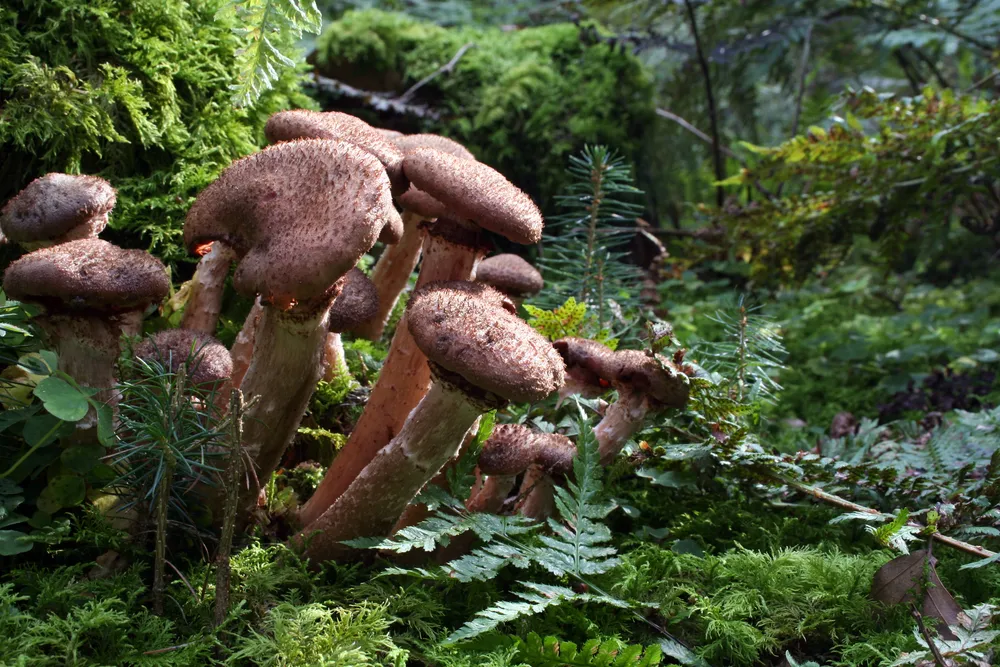
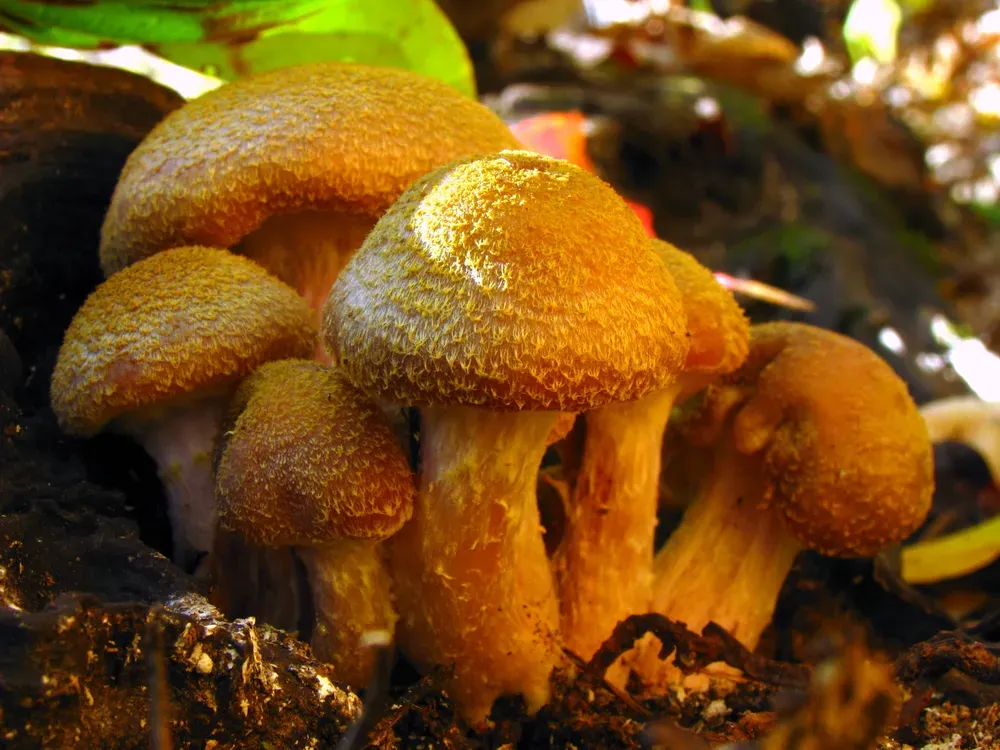
Honey fungus is the classic golden-autumn mushroom everyone knows.
A honey-brown cap with small scales, a ring on the stem, pale gills. It grows in huge clusters on stumps and roots of broadleaf trees in September and October. It's the most popular and most abundant of them all, and we've written about it in a separate in-depth article.
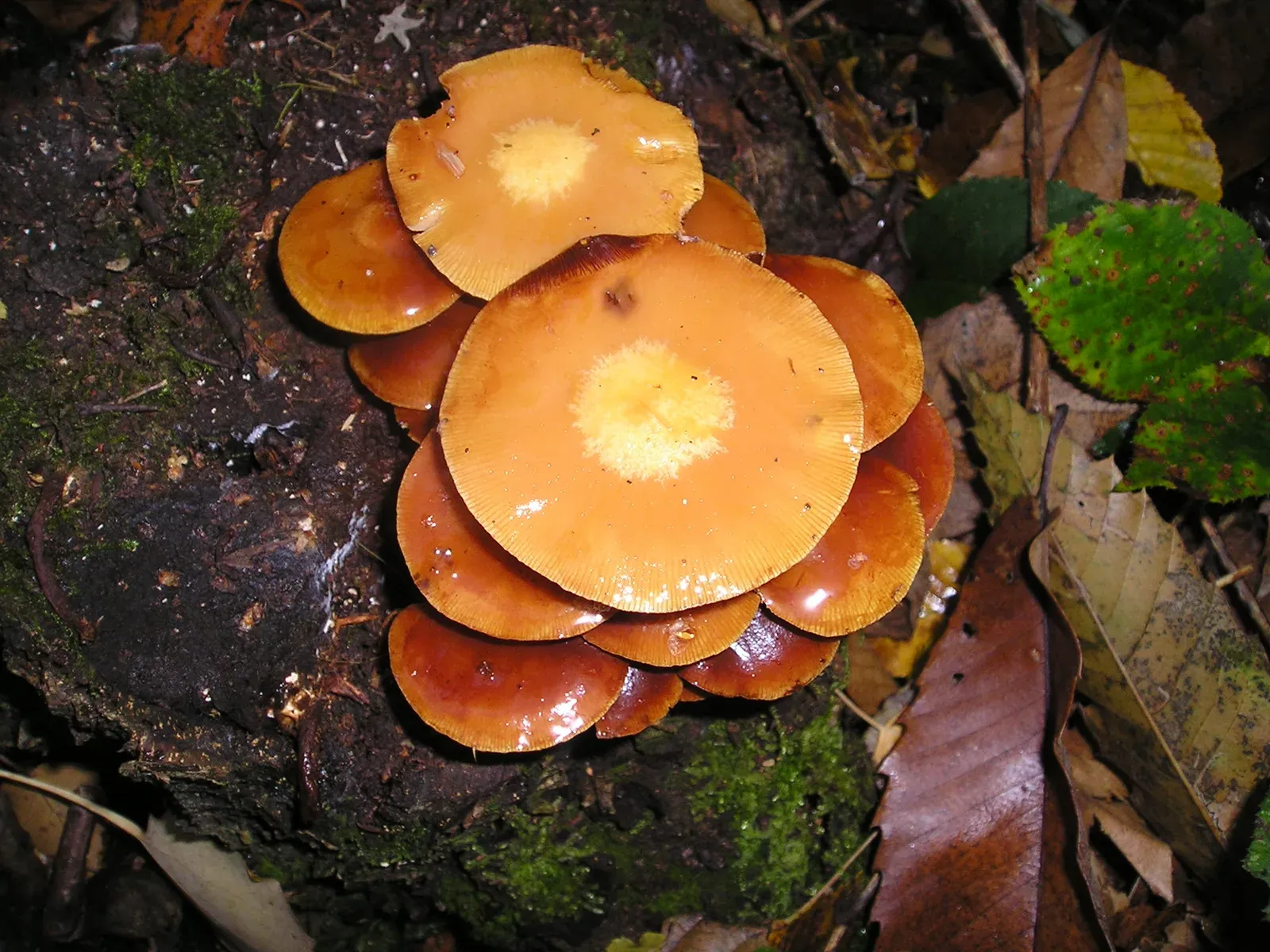
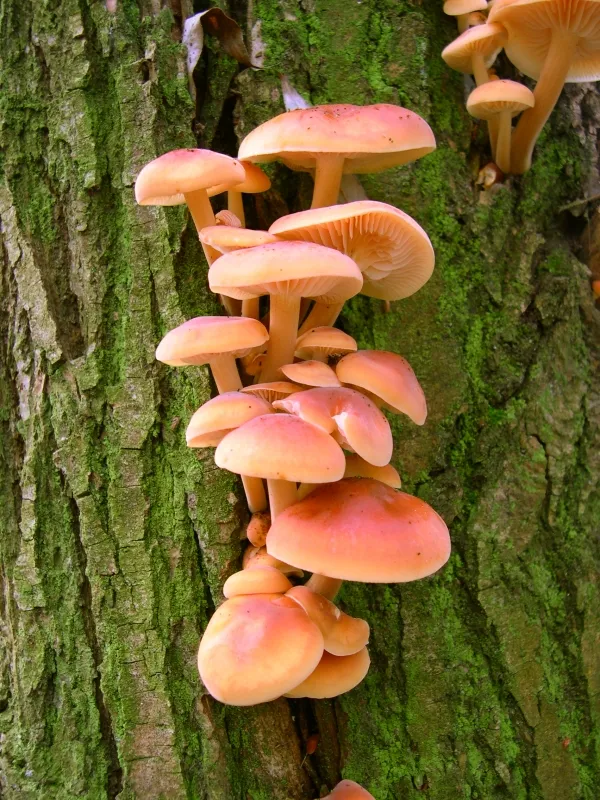
Sheathed woodtuft
Sheathed woodtuft gets ahead of the autumn one and grows from spring to fall.
Its cap is two-toned: darker in the moist center, lighter toward the edge, with a characteristic water-soaked band. It also has a ring on the stem. It grows on rotting broadleaf stumps, often in abundance. It's a tasty mushroom, but it's the one most often confused with poisonous lookalikes, so vigilance is a must.
Fairy ring champignon
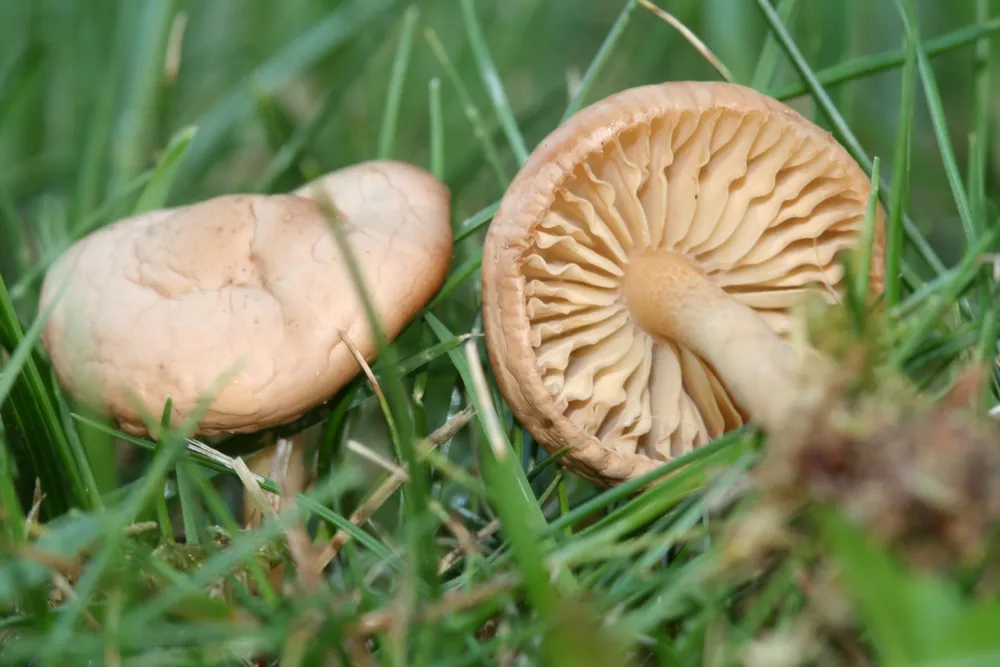
Fairy ring champignon stands out because it grows not on wood but in open places.
Look for it in meadows, pastures, clearings and roadsides, where it forms characteristic rings and rows in the grass. It's small and light brown, with a bump in the middle of the cap. The flesh has a pleasant smell, and the mushroom dries well.
Velvet shank and bulbous honey fungus
Cold-hardy species extend the honey fungus season.
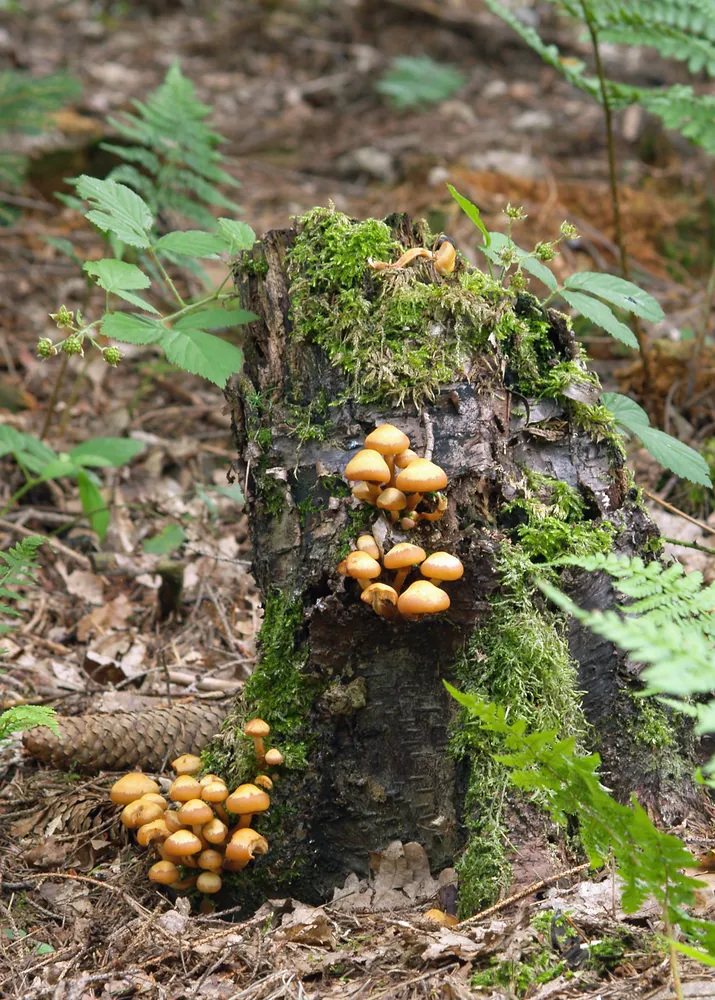
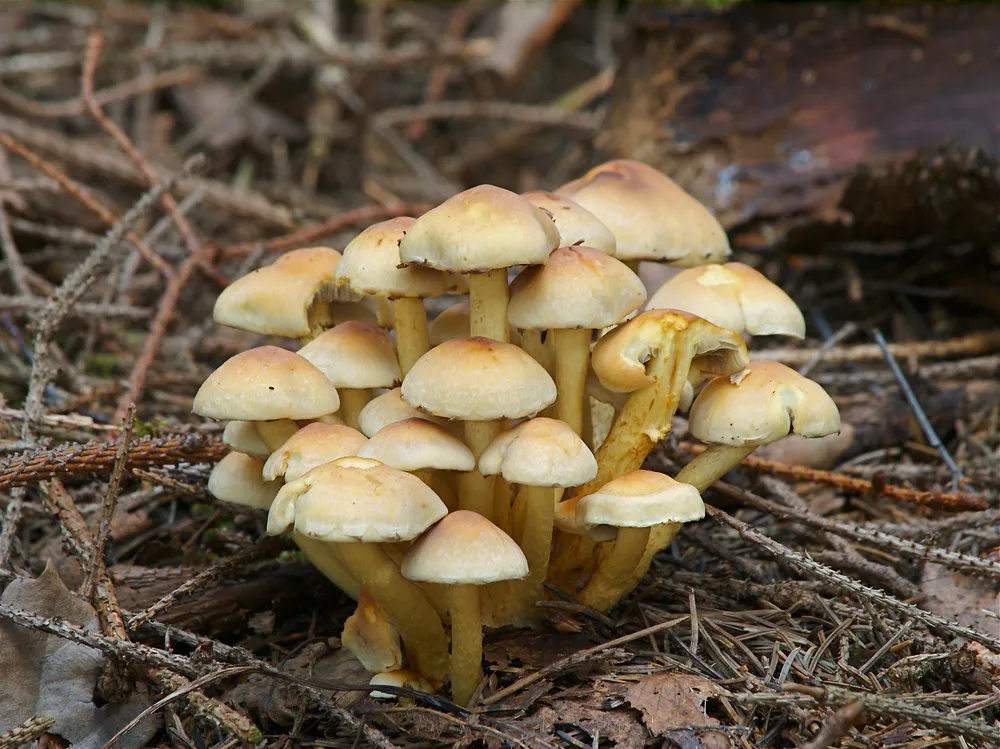
- **Velvet shank.** A true champion of cold tolerance: it grows in late fall and even during winter thaws on the trunks of broadleaf trees. It has a velvety dark stem and a slimy orange-brown cap with no ring.
- **Bulbous honey fungus.** Similar to the autumn one, but with a characteristically thickened, bulb-like stem. It grows in the fall, often in conifer forests.
Thanks to these species, honey fungus turns up in the forest almost all year round, even when the other mushrooms are long gone.
How not to confuse honey fungus with lookalikes
All true honey fungus species share a few common traits that set them apart from their poisonous lookalikes.
- Ring on the stem. Present in honey fungus, the sheathed woodtuft and bulbous honey fungus. If a similar mushroom lacks one, that's a reason to be on guard.
- Pale gills. In true honey fungus they're cream-colored, not bright yellow or gray-violet.
- Scales on the cap. Typical of many honey fungus species, whereas the lookalikes have a smooth cap.
The main poisonous lookalike is the sulphur tuft. We explain in detail how to tell it from the real thing in our article on false honey fungus.
Sources
- “Key to the Fungi of Ukraine” (Kyiv, Naukova Dumka publishing house).
- Armillaria mellea in GBIF, the global biodiversity database.
- Fungi in MycoBank, the international fungal nomenclature database.
- Honey fungus on Wikipedia.
Frequently asked questions
How many honey fungus species are there in Ukraine?
Several main ones: , , , and . Together they grow almost all year round.
How does the summer species differ from the autumn honey fungus?
The sheathed woodtuft grows from spring to fall and has a two-toned cap with a water-soaked band. Honey fungus grows in September–October, has scales on the cap and paler gills. Both have a ring on the stem.
Which honey fungus doesn't grow on wood?
. It grows in meadows, pastures and clearings, forming rings in the grass, rather than on stumps and trunks like the other honey fungus species.
Which honey fungus is the most cold-hardy?
. It grows in late fall and even during winter thaws on the trunks of broadleaf trees. It has a velvety dark stem and a slimy cap with no ring.
Is all honey fungus edible?
True honey fungus is edible, but among similar mushrooms there are poisonous false honey fungus species. So every mushroom must be checked for the ring, gills and scales, examining each one individually.
Which honey fungus is most often confused with a poisonous one?
, because it grows on stumps next to false honey fungus. Checking for the ring and pale gills is what saves you.
Does the velvet shank have a ring on the stem?
No. Unlike honey fungus and the sheathed woodtuft, the has no ring. You recognize it by its velvety dark stem and slimy orange-brown cap.
How do you tell true honey fungus from false?
By the ring on the stem, the pale gills and the scales on the cap. The main lookalike is the . Details in our .
Mushrooms in this article
Related articles
 How to identify
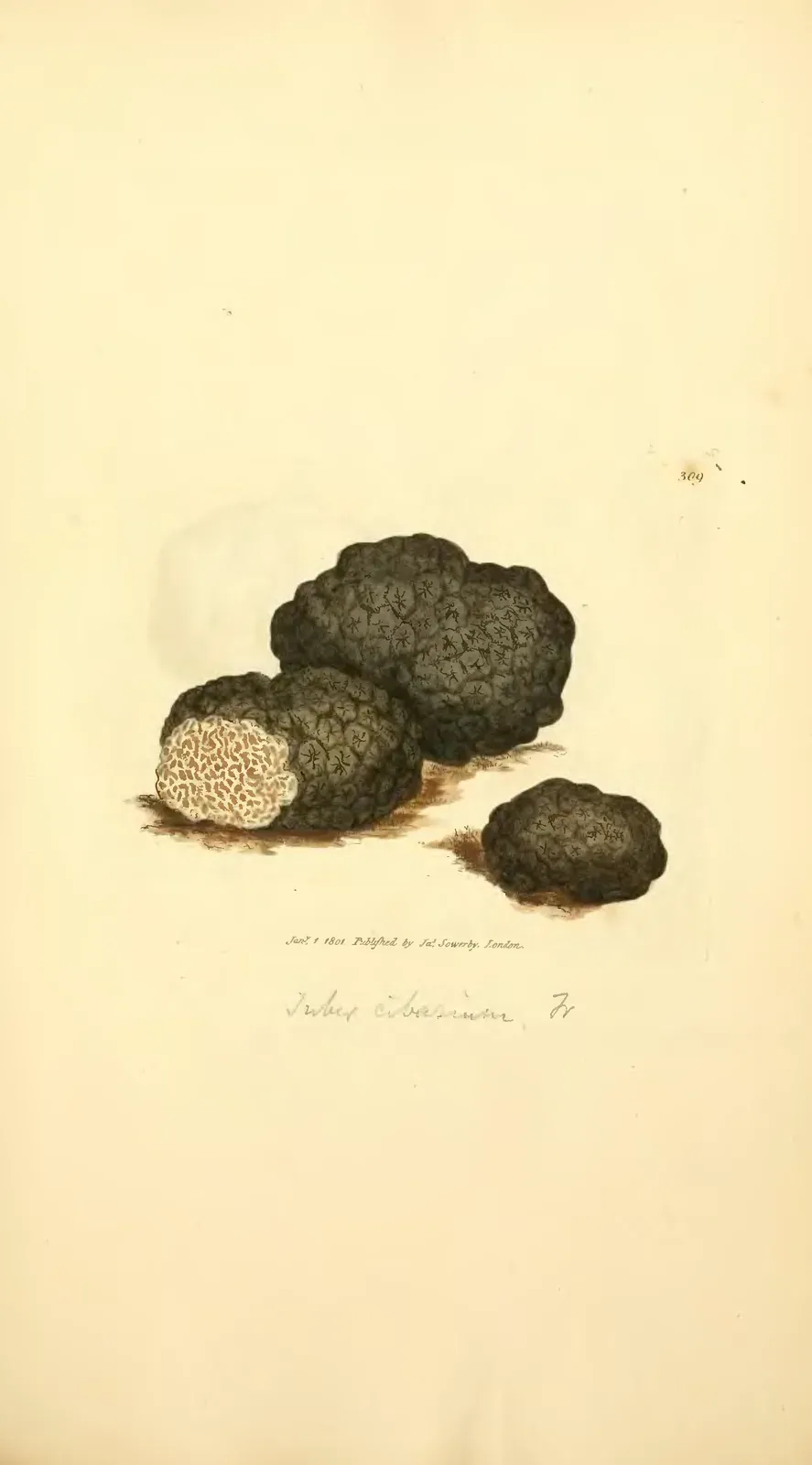
Truffles in Ukraine: do they grow here, and where to look
Truffles aren't just a French delicacy. Several species grow in Ukraine too. Here's which ones, where they occ…
August 24, 2026·2 min Recipes & cooking
How to store fresh mushrooms, and for how long
Fresh mushrooms spoil faster than you might think. Here's how long they keep in the fridge, how to store them…
August 21, 2026·4 min Recipes & cooking
How long to boil mushrooms
Boiling time depends on the type of mushroom and on what you're cooking next. Here's a clear cheat sheet: how…
August 22, 2026·4 min