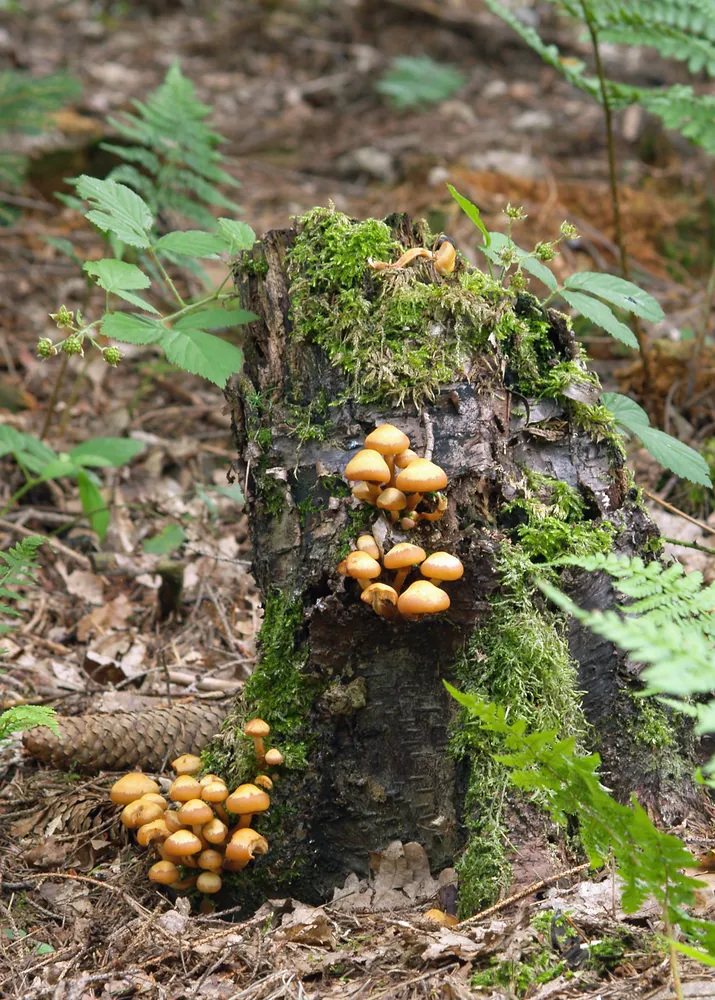
Sheathed woodtuftKuehneromyces mutabilis
Expert-verifiedUpdated October 3, 2026
Passport
- Edibility
- Edible
- Season
- Apr — Oct
- Hymenophore
- Gilled
- Cap color
- Brown
- Size
- Small (up to 5 cm)
- Smell
- Pleasant
- Reviewed
- Yes ✓
Quick answers
Where to look?
Deciduous forest, Mixed forest
When does it appear?
Apr — Oct
Active months: April, May, June, July, August, September, October.
How to recognize it? Three signs
- Cap color: Brown, Cream, Yellow
- Cap shape: Convex
- Smell: Pleasant
Fruiting season
April – October
Description
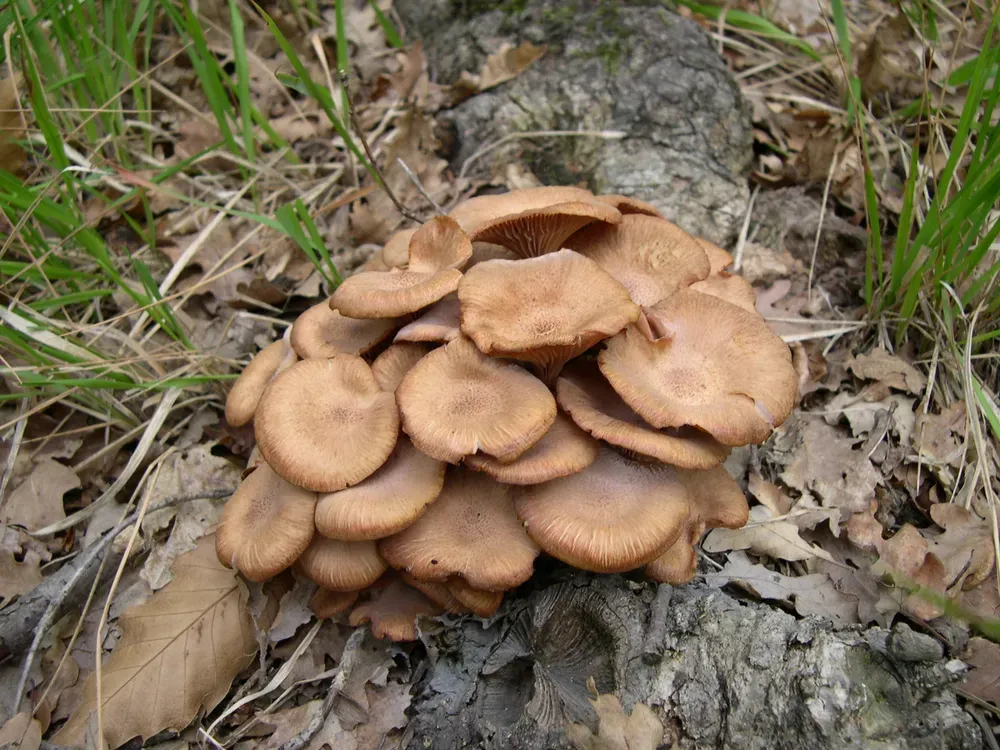
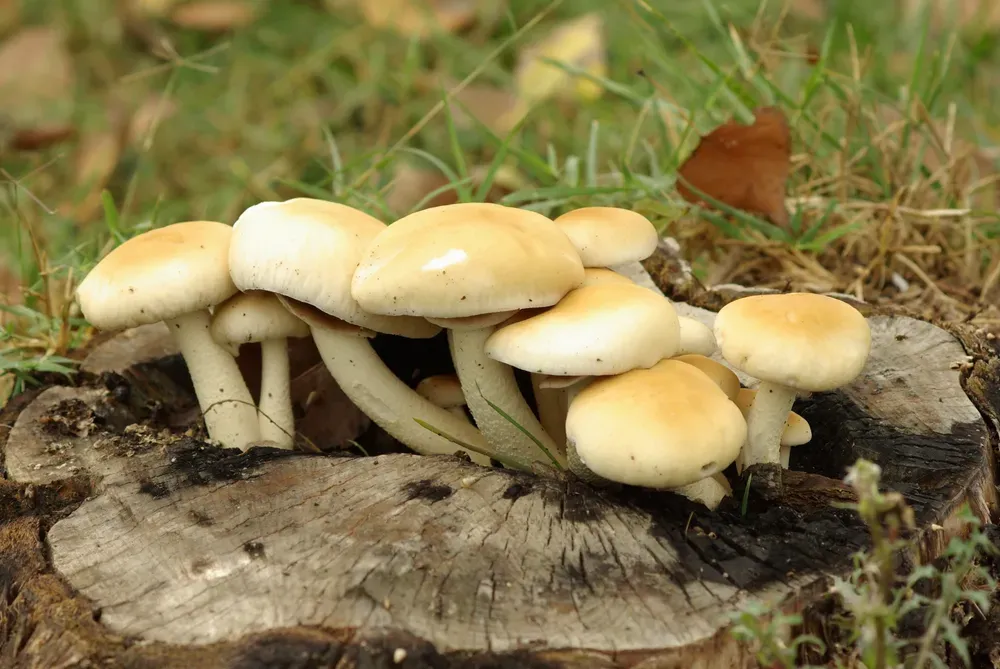
The sheathed woodtuft (Kuehneromyces mutabilis) is a favorite summer mushroom of Ukrainian foragers, the one that fills the first serious basket of the year. Its most telling feature is the two-toned cap: in wet weather the center is dark brown and the edge almost white as it dries out; in dry weather it's the other way around. The Latin epithet mutabilis ("changeable") refers to exactly this. It grows in clusters on stumps and fallen wood of broadleaf trees: oak, beech, birch, poplar, hornbeam, often dozens or even hundreds of fruiting bodies on a single stump.
Edible, very tasty. The flesh is meaty in the cap, with a fragrant mushroomy flavor, and it keeps its shape after cooking. It works for everything: frying, pickling, drying, freezing, mushroom caviar, soup. One of the best culinary stump mushrooms, alongside the true honey fungus. Young ones go into the basket whole; on older ones, cut off the stem (it turns tough and fibrous).
Most important: this is one of the most dangerous "culinary" mushrooms because of its deadly double, the funeral bell (Galerina marginata). Both grow in clusters on stumps, both have a ring on the stem, both are brown. The key difference lies in the spores and the stem. The rule: pick sheathed woodtufts only after thorough training with an experienced forager who can show you the double on a neighboring stump. Beginners are better off starting with honey fungus, which has a distinctive pale stem with small scales.
In Ukraine it is widespread throughout the forest zone: the Carpathians, Polissia, the forest-steppe, and floodplain and park woodlands of the steppe. The season runs April to October, peaking in May–June (an early wave after the first rains) and August–September. One of the longest mushroom seasons.
Cap
The cap is 3-7 cm across, hemispherical with an inrolled edge in young mushrooms, later becoming convex to flat with a noticeable low bump. The color is two-toned: in wet weather the center is dark chestnut-brown and the edge pale ocher; in dry weather it's the other way around. The surface is smooth, slimy in wet weather. The cap skin peels off easily.
Hymenophore
Gilled hymenophore: the gills are attached to the stem, moderately crowded. In young mushrooms they are pale beige, cream, darkening with age to brown, chocolate-brown as the spores ripen. The spore print is brown to rusty brown. In young mushrooms the gills are covered by a whitish partial veil.
Stem
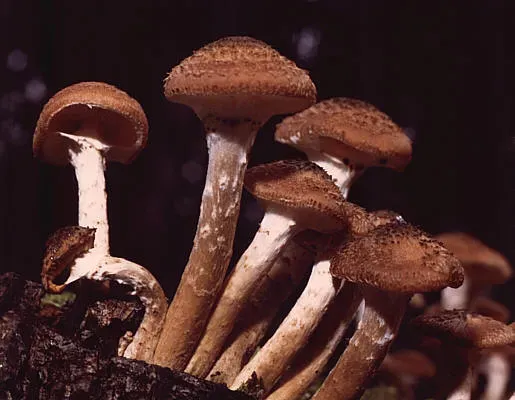
The stem is 4-8 cm tall and 0.5-1 cm thick, cylindrical, often curved. Two-toned: in the upper part (above the ring) it is smooth, pale ocher-cream. In the lower part (below the ring) it is brownish-black, with distinct brown toothlike scales that stick outward. The ring is narrow, membranous, brownish; noticeable in young mushrooms, it may disappear in older ones.
Flesh
The flesh is meaty in the cap, thin in the stem, creamy white to brownish cream. When cut it does not change color. The smell and taste are pleasantly mushroomy, with a nutty note.
Smell
Pleasantly mushroomy with a nutty note. No chemical or mealy undertones, an extra diagnostic feature against Galerina, which has a faint mealy smell.
Lookalikes
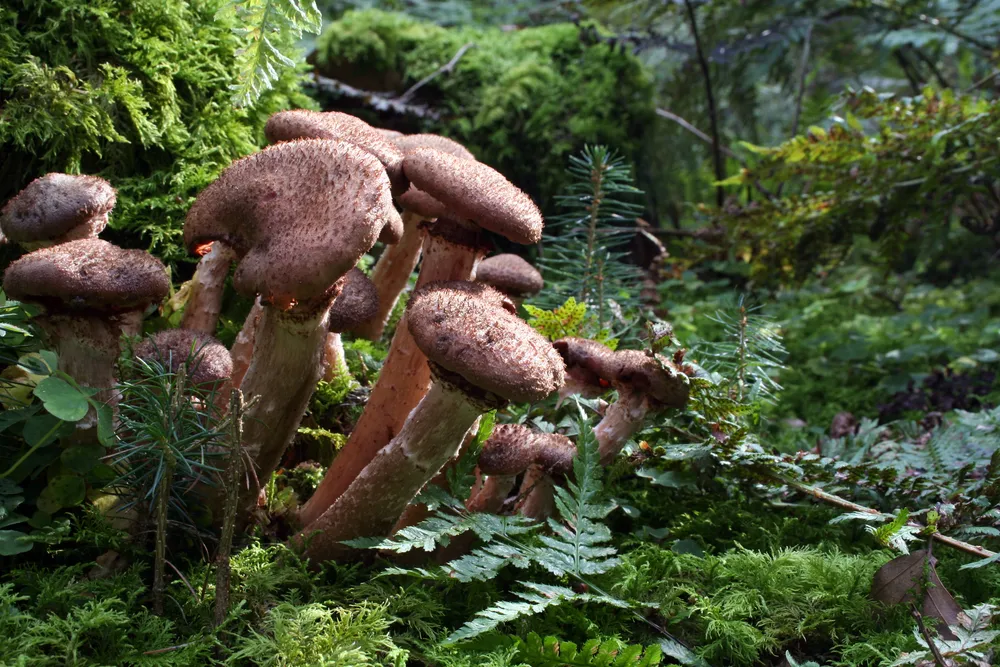
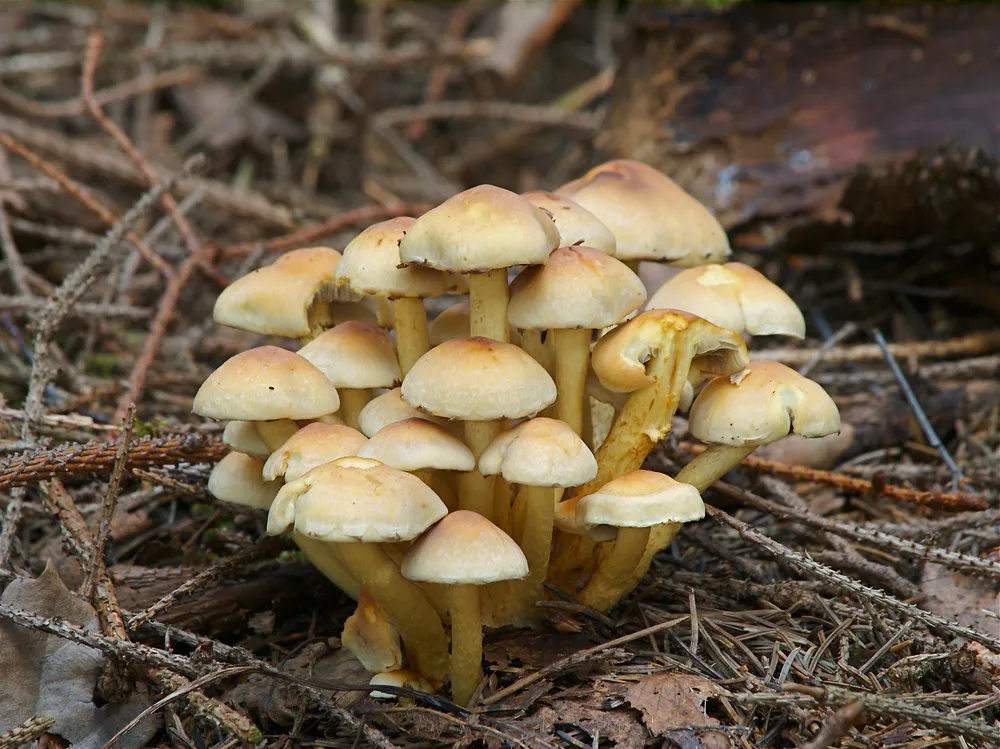
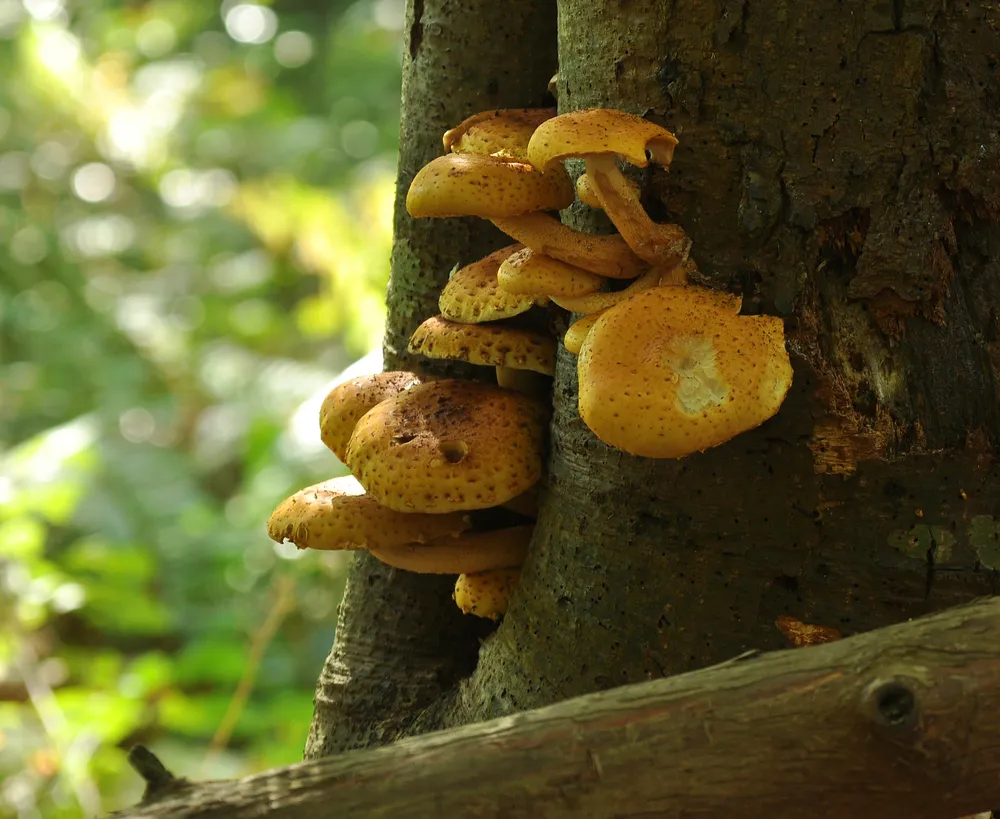
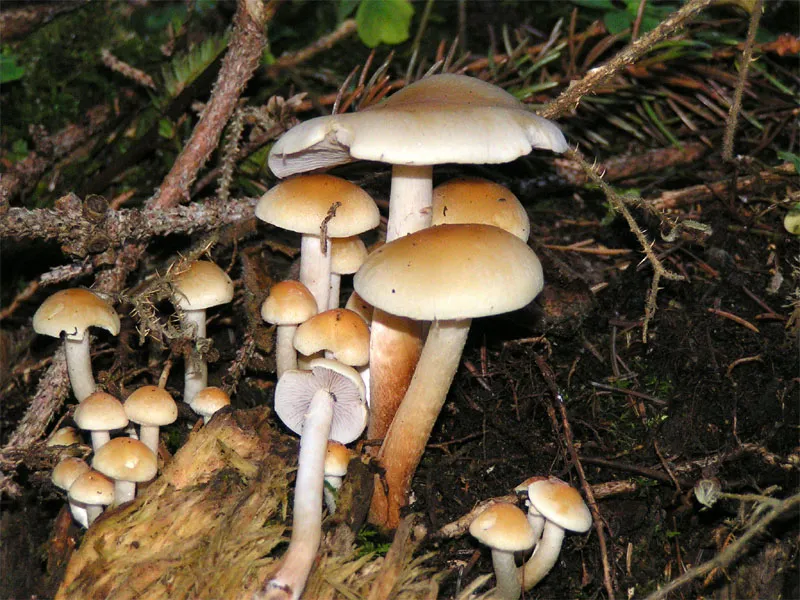
Related species
Mushrooms of the same genus and habitat — to study side by side and never mix up.
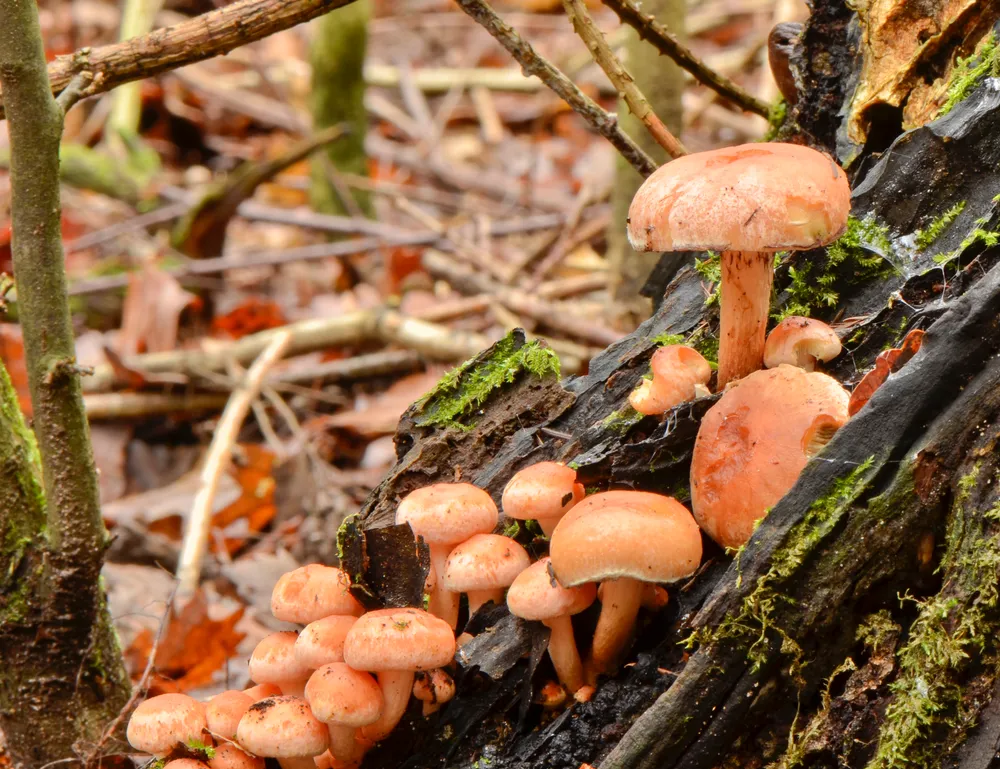
Brick tuft
Hypholoma lateritium

Agrocybe arvalis
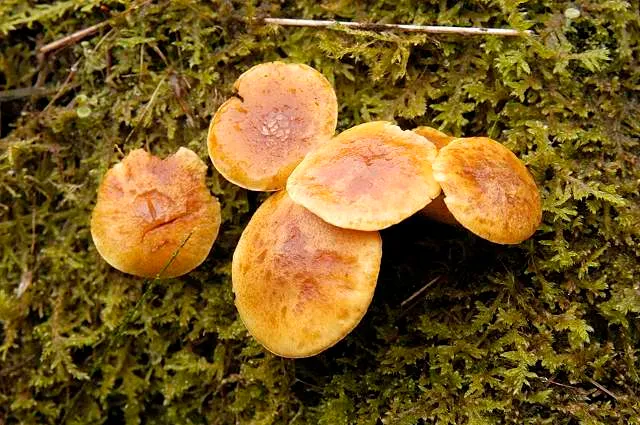
Slender pholiota
Pholiota spumosa
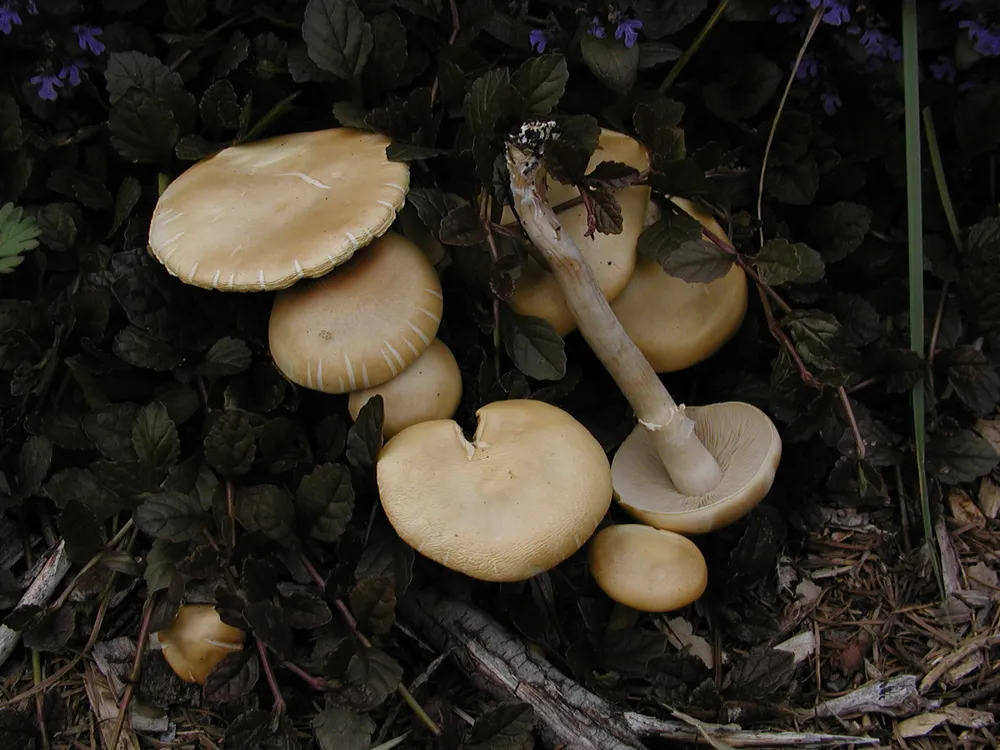
Spring fieldcap
Agrocybe praecox
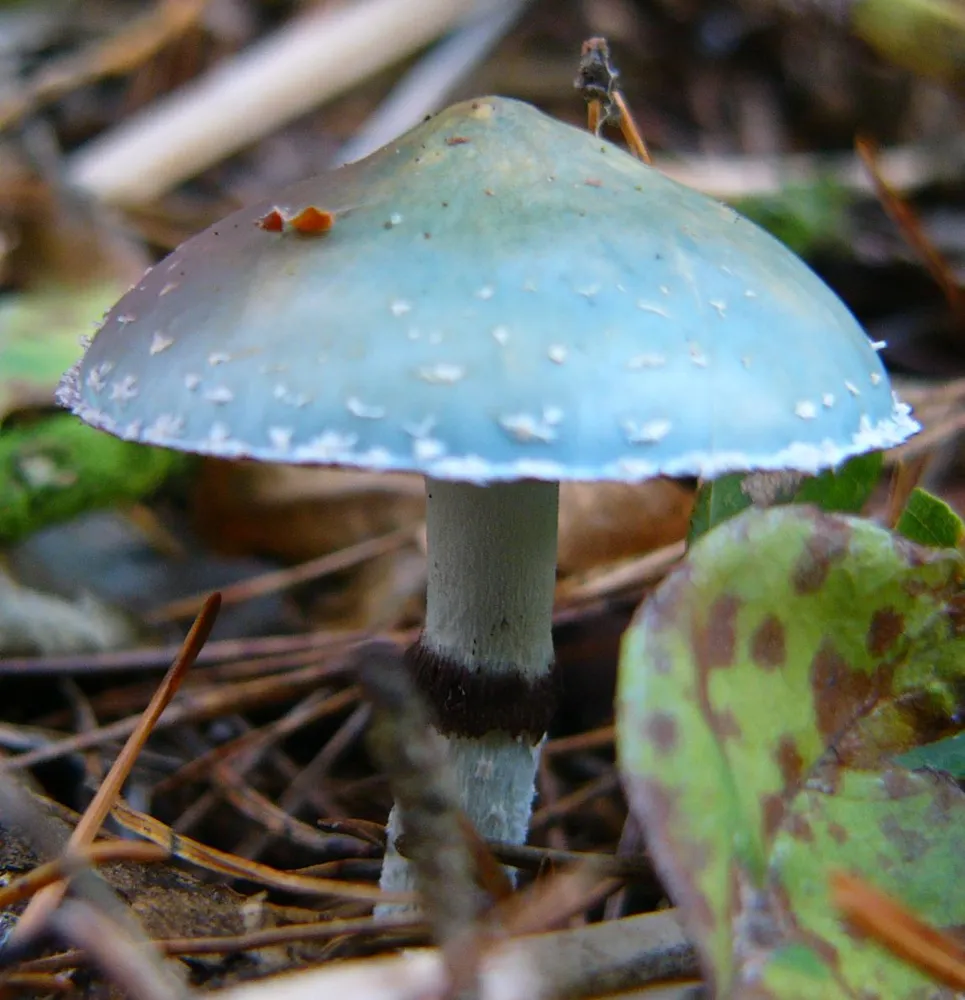
Verdigris agaric
Stropharia aeruginosa
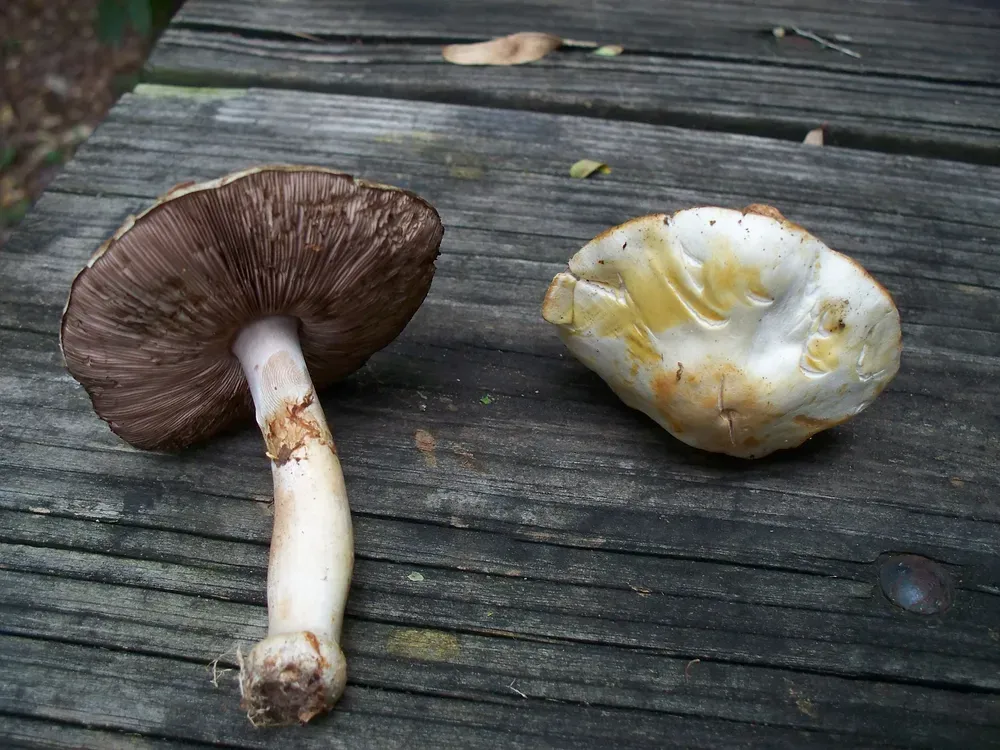
Agaricus abruptibulbus
Agaricus haemorrhoidarius
Agaricus haemorroidarius
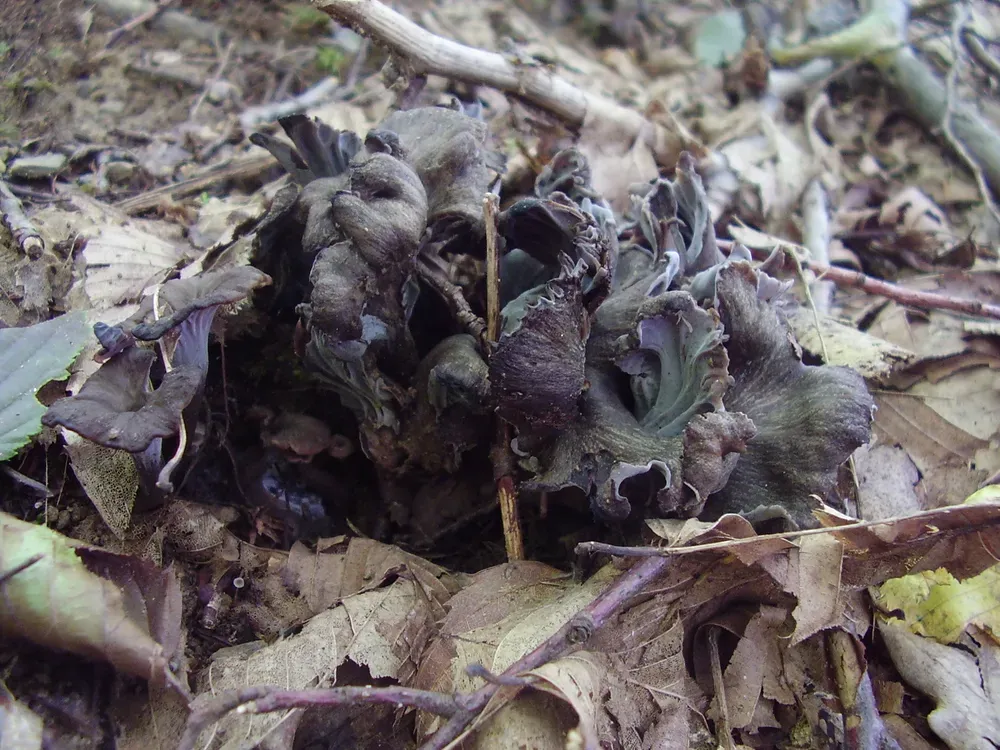
Ashen chanterelle
Cantharellus cinereus
Related reading
 How to identify
"Openky" or "pidpenky": the right Ukrainian name for honey fungus
Some say *openky*, others *pidpenky*, and both mean the same mushrooms by the stumps. We explain where the two…
July 16, 2026·2 min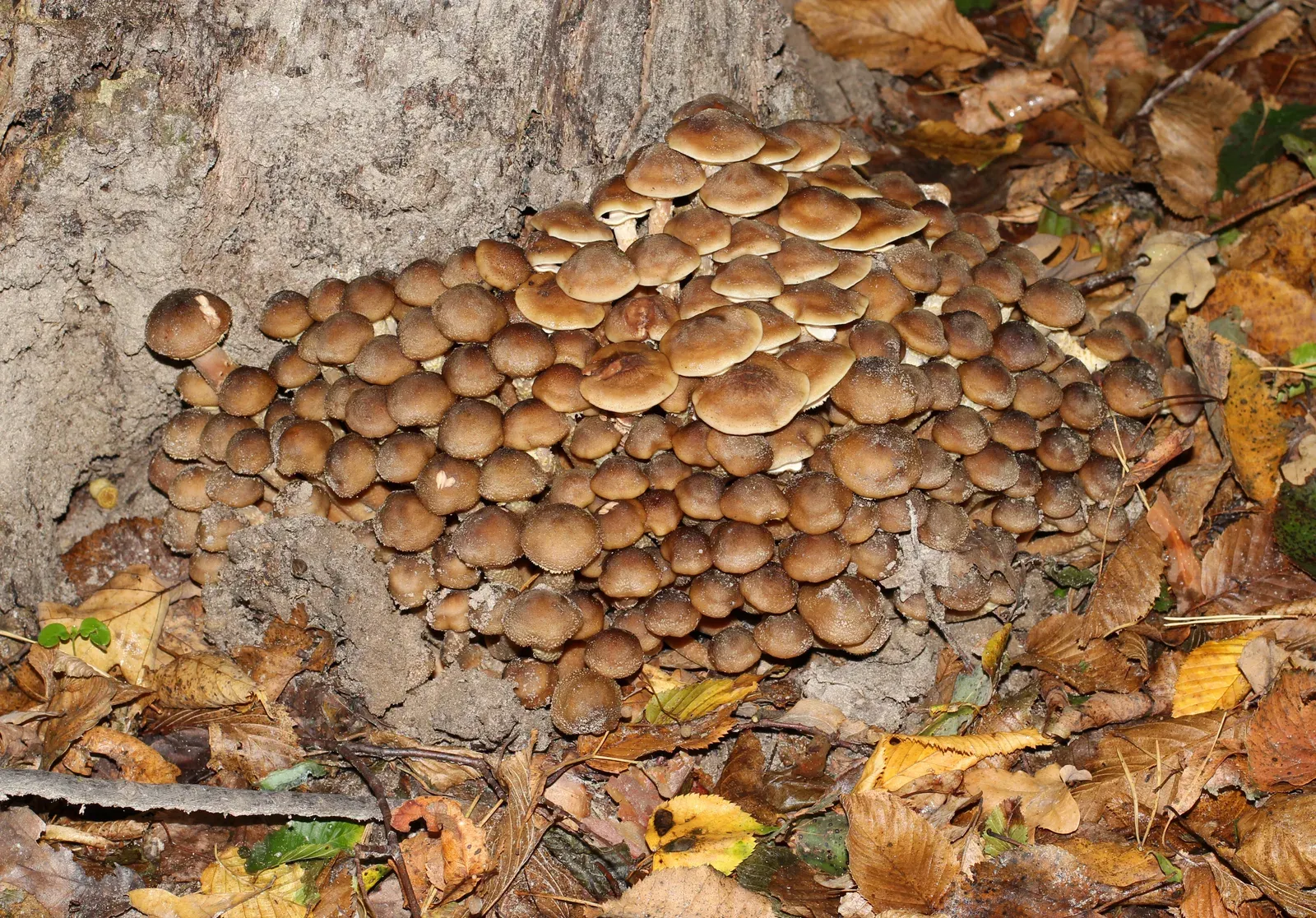 Where & when to forage
When does honey fungus season start in Ukraine?
Honey fungus is the signature mushroom of golden autumn. The first clusters appear as early as late August, an…
July 10, 2026·3 min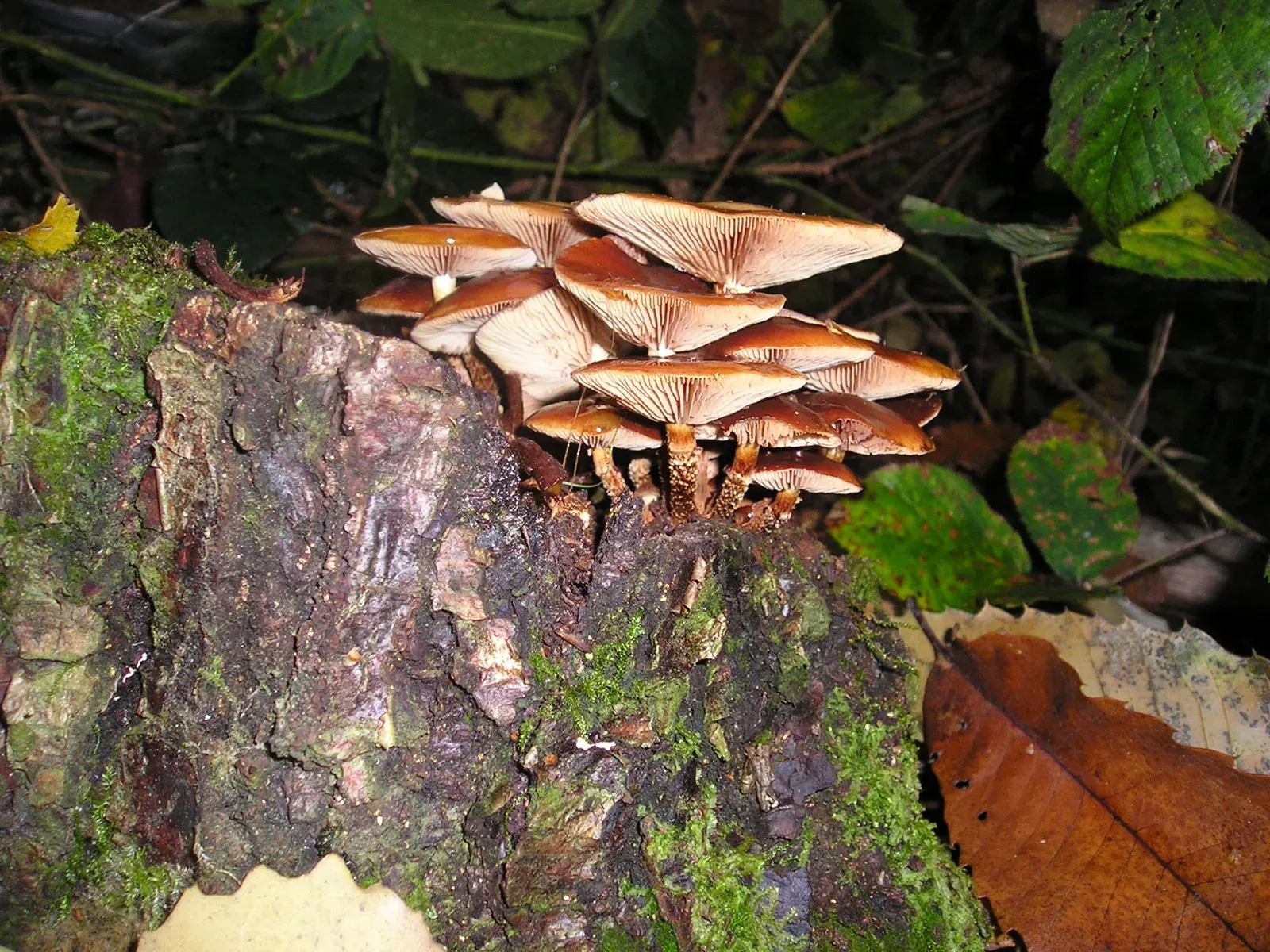 How to identify
Summer vs. autumn honey mushrooms: what's the difference?
Summer and autumn "honey mushrooms" are different species, not an "early" and a "late" form of the same one. B…
July 10, 2026·3 min
Frequently asked questions
Is it safe to eat?
Yes, but only if the identification is reliable. The mushroom itself is edible without restrictions, but it has a deadly double, the funeral bell. Before your first solo foray, be sure to go through "field school" with an experienced forager. It's best cooked after a short 10-minute boil; this isn't essential, but it removes leftover slime from the cap skin.
How do you tell it apart from the funeral bell?
The stem below the ring is the main clue. In the sheathed woodtuft it is dark brown with distinct toothlike scales, rough to the touch. In Galerina it is smooth, evenly dark reddish-brown without scales. If the stem below the ring is smooth, it is not a sheathed woodtuft. You can take a spore print (cover the cap with paper for 12 hours), but both are brown, so this test doesn't help. Smell plus the scales on the stem are the most reliable.
What happens if you accidentally eat a Galerina?
Symptoms are delayed by 6-24 hours (most often 8-12): nausea, vomiting, diarrhea. Then comes a "false recovery phase". From the third day, acute liver failure. Without treatment, about half of those poisoned die. Treatment: intravenous silibinin, a sorbent, IV drips. If you have eaten "stump mushrooms" and gastroenteritis symptoms start 8-12 hours later, call an ambulance and have the mushroom leftovers identified.
Where should you look for it?
On stumps, fallen wood and roots of broadleaf trees: oak, beech, birch, poplar, hornbeam, willow. It is especially abundant on old oak and beech stumps 5-15 years old. A saprotroph (not a parasite like honey fungus), it grows only on dead wood.
Which regions of Ukraine is it found in?
Throughout the forest and forest-steppe zones: the Carpathians (especially old-growth beech and oak forests), the Carpathian foothills, Polissia (oak and alder woods), the forest-steppe. In the steppe, in floodplain oak groves and parks. One of the most common stump mushrooms.
When should you look for it?
April to October, peaking in May–June (an early wave after the first warm rains) and August–September (the second wave). One of the longest seasons of any mushroom. In a warm year it fruits into October.
What other mushrooms is it confused with?
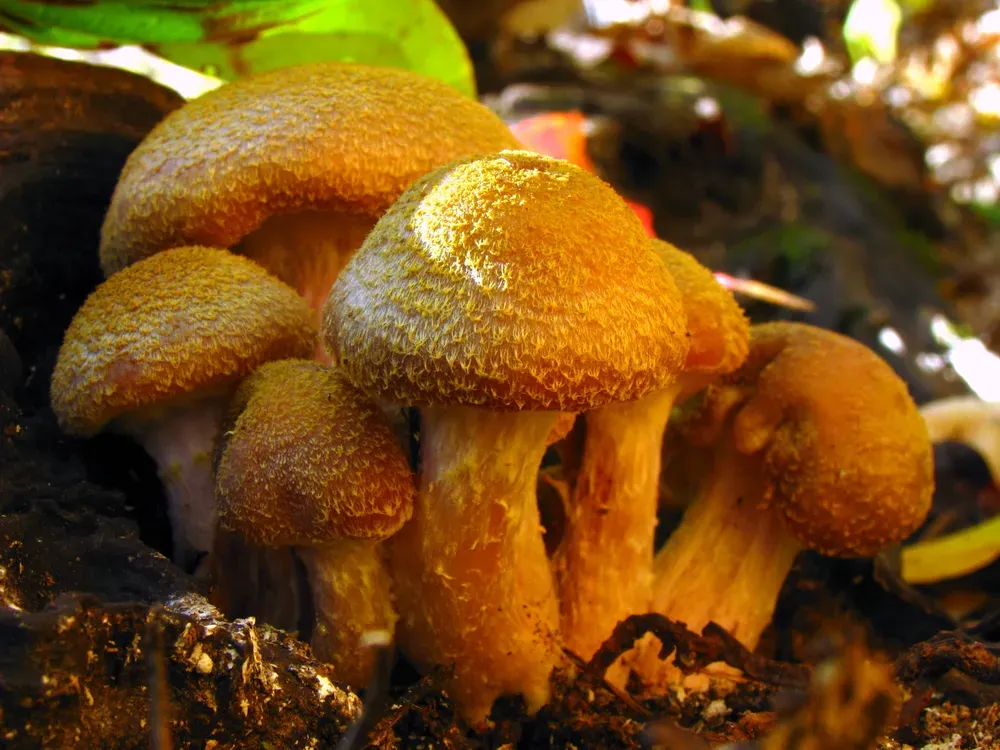
Besides the funeral bell (Galerina marginata), which is deadly poisonous, it gets confused with young honey fungus (Armillaria mellea), which is also edible. With sulphur tuft (Hypholoma fasciculare), which is poisonous, with a bitterish taste and sulphur-yellow gills instead of brown ones. Always tell them apart by the gills and the stem.
How do you cook it?
Fry it with onion and sour cream: the very best dish. Pickle it after a 10-minute boil, with vinegar and spices; it keeps beautifully until spring. Dry it: string young caps on a thread in the shade, and you'll get fragrant "medallions" for soups. Freeze it, but always boil it for 10 minutes first. Mushroom caviar made from sheathed woodtufts is a genre of its own.
Is Sheathed woodtuft edible or poisonous?
Does Sheathed woodtuft have gills or pores?
What does the cap of Sheathed woodtuft look like?
What does the stem of Sheathed woodtuft look like?
Sources
- [1]Вікіпедія (українська)
- [2]Атлас грибів України, Зеров Д.К. (1979)
- [3]MycoBank Database
- [4]Index Fungorum
- [5]GBIF
- [6]iNaturalist Ukraine