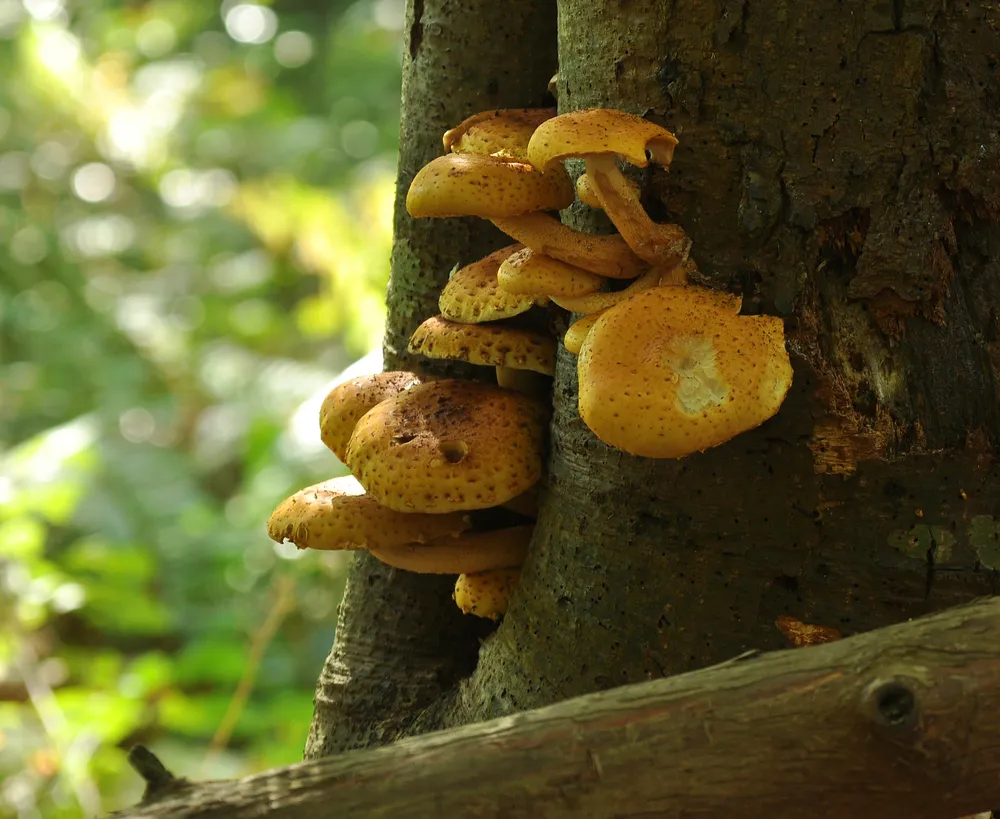
Golden scalycapPholiota aurivella
Expert-verifiedUpdated October 3, 2026
Passport
- Edibility
- Conditionally edible
- Season
- Aug — Nov
- Hymenophore
- Gilled
- Cap color
- Yellow
- Size
- Medium (5–15 cm)
- Smell
- Pleasant
- Reviewed
- Yes ✓
Quick answers
Where to look?
Deciduous forest, Mixed forest
When does it appear?
Aug — Nov
Active months: August, September, October, November.
How to recognize it? Three signs
- Cap color: Yellow, Orange, Brown
- Cap shape: Convex
- Smell: Pleasant
Fruiting season
August – November
Description
The golden scalycap (Pholiota aurivella) is one of the most beautiful autumn mushrooms in Ukrainian forests. It's easy to recognize by its bright golden-orange cap with darker reddish-brown scales, growing in clusters high on the trunks of living and dead broadleaf trees — mostly beech, hornbeam, poplar and willow, less often oak. You can often spot it from several meters away — a bright orange-yellow bouquet on a gray trunk — and even a beginner forager will recognize it the very first time.
The golden scalycap is conditionally edible. The flesh of young mushrooms is firm and fragrant but has a slight bitter note, which disappears after boiling for 10-15 min and pouring off the water. In old mushrooms the flesh turns tough and bitter — no longer worth it. Culinary value is moderate: good for frying after boiling, and it pickles well. Don't confuse it with its relative, the shaggy scalycap (Pholiota squarrosa), which is also edible after boiling but has drier, sharper scales and a paler background.
In Ukraine it is widespread throughout the forest zone: the Carpathians, Prykarpattia, Polissia and the forest-steppe. It is a saprotroph and a weak parasite — it grows on weakened living trees and dead wood. Season: August — November, peaking in October. It often grows in large clusters of 10-30 fruiting bodies, and a single cut can fill your basket. A classic "bonus" mushroom on a late-autumn honey fungus hunt.
Cap
Cap 4-12 cm across, hemispherical with an inrolled margin in young mushrooms, becoming convex to almost flat with age. Color: golden-orange, honey-yellow, with darker reddish-brown flattened scales arranged in concentric rings. In wet weather the cap surface is slightly slimy. In young mushrooms the cap margin carries remnants of a whitish veil.
Hymenophore
The hymenophore is made of gills — attached to the stem, moderately crowded. When young they are light yellow, darkening with age to rusty brown as the spores ripen. Spore print rusty brown. In young mushrooms the gills are covered by a whitish cobweb-like veil, which tears and leaves a ring-like remnant on the stem.
Stem
Stem 5-12 cm tall, 0.8-1.5 cm thick, cylindrical, often curved from growing on the vertical surface of a trunk. Color: yellow at the top, dark rusty toward the base. On the stem there is a ring zone from veil remnants (not a true ring, but a zone with scales). Below the ring zone the brown scales are more pronounced.
Flesh
The flesh is firm, yellow, becoming tough in the stem with age. It does not change color when cut. The smell is distinctly mushroomy and pleasant in young specimens. The taste is mild at first, then slightly bitter — the bitterness disappears after boiling.
Smell
Pleasant and mushroomy, with a light nutty or resinous note in young specimens. In old ones — sharper, sour and astringent.
›Scientific synonyms (5)
Agaricus aurivellus Batsch (1786), Agaricus squarrosus var. aurivellus (Batsch) Pers. (1801), Lepiota squarrosa var. aurivella (Batsch) Gray (1821), Dryophila aurivella (Batsch) Quél. (1886), Hypodendrum aurivellum (Batsch) Overh. (1932)
Lookalikes
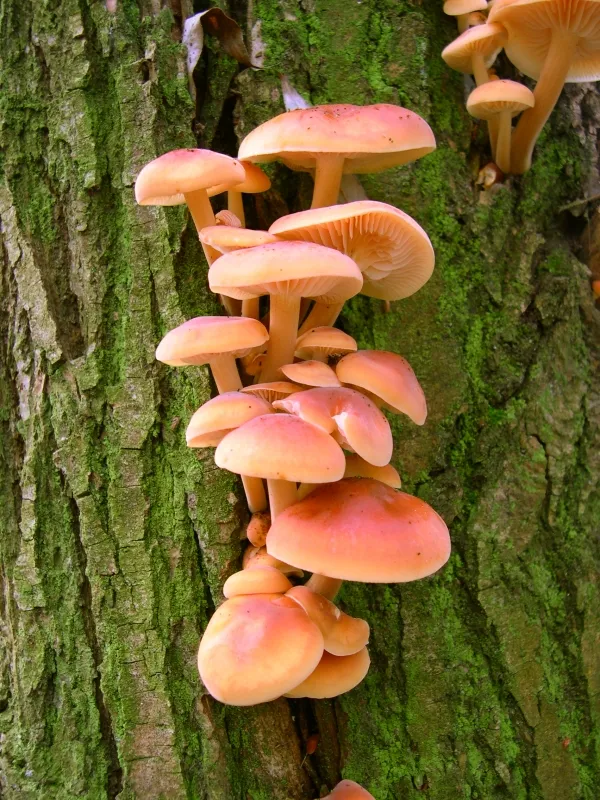
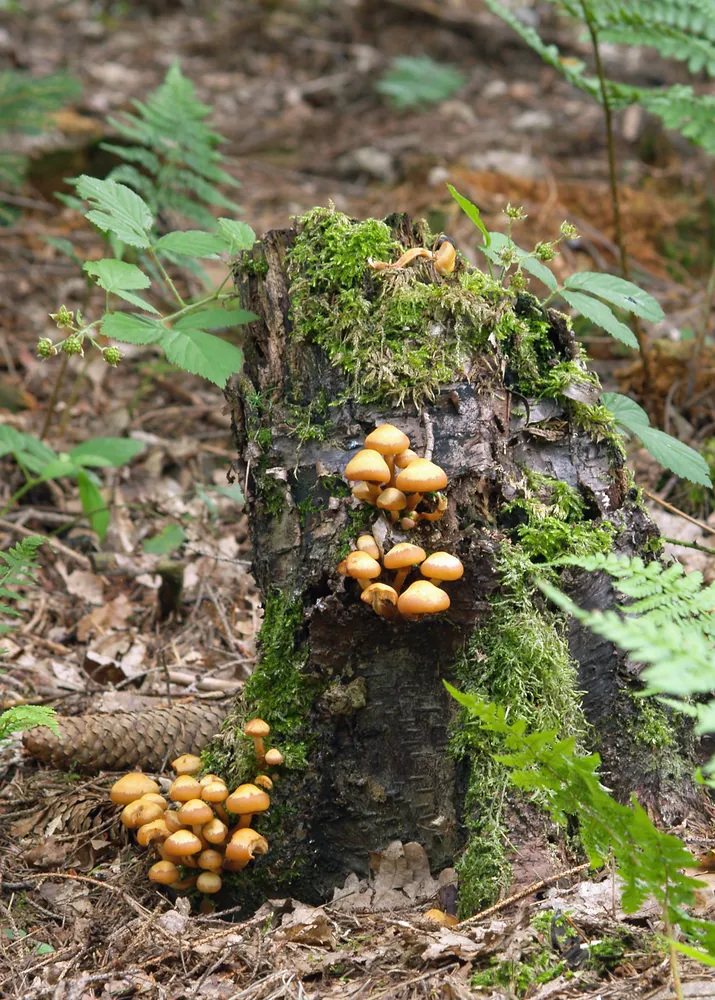
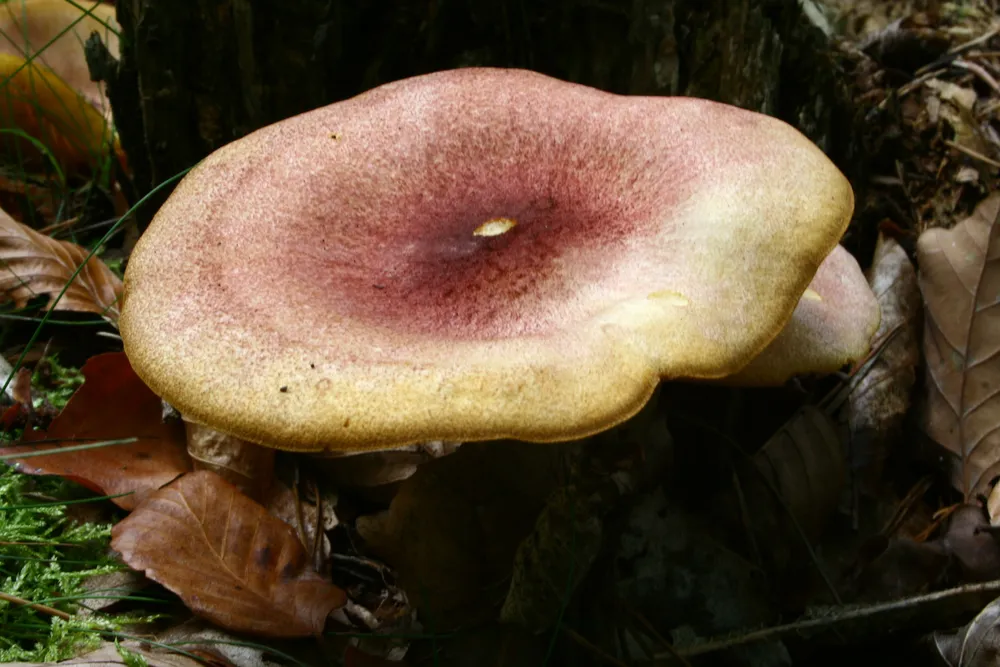
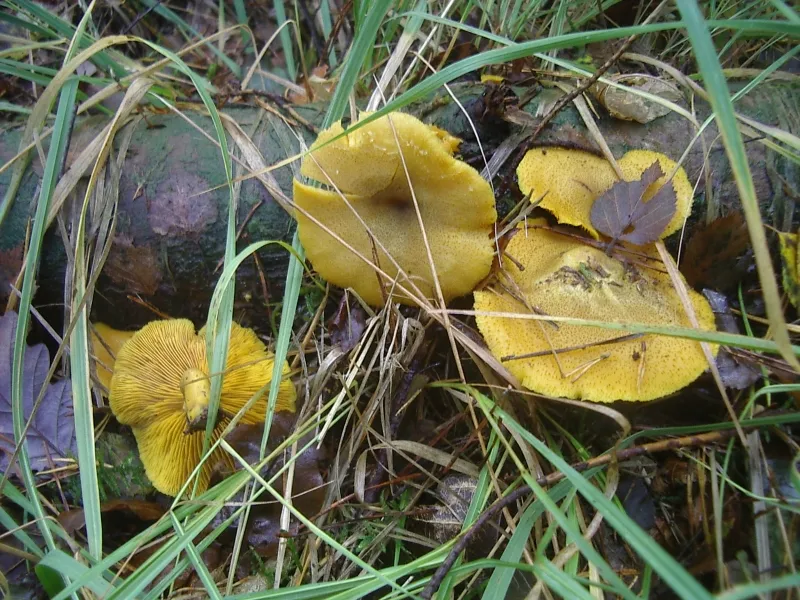
Related species
Mushrooms of the same genus and habitat — to study side by side and never mix up.
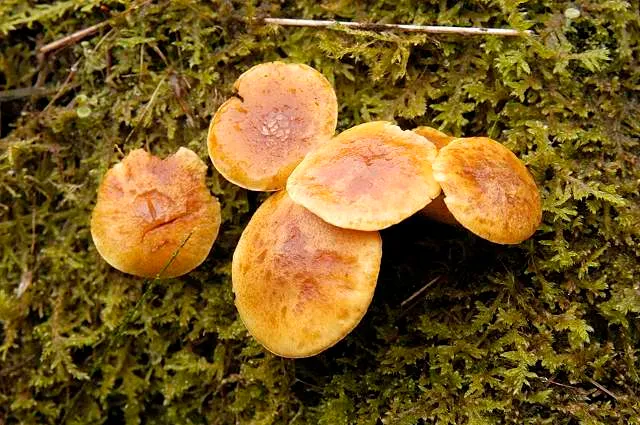
Slender pholiota
Pholiota spumosa
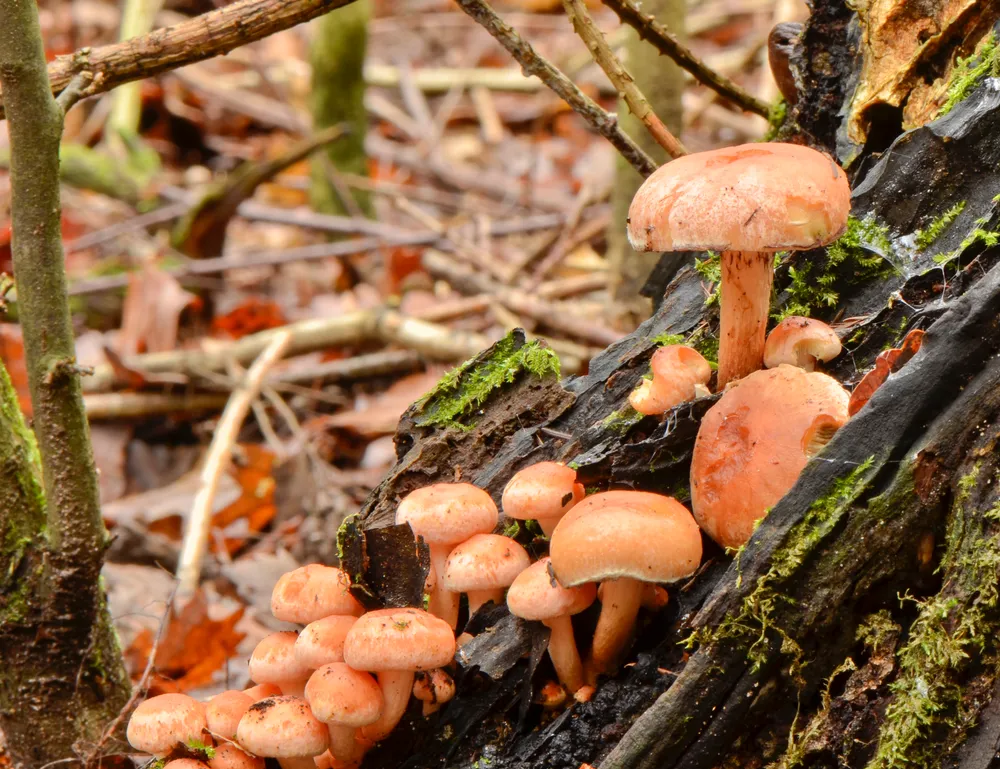
Brick tuft
Hypholoma lateritium
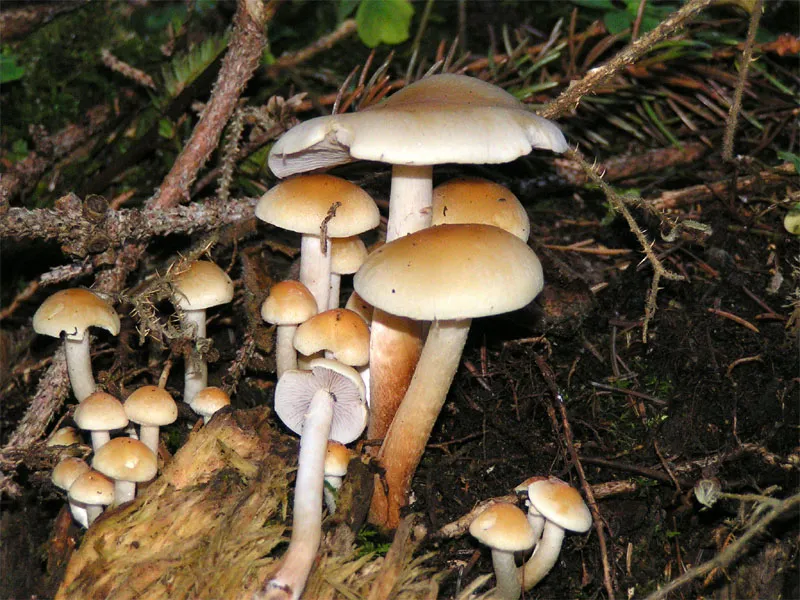
Conifer tuft
Hypholoma capnoides
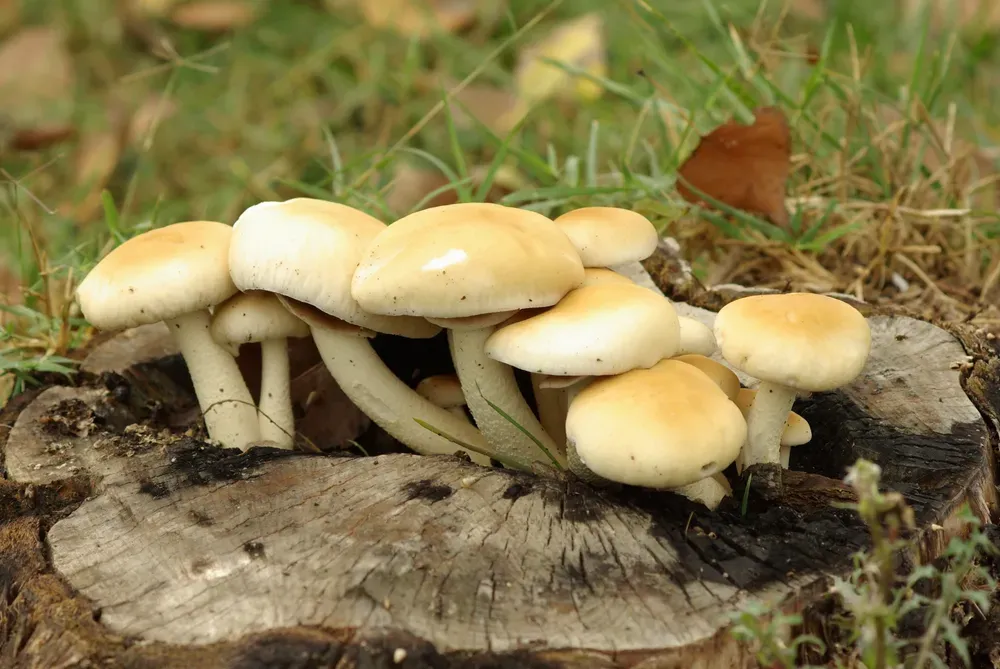
Poplar fieldcap
Cyclocybe aegerita
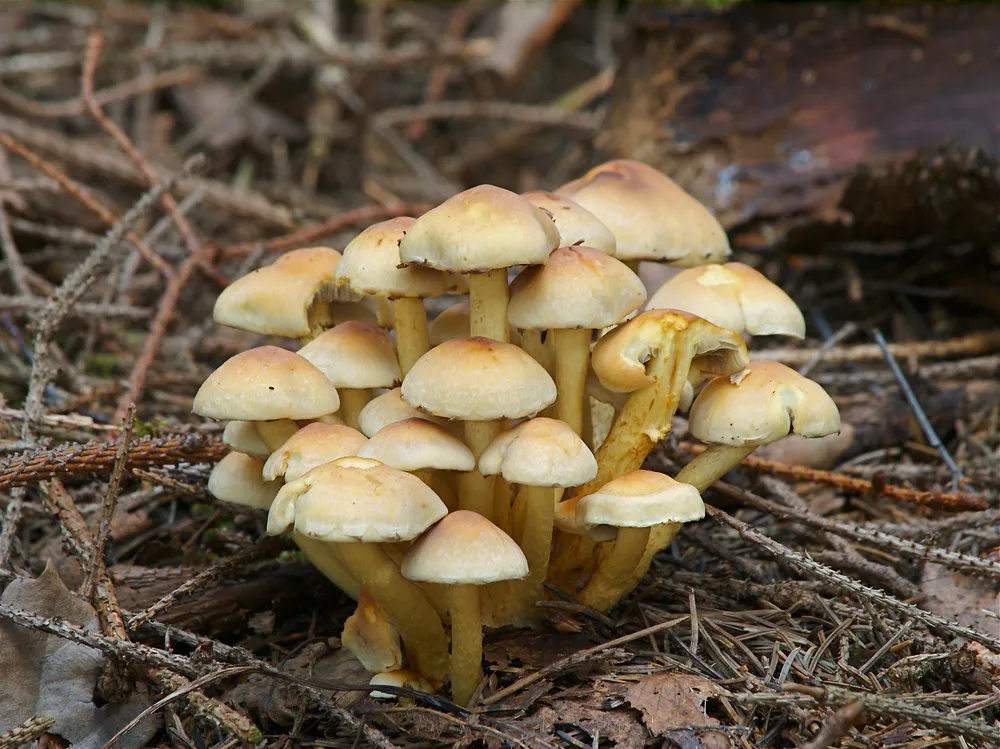
Sulphur tuft
Hypholoma fasciculare

Agrocybe arvalis
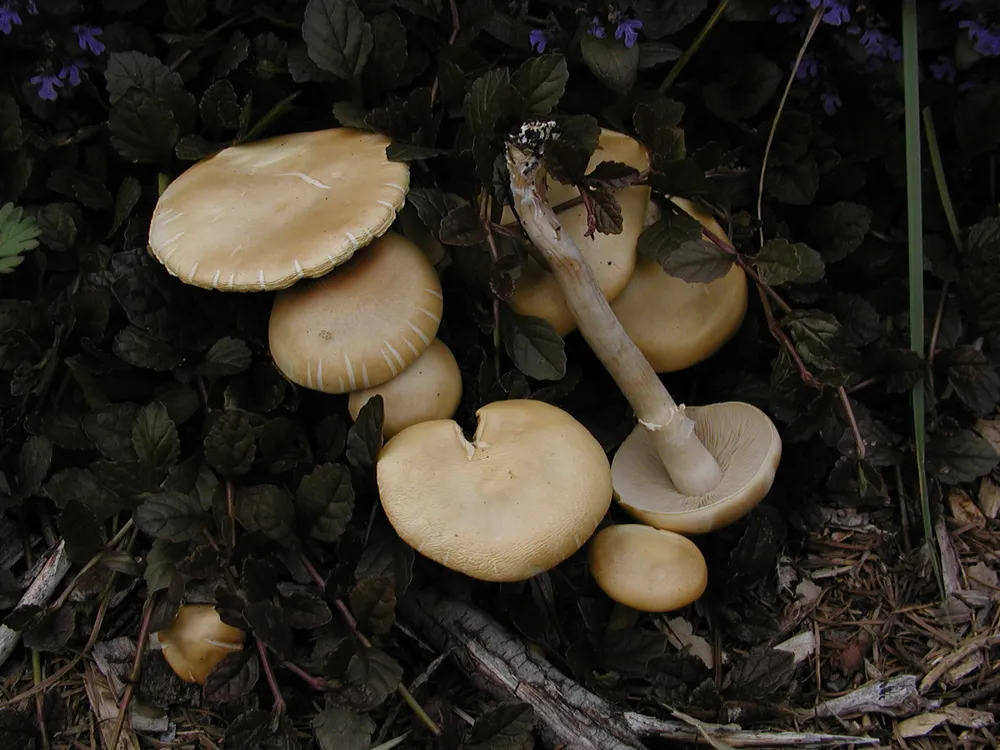
Spring fieldcap
Agrocybe praecox
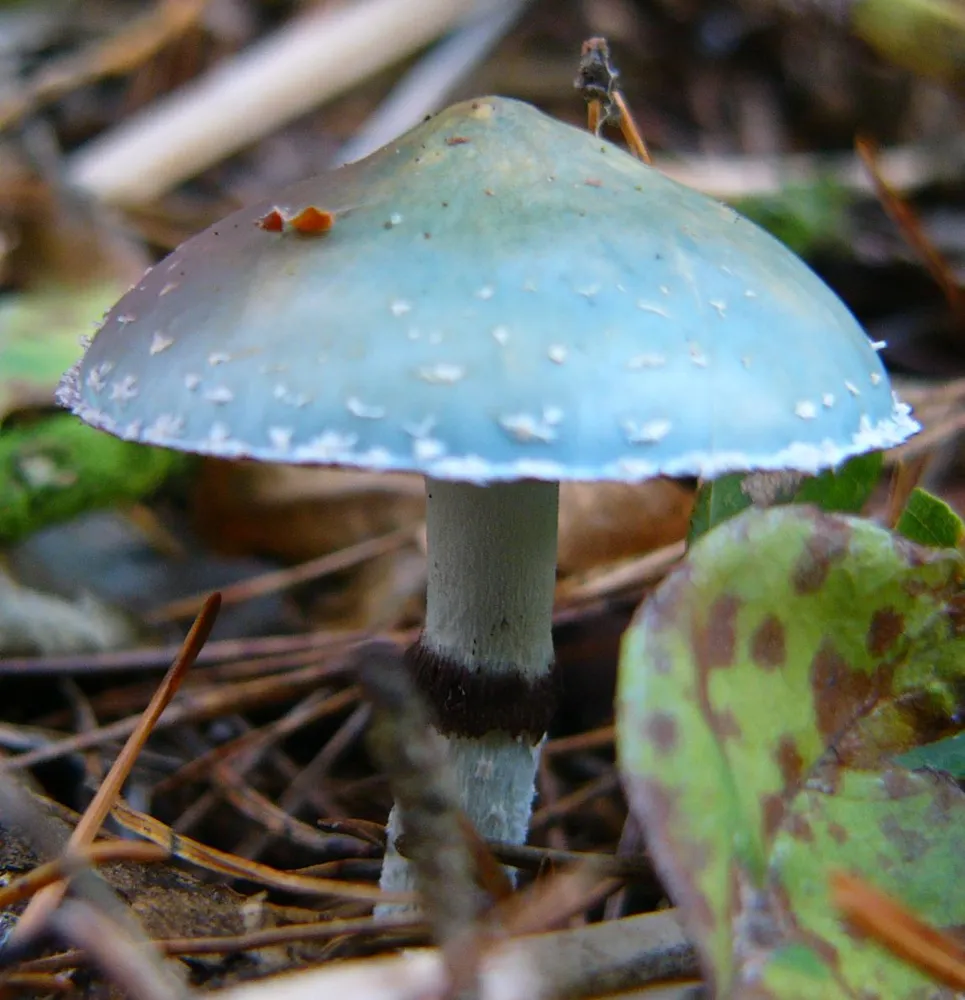
Verdigris agaric
Stropharia aeruginosa
Frequently asked questions
Is it safe to eat?
Yes, after mandatory boiling for 10-15 min, pouring off the water. Without boiling it can taste slightly bitter and cause stomach discomfort. Old specimens with tough flesh are best skipped — they don't taste good and are harder to digest.
How do you tell it from the shaggy scalycap?
Both are edible after boiling, so a mix-up isn't critical. The golden scalycap is golden-orange with flattened scales and a slightly slimy cap in wet weather. The shaggy scalycap is ocher-yellow with sharp, upturned scales and an always dry cap. Both grow in clusters on trees.
Could it be confused with dangerous mushrooms?
Among mushrooms growing on trees in Ukraine there are no serious poisonous lookalikes. In theory — with the common rustgill (Gymnopilus penetrans), which is also rusty yellow but smaller, grows on conifer wood, is very bitter and is not eaten. Or with young psilocyboid Pholiota species — but they have much darker brown caps without the bright orange.
Where should you look for it?
On trunks and stumps of broadleaf trees — beech, hornbeam, poplar, willow, less often oak and ash. It grows high up — often 2-5 meters off the ground, so you can see the caps from afar. It loves weakened or dead trees in damp forests: the beech old-growth forests of the Carpathians, floodplain poplar-and-willow woods, old oak forests.
Which regions of Ukraine is it found in?
Throughout the forest zone: the Carpathians (especially abundant in the beech belt), Prykarpattia, Polissia, the forest-steppe. In the steppe — only in floodplain poplar woods along rivers (the Dnipro, the Southern Bug).
When should you look for it?
August — November, peaking in October. It tolerates the first frosts — it often fruits when most other mushrooms are already gone. A classic late-autumn species.
What mushrooms is it confused with?
Most often — with other Pholiota species, which are also edible after boiling. The one you really must tell it apart from is rustgills (Gymnopilus) — smaller, more bitter, not edible. Their caps are matte, not slimy, and they grow mostly on conifer wood.
How do you cook it?
Boil for 10-15 min and pour off the water. Then fry with onion, add to mushroom caviar, or pickle. Young caps hold their shape well. In soup the flesh becomes rather tough, so use it with caution in soups. Don't dry it — drying intensifies the bitter note.
Is Golden scalycap edible or poisonous?
Does Golden scalycap have gills or pores?
What does the cap of Golden scalycap look like?
What does the stem of Golden scalycap look like?
Sources
- [1]Вікіпедія (українська)
- [2]Атлас грибів України, Зеров Д.К. (1979)
- [3]MycoBank Database
- [4]Index Fungorum
- [5]GBIF
- [6]iNaturalist Ukraine