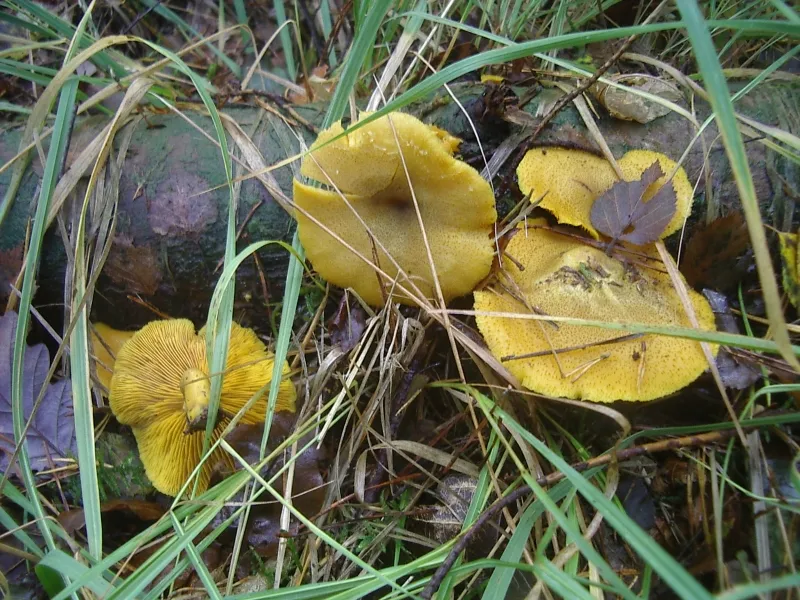
Prunes and custardTricholomopsis decora
Expert-verifiedUpdated October 3, 2026
Passport
- Edibility
- Conditionally edible
- Season
- Aug — Oct
- Hymenophore
- Gilled
- Cap color
- Yellow
- Size
- Small (up to 5 cm)
- Smell
- Odorless
- Reviewed
- Yes ✓
Quick answers
Where to look?
Conifer forest, Mixed forest
When does it appear?
Aug — Oct
Active months: August, September, October.
How to recognize it? Three signs
- Cap color: Yellow, Orange
- Cap shape: Convex
- Smell: Odorless
Fruiting season
August – October
Description
Prunes and custard, also called the decorated mushroom (Tricholomopsis decora), is a close relative of plums and custard (T. rutilans), but without its signature red scales — it is an entirely yellow mushroom with fine brownish-fibrous scales on the cap. The Latin epithet decora means "adorned", a nod to its pretty pattern. The cap is 3-8 cm across, convex when young, flattening out with age, with a slightly sunken center, golden yellow and clearly covered in fine brownish-olive fibrous scales.
Edible with caution — like T. rutilans, it needs mandatory boiling for 10-15 min before cooking. Young fruiting bodies have a faint sourish-bitter aftertaste when raw, which partly disappears with boiling. Its culinary value is modest: the flesh is cottony, with a neutral taste. Foragers rarely pick it because of its mediocre quality.
Key features of Tricholomopsis decora: Golden-yellow cap clearly covered in fine brownish-olive fibrous scales Yellow gills with a white spore print Yellow stem Grows on dead conifer stumps and fallen trunks (pine, spruce) Spore print white to cream
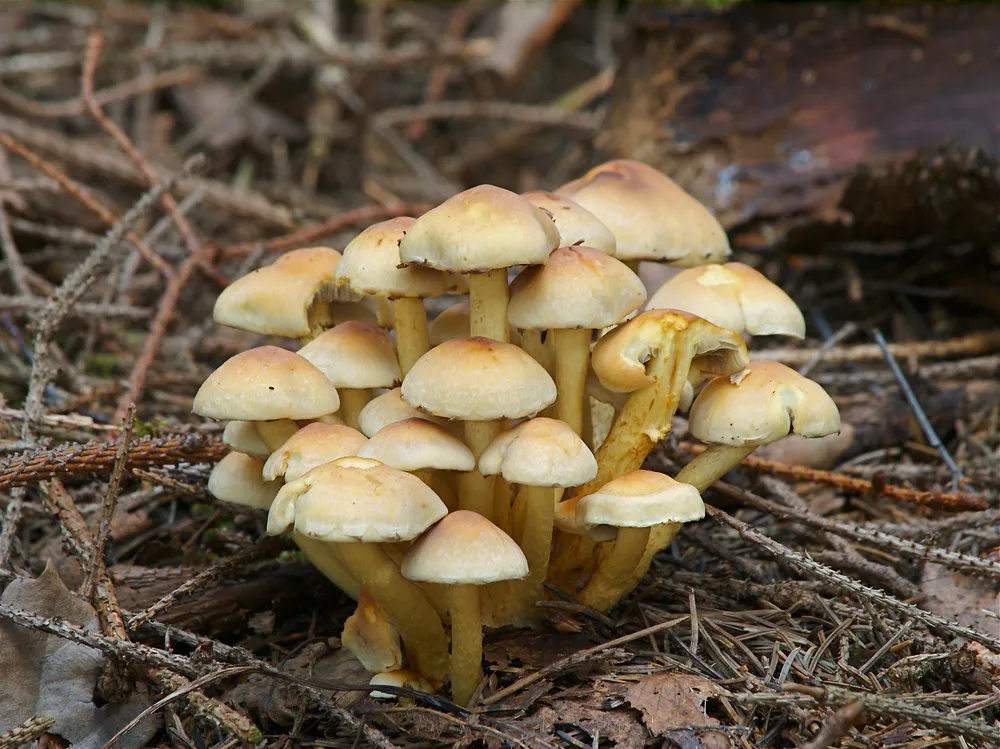
The main thing is to recognize it as a relative of T. rutilans and not to confuse it with young poisonous yellow webcaps and Hypholoma fasciculare (sulphur tuft, a toxic false honey fungus). The key check is the spore print of T. decora is white, webcaps give a rusty-brown one, Hypholoma a purple-black one.
In Ukraine, Tricholomopsis decora is common in coniferous and mixed forests: the Carpathians, Prykarpattia, Polissia. Season: August to October.
Cap
Cap 3-8 cm across, when young convex with an inrolled margin, with age becoming flat and spread out with a slightly sunken center. The cap skin is dry-fibrous, golden yellow, densely covered in small brownish-olive fibrous scales, especially in the center. The base color is golden yellow to yellow-orange.
Hymenophore
Gilled hymenophore: the gills are notched (emarginate) at the stem, crowded, fleshy, distinctly yellow. Spore print white to cream.
Stem
Stem 3-7 cm tall, 0.5-1.2 cm thick, cylindrical, hollow in old specimens. Color yellowish to yellow-orange, with fine brownish-fibrous scales on the lower part. Surface dry-fibrous. No ring.
Flesh
Flesh yellowish, thin and cottony in the cap, rather tough in the stem. When cut, there are no noticeable color changes. Smell faintly mushroomy with a woody note, taste mild with a sourish-bitter aftertaste.
Smell
Faintly mushroomy with woody notes, not distinctive.
›Scientific synonyms (7)
Agaricus decorus Fr., Cortinellus decorus (Fr.) P. Karst., Tricholoma decorum (Fr.) Quél., Gyrophila decora (Fr.) Quél., Pleurotus decorus (Fr.) Sacc., Dendrosarcus decorus (Fr.) Kuntze, Tricholoma rutilans var. decorum (Fr.) Maire
Lookalikes
Related species
Mushrooms of the same genus and habitat — to study side by side and never mix up.
_Ricken_185798.webp)
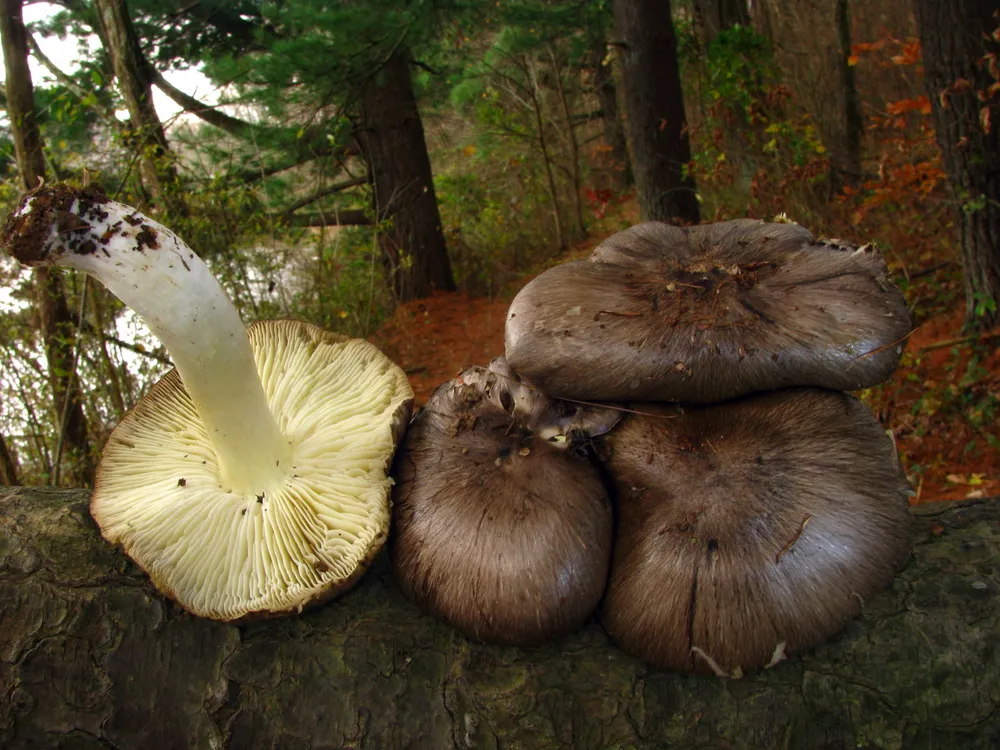
Booted knight
Tricholoma focale
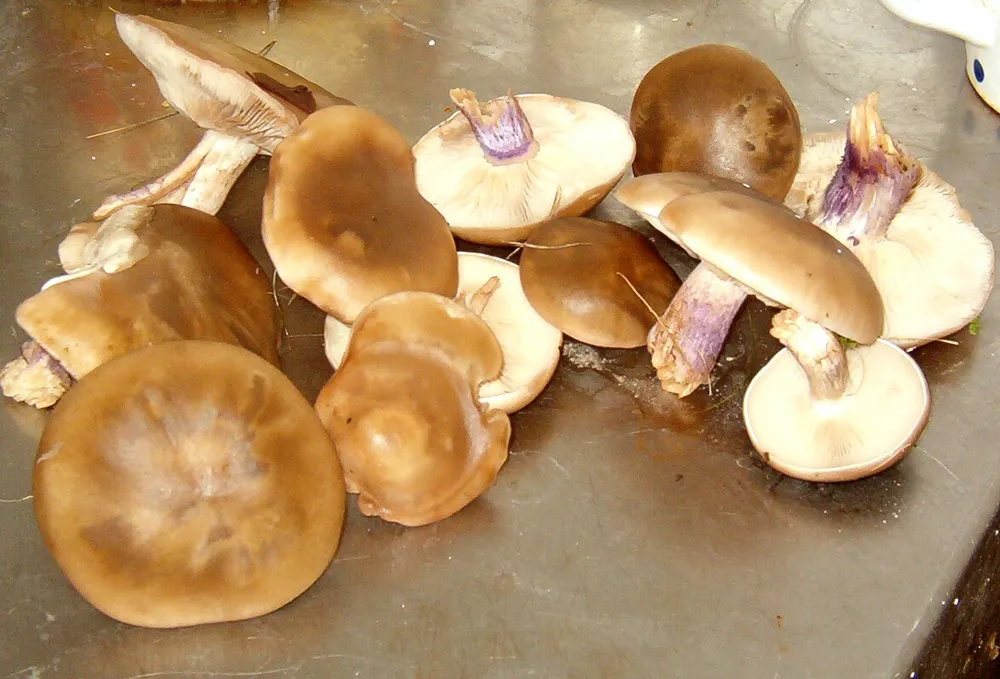
Charbonnier
Tricholoma portentosum
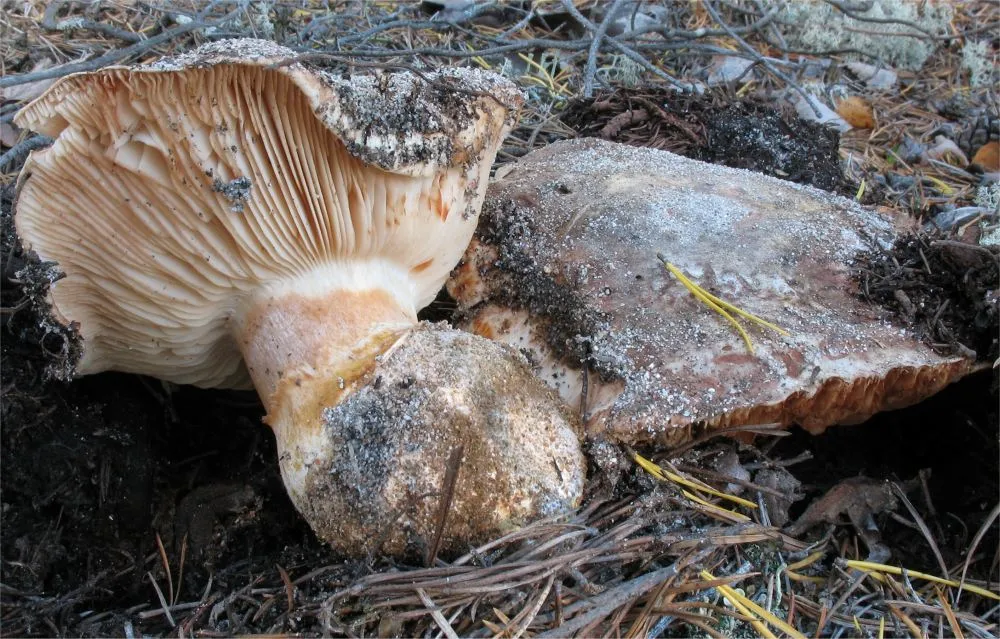
Field blewit
Collybia personata
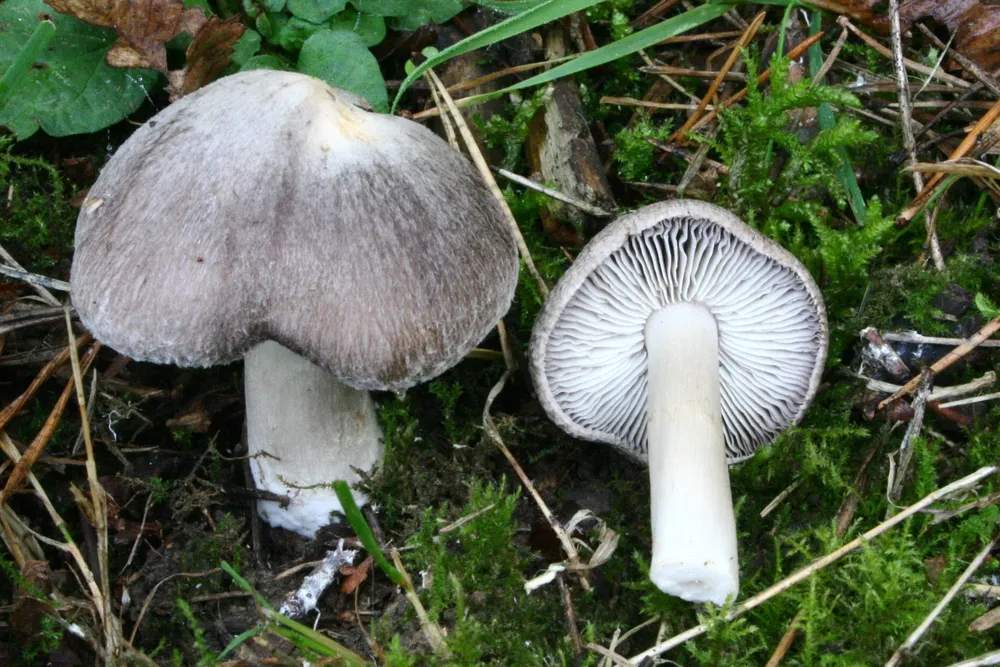
Giant knight
Tricholoma colossus
Grey knight
Рядовка наземна
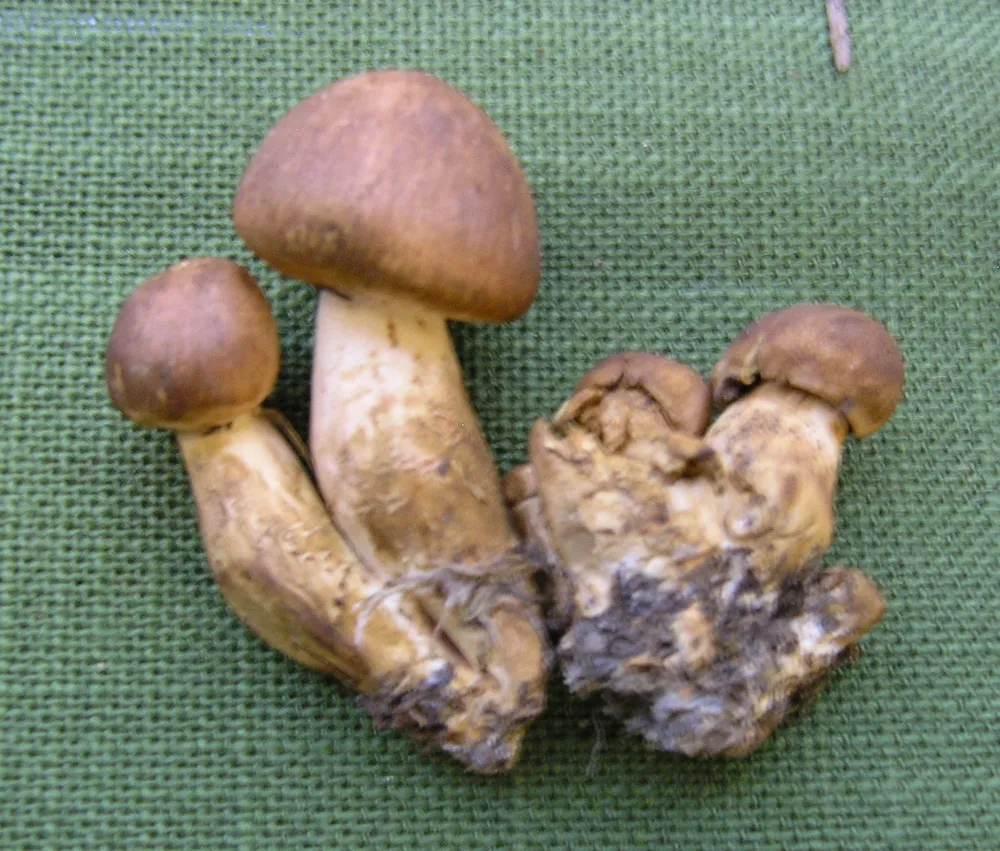
Matt knight
Tricholoma imbricatum
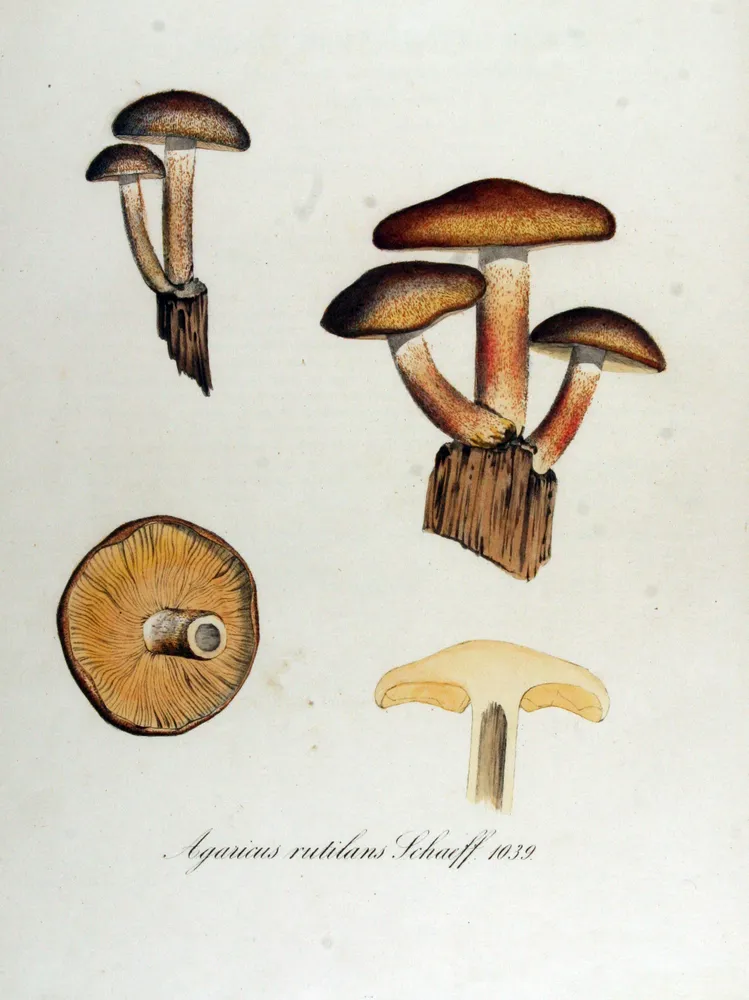
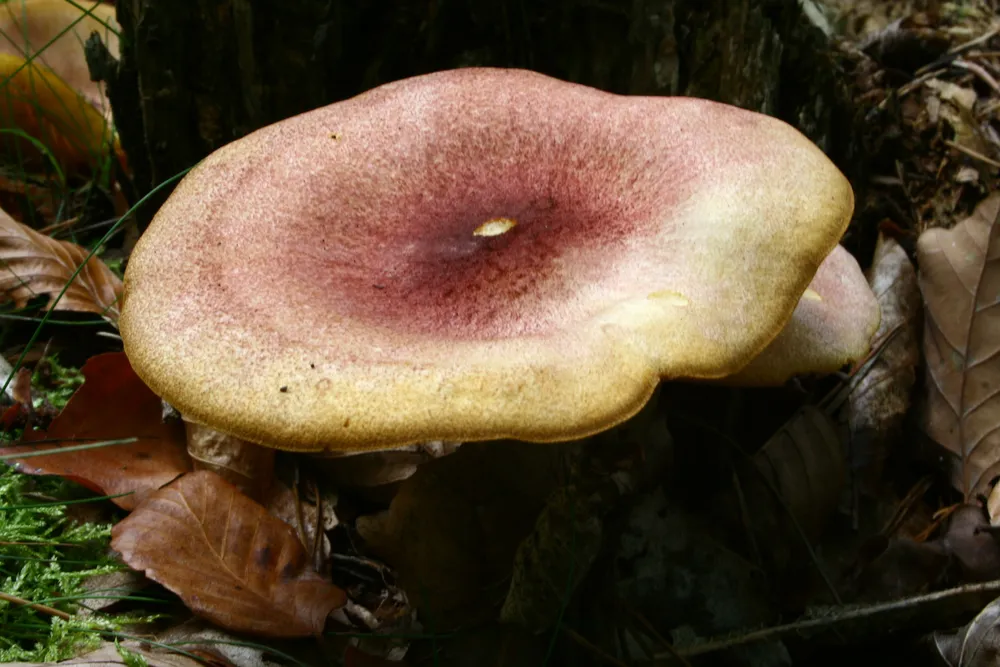
Plums and custard
Рядовка червона
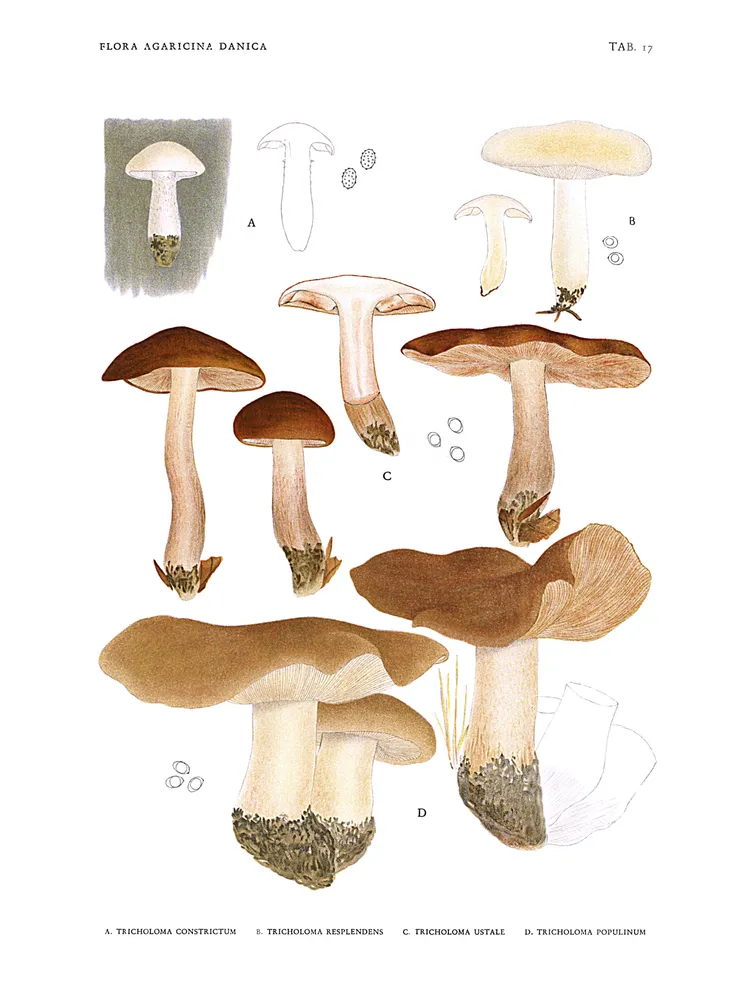
Poplar knight
Рядовка тополева
Frequently asked questions
Can you eat it?
You can, but without much enthusiasm — after mandatory boiling for 10-15 min. Its culinary value is low (cottony flesh with a sourish aftertaste). In a mix with more aromatic mushrooms, it's fine.
How do you tell it apart from poisonous yellow mushrooms?
A spore print is a must. Tricholomopsis decora — white to cream, Hypholoma fasciculare (sulphur tuft, a poisonous false honey fungus) — purple-black, yellow webcaps (Cortinarius) — rusty-brown. The second check is habitat: T. decora grows on conifer stumps, Hypholoma grows in clusters on conifer and broadleaf stumps, and webcaps grow on the ground.
How do you cook it?
Always boil it for 10-15 min and drain the water, then fry with onion, in a mix with saffron milk caps and slippery jacks.
Where should you look for it?
On dead conifer stumps and fallen trunks (pine, spruce) in coniferous and mixed forests.
Which regions of Ukraine is it found in?
Common in the forest zone wherever there are conifers: the Carpathians, Prykarpattia, Polissia, and in places the forest-steppe in its pine stands.
When should you look for it?
August to October, peaking in September.
What mushrooms is it confused with?
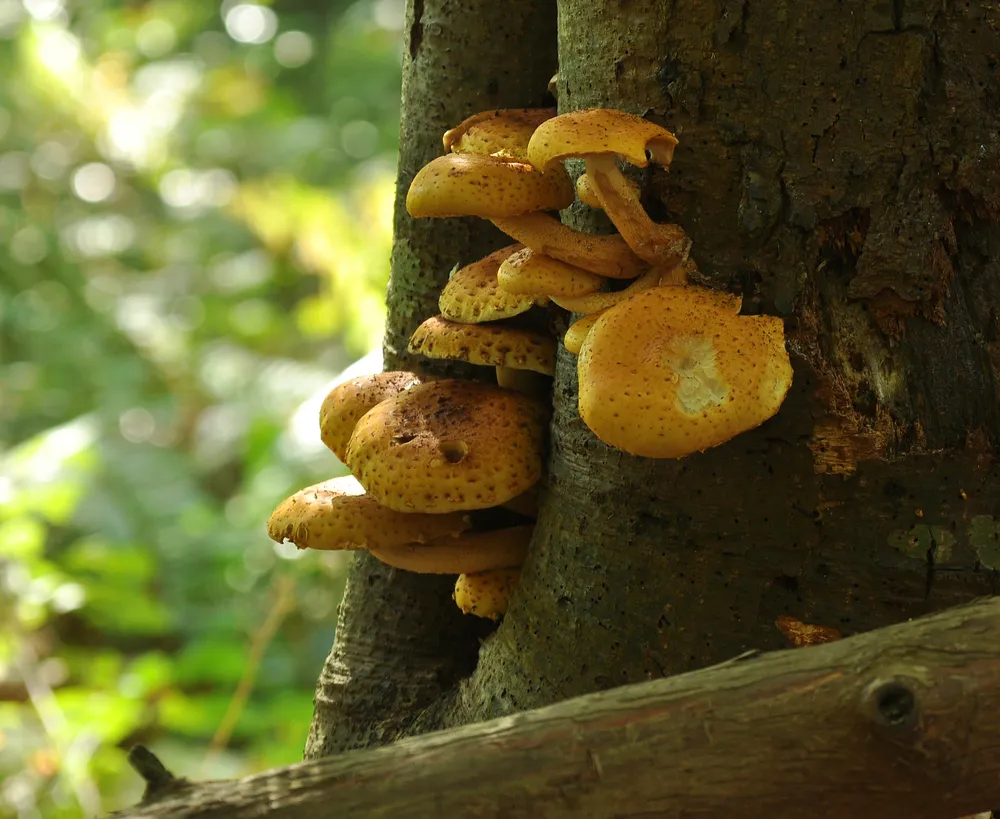
With T. rutilans (plums and custard) — a relative, but with distinctly red-purple scales. With Pholiota aurivella (golden scalycap) — on broadleaf trees, with a ring. With Hypholoma fasciculare (sulphur tuft, POISONOUS!) — grows in clusters on stumps, purple-black spore print.
Is Prunes and custard edible or poisonous?
Does Prunes and custard have gills or pores?
What does the cap of Prunes and custard look like?
What does the stem of Prunes and custard look like?
What do Prunes and custard smell and taste like?
Sources
- [1]Вікіпедія (українська)
- [2]Атлас грибів України, Зеров Д.К. (1979)
- [3]MycoBank Database
- [4]Index Fungorum
- [5]GBIF
- [6]iNaturalist Ukraine