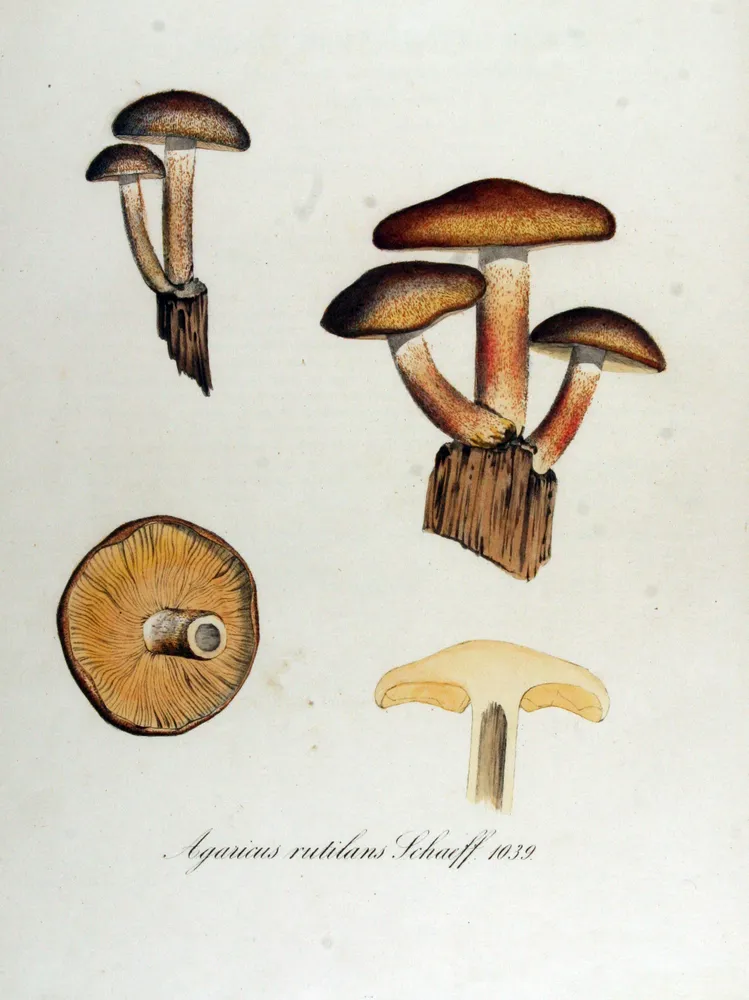
Plums and custardРядовка червона
Expert-verifiedUpdated June 13, 2026
Passport
- Edibility
- Conditionally edible
- Season
- Aug — Nov
- Hymenophore
- Gilled
- Cap color
- Red
- Size
- Small (up to 5 cm)
- Smell
- Floury
- Reviewed
- Yes ✓
Quick answers
Where to look?
Conifer forest, Mixed forest
When does it appear?
Aug — Nov
Active months: August, September, October, November.
How to recognize it? Three signs
- Cap color: Red, Brown
- Cap shape: Umbonate
- Smell: Floury
Fruiting season
August – November
Description
The scaly knight (the Ukrainian Wikipedia article under this name mainly describes Tricholoma vaccinum — the "cow" or "herdsman's" knight) is a distinctive rusty-reddish knight of pine forests with a distinctly scaly-fibrous cap. The Latin epithet vaccinum means "of cows" (from vacca — "cow"), probably because the rough, fibrous-scaly cap surface resembles a russet cowhide. Cap 3-8 cm across, conical-convex to flat-conical, rusty chestnut-red, covered in distinctly raised fibrous scales, especially toward the margin.
Conditionally edible after mandatory boiling for 15-20 min, discarding the water. The flesh has a bitterish, astringent taste when raw and a distinct, unpleasantly mealy smell, which partly fades with boiling. Foragers rarely pick it because of its middling culinary quality — the bitterness and tough flesh make it hard to cook. Older literature lists it as "edible, 4th category"; today the advice is to limit portions or skip it altogether.
The mushroom is closely tied to pine (sometimes spruce) — a characteristic feature. It often grows in groups on the forest floor in dry pine woods on sandy soils. Season: August — November. In some regions of Europe it is listed as "mildly toxic" — in some people it causes gastrointestinal discomfort even after boiling.
The main risk is confusing it with young poisonous webcaps (Cortinarius spp.) and with similar brown/red knights. A spore print is a must the first time you pick it. If the flesh is bitter even after boiling — don't eat it; that's a sign it is less safe.
In Ukraine, the scaly knight is common in pine and spruce-pine forests: the Carpathians, Prykarpattia, Polissia, and parts of the forest-steppe. A mycorrhizal partner of Scots pine.
Cap
Cap 3-8 cm across, when young distinctly conical or bell-shaped, becoming with age flat-conical with a low, broad umbo. The cap skin is dry, fibrous-scaly with distinctly raised fine scales, especially toward the margin (where the scales are often curled back). Color rusty chestnut-red, with a darker center and a paler margin, slightly darker in wet weather. The margin is inrolled when young, with felty veil remnants.
Hymenophore
Gilled hymenophore — the gills are sinuately attached to the stem, moderately crowded, fleshy. When young — whitish, becoming with age cream-colored with distinct rusty spots on the edges and surface — a characteristic feature. Spore print white.
Stem
Stem 4-8 cm tall, 0.7-1.5 cm thick, cylindrical, hollow inside when old. Color whitish at the top, brownish-chestnut and scaly-fibrous below. The surface is dry and fibrous, with characteristic raised scales similar to those on the cap. No ring.
Flesh
Flesh thin, brittle, whitish to cream; where cut it turns pinkish or slowly takes on a brownish-red tint. Smell faintly mealy or unpleasantly musty, taste distinctly bitterish and astringent.
Smell
Faintly mealy with a hint of rotting wood, not especially pleasant.
Lookalikes
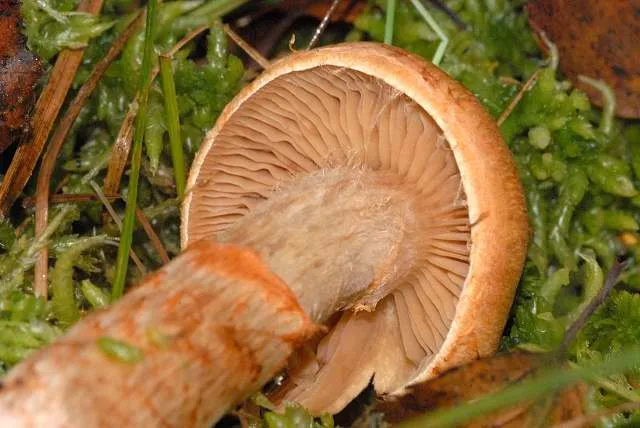
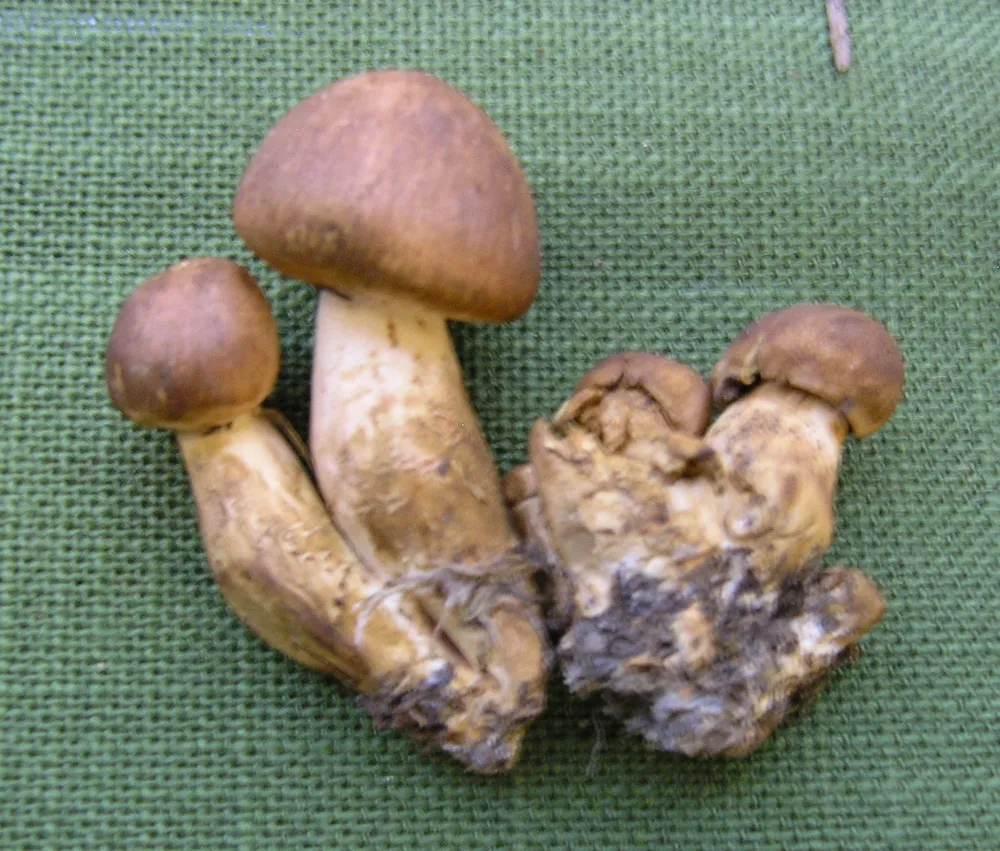
Related species
Mushrooms of the same genus and habitat — to study side by side and never mix up.
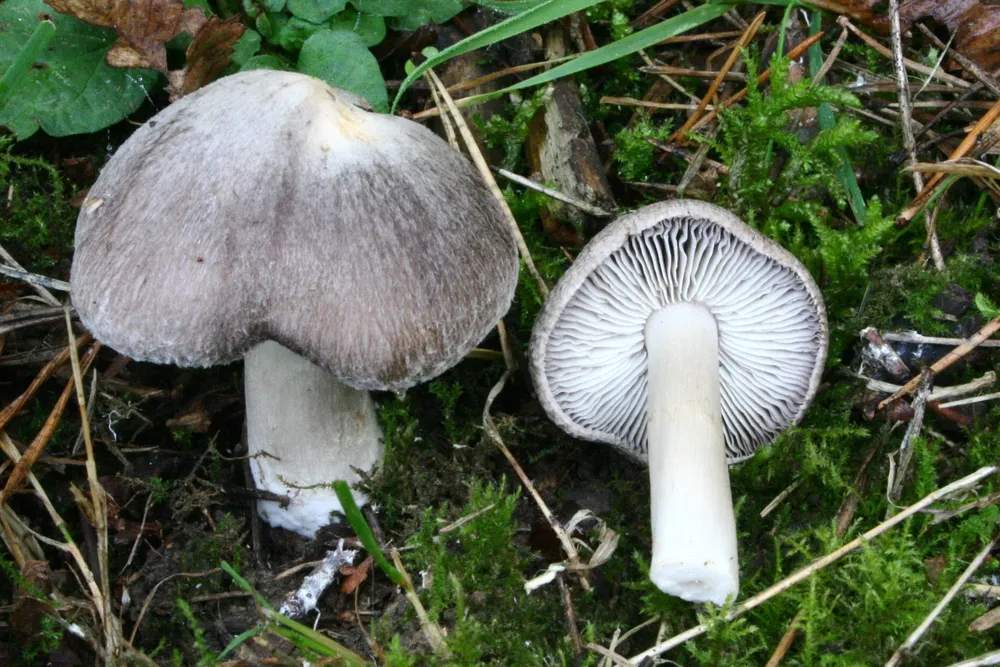
Grey knight
Рядовка наземна
_Ricken_185798.webp)
Booted knight
Tricholoma focale
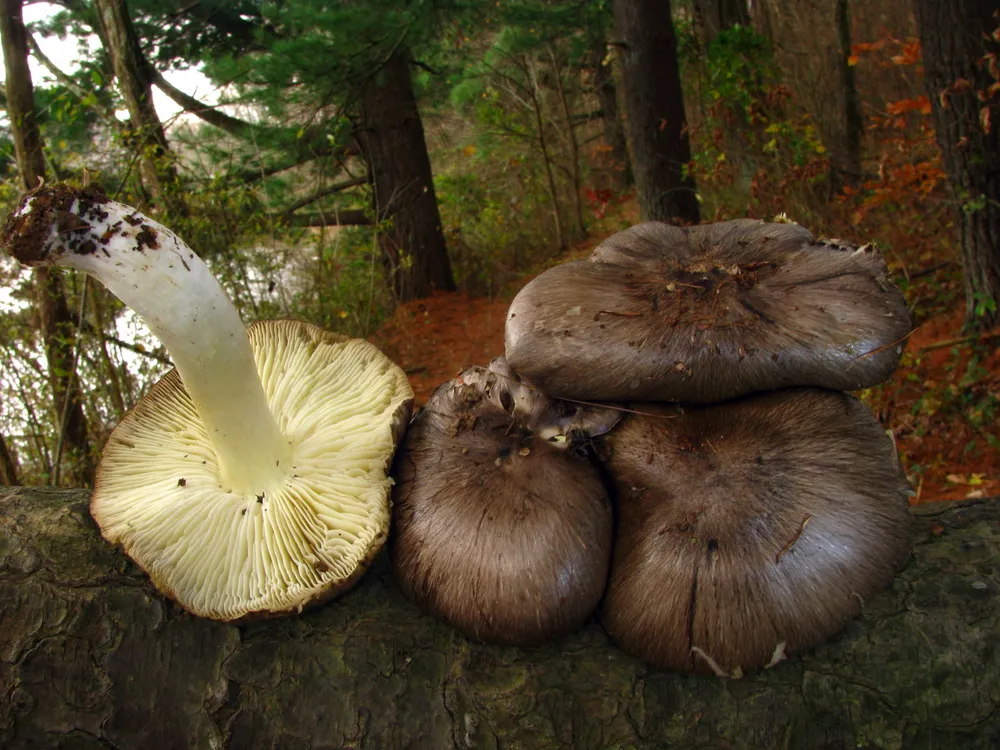
Charbonnier
Tricholoma portentosum
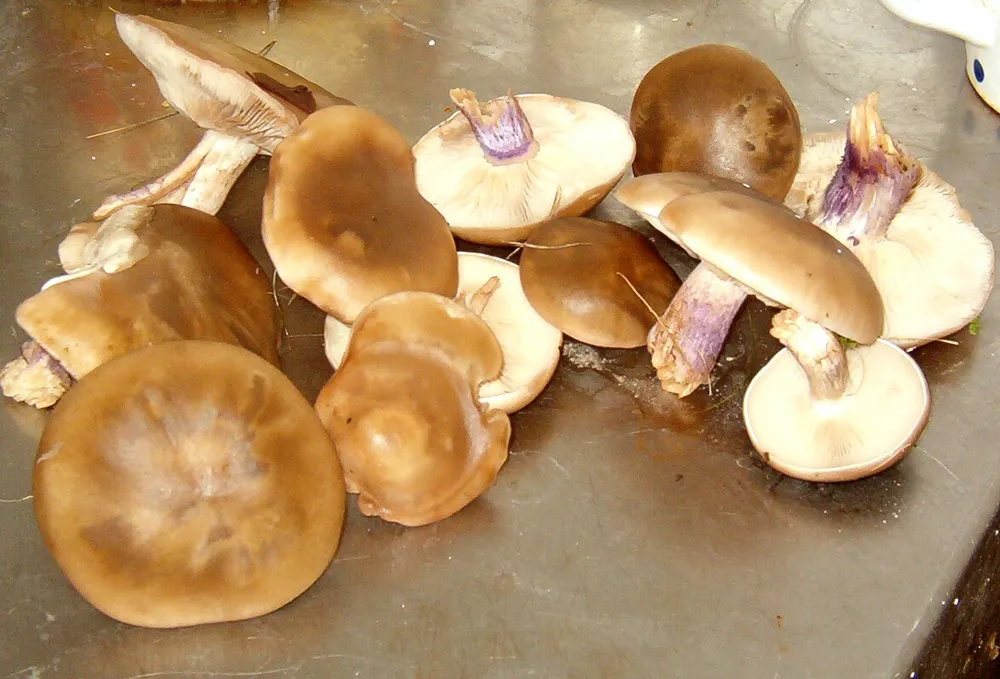
Field blewit
Collybia personata
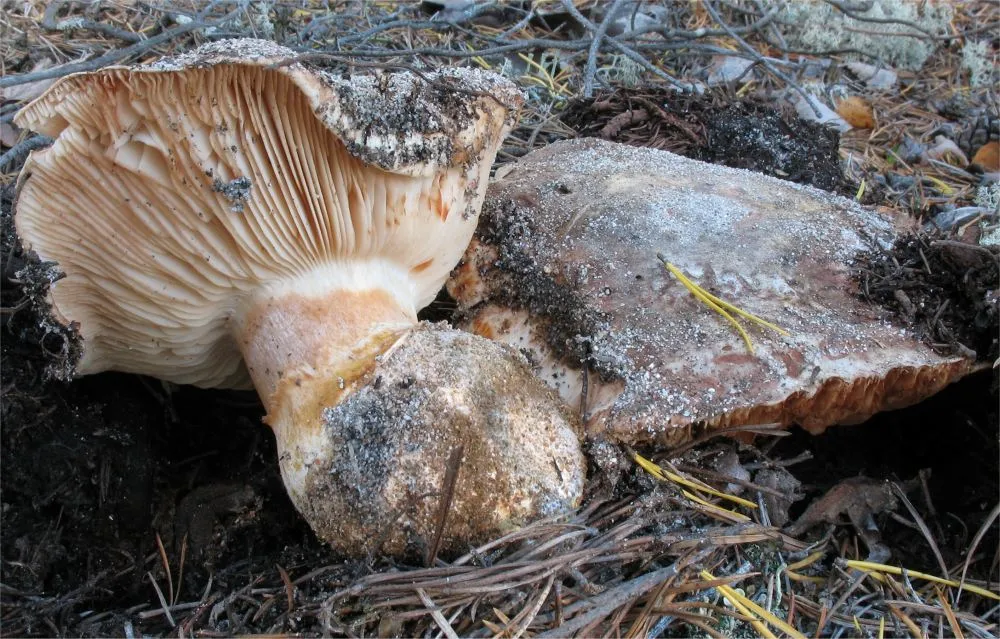
Giant knight
Tricholoma colossus
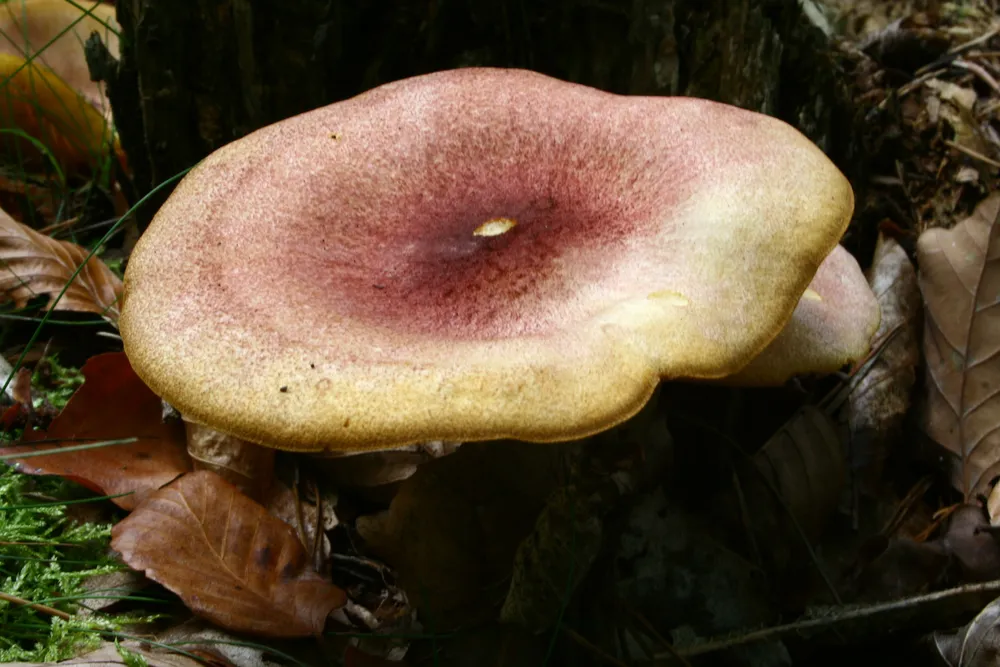
Plums and custard
Tricholomopsis rutilans
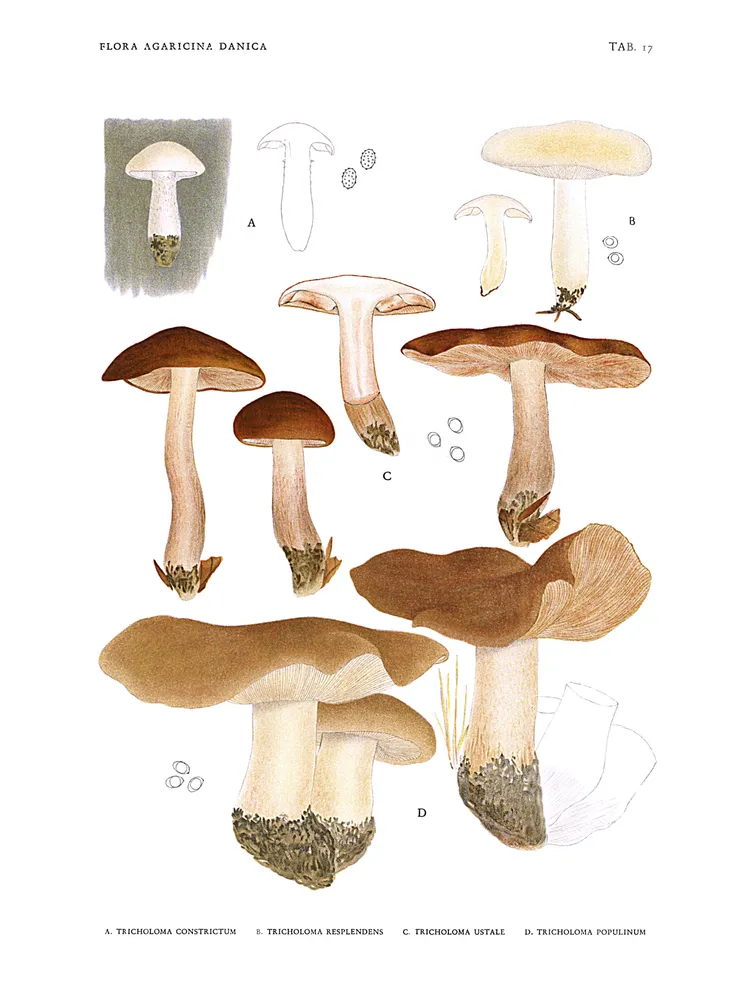
Poplar knight
Рядовка тополева
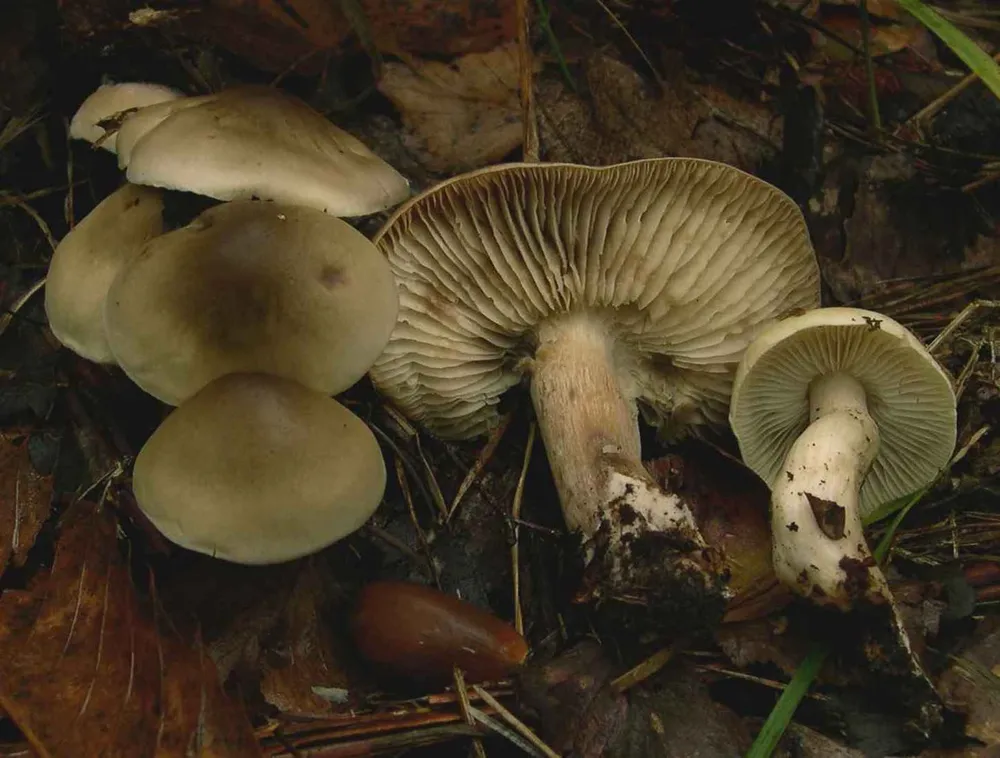
Soapy knight
Tricholoma saponaceum
Frequently asked questions
Is it worth picking?
With restraint. Its culinary quality is low — the bitterness and tough flesh don't fully go away with boiling. Some people get gastrointestinal discomfort after eating it. In a pine wood with saffron milk caps, slippery jacks and porcini around — walk on by. If you've already picked it — be sure to boil it for 15-20 min, and keep the first portion small.
How do you tell it apart from poisonous webcaps?
A spore print is a must — Tricholoma vaccinum has a WHITE spore print, webcaps — rusty-orange. This is the key test for all rusty-brown mushrooms in pine forests. The second: young webcaps have a cobwebby cortina on the stem, the knight doesn't.
How do you cook it?
Be sure to boil it for 15-20 min in salted water, drain the water and rinse the mushrooms. Then fry it with onions, stew it, or add it to a mix with tastier mushrooms. It isn't worth a dish of its own. If the flesh stays distinctly bitter after boiling — throw it out.
Where should you look for it?
In pine and spruce-pine forests on the forest floor among moss, often in grass near old pines on sandy soils. It loves dry, sunny pine woods. It often grows in groups of 5-15.
Which regions of Ukraine is it found in?
Common in the forest zone wherever there are conifers: the Carpathians, Prykarpattia, Polissia, and parts of the forest-steppe in pine stands.
When should you look for it?
August — November, peaking in September-October. It loves dry, cool autumns.
Which mushrooms is it confused with?
With Cortinarius armillatus (red banded webcap) — a rusty-red cap, but with characteristic rusty bands on the stem and a rusty spore print. With Tricholoma imbricatum (matt knight) — larger, darker, without distinct scales. With Hebeloma spp. — a bitter, radish-like smell, rusty-brown spore print.
Is Plums and custard edible or poisonous?
Does Plums and custard have gills or pores?
What does the cap of Plums and custard look like?
What does the stem of Plums and custard look like?
What do Plums and custard smell and taste like?
Sources
- [1]Вікіпедія (українська)
- [2]Атлас грибів України, Зеров Д.К. (1979)
- [3]MycoBank Database
- [4]Index Fungorum
- [5]GBIF
- [6]iNaturalist Ukraine