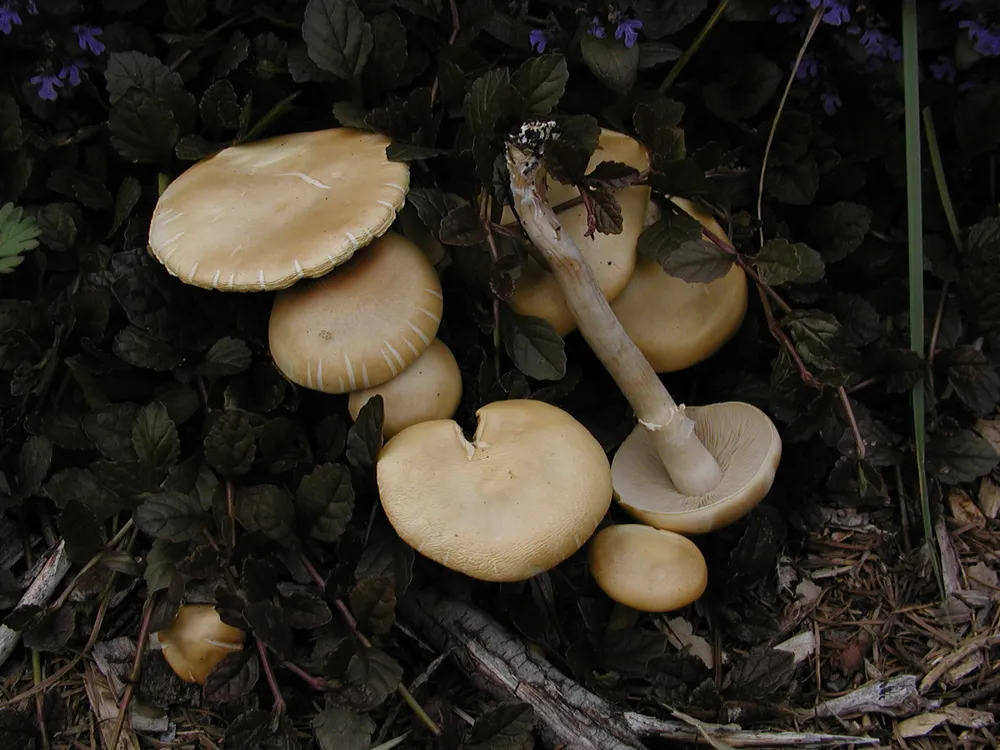
Spring fieldcapAgrocybe praecox
Expert-verifiedUpdated October 3, 2026
Passport
- Edibility
- Edible
- Season
- May — Jul
- Hymenophore
- Gilled
- Cap color
- Brown
- Size
- Medium (5–15 cm)
- Smell
- Pleasant
- Reviewed
- Yes ✓
Quick answers
Where to look?
Deciduous forest, Mixed forest
When does it appear?
May — Jul
Active months: May, June, July.
How to recognize it? Three signs
- Cap color: Brown, Yellow
- Cap shape: Convex
- Smell: Pleasant
Fruiting season
May – July
Description
The spring fieldcap is one of the first capped mushrooms to appear in spring, when most foragers are still waiting for summer rains. You can find it as early as May or June: along forest roadsides, in clearings, in young broadleaf plantings.
It sticks to hornbeam-oak, oak, beech and birch woods. It is not the kind of haul you set off for at dawn, but if you are strolling through an early-summer forest, it is good to know. Experienced foragers pick it and eat it fresh. The cap is up to 8 cm, fleshy, with thin flesh and a narrow white ring on the stem.
It is a little-known edible mushroom, so you don’t often see it in baskets. If you do pick it, first identify it with confidence, because other species grow nearby this season, some of them doubtful.
Cap
Up to 8 cm across. In young mushrooms whitish or yellowish in the center, turning ocher-brown or ocher-gray with time. The surface is smooth, convex at first, then opening out. Fleshy to the touch.
Hymenophore
Gilled spore-bearing surface. In young mushrooms the gills are white, gradually darkening to brown — that is the spore color showing through.
Stem
Cylindrical, up to 8 cm tall. The upper part is white, the base brown. It has a narrow white ring — a key identification feature. No volva.
Flesh
Thin, fleshy, without a strong color change when cut. Pale in a fresh mushroom.
Smell
Mushroomy, nondescript, without sharp notes.
›Scientific synonyms (5)
Pholiota praecox (Pers.) P.Kumm., Dryophila praecox (Pers.) Quél., Hylophila praecox (Pers.) Quél., Naucoria praecox (Pers.) Fayod, Togaria praecox (Pers.) W.G.Sm.
Lookalikes

Related species
Mushrooms of the same genus and habitat — to study side by side and never mix up.
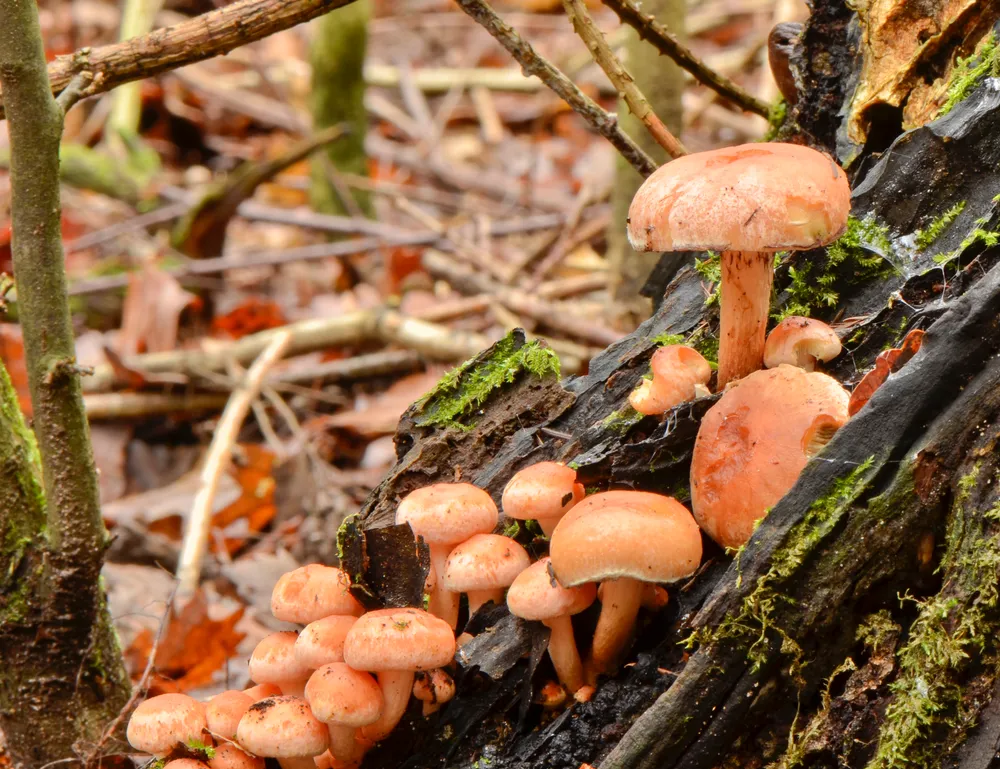
Brick tuft
Hypholoma lateritium
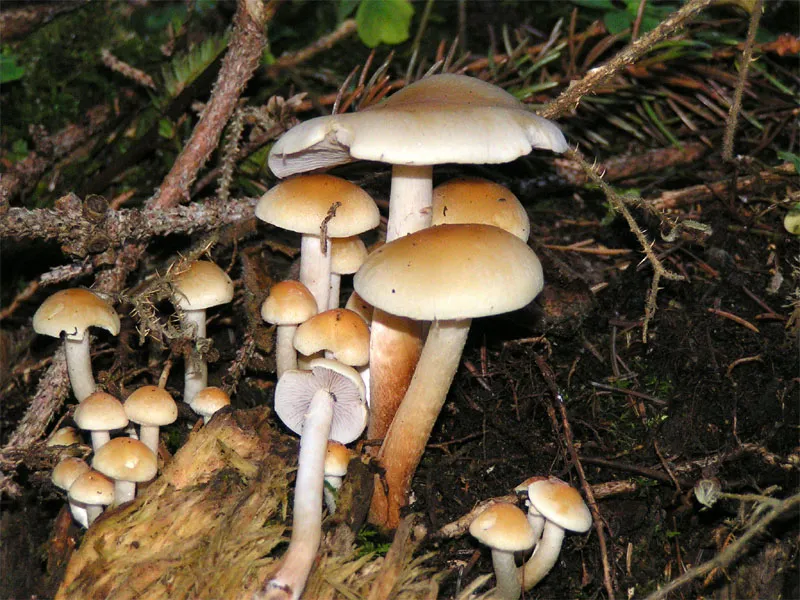
Conifer tuft
Hypholoma capnoides
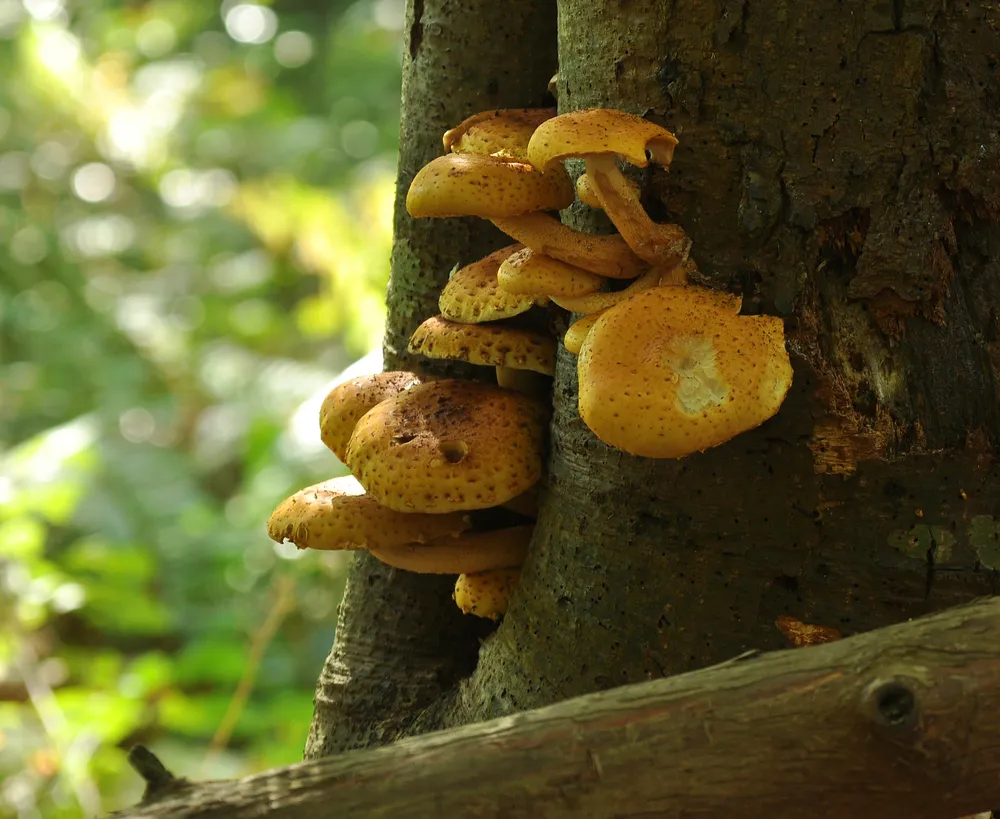
Golden scalycap
Pholiota aurivella
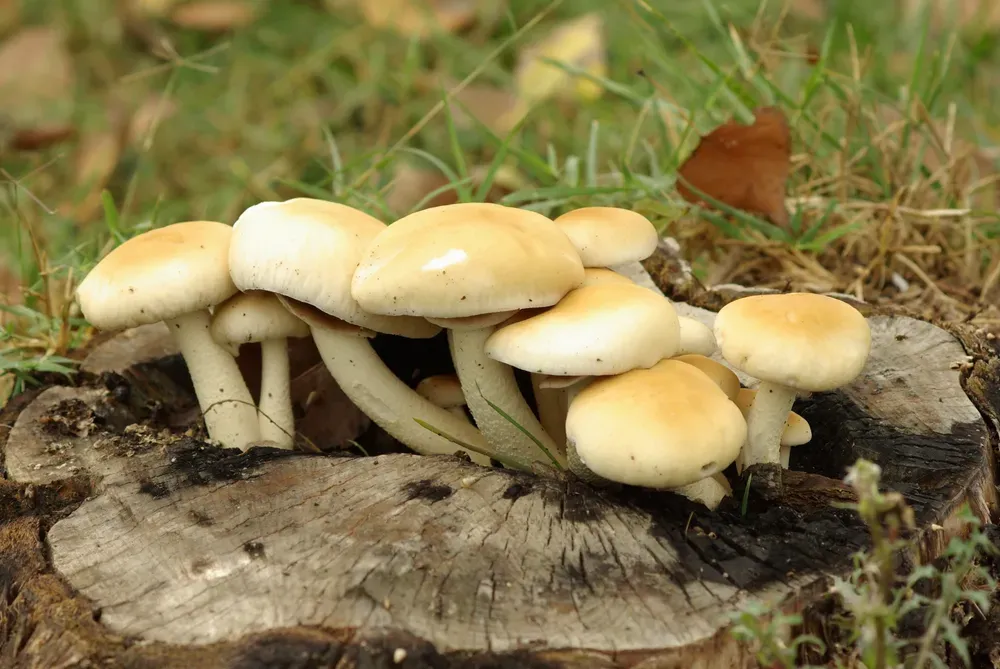
Poplar fieldcap
Cyclocybe aegerita
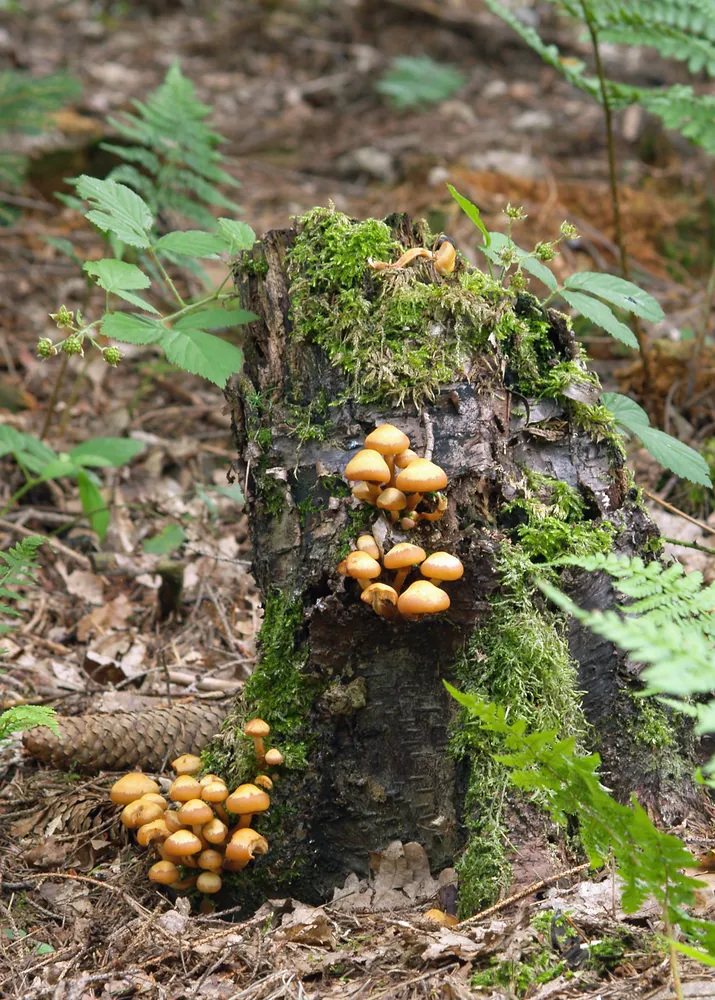
Sheathed woodtuft
Kuehneromyces mutabilis
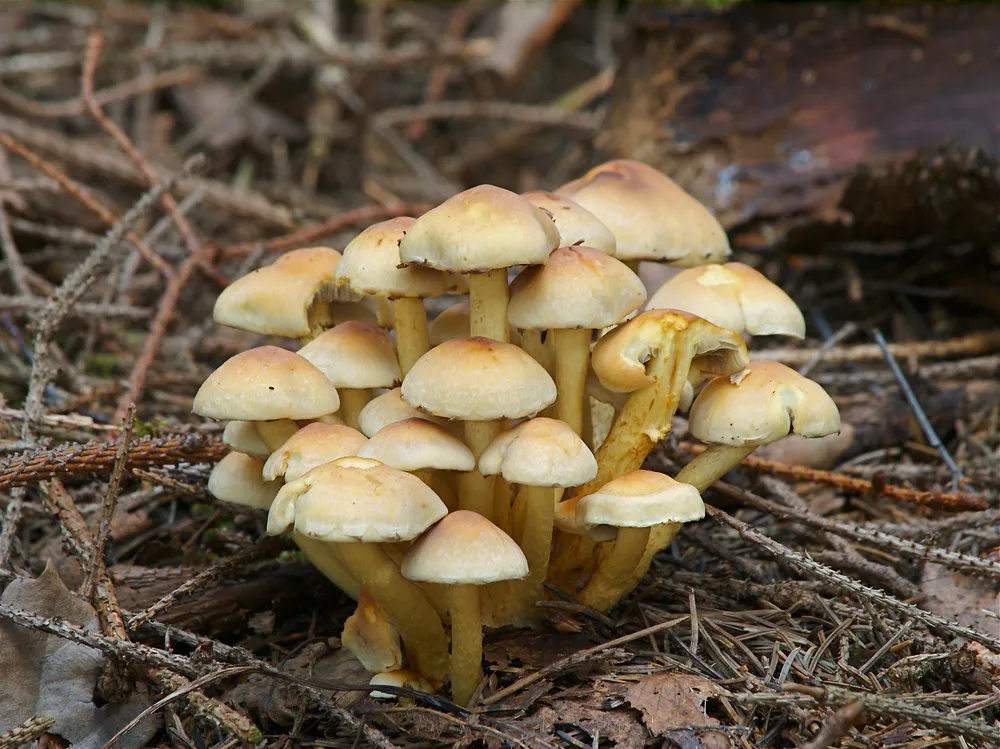
Sulphur tuft
Hypholoma fasciculare
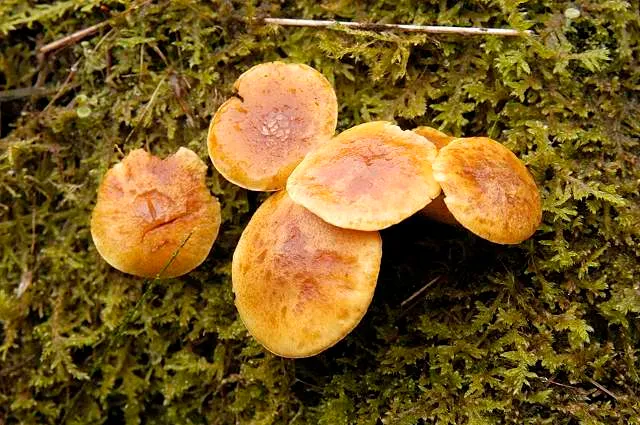
Slender pholiota
Pholiota spumosa
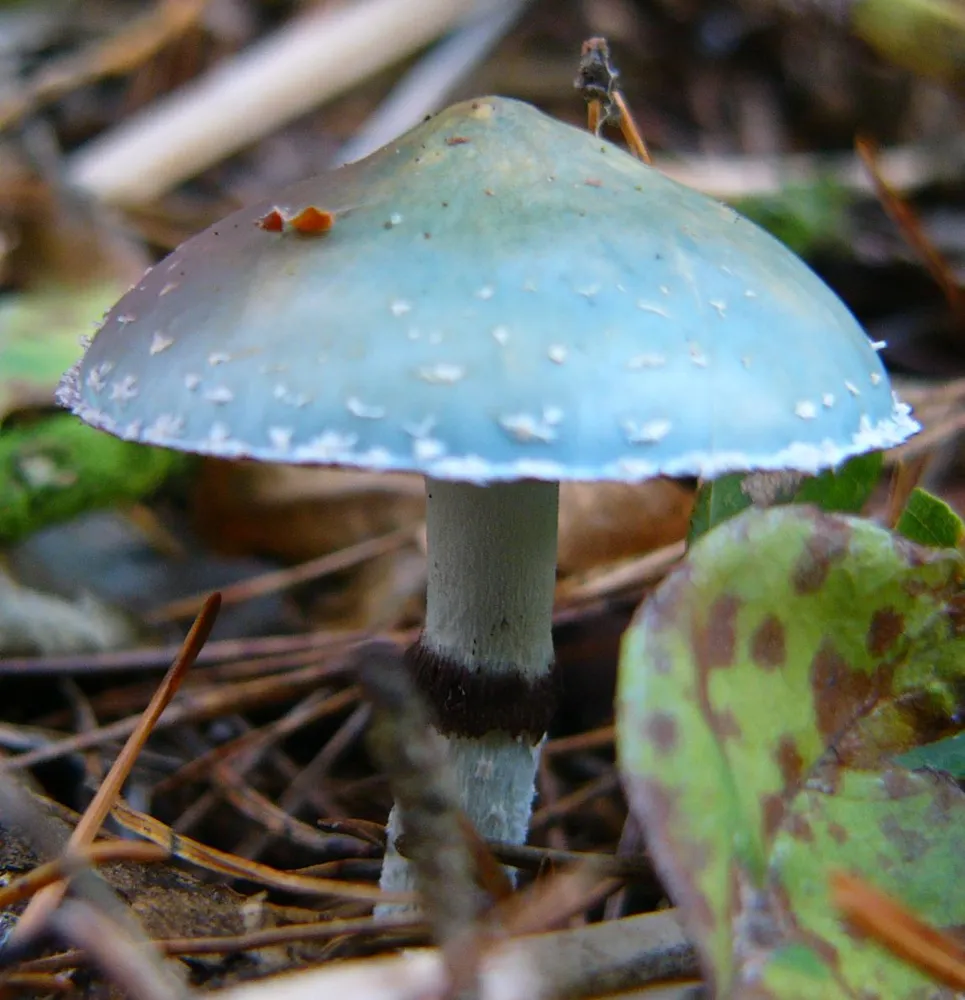
Verdigris agaric
Stropharia aeruginosa
Frequently asked questions
Can you eat it?
Yes, the mushroom is edible and is eaten fresh. But the species is little known, so cook just a small test portion before making a full dish.
Why is inaccurate identification dangerous?
Among spring capped mushrooms there are both unknown and toxic species. If in doubt, put it back. No breakfast is worth the risk.
Where does it grow?
In young broadleaf plantings, along forest roadsides and in clearings. Found in hornbeam-oak, oak, beech and birch woods.
Does it grow in conifer forests?
No, it is a mushroom of broadleaf forests. It avoids pine and spruce — look among oaks, hornbeams and birches.
When does it appear?
Very early — in May and June. That is where “spring” in the name comes from: it arrives while most capped mushrooms are still “asleep.”
Does it appear in autumn?
It is mainly a spring and early-summer species. If you look in autumn, you will most likely find other relatives in the genus Agrocybe.
What can it be confused with?
With other Agrocybe species that appear at other times of year. The narrow white ring on the stem and the typical ocher-brown cap are the two main distinguishing features.
How do you avoid confusing it with a dangerous mushroom?
In a May forest, doubtful members of other genera may grow nearby. If there is no white ring on the stem and no brown spore print, it is not the spring fieldcap.
Is Spring fieldcap edible or poisonous?
Does Spring fieldcap have gills or pores?
What does the cap of Spring fieldcap look like?
What does the stem of Spring fieldcap look like?
Sources
- [1]Вікіпедія (українська)
- [2]Атлас грибів України, Зеров Д.К. (1979)
- [3]MycoBank Database
- [4]Index Fungorum
- [5]GBIF
- [6]iNaturalist Ukraine