Deadly fibrecapInocybe erubescens
Expert-verifiedUpdated October 3, 2026
Passport
- Edibility
- Deadly poisonous
- Season
- May — Aug
- Hymenophore
- Gilled
- Cap color
- White
- Size
- Medium (5–15 cm)
- Smell
- Pleasant
- Reviewed
- Yes ✓
DEADLY POISONOUS
Eating it can cause death. Do not pick it and do not taste it.
Toxin: muscarine in an exceptionally high concentration — 100-200 times more than in the fly agaric. Symptoms begin 15-60 minutes after eating (fast). A severe form of the classic muscarine syndrome: heavy salivation (by the liter), profuse sweating (clothes soaked through), tearing, runny nose, constricted pupils (miosis), bronchospasm with a feeling of suffocation, bradycardia (slow heartbeat) down to 30-40 bpm, a drop in blood pressure, nausea, vomiting, intestinal cramps, diarrhea. In severe cases — collapse, pulmonary edema, cardiac arrest. Fatal cases have been documented among healthy adults. The antidote is atropine (intravenously in hospital, with ECG and blood pressure monitoring). If you suspect poisoning, call immediately 112 or your local emergency number. Keep any leftover mushrooms and vomit. The sooner the antidote is given, the better the outlook. Without help within 2-4 hours there is a real risk of death.
If you suspect poisoning, call an ambulance immediately: 112 (the European emergency number) or your local emergency number
Quick answers
Where to look?
Deciduous forest, Mixed forest
When does it appear?
May — Aug
Active months: May, June, July, August.
How to recognize it? Three signs
- Cap color: White, Cream, Red, Pink
- Cap shape: Convex
- Smell: Pleasant
Fruiting season
May – August
Description
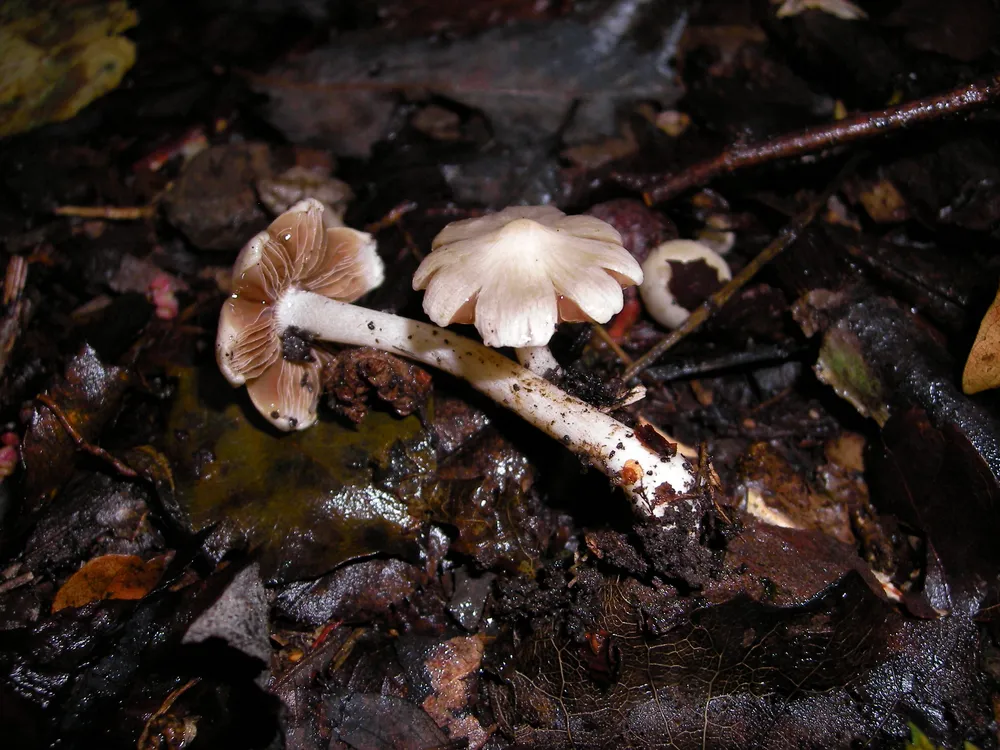
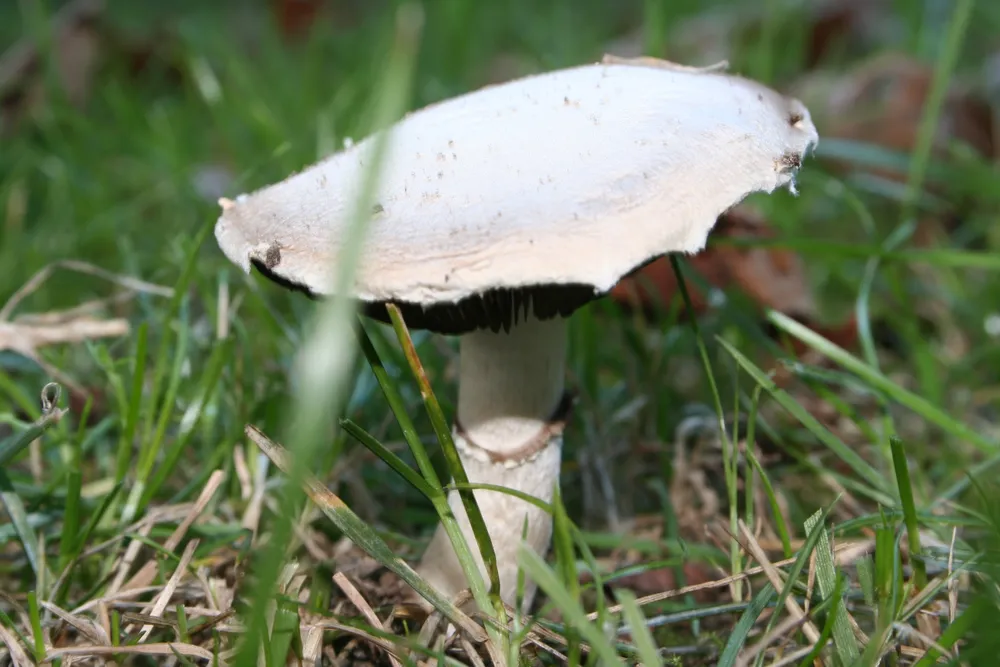
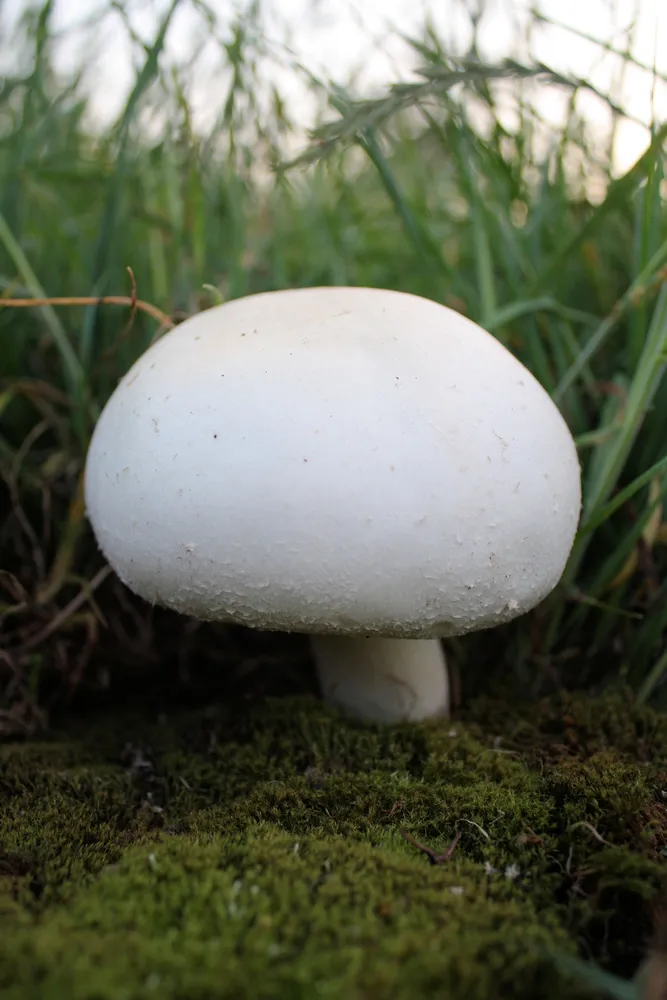
The deadly fibrecap (Inocybe erubescens, synonym Inocybe patouillardii) is the most dangerous member of the genus Inocybe in Europe and one of the few mushrooms that have caused documented deaths among healthy adults. It's a small mushroom with a whitish, silky-shiny cap that, with age or when touched, slowly turns red — brick-carmine or pinkish-red. Hence the scientific name erubescens, "the one that blushes". This slow blush is the species' key diagnostic feature. It looks so much like a young Agaricus or St George's mushroom (Calocybe gambosa) that cases of confusion are many.
This is a deadly poisonous mushroom. It contains an extremely high concentration of muscarine — 100-200 times more than the fly agaric. Unlike all the other poisonous Inocybe species, which cause severe but treatable poisoning, this one can kill even a healthy adult if help comes too late. Symptoms start quickly — within 15-60 minutes: heavy salivation, profuse sweating, cramps, bradycardia, collapse. The antidote is atropine, given in hospital under a cardiologist's supervision. Across Europe this mushroom is officially classed as dangerous; deaths have been documented in Italy, France, Switzerland and Ukraine. Do NOT pick it in any form, under any circumstances — no adult or child should taste even a crumb.
In Ukraine it is widespread in broadleaf and mixed forests — mostly under oak, beech, hornbeam and hazel. It loves limestone and alkaline soils. Season: May — August, peaking in June–July. It often grows in groups of 3-10 fruiting bodies, in grassy spots, at forest edges, and in gardens and parks with broadleaf trees. Its season overlaps with the hunt for young Agaricus and St George's mushrooms — hence the risk of confusion.
Cap
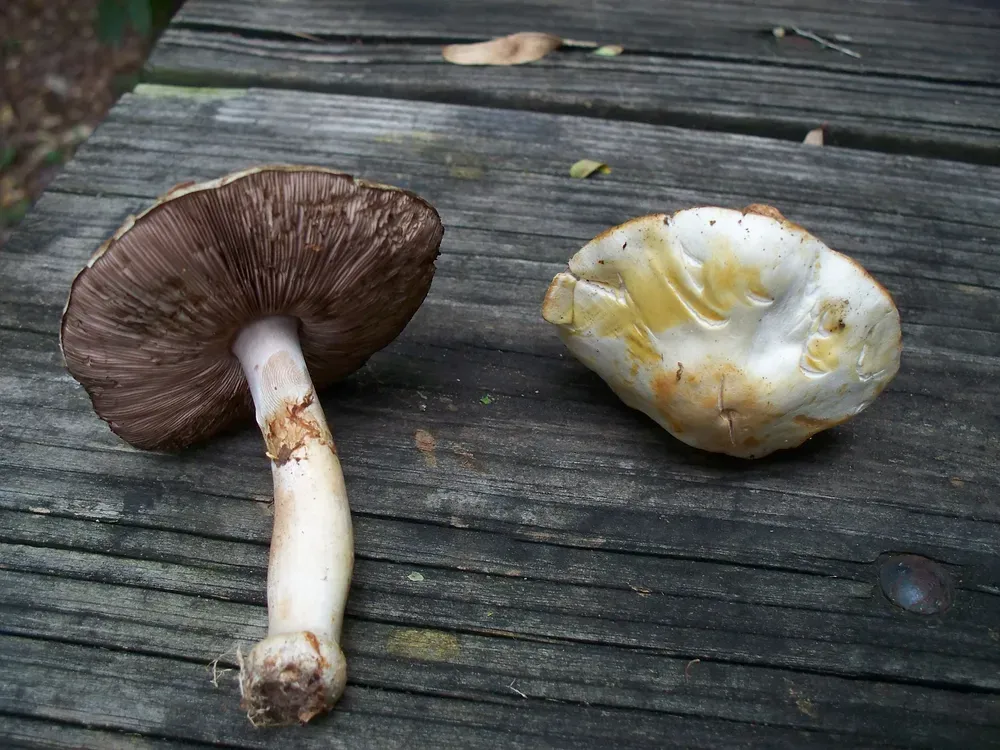
The cap is 3-10 cm across, hemispherical to convex in young mushrooms, with a broad umbo in the center; it opens out with age. The surface is silky-shiny, with fine radial fibers and flattened scales. At first the color is whitish, cream or ivory; with age and when touched it slowly turns red — first pinkish, then brick-carmine or cinnamon-red. The reddening is most visible along the cap margin and wherever the mushroom is damaged. This is the key diagnostic feature.
Hymenophore
Gilled hymenophore. The gills are fairly crowded, notched where they meet the stem. In young mushrooms they are whitish-pinkish, with age olive-brown to brick-brown. The spore print is olive-brown or tobacco-colored — typical of the whole genus Inocybe.
Stem
The stem is 3-10 cm tall and 0.5-1.5 cm thick, cylindrical or slightly widening toward the base. It's whitish to cream, with a pink or reddish-brick tinge (especially in the lower part). When touched and with age it turns red, just like the cap. The surface is lengthwise-fibrous, with no ring. The flesh of the stem is firm.
Flesh
The flesh is thick and white; when cut, it slowly turns red (not right away: sometimes only after 30 minutes or more), especially in the lower part of the stem. This is an important way to tell it from most Agaricus mushrooms, whose flesh either doesn't change color or turns yellow (though some wood mushrooms, such as Agaricus silvaticus, also redden, so check the gills and spore print too). The smell and taste of the fresh flesh are pleasant, fruity and sweetish — which is exactly what makes it so treacherous.
Smell
Sweet and fruity, with notes of ripe pears or apples — unusual for the genus Inocybe, which usually smells spermatic or musty. This appealing aroma + a reddening white cap + the season when edible white mushrooms are being picked = the perfect trap for a beginner forager. Never rely on smell when identifying this species.
›Scientific synonyms (1)
Inocybe patouillardii Bres.
Lookalikes
Related species
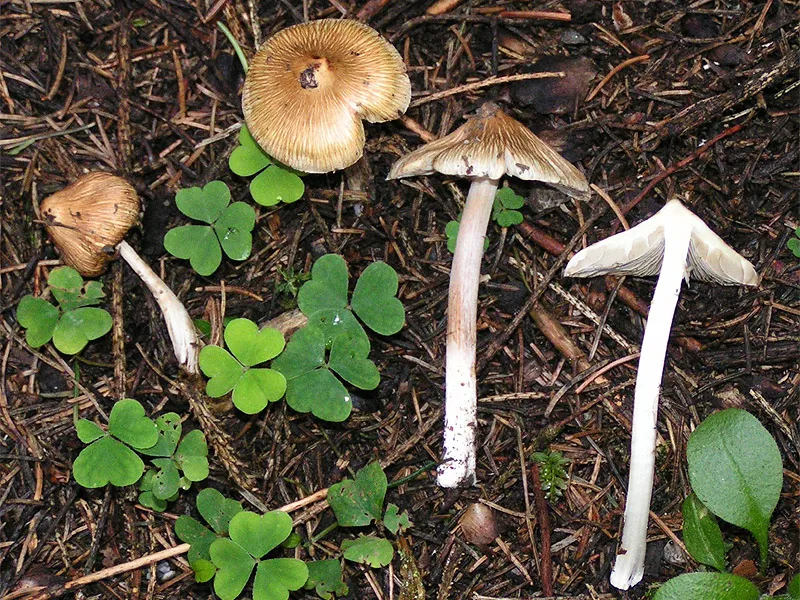
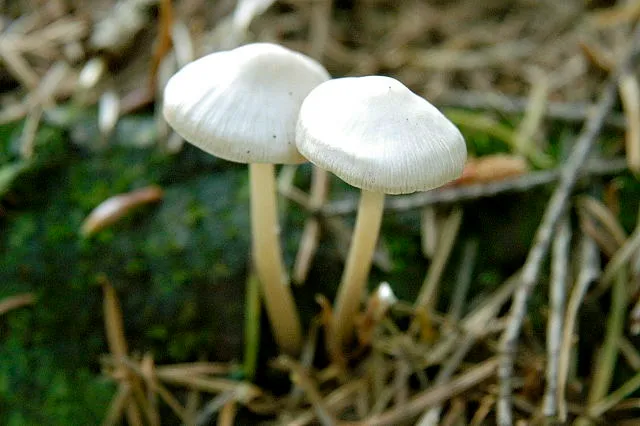
Mushrooms of the same genus and habitat — to study side by side and never mix up.
Inocybe brunnea
Inocybe serotina
White fibrecap
Inocybe geophylla
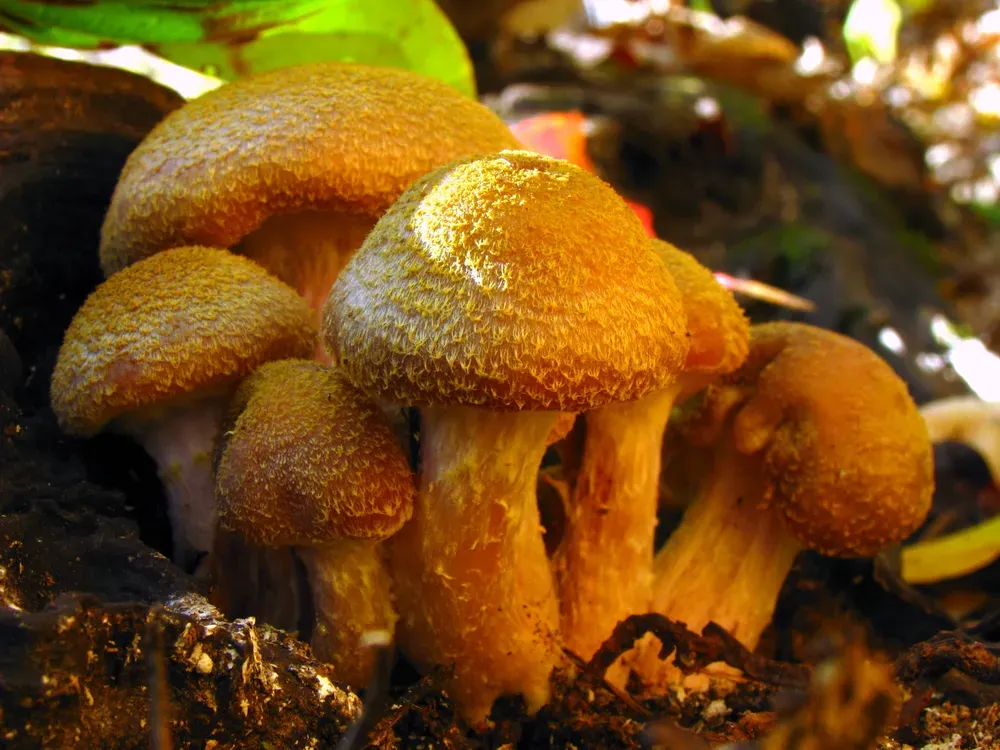
Bulbous honey fungus
Armillaria gallica
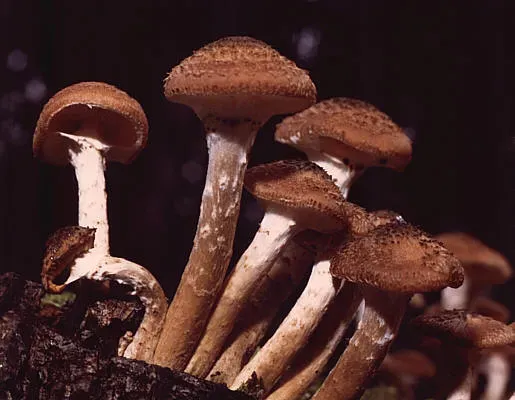
Dark honey fungus
Armillaria ostoyae
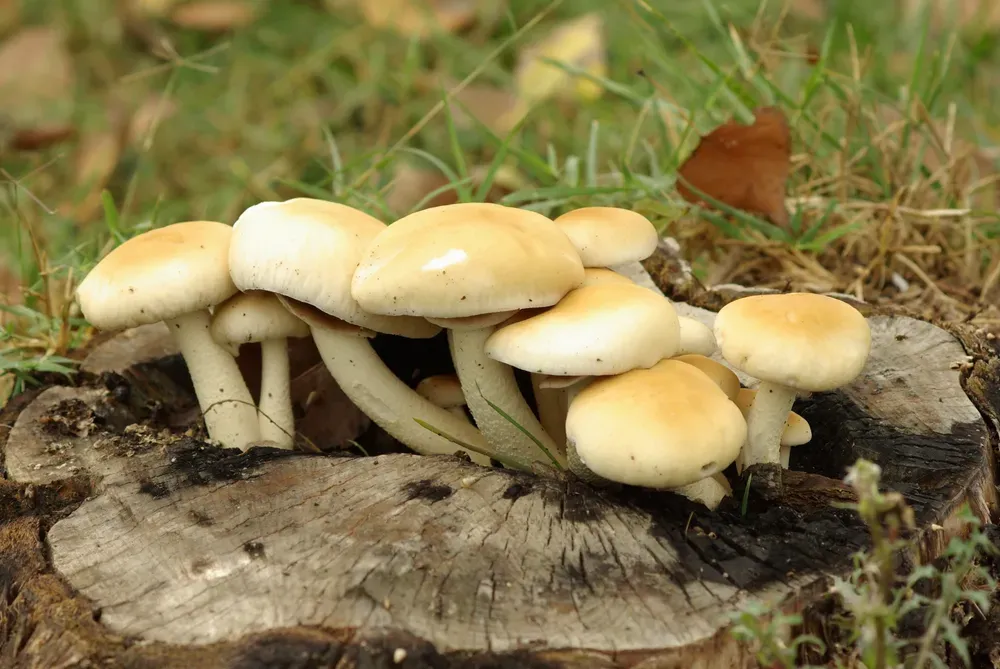
Poplar fieldcap
Cyclocybe aegerita
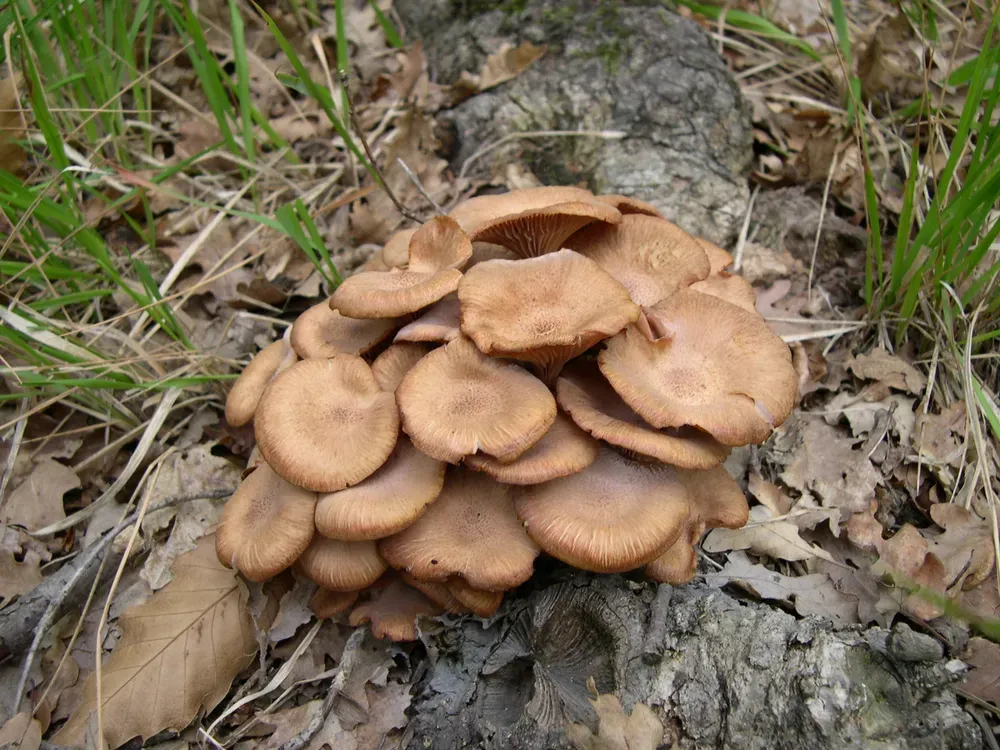
Ringless honey fungus
Desarmillaria tabescens
Agaricus abruptibulbus
Frequently asked questions
Is it really a deadly mushroom?
YES — it's one of the few truly deadly species in the genus Inocybe. Fatal cases among healthy adults have been documented in Europe. Do not pick it in any form, under any circumstances. The temptation to "just have a taste", or mistaking it for an Agaricus, can cost you your life.
What happens if you eat it by accident?
Within 15-60 minutes — sudden profuse salivation (by the liter), sweating through your clothes, tearing, runny nose, a feeling of suffocation, slow heartbeat down to 30-40 bpm, a drop in blood pressure, stomach cramps, diarrhea. In severe cases — collapse and a risk of cardiac arrest. Call immediately 112 or your local emergency number — don't wait in the hope that "it'll pass". In hospital you'll be given atropine. Put any leftover mushrooms in a bag — it's critical for the doctor to know exactly what was eaten. Do NOT treat yourself with atropine — in the wrong dose it is lethal.
How do you avoid mistaking it for an Agaricus?
Three critical differences. (1) Flesh when cut: in Inocybe erubescens it slowly turns red gradually, sometimes only after 30 min or more (especially in the lower part of the stem). In a young Agaricus it either doesn't change color or turns yellow. (2) Gills: in Inocybe — whitish at first, then olive-brown. In Agaricus — pink at first, then chocolate-brown and almost black. (3) Spore print: in Inocybe — olive-brown. In Agaricus — blackish-brown. Before eating, you must cut a young mushroom in half and wait at least 30 minutes — if the flesh starts turning red, don't eat it. But this test is not a green light: if the flesh doesn't redden, that doesn't make the mushroom safe, and some edible Agaricus species (such as the blushing wood mushroom, Agaricus silvaticus) redden too. Identify by all the features together — gills, spore print — and when in doubt, leave it.
Where does it usually grow?
In broadleaf and mixed forests under oak, beech, hornbeam and hazel. It loves limestone and alkaline soils. It often grows in grassy spots, at forest edges, and in gardens and parks with old broadleaf trees. It forms mycorrhiza, so it's tied to specific trees.
Which regions of Ukraine is it found in?
The Carpathians, the Carpathian foothills, the Western and Right-Bank Forest-Steppe (especially on the limestone soils of Podillia), and less often Polissia. In the steppe — in parks and ravine woodlands. The species isn't common, but it's found regularly.
When does it fruit?
May — August, peaking in June–July. This coincides with the season for spring edibles (St George's mushroom, early Agaricus), which makes the risk of confusion even greater.
Which edible mushrooms is it most often confused with?
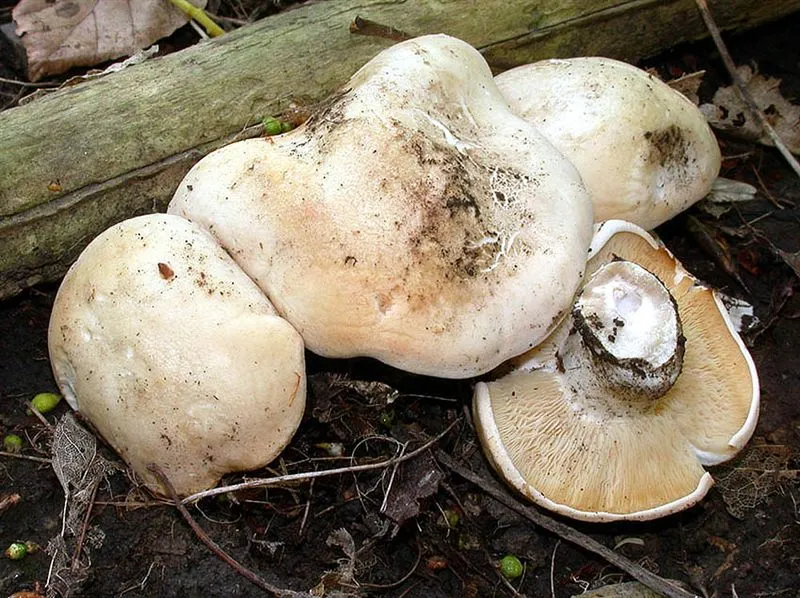
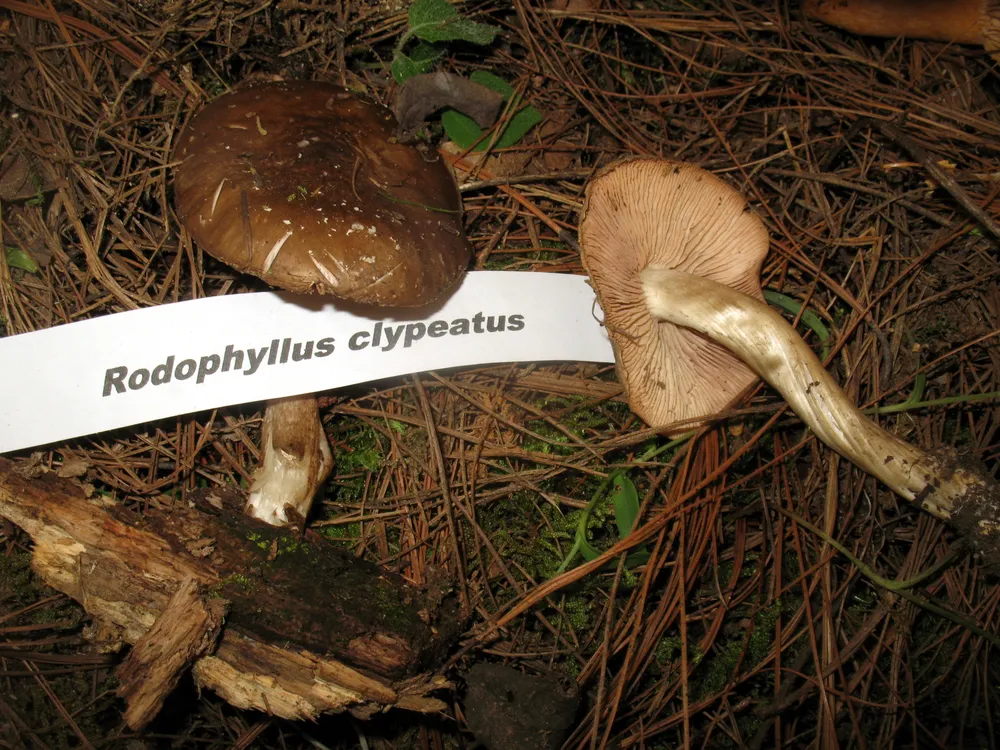
With young field mushrooms (Agaricus) — the most common and most fatal mix-up. With St George's mushroom (Calocybe gambosa) — also a whitish spring mushroom. With Shield pinkgill — also white and springtime. The general rule: never pick a white or cream forest mushroom without checking the flesh for reddening + taking a spore print. If the flesh turns red (wait at least 30 min) — absolutely do not eat it.
Is it different from other fibrecaps?
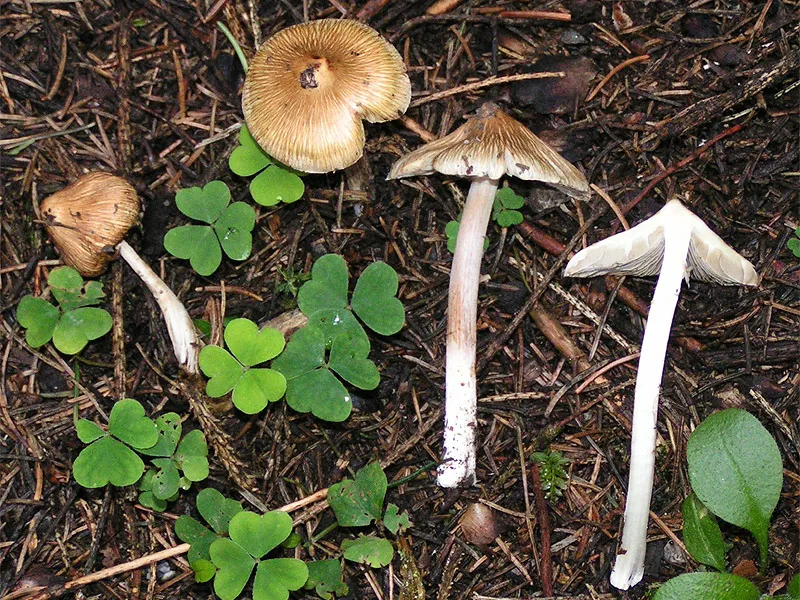
YES — it's the only well-known Inocybe with a white/cream cap that turns red. Other poisonous fibrecaps usually have a brown or yellowish cap from the very start. Reddening white cap + sweetish, fruity smell + olive-brown spore print = I. erubescens, the most dangerous of them all.
Is Deadly fibrecap edible or poisonous?
Does Deadly fibrecap have gills or pores?
What does the cap of Deadly fibrecap look like?
What does the stem of Deadly fibrecap look like?
Sources
- [1]Вікіпедія (українська)
- [2]Атлас грибів України, Зеров Д.К. (1979)
- [3]MycoBank Database
- [4]Index Fungorum
- [5]GBIF
- [6]iNaturalist Ukraine