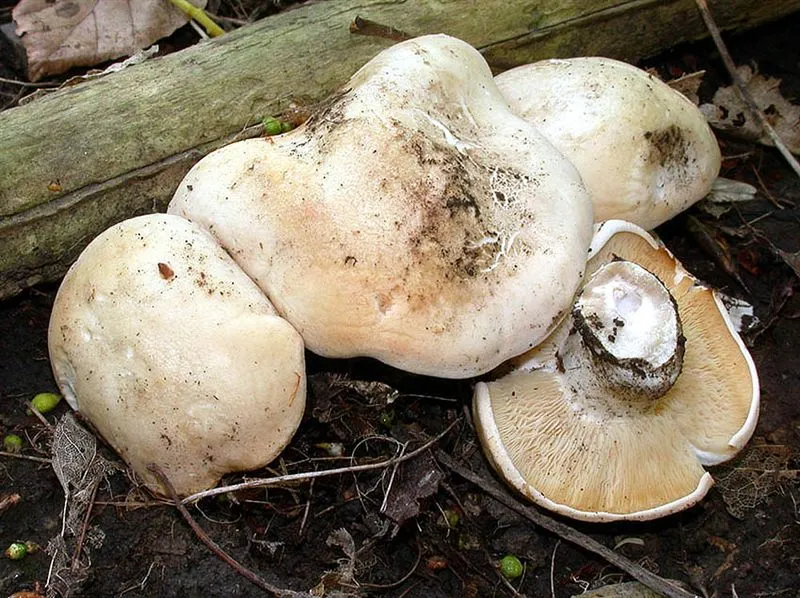
St George's mushroomCalocybe gambosa
Expert-verifiedUpdated October 3, 2026
Passport
- Edibility
- Edible
- Season
- Apr — Jun
- Hymenophore
- Gilled
- Cap color
- White
- Size
- Large (over 15 cm)
- Smell
- Floury
- Reviewed
- Yes ✓
Quick answers
Where to look?
Deciduous forest, Mixed forest
When does it appear?
Apr — Jun
Active months: April, May, June.
How to recognize it? Three signs
- Cap color: White, Cream
- Cap shape: Convex
- Smell: Floury
Fruiting season
April – June
Description
St George's mushroom (Calocybe gambosa, synonym Tricholoma gambosum, known across Europe as "St. George's mushroom" or "St. Yurii's mushroom") is a rare and very tasty spring mushroom whose appearance coincides with St. George's Day (April 23 in the Catholic calendar, May 6 in the Orthodox one). The Latin epithet gambosa means "short-legged", a nod to its characteristically low, stout stem. The cap is 5-15 cm across, very fleshy, creamy white to ochre-cream; hemispherical when young, it flattens to convex with a wavy margin as it ages.
An excellent edible mushroom with real culinary standing — in Italy, France and England it is traditionally prized on a par with porcini. The flesh is firm, fleshy, pure white, with a distinct mealy smell and a sweetish, nutty taste. No pre-boiling needed (fresh, it has no bitterness); cook it as you would porcini: fry, stew, pickle or dry it. Young fruiting bodies are especially prized.
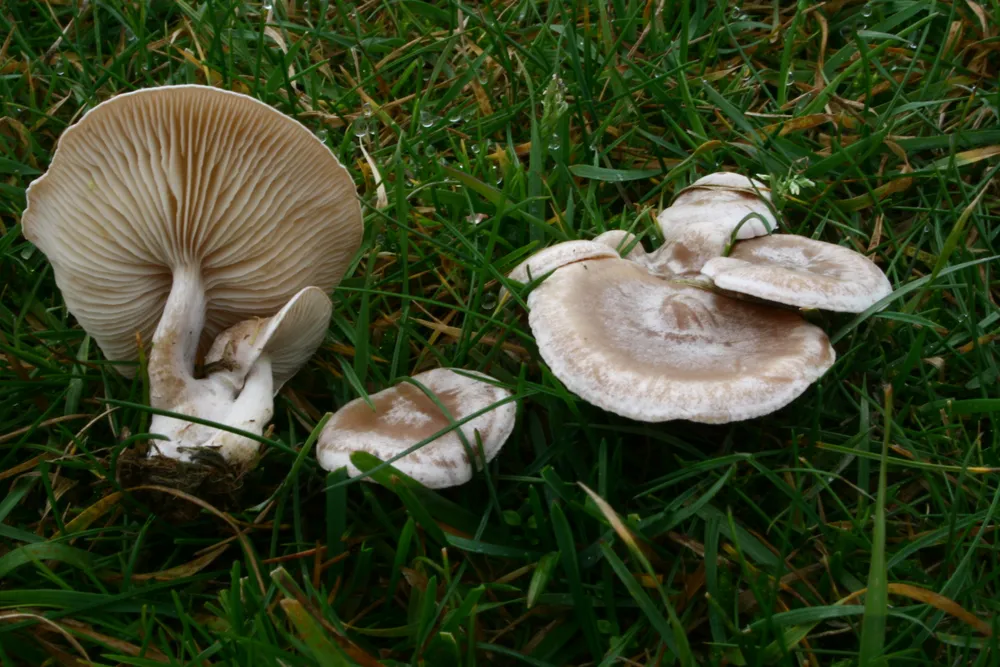
A very valuable trait — it is almost the only large, tasty mushroom of April–May in Ukraine. At a time when there are practically no other mushrooms (only morels), St George's mushroom gives you a real harvest for the kitchen. It often fruits in "fairy rings" 2-10 m across in meadows, at woodland edges and in orchards, next to blackthorn and dog rose — in clusters of 10-50 fruiting bodies at once.
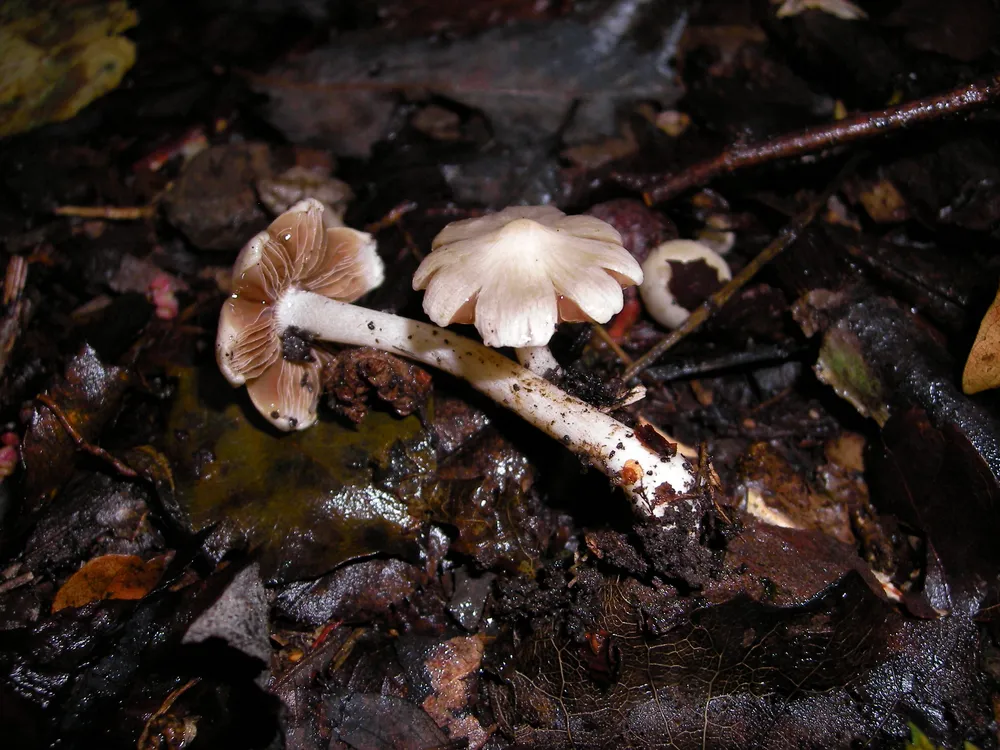
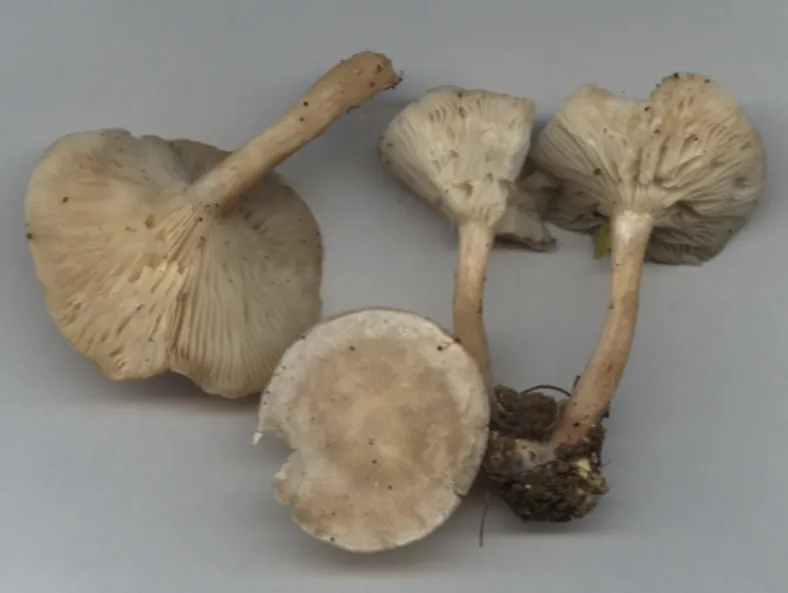
The main risk is confusing it with young Entoloma sinuatum (livid pinkgill) — also a large, whitish spring-to-summer mushroom with a mealy smell, but seriously poisonous! The key difference: Calocybe's spore print is WHITE, Entoloma's is pink to pinkish brown. The second one: Entoloma's gills turn pink with age, while Calocybe's stay creamy white. A spore print is a must, especially for beginners.
In Ukraine, St George's mushroom is rare to uncommon, known from the Carpathians, Prykarpattia, Podillia, and in part Polissia and the forest-steppe. Finds are very local — it fruits in the same glades and woodland edges year after year. The season is April — May (June), lasting a few weeks.
A precious find — if you come across a cluster, remember the spot and come back every spring.
Cap
The cap is 5-15 cm across (large, fleshy); when young it is hemispherical with an inrolled margin, with age becoming flat-convex, and in old specimens flat and spread out with a wavy margin. The skin is smooth, dry and matte in wet weather, with a fine felty fibrousness. Color: creamy white, ochre-cream, with a faint brownish tint at the center; in old specimens creamy ochre. The margin is even — inrolled when young, wavy and irregular when old.
Hymenophore
Lamellate hymenophore: the gills are notched (emarginate) at the stem, very crowded, thin, fleshy. Color: pure white to creamy white, with no pink or green tint — a diagnostic feature (it sets the mushroom apart from the poisonous Entoloma sinuatum, whose gills turn pink). Spore print white.
Stem
The stem is 3-7 cm tall, 1.5-3 cm thick — much shorter and thicker than the cap is wide (hence gambosa — "short-legged"). Cylindrical, thickening toward the base, firm, fleshy. Color: white to creamy white. Surface: smooth, with fine lengthwise fibers in the lower part. No ring.
Flesh
The flesh is very firm, fleshy, pure white. It does not change color when cut. Smell: distinctly mealy, sharp and characteristic (like freshly milled flour or dough); taste sweetish and nutty, with no bitterness.
Smell
Distinctly mealy, like freshly milled flour or raw dough — a diagnostic feature, easy to notice on a cut surface.
Lookalikes
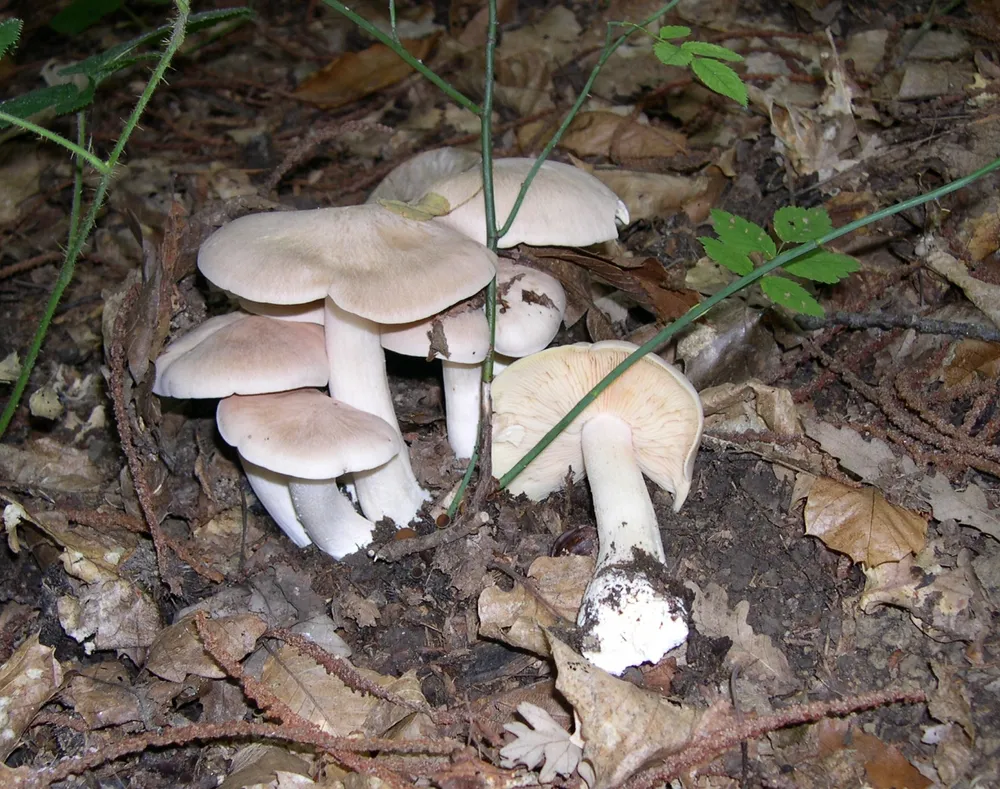
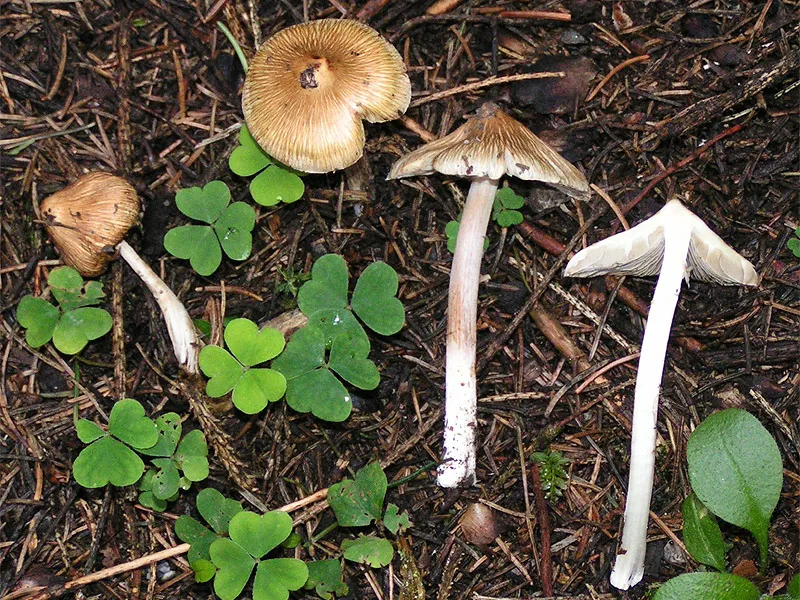
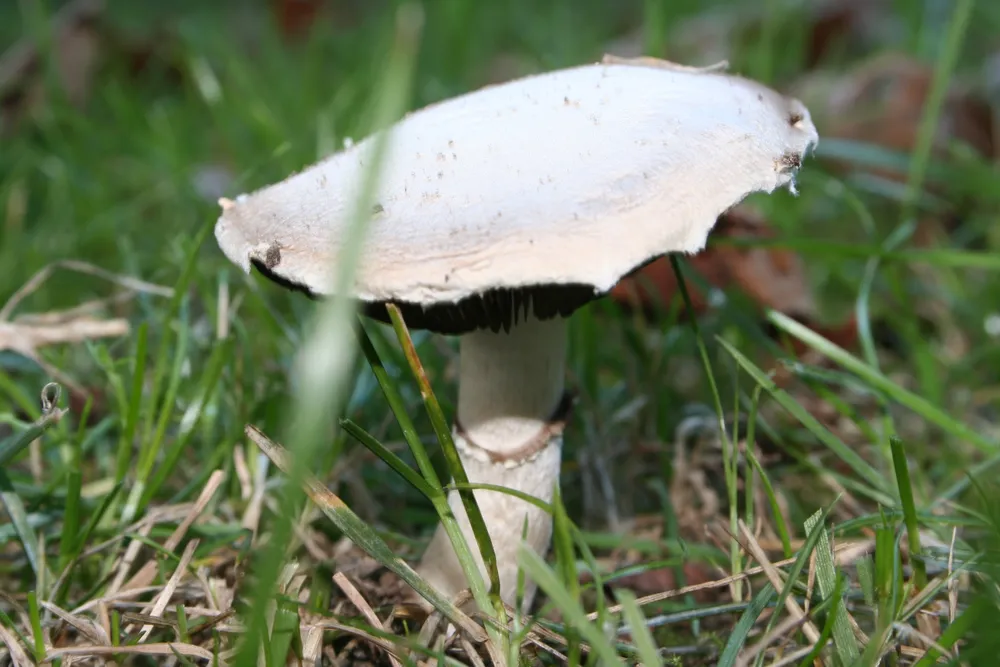
Related species
Mushrooms of the same genus and habitat — to study side by side and never mix up.

Clustered domecap
Lyophyllum decastes
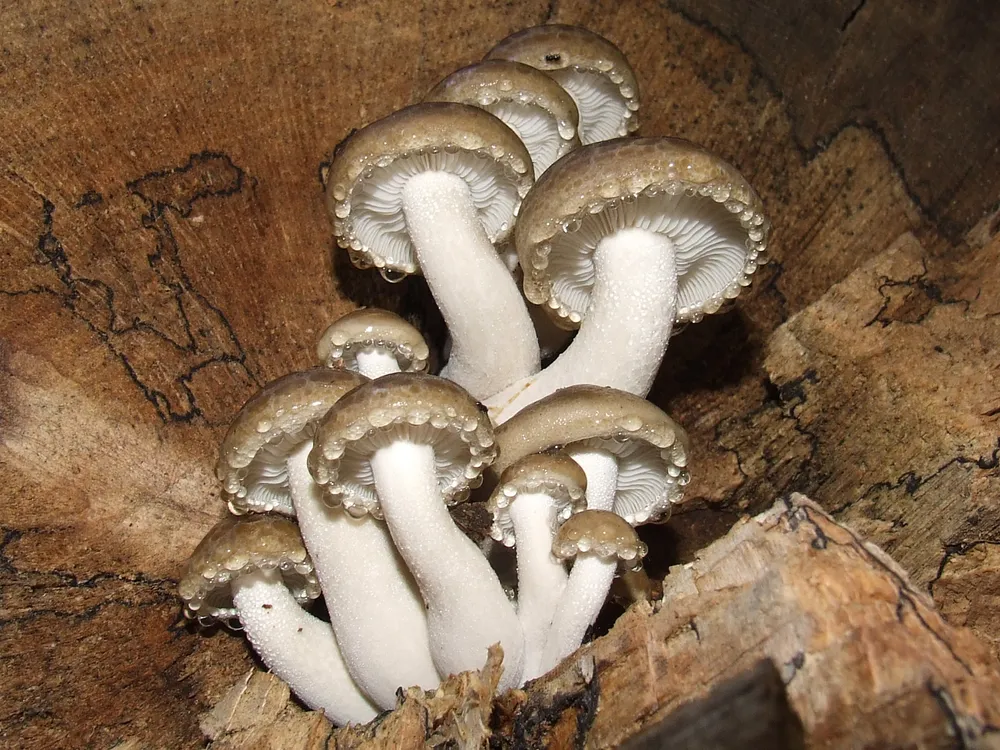
Elm oyster
Hypsizygus ulmarius
Gilded domecap
Lyophyllum favrei
Lyophyllum fumatofoetens
,_to_serve_as_an_atlas_to_the_Handbook_of_British_Fungi_(Pl._81)_(8163893789).webp)
Lyophyllum immundum
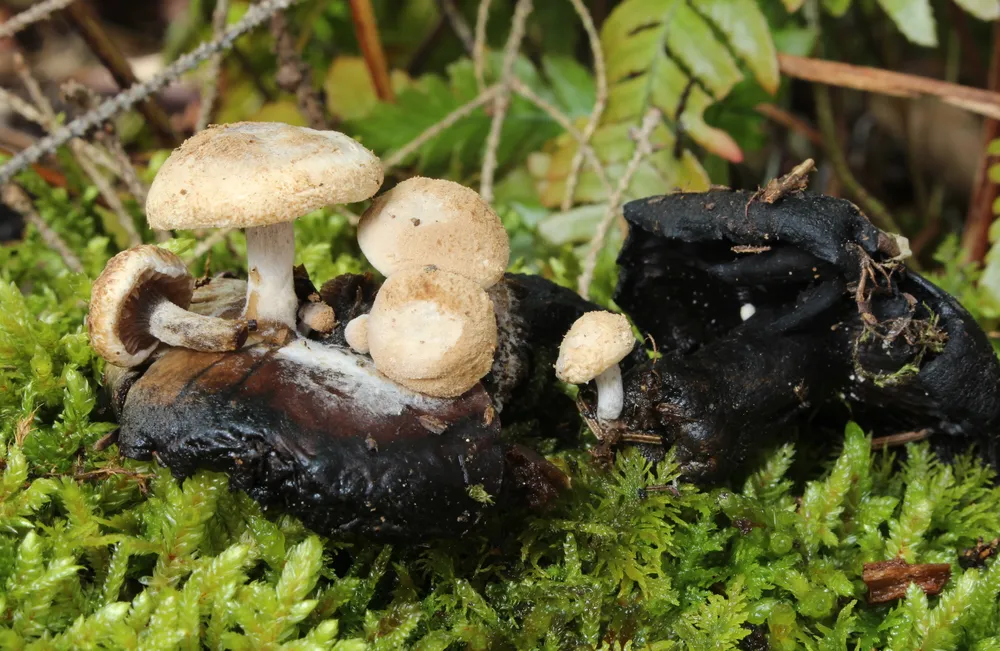
Powdery piggyback
Asterophora lycoperdoides
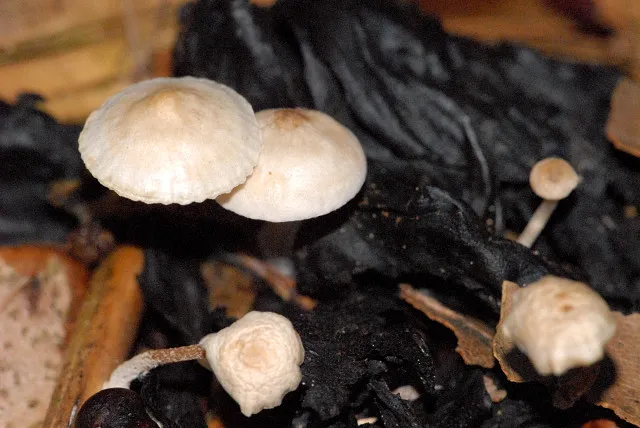
Silky piggyback
Asterophora parasitica
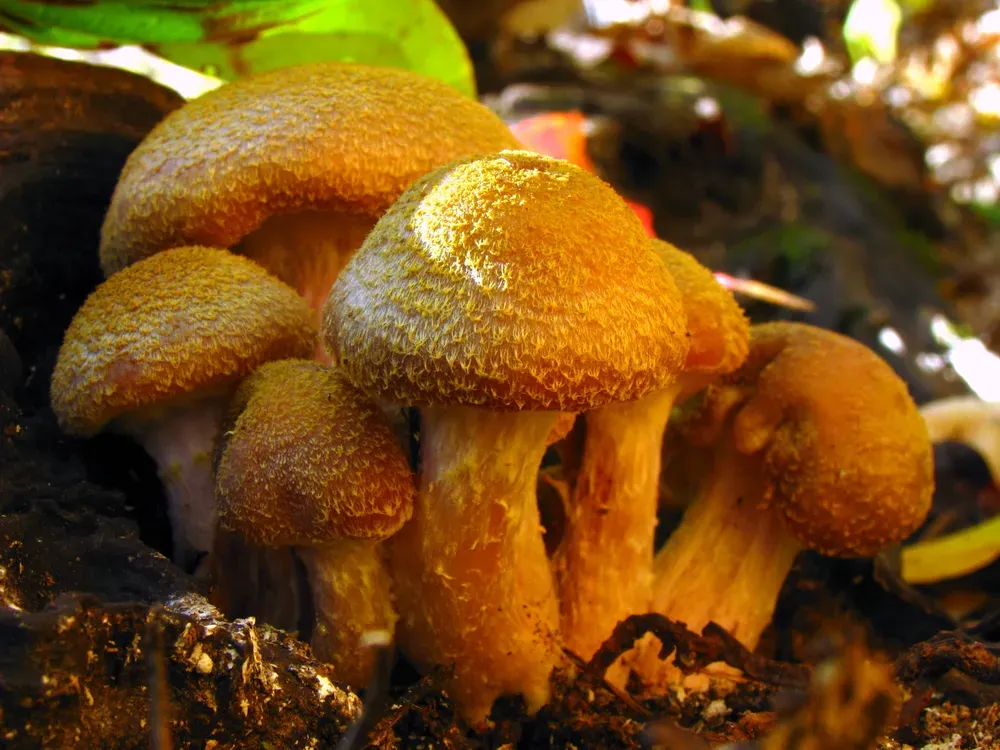
Bulbous honey fungus
Armillaria gallica
Frequently asked questions
How do you tell it from the poisonous Entoloma sinuatum?
Most important of all is the spore print. Calocybe gambosa — WHITE, Entoloma sinuatum — PINK to pinkish brown. Leave a cap on white paper for 12 hours and you will see the difference. Second check: in Calocybe the gills stay creamy white throughout its life; in Entoloma they turn pink with age because of the ripening pink spores. Third: Calocybe is a firm, fleshy mushroom with a thick, short stem; Entoloma is slimmer, with a longer, thinner stem.
Does it have other dangerous lookalikes?
Among spring mushrooms — Inocybe spp. (fibrecaps): smaller, with a distinctly conical cap covered in lengthwise fibers, rusty-brown spore print, and they contain muscarine (poisonous). Calocybe has a large, fleshy cap without obvious fibers and a white spore print. Also young Entoloma vernum (also a pink spore print).
How do you cook it?
No pre-boiling needed (fresh, it has no bitterness). Fry young ones with onion and cream (a classic!), stew with potatoes, add to soups, pickle. Drying works beautifully — the aroma is fully preserved, and dried it tastes almost like porcini. In broths and sauces it gives a rich, mealy-nutty flavor.
Where should you look for it?
In meadows, at woodland edges, in orchards, among dog rose and blackthorn, on grassy lawns in parks. It often forms "fairy rings" 2-10 m across. It likes grassy spots with calcium-rich soil — near old buildings, on limestone. It fruits in the same glade for decades — so the spot is worth remembering.
Where in Ukraine does it grow?
Rare to uncommon: mostly in the Carpathians, Prykarpattia and western Podillia (Ternopil and Khmelnytskyi regions); in part in Polissia and the forest-steppe, on old woodland edges and in orchards. Its distribution is patchy, with local "hot spots".
When should you look for it?
April — May (June), peaking around May 6 (St. George's Day in the Orthodox calendar). The season is short — 3-5 weeks. In a cold spring it may shift to mid-May.
What else is it confused with?
With a young Agaricus campestris (field mushroom) — also white, but with a ring on the stem and pink/brown gills. With Volvariella speciosa — which has a volva at the stem base. With Macrolepiota — those have scales on the cap and a movable ring. Calocybe gambosa has no ring, no volva, pure white gills and a distinct mealy smell.
Can it be cultivated?
Commercially — practically no (there is no commercial cultivation, unlike button mushrooms). In nature the mushroom is mycotrophic and relies on a symbiosis with grassland plants. Remember your wild spot and come back every spring — that will be your own "personal supply".
Is St George's mushroom edible or poisonous?
Does St George's mushroom have gills or pores?
What does the cap of St George's mushroom look like?
What does the stem of St George's mushroom look like?
Sources
- [1]Вікіпедія (українська)
- [2]Атлас грибів України, Зеров Д.К. (1979)
- [3]MycoBank Database
- [4]Index Fungorum
- [5]GBIF
- [6]iNaturalist Ukraine