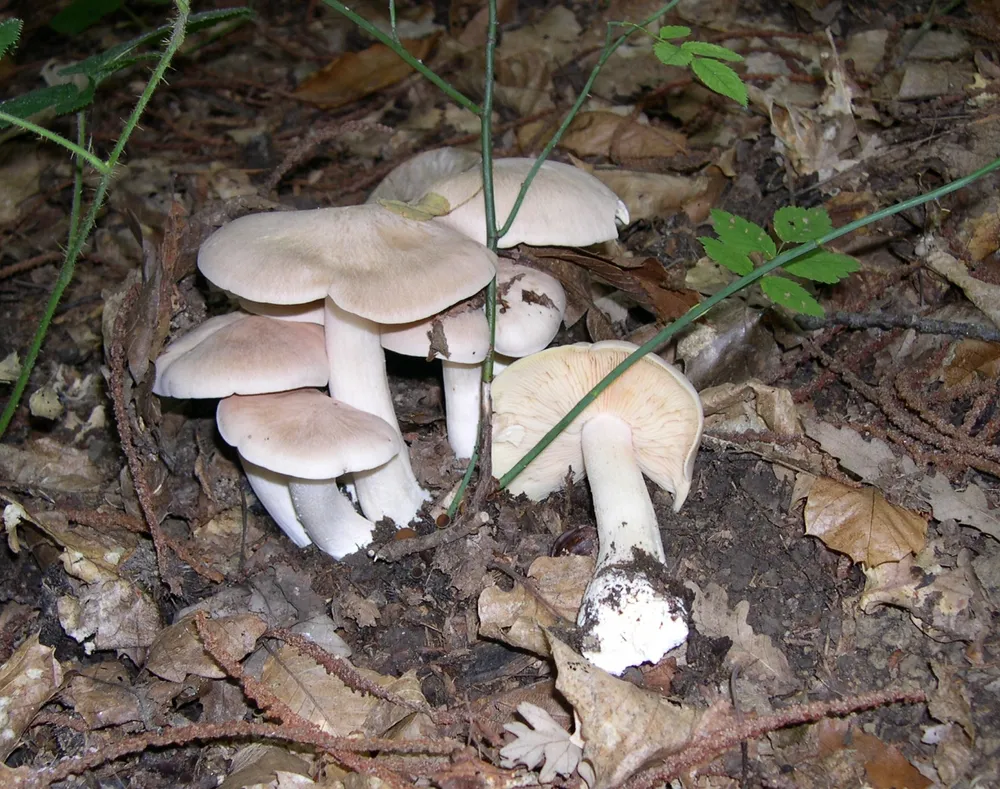
Livid pinkgillEntoloma sinuatum
Expert-verifiedUpdated October 3, 2026
Passport
- Edibility
- Poisonous
- Season
- Jul — Oct
- Hymenophore
- Gilled
- Cap color
- White
- Size
- Large (over 15 cm)
- Smell
- Floury
- Reviewed
- Yes ✓
POISONOUS
Eating it causes poisoning. Do not pick it unless you have identified it with certainty.
Toxins: a complex mixture, not fully identified; muscarine-like and gi-toxic compounds are suspected. The action is mainly gastrointestinal. Symptoms begin 30 minutes — 2 hours after the meal: severe nausea, repeated vomiting, exhausting watery diarrhea, abdominal pain, cramps. Acute symptoms last 24-48 hours, full recovery takes 3-7 days. In severe cases — dehydration, liver and kidney damage, less often heart arrhythmias. Deaths are rare but documented (mostly in children and people in poor health). Call an ambulance immediately if you suspect poisoning. Keep the remains of the mushroom and the vomit for identification. Don't try to pump the stomach at home — that's a doctor's job.
If you suspect poisoning, call an ambulance immediately: 112 (the European emergency number) or your local emergency number
Quick answers
Where to look?
Deciduous forest, Mixed forest
When does it appear?
Jul — Oct
Active months: July, August, September, October.
How to recognize it? Three signs
- Cap color: White, Cream, Grey, Yellow
- Cap shape: Convex
- Smell: Floury
Fruiting season
July – October
Description
The livid pinkgill (also known as the lead poisoner, Latin Entoloma sinuatum) is one of the best-known culprits behind mass mushroom poisonings in Europe. It's a large, stately mushroom that looks like an Agaricus or a knight, with a whitish or grayish-yellow cap and a meaty stem. With age it gives itself away by the characteristic pinkish tint of its gills — the spore print of Entoloma is always pinkish-brown. It's this pink detail that saves lives: before it shows up, the mushroom looks so appetizing that people regularly put it in their baskets. The symptoms of poisoning are harsh but rarely fatal — nausea, vomiting and exhausting diarrhea 30 minutes — 2 hours after the meal, lasting 2-3 days, with possible liver and kidney damage.
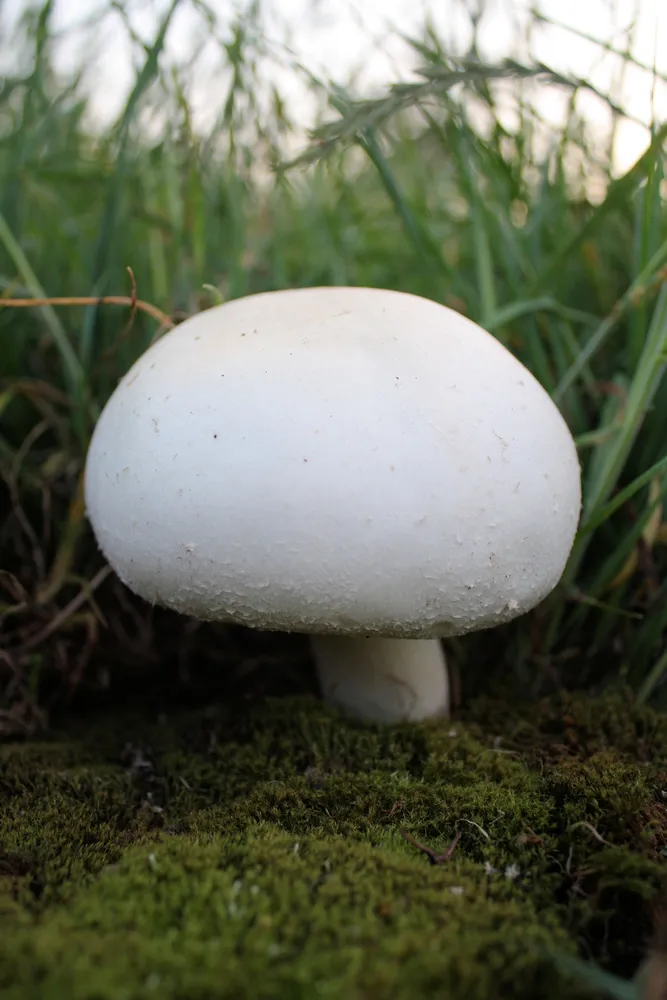
This is a highly poisonous mushroom that you must not eat in any form. Neither boiling nor pickling helps — the toxins are heat-stable. The special danger lies in how much it looks like valuable edible species: a young Agaricus, a knight, the shield pinkgill. Most poisonings involve beginner foragers who spotted a big “meaty mushroom in a field” and put it in their basket. Only one habit saves you: check the gill color on a mature mushroom and take a spore print on clean paper. In every Entoloma it's pink — this is what fundamentally sets the genus apart from Agaricus (dark brown) and knights (white).
In Ukraine it is widespread in the forest and forest-steppe zones — it grows in deciduous and mixed forests, most often under oak, beech, hornbeam and hazel. It forms mycorrhiza. Season — late summer and all of autumn: July-October. It often grows in groups and rings ("fairy rings") of 5-20 fruiting bodies.
Cap
Cap 6-20 cm across, hemispherical to convex in young mushrooms, spreading out with age, with a broad umbo in the center. Color pale gray, dirty white, ivory, with a yellowish or yellowish-livid tint — hence the name. The surface is smooth and silky-shiny, slippery in the rain and dry in dry weather. The cap skin is tough and does not peel.
Hymenophore
Gills. The gills are fairly broad (up to 1 cm), notched where they meet the stem; in young mushrooms they are whitish-yellowish, with age they take on a characteristic pinkish, then salmon color. Spore print pinkish-brown — the key diagnostic feature of the whole genus Entoloma.
Stem
Stem 5-15 cm tall, 1-3 cm thick, cylindrical, thickened toward the base. Color whitish to dirty white. The surface is lengthwise-fibrous, with no ring. Flesh of the stem is firm, hollow in old mushrooms.
Flesh
Flesh is thick, meaty, white, does not change color when cut. The smell and taste of the fresh flesh are pleasant, mealy-cucumber — which makes this species all the more treacherous: it smells and tastes “right”, and nothing raises suspicion while you clean it.
Smell
Mealy-cucumber — typical of many Entoloma. In old mushrooms it's sourish and unpleasant. The taste is mild and mealy. Do NOT rely on taste for identification — it tells you nothing about toxicity.
›Scientific synonyms (1)
Entoloma lividum (Bull. ex St.Amans) Quél.
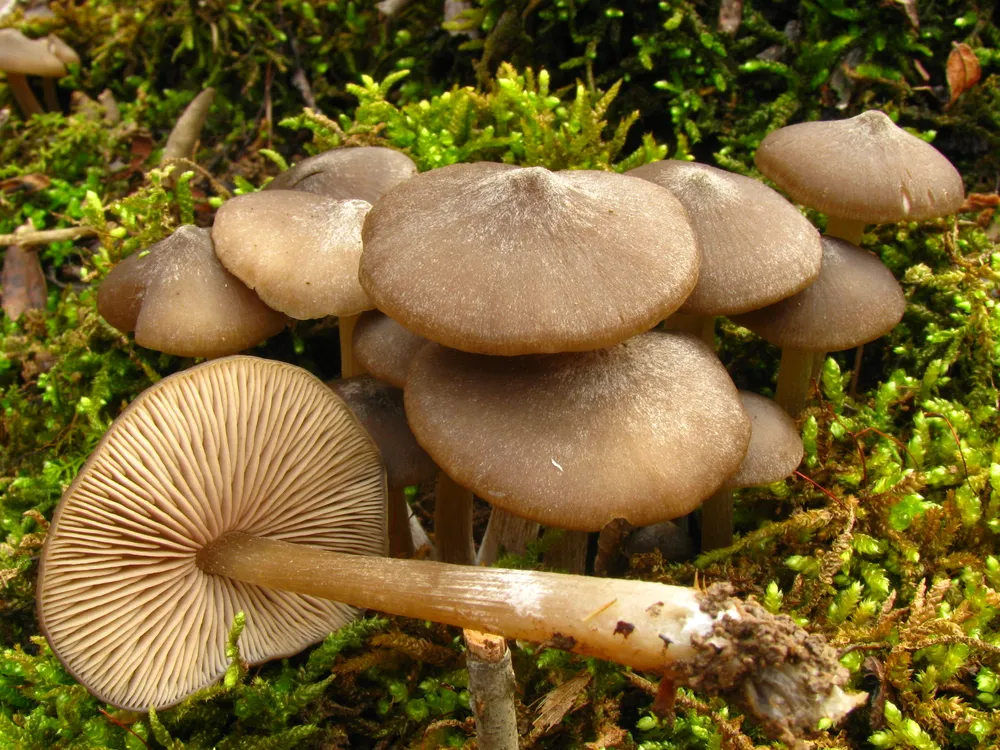
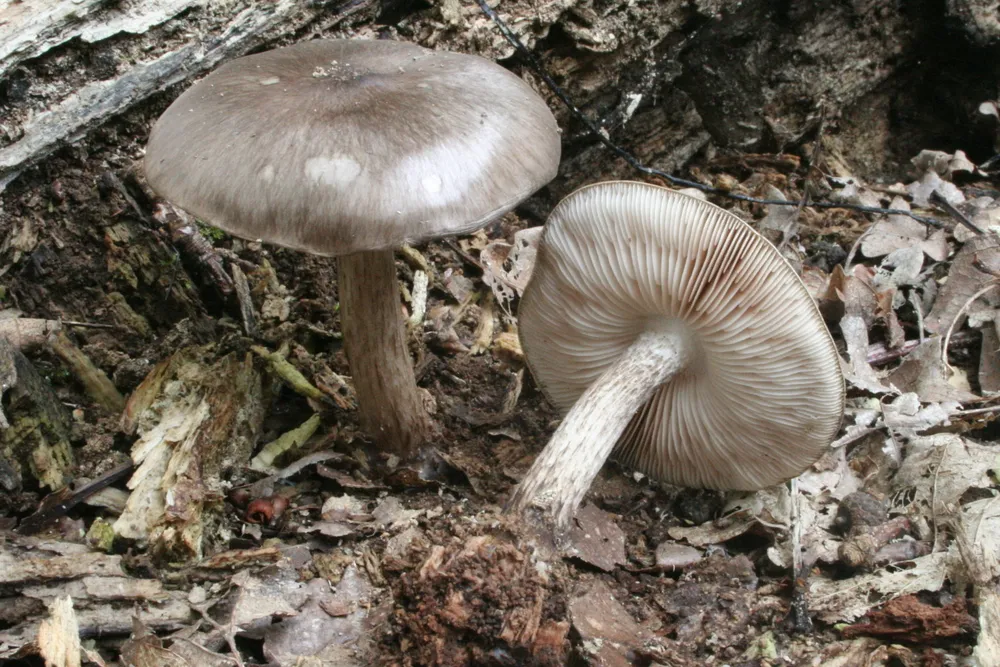
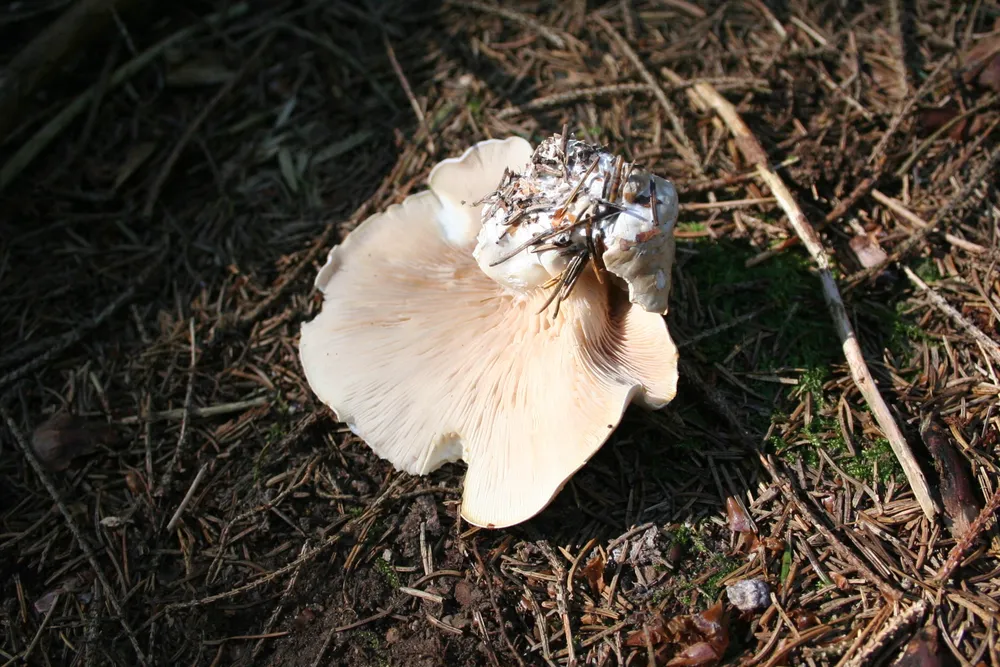
Lookalikes
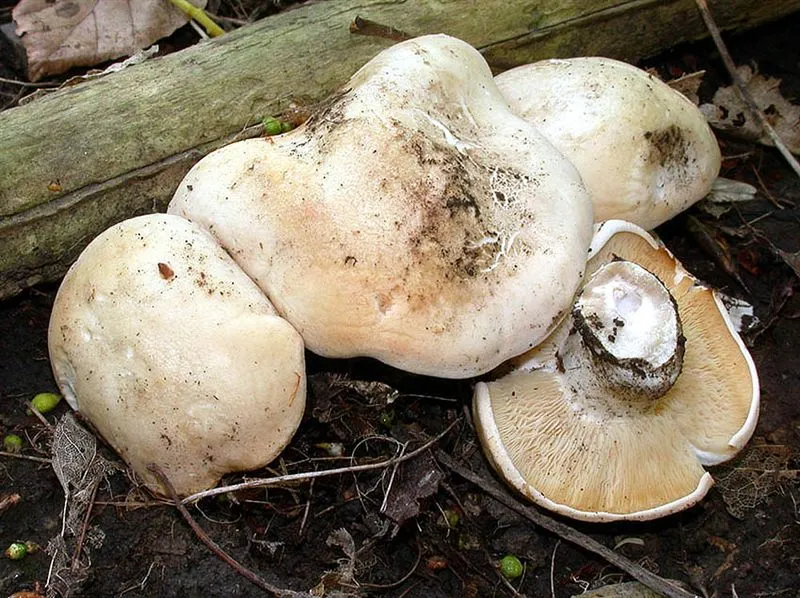
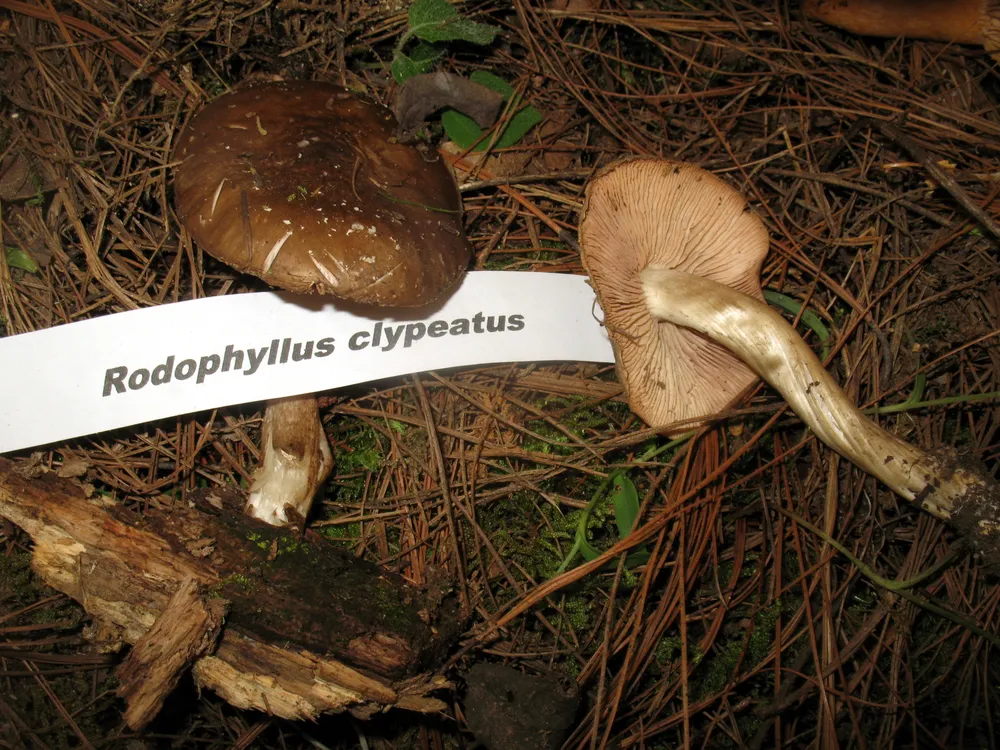
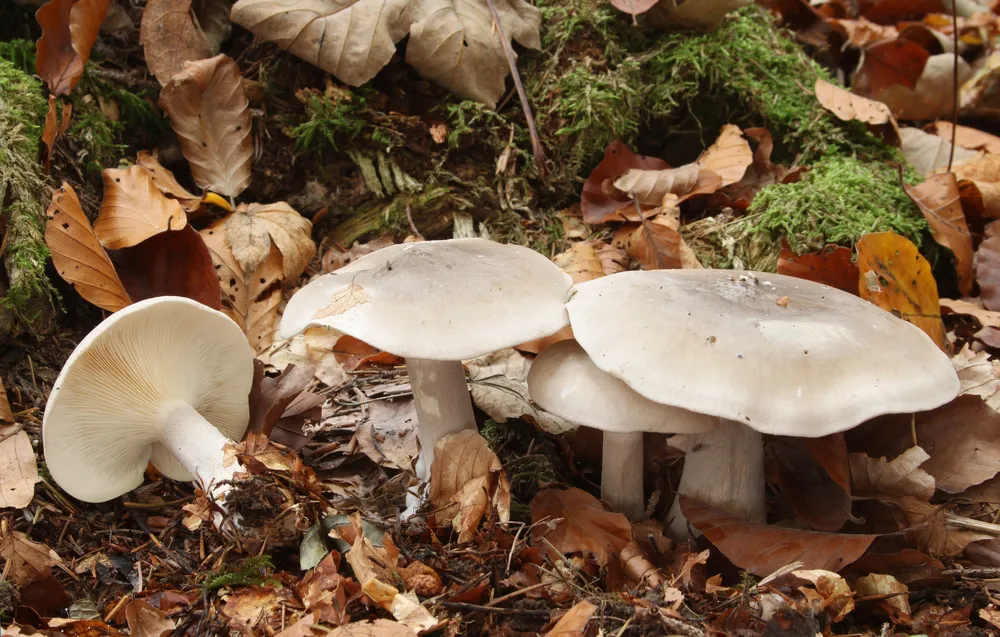
Related species
Mushrooms of the same genus and habitat — to study side by side and never mix up.
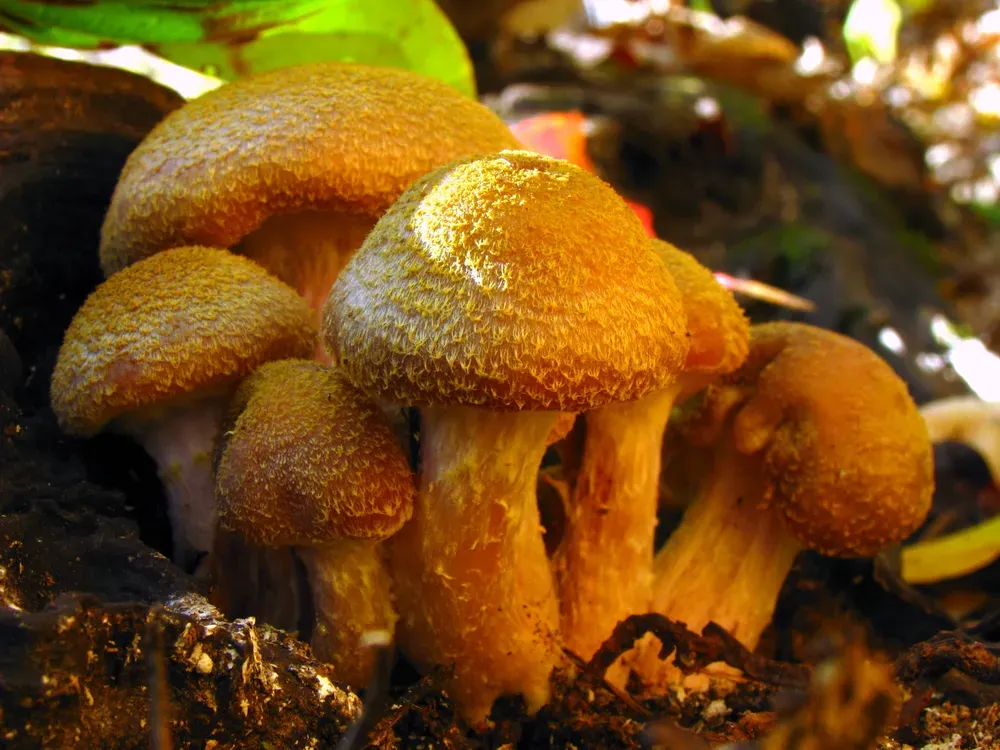
Bulbous honey fungus
Armillaria gallica
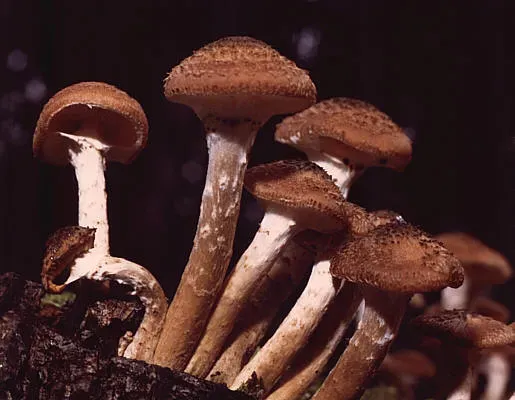
Dark honey fungus
Armillaria ostoyae
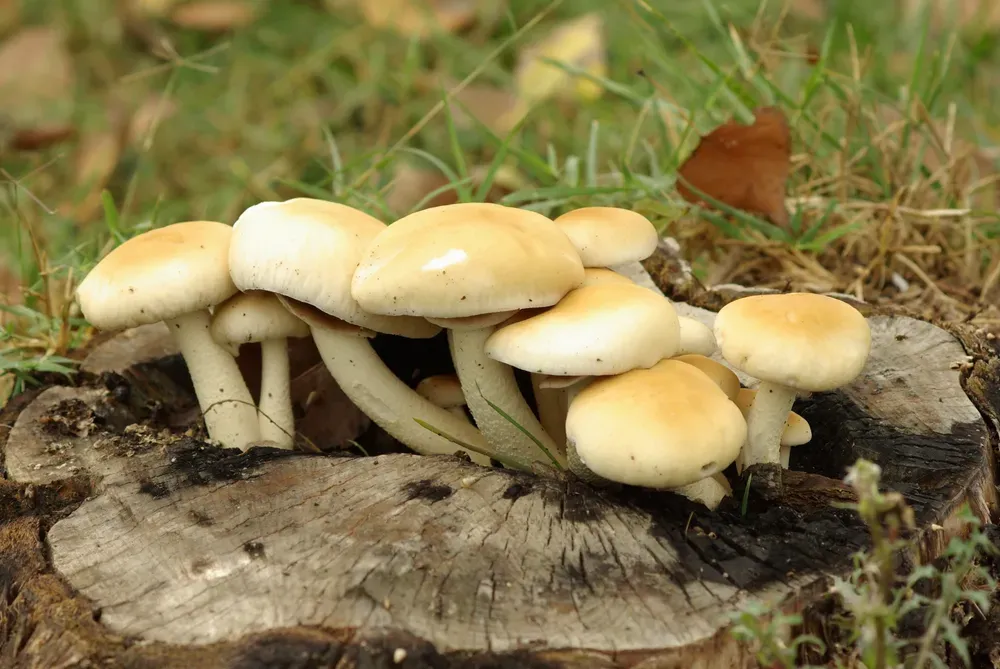
Poplar fieldcap
Cyclocybe aegerita
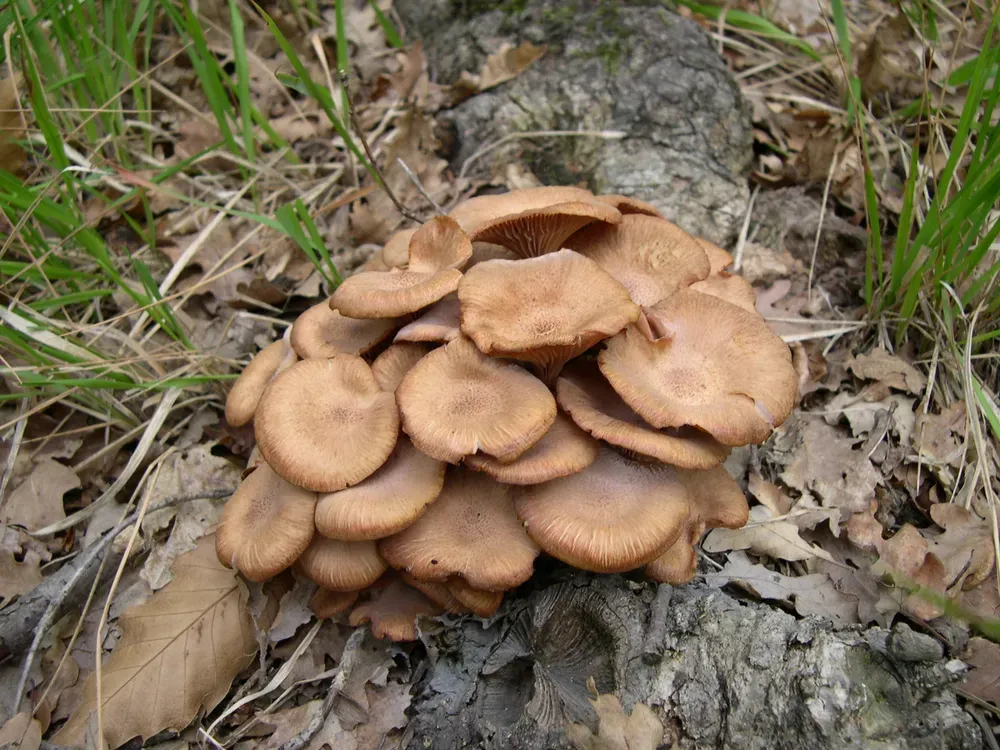
Ringless honey fungus
Desarmillaria tabescens
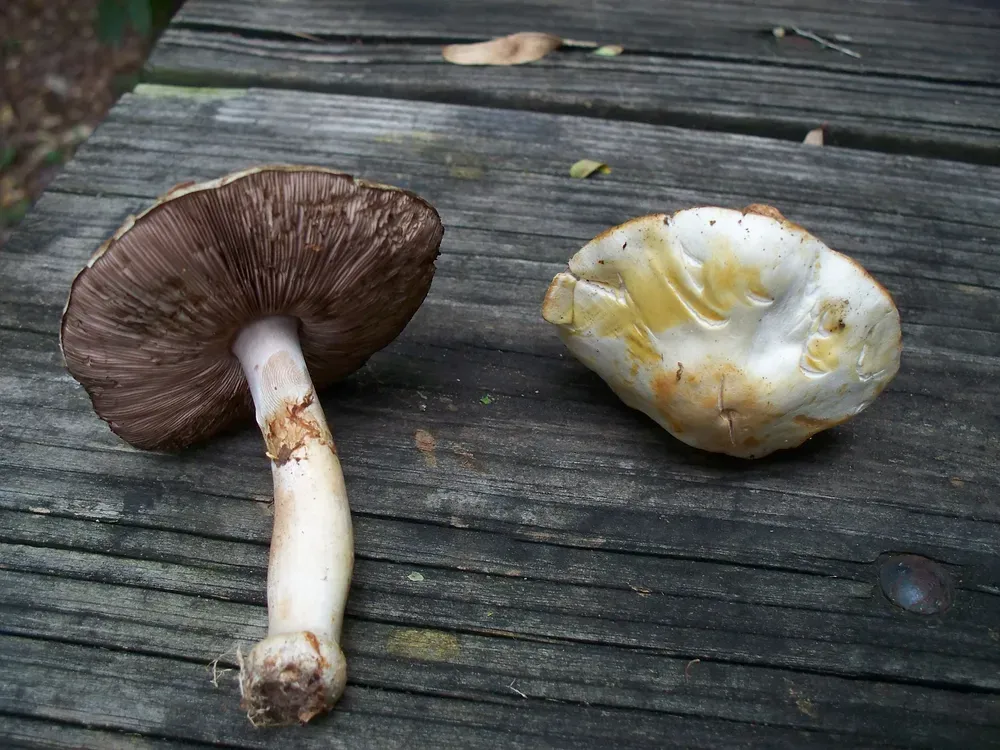
Agaricus abruptibulbus
Agaricus haemorrhoidarius
Agaricus haemorroidarius
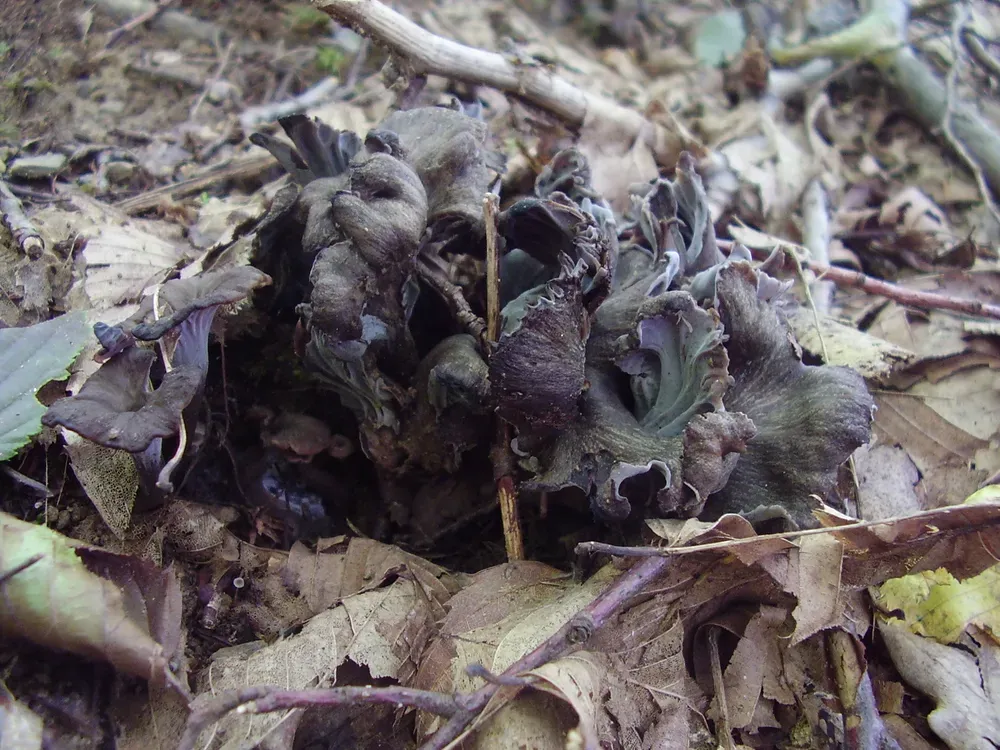
Ashen chanterelle
Cantharellus cinereus
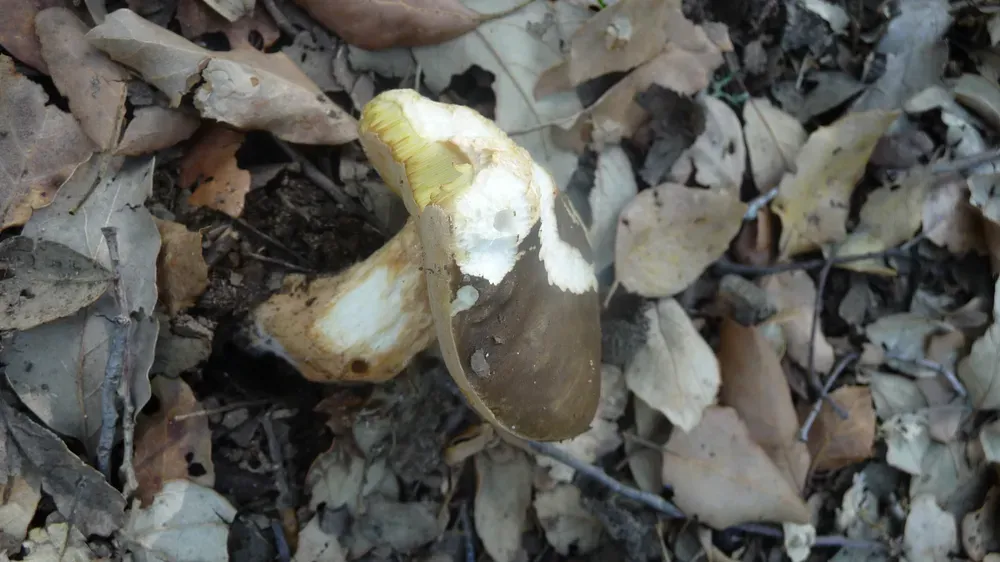
Blushing bolete
Leccinum roseofractum
Frequently asked questions
What happens if you eat it by accident?
30 minutes — 2 hours after the meal, severe nausea, repeated vomiting and exhausting diarrhea will set in. Call an ambulance immediately — 112 or your local emergency number. Collect the remains of the mushroom and any vomit in a bag — the doctor will need to identify the culprit. Don't try to “drink lots of water” or “make yourself vomit” on your own — that's done by a doctor in hospital. The outlook is good if you get help quickly, but liver and kidney damage is possible, so follow-up blood tests are a must.
How do you NOT confuse it with an Agaricus?
Two fundamental differences. (1) Gills: in a young Agaricus they are pink, then chocolate-brown, and in an old one almost black. In Entoloma the gills are whitish at first, then turn pinkish-salmon and stay that way. (2) Spore print: in Agaricus it's dark brown or blackish-brown, in Entoloma pinkish-brown. Taking a print is easy: cut off the cap, lay it gills down on white paper, cover with a glass, and check the color after 2-6 hours.
And if I boil it for a long time — will it become edible?
NO. The toxins of Entoloma sinuatum are heat-stable — boiling, pickling, drying and freezing do not destroy them. No method of preparation makes this mushroom safe. Not eating it is the only right approach.
Where does it usually grow?
In deciduous and mixed forests, most often under oak, beech, hornbeam, hazel. It forms mycorrhiza — meaning it is tied to specific trees. It does NOT grow in meadows or open fields (this sets it apart from the field mushroom). It often grows in rings ("fairy rings") of 5-20 mushrooms. It likes rich, moist, alkaline soils.
Which regions of Ukraine is it found in?
The forest-steppe zone (Western, Right-Bank and Left-Bank Forest-Steppe), Polissia, the Carpathians and Prykarpattia, less often in the ravine forests of the Steppe. Most common in the oak and beech forests of Podillia, Kyiv region, Poltava region and the Carpathians.
When does it fruit?
Late July — October, peaking in August-September. It loves a warm, damp autumn. It does not appear in the cold months (November-May).
What is it most often confused with?
With three edible groups: (1) Agaricus mushrooms — checking the spore print saves you (blackish-brown in Agaricus, pink in Entoloma). (2) Knights (Tricholoma) — knights have a spore print that is white, never pink. (3) The shield pinkgill (Entoloma clypeatum) — an edible relative that grows in spring under rosaceous trees (apple, plum, hawthorn). Tell them apart by season (shield pinkgill — May-June, livid pinkgill — August-October) and by habitat.
Why isn't this a "death cap"?
The death cap (Amanita phalloides) is a different kind of poison: deadly poisonous, with a slow-acting toxin (amatoxin), no immediate symptoms, a ring on the stem and a volva at the base. Entoloma sinuatum has no ring and no volva, and it poisons violently and quickly, but the outlook is better. These are two different kinds of danger: the death cap is quiet and kills within one to three days, the livid pinkgill is loud and wears you out over one to two days without high mortality.
Is Livid pinkgill edible or poisonous?
Does Livid pinkgill have gills or pores?
What does the cap of Livid pinkgill look like?
What does the stem of Livid pinkgill look like?
Sources
- [1]Вікіпедія (українська)
- [2]Атлас грибів України, Зеров Д.К. (1979)
- [3]MycoBank Database
- [4]Index Fungorum
- [5]GBIF
- [6]iNaturalist Ukraine