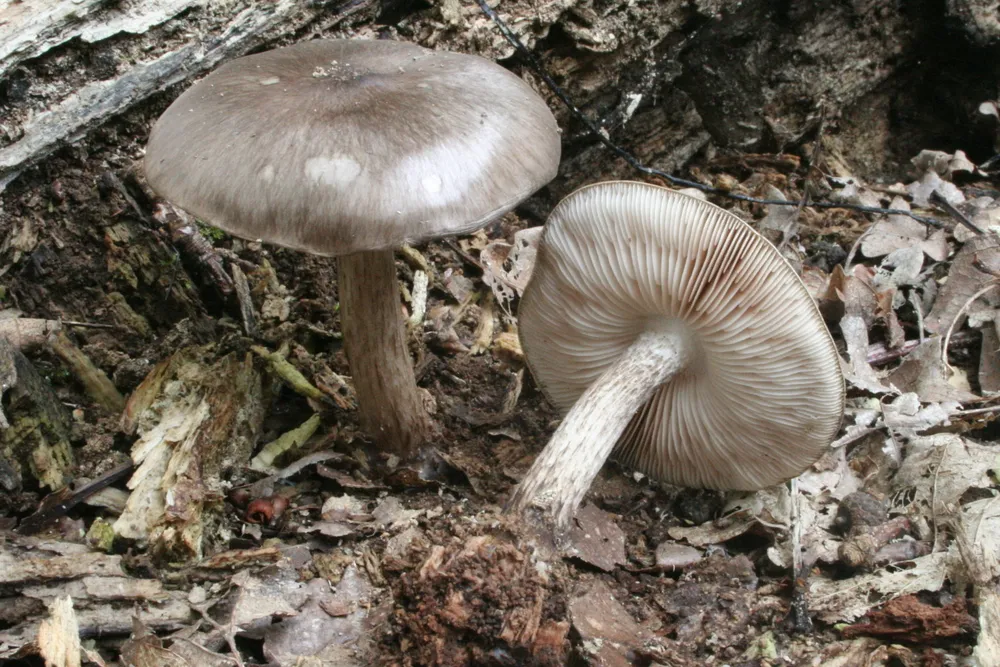
Deer shieldPluteus cervinus
Expert-verifiedUpdated October 3, 2026
Passport
- Edibility
- Edible
- Season
- May — Oct
- Hymenophore
- Gilled
- Cap color
- Brown
- Size
- Medium (5–15 cm)
- Smell
- Radish-like
- Reviewed
- Yes ✓
Quick answers
Where to look?
Deciduous forest, Mixed forest
When does it appear?
May — Oct
Active months: May, June, July, August, September, October.
How to recognize it? Three signs
- Cap color: Brown, Dark brown, Grey
- Cap shape: Convex
- Smell: Radish-like, Odorless
Fruiting season
May – October
Description
The deer shield (Pluteus cervinus, also known as the "deer mushroom") is the most common member of the large genus Pluteus in our forests. The Latin epithet cervinus, "of a deer," refers to the brownish-gray color of the cap, which resembles a deer's coat. It is a saprotroph on the rotting wood of deciduous trees, often growing singly or in twos and threes on old stumps and fallen trunks.
Edible, but middling in the kitchen. The flesh is soft and watery, with a neutral taste. Good for frying in a mix with other mushrooms, or for pickling. On its own it doesn't impress, lacking any distinctive mushroom aroma. Young mushrooms are better than old ones.
Its safety value is diagnostic. The deer shield is easy to recognize by two features: pink gills and a stem with no ring. That makes it a good example for learning to tell mushrooms apart from the deadly poisonous amanitas (with a ring and a volva). It's the perfect species to start your study of forest mycology with.
In Ukraine it is widespread in all forest types: the Carpathians, Prykarpattia, Polissia, and the forest-steppe. It is a saprotroph on the rotting wood of oak, beech, hornbeam, birch, and poplar, less often on conifers. Season: May to October, peaking in June (the summer flush) and in August-September. One of the longest mushroom seasons: it fruits almost year-round when there's enough moisture.
Cap
Cap 4-12 cm across, hemispherical to conical-convex with an umbo when young, later becoming convex-flat with a low umbo. Color brownish-gray, deer-brown, dark brown, darker when young, fading to gray-brown with age. Surface smooth with fine, darker radial fibers, slightly sticky in wet weather.
Hymenophore
Gilled hymenophore: the gills are free (not attached to the stem), crowded. When young they are whitish, later turning pink from the mature pink spores. Spore print PINK: a diagnostic feature of the genus Pluteus (one of the few gilled forest mushrooms with pink spores).
Stem
Stem 5-12 cm tall, 0.8-1.5 cm thick, cylindrical, long, relatively thin, often thickened toward the base. Color whitish to gray-brown, with fine, darker lengthwise fibers. No ring, no volva: diagnostic against amanitas.
Flesh
Flesh soft, watery, white. When cut, it does not change color. Smell faint; in some populations with a hint of radish or raw potato.
Smell
Faint, neutral, mushroomy; in some populations with a hint of radish or raw potato.
›Scientific synonyms (7)
Agaricus atricapillus Batsch, Agaricus fertilis Pers., Agaricus phonospermus Bull., Gymnopus fertilis (Pers.) Gray, Agaricus cervinus Schaeff., Agaricus curtisii Berk., Pluteus atricapillus var. albus Vellinga
Lookalikes
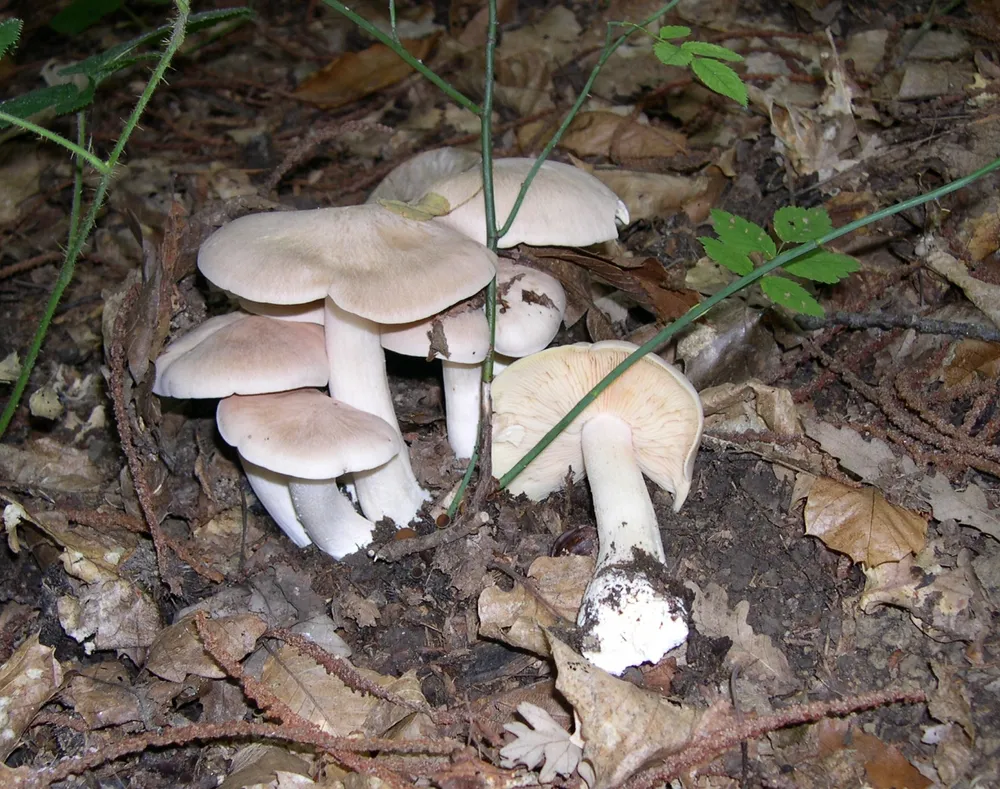

Related species
Mushrooms of the same genus and habitat — to study side by side and never mix up.
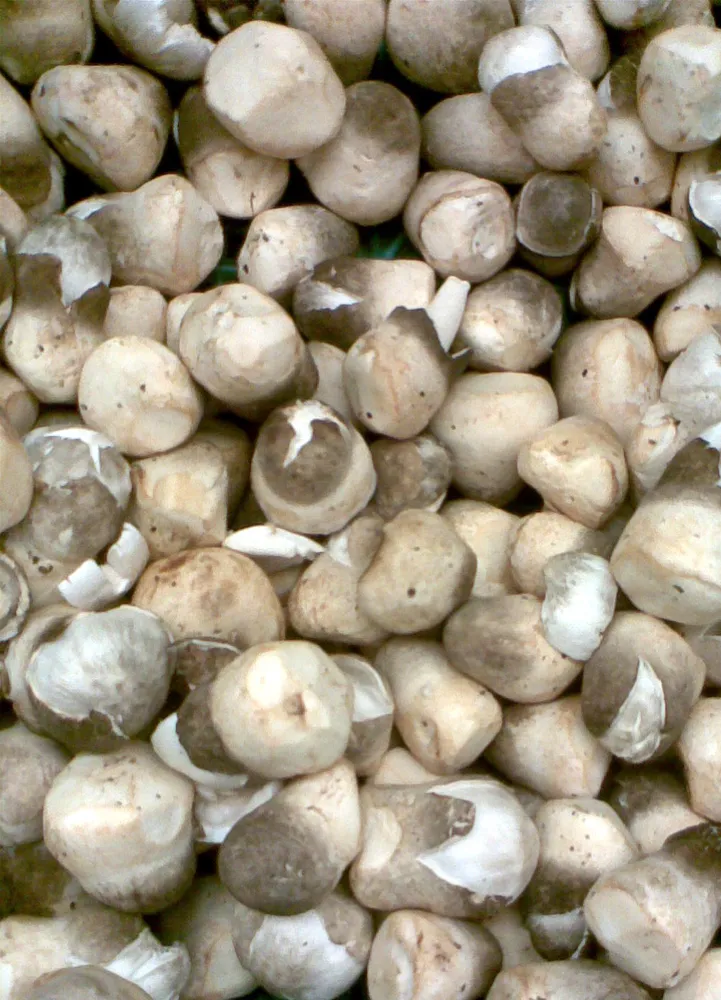
Paddy straw mushroom
Volvariella volvacea
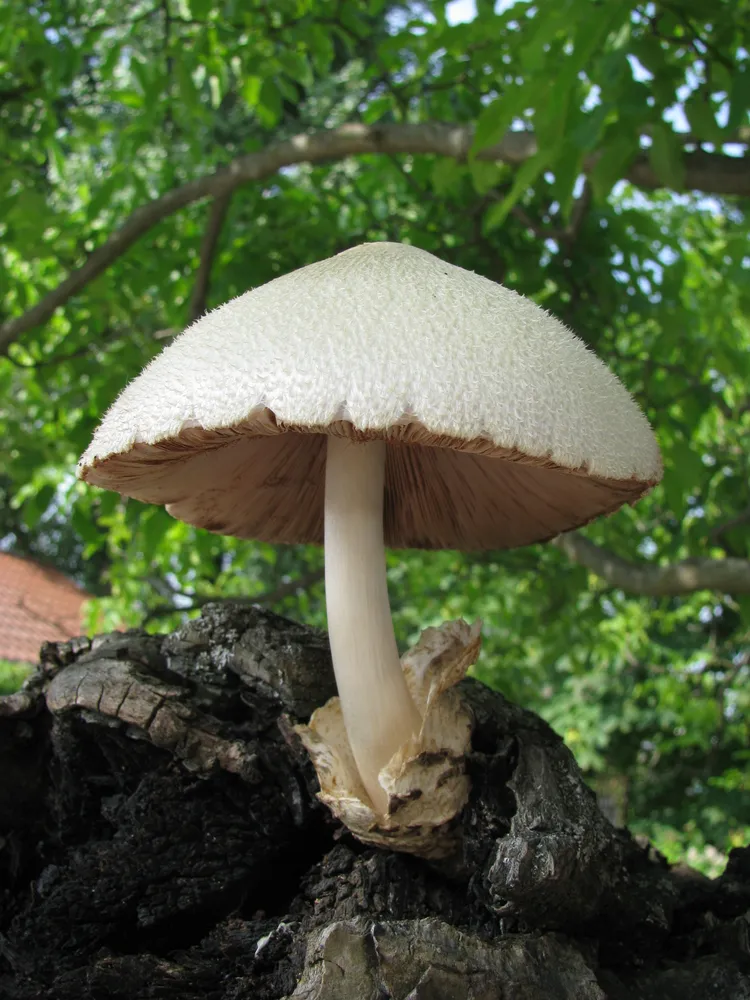
Silky rosegill
Volvariella bombycina
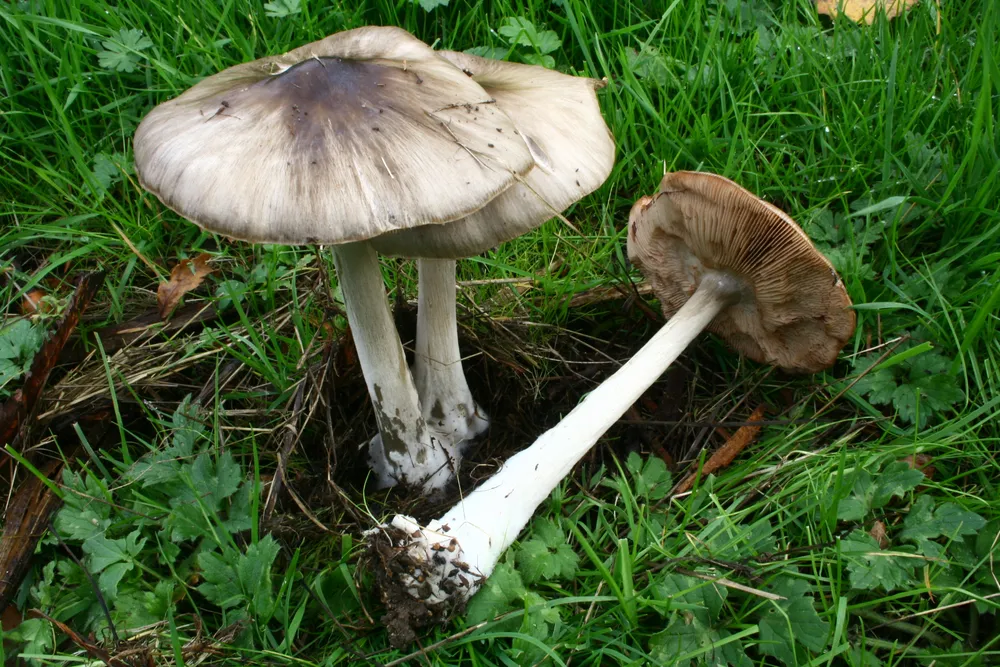
Stubble rosegill
Volvopluteus gloiocephalus
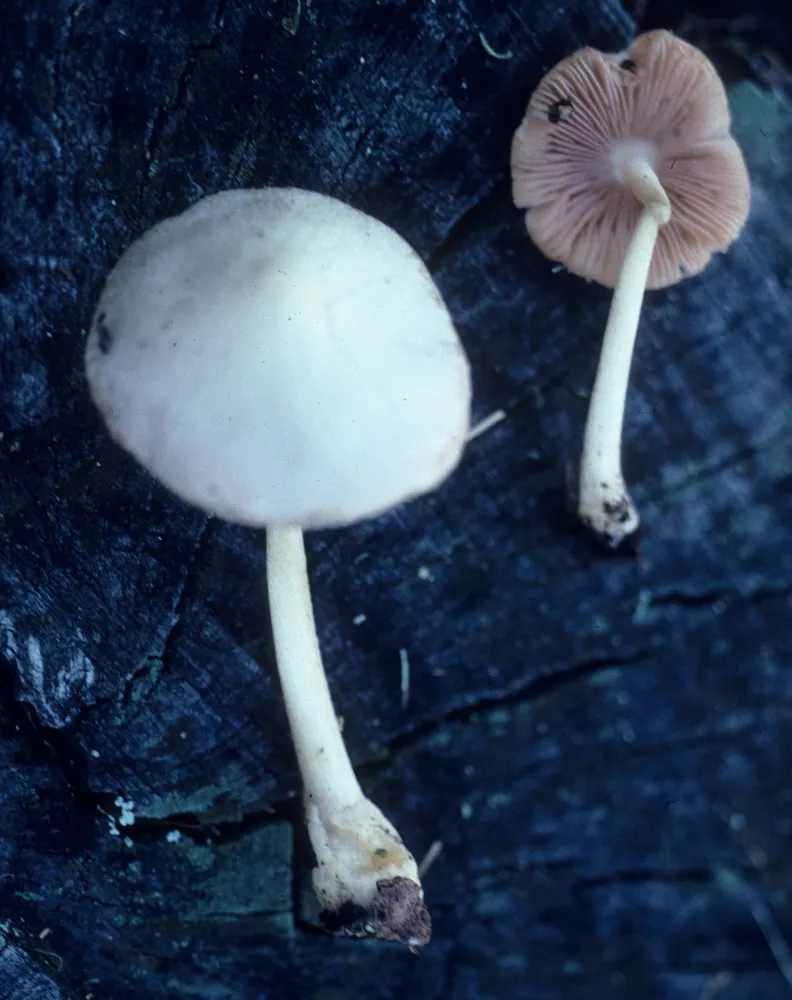
Volvariella hypopithys
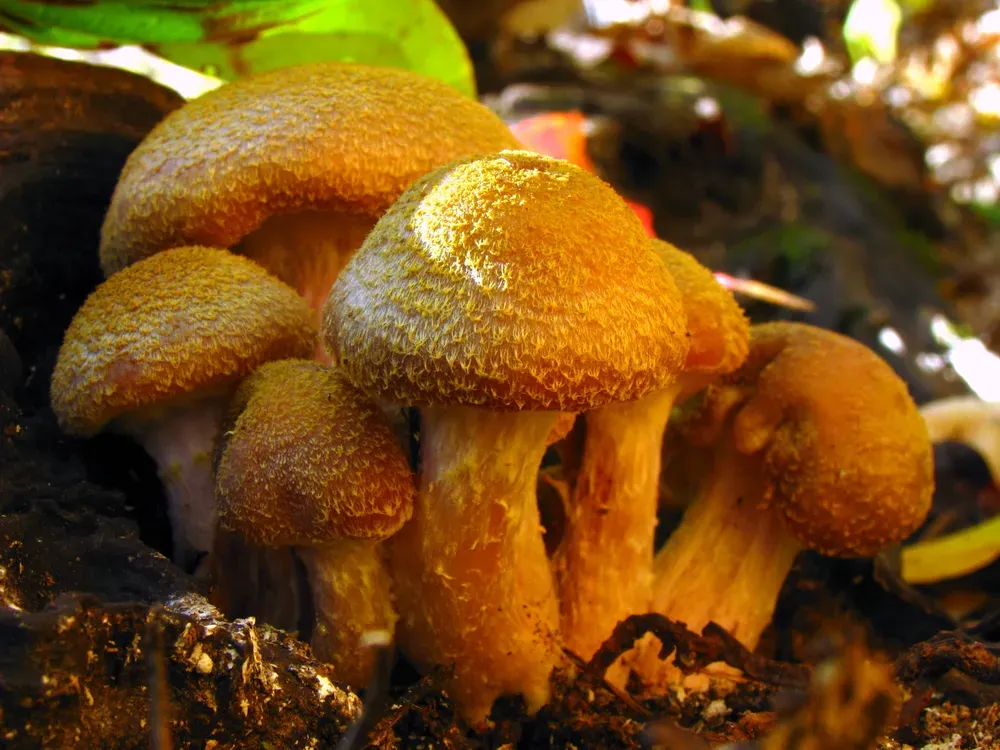
Bulbous honey fungus
Armillaria gallica
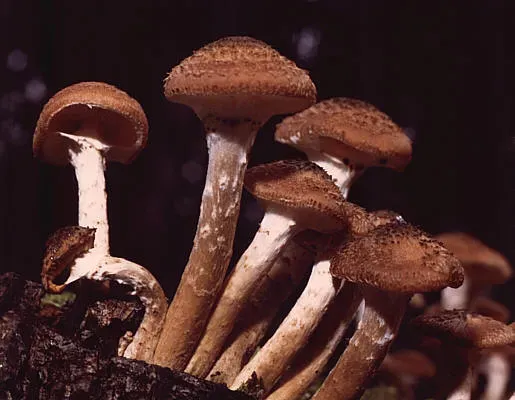
Dark honey fungus
Armillaria ostoyae
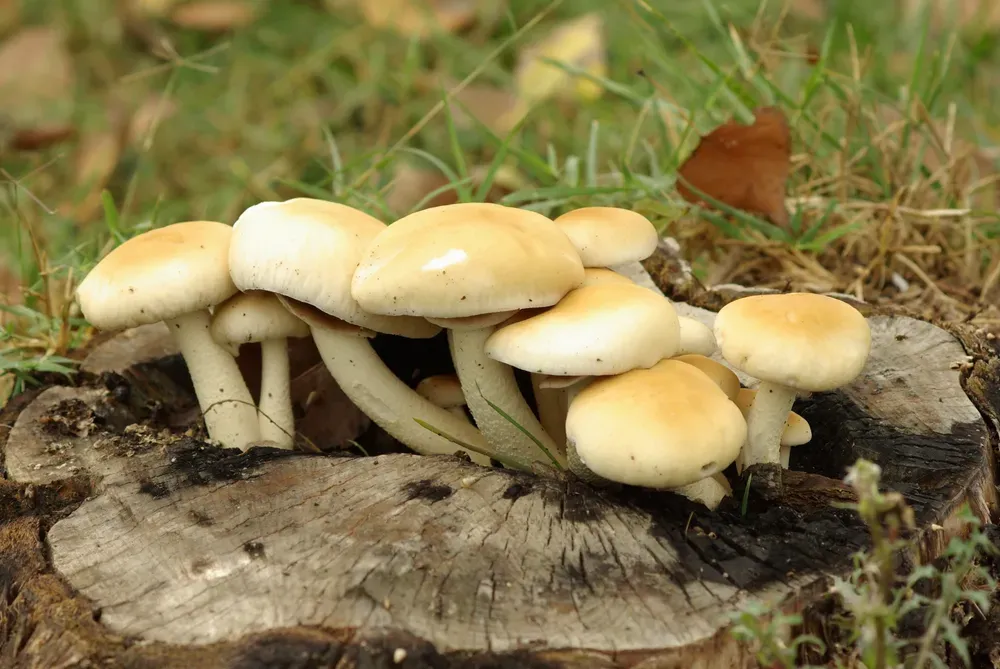
Poplar fieldcap
Cyclocybe aegerita
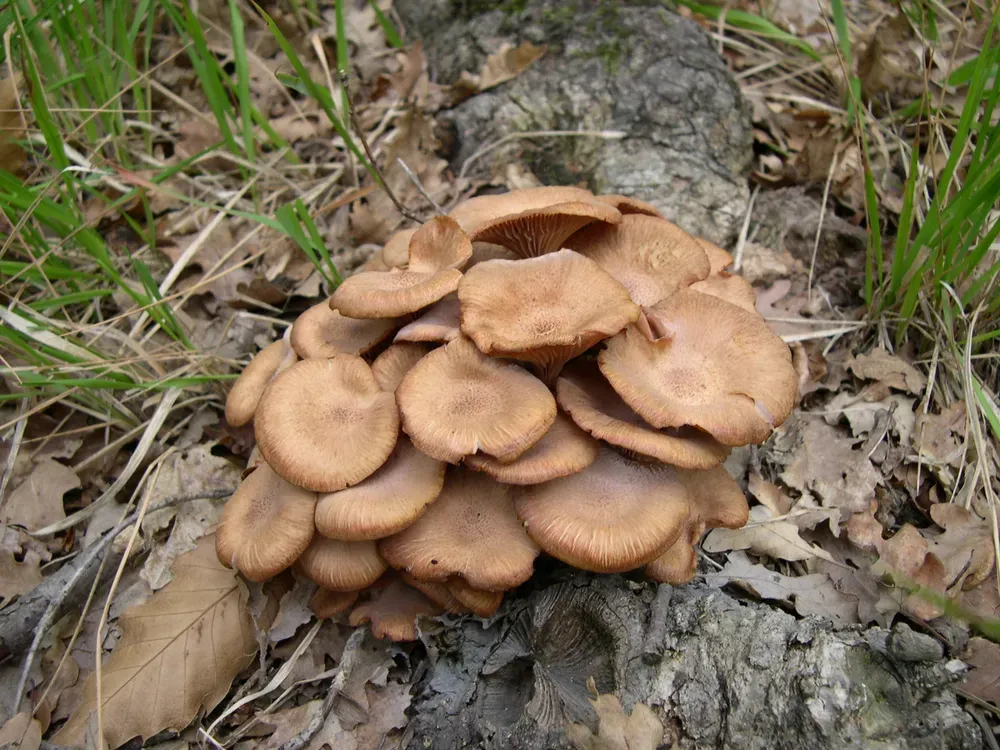
Ringless honey fungus
Desarmillaria tabescens
Frequently asked questions
Is it safe to eat?
Yes, without restrictions. Its culinary value is modest: the flesh is soft and neutral. Young mushrooms are better. Cook it in a mix with other mushrooms or on its own after a short boil.
How do you recognize it?
Two key features. (1) Pink gills in a mature mushroom and a pink spore print. (2) A stem with no ring and no volva. If you find a gilled mushroom on a hardwood stump with these features, there's an 80% chance it's a deer shield or a relative.
Does it have dangerous lookalikes?
Serious ones? None. Among pink-spored mushrooms, the dangerous ones are pinkgills (Entoloma) (Entoloma sinuatum causes severe gastroenteritis), but pinkgills grow on soil, not on rotting wood. Among mushrooms on stumps, in theory it could be confused with a young funeral bell (Galerina marginata), which is deadly! But the funeral bell has a brown spore print (not pink) and a ring on the stem (the deer shield has none).
Where should you look for it?
On the rotting wood of deciduous trees: stumps, fallen trunks, small twigs. Especially abundant on old oak and beech stumps and along damp forest edges. A saprotroph.
Which regions of Ukraine is it found in?
Throughout the forest and forest-steppe zones: the Carpathians, Prykarpattia, Polissia, and the forest-steppe. In the steppe, in floodplain oak groves and the parks of large cities.
When should you look for it?
May to October, peaking in June (the summer flush) and in August-September. One of the longest mushroom seasons: it fruits almost year-round when there's enough moisture.
Which mushrooms is it confused with?
With other shields (Pluteus salicinus, P. atricapillus, etc.), also edible. With the livid pinkgill: dangerous, but it grows on soil. With the funeral bell: deadly, on stumps, with a ring. The key safeguard is the spore print: pink = a shield or a pinkgill (edible or toxic); brown = a funeral bell (deadly).
How do you cook it?
On its own it's dull (soft, neutral flesh). In a mix with other mushrooms, it's fine. Fry it with onions. Pickle it after boiling for 10 min. Dry it: not great, the flesh is very thin and almost disappears when dried.
Is Deer shield edible or poisonous?
Does Deer shield have gills or pores?
What does the cap of Deer shield look like?
What does the stem of Deer shield look like?
Sources
- [1]Вікіпедія (українська)
- [2]Атлас грибів України, Зеров Д.К. (1979)
- [3]MycoBank Database
- [4]Index Fungorum
- [5]GBIF
- [6]iNaturalist Ukraine