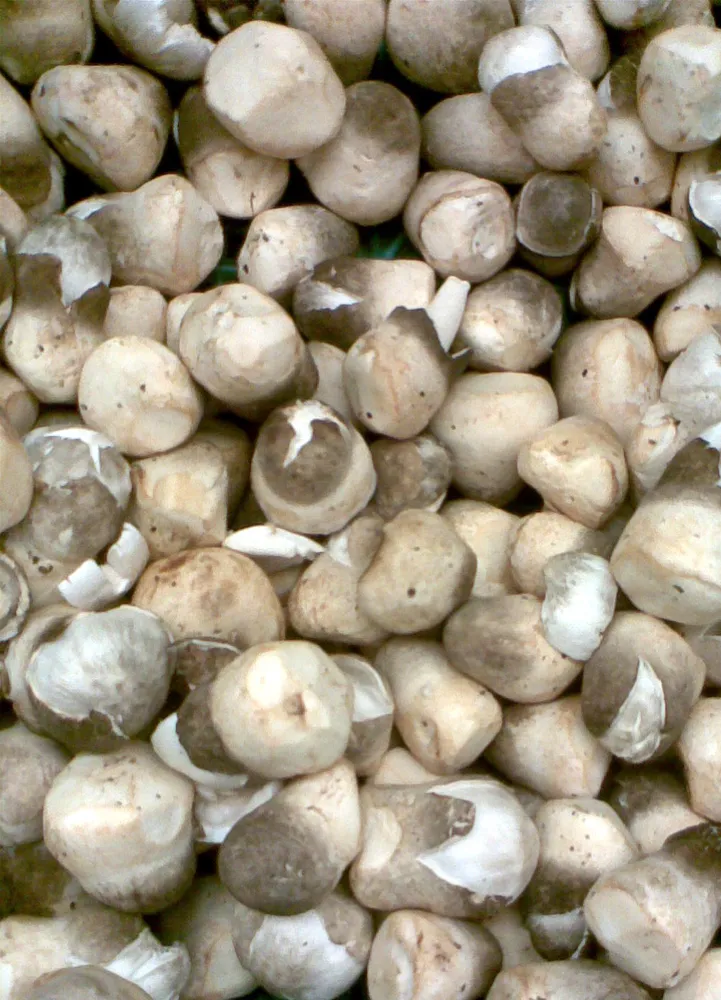
Paddy straw mushroomVolvariella volvacea
Expert-verifiedUpdated October 3, 2026
Passport
- Edibility
- Edible
- Season
- Jun — Sep
- Hymenophore
- Gilled
- Cap color
- Grey
- Size
- Medium (5–15 cm)
- Smell
- Floury
- Reviewed
- Yes ✓
Quick answers
Where to look?
Deciduous forest
When does it appear?
Jun — Sep
Active months: June, July, August, September.
How to recognize it? Three signs
- Cap color: Grey, Brown
- Cap shape: Convex
- Smell: Floury, Pleasant
Fruiting season
June – September
Description
The paddy straw mushroom (Volvariella volvacea, known in English-speaking countries as "paddy straw mushroom" or "straw mushroom") is one of the most popular cultivated mushrooms in Asia (China, Vietnam, Thailand, the Philippines) and a traditional ingredient in Asian cooking. The Latin epithet volvacea means "with a volva," a nod to the distinctive remnant of the universal veil (the volva) at the base of the stem, which stays for the whole life of the fruiting body. The cap is 5-12 cm across; in young mushrooms it is egg-shaped to round (the volva completely wraps the mushroom, as in young amanitas), and with age it breaks free and opens out to a flat, spread-out shape.
The color is gray-brown, grayish-black in the center, with a distinctive radial, fibrous pattern. The flesh is firm and tender, with a pleasant mushroomy taste, with no bitterness. An excellent edible mushroom of outstanding culinary quality. In Asia it is fried in soy sauce, cooked in sweet-and-sour sauces, added to chicken or seafood soups, and used in stir-fries. In Europe it is less popular because it is rare and resembles poisonous amanitas.
In Ukraine it does NOT occur in the wild (it is a tropical-subtropical species), but it is available canned in Asian shops. It is sometimes cultivated on specialist farms on rice straw or other straw (hence the common name).
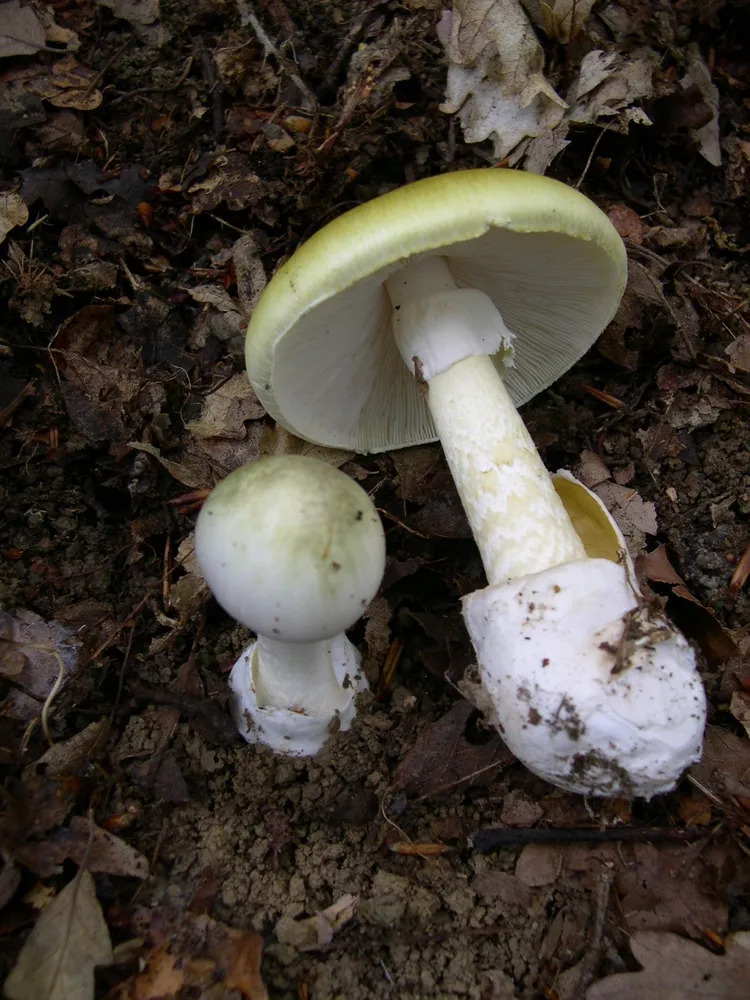
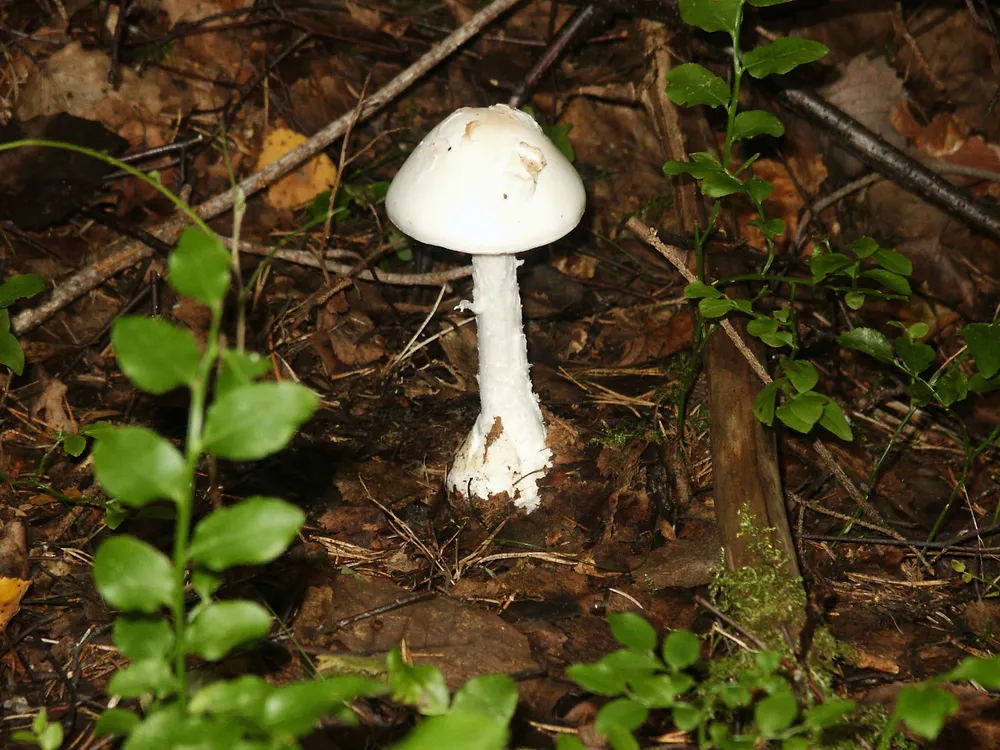
CRITICAL SAFETY WARNING. Young Volvariella volvacea in the "egg" stage (with the volva fully intact) looks very much like young deadly poisonous amanitas: Amanita phalloides (death cap) and A. virosa (destroying angel). This resemblance has led to serious poisonings in Vietnam and China, when inexperienced foragers picked "young straw mushrooms" in the wild and were poisoned. Key differences between V. volvacea and amanitas: V. volvacea gills: turn pink with age, spore print PINK (typical of the genus Volvariella) Amanitas: gills stay white, spore print WHITE V. volvacea stem: NO ring Amanitas: stem WITH a distinct ring in mature specimens
V. volvacea does NOT grow in the wild in Ukraine, so finding and identifying it in the forest is practically impossible. If you find something "like a straw mushroom" in our forests, it is almost certainly an amanita, not V. volvacea.
In Ukraine this species is found only as imports from Asia (fresh, frozen, canned, pickled).
Cap
Cap 5-12 cm across; when young it is completely wrapped in a whitish volva membrane (like an egg); with age it breaks free and becomes egg-shaped at first, then bell-shaped to convex, and flat and spread out in old mushrooms. The cap skin is smooth with fine radial fibers. The color is gray-brown, grayish-black in the center, paler toward the edge. The margin is even, with fine radial grooves in mature mushrooms.
Hymenophore
Gilled hymenophore: the gills are free from the stem (not attached!), crowded, thin. In young mushrooms they are whitish, and with age they turn pink to pinkish-brown, a diagnostic feature. The spore print is pink, and that is exactly what sets it apart from the white spore print of amanitas.
Stem
Stem 5-15 cm tall, 1-2 cm thick, firm, cylindrical, thickening toward the base. The color is white to cream, the surface smooth with fine lengthwise fibers. At the base there is a distinct SAC-LIKE VOLVA (a remnant of the universal veil) that stays for the mushroom's whole life. No ring.
Flesh
Flesh firm, tender, white to grayish-cream; it doesn't change color when cut. The smell is pleasantly mushroomy with a hint of freshly ground flour, the taste mild, delicate, pleasantly mushroomy.
Smell
Pleasantly mushroomy with a hint of flour, neutral and slightly sweet.
›Scientific synonyms (4)
Volvaria volvacea, Agaricus volvaceus Bull. (1786), Amanita virgata, Vaginata virgata
Lookalikes
Related species
Mushrooms of the same genus and habitat — to study side by side and never mix up.
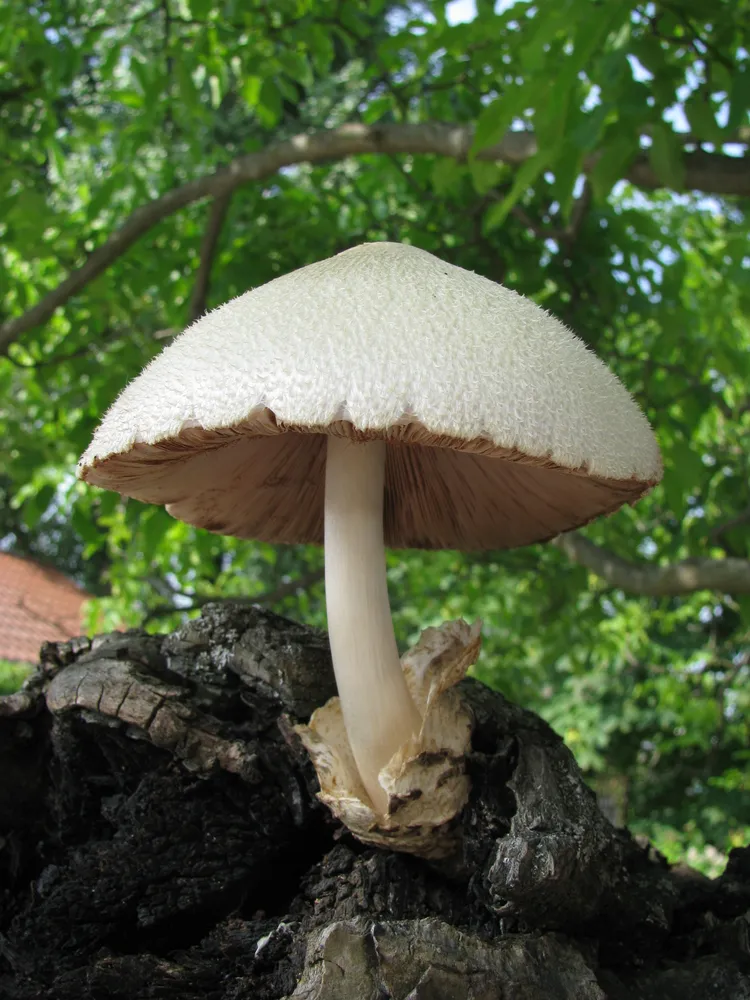
Silky rosegill
Volvariella bombycina
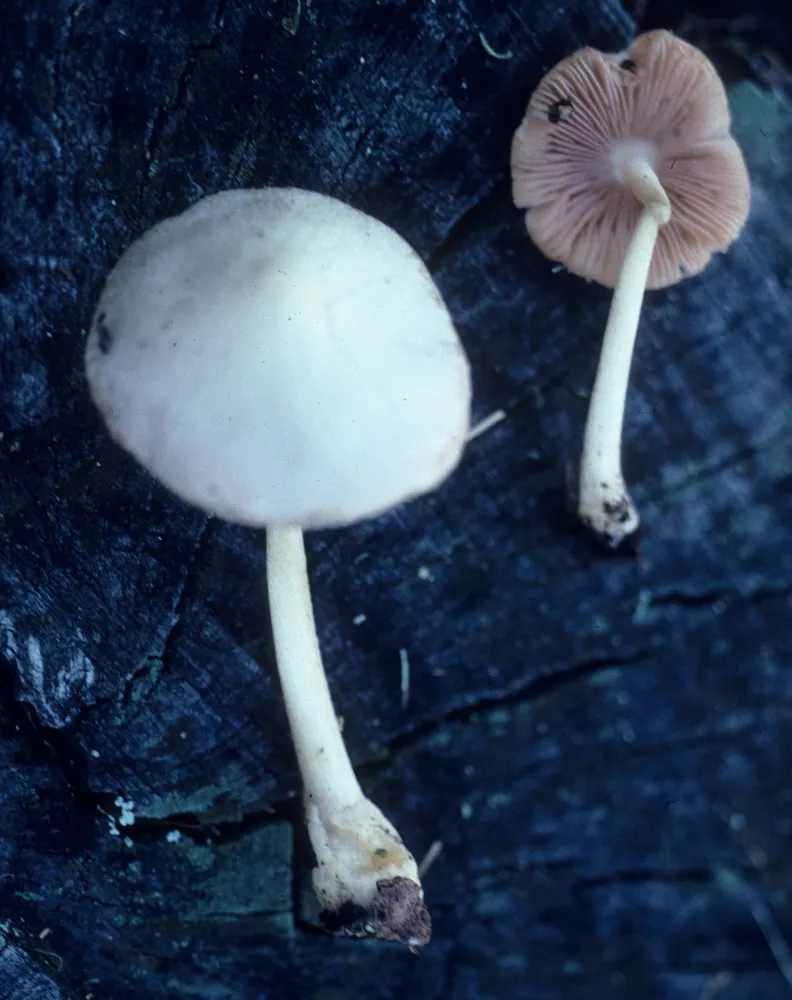
Volvariella hypopithys
Deer shield
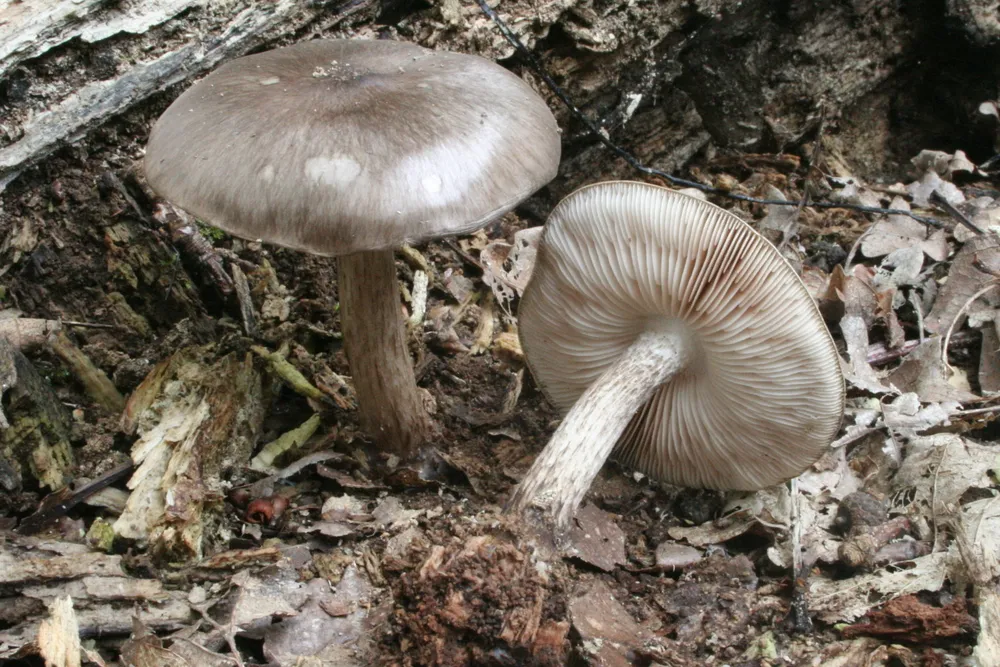
Pluteus cervinus
Stubble rosegill
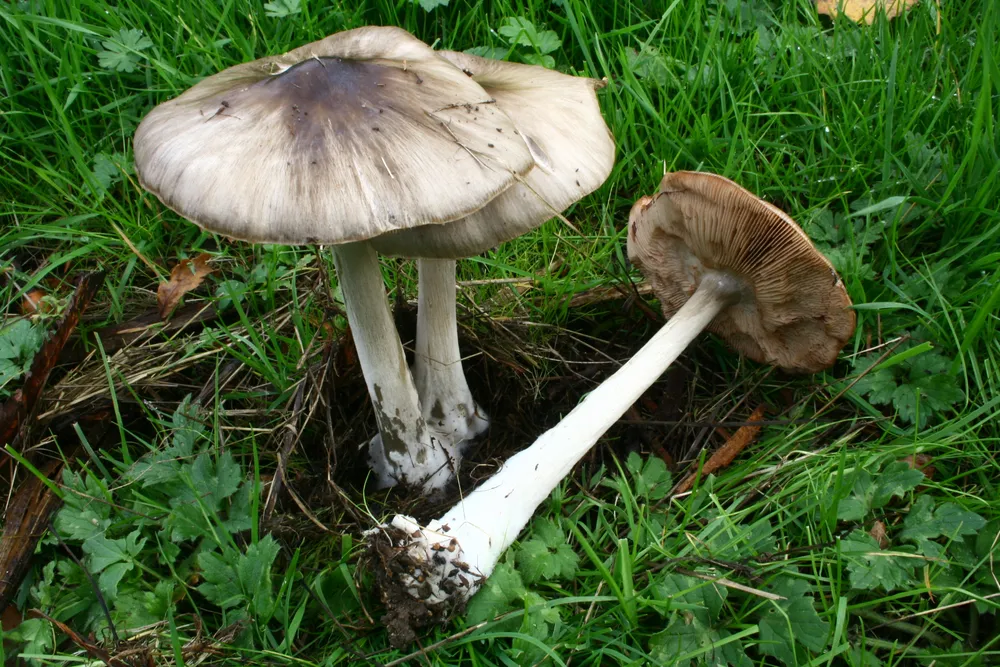
Volvopluteus gloiocephalus
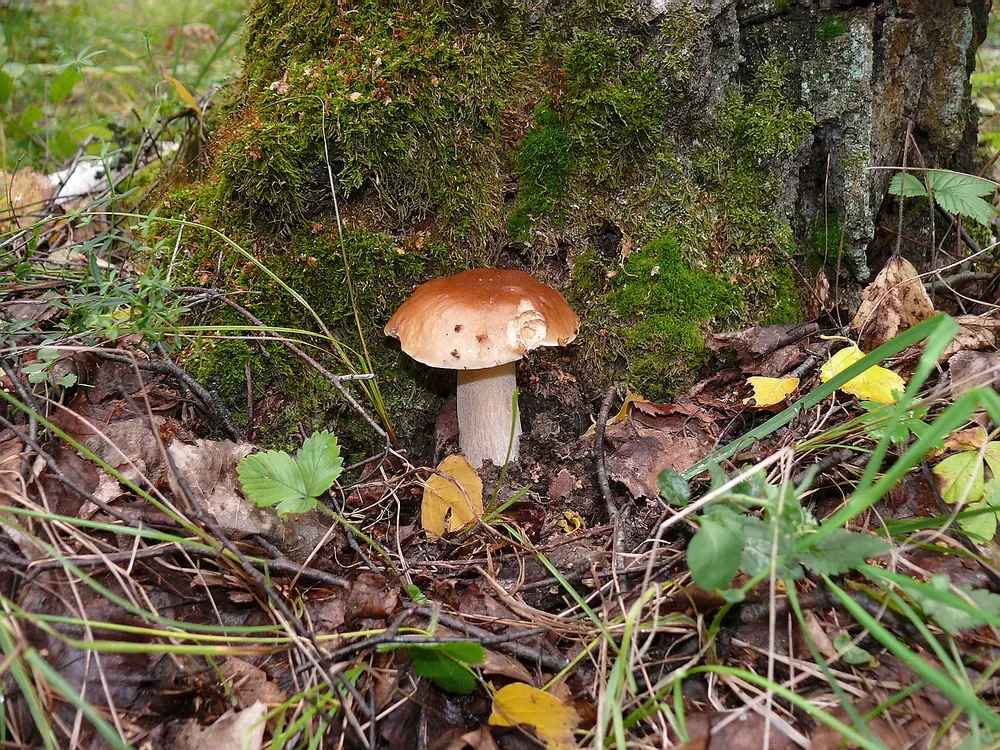
Boletus betulicola
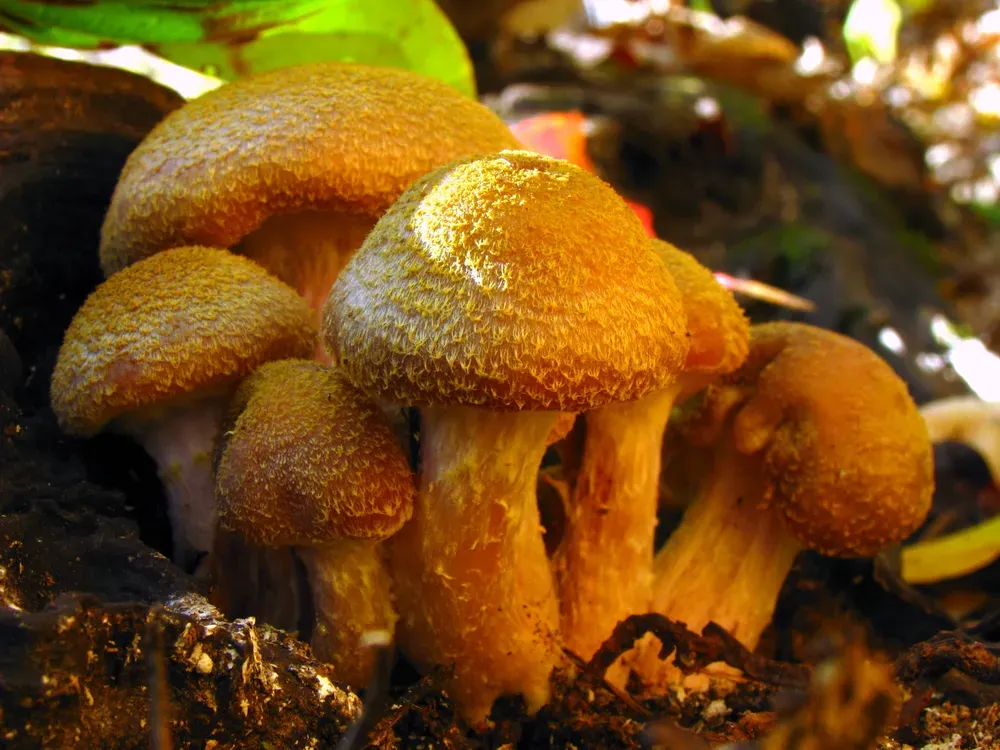
Bulbous honey fungus
Armillaria gallica
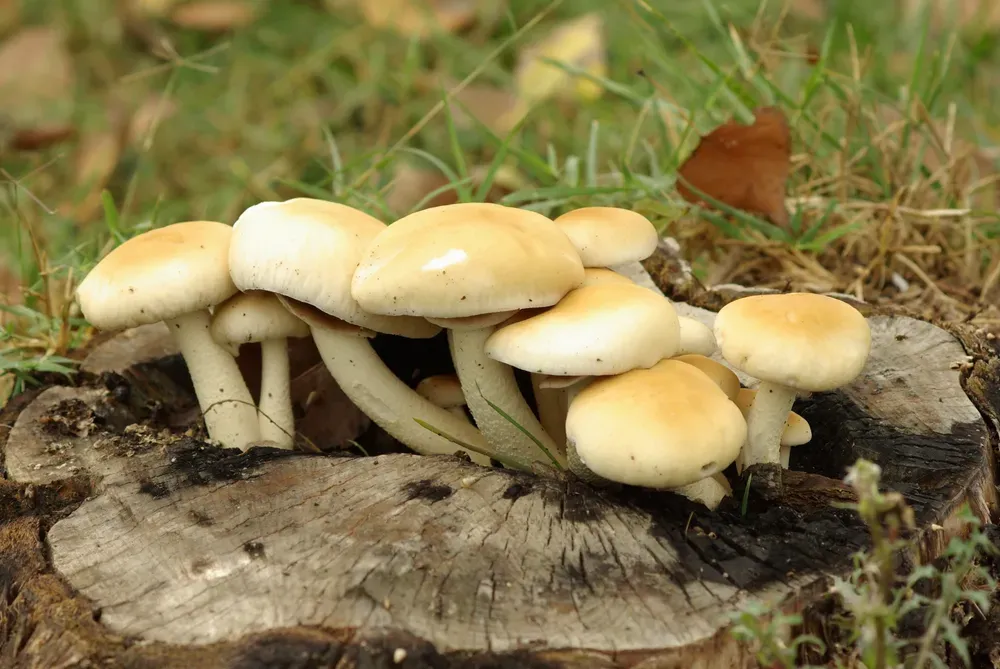
Poplar fieldcap
Cyclocybe aegerita
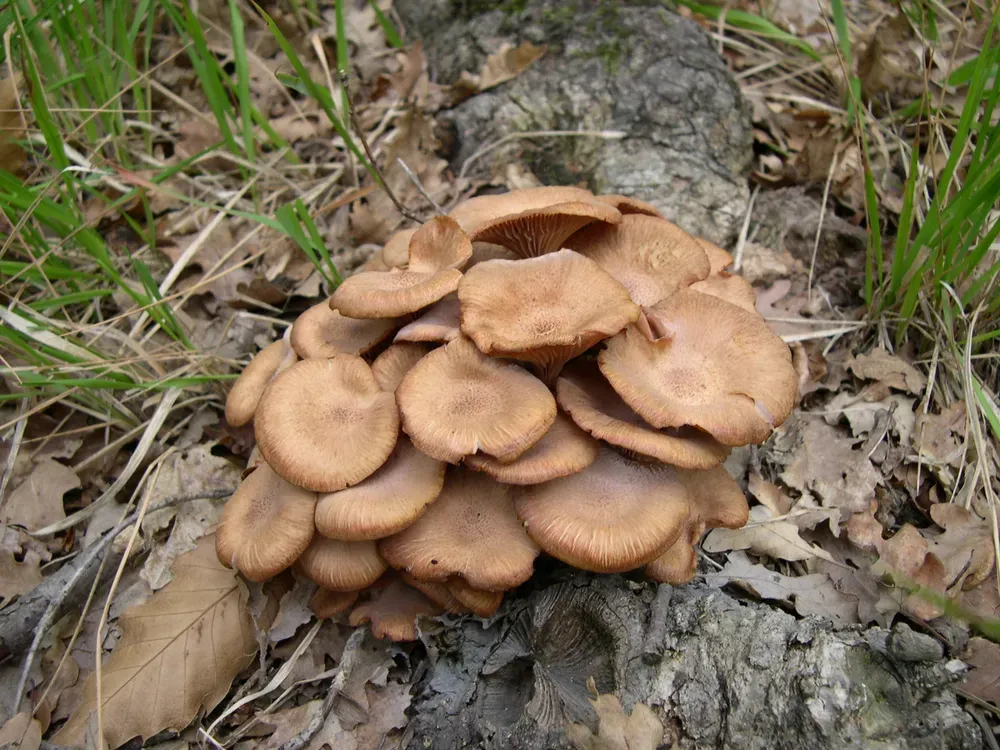
Ringless honey fungus
Desarmillaria tabescens
Frequently asked questions
Does it grow in Ukraine?
In the wild, NO. Volvariella volvacea is a tropical-subtropical species and does not occur in the wild in Ukraine. It is available as imports from Asia (fresh, frozen, canned) in Asian grocery stores. If you find "something similar" in the forest, it is almost certainly a poisonous amanita, not V. volvacea.
How do you tell it apart from deadly amanitas?
The key check is a spore print. V. volvacea has a PINK spore print. Amanitas (A. phalloides, A. virosa) have a WHITE spore print. Leave the cap on white paper for 12 hours and you will see the difference. Second check: V. volvacea has NO ring on the stem; amanitas have a ring. Third: in mature V. volvacea the gills are pink; in amanitas they stay white. If you have even the slightest doubt, DO NOT PICK IT; this species doesn't grow wild in Ukraine.
How do you cook it?
The classic is Asian cooking: fried in soy sauce with garlic and ginger, in sweet-and-sour sauces, in tom yum soups, mixed with fresh vegetables and corn, or as an ingredient in a stir-fry. The canned version (in jars or tins) just needs rinsing and adding to the dish 2-3 min before it's done. Fresh ones need brief, high heat (5-10 min).
Can you grow it in Ukraine?
Technically, yes, but it needs a warm, humid environment (28-32°C, 90% humidity) and a substrate of rice or wheat straw. It isn't grown commercially in Ukraine because of the climate and because it can't compete on price with imports. As a hobby, it's possible in a heated grow room or greenhouse.
Where does it grow in the wild?
In its natural range, on rice straw, on manure heaps, and in tropical forests of Southeast Asia. In Ukraine it does NOT occur.
Can you find it in Ukraine's shelterbelts?
No. If you see a young "egg-shaped" mushroom with a volva in the forest, it is a young amanita (Amanita) or another volva-bearing Volvariella (V. speciosa, V. gloiocephala: edible, but they also look a lot like amanitas and also need a spore print). Our firm rule: treat anything with a volva in the wild in Ukraine as a potential amanita, and don't take it without a spore print.
When can you find it in stores?
Imported: year-round, because in cultivation Volvariella grows all year (in a tropical environment). Fresh ones are rare; you'll more often find them canned or frozen in Asian shops.
What mushrooms is it confused with?
With Amanita phalloides (death cap, deadly poisonous!): young ones in the egg stage. With Amanita virosa (destroying angel): also deadly. With Volvariella speciosa, V. gloiocephala: genuine edible European Volvariella. All of these species have a volva, and that is the most important warning sign. The key check is a spore print: pink = Volvariella; white = Amanita (deadly).
Is Paddy straw mushroom edible or poisonous?
Does Paddy straw mushroom have gills or pores?
What does the cap of Paddy straw mushroom look like?
What does the stem of Paddy straw mushroom look like?
Sources
- [1]Вікіпедія (українська)
- [2]Атлас грибів України, Зеров Д.К. (1979)
- [3]MycoBank Database
- [4]Index Fungorum
- [5]GBIF
- [6]iNaturalist Ukraine