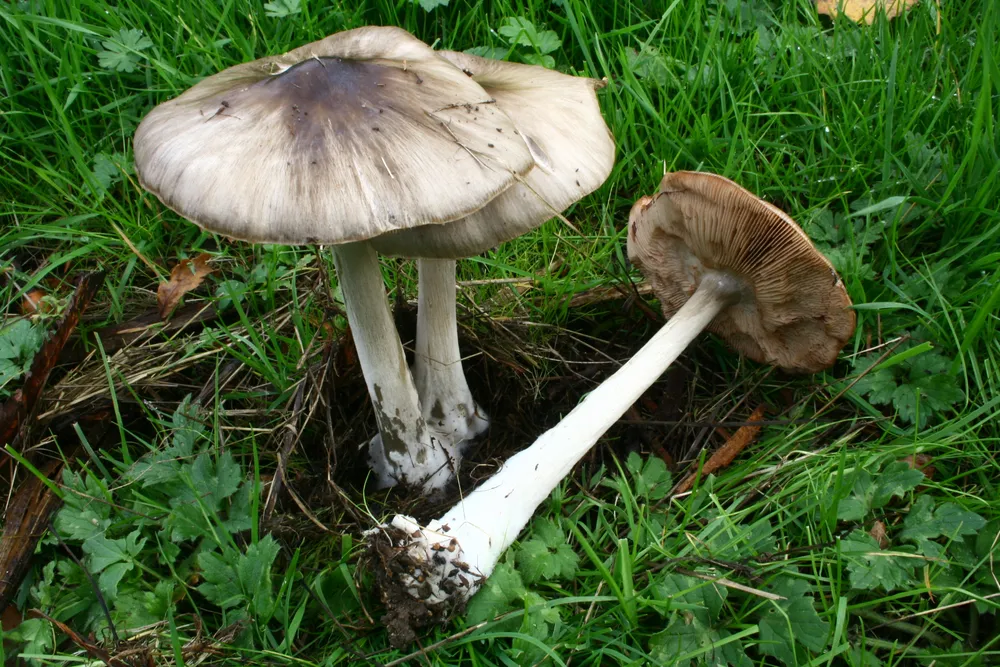
Stubble rosegillVolvopluteus gloiocephalus
Expert-verifiedUpdated October 3, 2026
Passport
- Edibility
- Conditionally edible
- Season
- May — Oct
- Hymenophore
- Gilled
- Cap color
- White
- Size
- Medium (5–15 cm)
- Smell
- Odorless
- Reviewed
- Yes ✓
Quick answers
Where to look?
Mixed forest, Deciduous forest
When does it appear?
May — Oct
Active months: May, June, July, August, September, October.
How to recognize it? Three signs
- Cap color: White, Grey, Brown
- Cap shape: Convex
- Smell: Odorless
Fruiting season
May – October
Description
The Stubble rosegill is a gilled mushroom with a characteristic sac-like sheath (volva) at the base of the stem. It looks elegant: a smooth white cap with a slightly darker center, pinkish gills and a cylindrical white stem rising from a white “sac.” Its silhouette resembles an amanita, but without a ring and in a completely different, soft color.
This is a conditionally edible mushroom of average quality. It's not considered a delicacy, and classic field guides leave it on the sidelines — the flesh is watery and the taste bland. You must boil it for 15 minutes before eating. Don't eat it raw or undercooked. If you're a beginner forager, better to pass it by: its resemblance to amanitas raises the risk of a mistake.
In Ukraine it grows singly or in small groups on rich humus soils, in orchards, parks, on compost heaps and at the edges of vegetable gardens. It's not abundant, but it turns up regularly — especially where there's organic debris and warmth.
Cap
Cap 5-15 cm, bell-shaped at first, then expanding to conical or flat with a small umbo. Whitish, grayish-brown in the center, with a silky sheen. Surface smooth, slightly slimy in wet weather, dry and silky in dry weather.
Hymenophore
Gilled hymenophore. Gills 8-12 mm wide, free (not attached to the stem). White at first, turning pink or pinkish-brown with age from the spores. Spore print pink — a key feature of the genus.
Stem
Stem 5-20 cm tall, 1-2.5 cm thick, cylindrical, slightly thickened toward the base. White or grayish-yellow, smooth or with a faint silkiness. No ring. At the base there's a characteristic sac-like volva, white or grayish, surrounding the stem like a cup.
Flesh
The flesh is white, thin and watery, and doesn't change color in the air. The texture is soft, not firm. Not suitable for long storage — it decomposes quickly.
Smell
Faint, indistinct mushroomy smell. Some authors describe a slight radish-like hint. Bland taste with no pronounced notes.
›Scientific synonyms (2)
Volvariella speciosa (Fr.) P.Kumm. (1871), Volvariella gloiocephala (Fr.) Gillet (1876)
Lookalikes
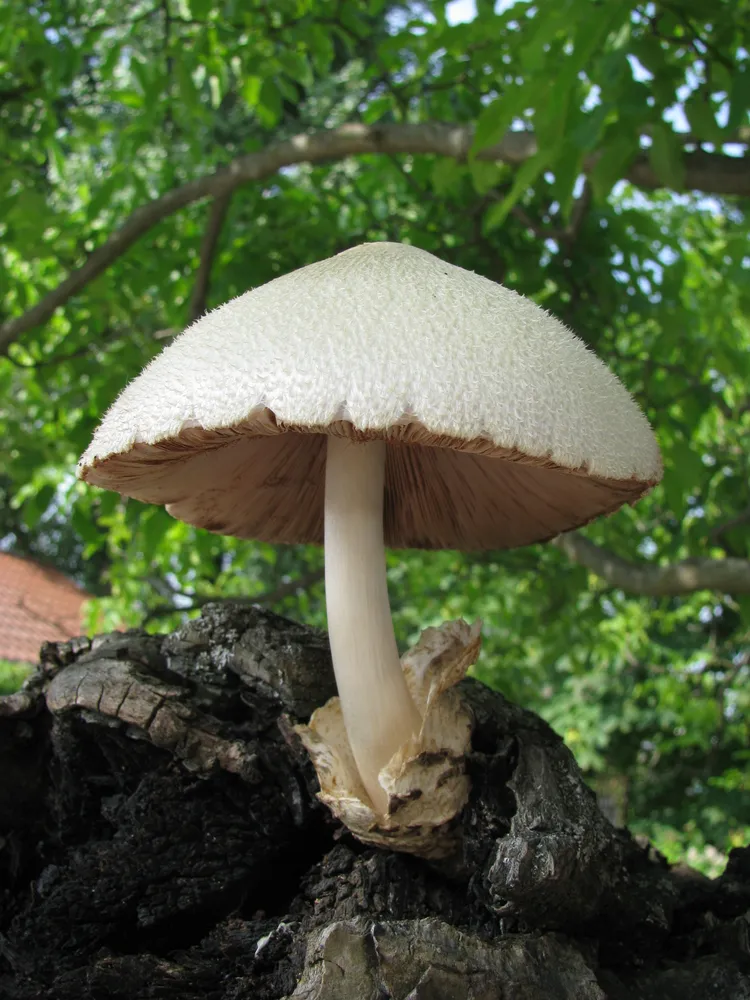
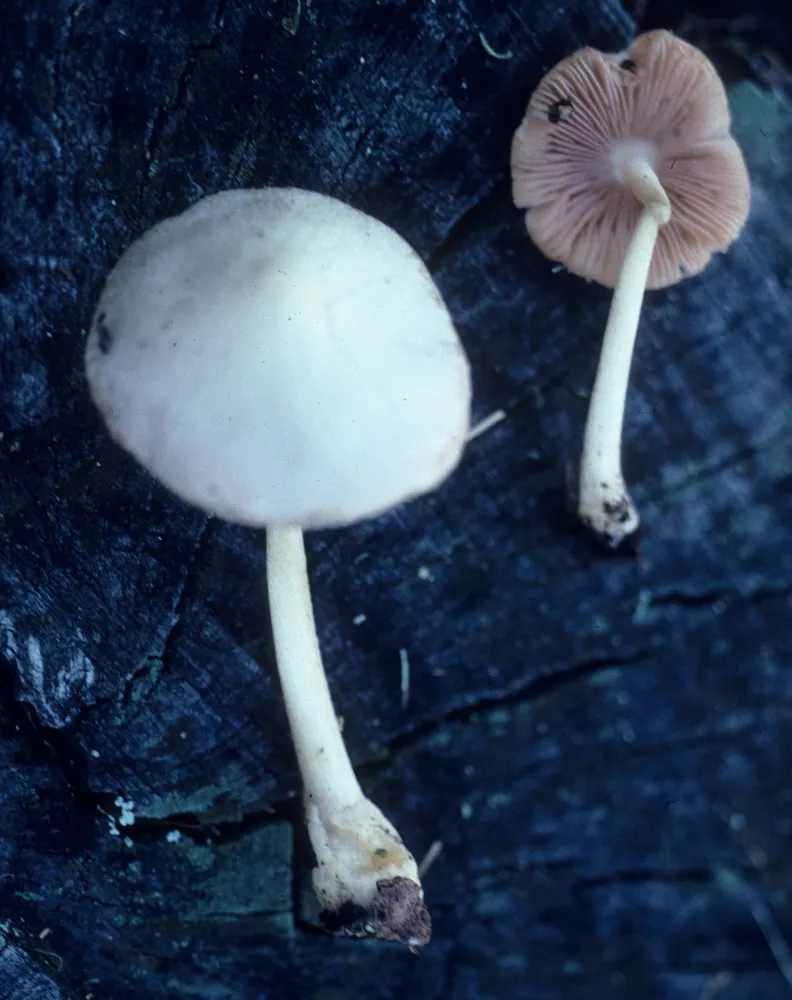
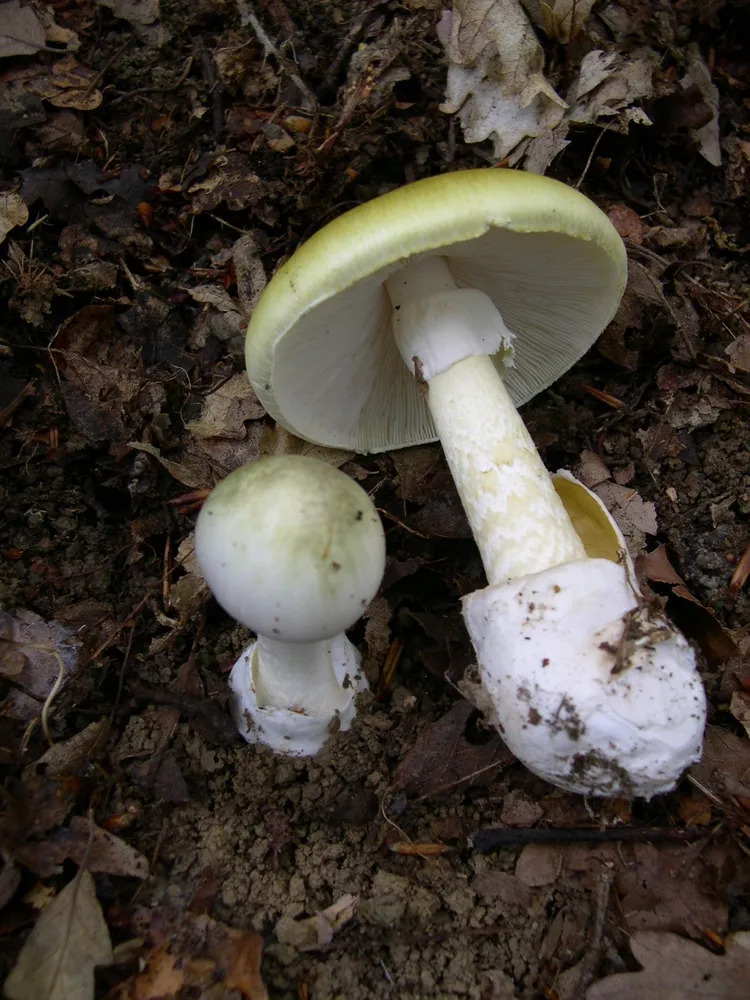
Related species
Mushrooms of the same genus and habitat — to study side by side and never mix up.
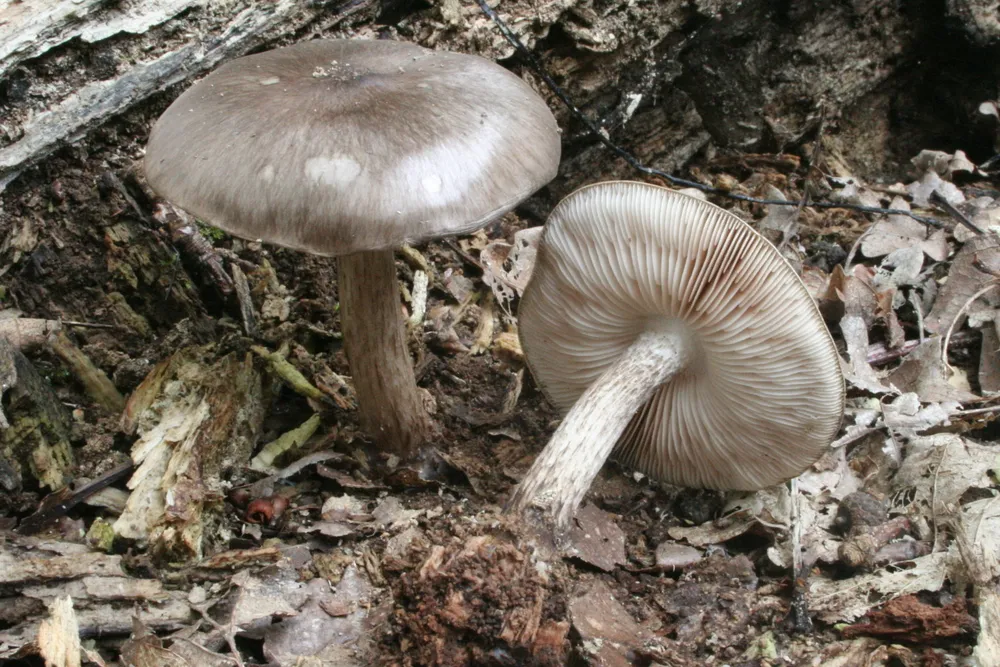
Deer shield
Pluteus cervinus
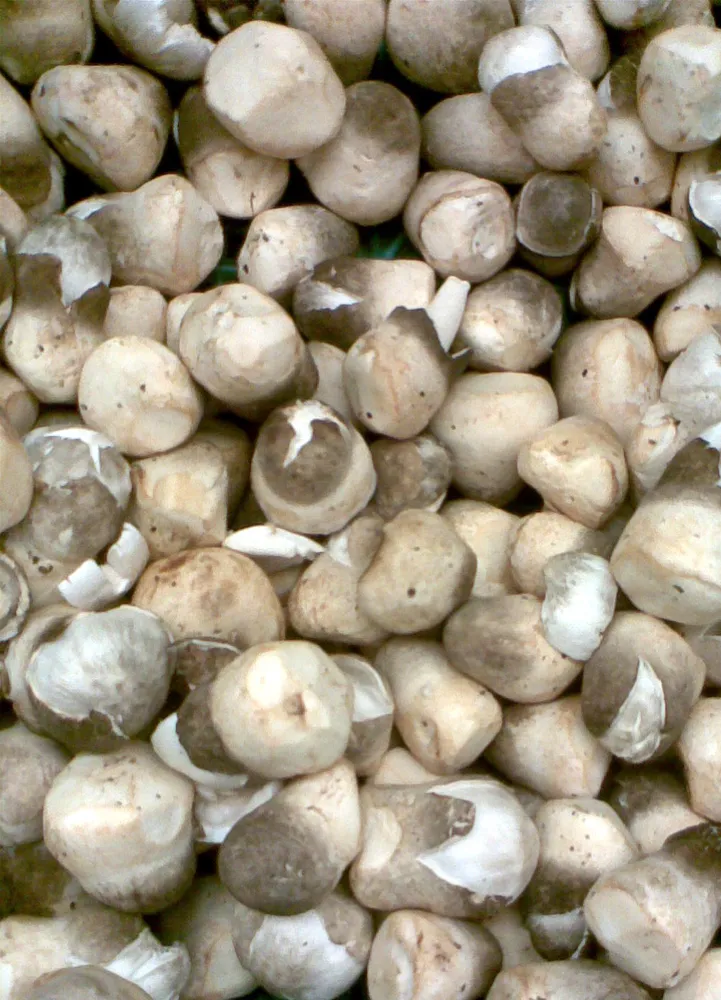
Paddy straw mushroom
Volvariella volvacea
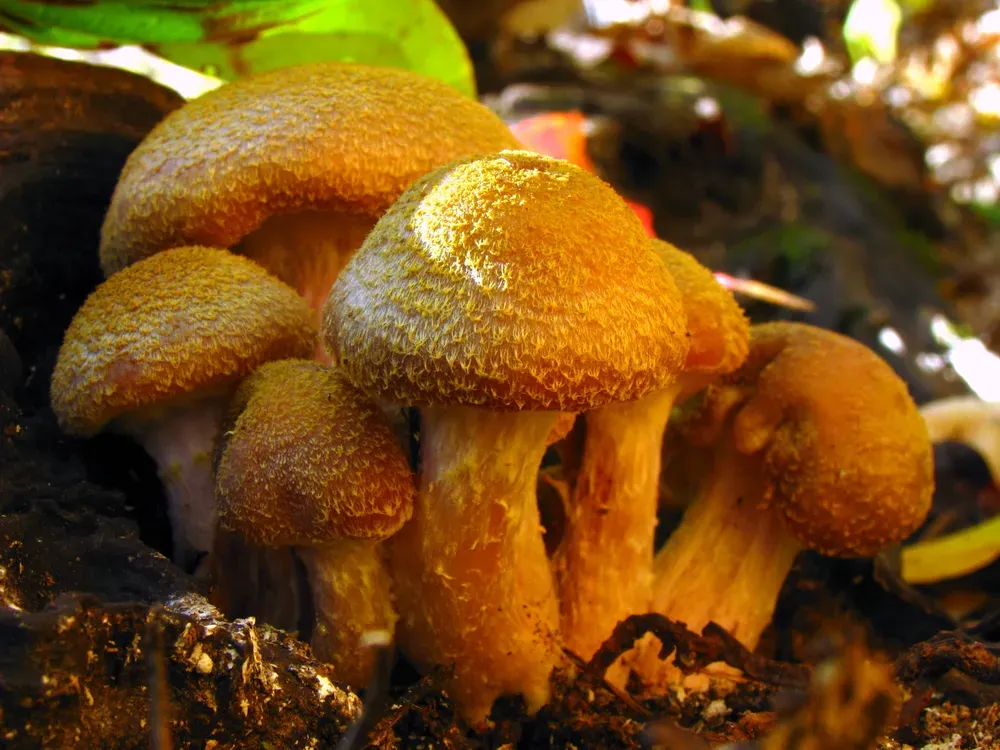
Bulbous honey fungus
Armillaria gallica
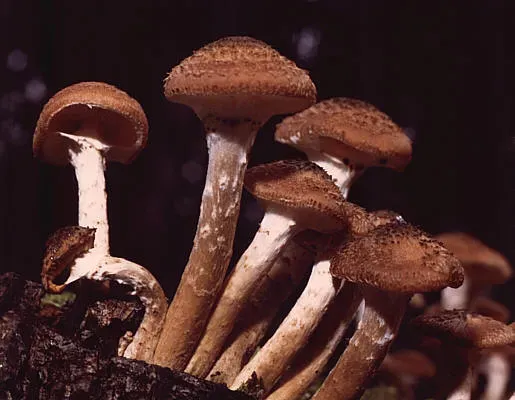
Dark honey fungus
Armillaria ostoyae
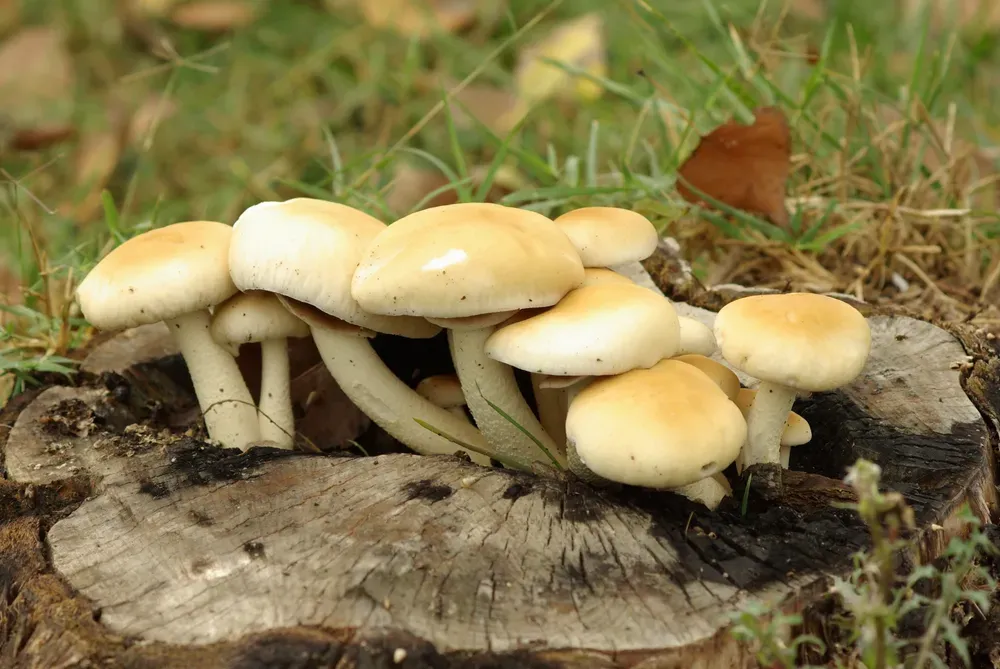
Poplar fieldcap
Cyclocybe aegerita
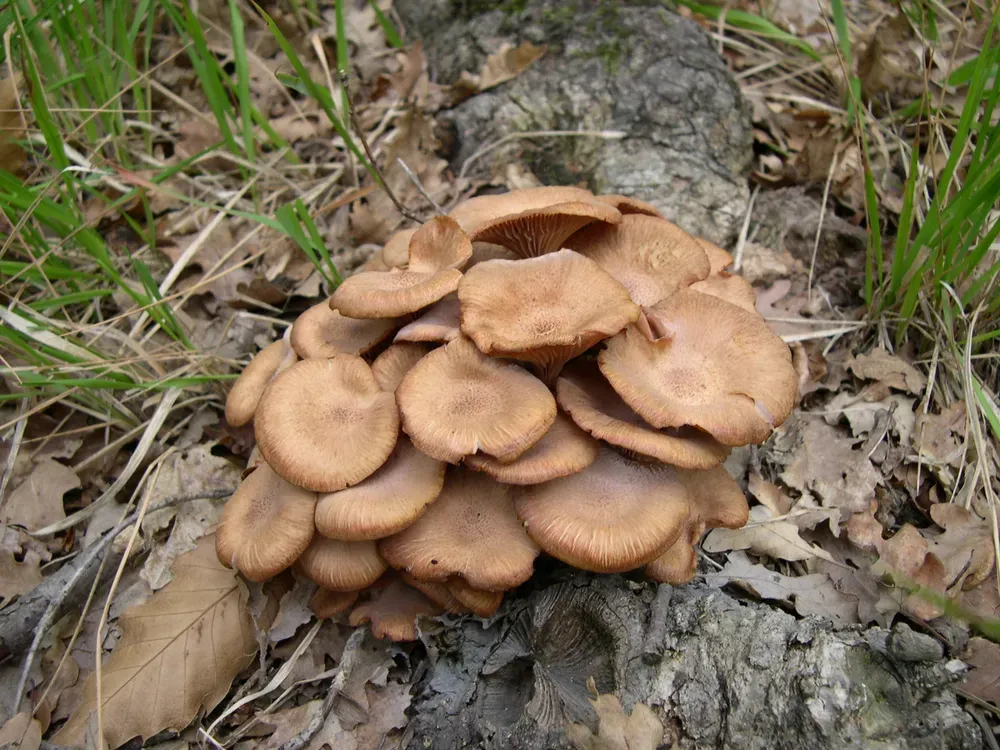
Ringless honey fungus
Desarmillaria tabescens
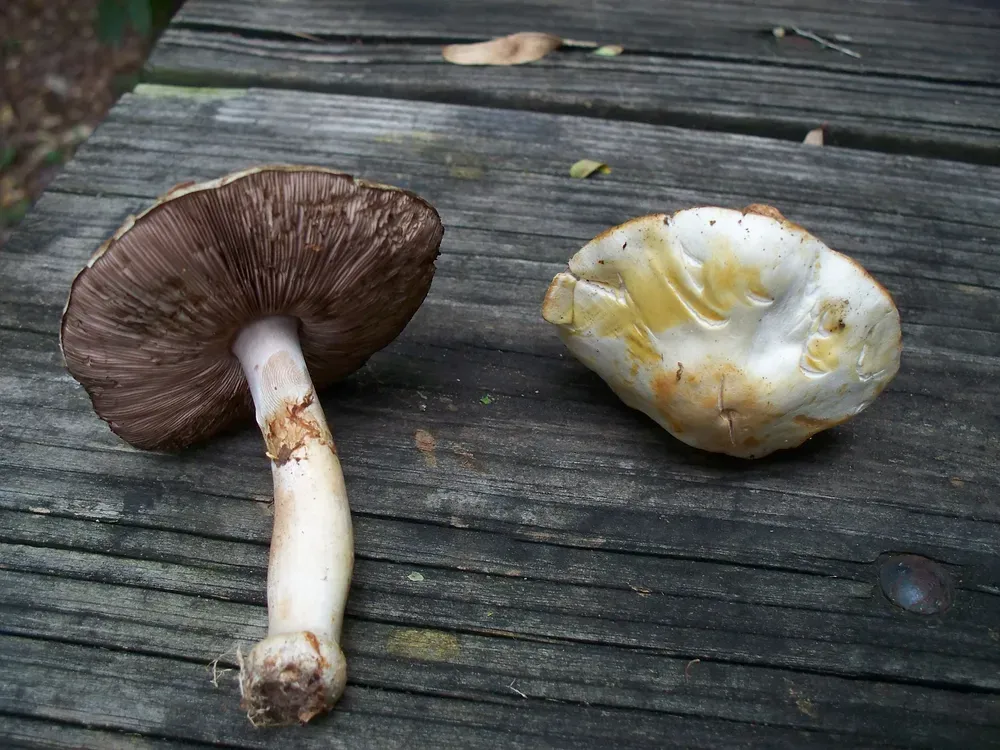
Agaricus abruptibulbus
Agaricus haemorrhoidarius
Agaricus haemorroidarius
Frequently asked questions
Can you eat it?
Yes, but only after boiling for 15 minutes and then draining the water. It's a mushroom of average quality — you wouldn't call it a delicacy, and its watery flesh and bland taste aren't for everyone.
Could you confuse it with an amanita?
This is the most important question. An amanita has a ring on the stem, and its gills stay white at any age. Volvariella has no ring, and its gills turn pink with age. If you see a ring or bright white gills on a mature mushroom — leave it where it is and don't take it.
Where should you look for it?
On rich humus soils: in orchards, parks, along the edges of vegetable gardens, near compost heaps, in leftover straw. It loves well-warmed soil with organic remains. In wild forest it's less common — it's a mushroom of cultivated landscapes.
Which regions of Ukraine does it grow in?
All over Ukraine, wherever there are rich soils and organic debris. Finds are reported from the Lviv region to the Luhansk region, especially around towns and villages and on farmland.
When does it appear?
From May to October, peaking in July–September. It loves warmth and moisture after good rains. In dry weeks it disappears, then appears in “flushes.”
How long does the fruiting body last?
Not long — 3-5 days. It quickly turns watery and decomposes. For the kitchen, take only young specimens with gills still white.
What is it confused with?
The most dangerous confusion is with amanitas (Amanita), especially the Death cap (Amanita phalloides) at a young stage. The key differences: Volvariella has no ring on the stem, and its gills turn pink with age (amanitas' gills stay white). If you have even the slightest doubt — do NOT take it.
How do you tell it from other Volvariellas?
The Silky rosegill grows on wood (not on soil), has a more pronounced ochre-brown tint to the cap and silky fibers. Volvariella hypopithys is much smaller (cap up to 3.5 cm) and grows in conifer woods. The Stubble rosegill is the largest of the three and grows on rich soils.
Is Stubble rosegill edible or poisonous?
Does Stubble rosegill have gills or pores?
What does the cap of Stubble rosegill look like?
What does the stem of Stubble rosegill look like?
Sources
- [1]Вікіпедія (українська)
- [2]Атлас грибів України, Зеров Д.К. (1979)
- [3]MycoBank Database
- [4]Index Fungorum
- [5]GBIF
- [6]iNaturalist Ukraine