
Most poisonous mushrooms cause only digestive upset, unpleasant but not fatal. But there are a few where lives are at stake: once is enough to land in intensive care, or worse. These are the mushrooms everyone who goes to the forest even occasionally should know.
Let's go over the four most dangerous mushrooms of Ukraine, their telltale features and what they're confused with. Remembering them is no harder than remembering a few faces, and the price of this knowledge may be someone's life.
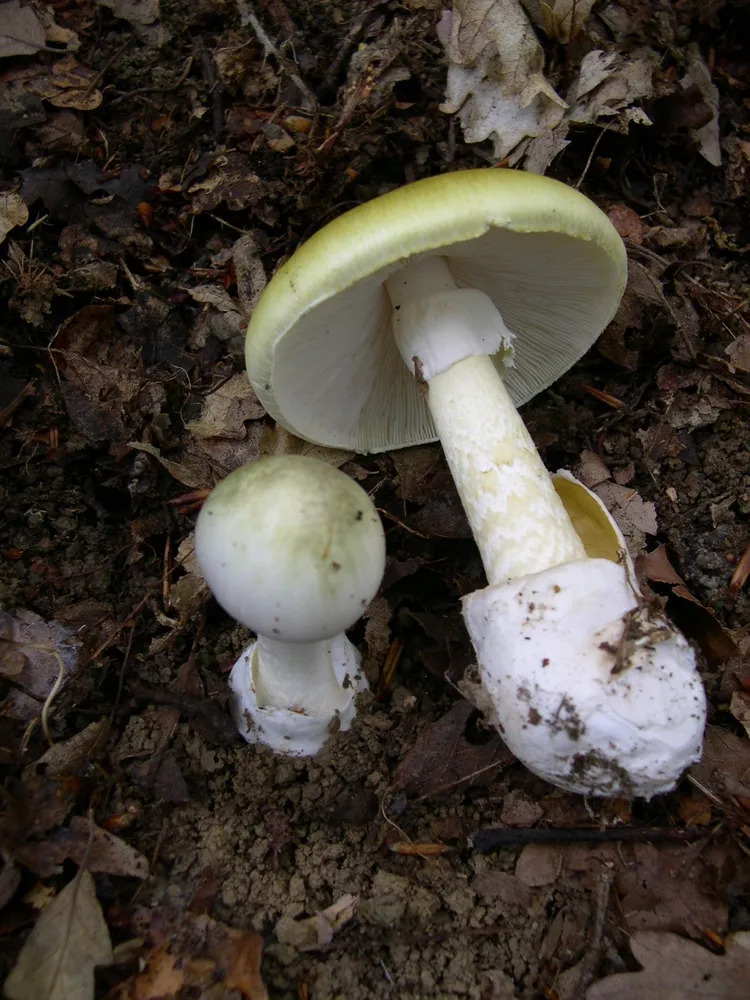
1. Death cap
Death cap is the undisputed leader in the number of fatal poisonings.
A pale green, olive or almost white cap, pure white gills, a thin ring on the stem and a sac at the base, often hidden in the soil. The most insidious part is that it tastes pleasant and arouses no suspicion. The toxin acts with a delay of six hours or more, by which time the liver is already damaged. More about it in a separate article.
Confused with: green brittlegills, young field mushrooms. What saves you is checking for white gills and a sac at the base.
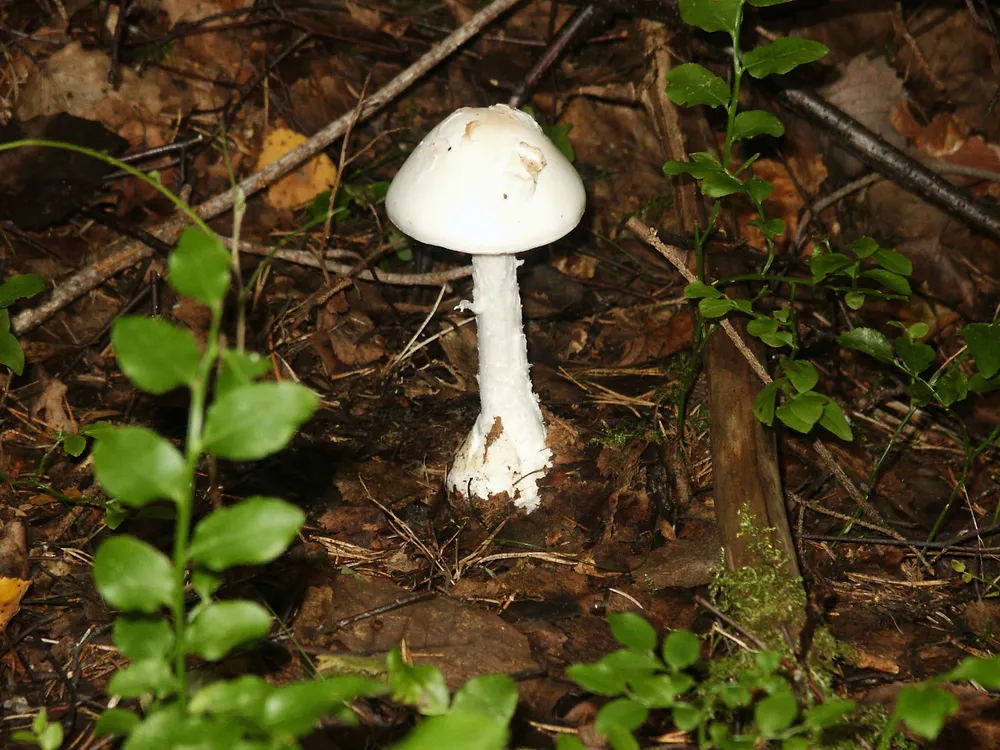
2. Destroying angel
Destroying angel is a close relative of the death cap and just as deadly a threat.
The mushroom is entirely white, with a ring, a sac at the base and an unpleasant sweetish, sickly smell. Its white color deceptively resembles a field mushroom, which is what makes it dangerous for people who pick field mushrooms.
Confused with: field mushrooms. What saves you is gill color: in field mushrooms they turn pink and then darken, while in the amanita they stay white.
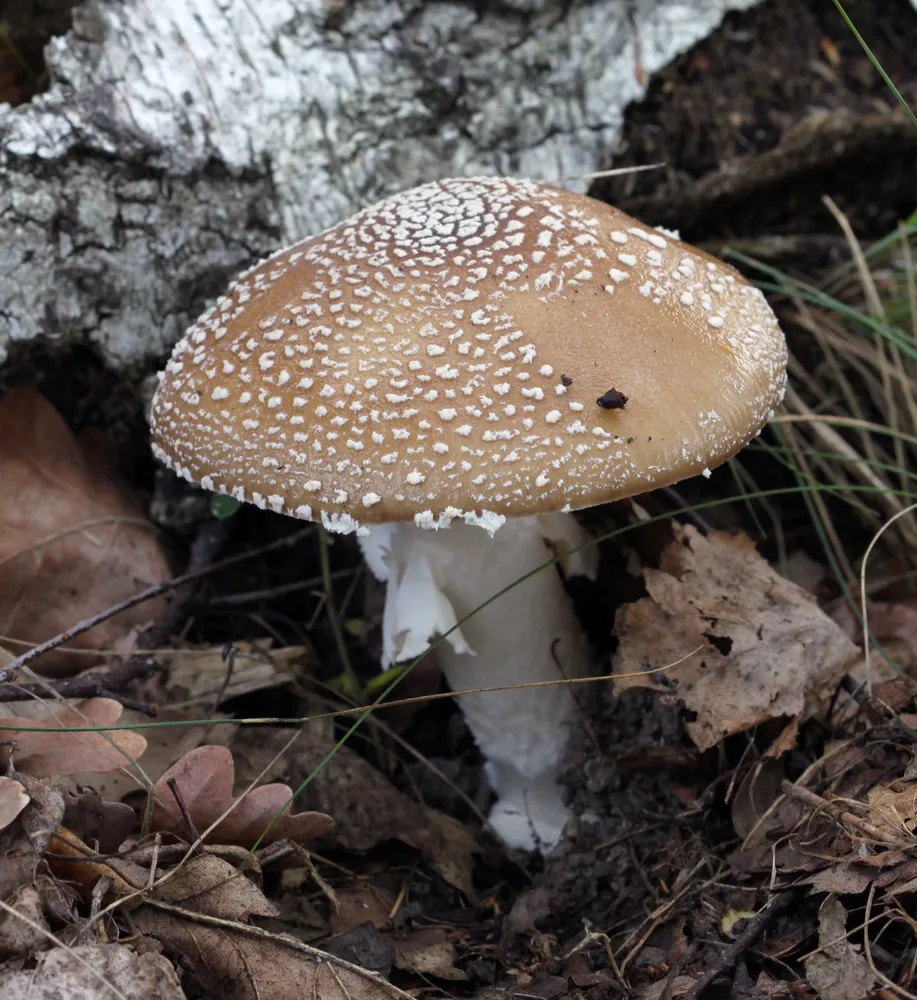
3. Panther cap
Panther cap is more poisonous than its bright red relative.
The cap is brownish with small white spots and a smooth edge; the stem has a ring and a swollen base with a sac. The toxin attacks the nervous system and can be fatal.
Confused with: edible gray amanitas and some knights. The same combination saves you: a ring plus a sac at the base. About the whole family, see our article on amanitas of Ukraine.
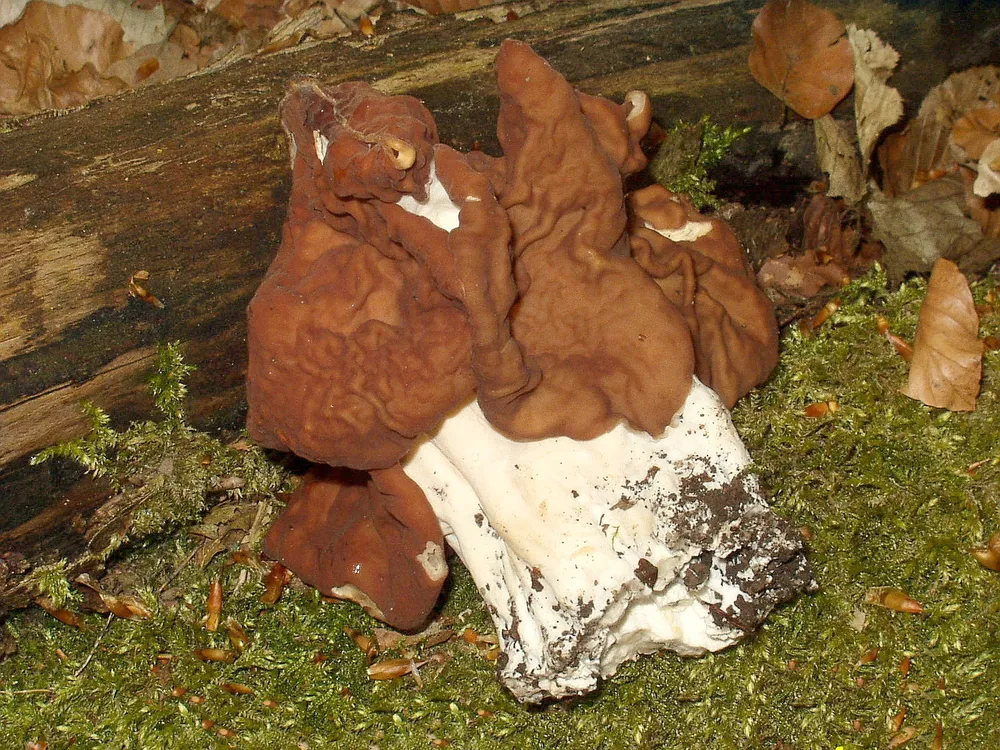
4. False morel
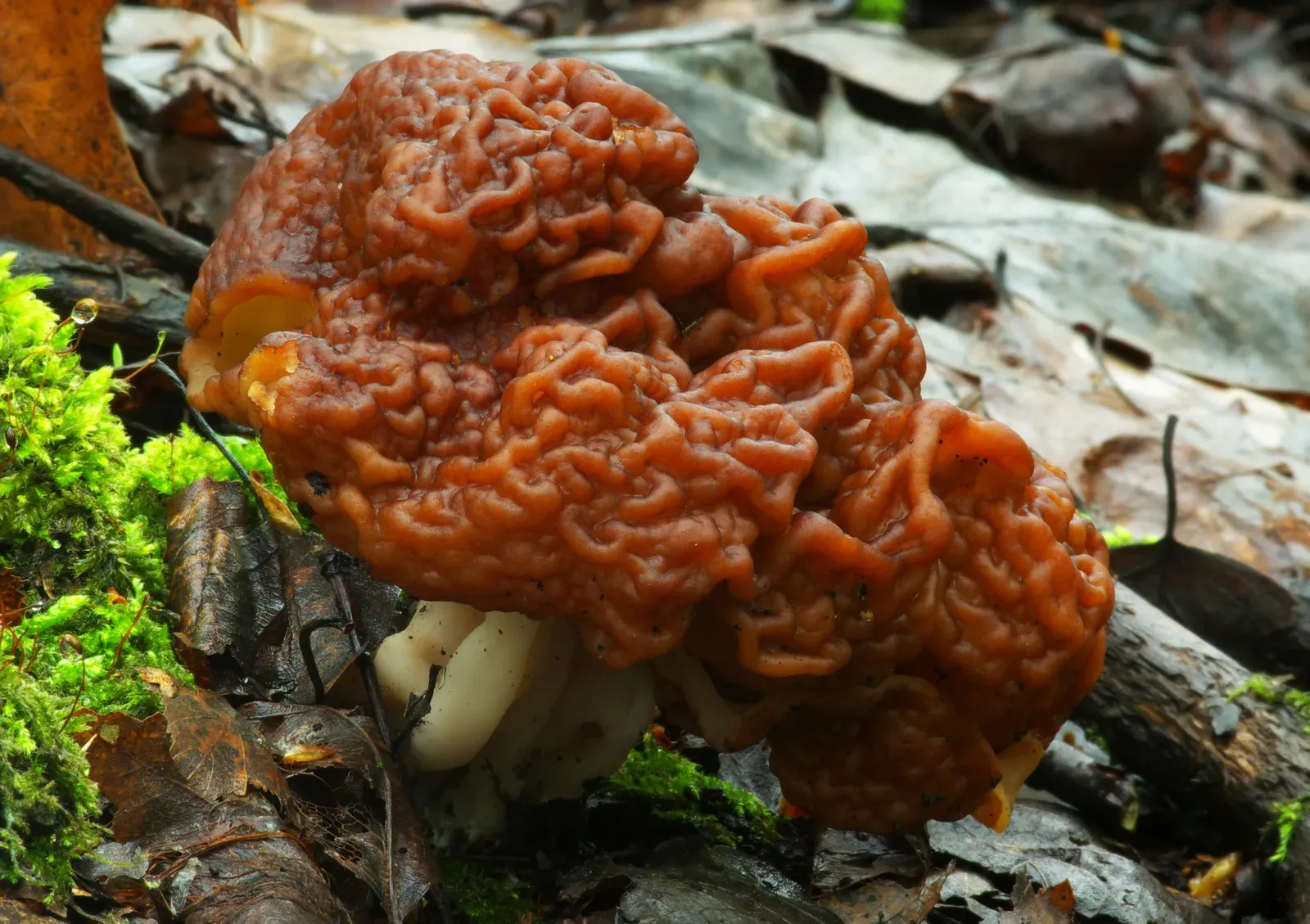
False morel is a spring mushroom that many people mistakenly consider safe.
It's easy to recognize by its shapeless, brain-like brown cap on a short stem. It appears early in spring. It contains a toxin that accumulates and damages the liver, and its amount is unpredictable. That's why modern sources advise not picking false morels at all.
Confused with: morels, which have a honeycomb-like rather than brain-like cap and are considered conditionally edible.
One rule for all four
Despite their differences, these mushrooms share what makes them especially dangerous.
- The toxin acts with a delay. The first symptoms often appear only many hours later, when helping is already more difficult.
- Processing doesn't help. Neither boiling, nor drying, nor salting neutralizes the toxins.
- The taste gives no warning. Many of them are neither bitter nor repulsive.
- Lookalikes nearby. Each one is disguised as a popular edible mushroom.
That's why your main protection is to never take unfamiliar or doubtful mushrooms. All the guidelines are in our safe foraging rules. And if you suspect poisoning, immediately call 112 or your local emergency number and follow the first aid instructions.
Sources
- “Identification Guide to the Fungi of Ukraine” (Kyiv, Naukova Dumka publishing house).
- Amanita phalloides in GBIF, the global biodiversity database.
- Fungi in MycoBank, the international fungal nomenclature database.
- Mushroom poisoning on Wikipedia.
Frequently asked questions
Which mushrooms in Ukraine are deadly poisonous?
Above all, , , and . These are the ones that can kill.
Which mushroom is the deadliest?
. It accounts for most fatal poisonings, because it tastes pleasant, and its toxin acts with a delay and damages the liver and kidneys.
Why are false morels considered dangerous?
Because the contains a toxin that accumulates and damages the liver, and the amount in the mushroom is unpredictable. That's why modern sources advise not picking false morels at all.
How do you tell a deadly amanita from a field mushroom?
By the gill color and the base of the stem. In a field mushroom the gills turn pink and darken, and there's no sac at the base. The has white gills, and there's a sac at the bottom of the stem.
How long before deadly poisoning shows up?
Often only after six hours or more, sometimes the next day. This delay is the most dangerous part: the person doesn't link feeling unwell to the mushrooms, while the toxin is already at work.
Can the toxins of these mushrooms be neutralized?
No. The toxins of the death cap, amanitas and the false morel are not destroyed by boiling, drying or salting. No cooking method makes these mushrooms safe.
Why is the panther cap more dangerous than the red one?
It contains more toxin and has not a bright but a brown spotted cap, resembling some edible mushrooms. Because of this, it's easier to put it in your basket by accident.
What should you do if you've eaten a deadly poisonous mushroom?
Call 112 or your local emergency number immediately, even if you still feel fine, and keep the leftover mushrooms for the doctors. Don't delay. Details in our article on .
Mushrooms in this article
Related articles
 Safety
False morel: why this spring mushroom is dangerous
The false morel looks like a morel, but it contains a poison. Here's how to recognize it, why it's dangerous a…
August 24, 2026·2 min Recipes & cooking
How to store fresh mushrooms, and for how long
Fresh mushrooms spoil faster than you might think. Here's how long they keep in the fridge, how to store them…
August 21, 2026·4 min How to identify
Truffles in Ukraine: do they grow here, and where to look
Truffles aren't just a French delicacy. Several species grow in Ukraine too. Here's which ones, where they occ…
August 24, 2026·2 min