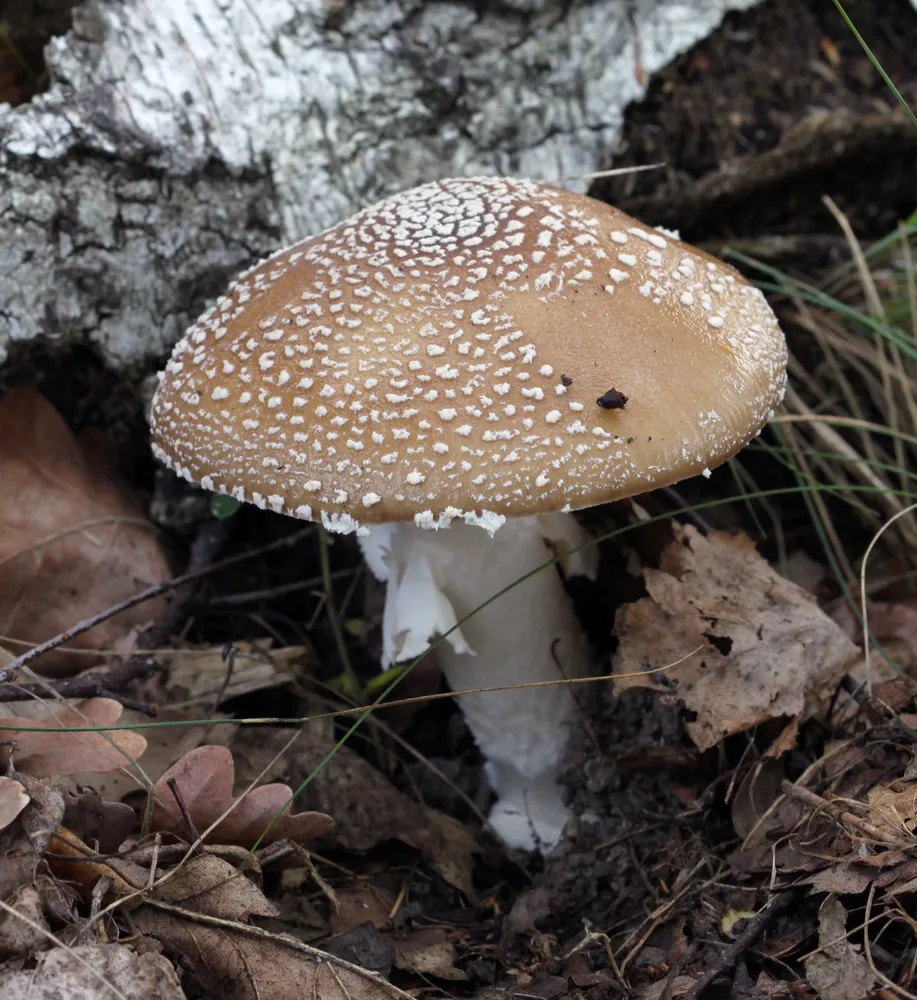
Panther capAmanita pantherina
Expert-verifiedUpdated August 15, 2026
Passport
- Edibility
- Poisonous
- Season
- Jul — Oct
- Hymenophore
- Gilled
- Cap color
- Brown
- Size
- Medium (5–15 cm)
- Smell
- Neutral
- Reviewed
- Yes ✓
POISONOUS
Eating it causes poisoning. Do not pick it unless you have identified it with certainty.
Higher concentrations of ibotenic acid and muscimol. Symptoms are more severe: deep hallucinations, possible coma. Get to a hospital immediately.
If you suspect poisoning, call an ambulance immediately: 112 (the European emergency number) or your local emergency number
Quick answers
Where to look?
Deciduous forest, Mixed forest
When does it appear?
Jul — Oct
Active months: July, August, September, October.
How to recognize it? Three signs
- Cap color: Brown, Grey
- Cap shape: Convex, Flat
- Smell: Neutral, Radicate
Fruiting season
July – October
Description
The panther cap (Amanita pantherina) is a poisonous mushroom, far more dangerous than the fly agaric thanks to its higher concentration of muscimol and ibotenic acid. It is common in coniferous and broadleaf forests across Eurasia, growing under pine, spruce, oak and beech.
Because of its brown or grayish cap, beginners often mistake it for edible species — in particular, the blusher (Amanita rubescens). The key difference: the panther cap's flesh does not turn pink when damaged.
Poisonous. The toxins are not destroyed by cooking. In case of poisoning, seek hospital care immediately.
Cap
Cap 5–12 cm across, spherical or bell-shaped when young, later flattened-convex. The surface is shiny, brown, gray-brown or olive-brown, densely covered with small, neat white warts — the fly agaric's warts are larger and more irregular.
Hymenophore
Gills free, white, crowded. They don't change color when damaged — this sets them apart from a similar edible species (the blusher), whose flesh and gills turn pink.
Stem
Stem 6–12 cm tall, white, smooth, with a thin membranous ring in the upper part. At the base there is a characteristic bulb and a thin sheath-like volva with several rows of scales — this distinguishes it from the blusher.
Flesh
Flesh firm, white, does not turn pink when damaged (a critical feature that distinguishes it from the similar blusher). No distinctive taste. The toxins are spread evenly throughout the whole fruiting body.
Smell
Smell faint, neutral or slightly unpleasant — subtly radish-like or earthy. It is neither sharp nor repulsive, which makes it harder to sense the danger while foraging.
Lookalikes
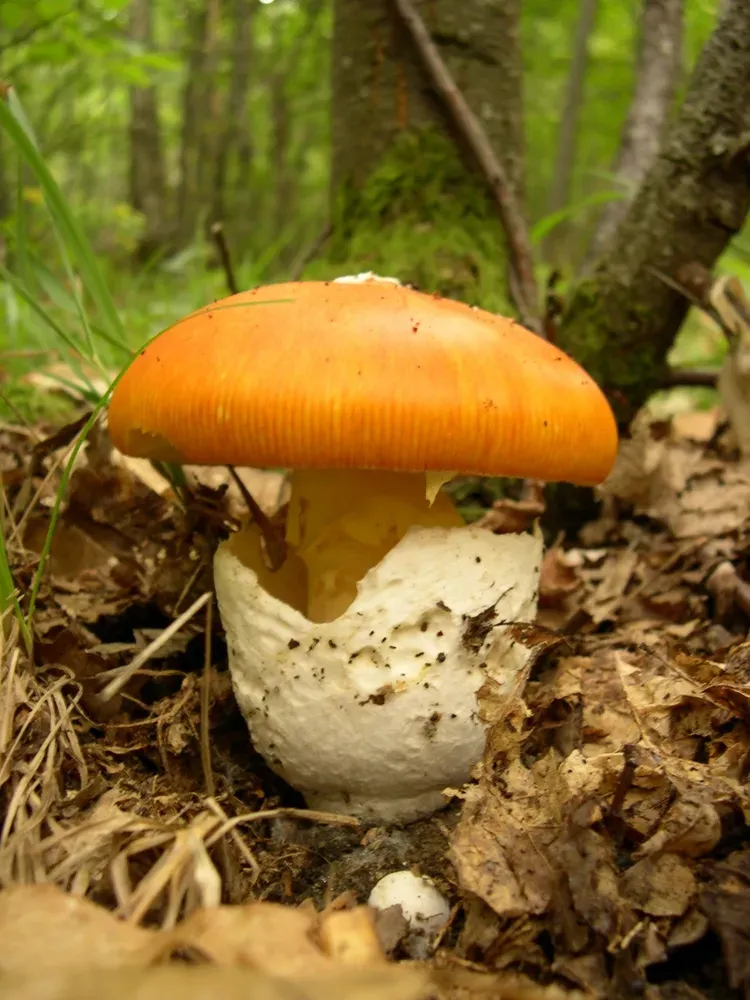
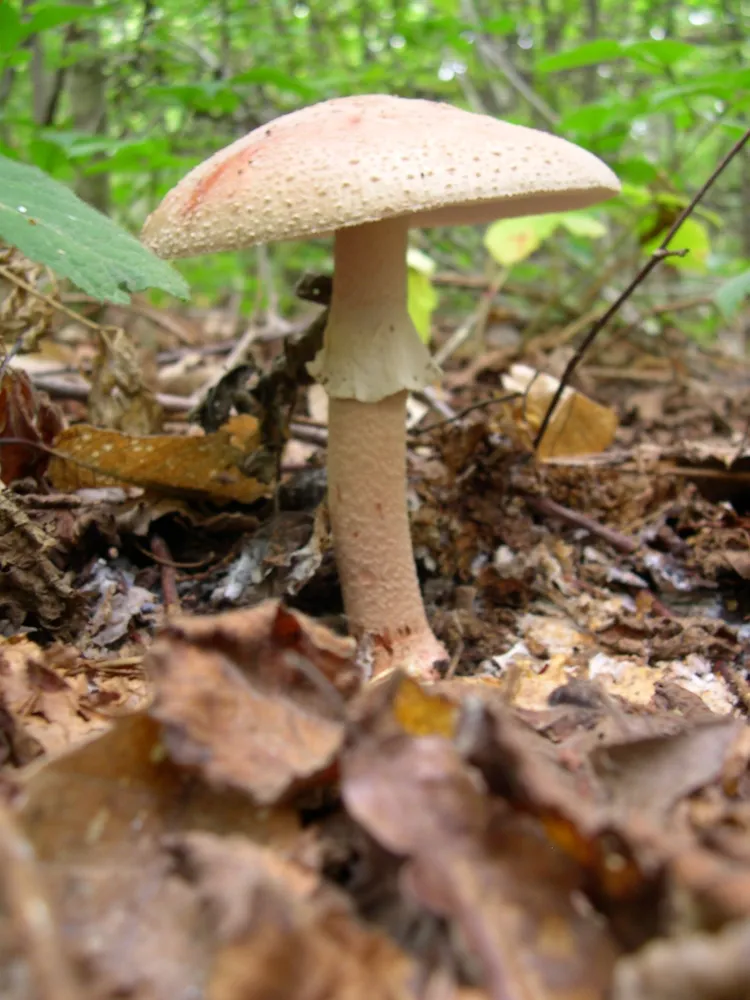
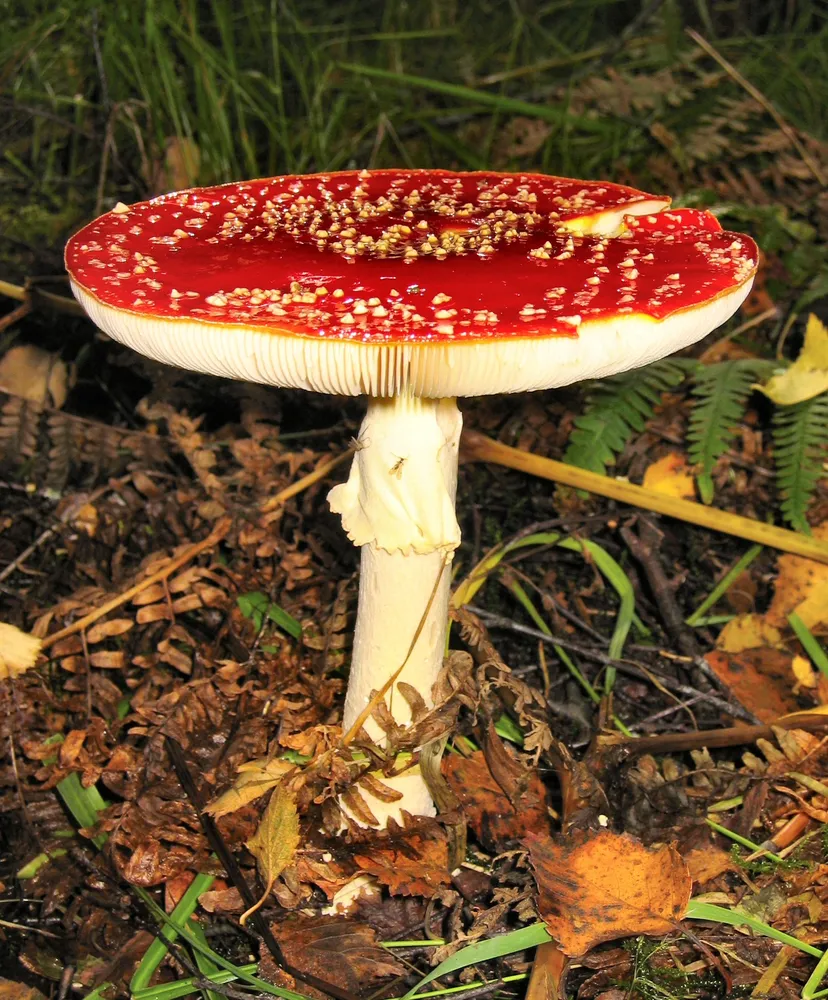
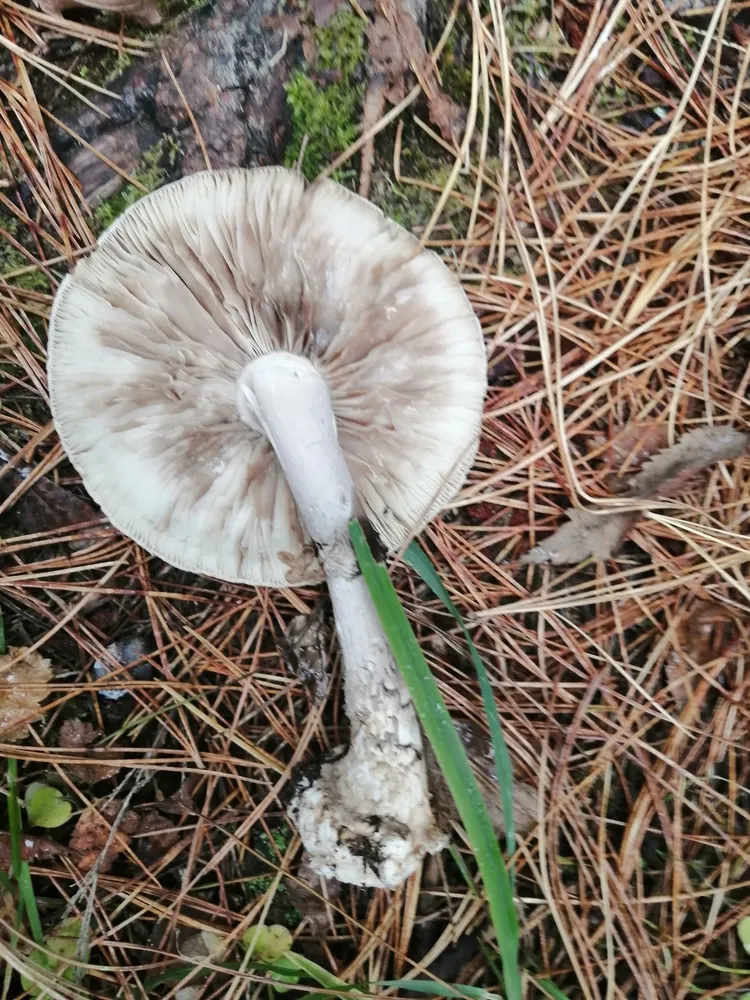
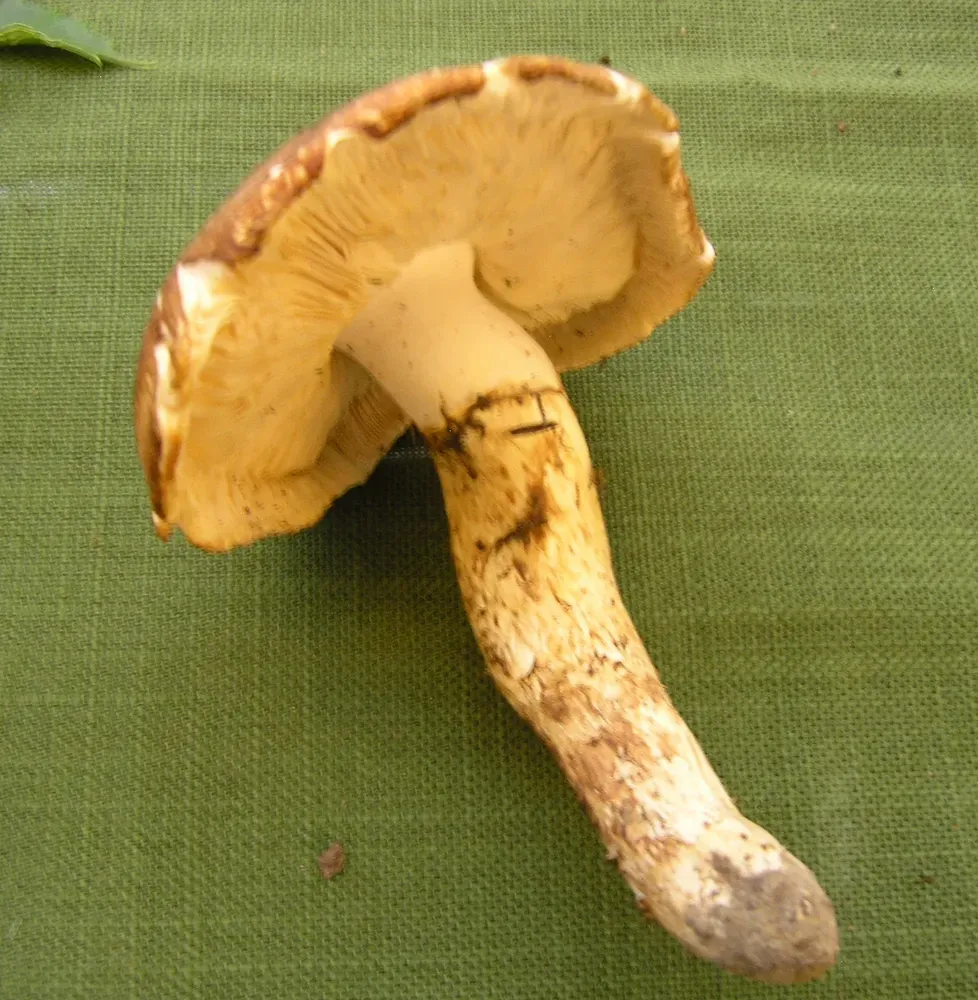
Related species
Mushrooms of the same genus and habitat — to study side by side and never mix up.
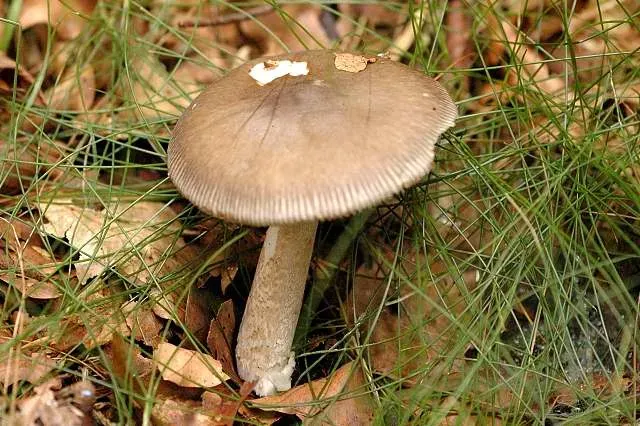
Amanita battarrae
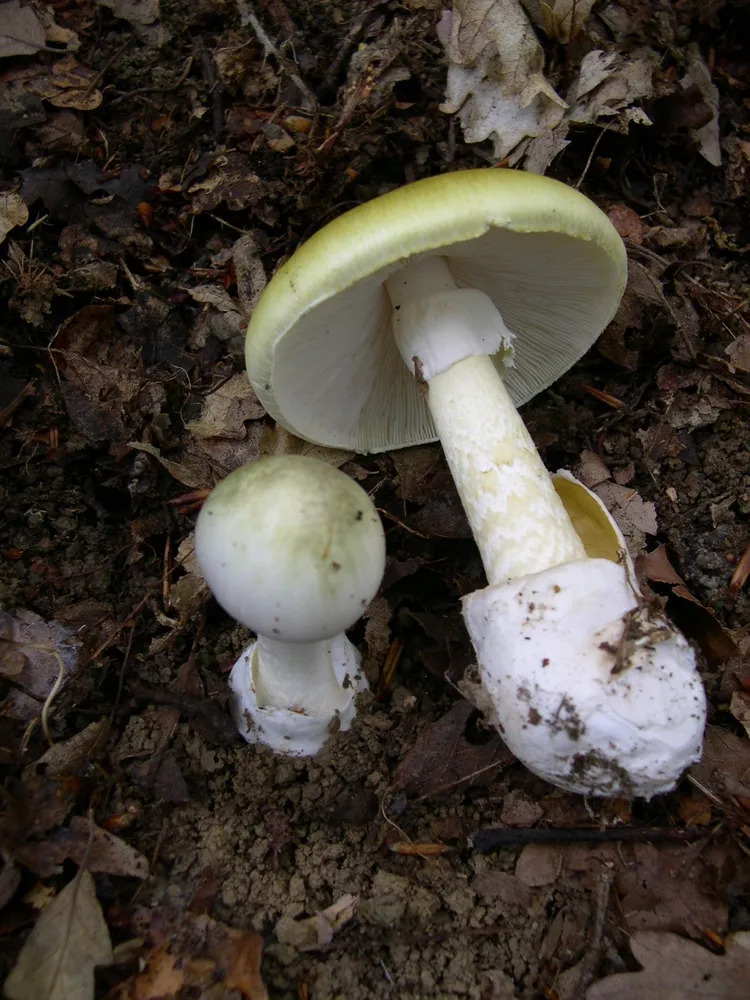
Death cap
Amanita phalloides
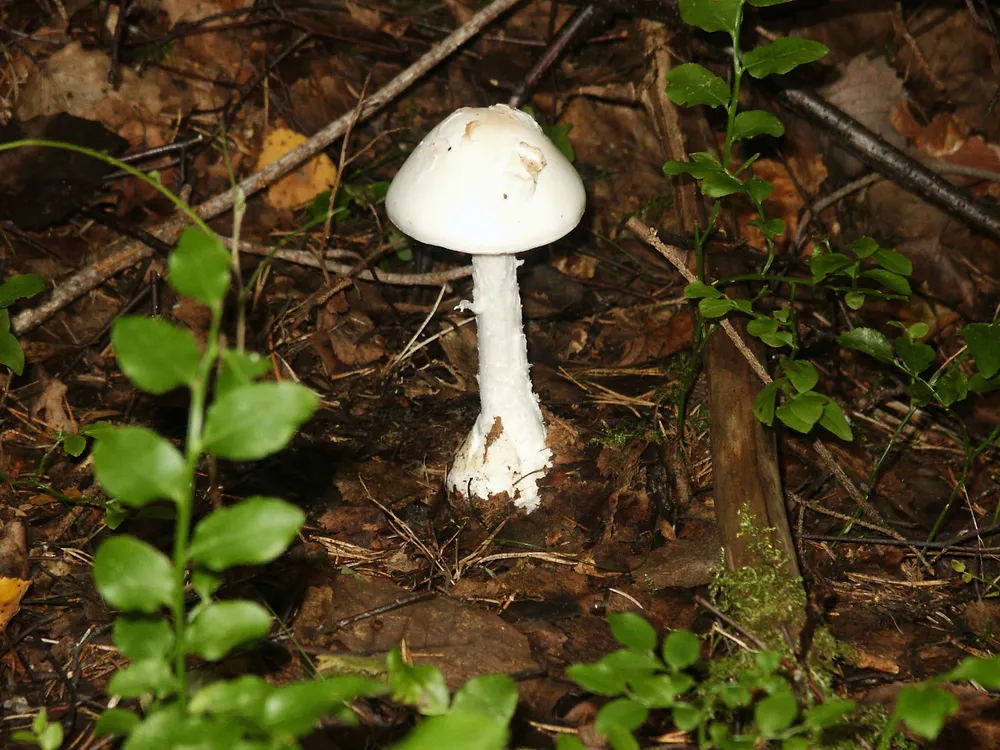
Destroying angel
Amanita virosa
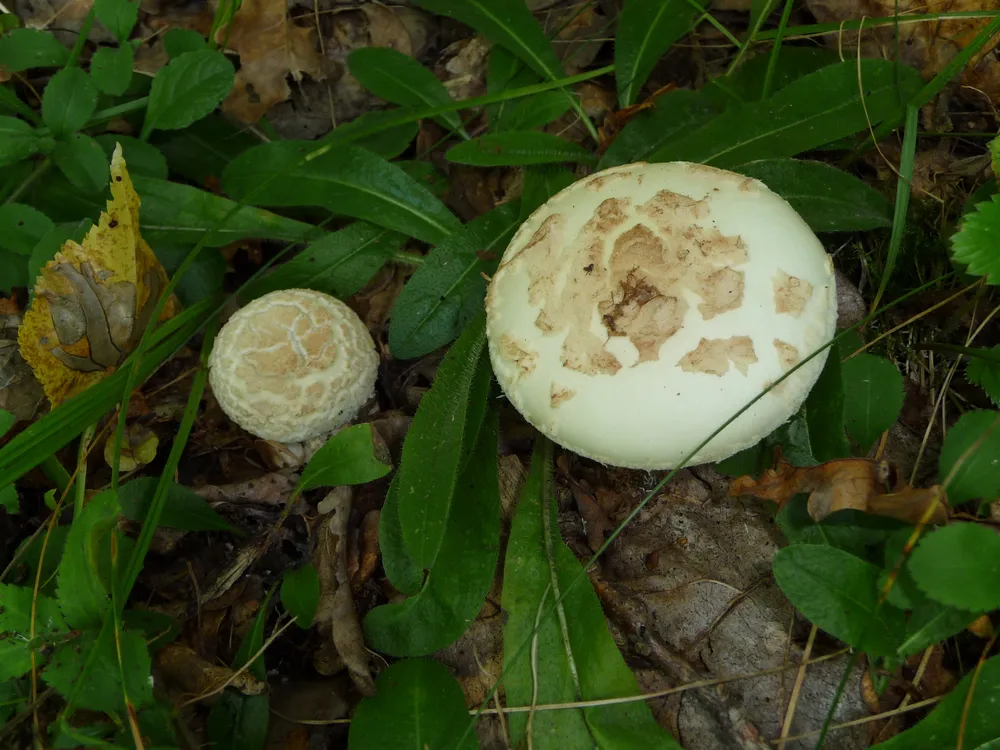
False death cap
Amanita citrina
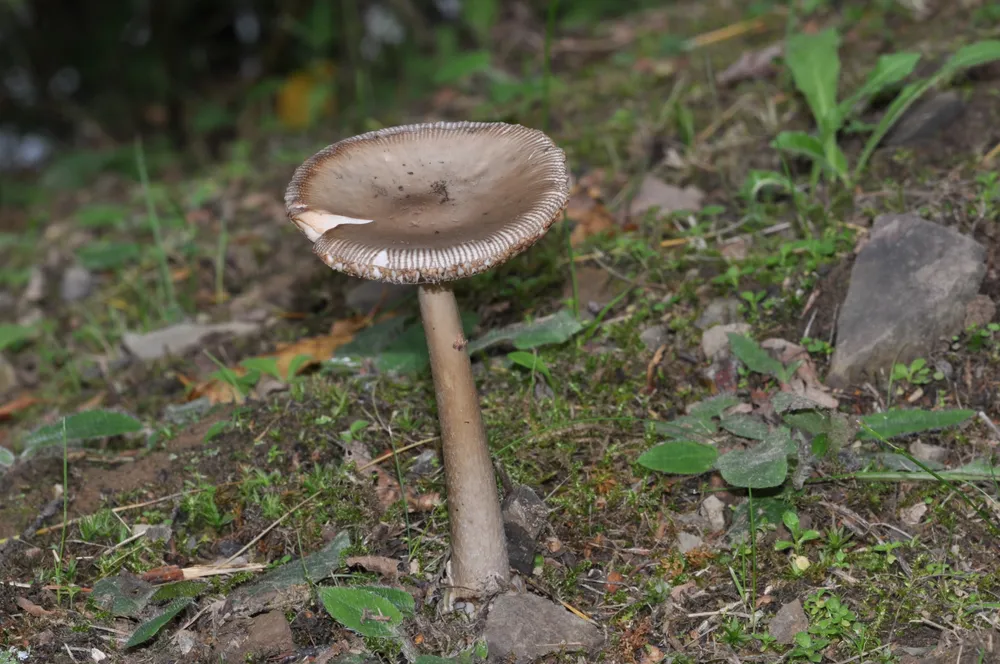
Grisette
Amanita vaginata
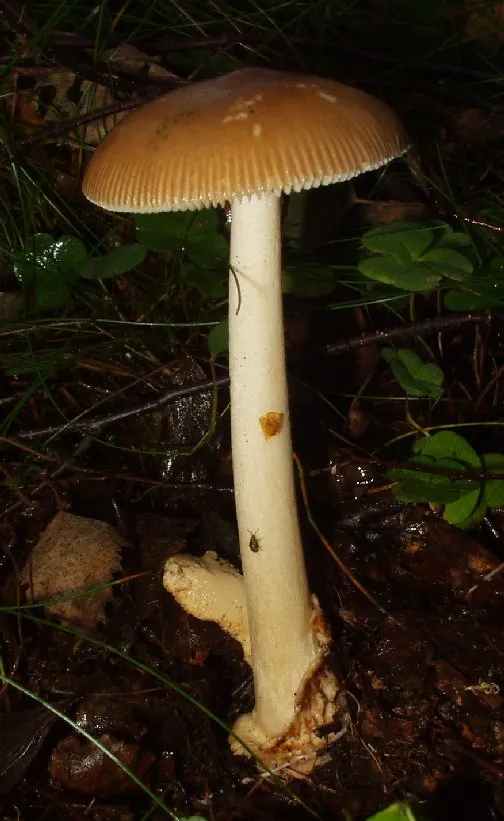
Tawny grisette
Amanita fulva
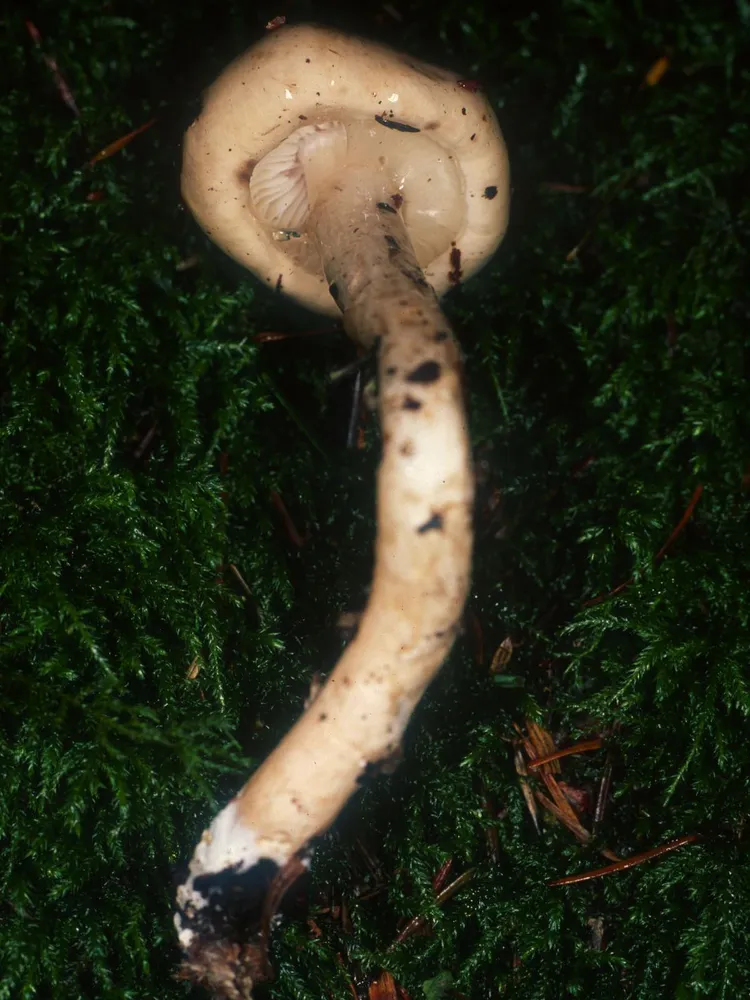
Dripping slimecap
Limacella illinita
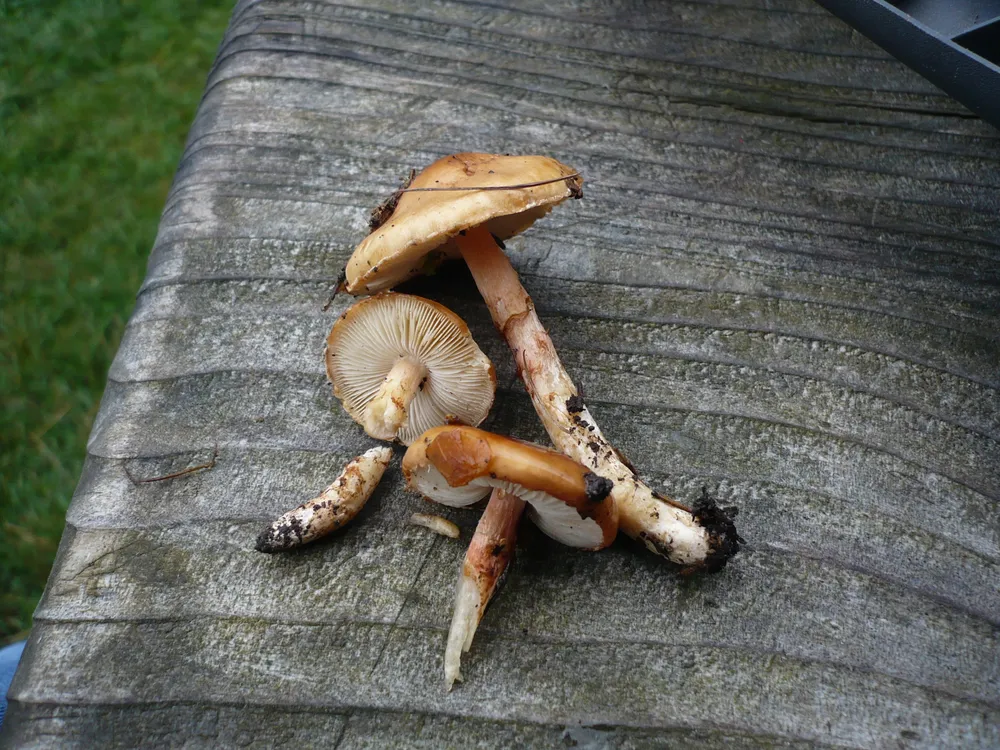
Limacella delicata
Related reading
 Safety
Deadly poisonous mushrooms of Ukraine: the four you must know
Among hundreds of mushrooms, a few can kill with a single meal. Here are four deadly poisonous mushrooms of Uk…
August 14, 2026·3 min Safety
Poisonous mushrooms of Ukraine: photos, names, and key signs
To forage safely, you need to know “the enemy by sight.” Here are the main poisonous mushrooms of Ukraine, the…
August 13, 2026·4 min.webp) Safety
SafetyMyths about spotting poisonous mushrooms
A silver spoon, an onion that darkens, mushrooms that snails eat: these are all folk “tests” that have cost pe…
August 12, 2026·4 min
Frequently asked questions
Is Panther cap edible or poisonous?
Does Panther cap have gills or pores?
What does the cap of Panther cap look like?
What does the stem of Panther cap look like?
What do Panther cap smell and taste like?
Where does Panther cap grow?
Which trees does Panther cap grow under?
When should you pick Panther cap?
What can Panther cap be confused with?
Why is Panther cap dangerous?
What is the scientific name of Panther cap?
Sources
- [1]Атлас грибів України, Зеров Д.К. (1979)
- [2]GBIF