Caesar's mushroomAmanita caesarea
Expert-verifiedUpdated October 3, 2026
Passport
- Edibility
- Edible
- Season
- Jul — Sep
- Hymenophore
- Gilled
- Cap color
- Orange
- Size
- Large (over 15 cm)
- Smell
- Pleasant
- Reviewed
- Yes ✓
Quick answers
Where to look?
Deciduous forest
When does it appear?
Jul — Sep
Active months: July, August, September.
How to recognize it? Three signs
- Cap color: Orange, Red, Yellow
- Cap shape: Convex
- Smell: Pleasant
Fruiting season
July – September
Description
Caesar's mushroom (Amanita caesarea) is one of the few amanitas that inspire admiration rather than fear. The ancient Romans called it the "royal mushroom" and served it to emperors — hence the Latin name honoring Caesar. In Southern Europe it is still considered one of the most expensive gourmet mushrooms, alongside porcini and truffles.
In Ukraine, Caesar's mushroom is a rare southern species listed in the Red Data Book. You can find it mainly in Zakarpattia and in the mountain oak forests of Crimea, where the climate is warmer and the soils richer. In the Forest-Steppe and the north of the country it practically never occurs. Picking wild specimens in Ukraine is prohibited — the mushroom is protected by law.
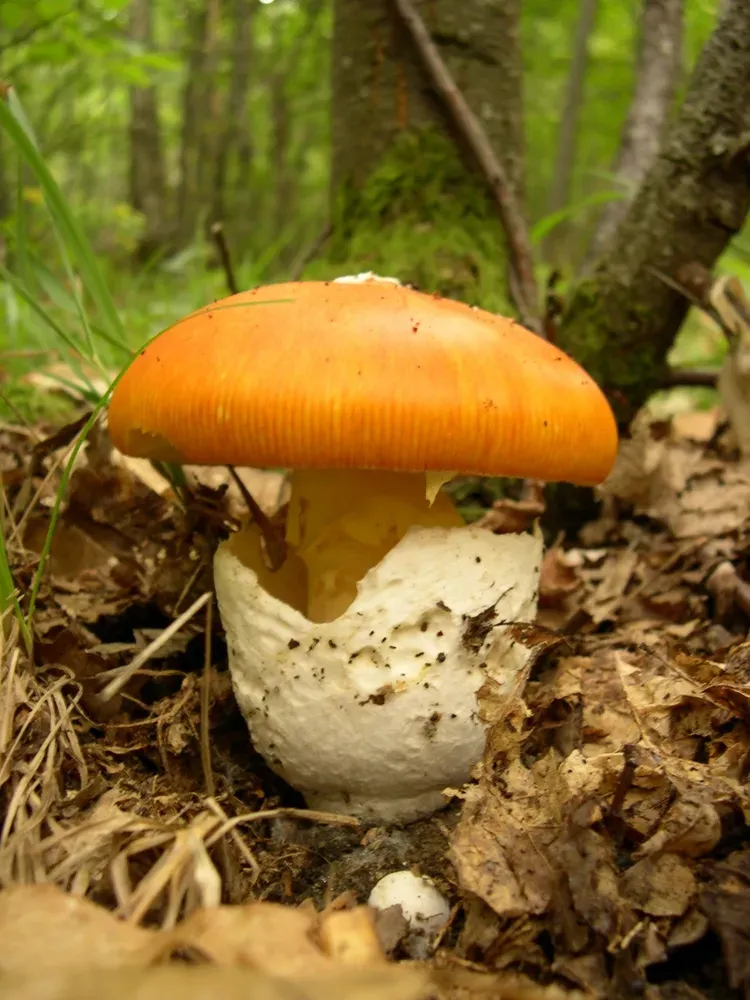
Caesar's mushroom is easy to recognize: a bright orange-red cap with smooth skin and no white flakes (unlike the fly agaric), golden-yellow gills, a yellow stem with a ring and a white sack-like volva at the base. Young mushrooms look like a yellow egg in a white pouch — hence the Italian name "ovolo". If you recognize this mushroom in a wild Ukrainian forest, do not pick it — take a photo and let local mycologists know.
Cap
Cap 8–20 cm, hemispherical in young mushrooms, then opening out to flattened-convex. Color bright orange-red, darker in the center, paler toward the edges. Surface smooth, shiny, without veil flakes (unlike the fly agaric). The cap skin peels easily. The cap margin has clearly visible radial striations — very pronounced in mature mushrooms.
Hymenophore
Gills free, crowded, golden yellow — one of the key features of the species (most amanitas have white gills). Spore print white or pale cream.
Stem
Stem 8–15 cm tall, 1–2.5 cm thick, cylindrical, slightly widening toward the base. Color bright yellow, smooth or finely scaly. At the top of the stem hangs a broad, membranous yellow ring, drooping like a skirt. At the base is a large, white, free, sack-shaped volva — an essential diagnostic feature.
Flesh
Flesh white or slightly yellowish under the cap skin, firm, does not change color when cut. Fibrous in the stem, with no hollows.
Smell
Smell pleasant, mushroomy, faintly sweet. Taste mild and nutty — which is exactly why the mushroom is so prized.
›Scientific synonyms (9)
Agaricus caesareus Scop., Agaricus clavatus Batsch, Agaricus aurantiacus Bull., Fungus caesareus (Scop.) Kuntze, Venenarius caesareus (Scop.) Murrill, Volvoamanita caesarea (Scop.) E. Horak, Agaricus aureus Batsch, Agaricus aurantiacus Bull., Amanita basii Guzmán & Ram.-Guill.
Lookalikes
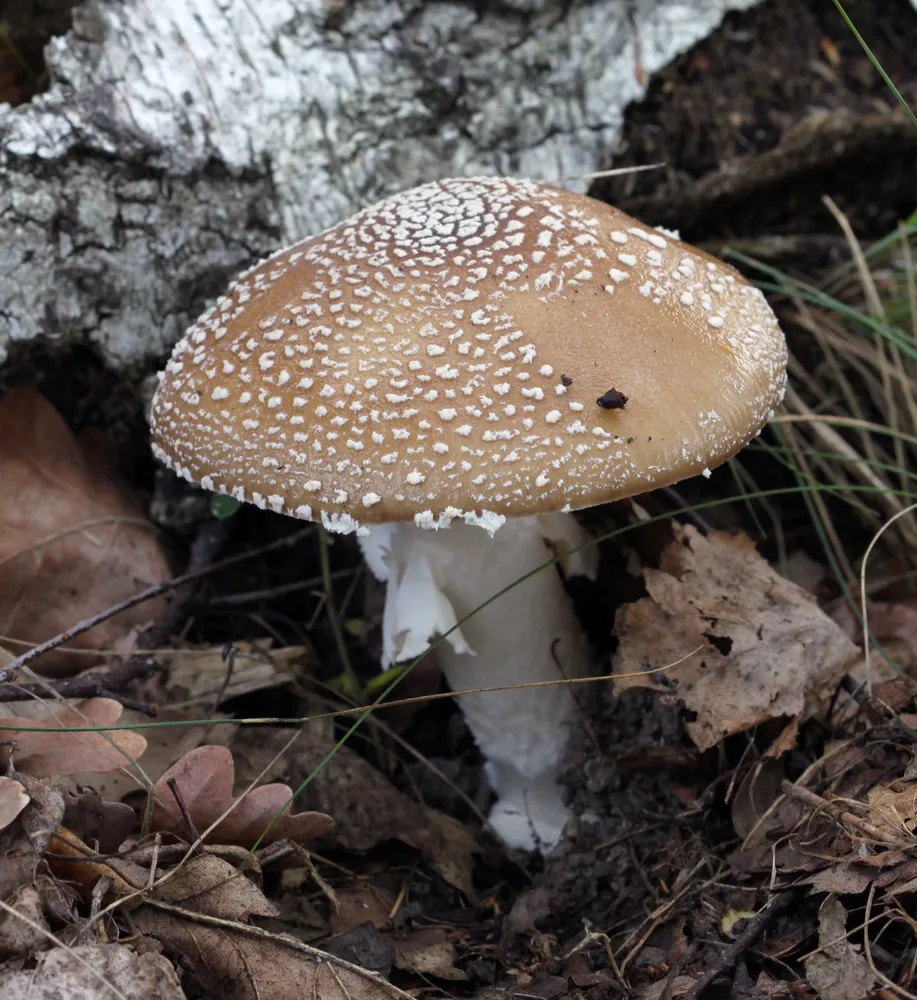
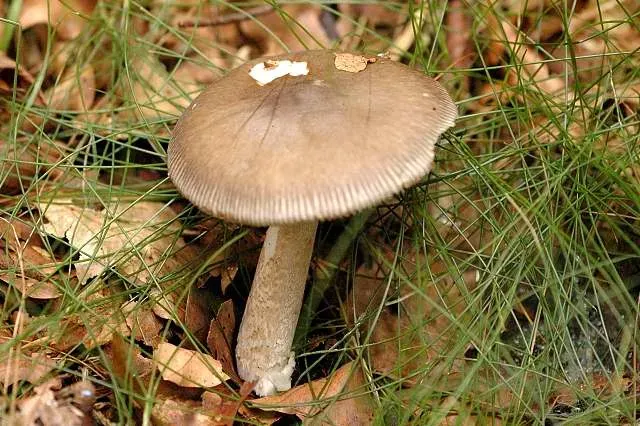
Related species
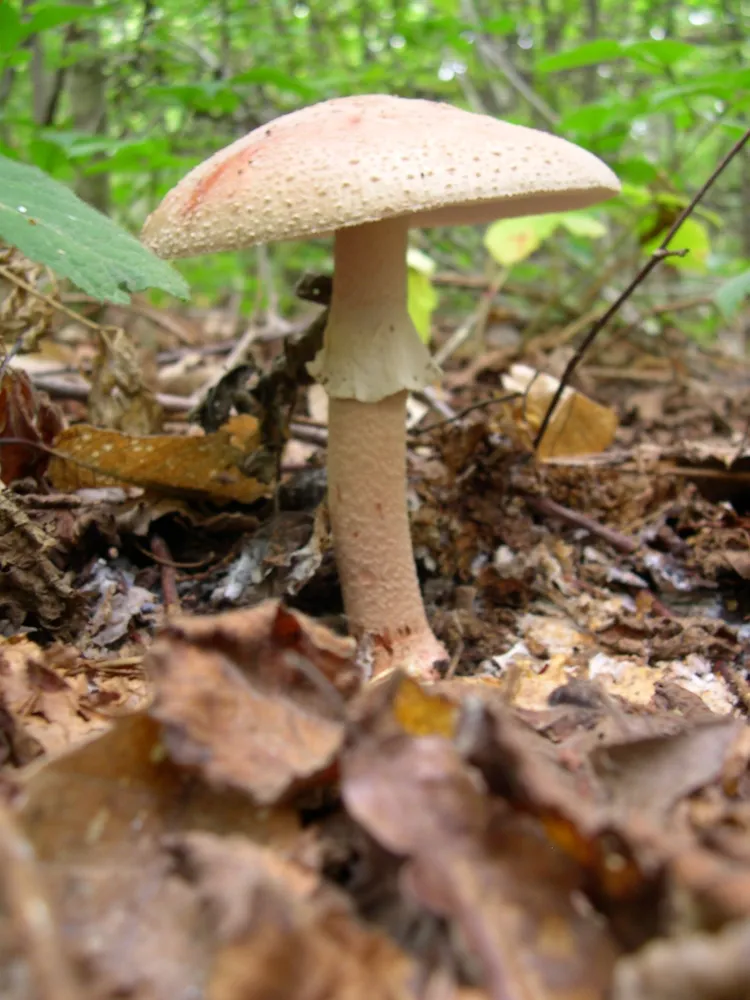
Mushrooms of the same genus and habitat — to study side by side and never mix up.
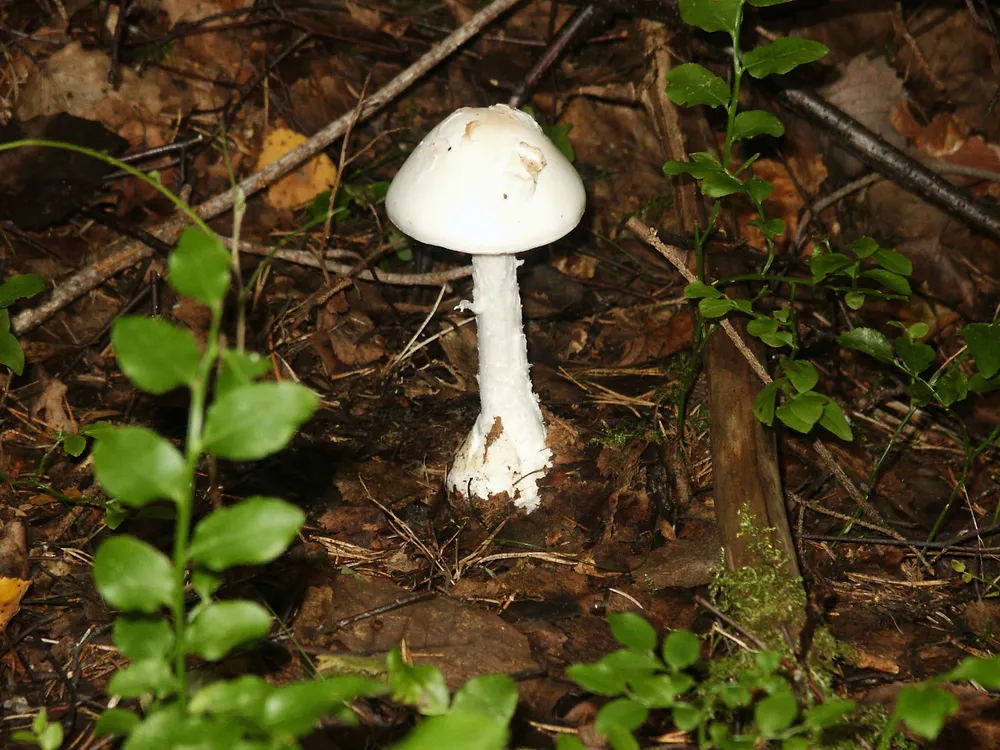
Destroying angel
Amanita virosa
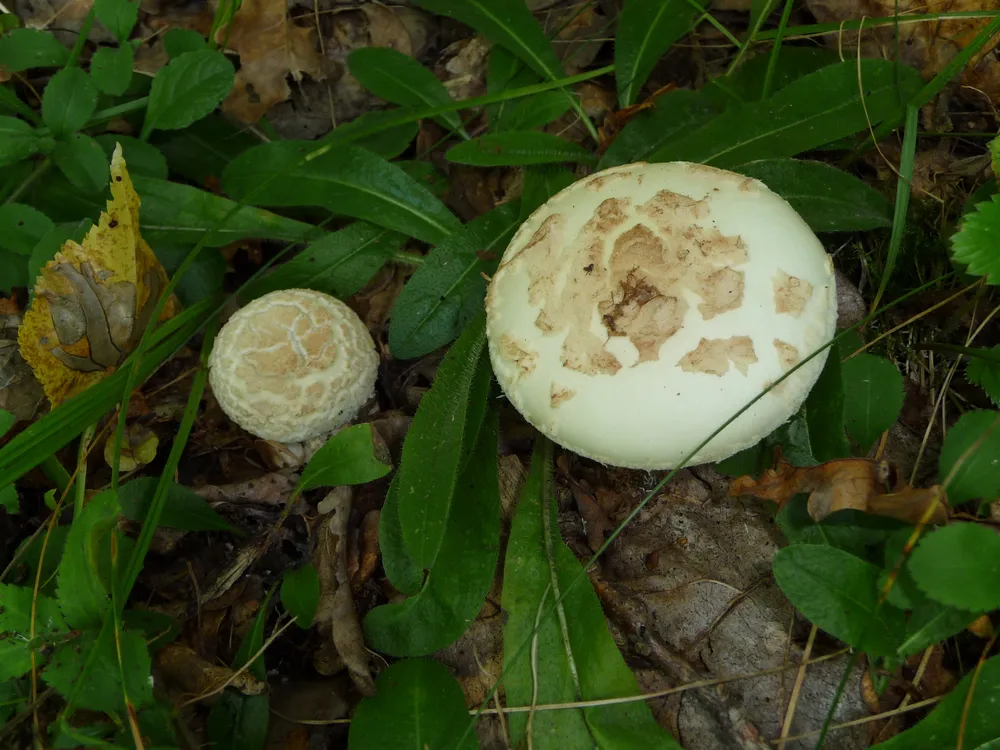
False death cap
Amanita citrina
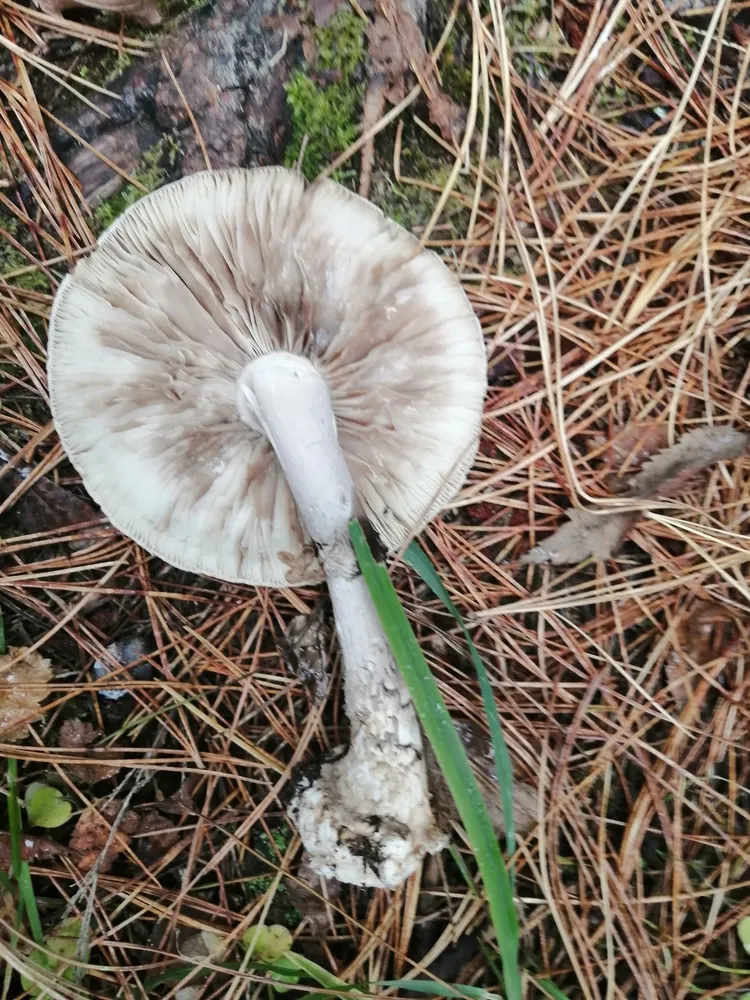
Grey veiled amanita
Amanita porphyria
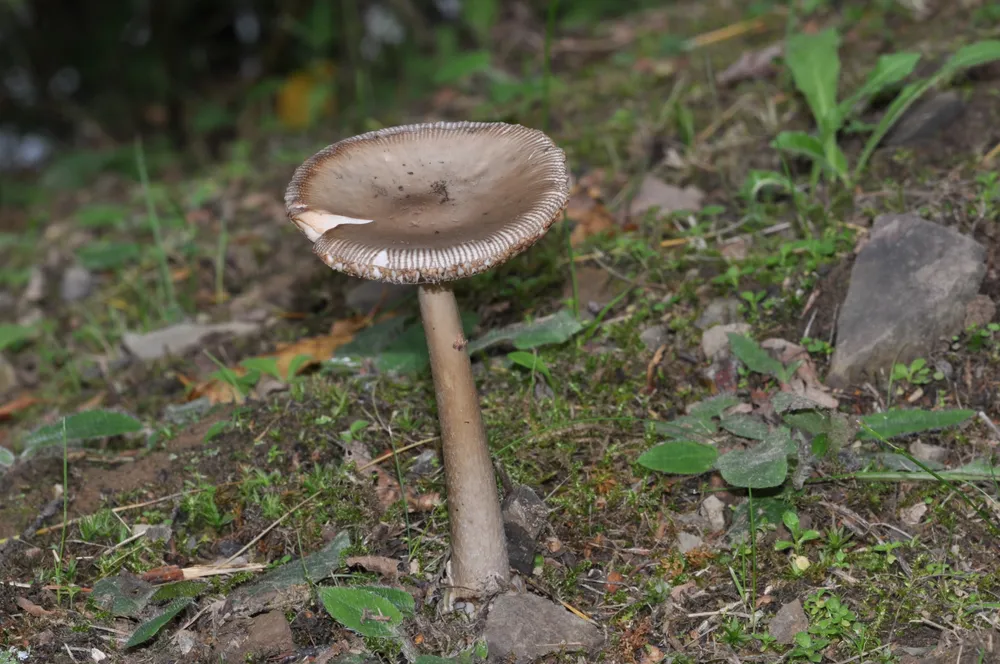
Grisette
Amanita vaginata
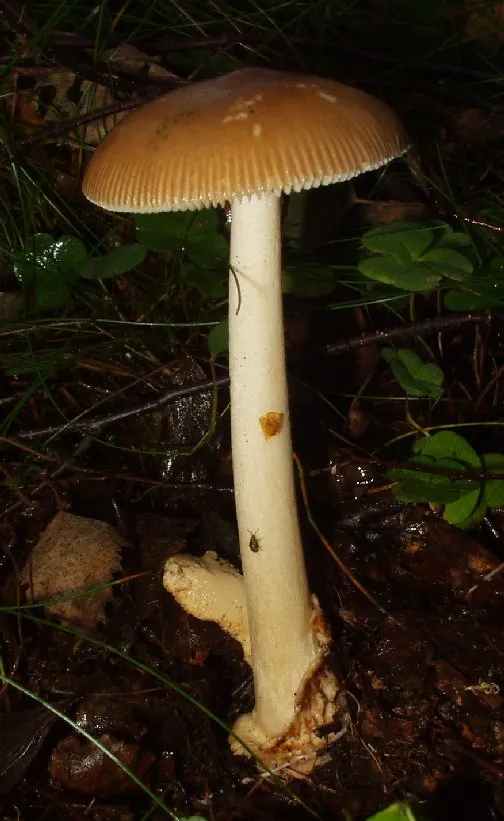
Tawny grisette
Amanita fulva
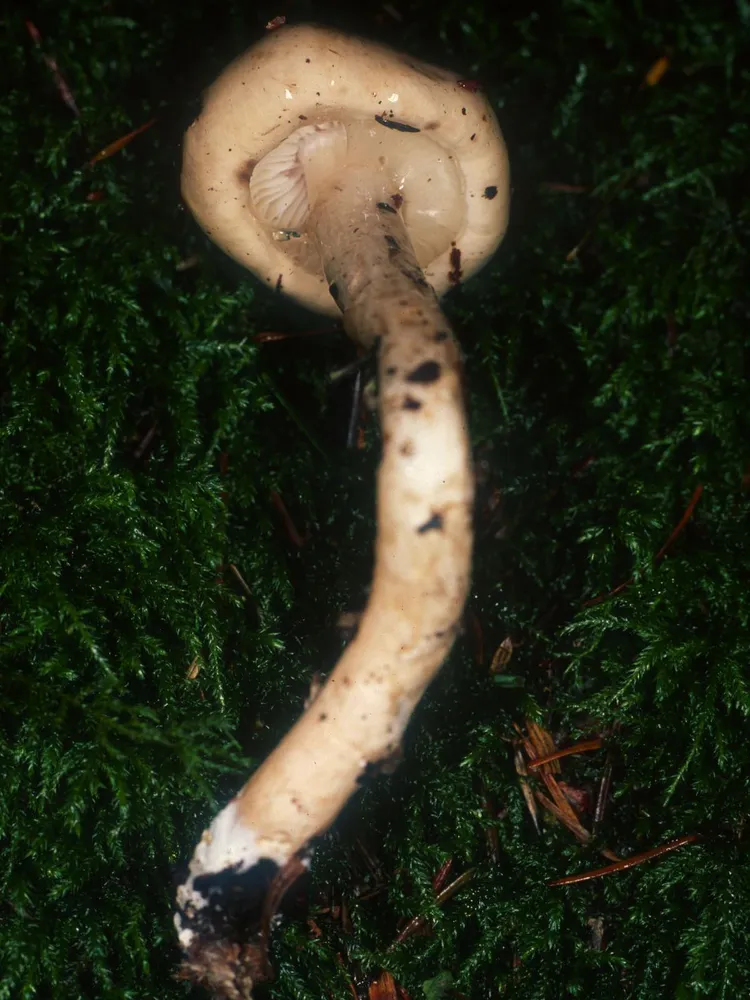
Dripping slimecap
Limacella illinita
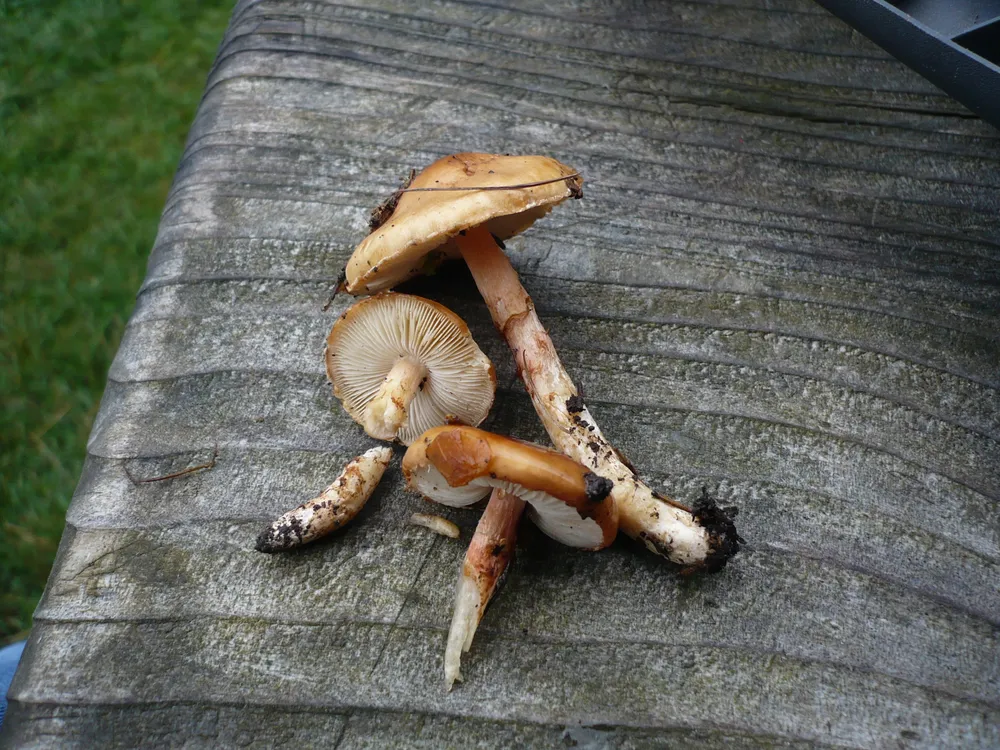
Limacella delicata
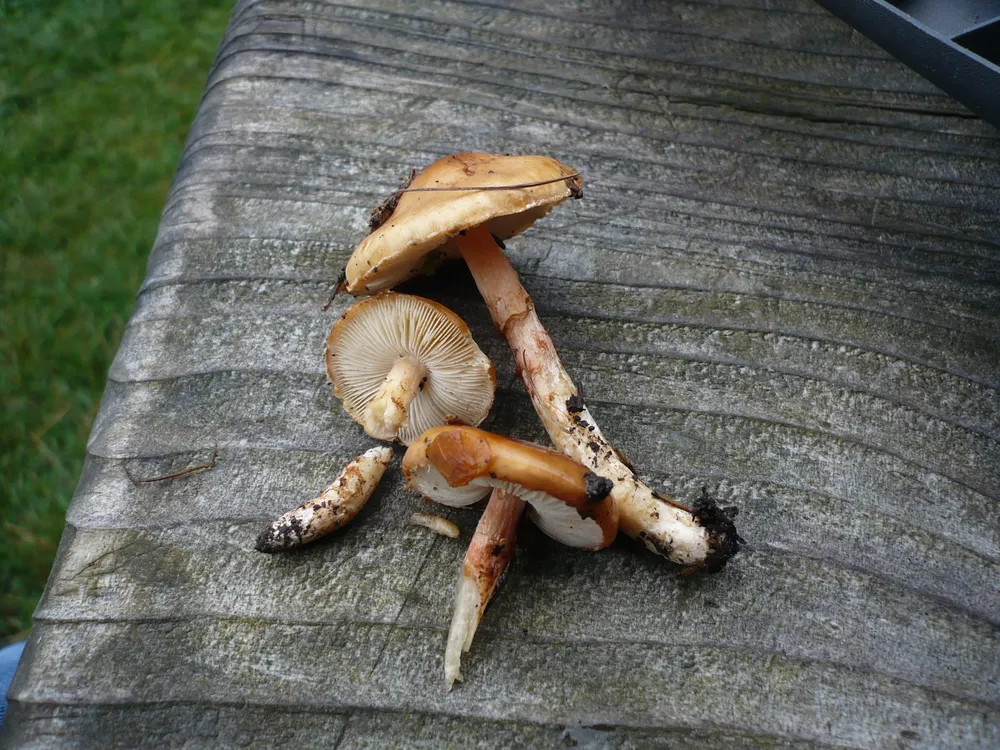
Limacella glioderma
Related reading
Frequently asked questions
Can Caesar's mushroom be confused with the fly agaric?
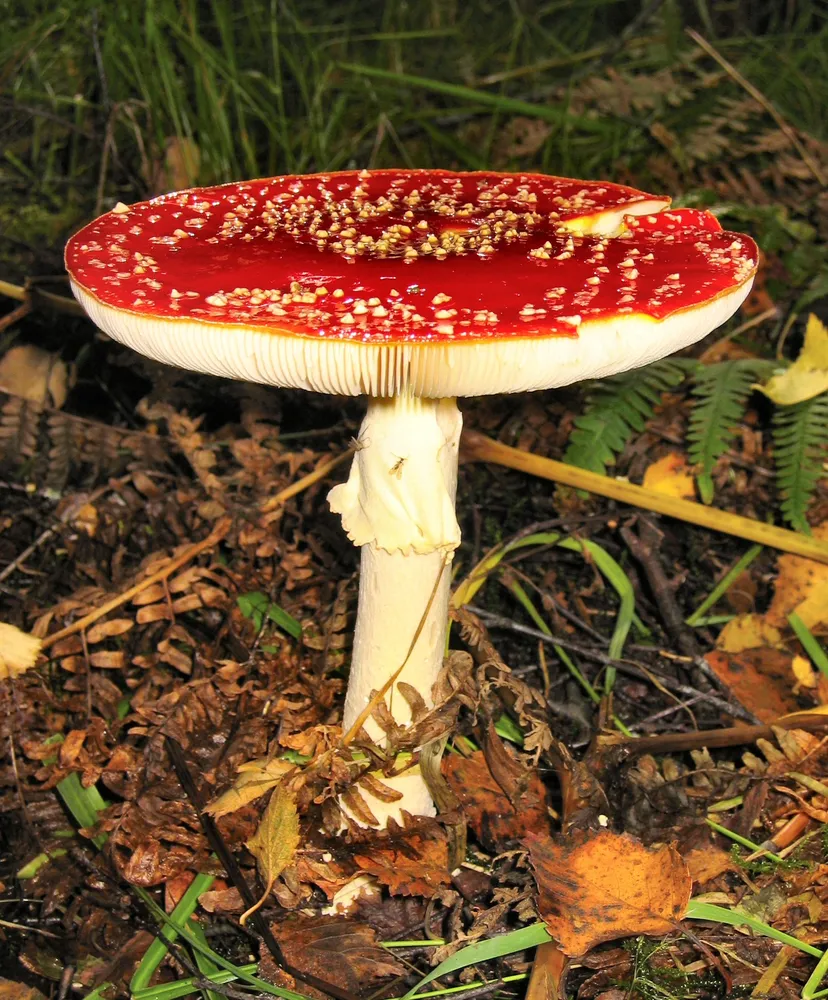
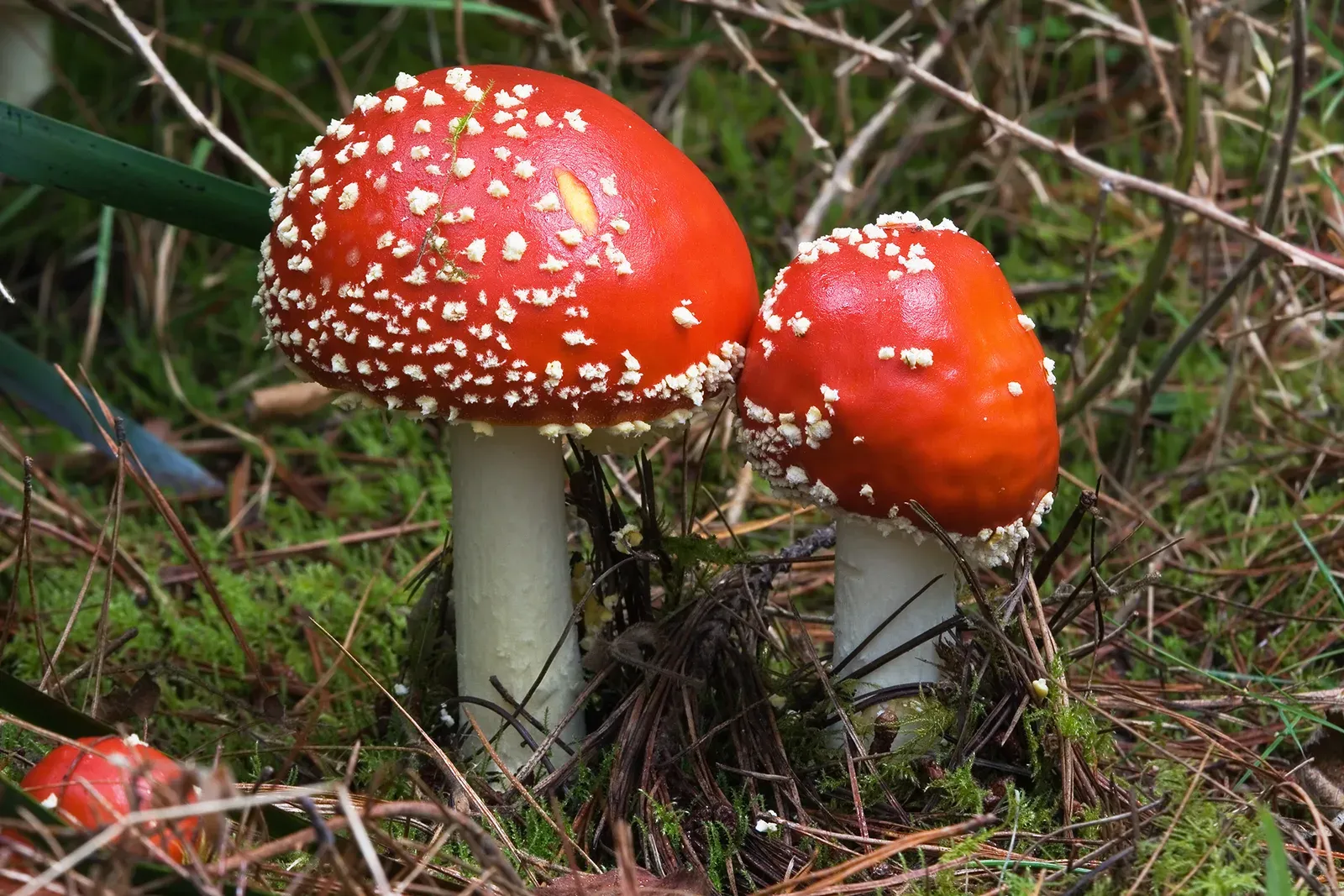
Not if you look carefully. The fly agaric (Amanita muscaria) has white veil flakes on its cap, and its gills and stem are white. Caesar's mushroom has a smooth cap with no flakes, and yellow gills and stem. But if you have the slightest doubt, leave it.
Can you pick Caesar's mushroom in Ukraine?
No. The species is listed in the Red Data Book of Ukraine, and picking it is prohibited by law. If you find one, take a photo, tell local mycologists or log it on iNaturalist, but leave the fruiting body in the forest.
Where does Caesar's mushroom grow in Ukraine?
Very rarely — mainly in Zakarpattia (lowland oak and beech woods) and in the Crimean Mountains. It does not occur in the country's northern regions — it is a southern, warmth-loving species.
When does Caesar's mushroom appear?
July to September, in warm, wet weather. Fruiting peaks in August. In very dry years it may not appear at all.
Which other amanitas can it be confused with?
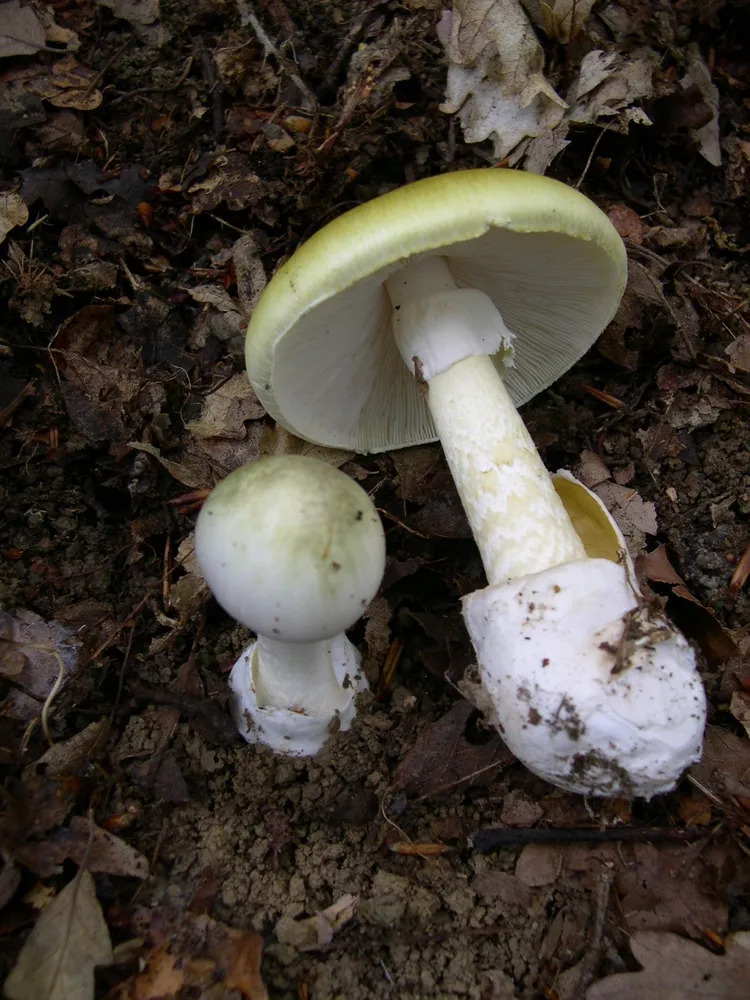
Young "egg"-stage specimens could in theory be confused with the death cap (Amanita phalloides) at the egg stage of its universal veil — but in the death cap the outer layer is white and the tissue inside is white too. Inside the shell of Caesar's mushroom is a bright yellow bud. If you cut an egg-shaped object open and find a white mass inside, it may be deadly dangerous — do not take it.
Which trees does it form mycorrhiza with?
Mainly with oak (Quercus) and beech (Fagus); in Southern Europe, with chestnut. In Zakarpattia it grows in oak-beech and beech woods, often at forest edges and on warm, sunny slopes.
Is Caesar's mushroom cultivated?
Not on a commercial scale — mycorrhizal mushrooms are very hard to grow. Everything sold at Southern European markets is wild-picked. In Ukraine, to repeat, picking wild specimens is prohibited.
How is Caesar's mushroom different from other orange mushrooms?
By its combination of features: a smooth orange-red cap + yellow gills + yellow stem + yellow ring + a white sack-like volva. No other mushroom has this full set. If even one feature does not match, it is a different species.
Is Caesar's mushroom edible or poisonous?
Does Caesar's mushroom have gills or pores?
What does the cap of Caesar's mushroom look like?
What does the stem of Caesar's mushroom look like?
Sources
- [1]Вікіпедія (українська)
- [2]Атлас грибів України, Зеров Д.К. (1979)
- [3]MycoBank Database
- [4]Index Fungorum
- [5]GBIF
- [6]iNaturalist Ukraine