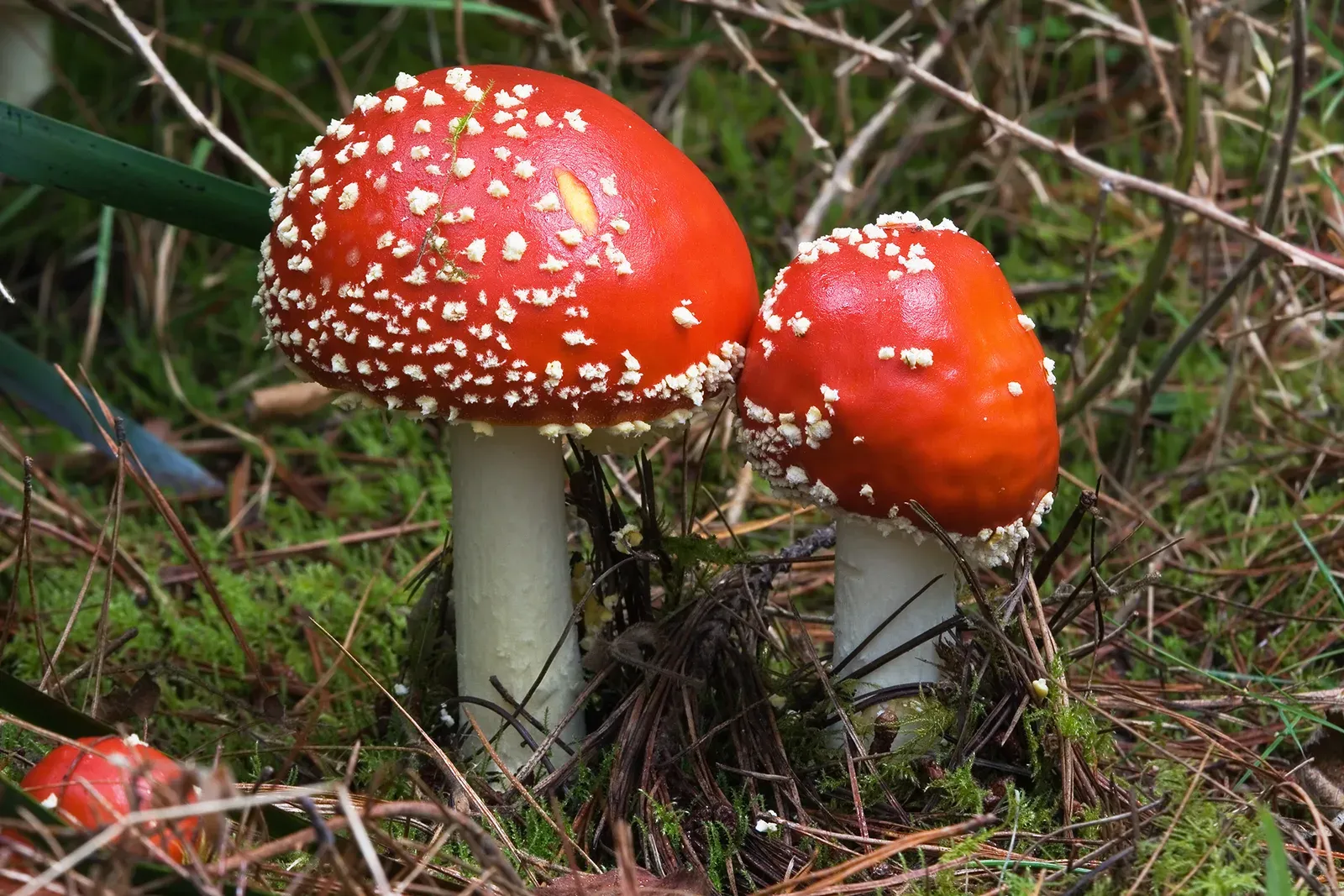
When people say “amanita,” most picture the red cap with white polka dots from fairy tales. In fact there are many amanitas, and among them are both deadly species and surprisingly edible ones. Telling them apart is useful even if you never plan to put an amanita in your basket, because some of them are easy to mistake for good mushrooms.
Let's meet the main amanitas of our forests, from the most dangerous to the edible ones, and see why this whole family calls for caution.
Why amanitas are dangerous
Most amanitas contain toxic substances that act on the nervous system, liver or kidneys. What makes the family so treacherous is that it includes both bright, instantly recognizable mushrooms and inconspicuous white or greenish species that look like edible ones.
The most dangerous relative of the amanitas is the death cap, which also belongs to this genus. We've written a separate detailed article about it, because it's the one behind most fatal poisonings.
A feature many amanitas share is a white skirt on the stem and a swelling or sac at its base. When you see this combination, be especially careful.
Deadly and poisonous amanitas
Never pick these species, under any circumstances.
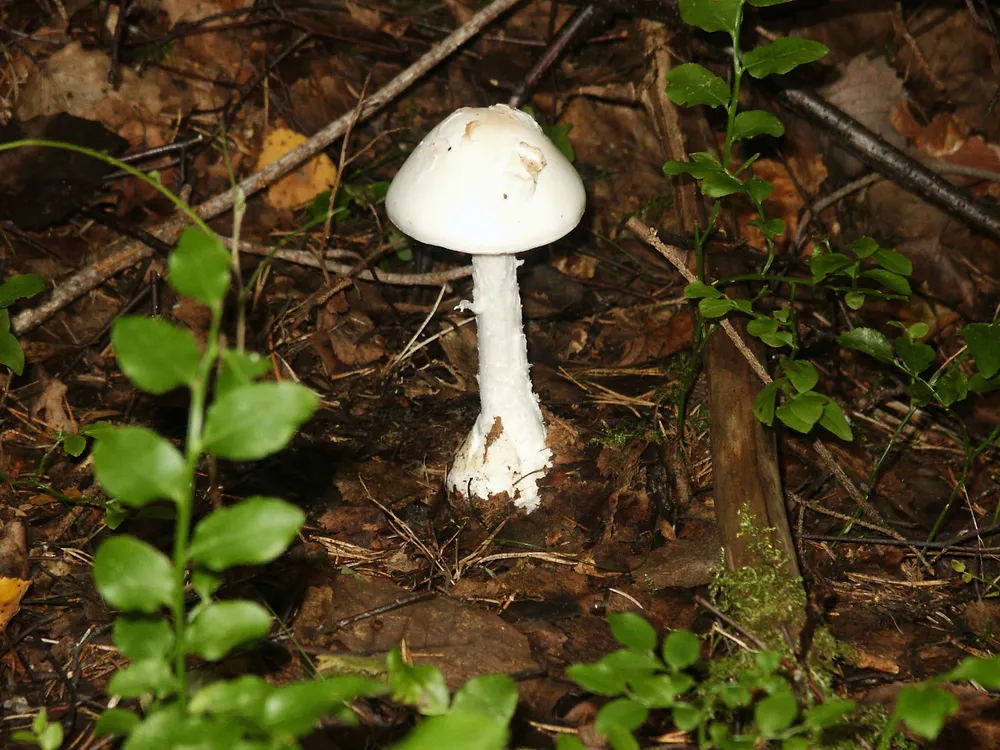
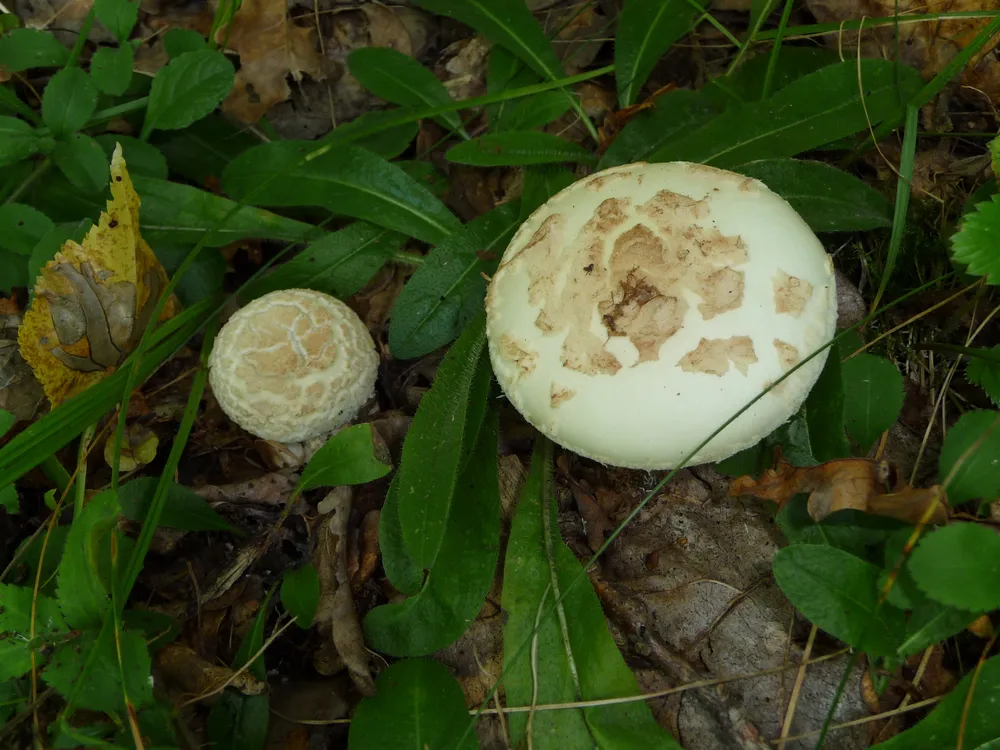
- **Destroying angel.** An entirely white mushroom with an unpleasant smell. Deadly poisonous, a close relative of the death cap. Its white color deceptively resembles a field mushroom.
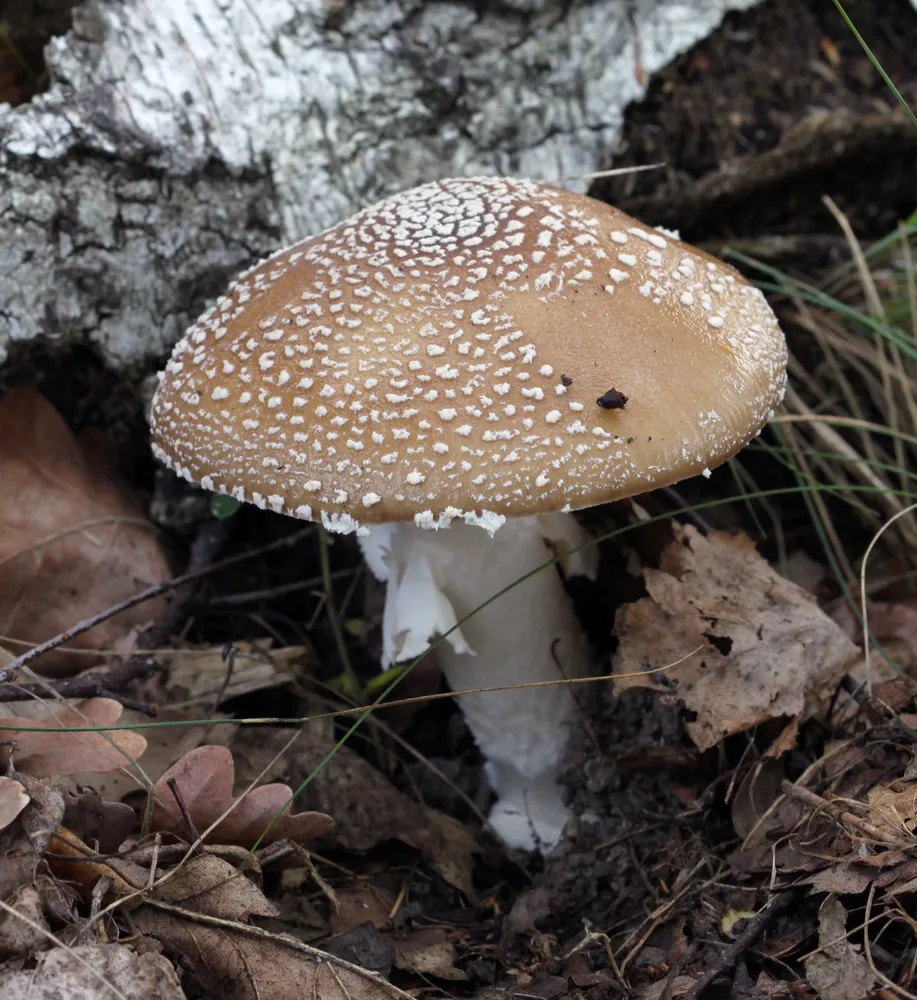
- **Panther cap.** A brownish cap with white spots. Very poisonous, more dangerous than the red one. It gets confused with edible gray amanitas and some Tricholoma (knights).
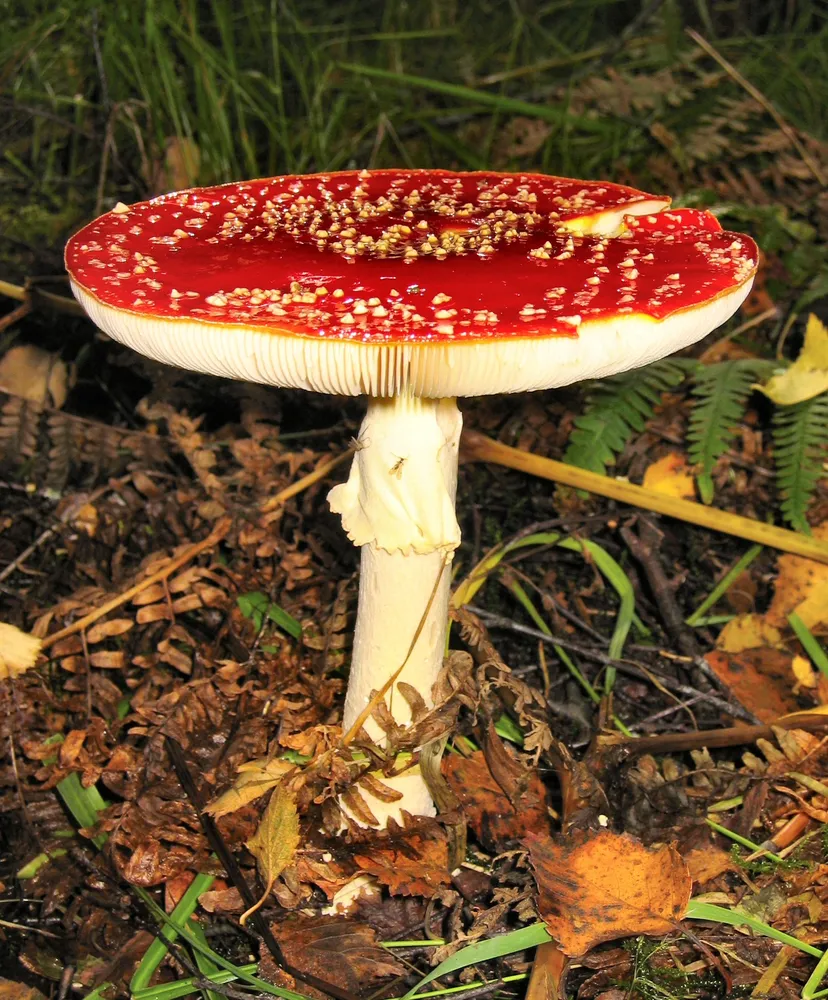
- **Fly agaric.** The very fairy-tale mushroom. Poisonous, although deaths are rare. Its bright color is a warning in itself, so people seldom mistake it.
- **False death cap.** A pale yellow cap that resembles the death cap. Mildly poisonous, but because it looks like its deadly relative, it isn't picked either.
As you can see, the greatest danger isn't the bright red mushroom but the inconspicuous white and pale species disguised as edible ones.
Are there edible amanitas?
Yes, but treat them as an exception for experts, not a rule for beginners.
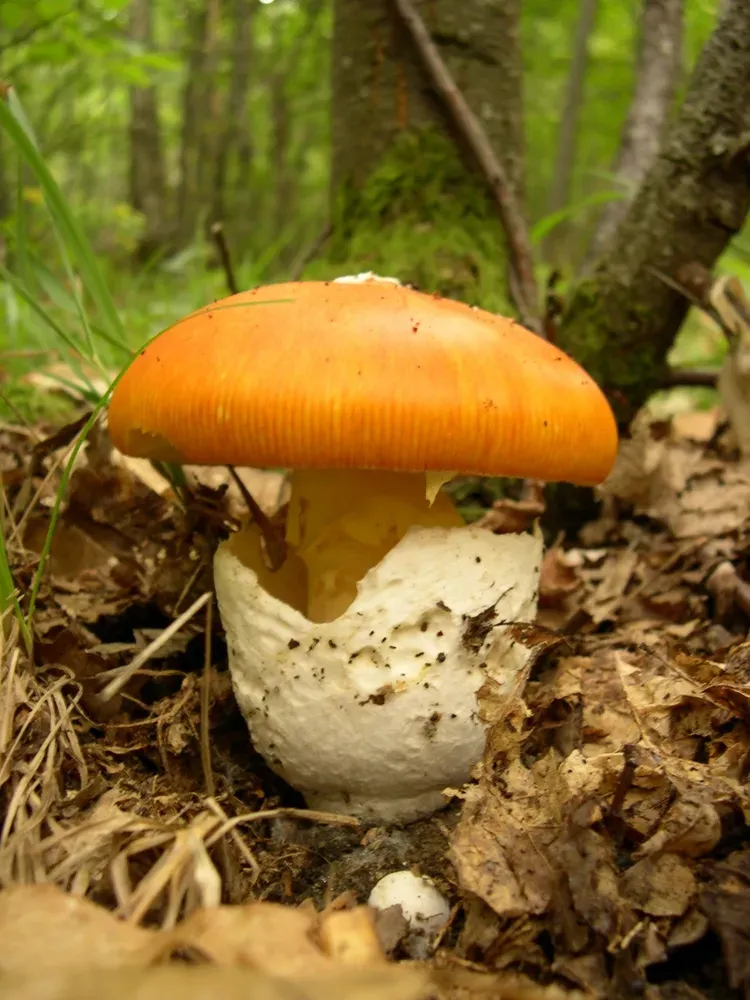
- **Caesar's mushroom.** A rare, beautiful mushroom with an orange-red cap and yellow gills. It has long been prized as a delicacy. In Ukraine it occurs in the south and west and is protected in some places, so it's best not to pick it.
The rest of the edible amanitas look so much like their poisonous relatives that the risk isn't worth it. For a beginner it's safer to steer clear of the whole family and look for tasty mushrooms among safer species, such as porcini or chanterelles.
How not to confuse an amanita with a good mushroom
A few habits will protect you from mistakes.
- Look at the base of the stem. A sac or swelling at the bottom is a reason to be alert. Dig up suspicious mushrooms whole.
- Look for the skirt. A white ring on the stem is typical of amanitas.
- Don't trust color alone. The most dangerous amanitas are pale and inconspicuous, not bright.
- If in doubt, leave it. It's the golden rule for all mushrooms, no exceptions.
And to confidently tell poisonous species from similar edible ones, dive into our panther cap vs. fly agaric comparison. And if someone feels unwell after a mushroom meal, call 112 or your local emergency number right away and follow our first aid guide.
Sources
- “Key to the Fungi of Ukraine” (Kyiv, Naukova Dumka publishing house).
- Amanita muscaria on GBIF, the global biodiversity database.
- Amanita on MycoBank, the international fungal nomenclature database.
- Amanita on Wikipedia.
Frequently asked questions
Are all amanitas poisonous?
Most are, from mildly poisonous to deadly. There are edible species too, such as , but they are rare and resemble poisonous ones, so beginners are better off avoiding the whole family.
Which amanita is the most dangerous?
and the amanitas' close relative, the . They are deadly poisonous, and their white color deceptively resembles a field mushroom.
Is the fly agaric deadly?
is poisonous, but deaths are rare. Far more dangerous is the inconspicuous .
Why is the panther cap more dangerous than the fly agaric?
It contains more toxin, and its cap isn't bright but brown and spotted, resembling some edible mushrooms. That makes it easier to mix up. Details in the .
Can you eat Caesar's mushroom?
It's an edible mushroom that was once a delicacy, but in Ukraine it is rare and protected in some places. On top of that, it's easy to confuse with its poisonous relatives, so we don't recommend picking it.
How do you tell an amanita from an edible mushroom?
Look for a white skirt on the stem and a sac or swelling at its base. Dig up suspicious mushrooms whole so you can see the base. This combination of features is a reason to leave the mushroom in the forest.
Why can't you go by color?
Because the most dangerous amanitas aren't bright but pale and white. Red is more of a warning, while the inconspicuous species masquerade as field mushrooms, brittlegills and Tricholoma.
What should you do in case of amanita poisoning?
Call 112 or your local emergency number right away, even if the illness didn't start immediately. Self-treatment is dangerous. We've laid out step-by-step instructions in our article on .
Mushrooms in this article
Related articles
 Recipes & cooking
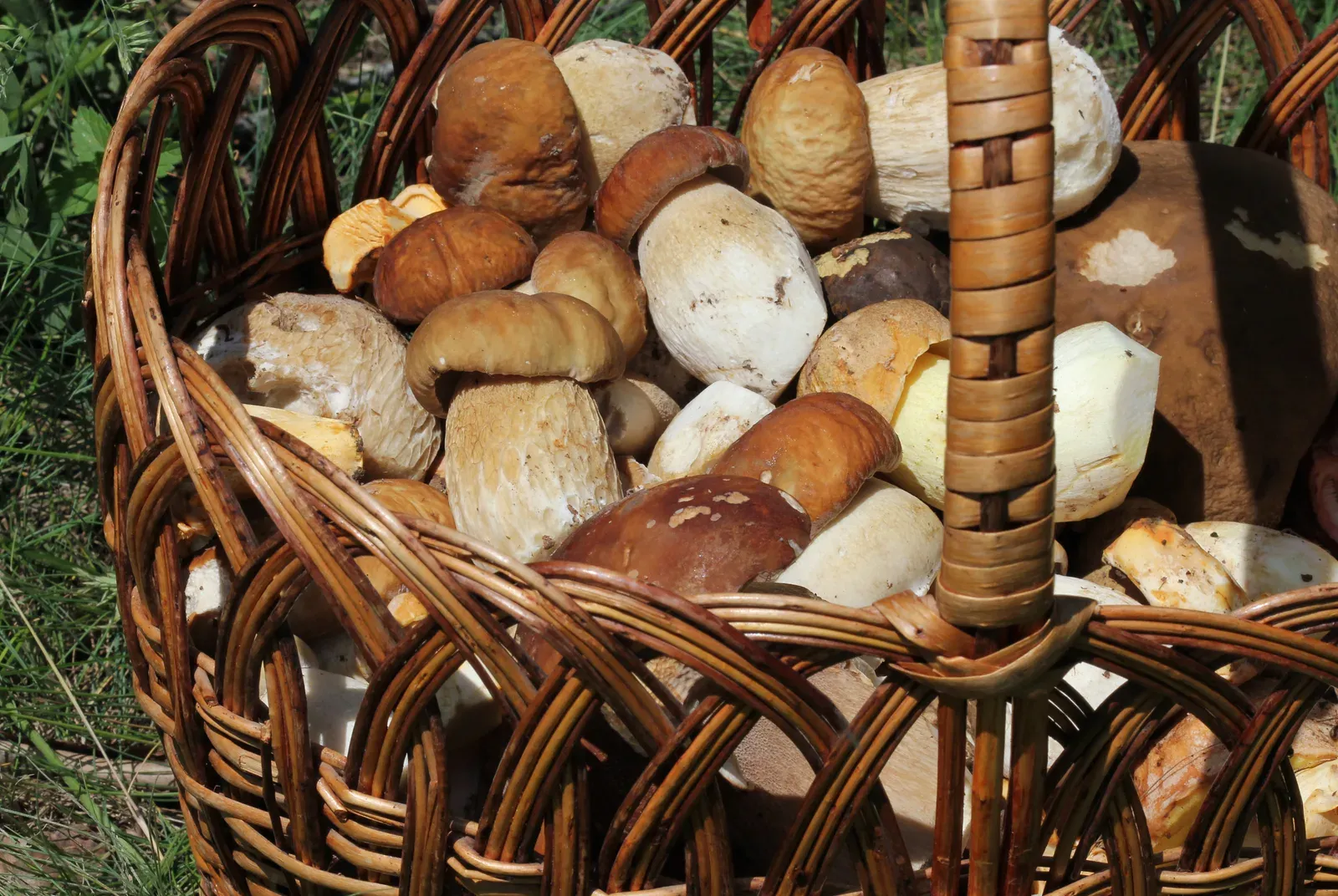
How to store fresh mushrooms, and for how long
Fresh mushrooms spoil faster than you might think. Here's how long they keep in the fridge, how to store them…
August 21, 2026·4 min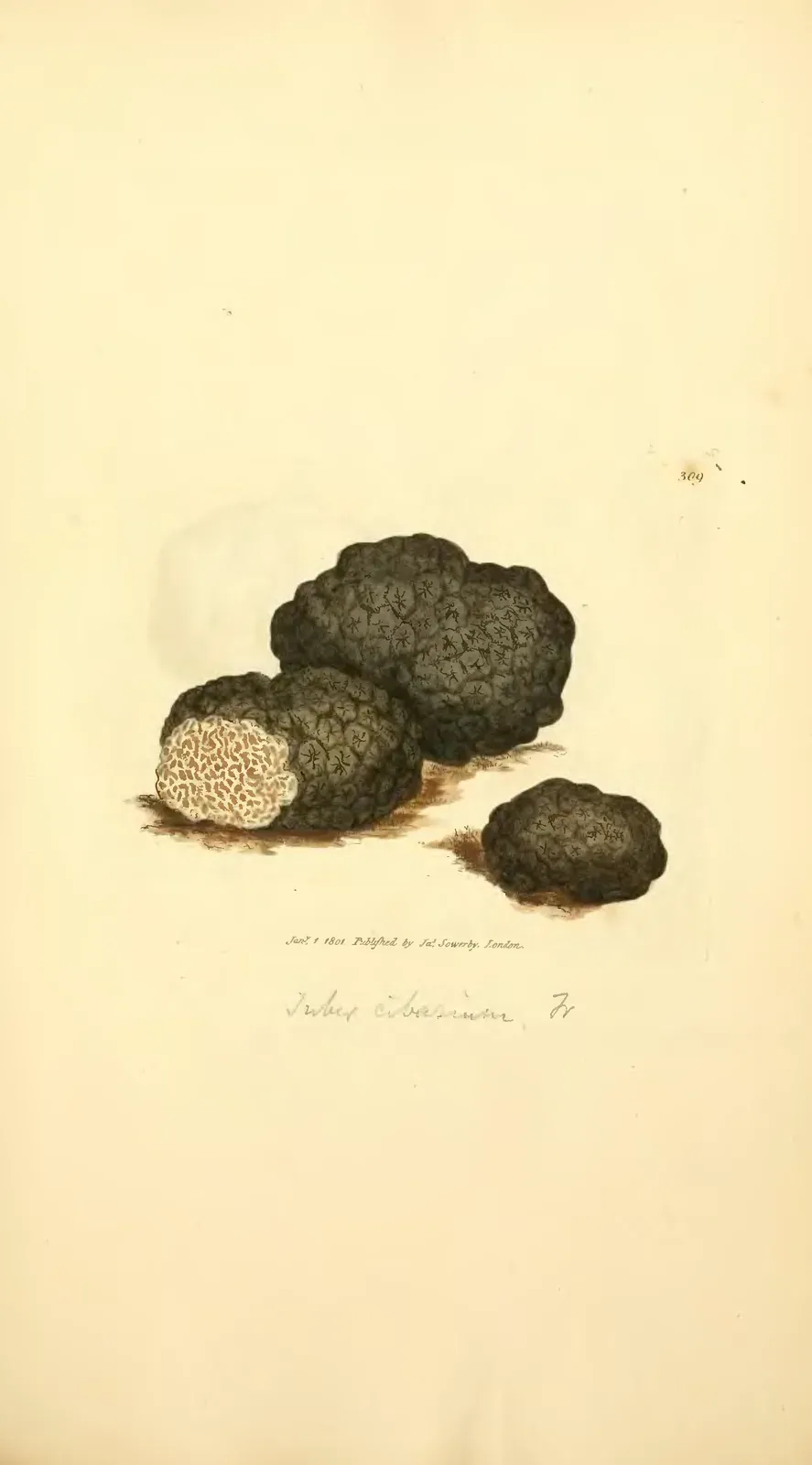 How to identify
Truffles in Ukraine: do they grow here, and where to look
Truffles aren't just a French delicacy. Several species grow in Ukraine too. Here's which ones, where they occ…
August 24, 2026·2 min Safety
False morel: why this spring mushroom is dangerous
The false morel looks like a morel, but it contains a poison. Here's how to recognize it, why it's dangerous a…
August 24, 2026·2 min