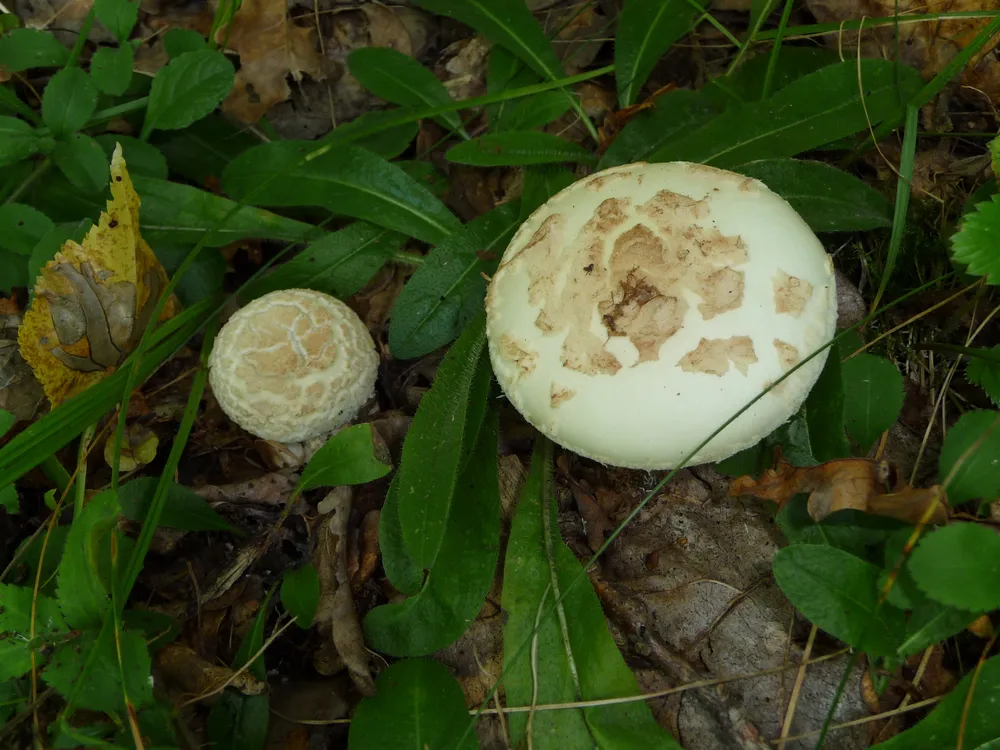
False death capAmanita citrina
Expert-verifiedUpdated October 3, 2026
Passport
- Edibility
- Inedible
- Season
- Aug — Oct
- Hymenophore
- Gilled
- Cap color
- Yellow
- Size
- Medium (5–15 cm)
- Smell
- Radish-like
- Reviewed
- Yes ✓
Quick answers
Where to look?
Deciduous forest, Mixed forest
When does it appear?
Aug — Oct
Active months: August, September, October.
How to recognize it? Three signs
- Cap color: Yellow, Cream
- Cap shape: Convex
- Smell: Radish-like
Fruiting season
August – October
Description
The false death cap (Amanita citrina) is a classic "European" amanita with a pale yellow, lemon-citrine cap and a distinct smell of raw potato or radish. Old Soviet literature sometimes labeled it conditionally edible, but modern mycologists unanimously classify it as inedible because of weak toxins (bufotenine and related tryptamines) and that same unpleasant smell, which spoils any dish.
The main reason to be wary of it is its resemblance to the death cap (Amanita phalloides), the deadliest mushroom in Europe. Both have caps ranging from cream to yellowish, and both have a ring and a volva. A young death cap can easily be mistaken for the "harmless" false death cap, and that mistake is fatal. So the cautious forager's rule is: no yellow amanita with a ring goes into the basket. Period.
In Ukraine it is common in deciduous and mixed forests: the Carpathians, Polissia, the forest-steppe. It forms mycorrhiza with oak, beech, hornbeam, and less often birch. Season: August — October. It often grows in groups of 3-10 fruiting bodies along mossy forest edges. Finding a false death cap is a signal that "amanitas with amatoxins may be here too" — look around carefully and never taste anything white or yellow with a ring.
Cap
Cap 5-10 cm across, hemispherical in young mushrooms, becoming convex-flat with age. Color pale yellow, lemon-citrine, creamy yellow, slightly darker in the center. Surface smooth, slightly slimy in wet weather. The cap often carries large whitish or grayish membranous patches — remnants of the universal veil (volva) that stuck to it as it grew. The cap margin is smooth.
Hymenophore
Gilled hymenophore — gills white, free (not attached to the stem), moderately crowded. Spore print white.
Stem
Stem 6-10 cm tall, 1-1.5 cm thick, cylindrical, with a pronounced bulbous base (like an onion bulb). Color white to yellowish. In the upper part — a white membranous ring. At the base — a volva forming a rim on the bulb (not a sac, as in the destroying angel).
Flesh
Flesh white to pale yellow. When cut, it does not change color. Smell distinct, with a note of raw potato or radish — a diagnostic feature of the species.
Smell
A distinct potato-and-radish smell, with notes of raw potato, radish or a damp cellar. It comes out when you rub the flesh between your fingers. The most important diagnostic feature of the species.
›Scientific synonyms (1)
Amanita mappa
Lookalikes
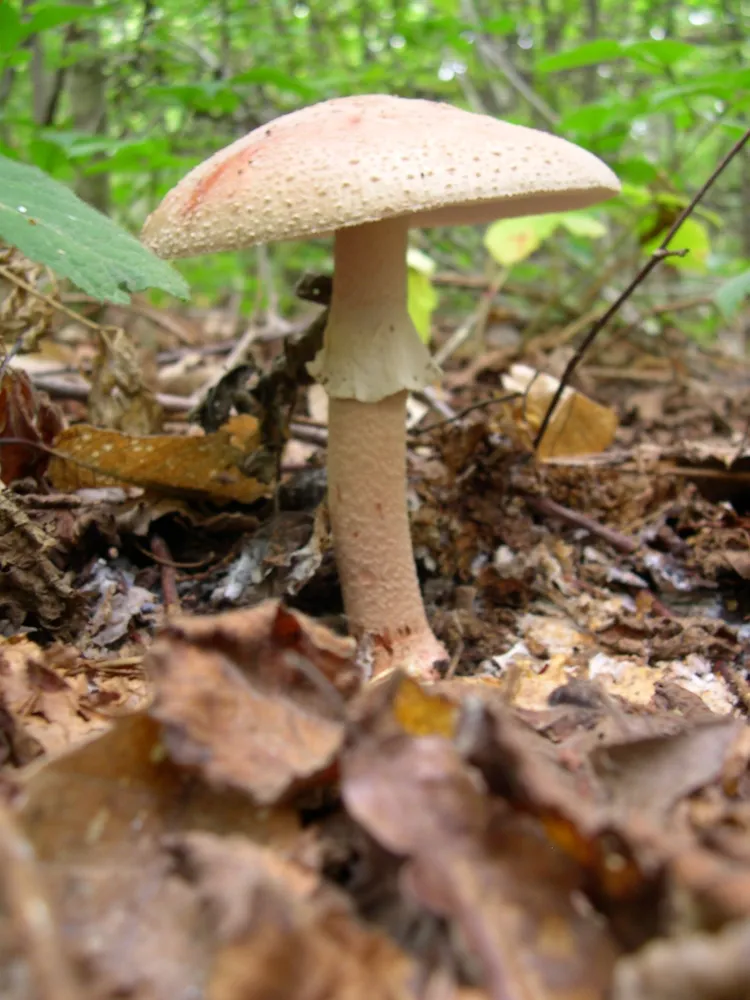
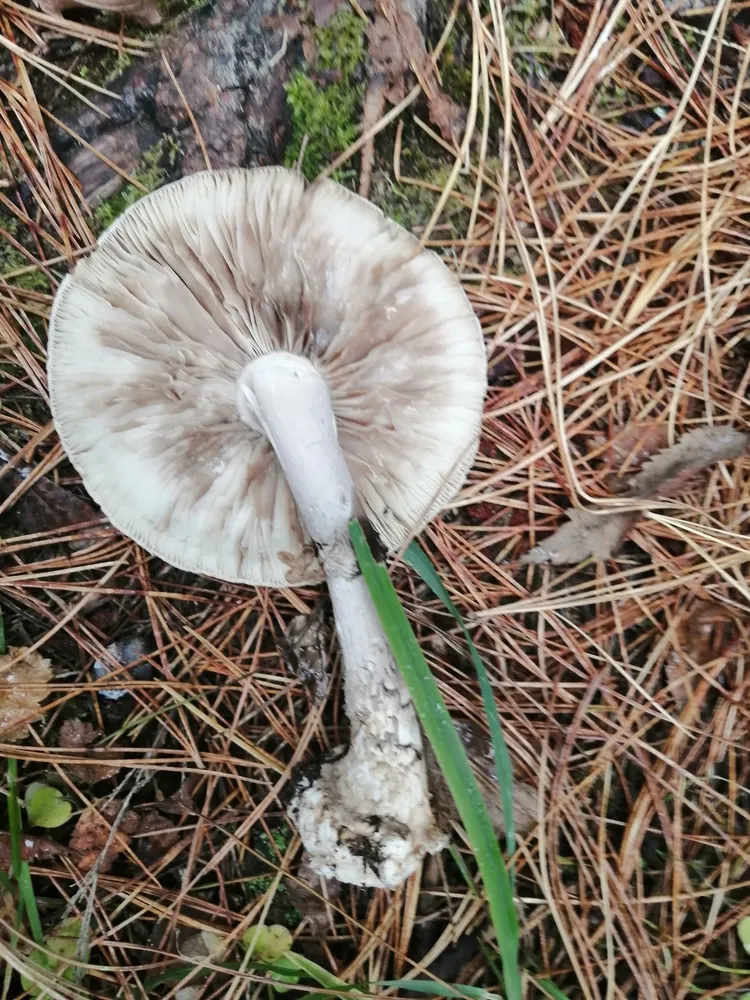
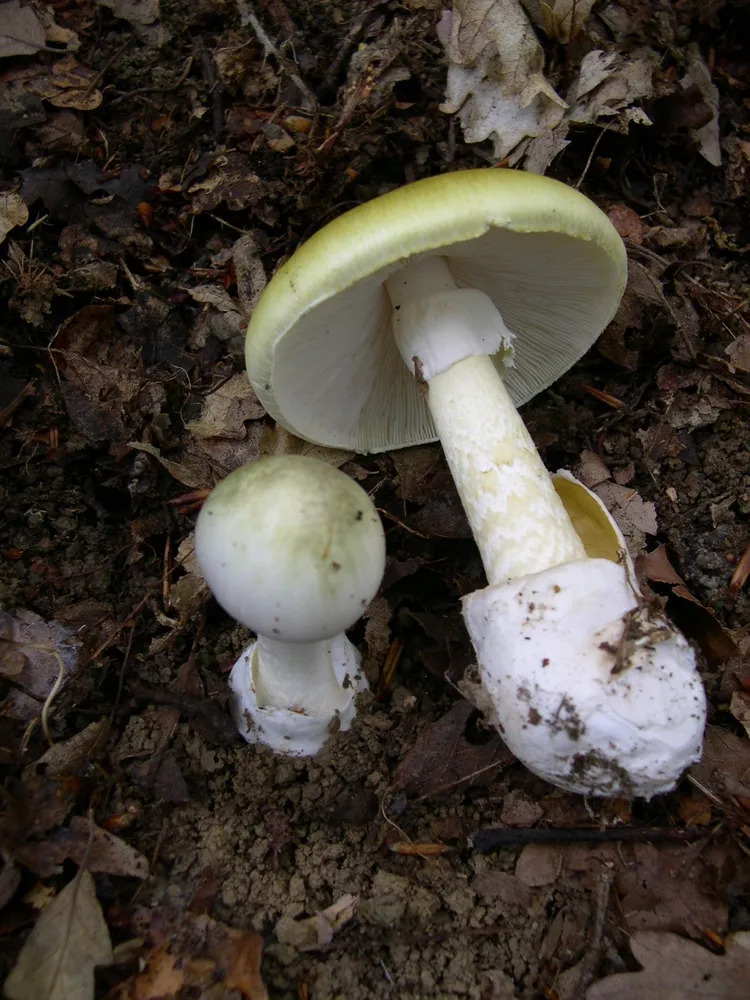
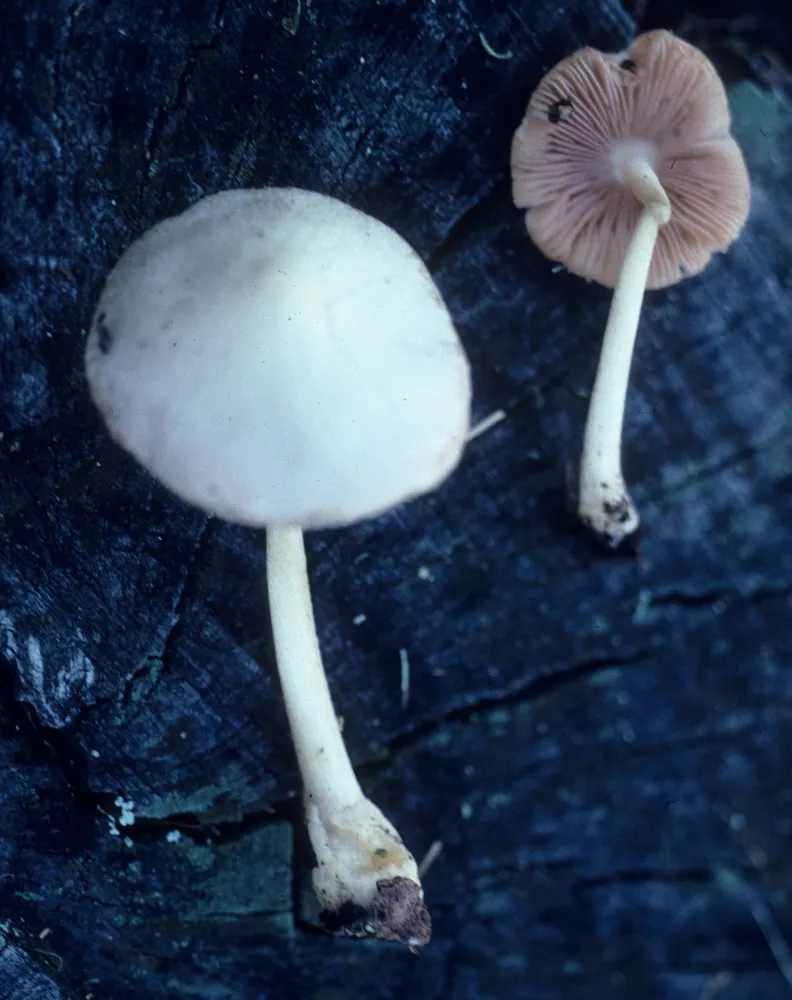
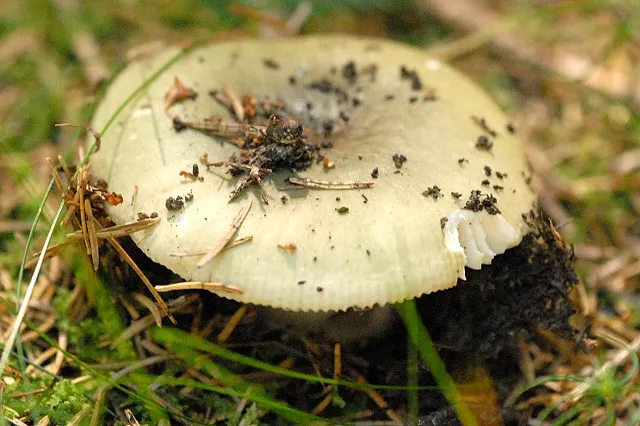
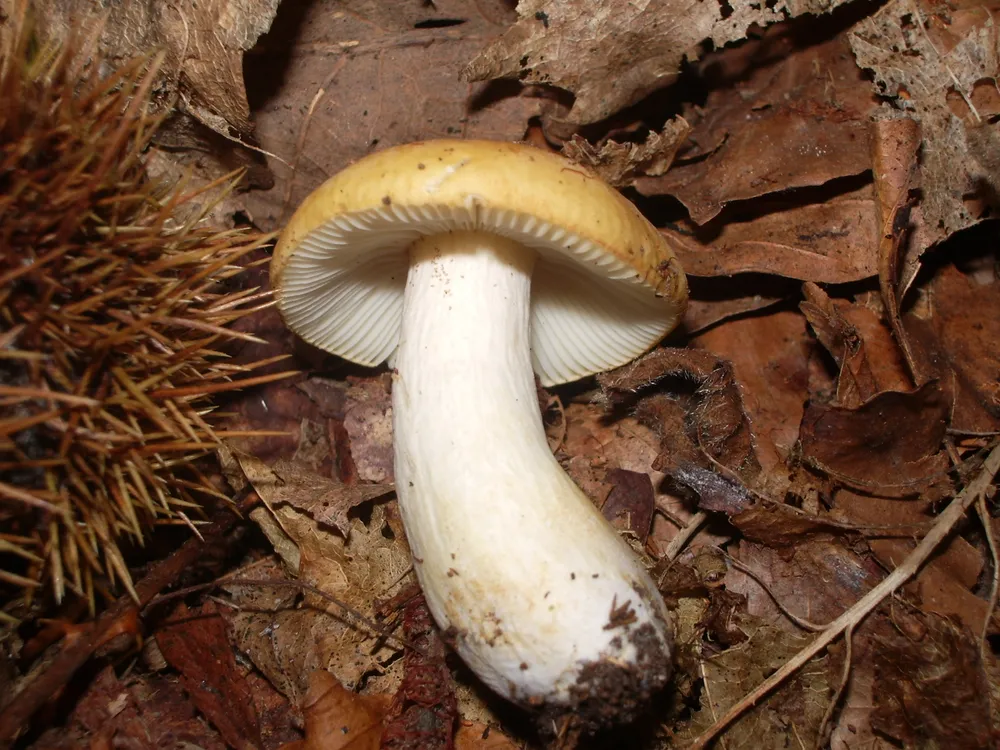
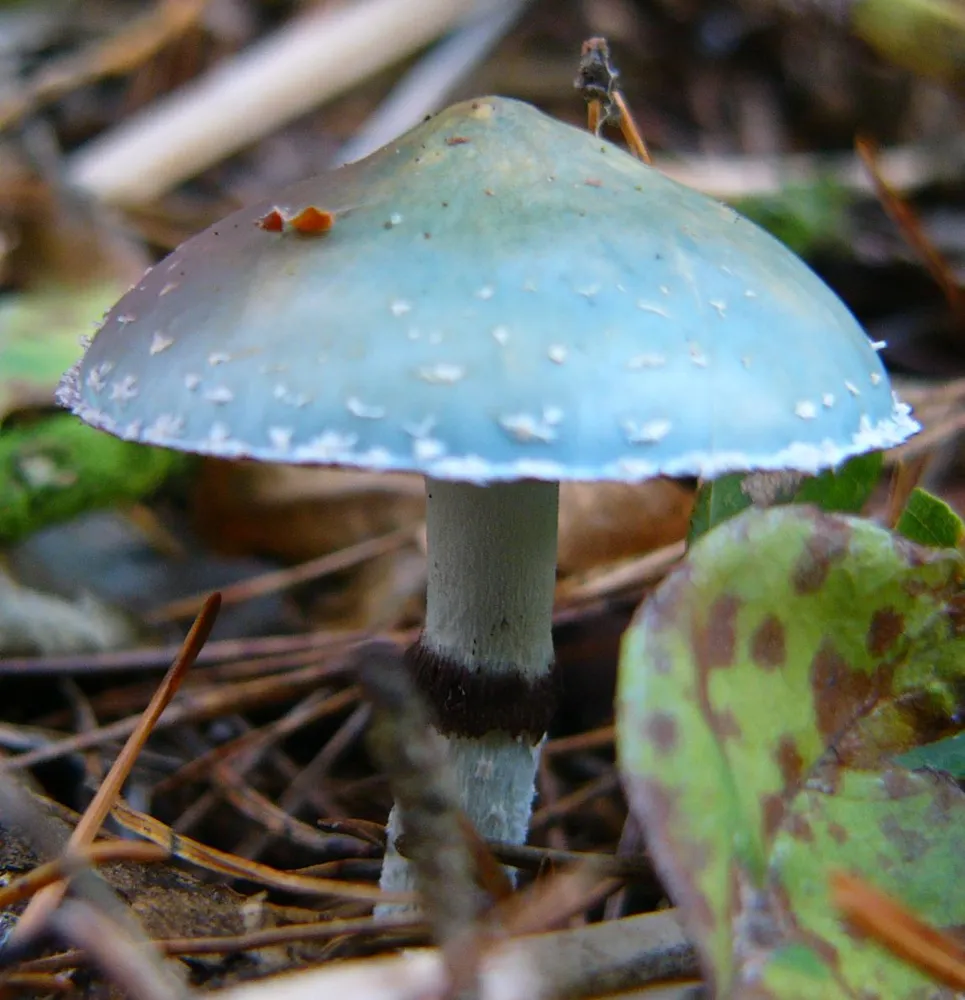
Related species
Mushrooms of the same genus and habitat — to study side by side and never mix up.
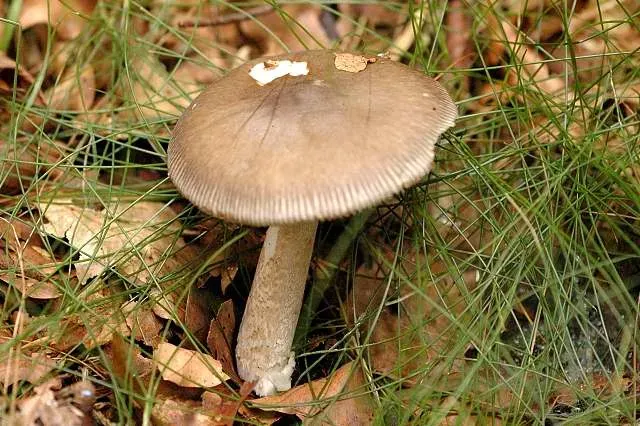
Amanita battarrae
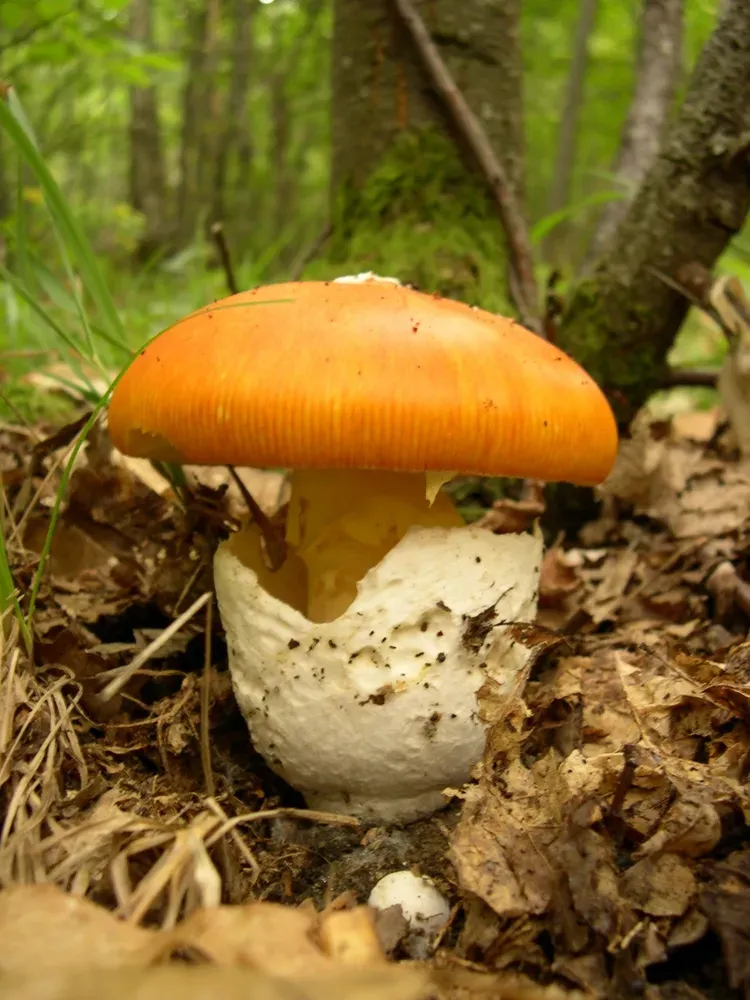
Caesar's mushroom
Amanita caesarea
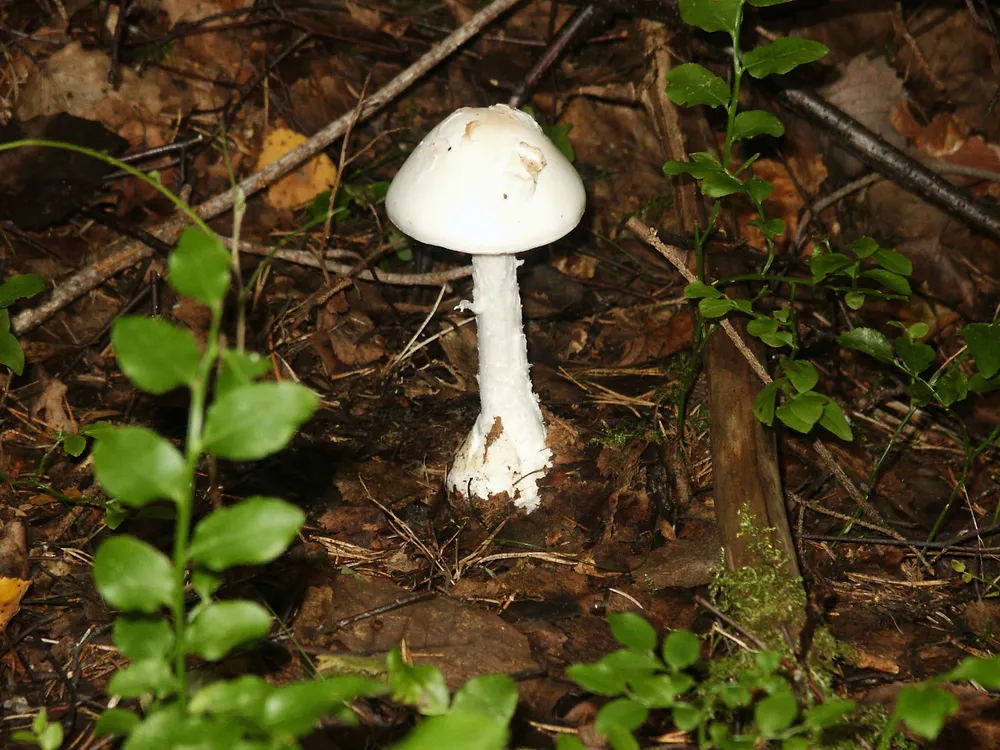
Destroying angel
Amanita virosa
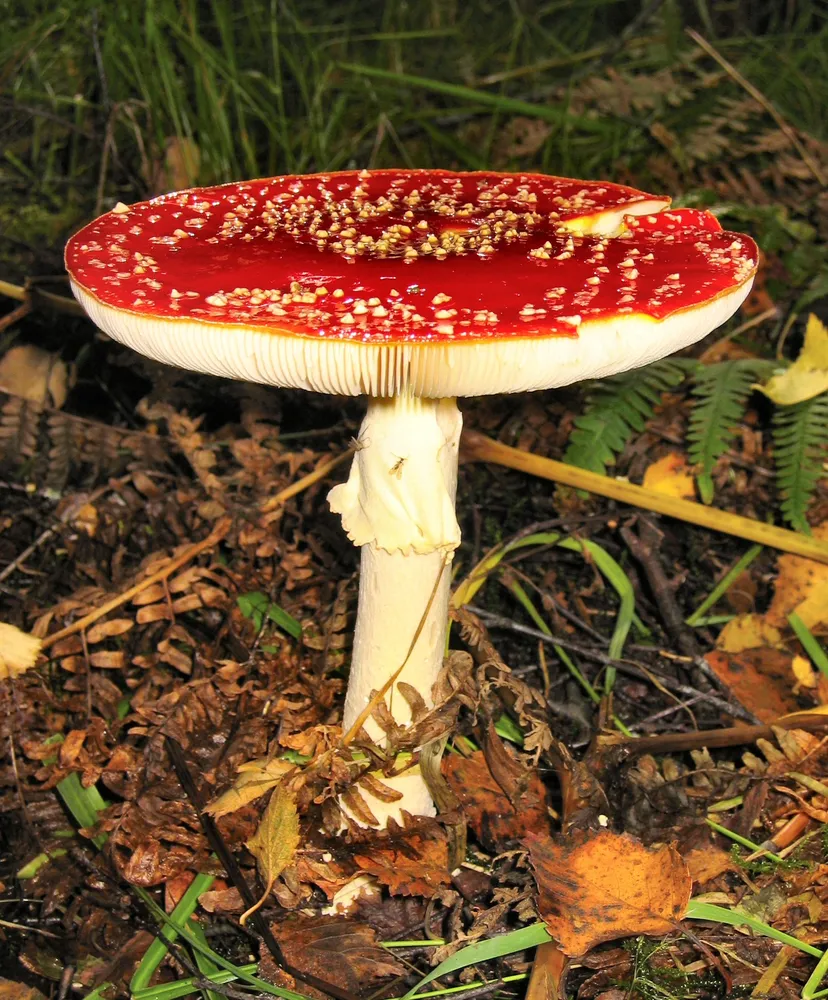
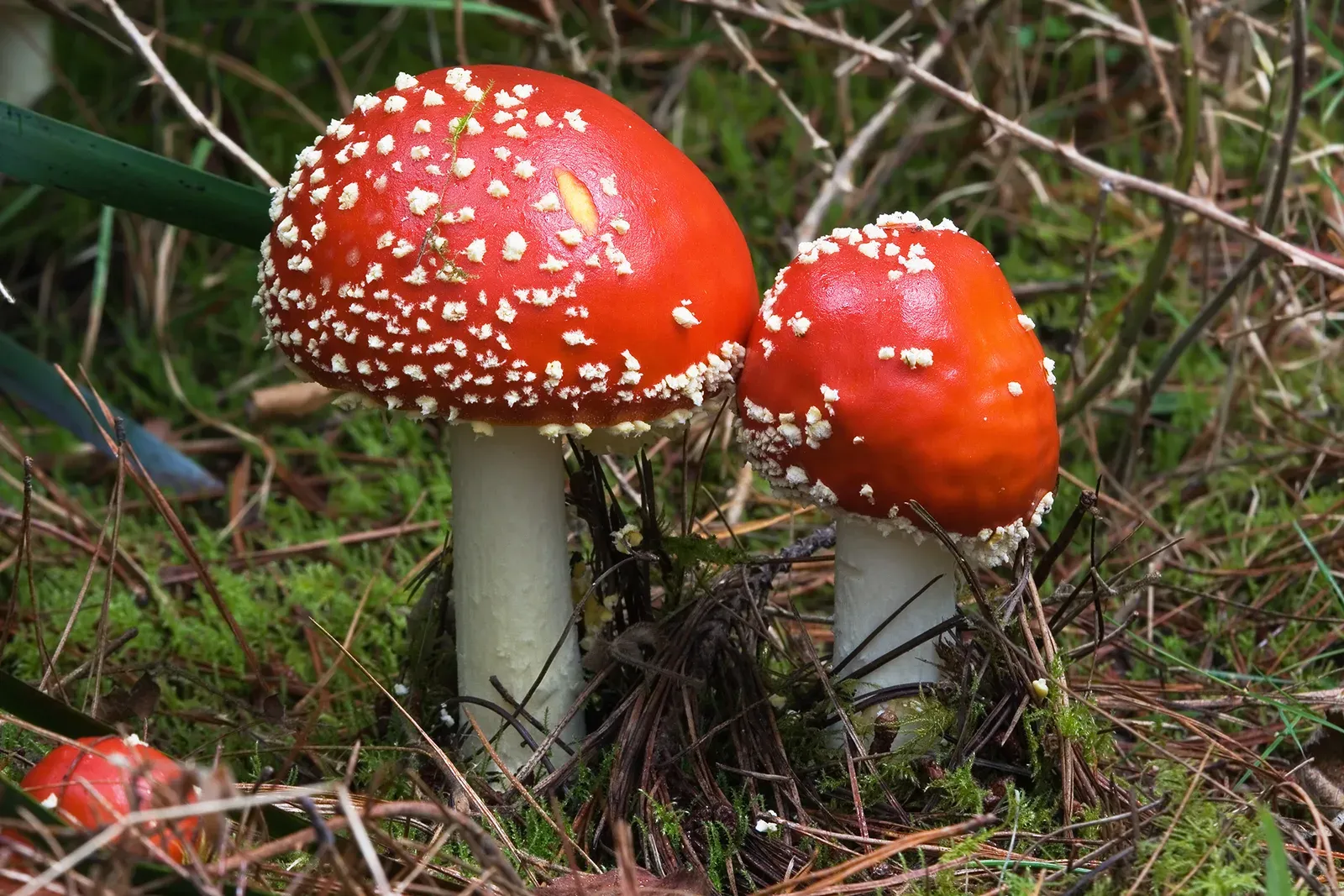
Fly agaric
Amanita muscaria
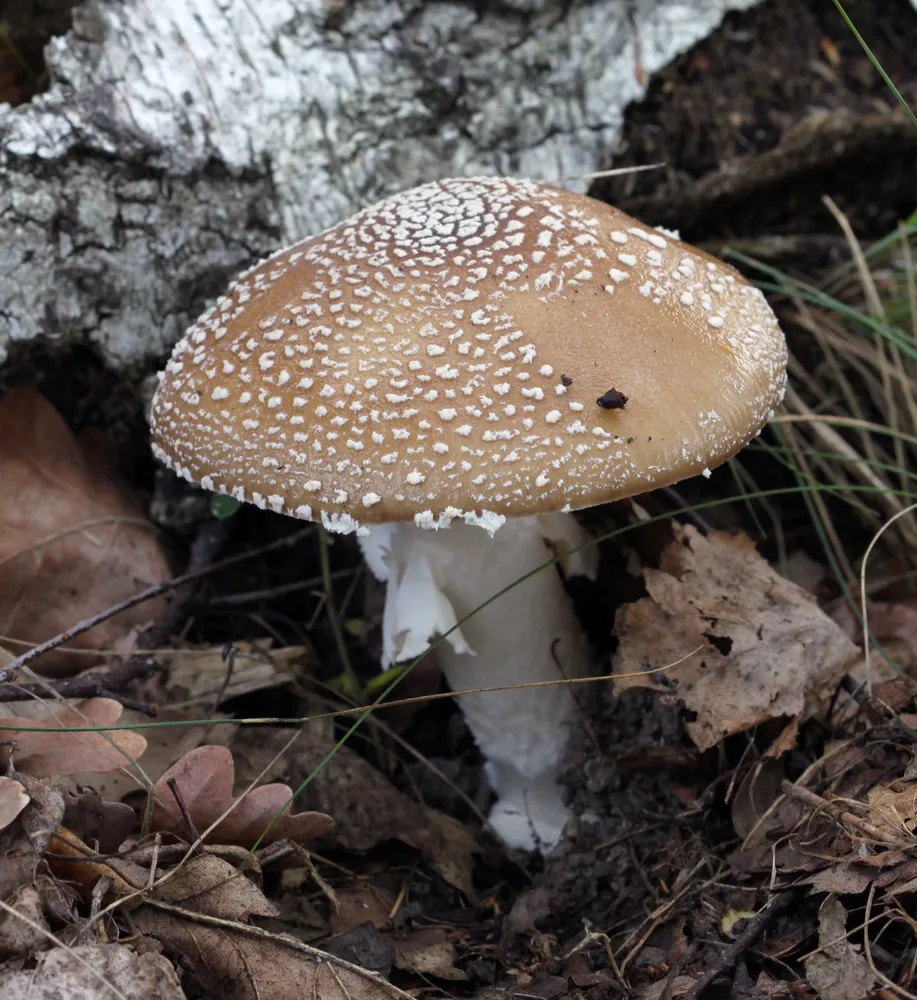
Panther cap
Amanita pantherina
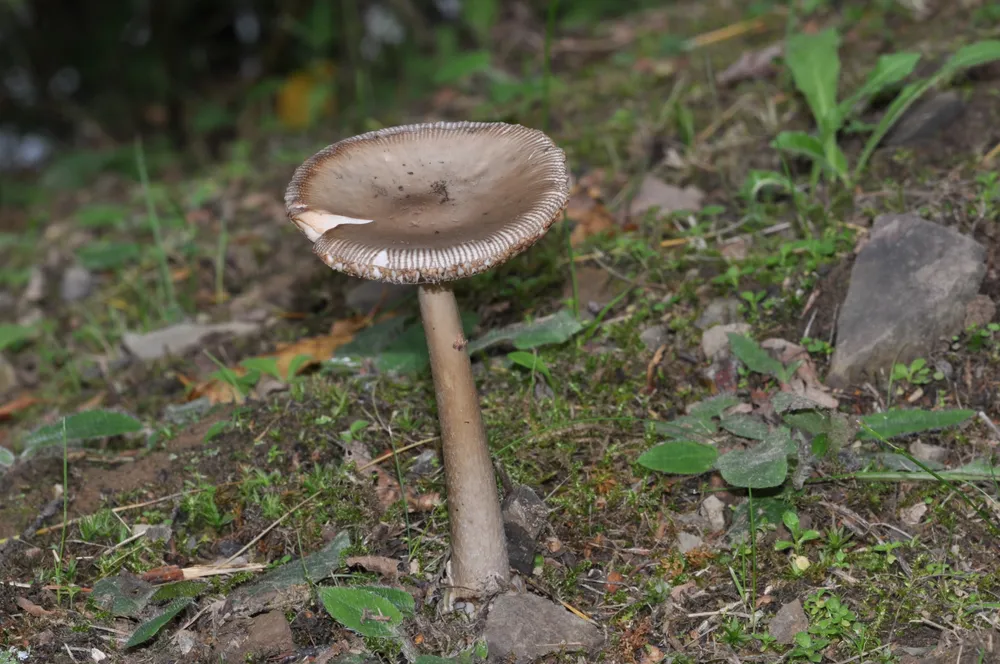
Grisette
Amanita vaginata
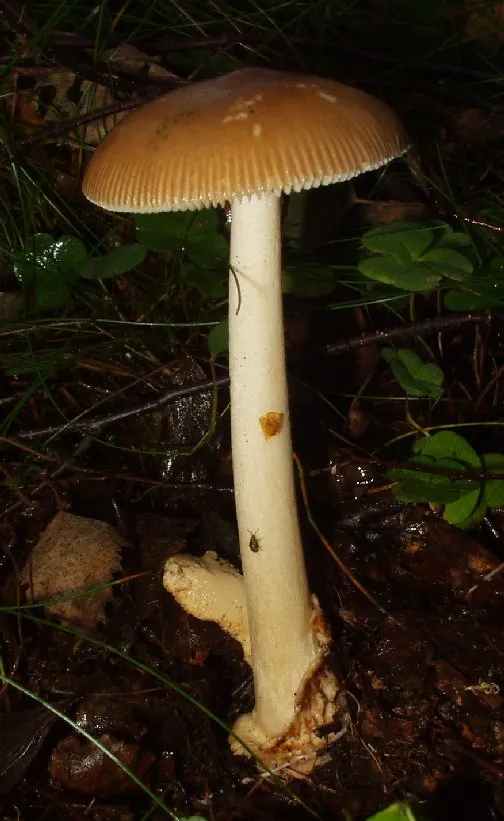
Tawny grisette
Amanita fulva
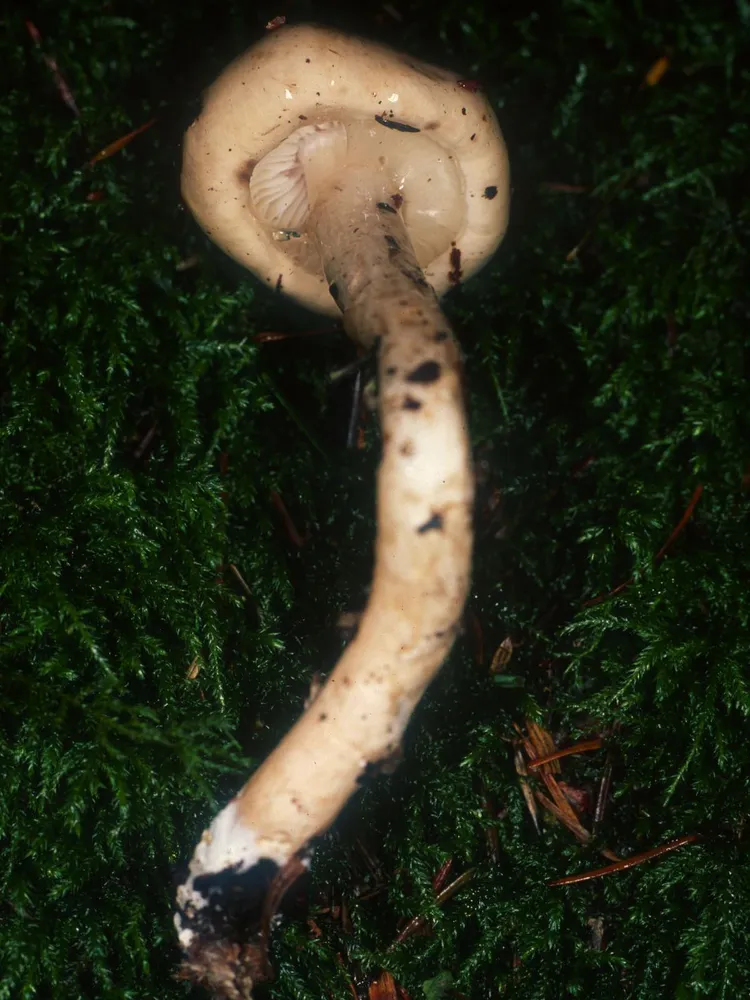
Dripping slimecap
Limacella illinita
Related reading
Frequently asked questions
Can you eat it?
No. Modern mycologists classify it as inedible because of weak psychoactive compounds (bufotenine) and the unpleasant smell of raw potato. Old Soviet literature sometimes labeled it conditionally edible — that advice is outdated, so don't rely on it.
Does it have dangerous lookalikes?
Yes, the most dangerous is the death cap (Amanita phalloides), which is deadly poisonous (amatoxins). Both are yellowish, with a ring and a volva. Key differences: the death cap has a cap with a greenish or olive tint, while the false death cap is pure lemon yellow. The death cap has no radish smell (its smell is faint and honey-like), while the false death cap has a distinct potato-and-radish smell. If you have even the slightest doubt — do NOT pick it.
What happens if you eat it by accident?
The false death cap itself usually causes nothing serious. There may be mild nausea and dizziness. Symptoms pass within a few hours. But if it was confused with a death cap — it is fatal! So in any poisoning by a "yellow amanita with a ring" — call an ambulance, get tested for amatoxins, and have liver enzymes monitored.
Why does it smell of raw potato?
These are natural volatile compounds of the species — geraniol and related terpenoids that resemble freshly cut potato. This is a diagnostic feature that helps tell it apart from the death cap (no radish smell) and the panther cap (also no radish smell). It comes out when you rub the flesh.
Where should you look for it?
In deciduous and mixed forests — mostly oak, beech and hornbeam woods with some birch. It likes damp, mossy spots. It forms mycorrhiza with oak and other broadleaf trees.
In which regions of Ukraine does it occur?
Throughout the forest and forest-steppe zones: the Carpathians, Prykarpattia, Polissia, the forest-steppe. In the steppe — in floodplain oak woods. One of the most common amanitas in our forests.
When should you look for it?
August — October, peaking in September. Its season coincides with the main mushroom season, so you'll come across it often.
Which edible mushrooms is it confused with?
Most often with Caesar's mushroom (Amanita caesarea) — which is edible, but very rare in Ukraine (Red Data Book), and has a bright orange cap and a yellow stem with no volva on a bulb. And with young Agaricus mushrooms — which have pink (not white) gills and no volva. The real danger, though, is the death cap (see the answer above).
Is False death cap edible or poisonous?
Does False death cap have gills or pores?
What does the cap of False death cap look like?
What does the stem of False death cap look like?
Sources
- [1]Вікіпедія (українська)
- [2]Атлас грибів України, Зеров Д.К. (1979)
- [3]MycoBank Database
- [4]Index Fungorum
- [5]GBIF
- [6]iNaturalist Ukraine