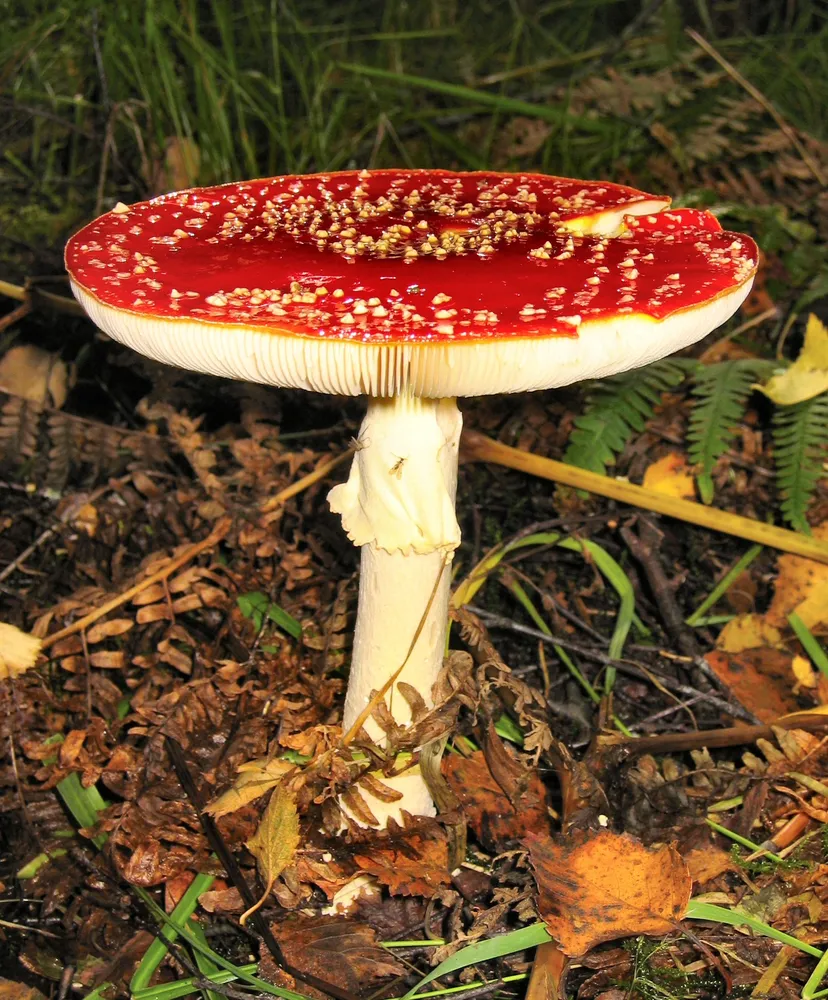
Fly agaricAmanita muscaria
Expert-verifiedUpdated August 15, 2026
Passport
- Edibility
- Poisonous
- Season
- Jul — Oct
- Hymenophore
- Gilled
- Cap color
- Red
- Size
- Large (over 15 cm)
- Smell
- Neutral
- Reviewed
- Yes ✓
POISONOUS
Eating it causes poisoning. Do not pick it unless you have identified it with certainty.
Contains muscimol and ibotenic acid. Symptoms within 30 min – 2 h: hallucinations, disorientation, nausea, tachycardia. Rarely fatal, but requires medical attention.
If you suspect poisoning, call an ambulance immediately: 112 (the European emergency number) or your local emergency number
Quick answers
Where to look?
Conifer forest, Mixed forest, Deciduous forest
When does it appear?
Jul — Oct
Active months: July, August, September, October.
How to recognize it? Three signs
- Cap color: Red, Orange
- Cap shape: Convex, Flat
- Smell: Neutral
Fruiting season
July – October
Description
The fly agaric (Amanita muscaria) is one of the best-known poisonous mushrooms in the world, recognizable by its bright red cap with white spots — remnants of the veil. It is widespread in coniferous and mixed forests of Eurasia and North America, where it forms mycorrhiza with birch, pine and spruce.
It contains psychoactive substances — muscimol and ibotenic acid — which cause toxic psychosis, hallucinations and severe autonomic disturbances. Deaths are rare, but severe poisoning requires hospitalization.
This mushroom is poisonous. Do not eat it. Despite a common misconception, ordinary boiling is not enough to neutralize the toxins.
Cap
Cap 8–20 cm across, egg-shaped when young, then flattened-convex or almost flat. The surface is bright red or orange-red, fading to orange in old mushrooms. It is covered with white or yellowish warts — remnants of the universal veil (easily washed off by rain).
Hymenophore
Gills free, crowded, white, not changing color. Spore print white. White gills combined with a red cap, a ring and a volva are a reliable combination of amanita features.
Stem
Stem 8–18 cm tall, 1.5–2.5 cm thick, white, cylindrical, with a bulbous, swollen base. There is a well-developed membranous ring in the upper part and a characteristic ragged, sheath-like volva at the base, often hidden in the soil.
Flesh
Flesh soft, white, yellowish under the cap skin. Does not change color when cut. No distinctive smell. It contains toxic isoxazoles even in flesh that has no smell and no sharp taste.
Smell
Smell faint, neutral or slightly sweetish. The very absence of a repulsive smell is part of the fly agaric's “trap”: the mushroom looks attractive and doesn't put you off by its smell.
Lookalikes
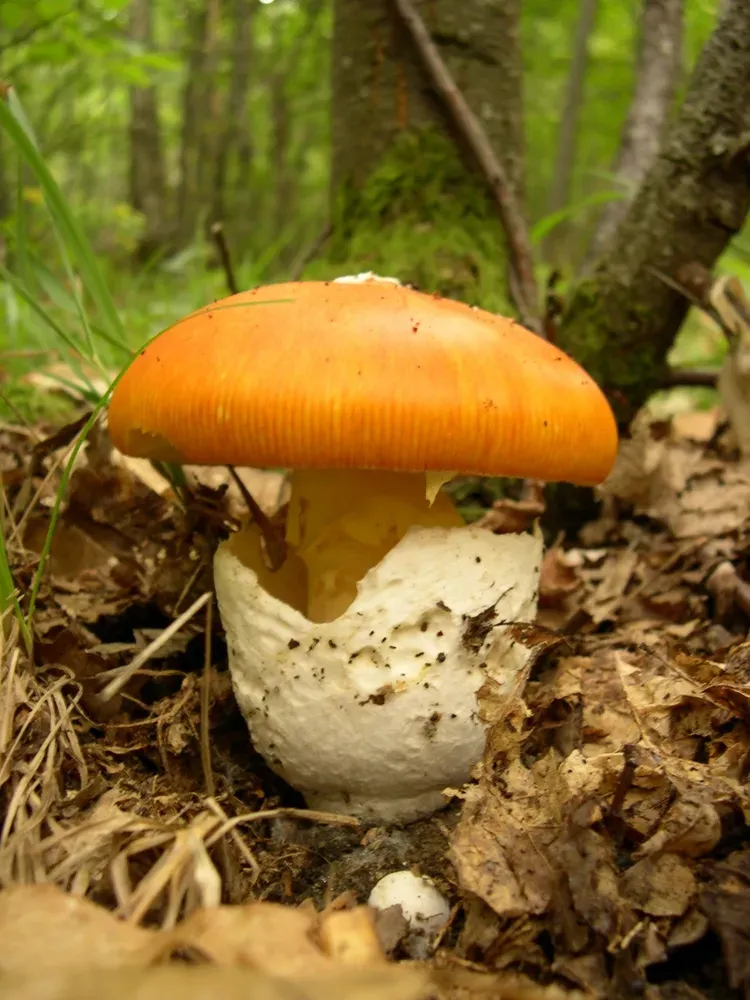
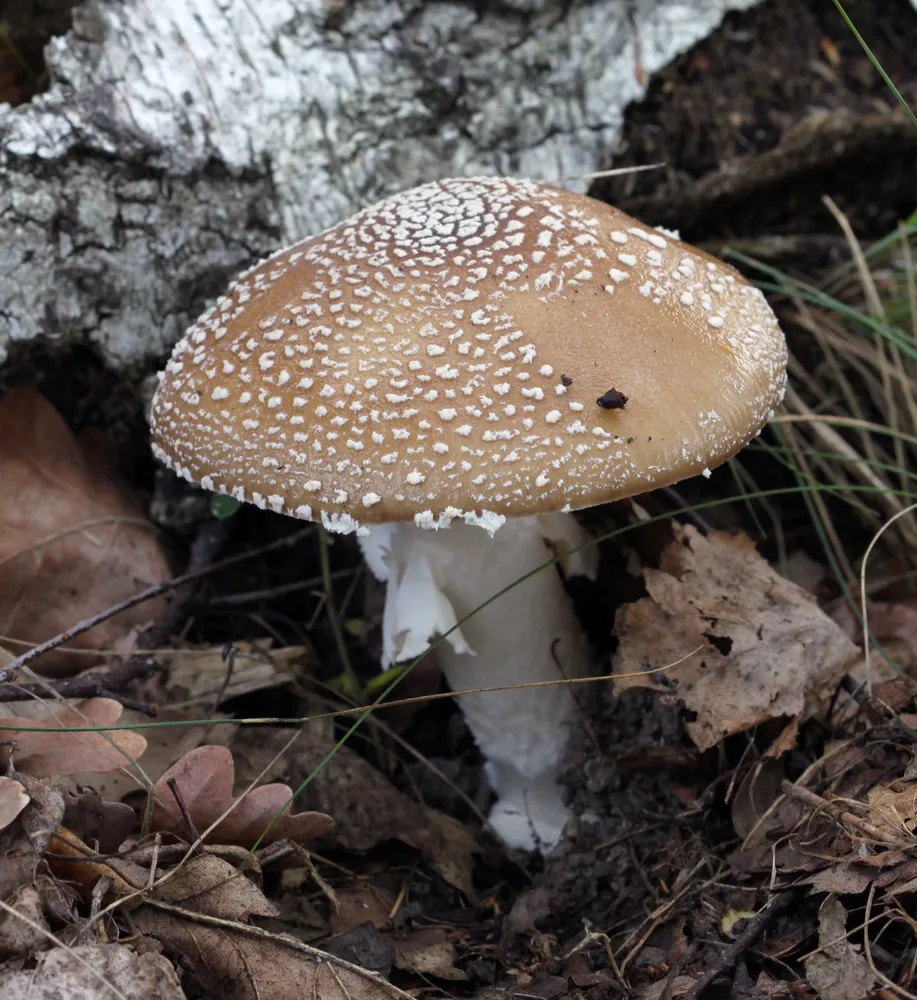
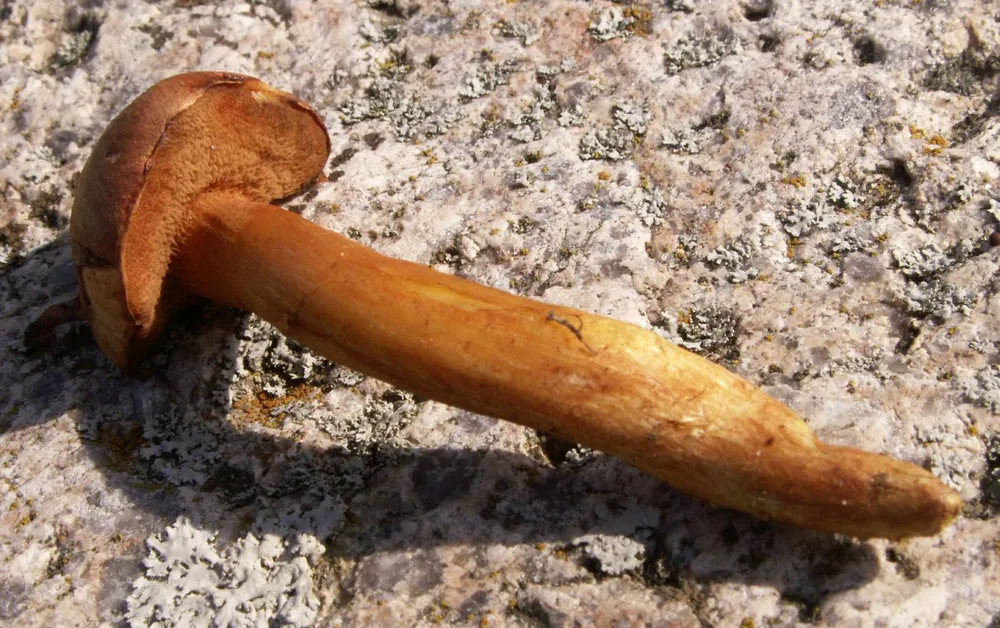
Related species
Mushrooms of the same genus and habitat — to study side by side and never mix up.
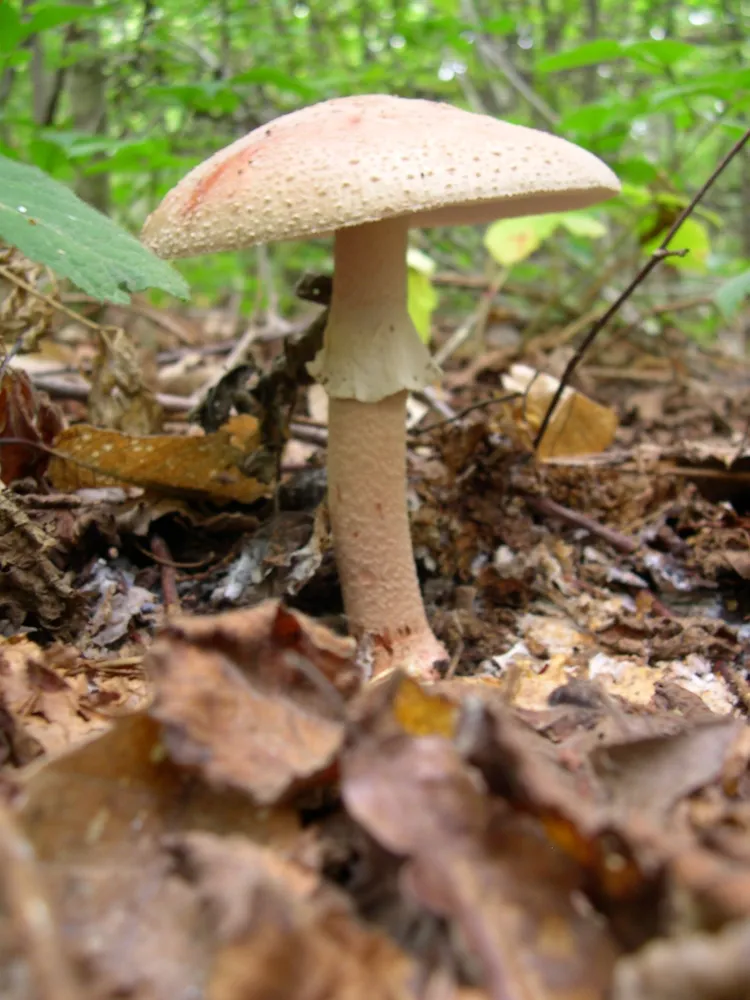
Blusher
Amanita rubescens
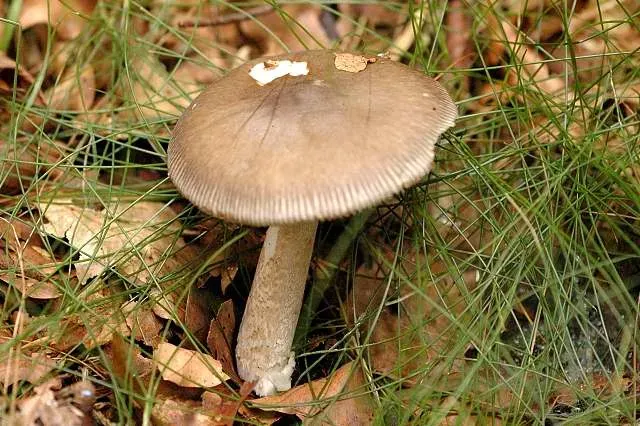
Amanita battarrae
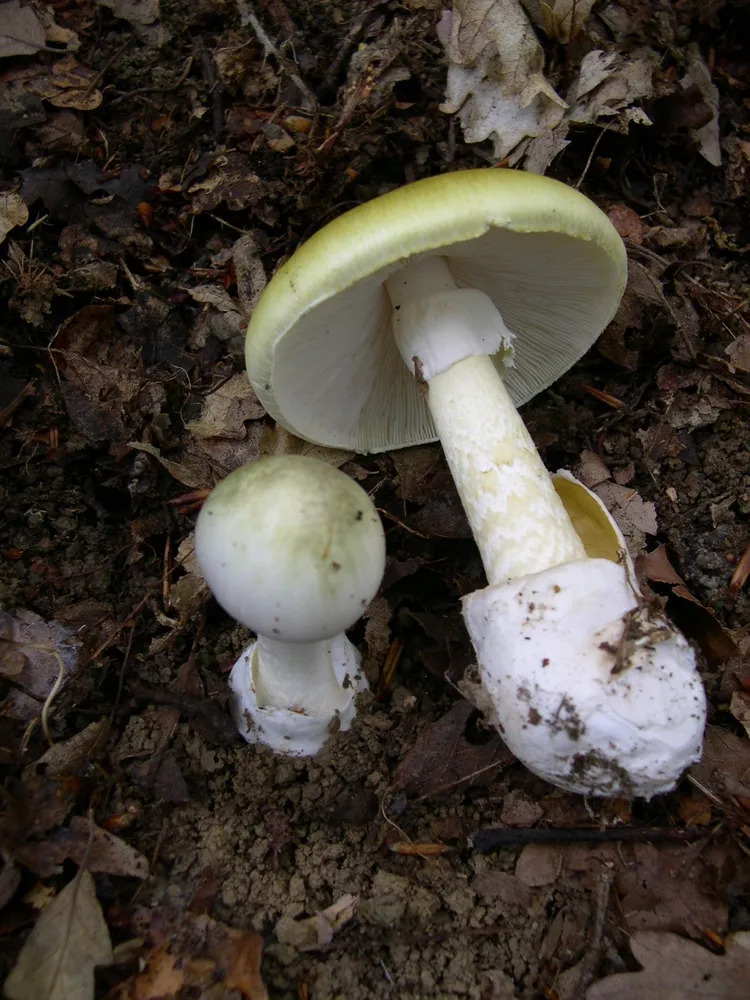
Death cap
Amanita phalloides
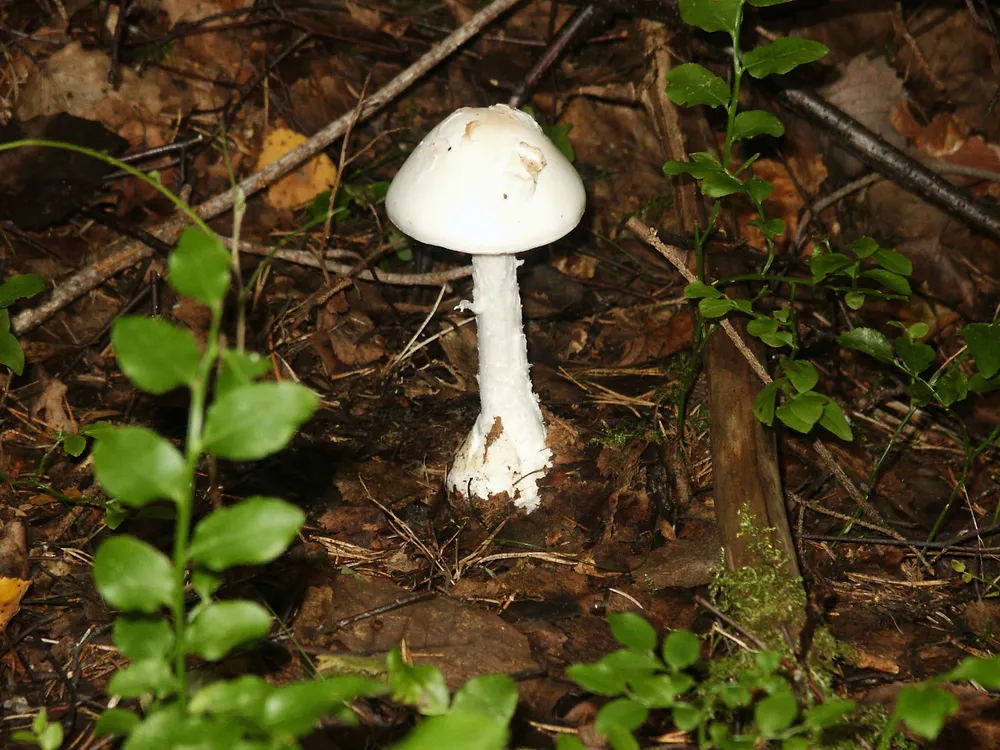
Destroying angel
Amanita virosa
False death cap
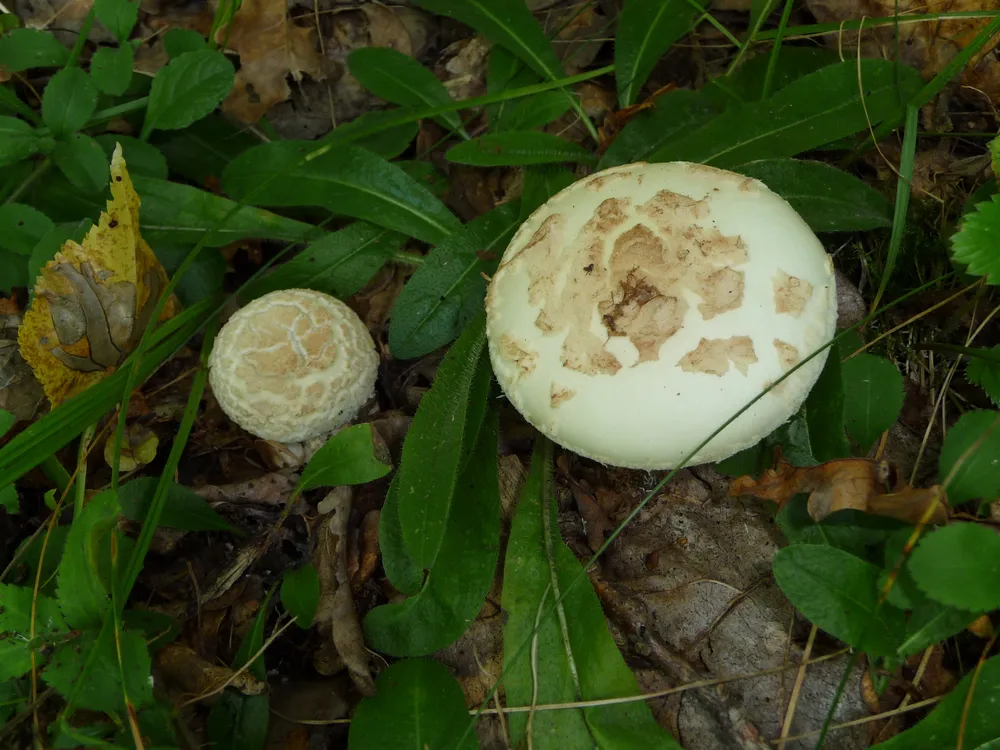
Amanita citrina
Grey veiled amanita
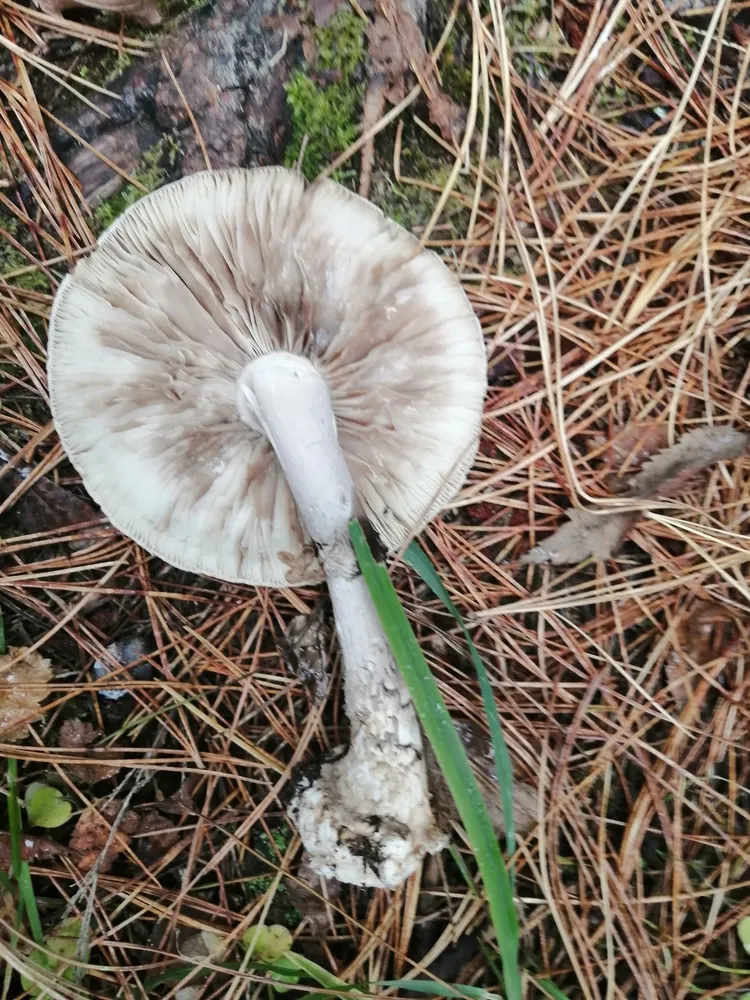
Amanita porphyria
Grisette
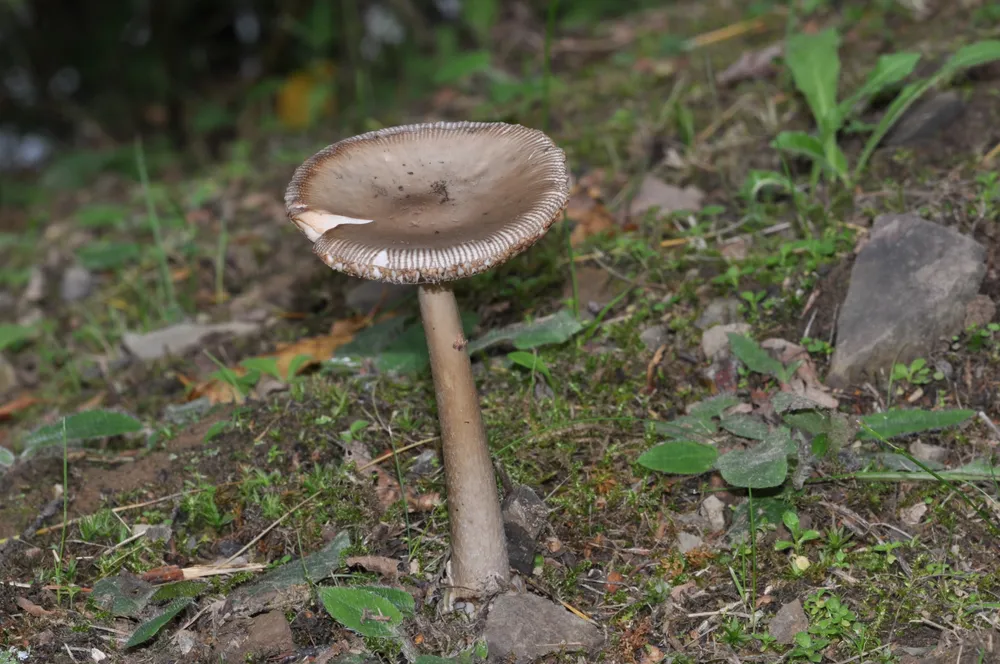
Amanita vaginata
Tawny grisette
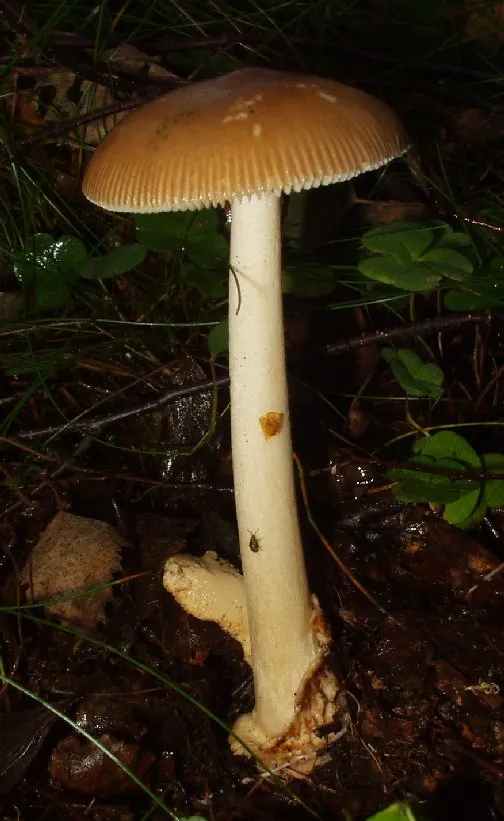
Amanita fulva
Related reading
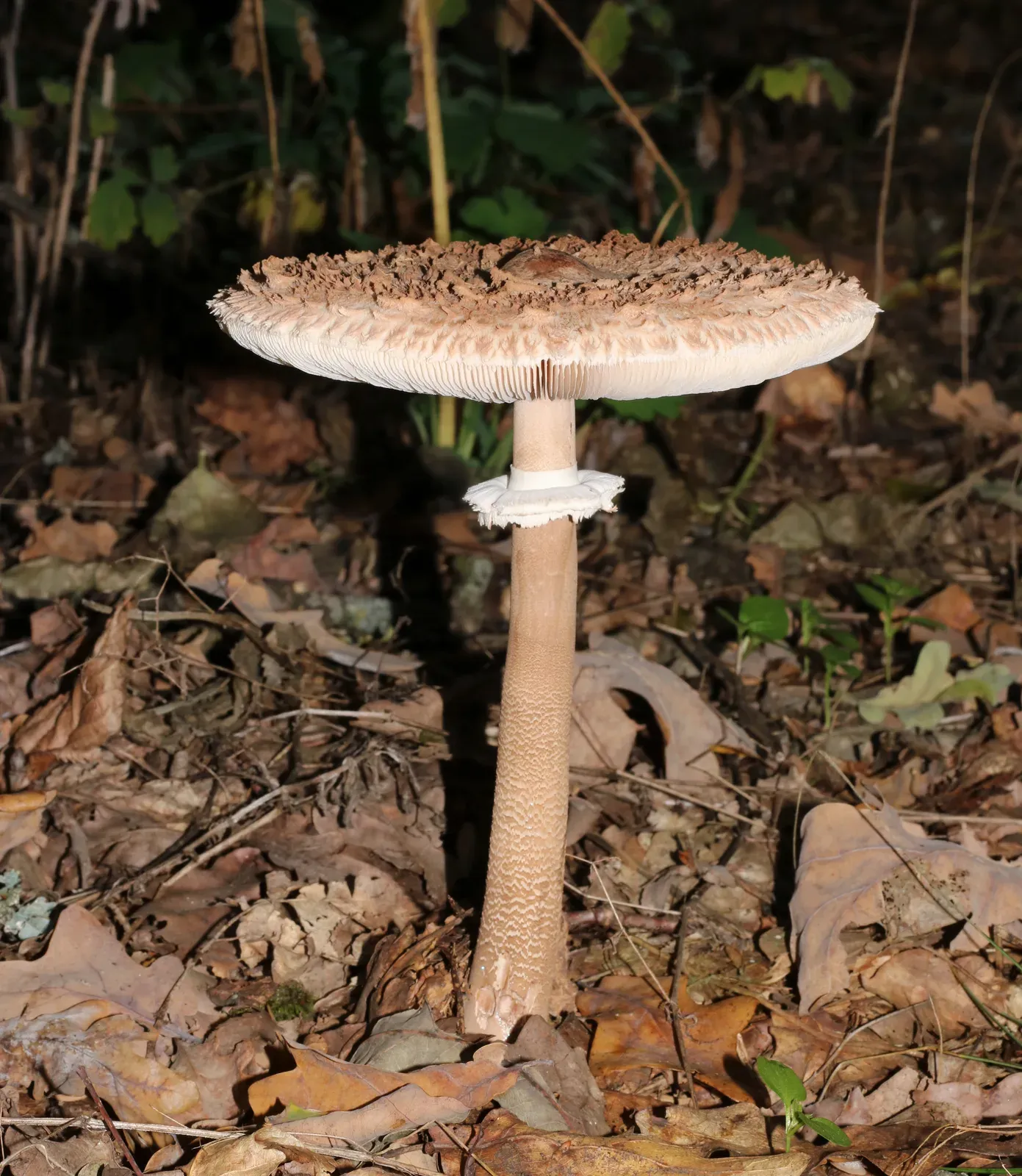 How to identify
Mushrooms with a ring on the stem: what it warns you about
The ring, or skirt, on the stem is an important feature you need to know how to read. Here's which mushrooms h…
August 21, 2026·3 min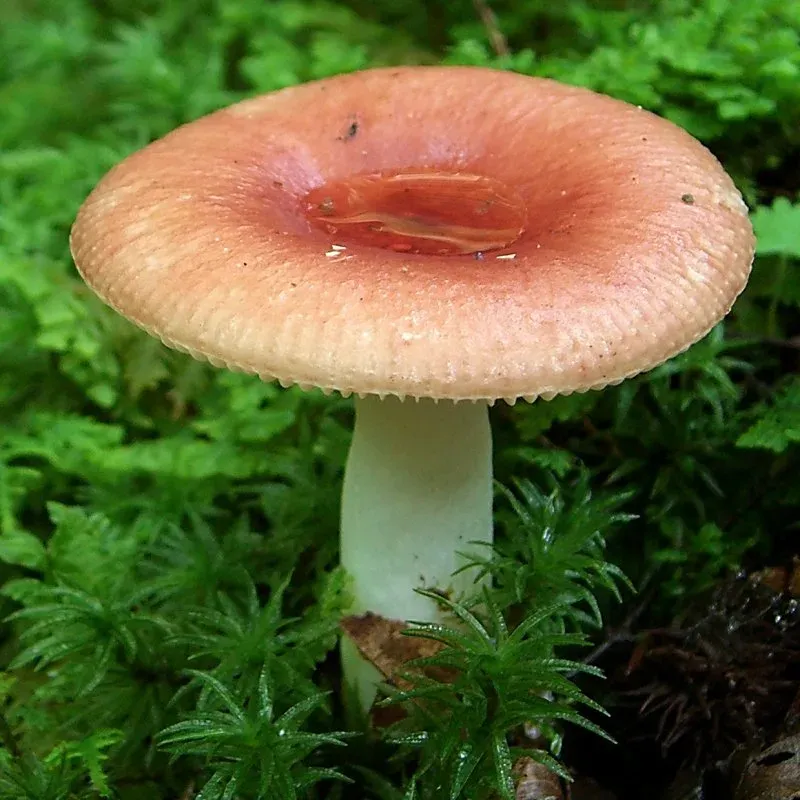 How to identify
Red-capped mushrooms: edible and dangerous
A red cap in the forest is a reason to stop. These mushrooms include both tasty red-capped scaber stalks and p…
August 21, 2026·3 min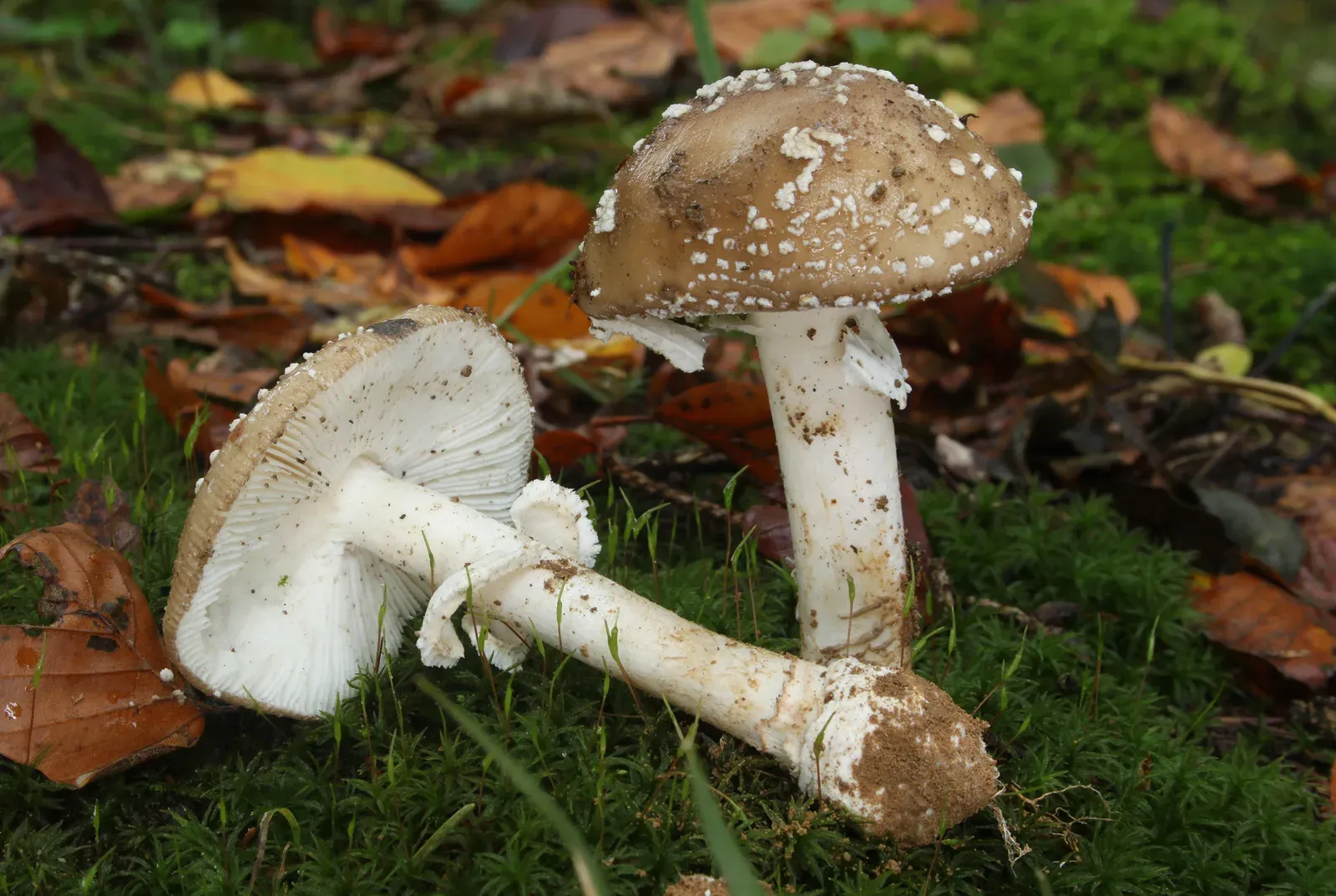 Safety
Panther cap: how to tell it from edible mushrooms
The panther cap is one of the most poisonous mushrooms in our forests, and it sometimes gets mistaken for edib…
July 20, 2026·2 min
Frequently asked questions
Is Fly agaric edible or poisonous?
Does Fly agaric have gills or pores?
What does the cap of Fly agaric look like?
What does the stem of Fly agaric look like?
What do Fly agaric smell and taste like?
Where does Fly agaric grow?
Which trees does Fly agaric grow under?
When should you pick Fly agaric?
What can Fly agaric be confused with?
Why is Fly agaric dangerous?
What is the scientific name of Fly agaric?
Sources
- [1]Атлас грибів України, Зеров Д.К. (1979)
- [2]GBIF