Grey veiled amanitaAmanita porphyria
Expert-verifiedUpdated June 13, 2026
Passport
- Edibility
- Poisonous
- Season
- Aug — Oct
- Hymenophore
- Gilled
- Cap color
- Grey
- Size
- Medium (5–15 cm)
- Smell
- Radish-like
- Reviewed
- Yes ✓
POISONOUS
Eating it causes poisoning. Do not pick it unless you have identified it with certainty.
It contains ibotenic acid and muscimol — neurotoxins acting on GABA-A and glutamate receptors in the central nervous system. Symptoms appear 30 min - 2 h after eating: disorientation, hallucinations, euphoria or anxiety, muscle spasms (ataxia), nausea, vomiting, tachycardia, mydriasis (dilated pupils), and in severe cases — seizures, delirium, coma. Lasts 6-12 hours, sometimes up to a full day. Deaths are rare (unlike the deadly destroying angel and death cap), but the poisonings are severe and require hospitalization.
What to do if you suspect poisoning: call an ambulance immediately. Gastric lavage, activated charcoal (repeated doses). IV fluid therapy, monitoring. For seizures — benzodiazepines (diazepam). Do NOT use atropine — it is contraindicated in this type of poisoning (there is no muscarine here). Treatment lasts 1-3 days, usually followed by full recovery.
Prevention: no mushroom with a ring + a volva goes into the basket. Skip any gray-purple, violet or lilac gilled mushroom under pines and spruces.
If you suspect poisoning, call an ambulance immediately: 112 (the European emergency number) or your local emergency number
Quick answers
Where to look?
Conifer forest, Mixed forest
When does it appear?
Aug — Oct
Active months: August, September, October.
How to recognize it? Three signs
- Cap color: Grey, Violet, Brown
- Cap shape: Convex
- Smell: Radish-like
Fruiting season
August – October
Description
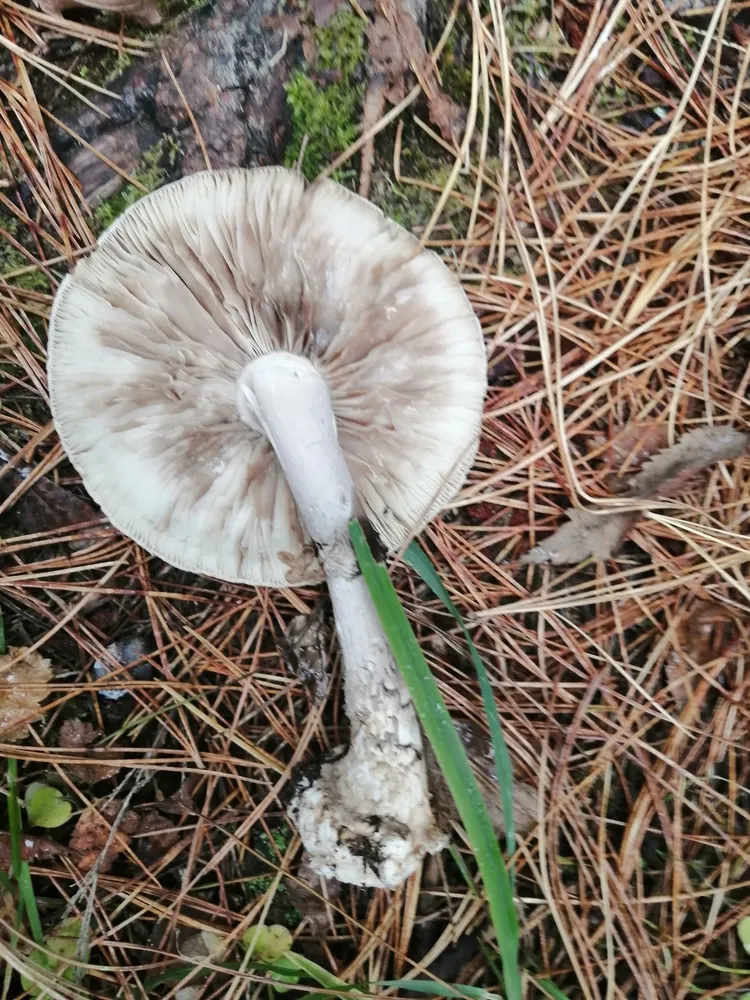
The grey veiled amanita (Amanita porphyria) is a poisonous cousin of the panther cap, with a distinctive gray-purple or violet-brown cap. In our forests it is less common than the panther cap, but it sometimes comes up in clusters in the pine and spruce forests of the Carpathians and Polissia. It looks like a panther cap without the prominent white fluffy warts — the cap is smoother, with thin grayish veil remnants. The Latin epithet porphyria refers to the "porphyry" purple-gray color of the cap.
Poisonous. It contains the same group of toxins as the panther cap — ibotenic acid and muscimol (neurotoxins acting on GABA receptors in the central nervous system). Symptoms appear 30 min - 2 h after eating: disorientation, hallucinations, muscle spasms, nausea, tachycardia, and in severe cases — seizures and coma. Deaths are rare (unlike with the destroying angel), but the poisonings are severe and require hospitalization. There is no specific antidote — treatment is symptomatic: gastric lavage, activated charcoal, IV fluids, benzodiazepines for seizures.
In Ukraine it occurs in conifer and mixed forests — the Carpathians, Prykarpattia, Polissia. It forms mycorrhiza with spruce, pine, and less often birch. Season: August — October. It often grows singly or in groups of 2-5 fruiting bodies in mossy spots. No mushroom with a purple, violet or gray-lilac tinge to the cap + a ring on the stem + a volva at the base goes into the basket. Absolutely none.
Cap
Cap 5-10 cm across, hemispherical in young mushrooms, becoming convex-flat with age. Color gray-purple, lilac-brown, with a violet tinge, darker in the center. Surface smooth, slightly slimy in wet weather, with thin grayish membranous veil remnants (not white and fluffy, as on the panther cap). The cap margin is smooth, without grooves.
Hymenophore
Gilled hymenophore — gills white, free (not attached to the stem), moderately crowded. Spore print white.
Stem
Stem 7-12 cm tall, 1-1.5 cm thick, cylindrical, with a pronounced bulbous swelling at the base. Color whitish to light gray, with violet or lilac tints, especially in the lower part. In the upper part — a white membranous ring with a violet tint. At the base — a volva forming a rim (not a sac like in the destroying angel, but a rim around the swelling).
Flesh
Flesh white, with a violet or lilac tint in the lower part of the stem. When cut, it does not change color (unlike the blusher, which turns strongly pink). The smell is faint; in some populations it has a note of old potato, radish or a damp cellar.
Smell
Faint; in some populations with a note of old potato or radish. Not diagnostic for safety.
Lookalikes
Related species
Mushrooms of the same genus and habitat — to study side by side and never mix up.
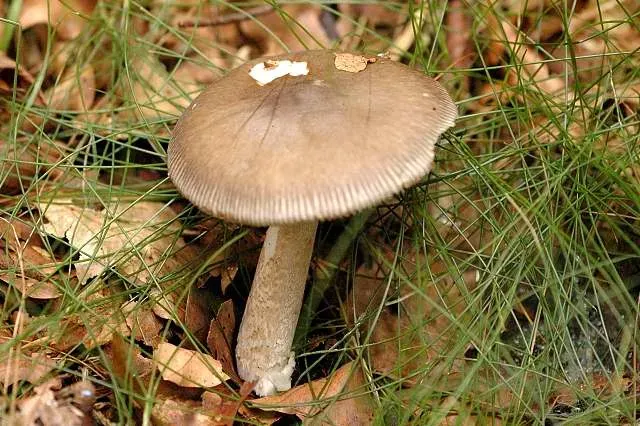
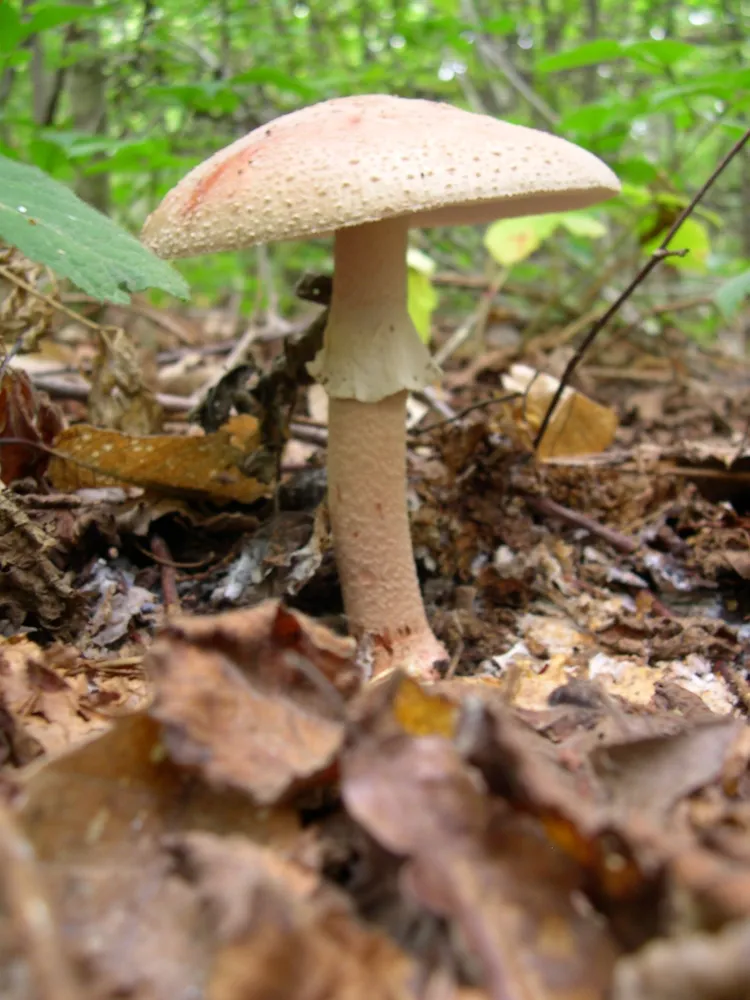
Amanita battarrae
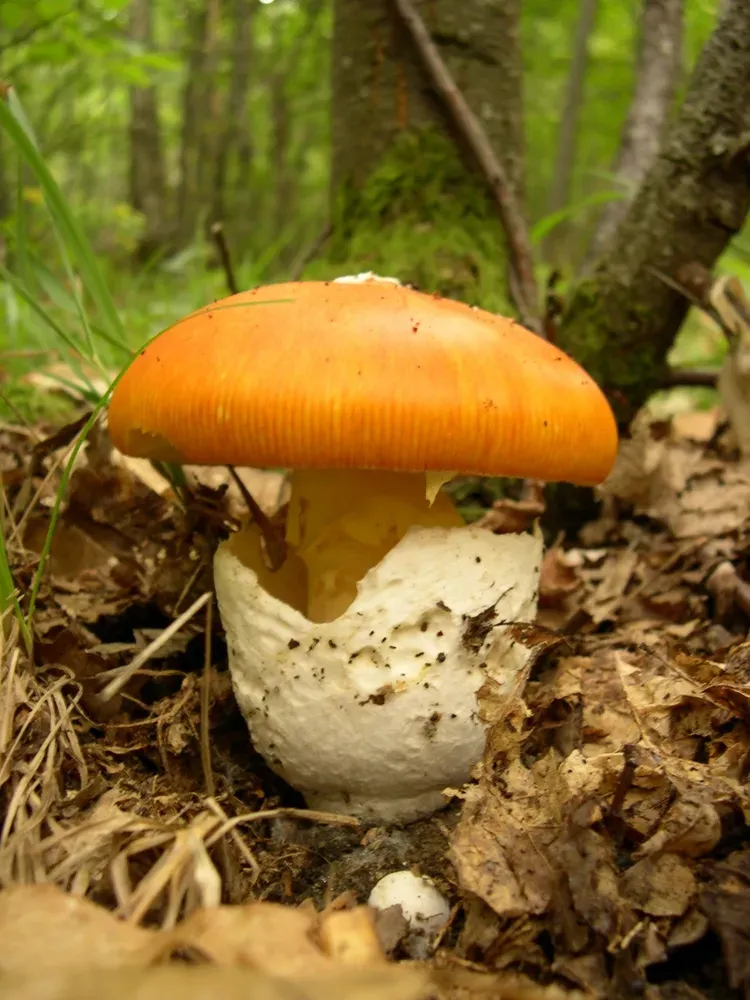
Caesar's mushroom
Amanita caesarea
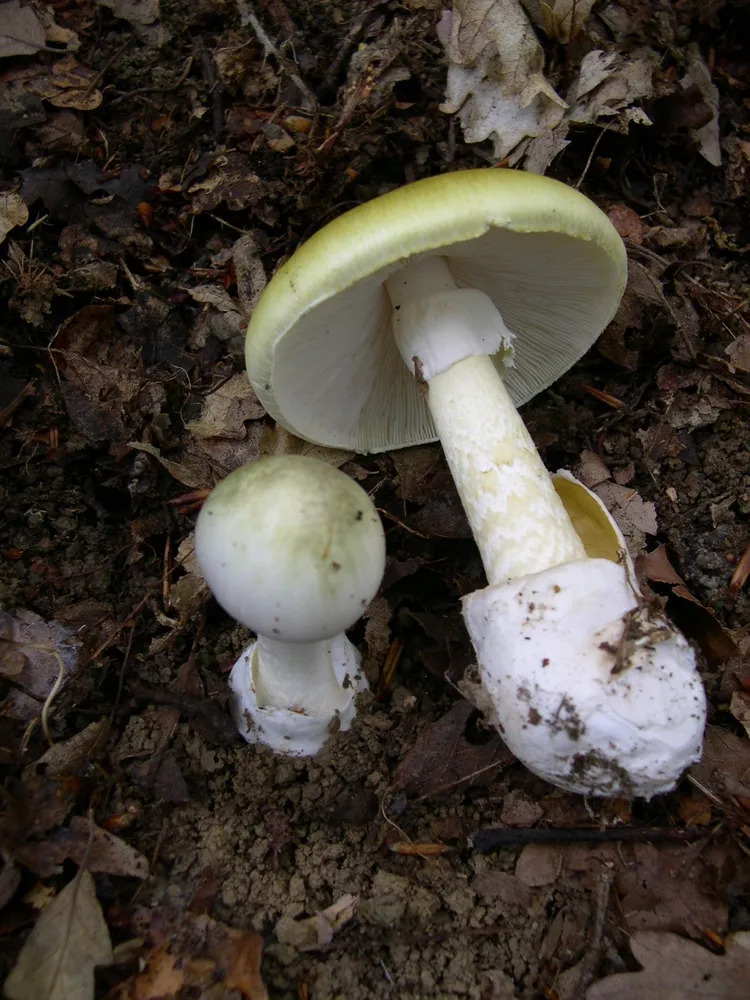
Death cap
Amanita phalloides
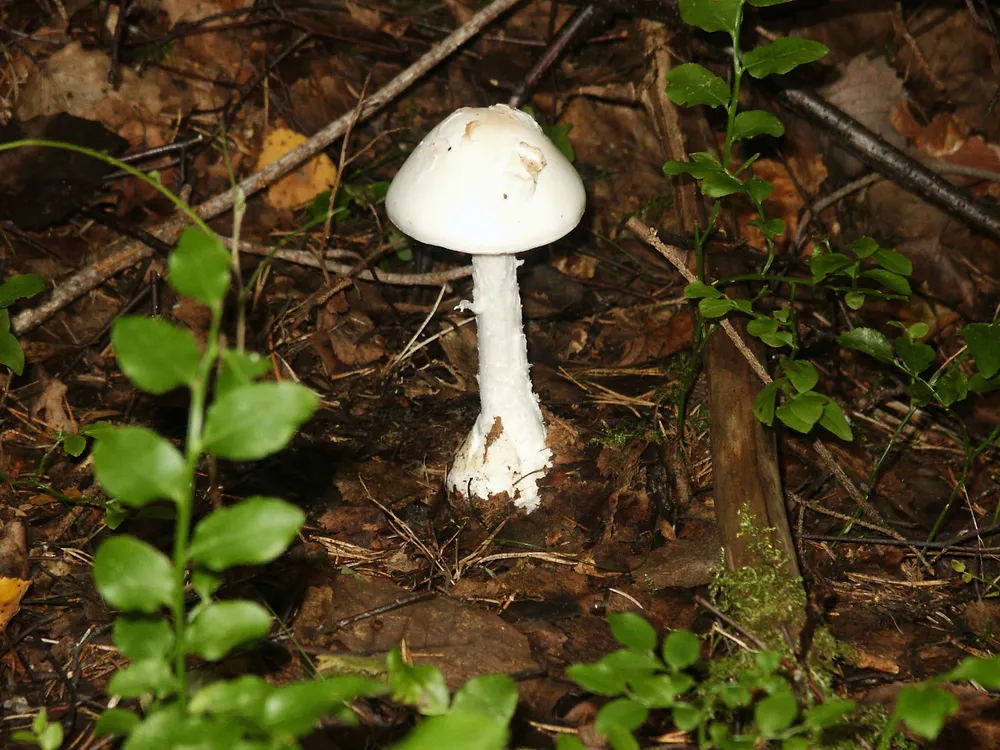
Destroying angel
Amanita virosa
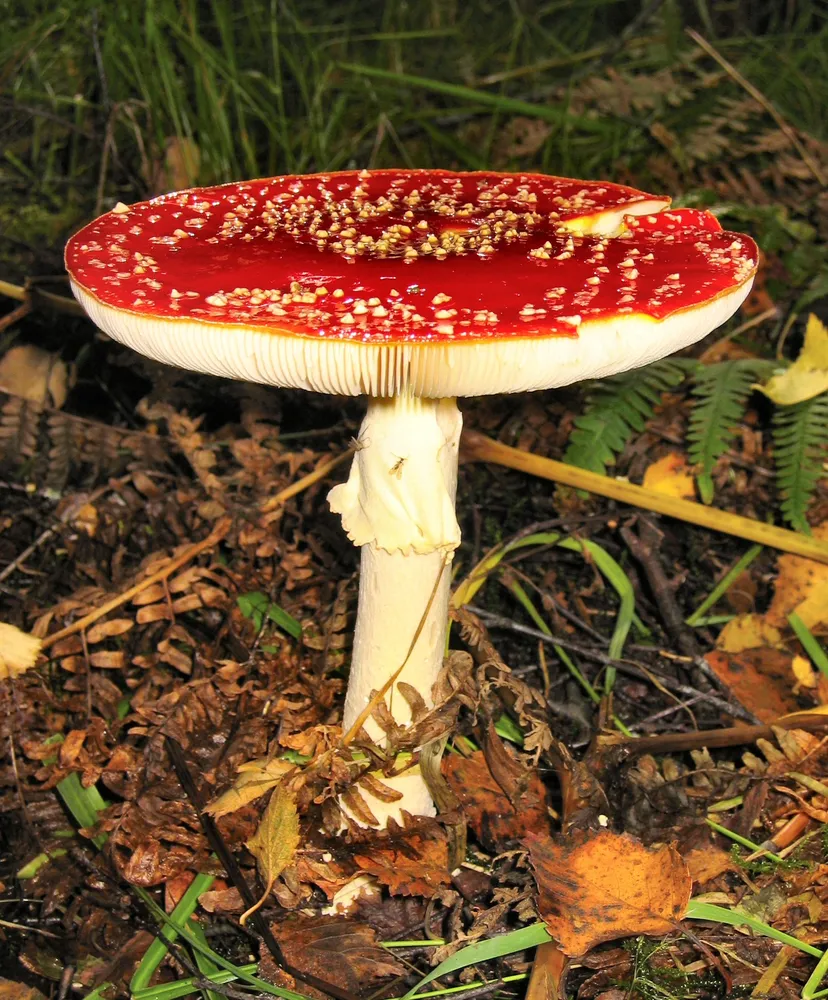
Fly agaric
Amanita muscaria
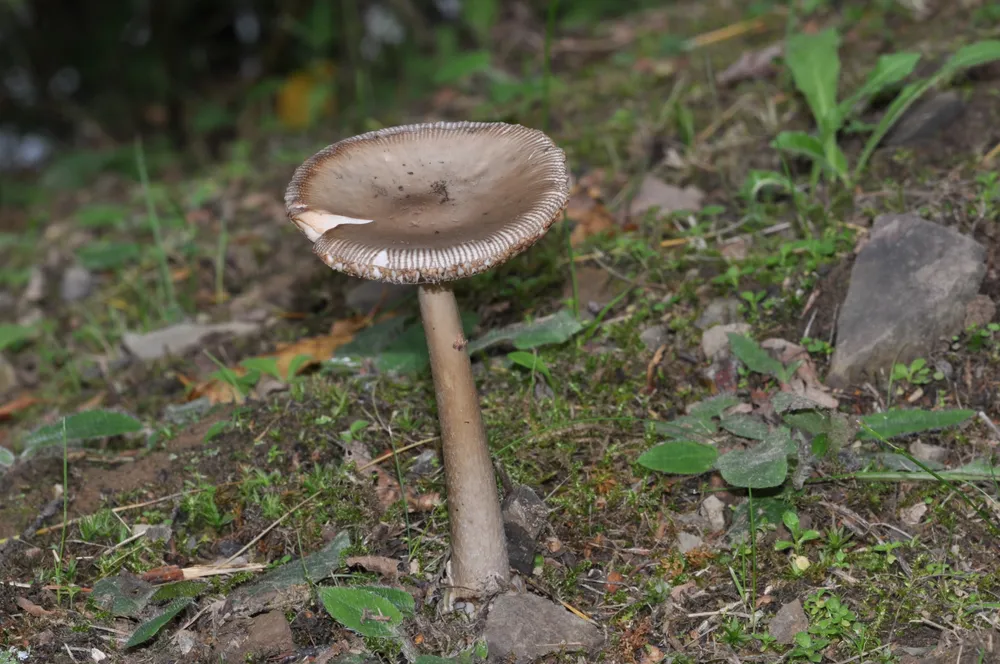
Grisette
Amanita vaginata
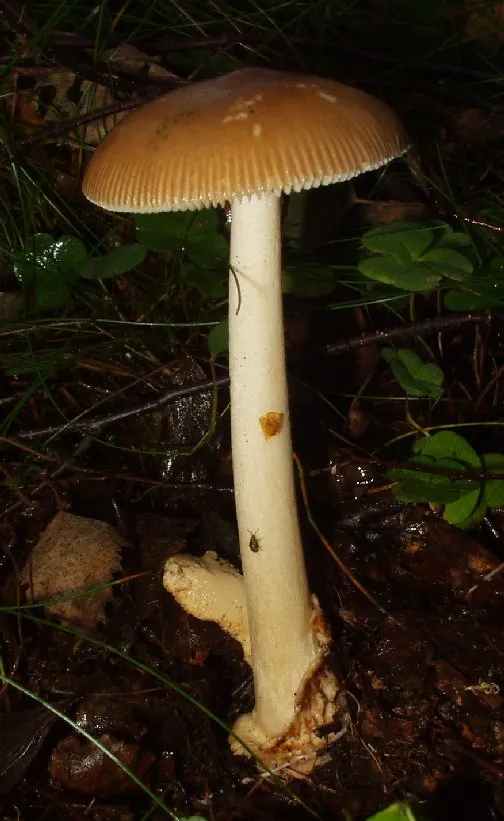
Tawny grisette
Amanita fulva
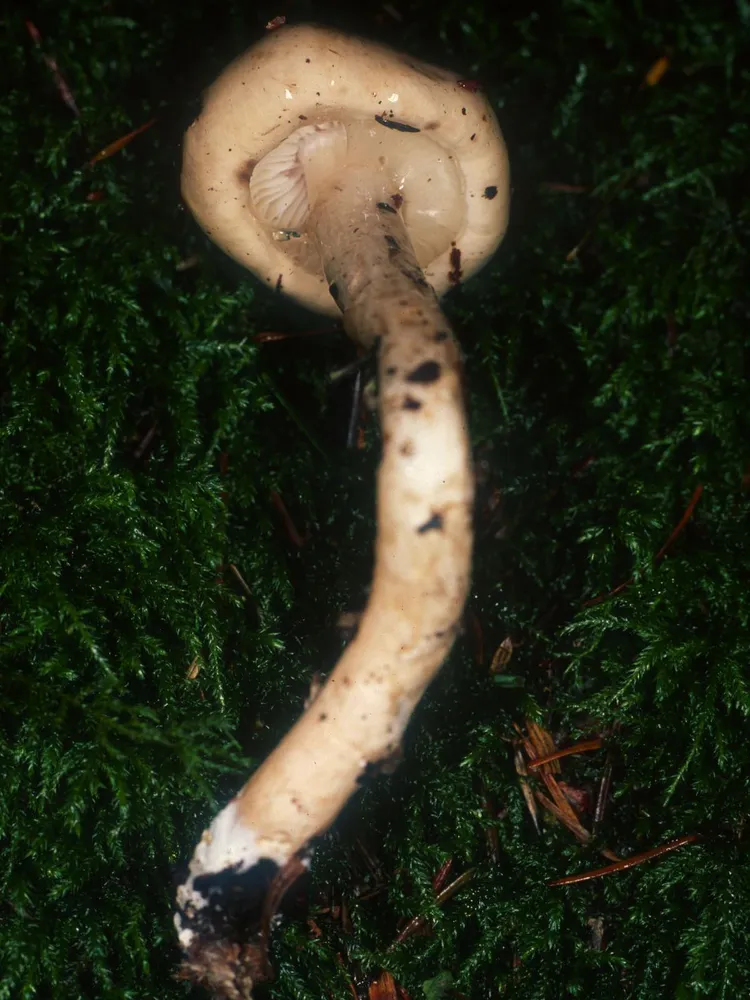
Dripping slimecap
Limacella illinita
Frequently asked questions
Can you eat it?
No. Poisonous — it contains ibotenic acid and muscimol. Symptoms within 30 min - 2 h: disorientation, hallucinations, muscle spasms. The death rate is low, but the poisonings are severe and require hospitalization.
How is it more dangerous than the panther cap?
Actually, it has the same set of toxins (ibotenic acid + muscimol), and the danger is comparable. The difference is more about frequency: the panther cap is more abundant here, while the grey veiled amanita is rarer. Both cause the same type of poisoning with neuropsychiatric symptoms. Neither is eaten.
What should you do if someone eats it by accident?
Call an ambulance. Gastric lavage, activated charcoal. In hospital — IV fluid therapy, CNS monitoring, benzodiazepines for seizures. Do NOT use ATROPINE — this is not muscarinic syndrome, and atropine is harmful here. Keep the mushroom remains so the toxin can be identified. Treatment lasts 1-3 days; the outlook is usually good with timely help.
How do you tell it apart from the panther cap?
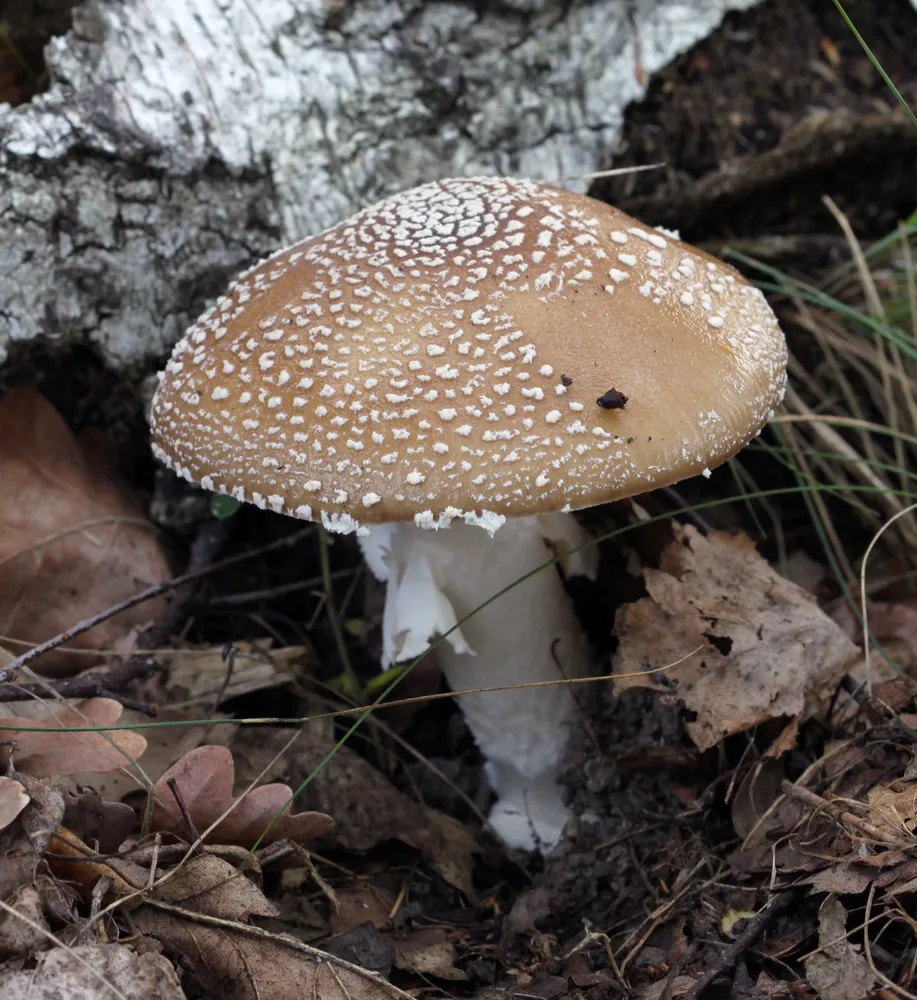
Scales on the cap: the panther cap has distinct white fluffy warts (universal veil remnants) arranged in concentric circles. The grey veiled amanita has grayish membranous remnants that are much less noticeable. Color: the panther cap is olive-brown to gray-brown. The grey veiled amanita has a violet or lilac tint. Both are equally dangerous, so telling them apart precisely is mostly academic.
Where does it grow?
In conifer and mixed forests — mostly with spruce and pine, less often with birch. It likes mossy, shady spots. It forms mycorrhiza with conifers.
In which regions of Ukraine does it occur?
Mainly the Carpathians (especially in spruce forests), Prykarpattia, Polissia (pine and spruce forests). In the steppe and the southern forest-steppe it is practically absent.
When should you look for it?
Better to ask "when to avoid it". August — October, peaking in September. Its season coincides with the main mushroom season.
Which mushrooms can it be confused with?
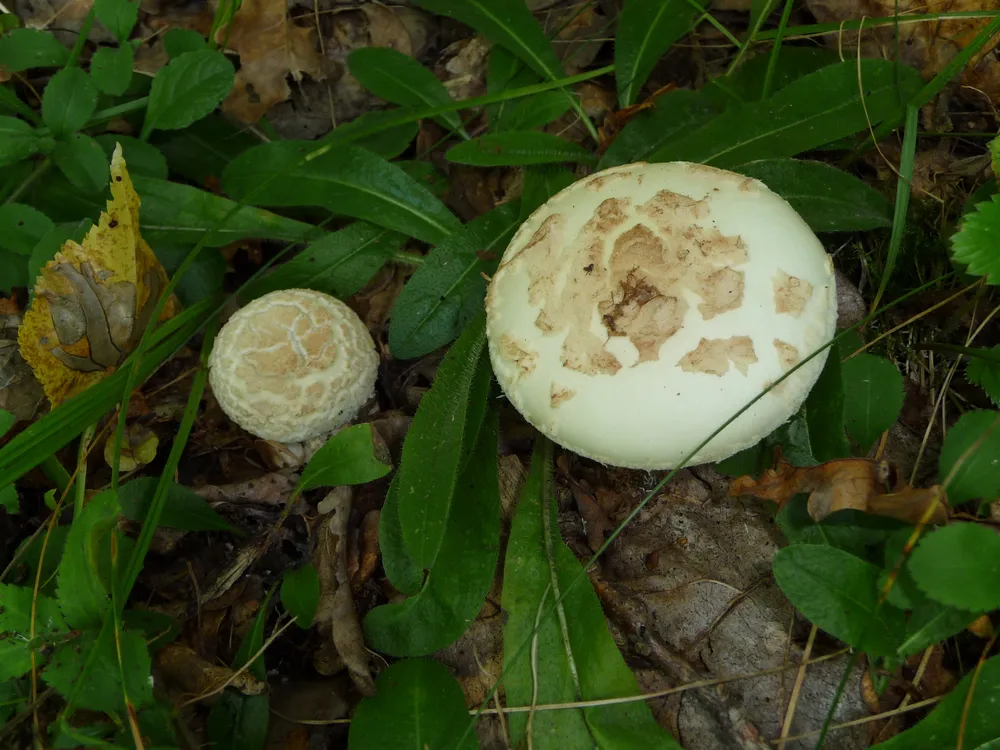
With the panther cap (Amanita pantherina) — a poisonous relative. With a young grey spotted amanita (Amanita spissa) — edible, but also best skipped because of the risk of confusion. With a young blusher (Amanita rubescens) — conditionally edible, but its flesh turns pink. The grey veiled amanita's flesh does not change color when cut — that is the key diagnostic feature.
Is Grey veiled amanita edible or poisonous?
Does Grey veiled amanita have gills or pores?
What does the cap of Grey veiled amanita look like?
What does the stem of Grey veiled amanita look like?
Sources
- [1]Вікіпедія (українська)
- [2]Атлас грибів України, Зеров Д.К. (1979)
- [3]MycoBank Database
- [4]Index Fungorum
- [5]GBIF
- [6]iNaturalist Ukraine