BlusherAmanita rubescens
Expert-verifiedUpdated October 3, 2026
Passport
- Edibility
- Conditionally edible
- Season
- Jun — Nov
- Hymenophore
- Gilled
- Cap color
- Brown
- Size
- Medium (5–15 cm)
- Smell
- Pleasant
- Reviewed
- Yes ✓
Quick answers
Where to look?
Deciduous forest, Mixed forest, Conifer forest
When does it appear?
Jun — Nov
Active months: June, July, August, September, October, November.
How to recognize it? Three signs
- Cap color: Brown, Pink, Red
- Cap shape: Convex
- Smell: Pleasant
Fruiting season
June – November
Description
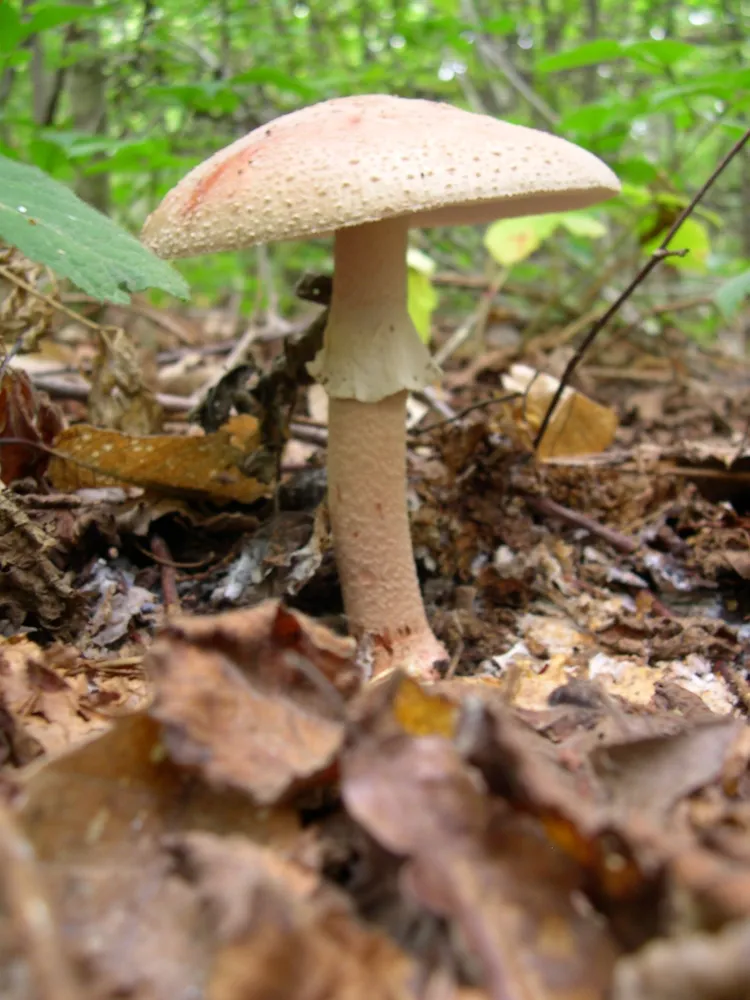
The blusher (Amanita rubescens) is the best-known "paradox" in the genus Amanita: the only amanita in our forests that is traditionally eaten after proper cooking. It's easy to recognize by its pinkish gray-brown cap with whitish-gray wartlike scales and, its main diagnostic feature, flesh that turns strongly pink or wine-red when cut and where damaged, especially at the base of the stem and where slugs have been feeding. Hence the name, "blusher".
Absolutely crucial: you MUST NOT EAT it raw: it contains heat-labile hemolysins (rubescenslysin), which destroy red blood cells. Boiled for 15-20 minutes with the cooking water always poured off, it is edible, with meaty flesh and a delicate nutty flavor. It's good for frying, pickling and stewing. In some Western countries (France, Italy) it's a traditional culinary mushroom. But in Ukraine, because of its deadly resemblance to the panther cap and the grey veiled amanita, it should be picked only by experienced foragers who confidently recognize the pinkening flesh as the key feature.
In Ukraine it is widespread in all types of forest: the Carpathians, the Carpathian foothills, Polissia, the forest-steppe. It is a mycorrhizal partner of oak, beech, hornbeam, birch, spruce and pine. The season runs June to November, peaking in August–September. It often grows in groups of 3-10 fruiting bodies. It's found regularly, but because of the risk of confusion we recommend: beginners should NOT pick it; experienced foragers ONLY after the mandatory check that the flesh turns pink and that the characteristic features of its poisonous relatives are absent.
Cap
The cap is 5-15 cm across, hemispherical in young mushrooms, later becoming convex to flat. The color is pinkish gray-brown, brownish pink, brick, darker in young mushrooms and paler in old ones. The surface is covered with noticeable whitish-grayish wartlike scales (remnants of the universal veil), scattered unevenly. In wet weather it is slightly sticky. The cap edge is smooth.
Hymenophore
Gilled hymenophore: the gills are whitish, turning pink over time where damaged, free. The spore print is white.
Stem
The stem is 6-12 cm tall and 1-2 cm thick, cylindrical, with a distinct bulbous swelling at the base. The color is whitish above, with pink or reddish tints lower down. In the upper part there is a white ring with lengthwise grooves and a pinkish tint. The volva is indistinct: it appears as concentric pinkish-white warts on the swollen base (not as a sac).
Flesh
The flesh is white, slowly (over 1-5 min) turns pink to wine-red when cut; this is the main diagnostic feature of the species. It turns especially pink where slugs or insects have been feeding. In an old mushroom all the flesh in the lower stem is wine-pink. The smell is faint and pleasantly mushroomy.
Smell
Faint and pleasantly mushroomy, with no distinctive notes. In old mushrooms, with a slight winey note.
Lookalikes
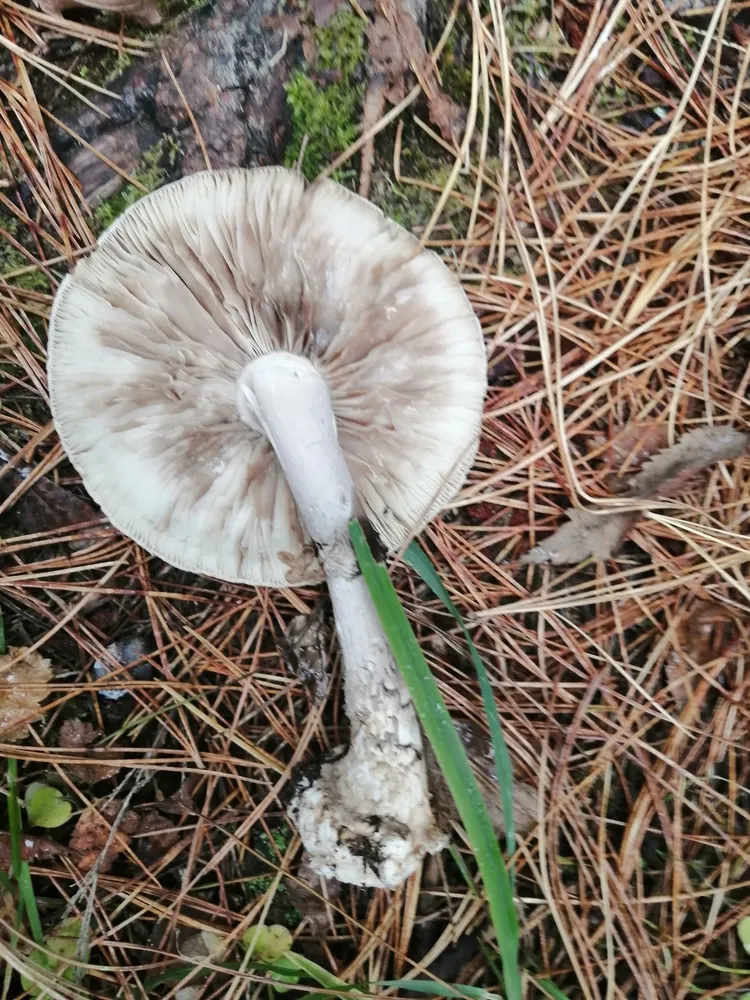
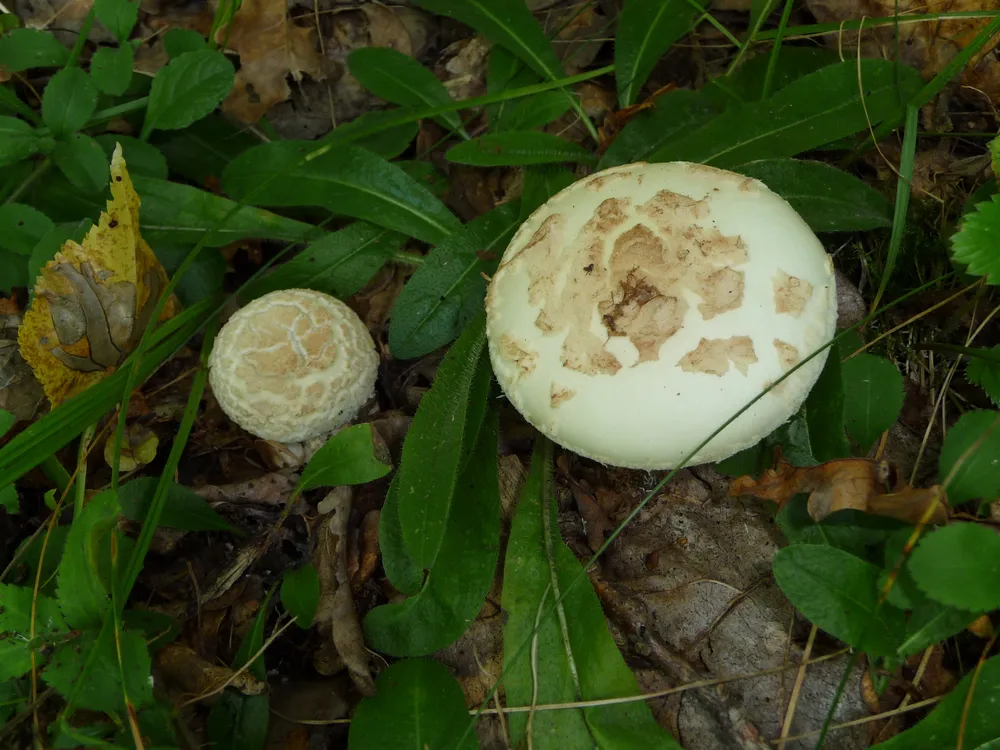
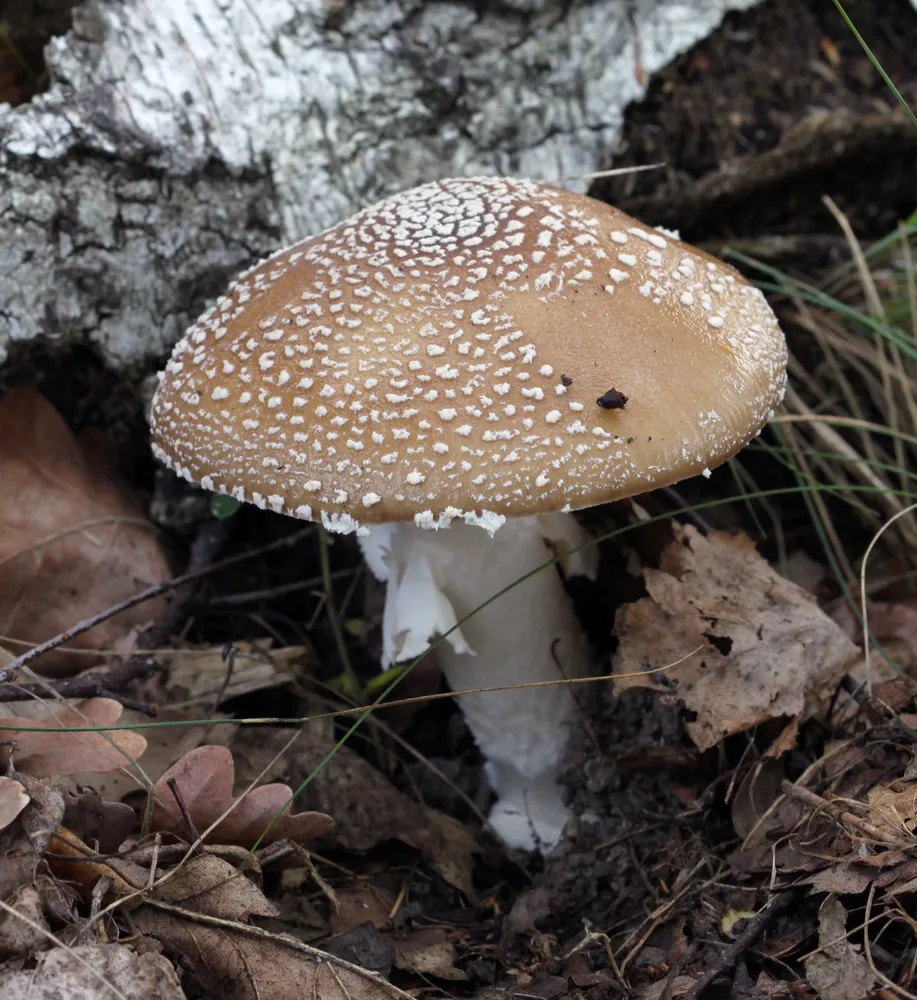
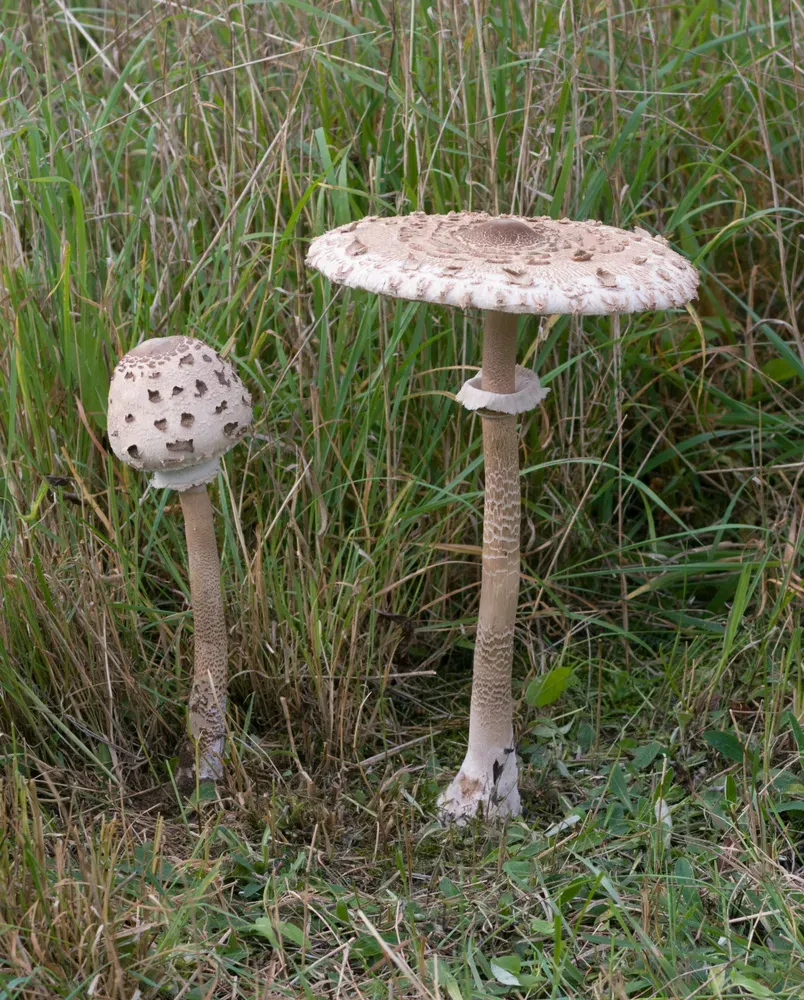
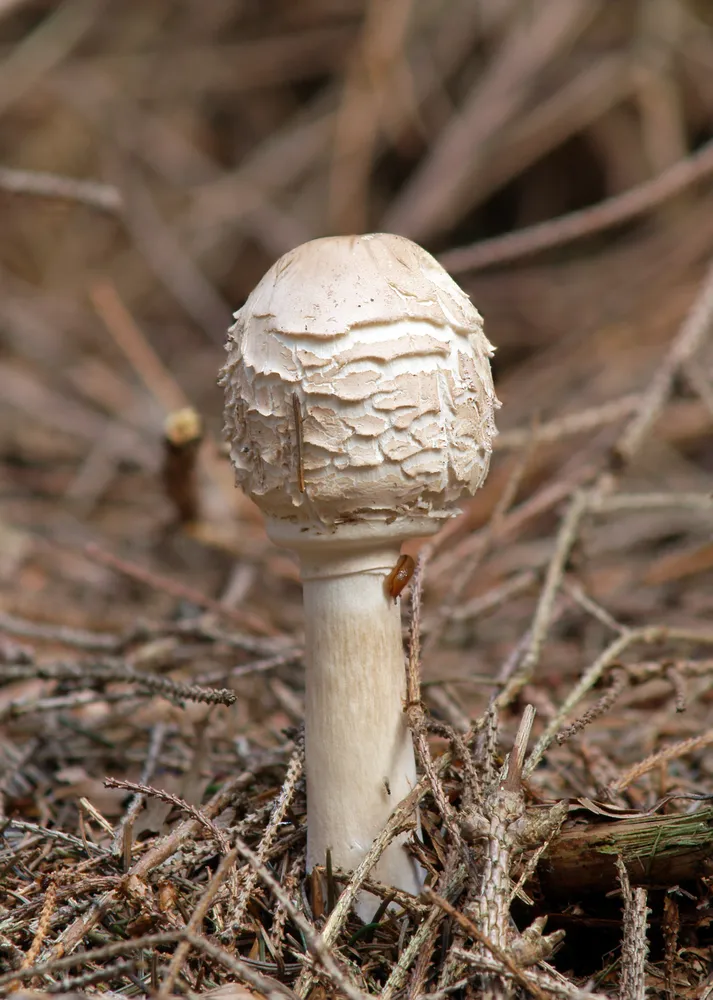
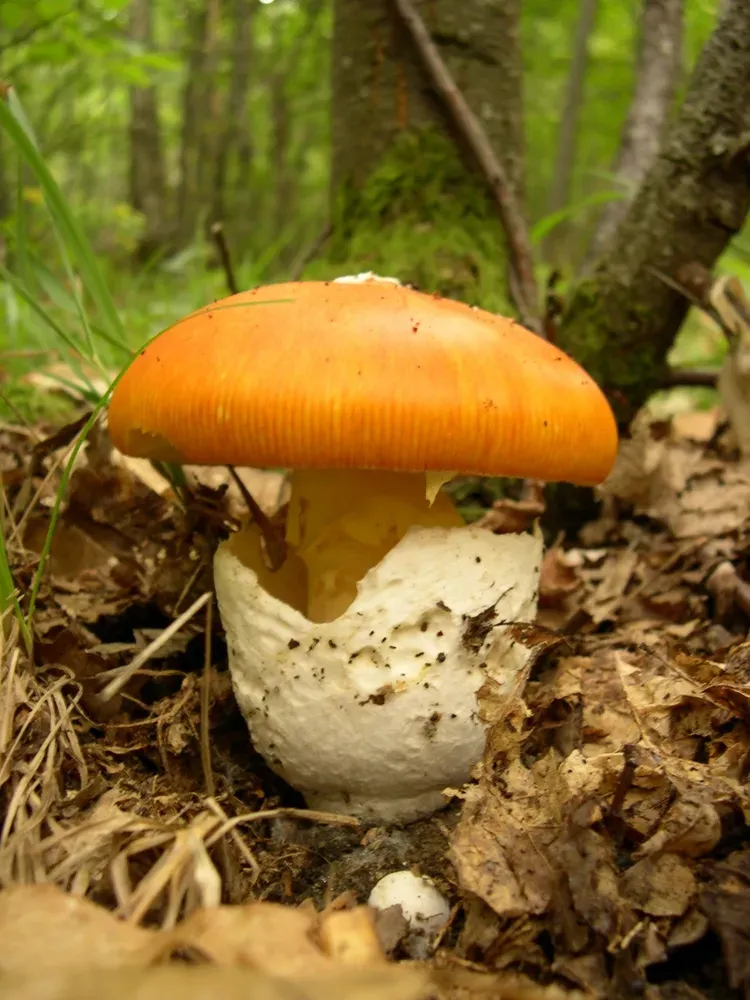
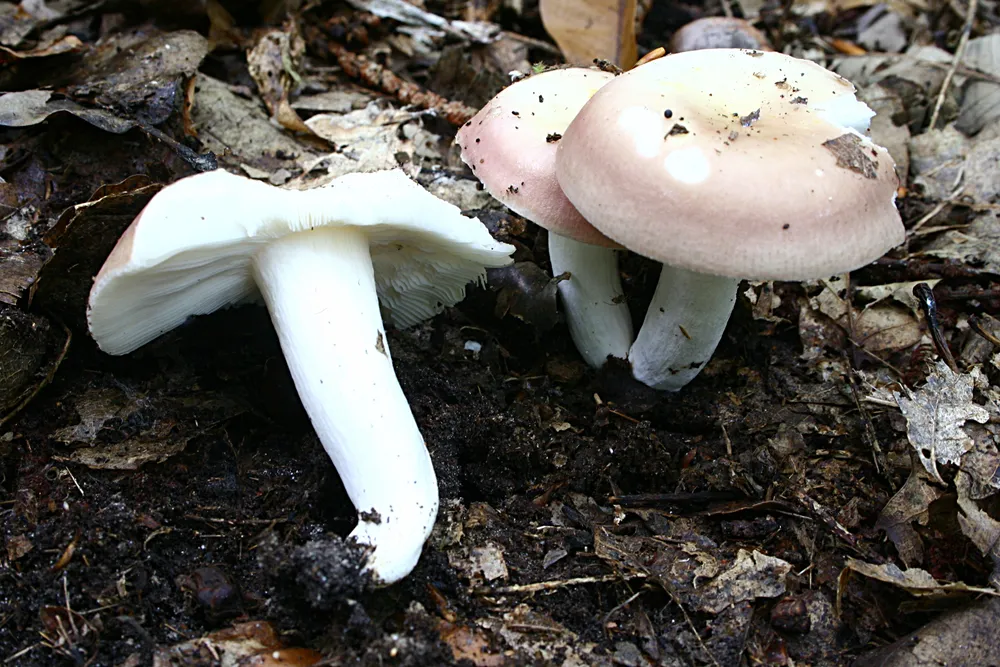
Related species
Mushrooms of the same genus and habitat — to study side by side and never mix up.
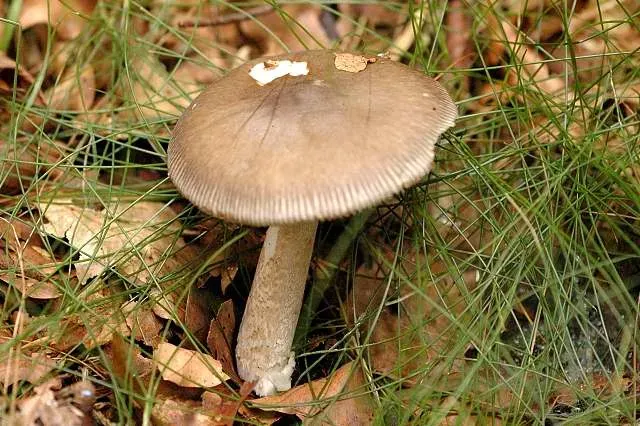
Amanita battarrae
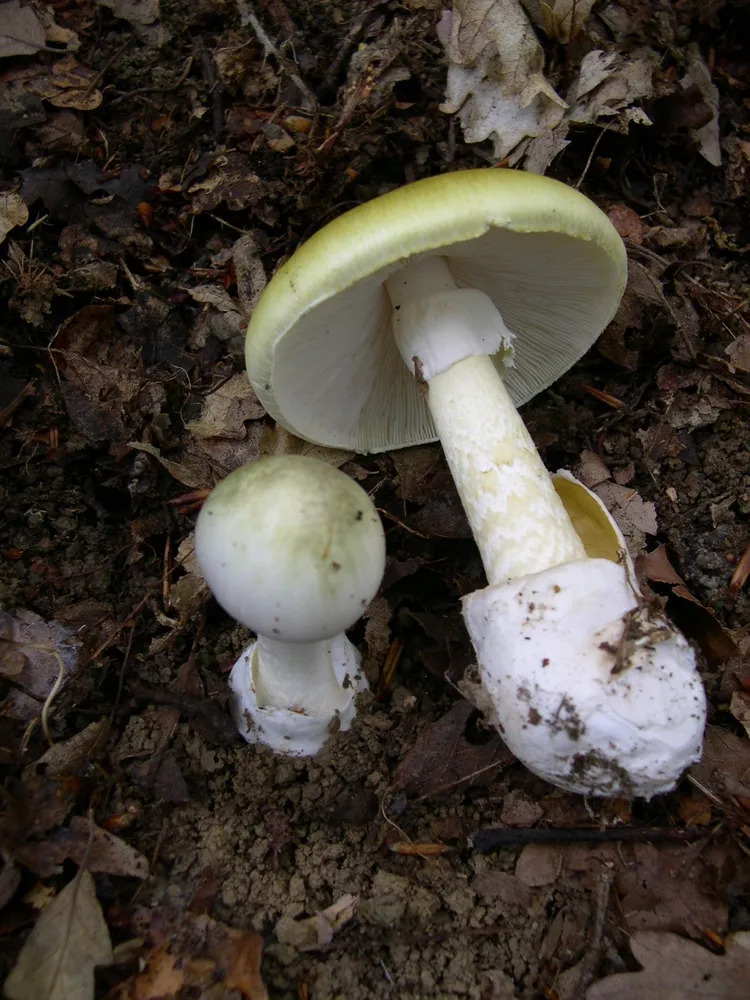
Death cap
Amanita phalloides
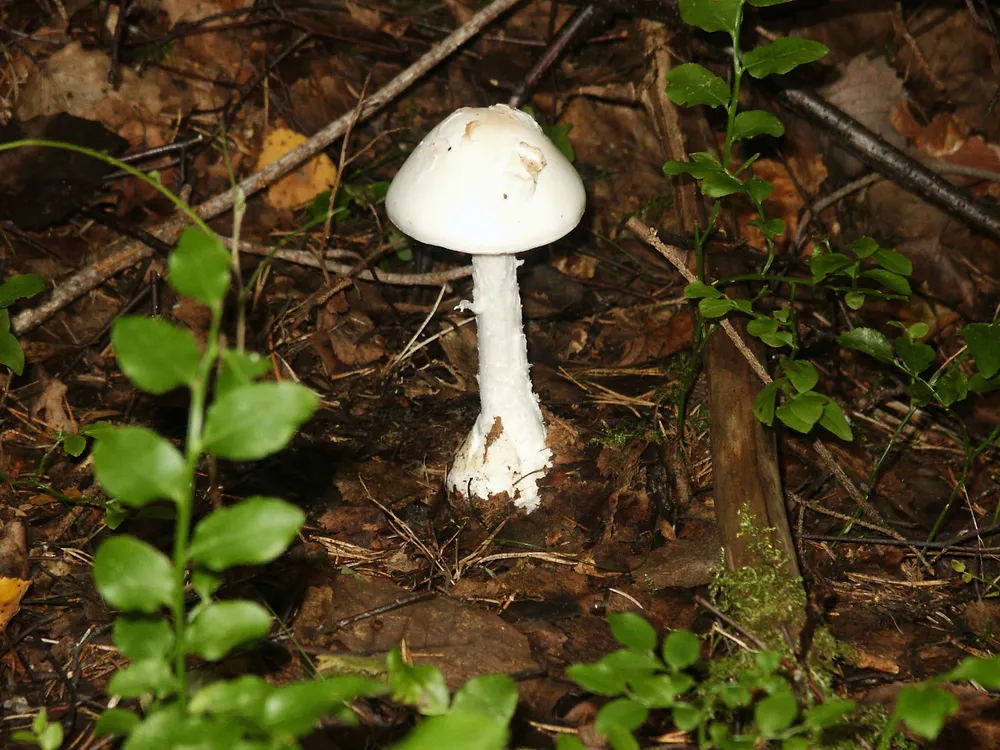
Destroying angel
Amanita virosa
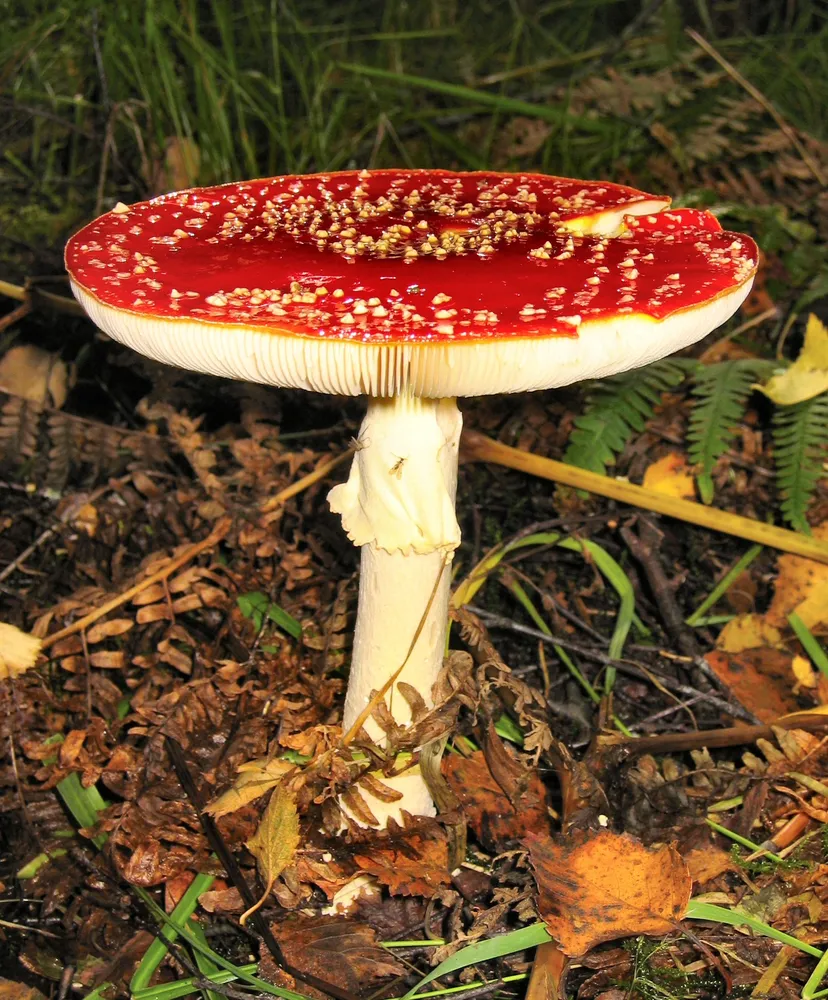
Fly agaric
Amanita muscaria
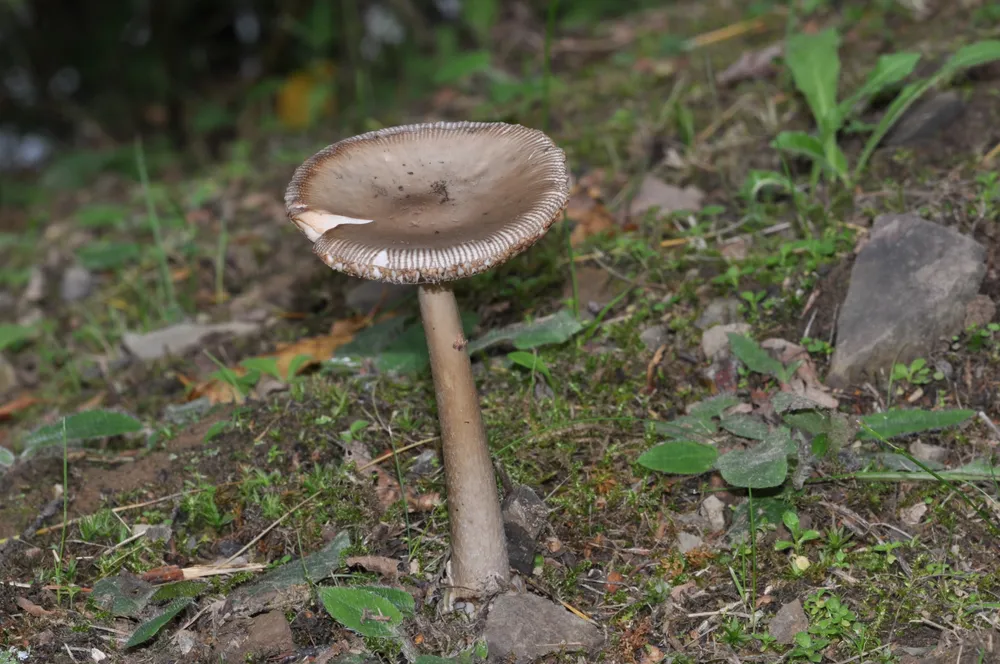
Grisette
Amanita vaginata
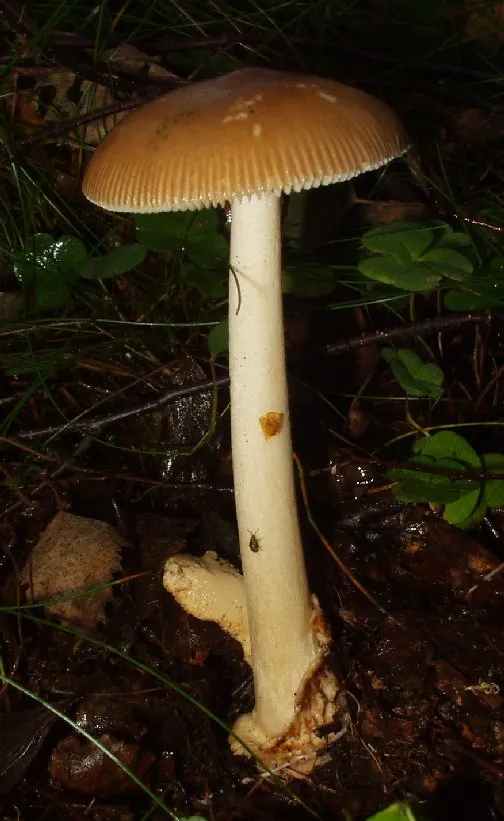
Tawny grisette
Amanita fulva
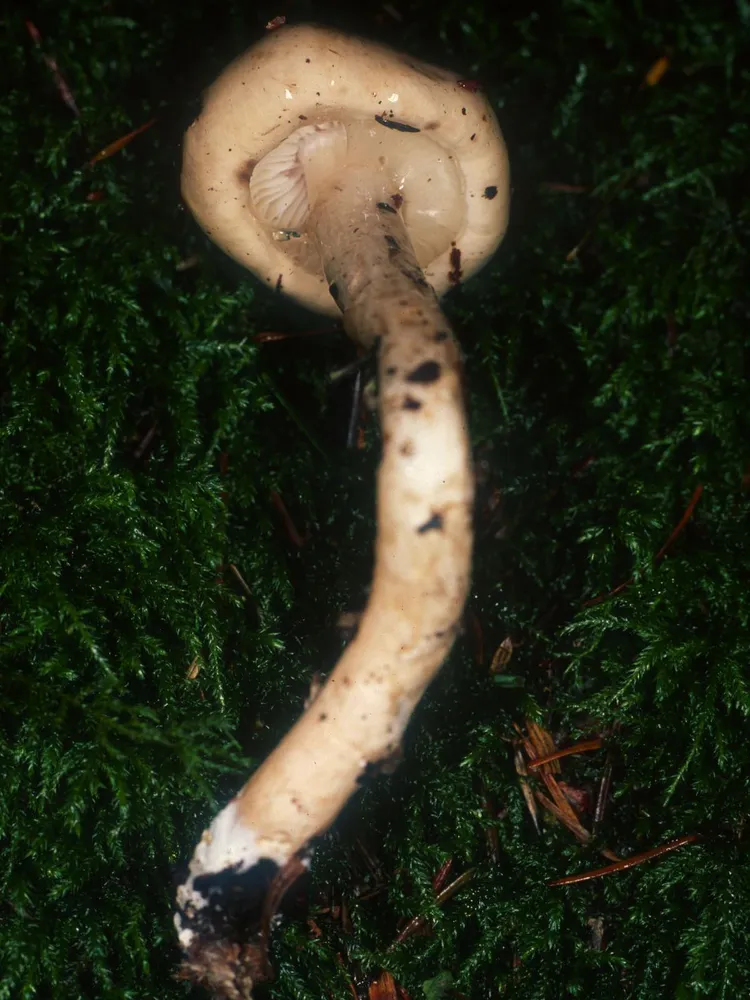
Dripping slimecap
Limacella illinita
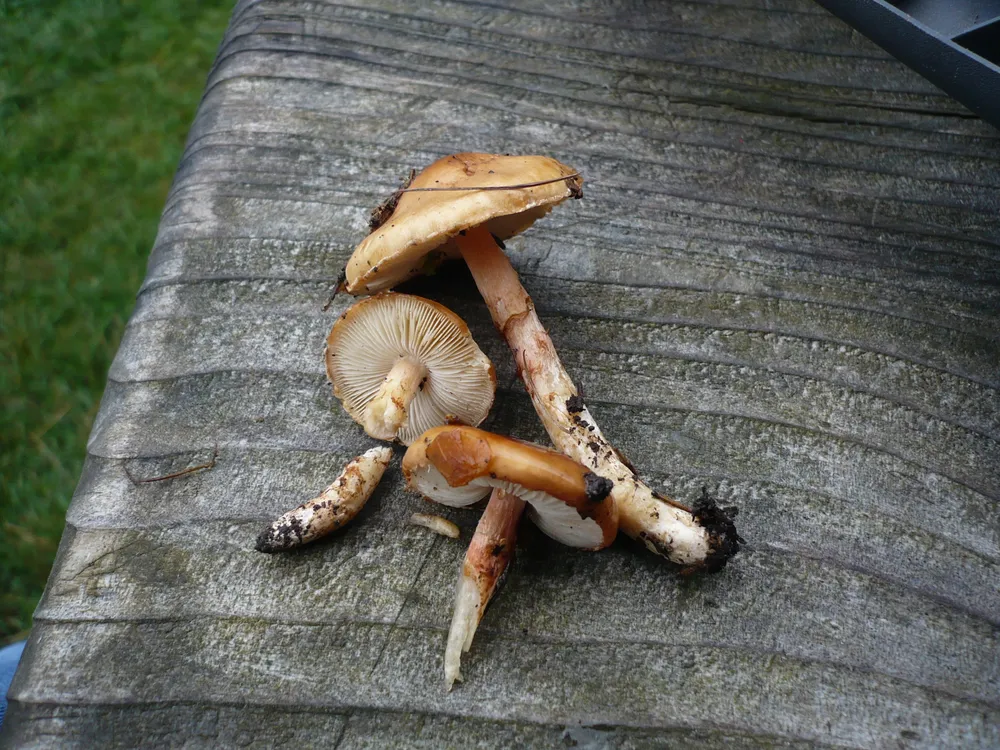
Limacella delicata
Frequently asked questions
Is it safe to eat?
Only after a mandatory 15-20-minute boil, with the cooking water poured off. Raw, it is poisonous (hemolysins destroy red blood cells). Cooked, it is edible, meaty, with a delicate nutty flavor. We recommend that only experienced foragers pick it, those who can confidently tell its pinkening flesh from the flesh of poisonous amanitas.
How do you tell it apart from the panther cap?
Most important: the flesh when cut. In the blusher it turns strongly pink to wine-red within 1-5 min (especially near the stem base). In the panther cap it stays white. The second feature: the color of the cap scales. In the blusher they are whitish-grayish, irregular. In the panther cap they are pure white, small, in concentric rings. The third: the volva. In the blusher it is indistinct, warty-ringed. In the panther cap it is a clear ring-shaped one in the form of 2-3 concentric rings on the bulb. If even one feature doesn't match, do NOT eat it.
What happens if you eat it raw?
After 1-3 h: nausea, vomiting, abdominal pain, acute gastroenteritis. In serious cases, hemolytic anemia, dark urine (hemoglobinuria), yellowing of the skin. Symptoms last 12-48 h. Usually not fatal, but it requires medical care: IV fluid therapy and monitoring of kidney function. If you've eaten it by accident: call 112 or your local emergency number right away, don't wait for symptoms, and keep the mushroom remains. Don't induce vomiting at home, and take activated charcoal only if a doctor tells you to.
Why do slugs eat it if the flesh is still poisonous?
Slugs have a completely different digestive and circulatory system: they have no red blood cells, so hemolysins don't harm them. This is a recurring paradox of mycology: "an animal eats the mushroom" does not mean a human can too. Ever. Slugs eat the death cap too, and it is the deadliest mushroom in Europe.
Where should you look for it?
In all types of forest: broadleaf, mixed and coniferous. It loves damp mossy spots, forest edges and shady slopes. A mycorrhizal partner of oak, beech, hornbeam, birch, spruce and pine.
Which regions of Ukraine is it found in?
Throughout the forest and forest-steppe zones: the Carpathians, the Carpathian foothills, Polissia, the forest-steppe. One of the most common amanitas.
When should you look for it?
June to November, peaking in August–September. It survives the first light frosts. One of the longest seasons among amanitas.
Which poisonous amanitas is it most often confused with?
With the panther cap (A. pantherina), which is poisonous and neurotoxic. With the grey veiled amanita (A. porphyria), which is poisonous. With the grey spotted amanita (A. spissa/excelsa), which is theoretically edible but not recommended because of the risk of confusing it with the panther cap. The blusher's fundamental diagnostic feature is flesh that turns pink when cut. If the cut flesh stays white, it is NOT a blusher, however similar the cap may look.
How do you cook it if you do decide to?
Step 1: clean it thoroughly and remove the veil remnants from the cap. Step 2: slice it and boil for 15-20 min in salted water. Step 3: always pour off the cooking water and rinse the mushrooms. Step 4: then cook as usual: fry with onion, pickle, stew with potatoes. To pickle: after boiling, cover with a marinade of vinegar and spices. Drying isn't a good idea, because hemolysins survive drying.
Is Blusher edible or poisonous?
Does Blusher have gills or pores?
What does the cap of Blusher look like?
Sources
- [1]Вікіпедія (українська)
- [2]Атлас грибів України, Зеров Д.К. (1979)
- [3]MycoBank Database
- [4]Index Fungorum
- [5]GBIF
- [6]iNaturalist Ukraine