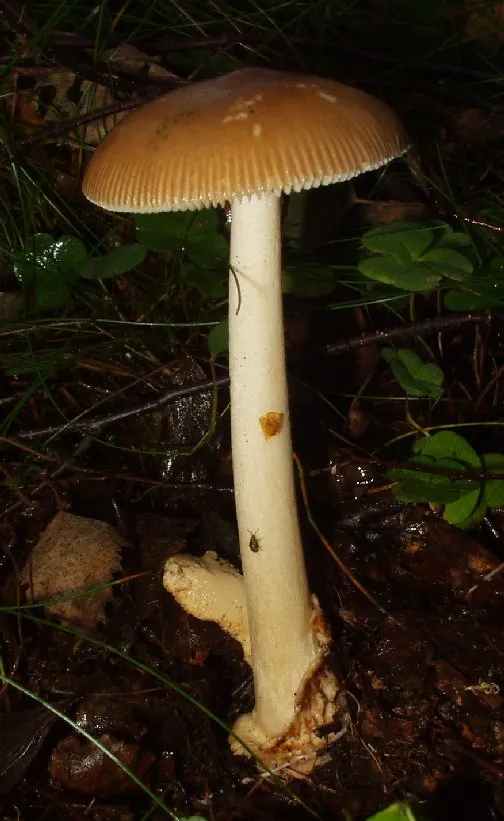
Tawny grisetteAmanita fulva
Expert-verifiedUpdated October 3, 2026
Passport
- Edibility
- Conditionally edible
- Season
- Jul — Oct
- Hymenophore
- Gilled
- Cap color
- Orange
- Size
- Medium (5–15 cm)
- Smell
- Odorless
- Reviewed
- Yes ✓
Quick answers
Where to look?
Deciduous forest, Mixed forest
When does it appear?
Jul — Oct
Active months: July, August, September, October.
How to recognize it? Three signs
- Cap color: Orange, Brown, Red
- Cap shape: Convex
- Smell: Odorless
Fruiting season
July – October
Description
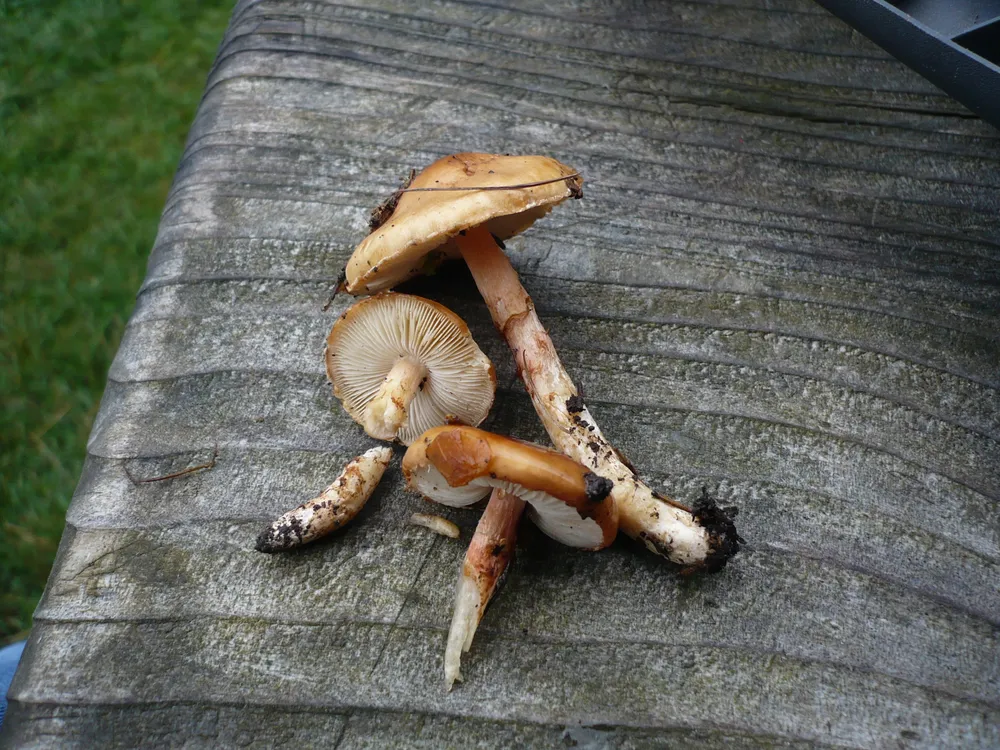
The tawny grisette (Amanita fulva) belongs to a special section of amanitas, Vaginatae ("sheathed"), which lack the key warning feature of the genus Amanita: a ring on the stem. Cap tawny orange-brown, stem slender, with a characteristic sac-like volva at the base, and the cap margin has fine radial grooves. Ukrainians call it a "float" for its light, graceful look, like a fishing float.
Technically edible, and in some Western European cuisines (France, Italy) it is traditionally eaten. But in Ukraine we recommend NOT picking it, even for experienced foragers, for four reasons:
1. It belongs to the genus Amanita, which includes deadly poisonous species (A. virosa, A. phalloides). Identifying a grisette correctly takes 100% certainty, and the risk of confusion is too high. 2. Its culinary value is modest: the flesh is thin and soft, with no distinctive mushroom aroma. 3. Raw, it is poisonous, like all amanitas, because of hemolysins; it must be boiled. 4. There are always better and safer edible species nearby (birch boletes, slippery jacks, Xerocomus boletes).
The cautious Ukrainian forager's rule: no mushroom with a sac-like volva goes in the basket. Period.
In Ukraine it is widespread in deciduous and mixed forests: the Carpathians, Prykarpattia, Polissia, and the forest-steppe. It forms mycorrhiza with birch, beech, and oak. Season: July to October. It often grows singly or in groups of 2-5 fruiting bodies among moss.
Cap
Cap 4-9 cm across, hemispherical to conical-convex when young, later becoming convex with a low umbo. Color reddish-brown, orange-brown, honey-brown, darker at the center, paler at the margin. Surface smooth, slightly slimy in wet weather. The cap margin has characteristic radial grooves, a diagnostic feature of section Vaginatae.
Hymenophore
Gilled hymenophore: the gills are free, crowded, pure white (not attached to the stem). Spore print white, as in all amanitas.
Stem
Stem 8-15 cm tall, 0.5-1.2 cm thick, thin, slender. Color whitish, with fine lengthwise brownish fibers or a fine mesh. No ring: the key difference from its deadly relatives. At the base: a sac-like, eggshell volva (whitish or with brownish tints), just like the destroying angel's.
Flesh
Flesh thin, soft, white to pale cream. When cut, it does not change color. Smell faint and neutral.
Smell
Faint, neutral, mushroomy, with no distinctive notes.
›Scientific synonyms (5)
Amanitopsis fulva (Pers.) W.G. Sm. \', MB#355911], Agaricus fulvus Schaeff., Amanitopsis vaginata var. fulva (Pers.) Sacc., Vaginata fulva (Pers.) A.H. Sm.
Lookalikes
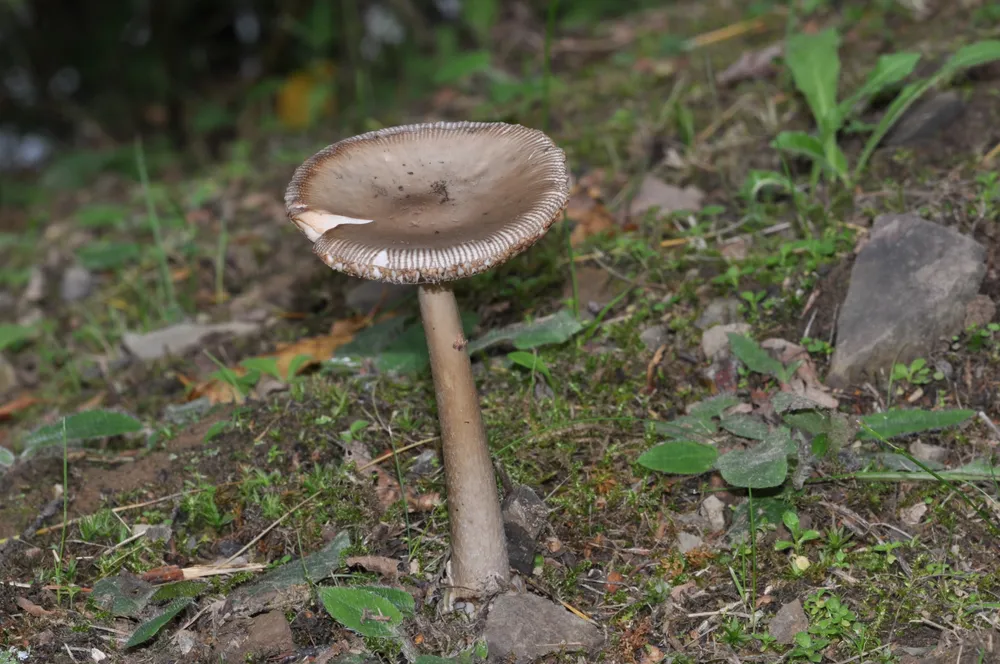
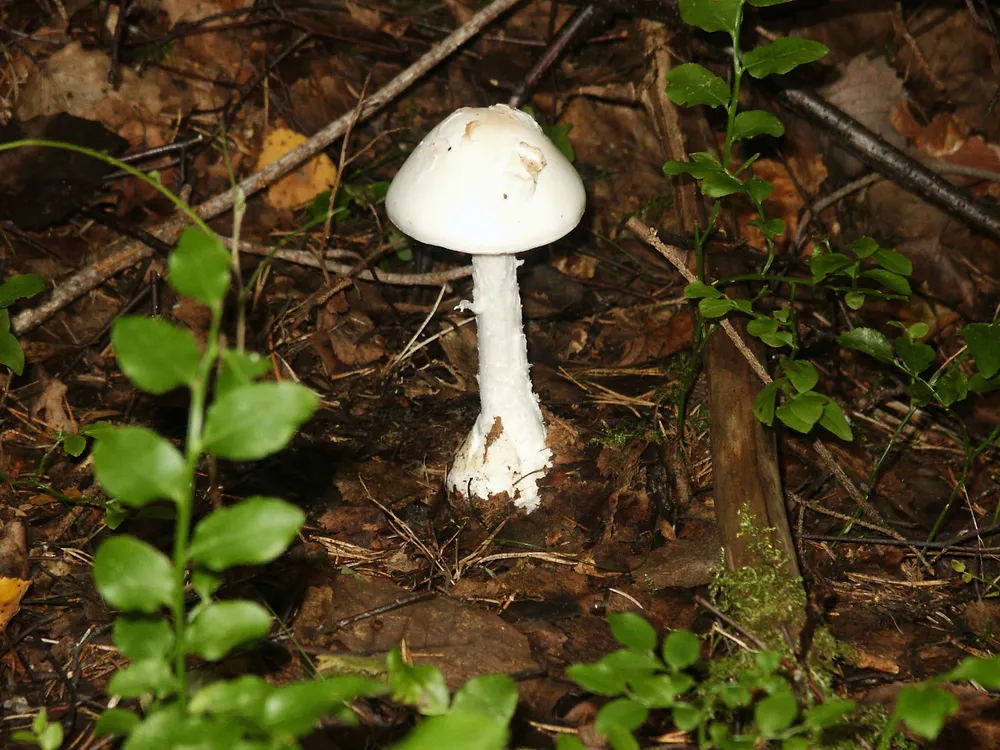
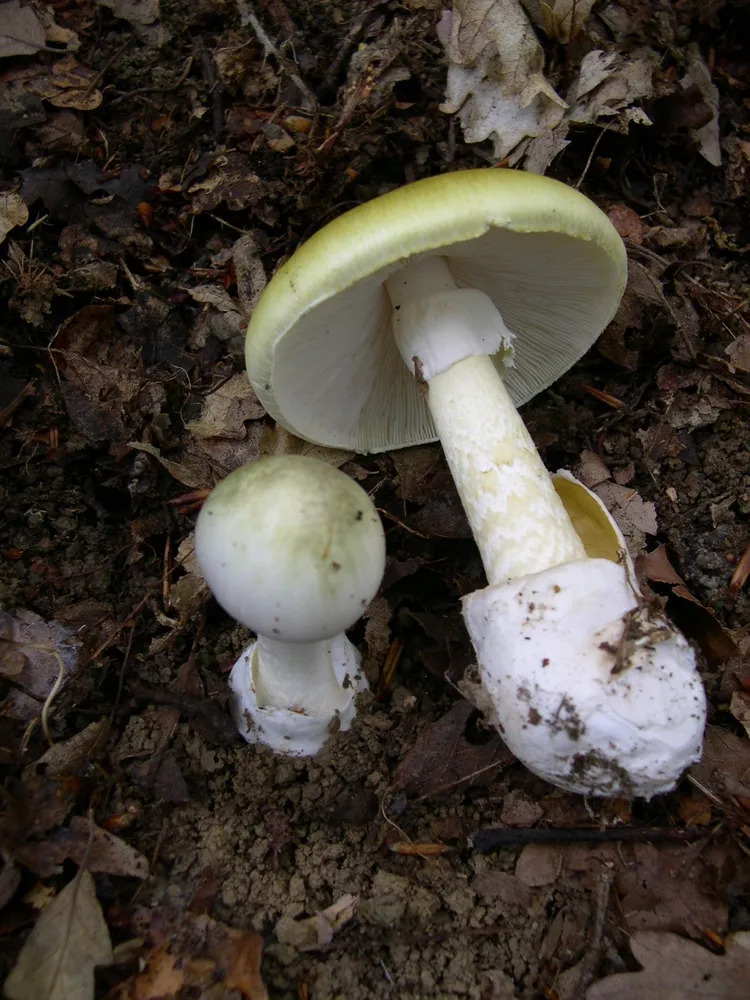
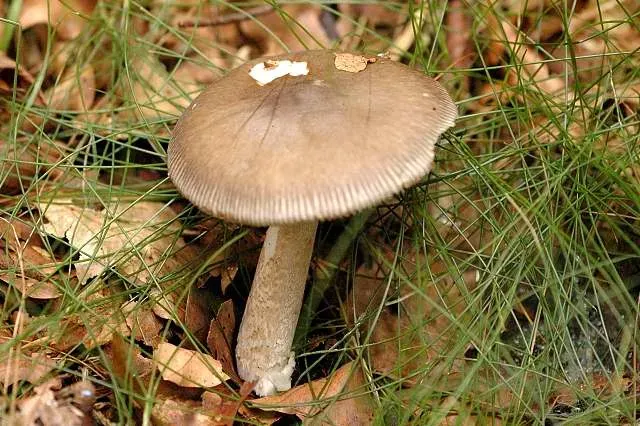
Related species
Mushrooms of the same genus and habitat — to study side by side and never mix up.
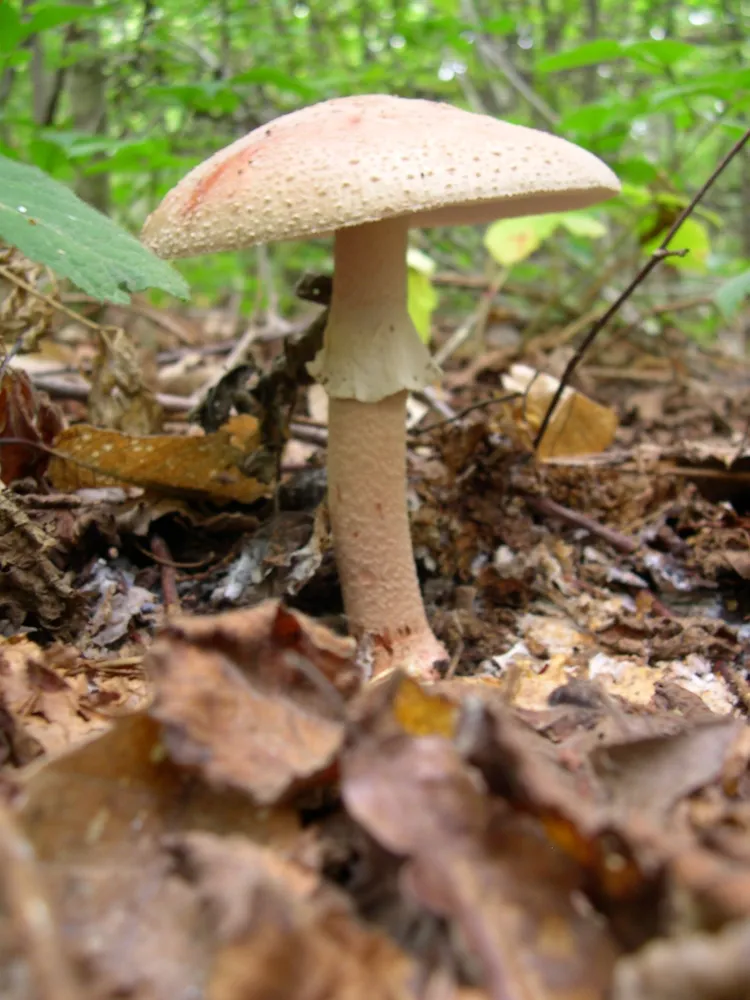
Blusher
Amanita rubescens
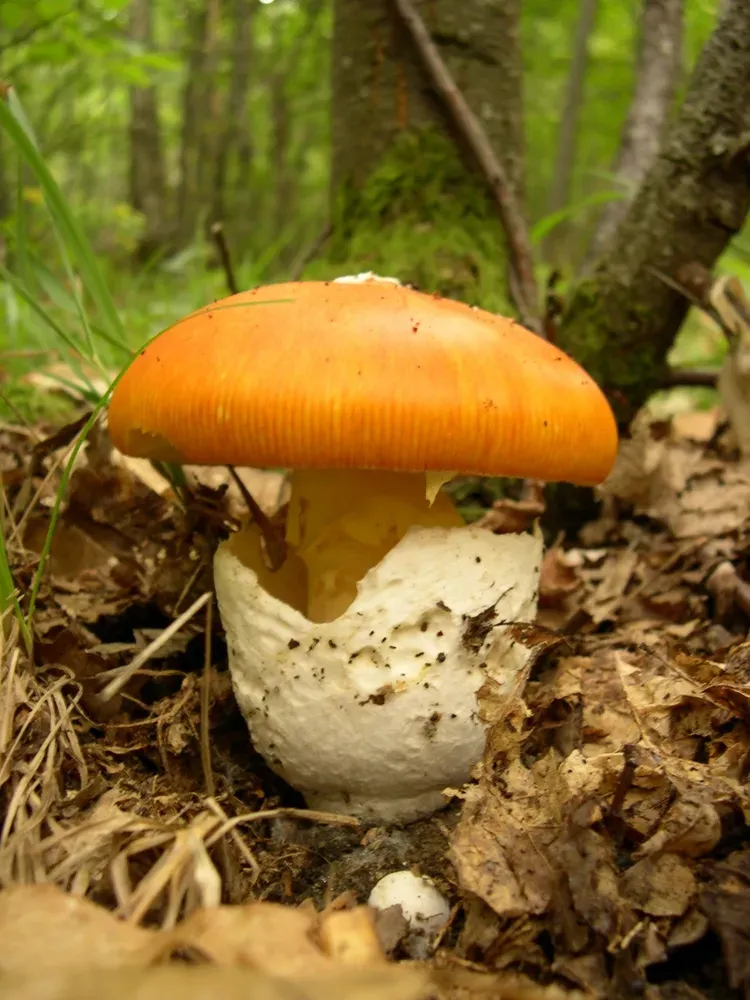
Caesar's mushroom
Amanita caesarea
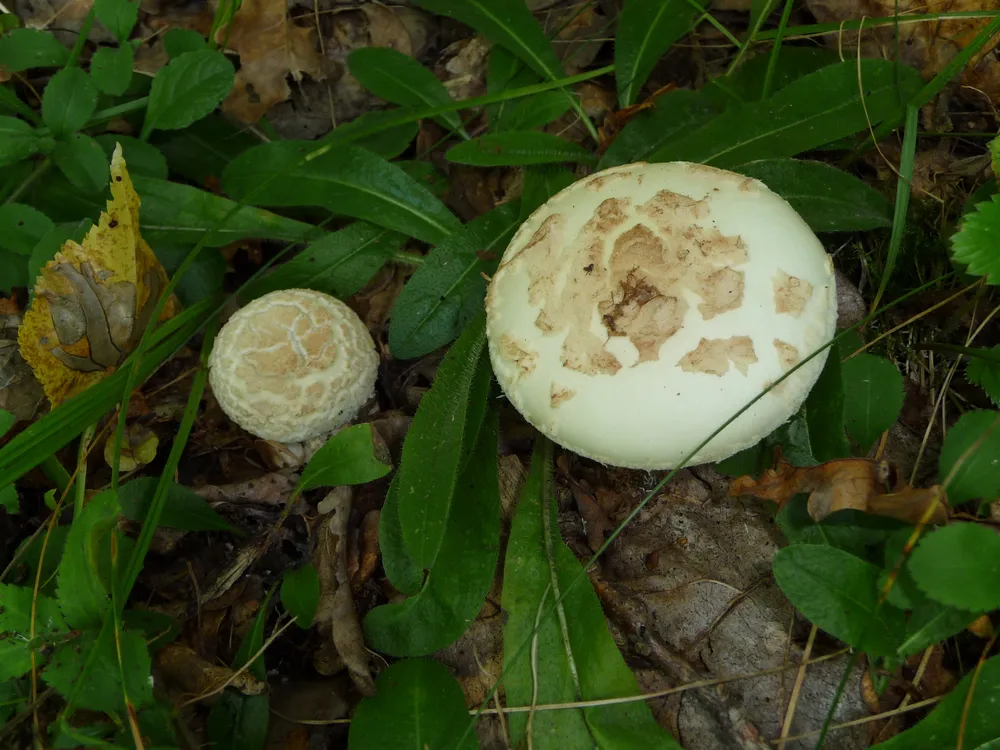
False death cap
Amanita citrina
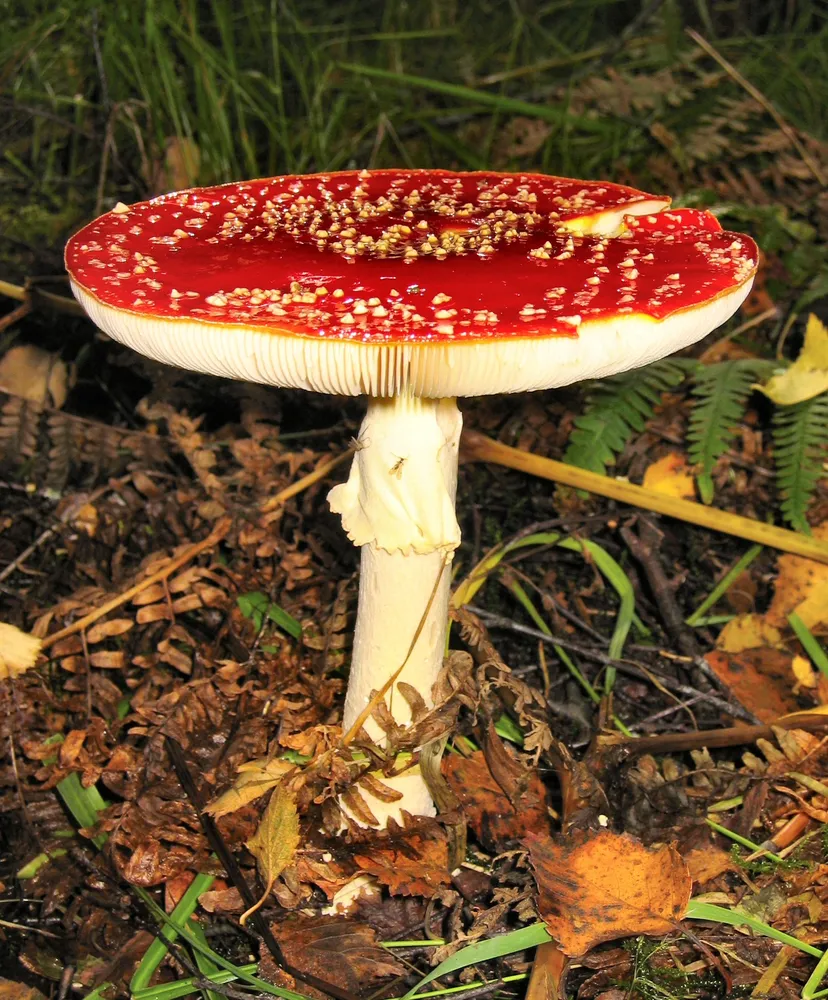
Fly agaric
Amanita muscaria
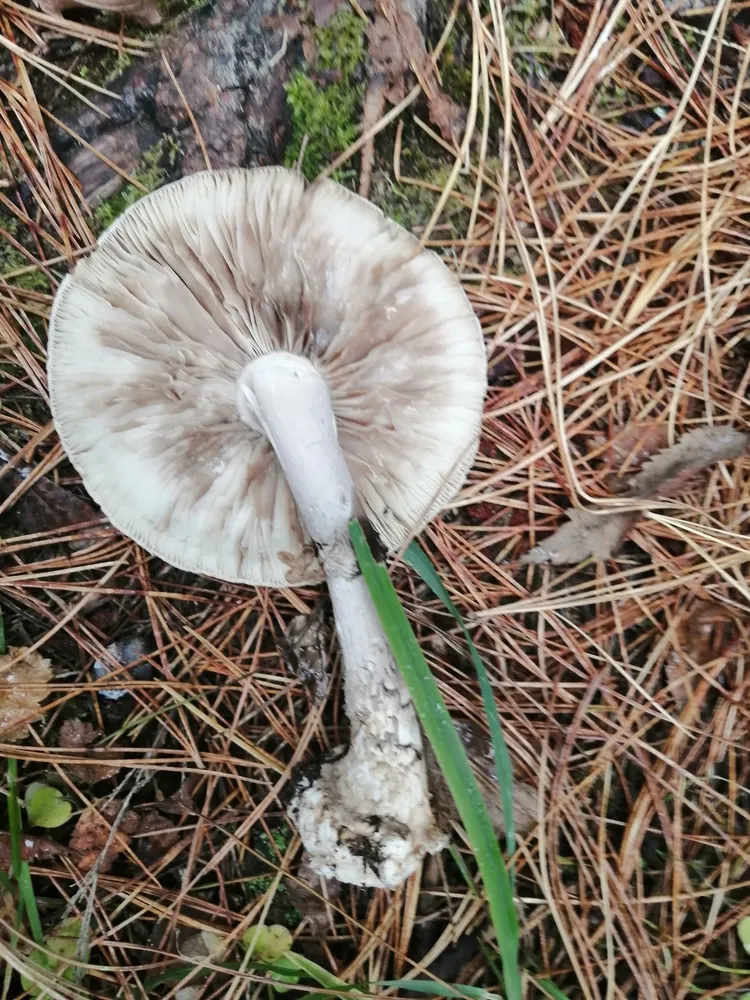
Grey veiled amanita
Amanita porphyria
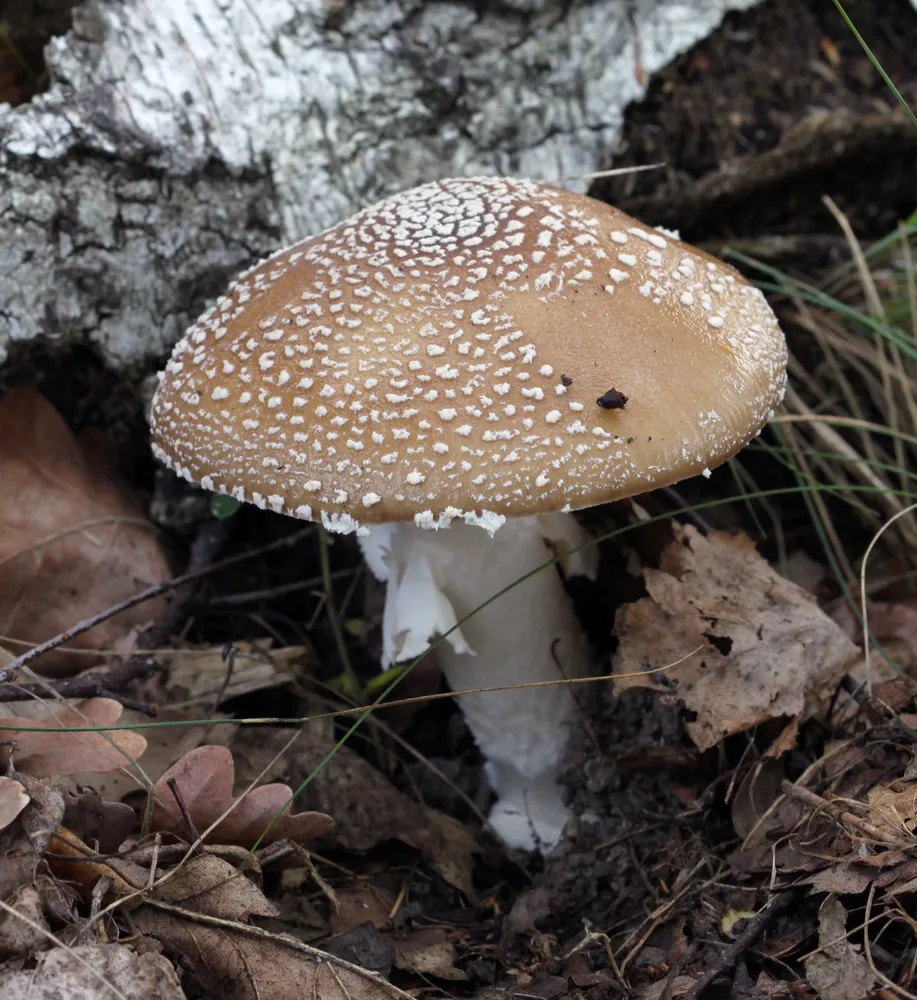
Panther cap
Amanita pantherina
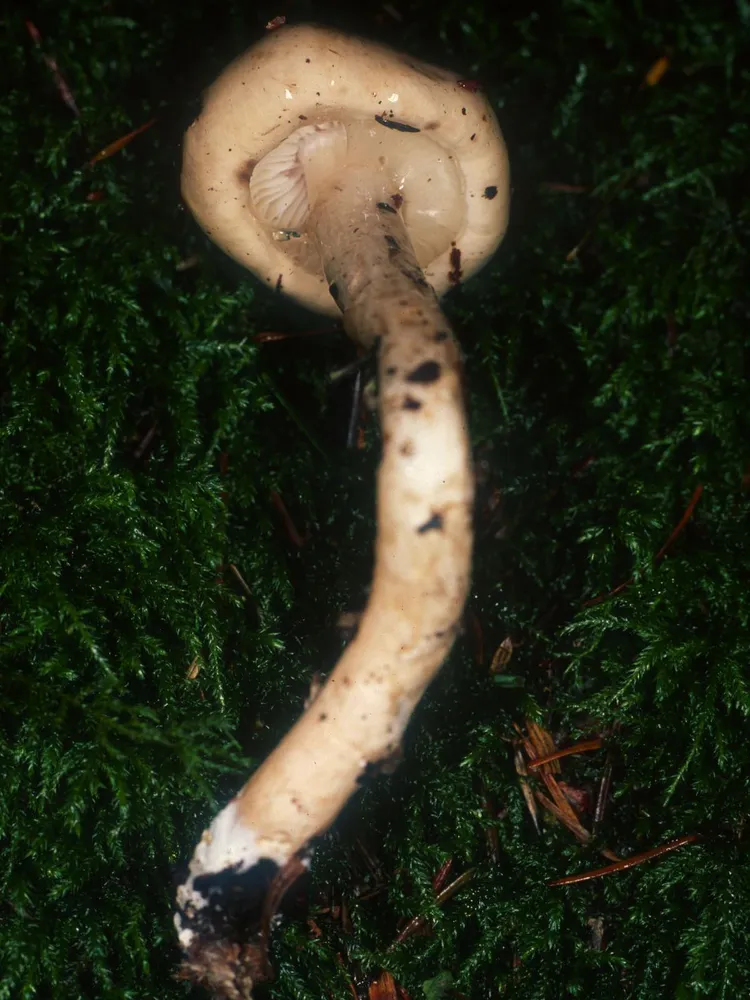
Dripping slimecap
Limacella illinita
Limacella delicata
Frequently asked questions
Can you eat it?
Technically yes, after mandatory boiling for 15-20 min. In practice, we do NOT recommend it, especially in Ukraine, because of the risk of confusing it with its deadly poisonous relatives in the genus Amanita. Its culinary value is modest, and there are plenty of safer alternatives.
How do you tell it from the destroying angel?
Two key features. (1) Cap color: the tawny grisette is tawny orange-brown. The destroying angel is completely white. (2) Ring on the stem: the destroying angel has a distinct white ring. The grisette has none. But young amanitas can have a hidden ring, so the rule is: no mushroom with a sac-like volva goes in the basket.
What if I want to try it in Europe, where people eat it?
In France and Italy it really is eaten, but only by experienced foragers who grew up in that culture and know the local mushroom flora. For a Ukrainian seeing the species for the first time in the Alps, the risk is the same. It's safer to taste it at a restaurant that serves it than to pick it yourself.
What happens if you mistake it for a deadly amanita?
If you mistake it for a destroying angel or a death cap (A. virosa, A. phalloides), about half of those poisoned die without treatment because of amatoxins; symptoms are delayed by 6-24 hours (most often 8-12), and without timely treatment, acute liver failure follows. It's not worth it.
Where does it grow?
In deciduous and mixed forests, mostly with birch, beech, and oak. It likes damp mossy forest edges and shady slopes. It forms mycorrhiza with these trees.
Which regions of Ukraine is it found in?
Throughout the forest and forest-steppe zones: the Carpathians, Prykarpattia, Polissia, and the forest-steppe. In the steppe, in floodplain oak groves.
When should you look for it?
More like "when to avoid it." July to October, peaking in August-September.
Which mushrooms is it confused with?
With other grisettes (A. vaginata, gray; A. crocea, saffron): all technically edible, all ringless amanitas. The real danger is confusing it with young A. virosa, A. phalloides, A. pantherina are deadly or severely poisonous. They have a ring on the stem (though it may be hidden). The rule: no mushroom with a volva goes in the basket.
Is Tawny grisette edible or poisonous?
Does Tawny grisette have gills or pores?
What does the cap of Tawny grisette look like?
What does the stem of Tawny grisette look like?
Sources
- [1]Вікіпедія (українська)
- [2]Атлас грибів України, Зеров Д.К. (1979)
- [3]MycoBank Database
- [4]Index Fungorum
- [5]GBIF
- [6]iNaturalist Ukraine