Amanita battarrae
Expert-verifiedUpdated June 13, 2026
Passport
- Edibility
- Conditionally edible
- Season
- Aug — Oct
- Hymenophore
- Gilled
- Cap color
- Grey
- Size
- Medium (5–15 cm)
- Smell
- Odorless
- Reviewed
- Yes ✓
Quick answers
Where to look?
Deciduous forest, Mixed forest
When does it appear?
Aug — Oct
Active months: August, September, October.
How to recognize it? Three signs
- Cap color: Grey, Brown
- Cap shape: Umbonate
- Smell: Odorless
Fruiting season
August – October
Description
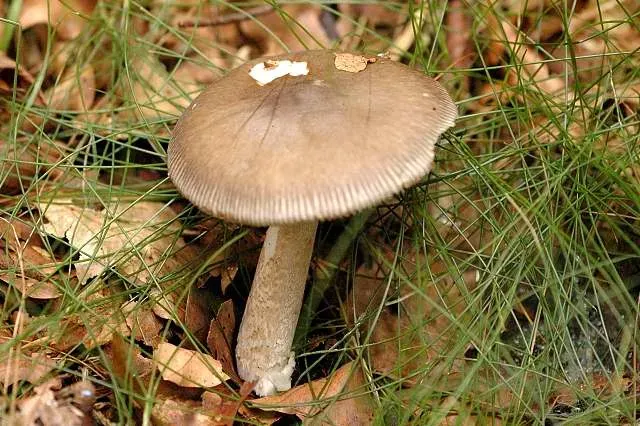
Amanita battarrae, or the “gray-zoned ringless amanita”, is one of three Ukrainian representatives of the so-called “ringless” amanitas (section Vaginatae). Like its close relatives — the grisette and the tawny grisette — it has no ring on the stem, but it does have a clearly visible white sack-like volva at the base. Finding this species in our forests is a rare event, because the mushroom prefers the warm broadleaf and oak-beech forests of Southern Europe.
In Ukraine it is reliably known from Zakarpattia, Prykarpattia, the Carpathians and the southern regions of the Forest-Steppe. It forms mycorrhiza mainly with beech, less often with oak and birch. It does not occur in the northern regions or the steppe. Like all amanitas, it needs careful identification: its relatives include deadly species (Amanita phalloides, A. virosa), so beginners are better off not picking this genus at all.
Edibility — conditional. In a number of European countries (Italy, Poland) the mushroom is considered edible after thorough boiling. However, in some people it can cause gastrointestinal upset, especially when eaten raw or undercooked. The general recommendation: boil for 15–20 min and discard the first water, then stew. Still, because of its resemblance to dangerous amanitas and its limited culinary value, we recommend simply not picking this species. All experienced foragers in Ukraine steer clear of amanitas.
Cap
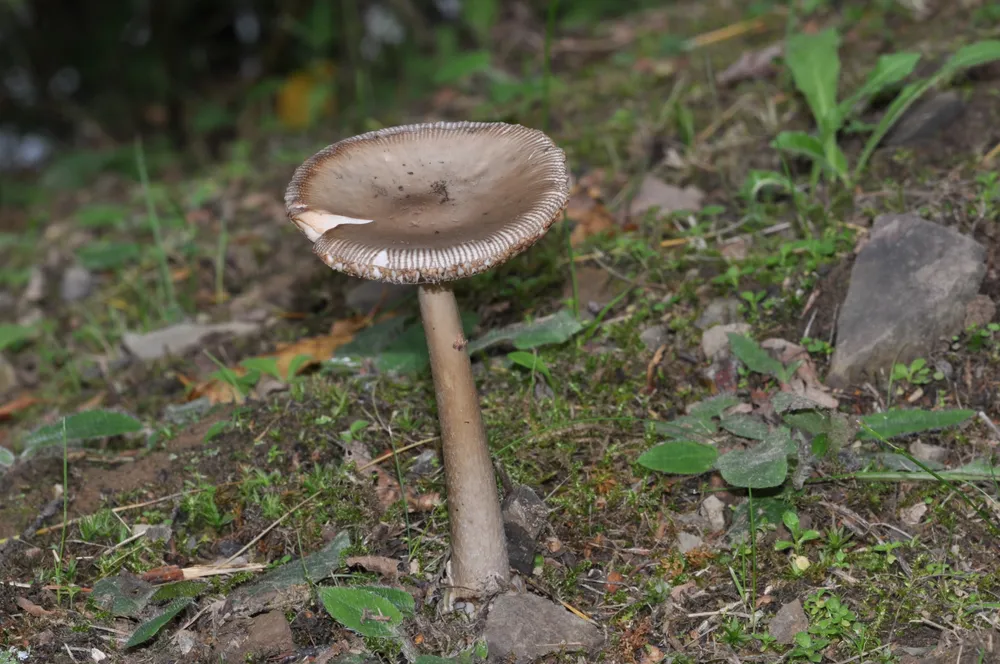
Cap 5–10 cm, bell-shaped in young mushrooms, then flattening to plano-convex with a small umbo in the center. Gray-brown with a distinctive zoned pattern — concentric darker bands near the margin. The margin is noticeably radially striate. Surface matte, slightly sticky in wet weather.
Hymenophore
Gills free, white, crowded. Spore print white.
Stem
Stem 7–12 cm tall, 0.8–1.5 cm thick, cylindrical, more slender than the cap. White or cream, sometimes with faint grayish scale-like patches. THERE IS NO RING — this is the key feature of section Vaginatae. At the base — a large, white, sack-like volva (remnants of the veil).
Flesh
Flesh white, thin, brittle. Does NOT change color when cut. Springy in young mushrooms, crumbly in mature ones.
Smell
Smell faint, neutral, described in some sources as slightly radish-like. Taste (only after cooking) — mild, with no pronounced notes.
Lookalikes
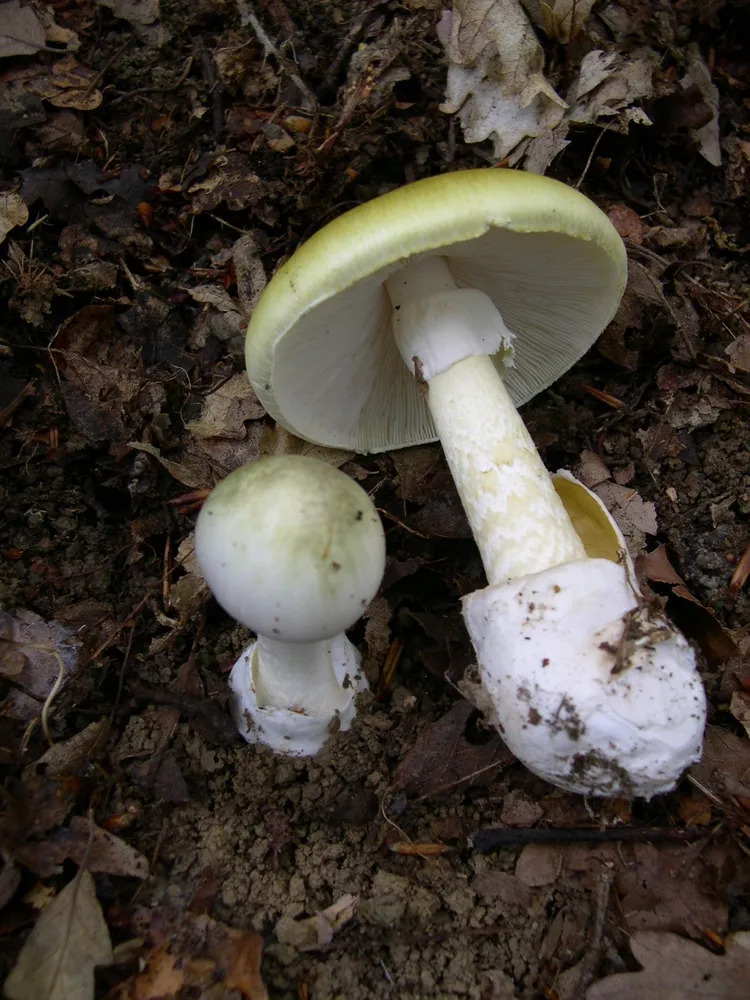
Related species
Mushrooms of the same genus and habitat — to study side by side and never mix up.
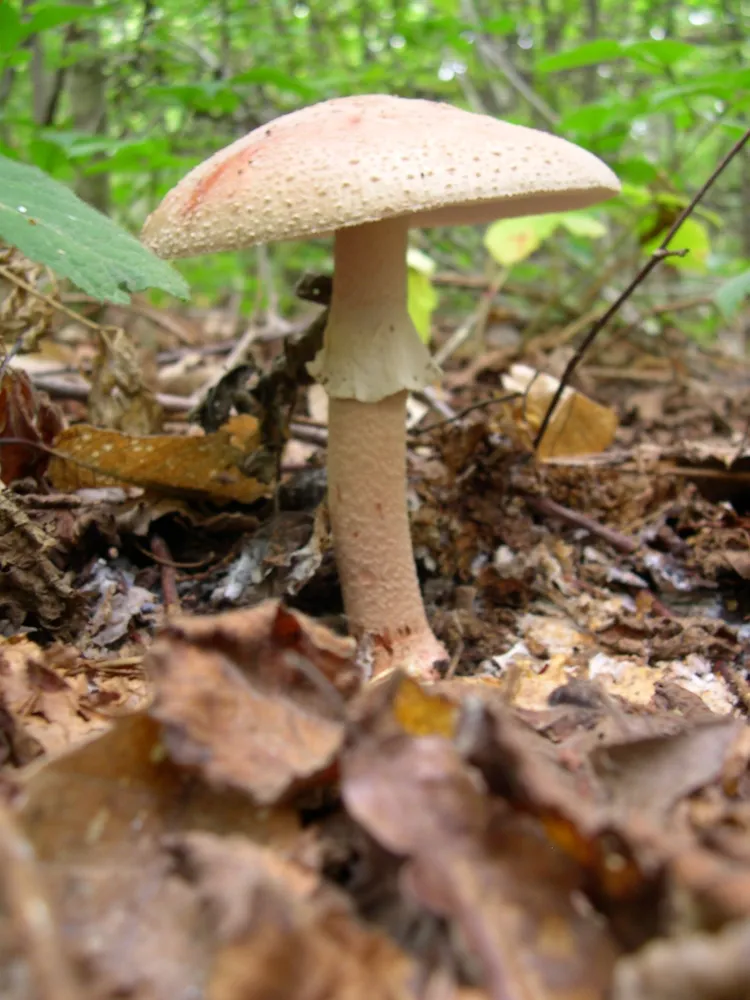
Blusher
Amanita rubescens
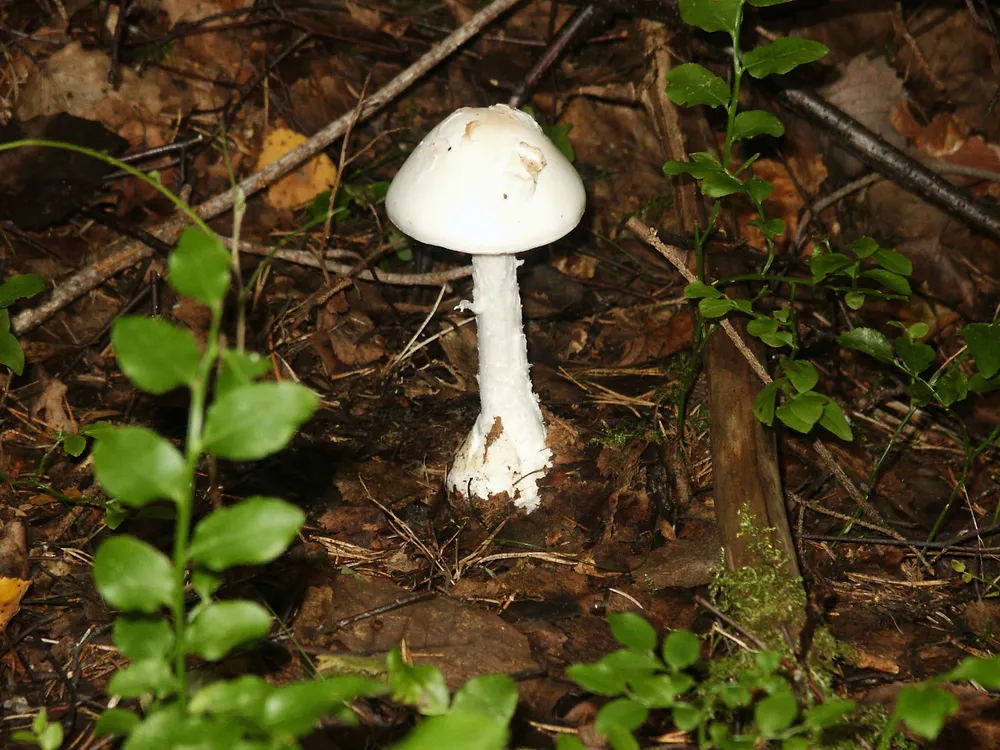
Destroying angel
Amanita virosa
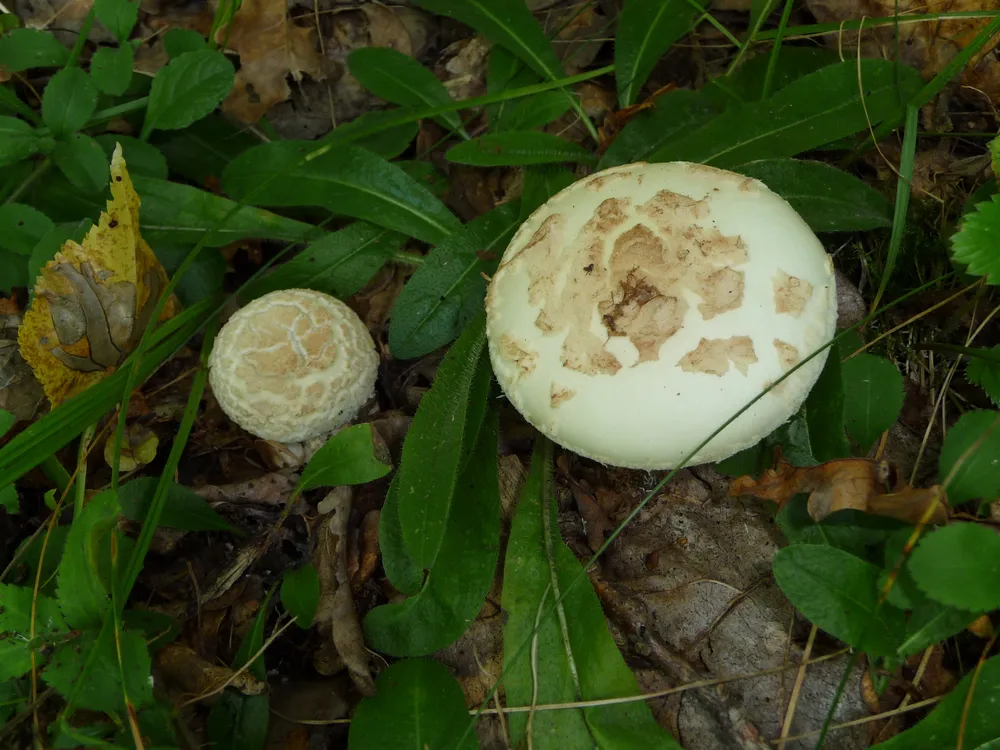
False death cap
Amanita citrina
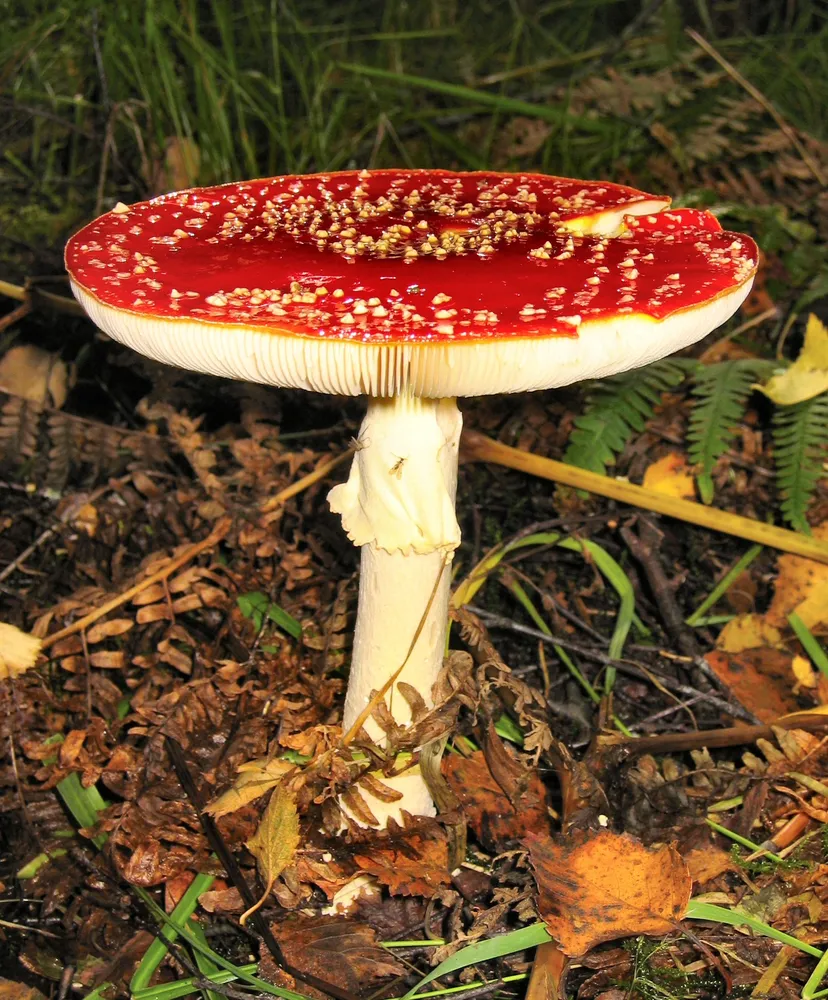
Fly agaric
Amanita muscaria
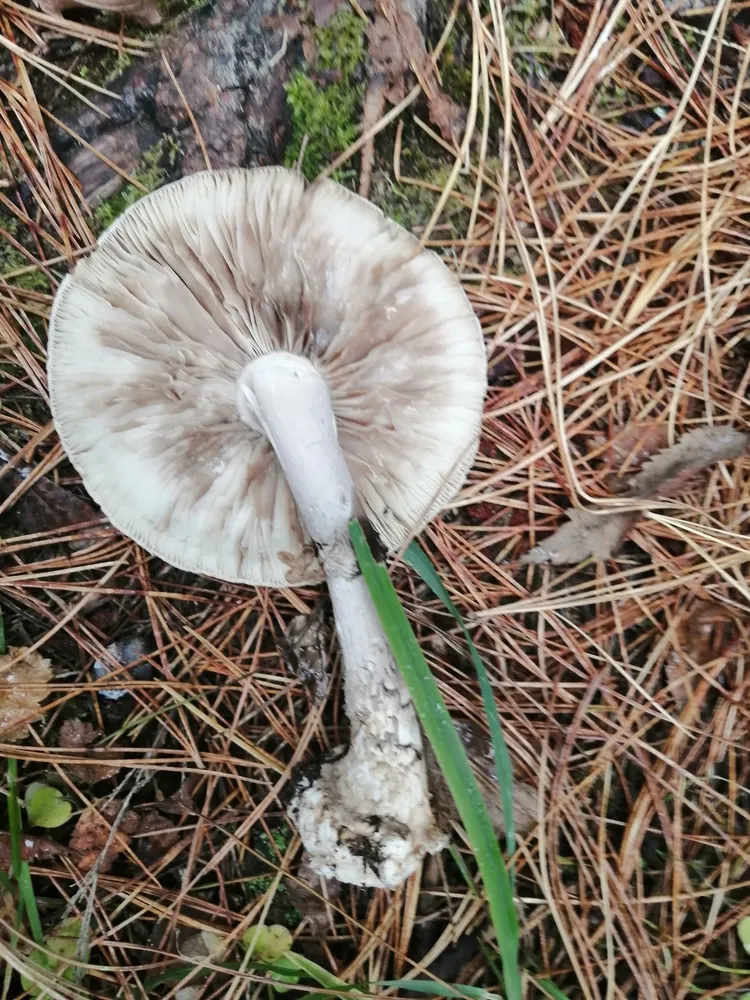
Grey veiled amanita
Amanita porphyria
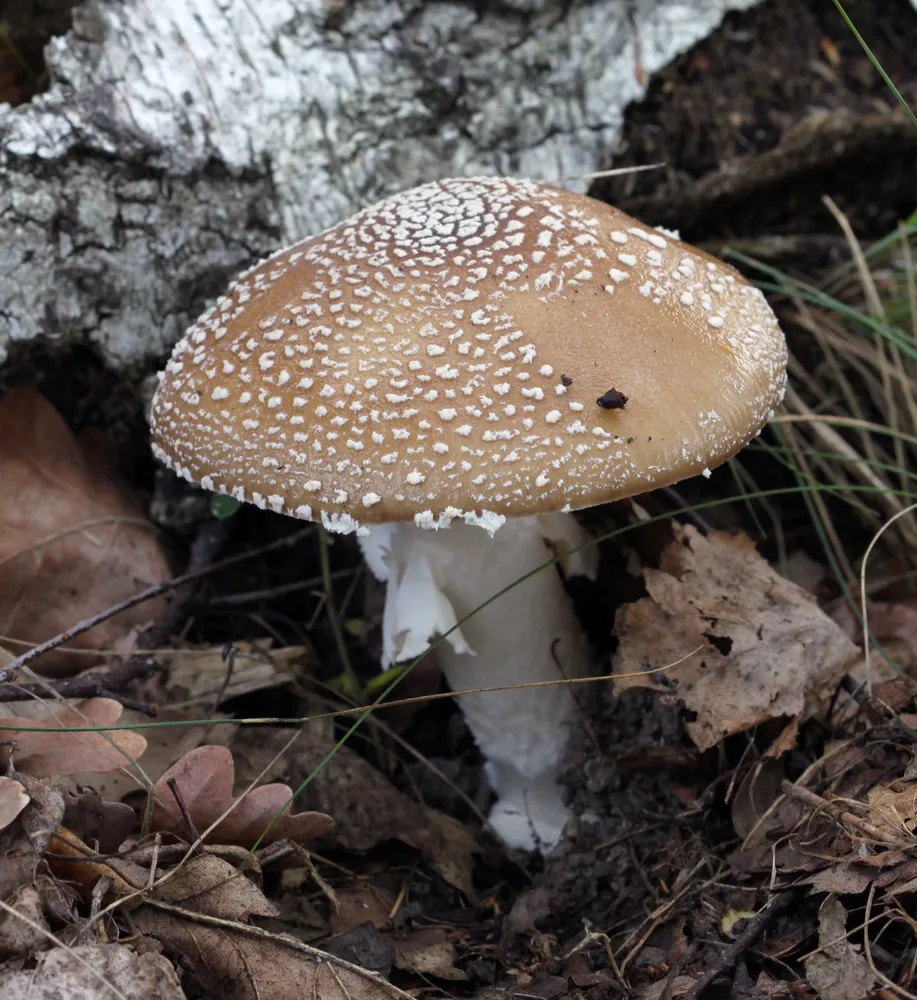
Panther cap
Amanita pantherina
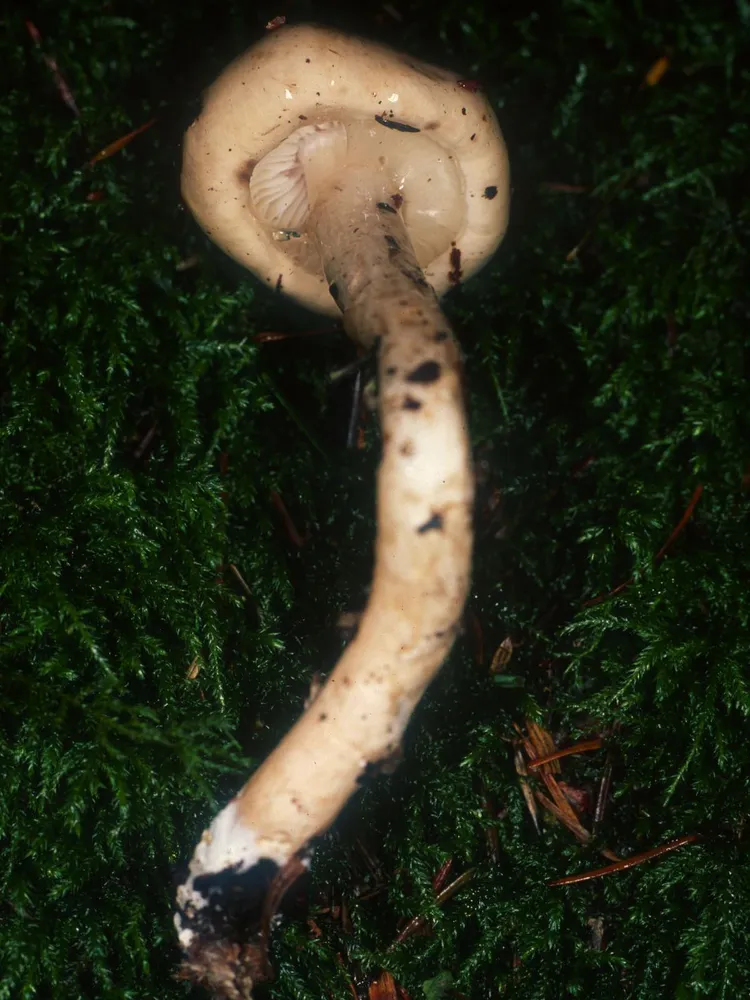
Dripping slimecap
Limacella illinita
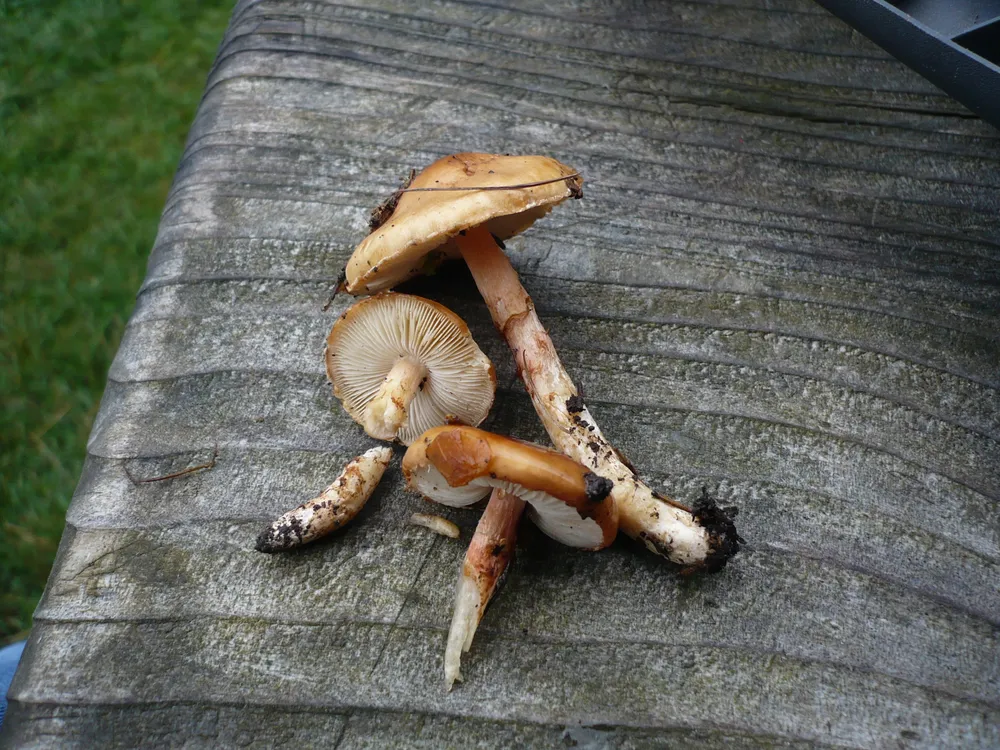
Limacella delicata
Frequently asked questions
Is it safe to pick?
We do NOT recommend it. Although the mushroom is formally conditionally edible, the genus Amanita includes deadly poisonous species (the death cap A. phalloides, the destroying angel A. virosa) that look similar. A misidentification can cost a life. Unless you are a professional mycologist, it's best not to pick amanitas at all.
How is it different from the death cap?
The death cap (Amanita phalloides) has a greenish olive or yellowish cap, while Amanita battarrae has a gray-brown cap with a zoned pattern. The death cap has a ring on the stem; Amanita battarrae has no ring. However, cases of mixed features do occur — one more argument against picking the genus Amanita without professional identification.
Where to look in Ukraine?
Beech, oak-beech and mixed forests of Zakarpattia, Prykarpattia, the Carpathians and the southern Forest-Steppe. It loves warm, shaded ravines, forest edges and sun-warmed slopes. It does not grow in the northern and eastern regions.
When does it fruit?
From August to October, peaking in September. It loves a warm, moderately moist autumn.
How is it different from the grisette?
The grisette (Amanita vaginata) has a uniformly gray cap with no zoned pattern. Amanita battarrae has distinctive concentric darker bands near the margin. Both lack a ring, both have a volva. Both are considered conditionally edible in Europe.
What are “ringless amanitas”?
Section Vaginatae in the genus Amanita is made up of species with no ring on the stem (unlike the “classic” amanitas — the fly agaric, Caesar's mushroom, the death cap). They do, however, keep the volva. This section includes the grisette, Amanita battarrae, the tawny grisette and others.
Which trees does it form mycorrhiza with?
Mainly beech (Fagus sylvatica), less often oak, birch and hornbeam. In the Carpathians it is often found in beech forests of the lower and middle elevation zones.
Why do people eat it in Poland, while you recommend not picking it in Ukraine?
Because of poisoning statistics. Poland has fewer cases of confusion with the death cap (different geography, different companion species). In Ukraine, fatal death cap poisonings happen regularly. The safer approach: avoid the genus Amanita entirely, even the “edible” species.
Is Amanita battarrae edible or poisonous?
Does Amanita battarrae have gills or pores?
What does the cap of Amanita battarrae look like?
What does the stem of Amanita battarrae look like?
Sources
- [1]Вікіпедія (українська)
- [2]Атлас грибів України, Зеров Д.К. (1979)
- [3]MycoBank Database
- [4]Index Fungorum
- [5]GBIF
- [6]iNaturalist Ukraine