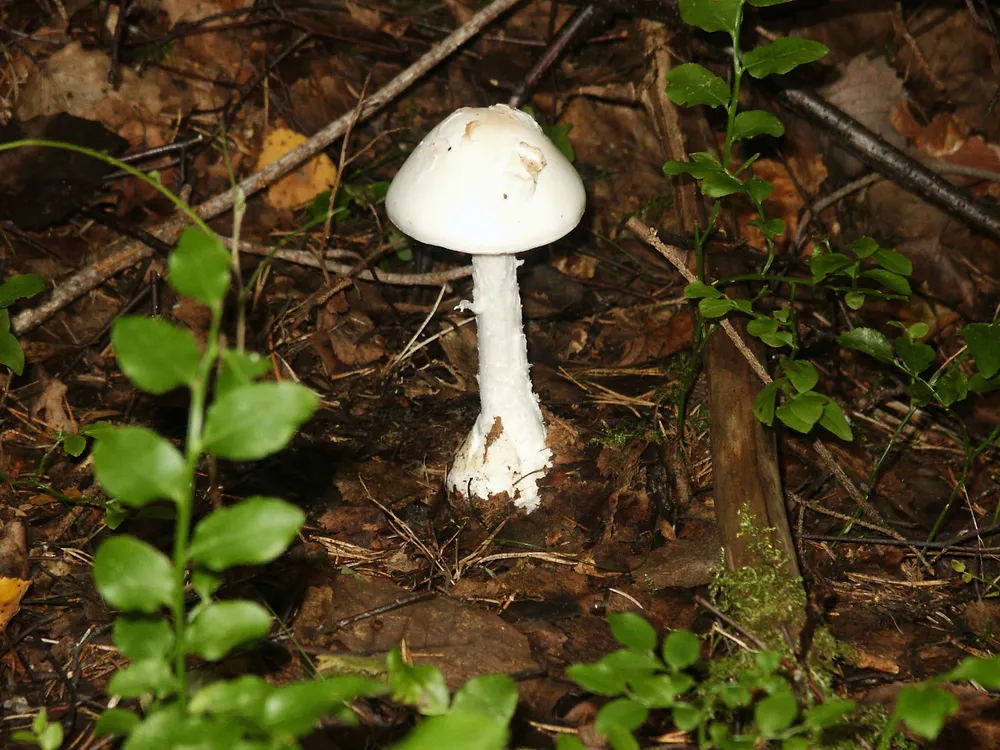
Destroying angelAmanita virosa
Expert-verifiedUpdated October 3, 2026
Passport
- Edibility
- Deadly poisonous
- Season
- Jul — Oct
- Hymenophore
- Gilled
- Cap color
- White
- Size
- Medium (5–15 cm)
- Smell
- Chemical
- Reviewed
- Yes ✓
DEADLY POISONOUS
Eating it can cause death. Do not pick it and do not taste it.
It contains amatoxins (α-amanitin, β-amanitin, γ-amanitin) and phallotoxins — the most powerful natural liver toxins known. A single mushroom contains a lethal dose for an adult. Symptoms develop in three phases:
Phase 1 (6-24 hours after eating, most often 8-12) — acute gastroenteritis: severe nausea, vomiting, abdominal pain, watery or bloody diarrhea, dehydration. Lasts 12-24 h.
Phase 2 (36-72 h after eating) — "deceptive improvement": the gastroenteritis subsides, the person feels better and often leaves the hospital. This is the most dangerous moment — meanwhile, the toxins are already destroying liver cells.
Phase 3 (from day three) — acute liver and kidney failure: jaundice, bleeding, encephalopathy, coma. It can end in death from liver failure or require a liver transplant.
What to do if you suspect poisoning: call an ambulance immediately, don't wait for symptoms — the best results come from treatment started within the first 36 hours after eating; but you should still go later, because late does not mean pointless. Treatment: silibinin (intravenous), intensive care, activated charcoal (repeated doses), hemodialysis, IV fluids. Keep the mushroom remains (from the cap, the soil where it was found) — this is critical for identifying the toxin.
Prevention: no white gilled mushroom with a ring and a volva goes into the basket. No exceptions. Agaricus mushrooms and parasols have fundamentally different features (see the FAQ).
If you suspect poisoning, call an ambulance immediately: 112 (the European emergency number) or your local emergency number
Quick answers
Where to look?
Conifer forest, Mixed forest
When does it appear?
Jul — Oct
Active months: July, August, September, October.
How to recognize it? Three signs
- Cap color: White, Cream
- Cap shape: Convex
- Smell: Chemical
Fruiting season
July – October
Description
The destroying angel (Amanita virosa), known in Western literature as the "angel of death" (destroying angel), is one of the most dangerous mushrooms on the planet and a deadly poisonous inhabitant of Ukrainian forests. On the outside it is an entirely white mushroom: a white cap, a white stem with a ring, a white sac-like volva at the base, white gills. No warning colors, no "alarming" signs to an inexperienced eye. That is exactly where its deadly danger lies: a young specimen looks innocent, like a young Agaricus mushroom, a parasol or a young Tricholoma.
It contains amatoxins (α-amanitin) — the same class of toxins as in the death cap (Amanita phalloides). Poisoning symptoms are delayed by 6-24 hours (most often 8-12) after eating, which makes this species treacherous: you have already forgotten you ate a mushroom by the time the signs begin. Amatoxins destroy liver and kidney cells. Without treatment, about half of those poisoned die; with modern intensive care started in time, about 10%. The specific drug is intravenous silibinin; supportive therapy includes hemodialysis, IV fluids and, in extreme cases, a liver transplant. A single mushroom can contain a lethal dose for an adult.
In Ukraine it occurs mainly in conifer and mixed forests of the Carpathians, Prykarpattia and Polissia, less often in the forest-steppe. It forms mycorrhiza with spruce, pine and birch. Season: July — October, peaking in August-September. THE GOLDEN RULE: no white mushroom with a ring + a volva in the forest goes into the basket. No tasting, no "I'll just try it on my tongue" — touching it carries essentially zero risk through the skin, but you must never swallow it. If you find one, take a photo for iNaturalist UA, don't handle it, and wash your hands after your walk.
Cap
Cap 5-12 cm across, hemispherical to egg-shaped in young mushrooms, becoming convex to flat with age. Color entirely white, creamy white, slightly yellowish in the center in old specimens. Surface smooth, slightly sticky in wet weather. No scales, no warts, no veil on the mature cap (unlike the fly agaric or Caesar's mushroom).
Hymenophore
Gilled hymenophore — gills white, free (not attached to the stem), moderately crowded. Spore print white. Compared with Amanita section Phalloideae: the gills are always white and free, even in mature specimens.
Stem
Stem 8-15 cm tall, 1-2 cm thick, cylindrical, long, slender, with a sac-like volva at the base (a remnant of the universal veil that looks like an eggshell). Color entirely white. In the upper part — a white membranous ring; firm in young specimens, may disappear in old ones. The stem surface often has thin white flaky scales and fibers.
Flesh
Flesh firm, entirely white. It does not change color when cut (unlike, for example, Agaricus mushrooms, which turn pink and darken). The smell gradually becomes unpleasant, with a hint of stale potato or chlorine — hence the epithet "stinking" in its Ukrainian name. In young mushrooms the smell is still faint, so don't rely on it as the only sign.
Smell
Faint and unpleasant, with a hint of old potato, chlorine or fish — especially in old specimens and when the flesh is damaged. Not diagnostic for safety: the smell develops only after some time, and a young mushroom with no distinct smell can still end up in the basket and cause fatal poisoning.
Lookalikes
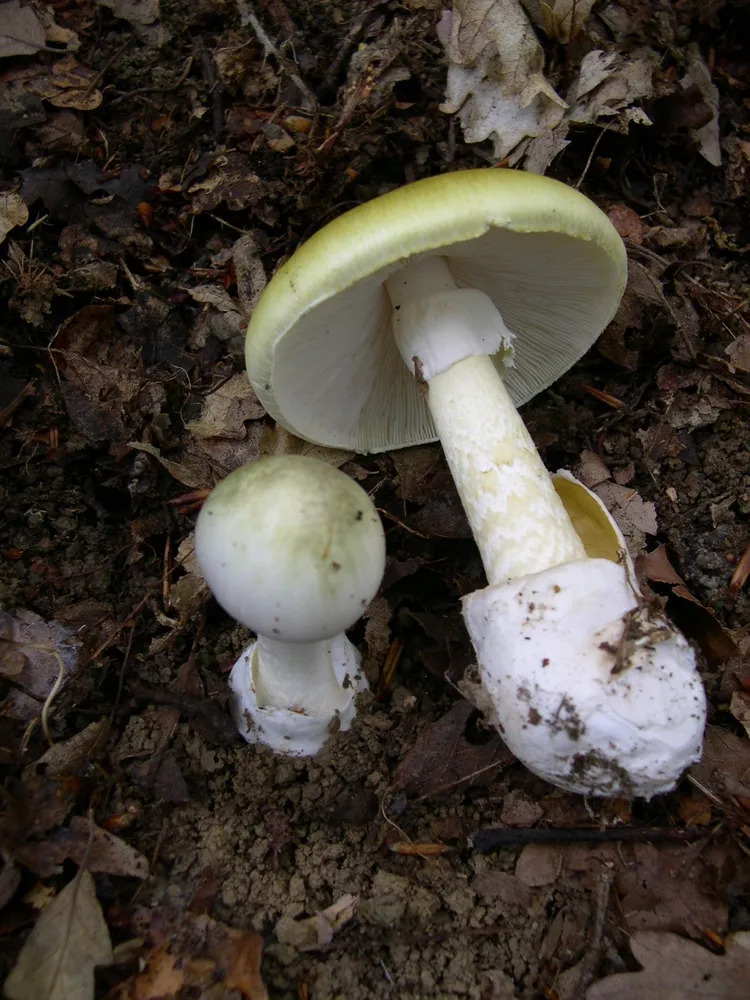
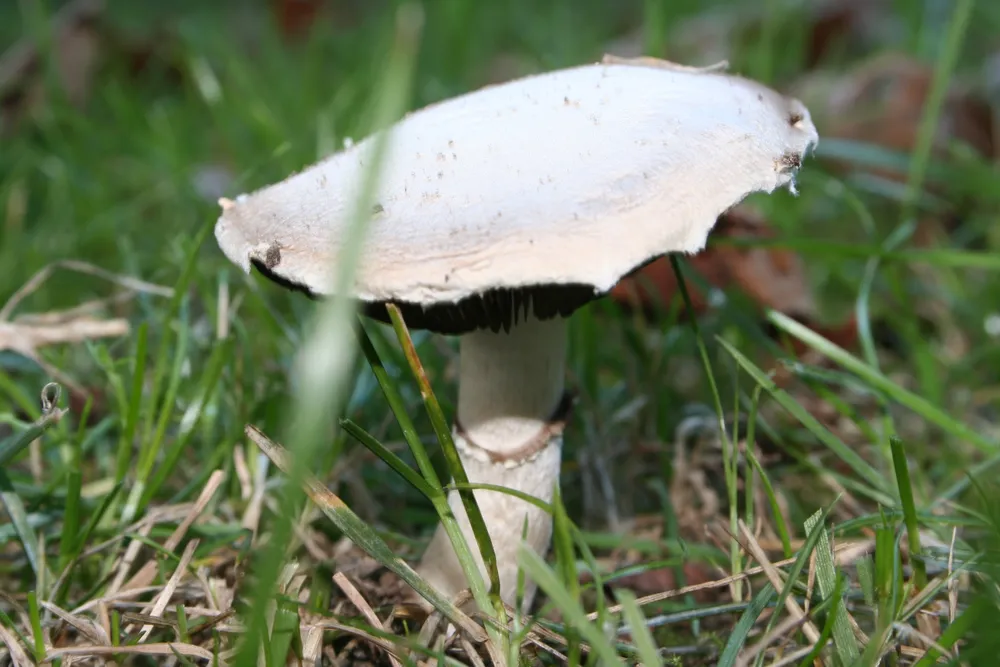
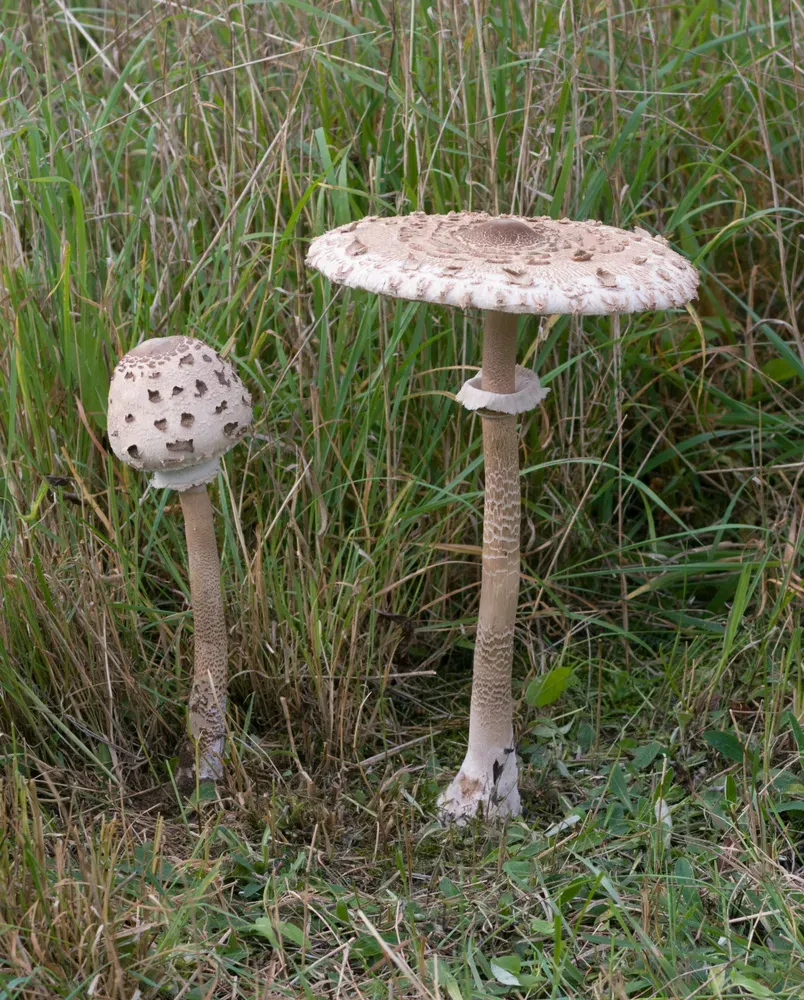
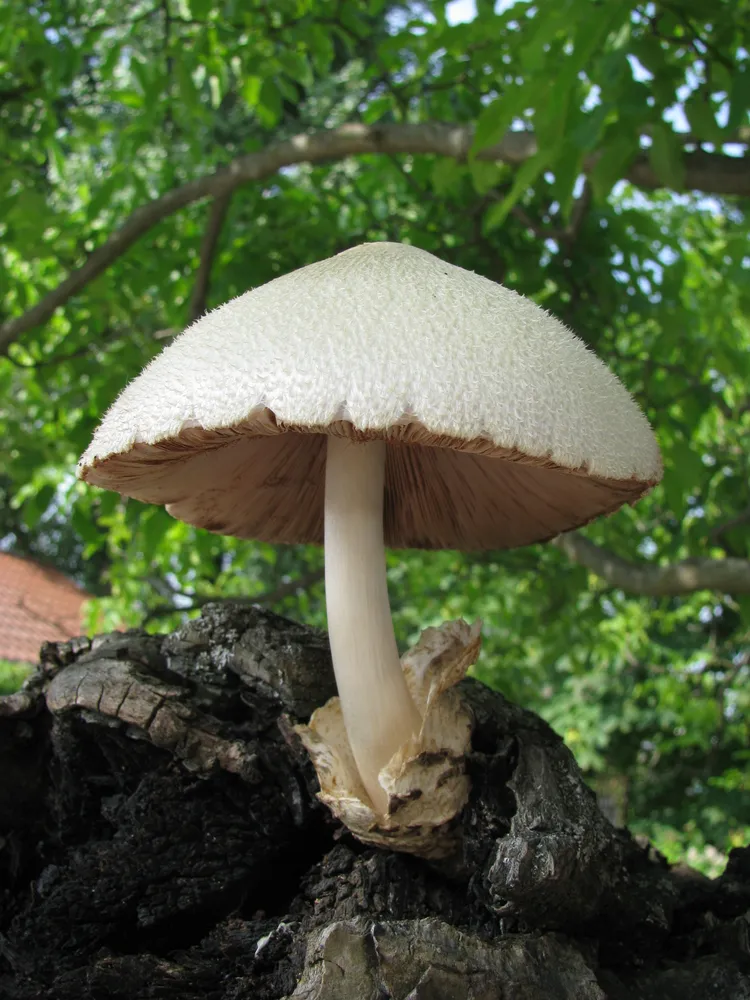
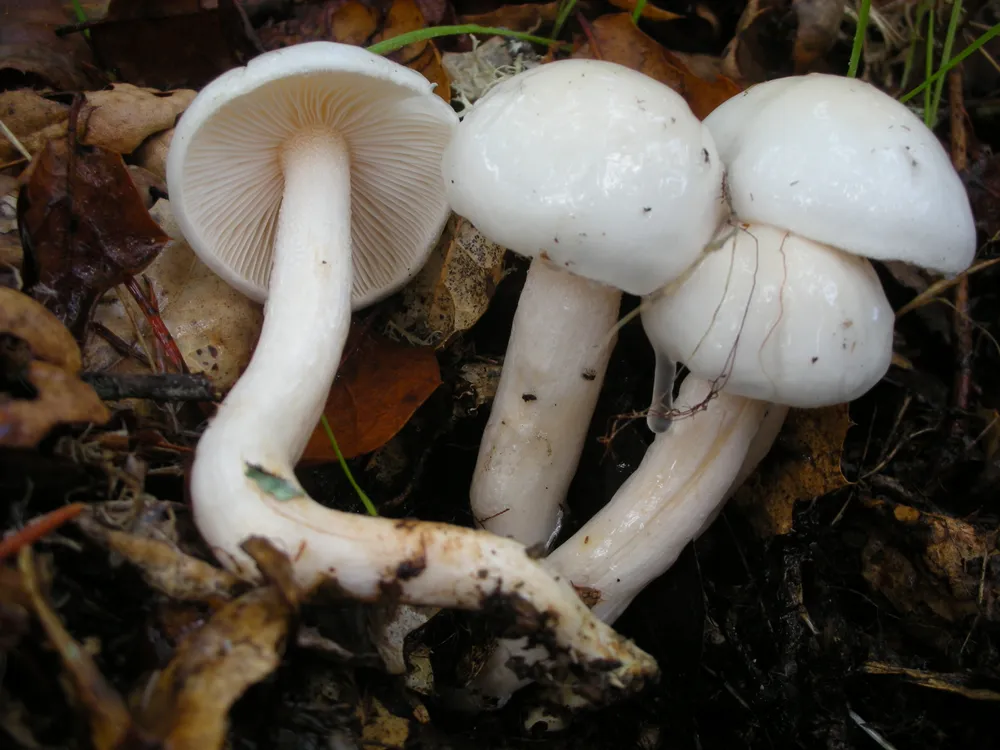
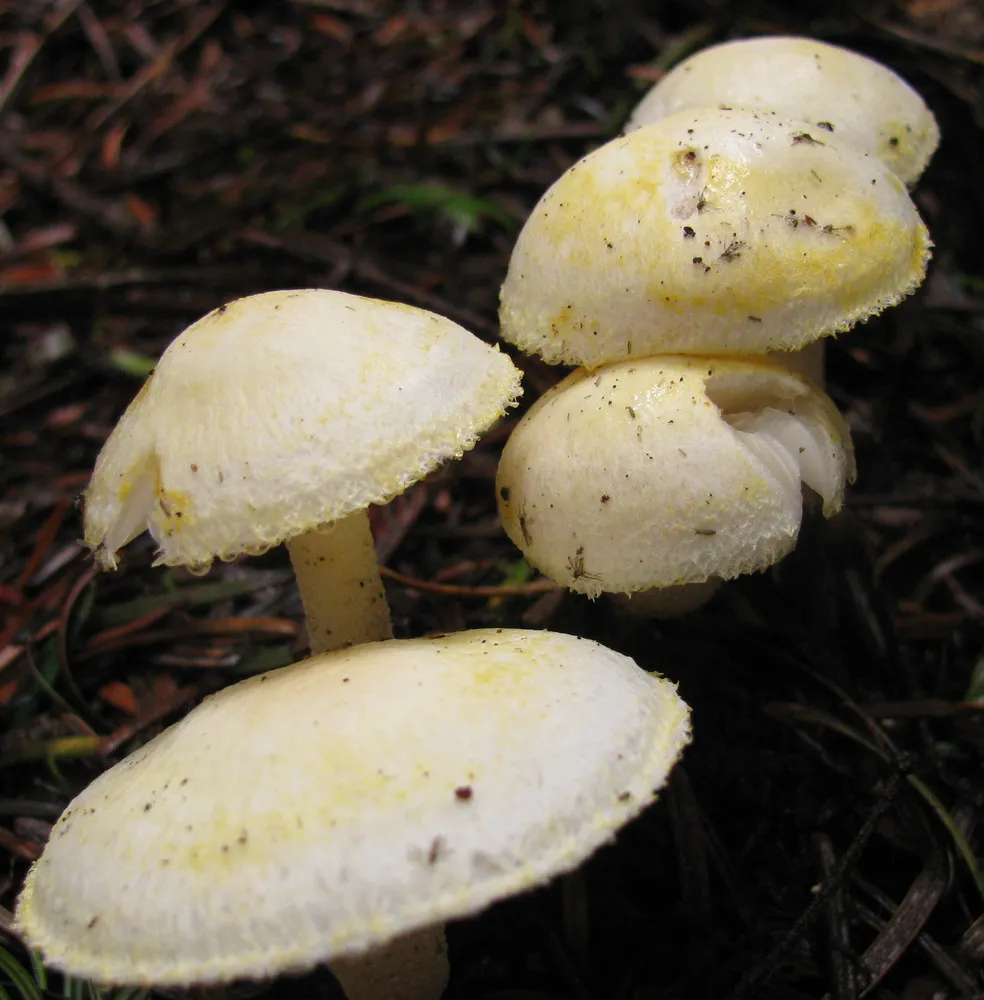
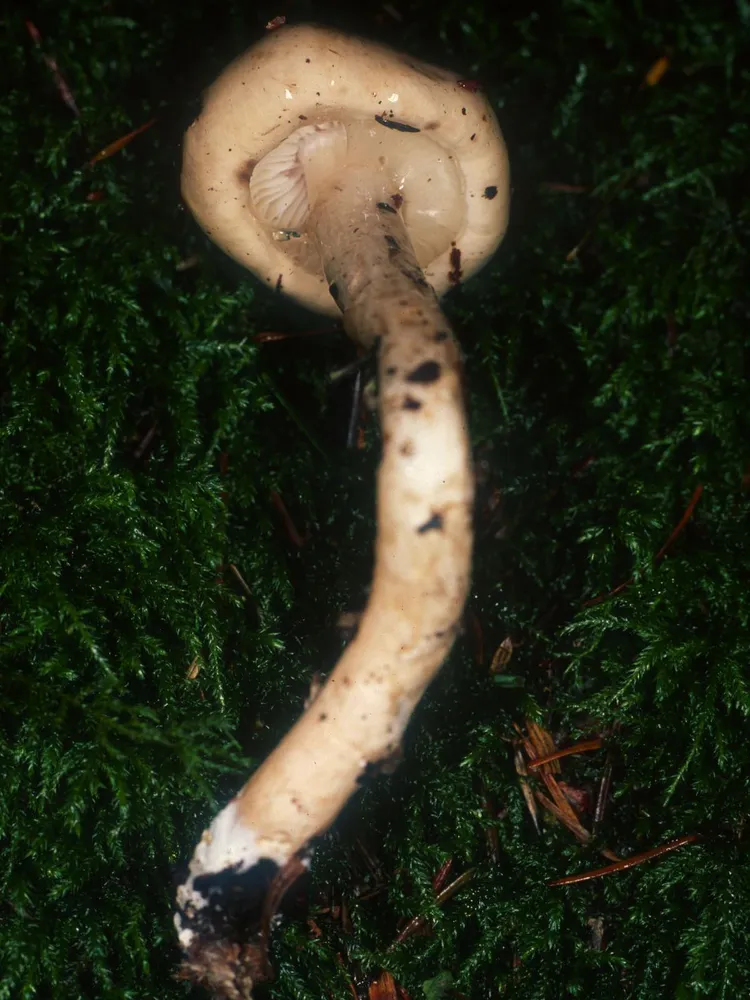
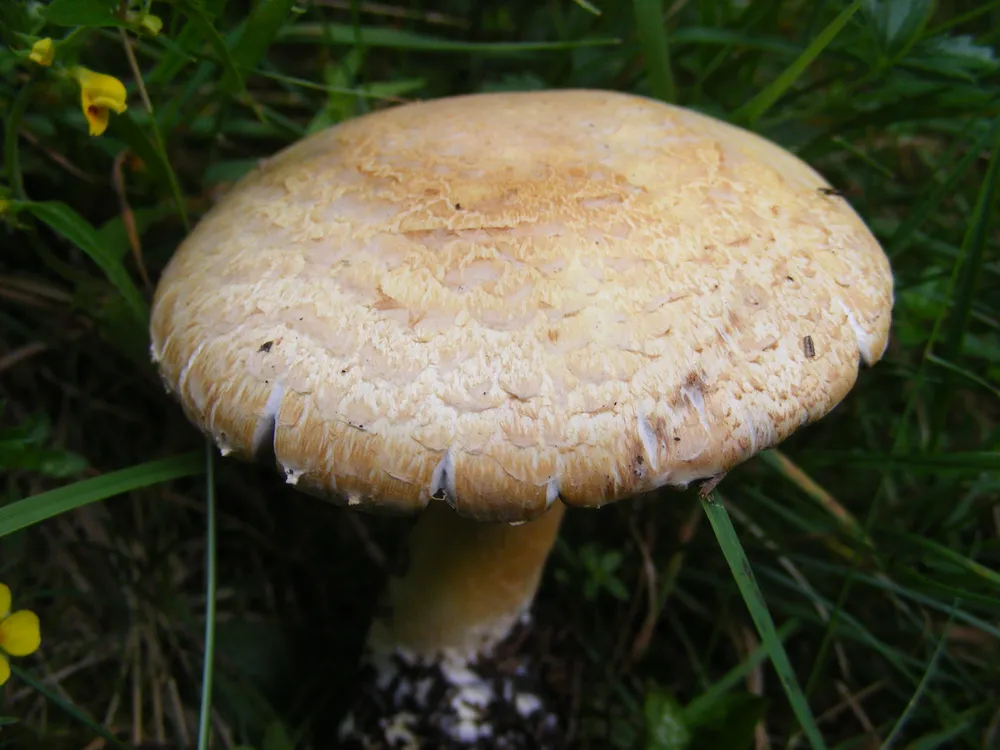
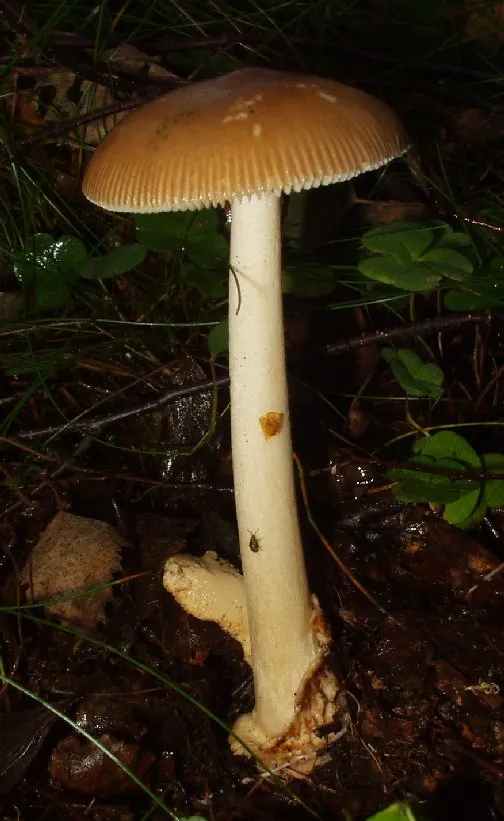
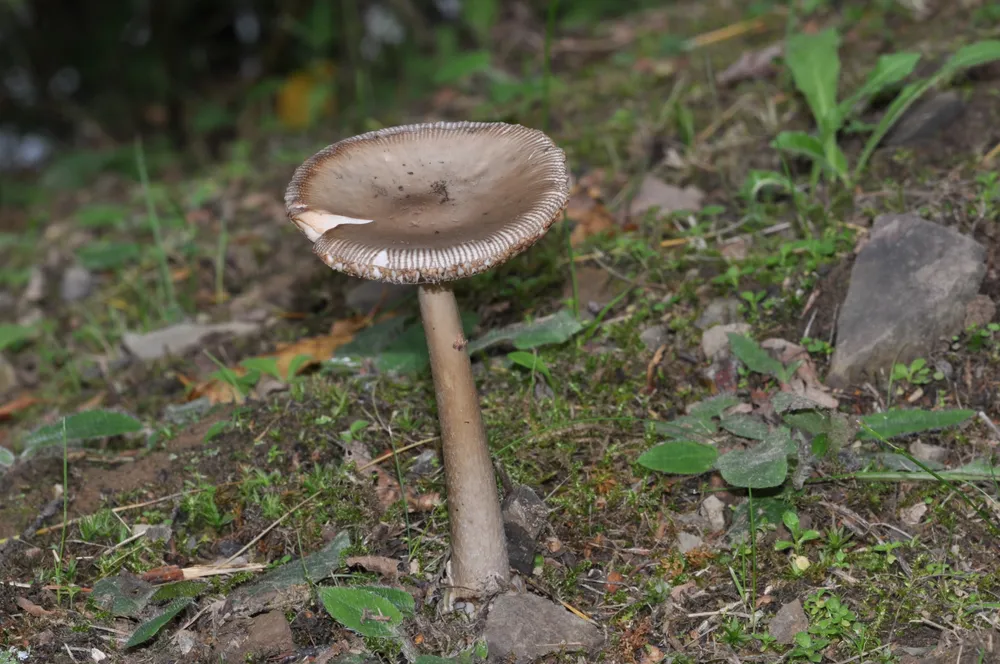
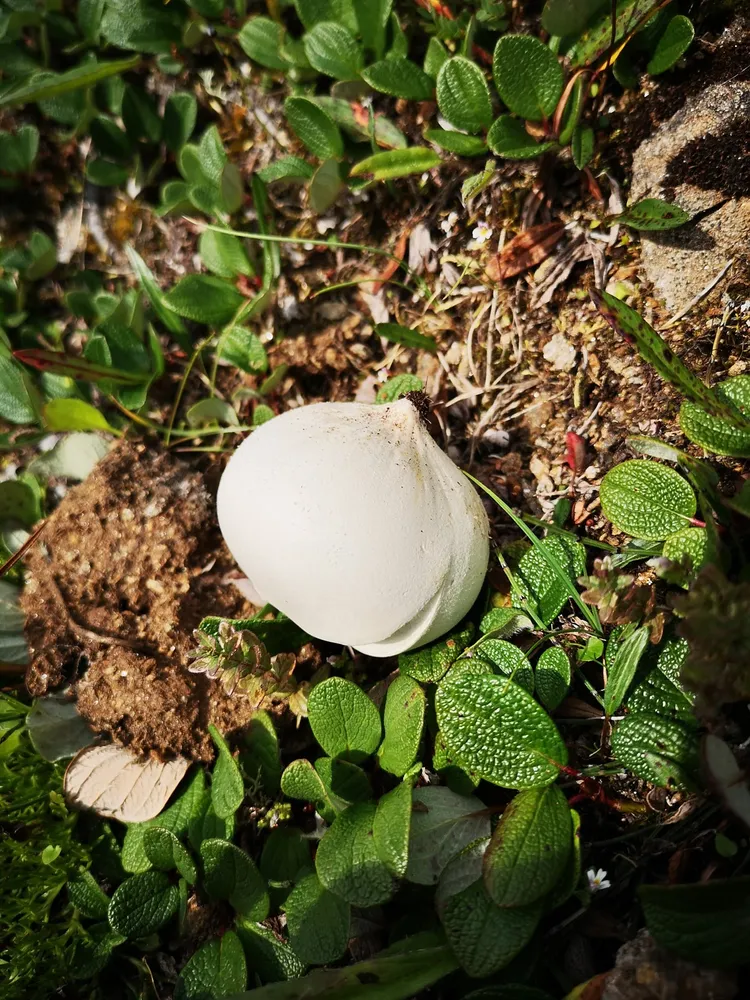
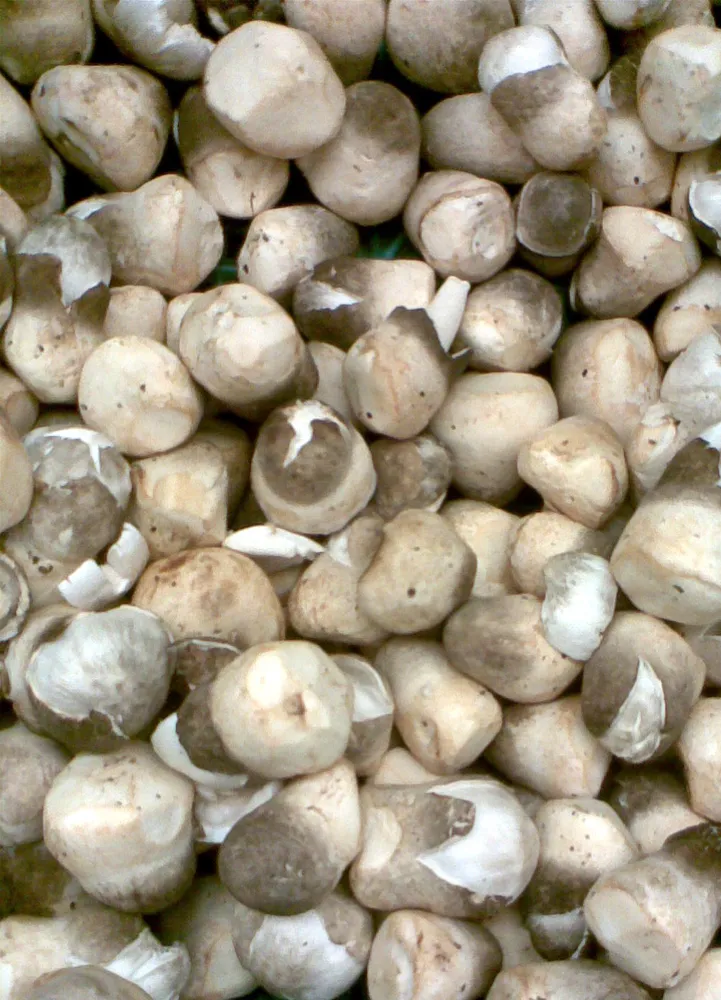
Related species
Mushrooms of the same genus and habitat — to study side by side and never mix up.
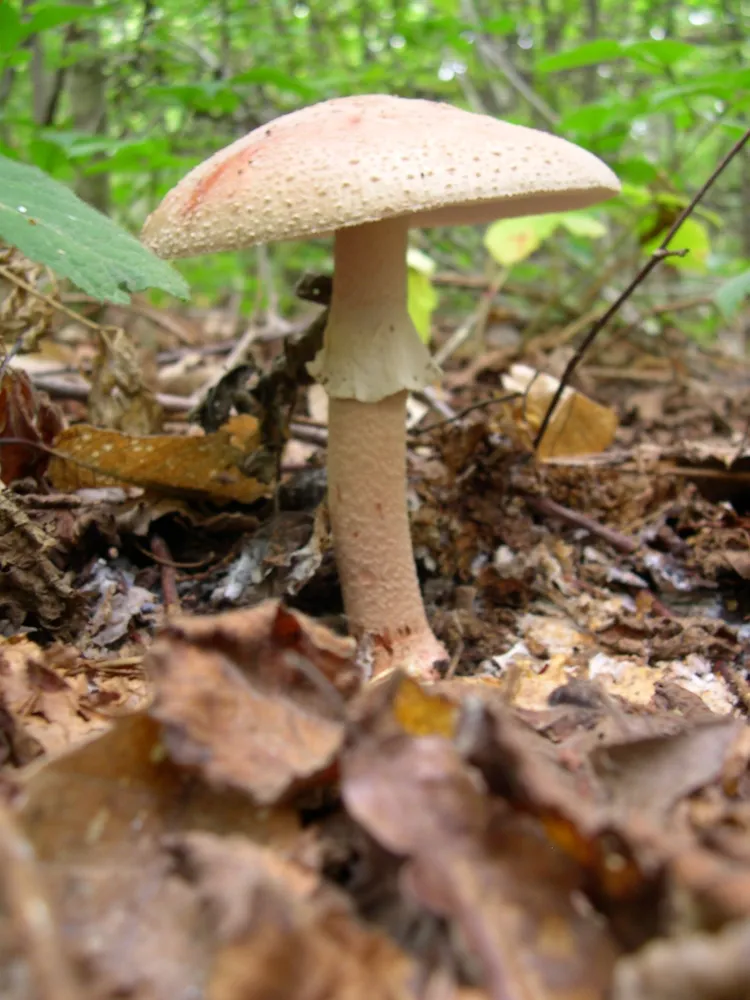
Blusher
Amanita rubescens
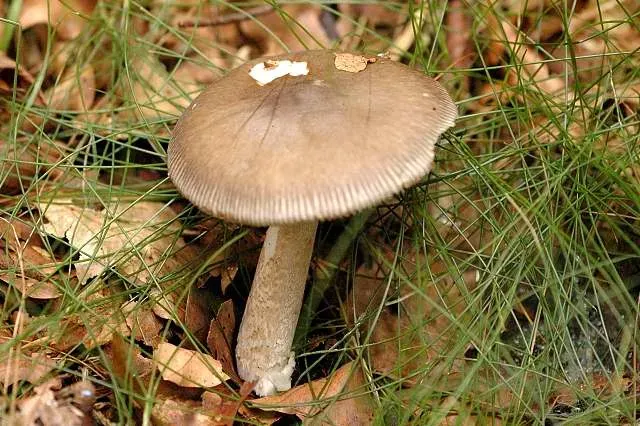
Amanita battarrae
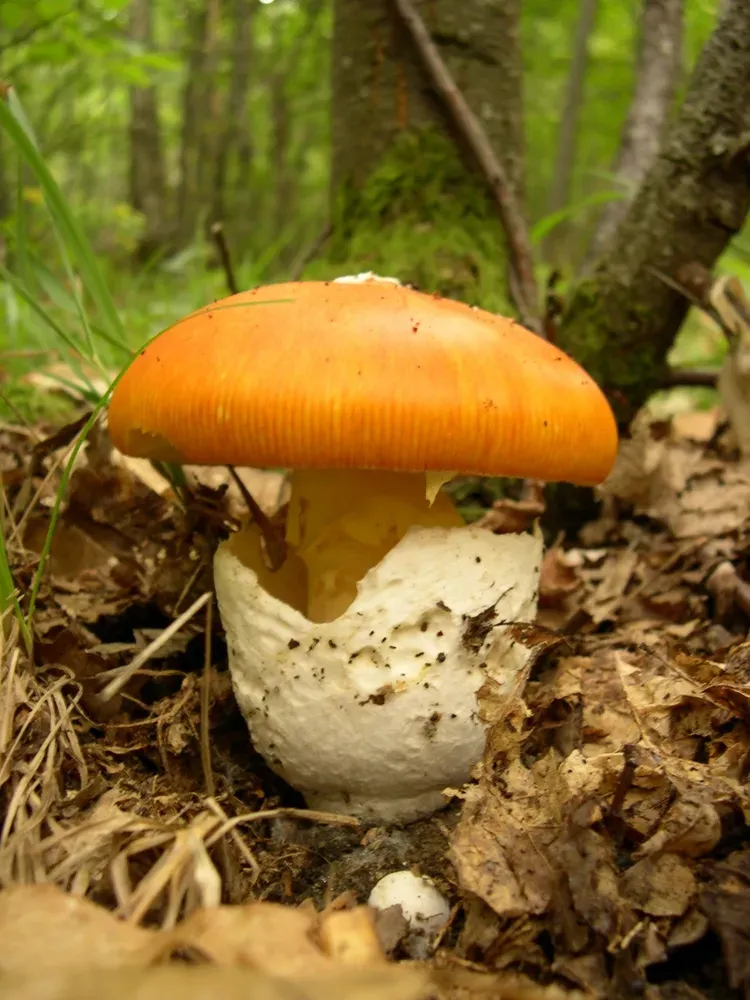
Caesar's mushroom
Amanita caesarea
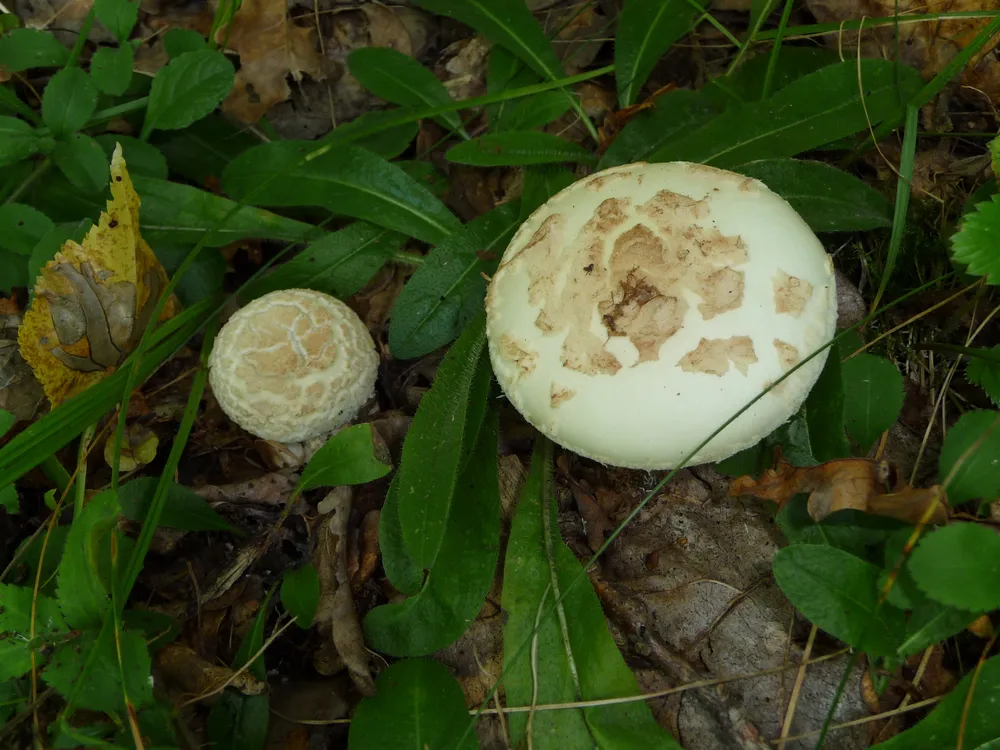
False death cap
Amanita citrina
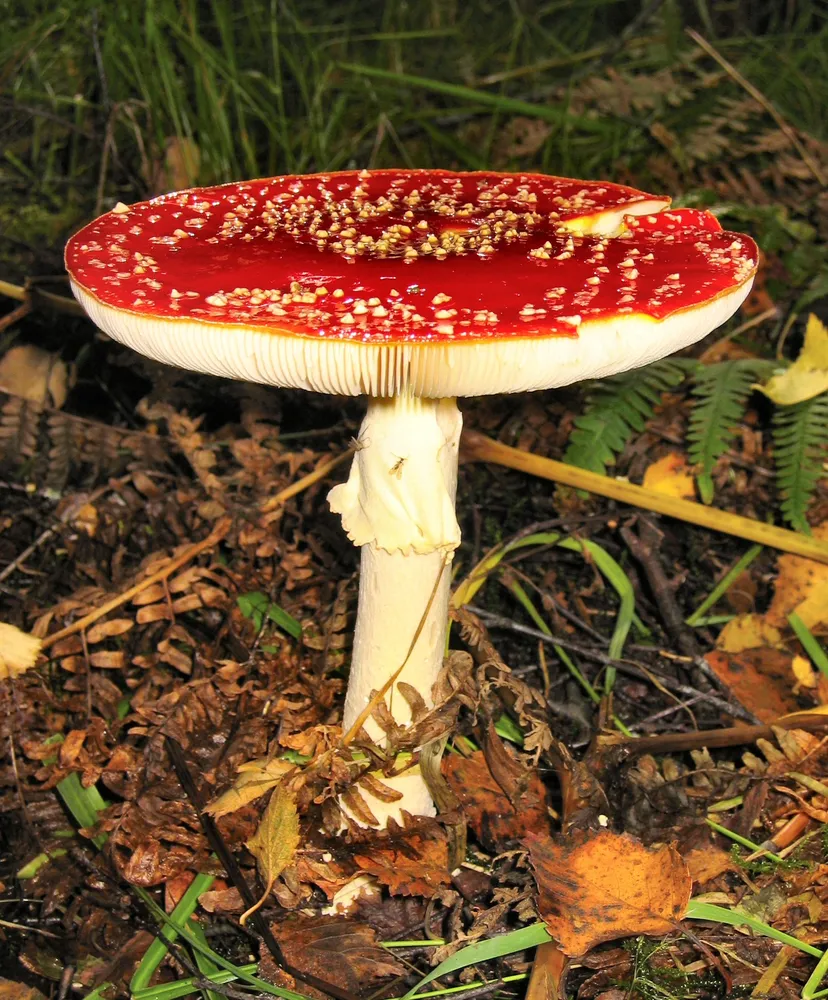
Fly agaric
Amanita muscaria
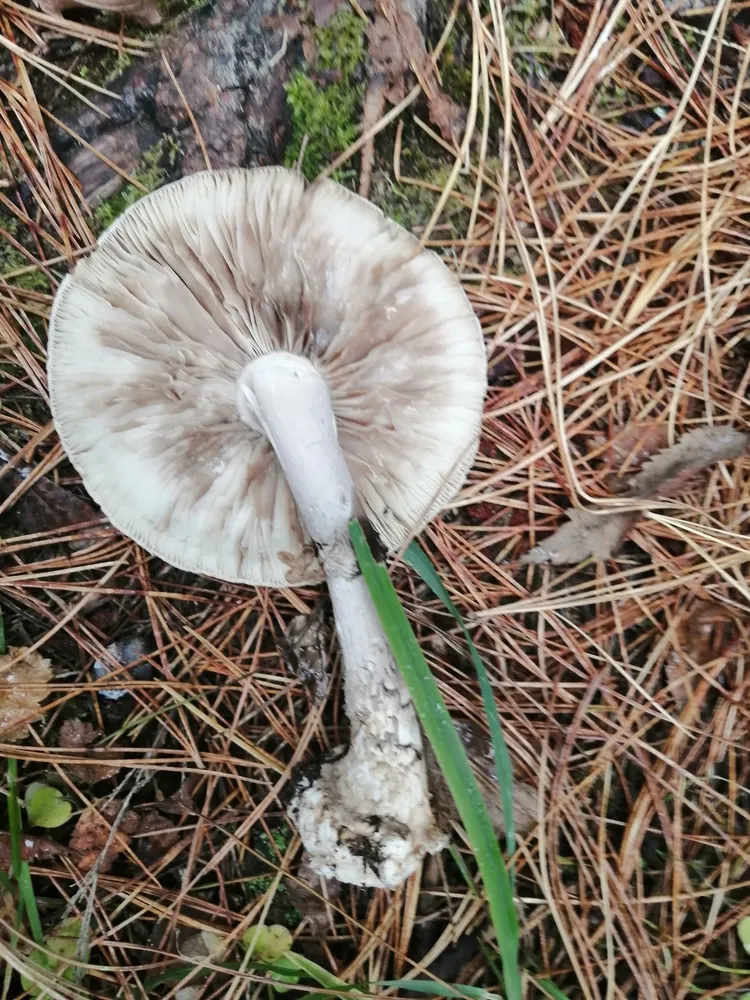
Grey veiled amanita
Amanita porphyria
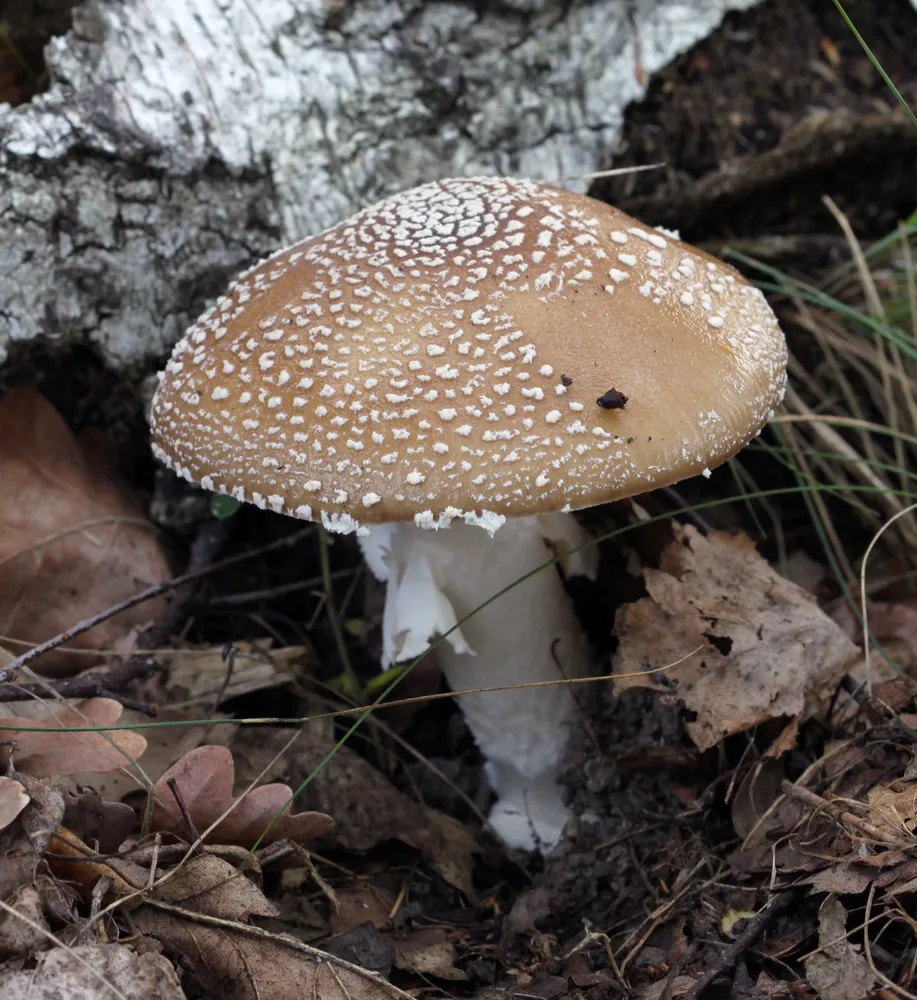
Panther cap
Amanita pantherina
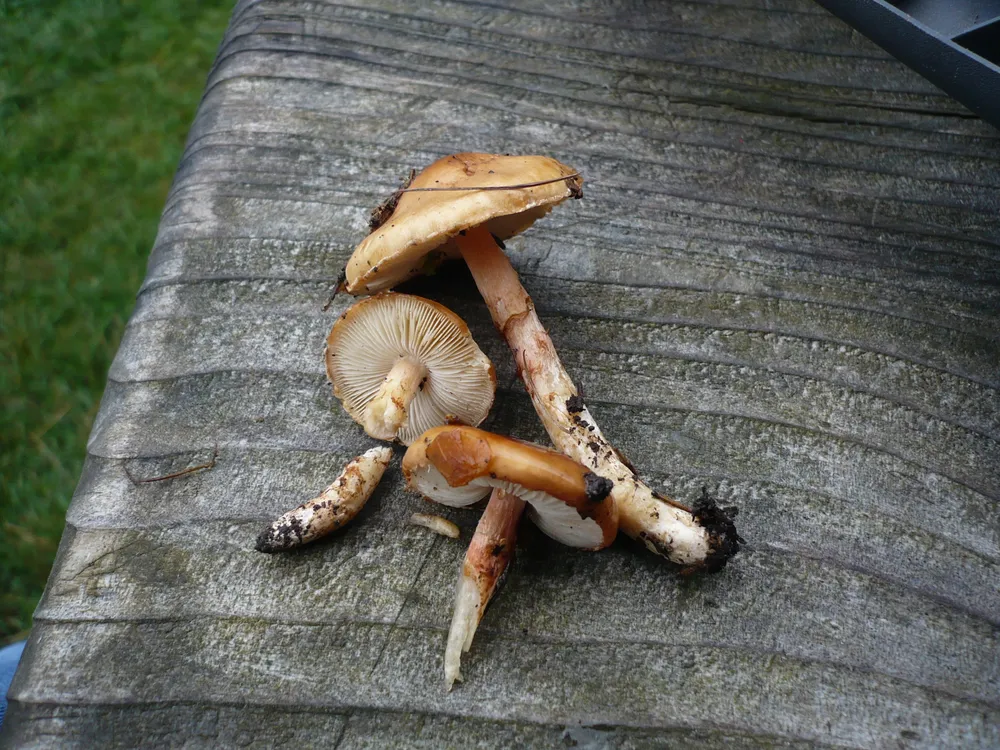
Limacella delicata
Related reading
 Safety
Deadly poisonous mushrooms of Ukraine: the four you must know
Among hundreds of mushrooms, a few can kill with a single meal. Here are four deadly poisonous mushrooms of Uk…
August 14, 2026·3 min Safety
Poisonous mushrooms of Ukraine: photos, names, and key signs
To forage safely, you need to know “the enemy by sight.” Here are the main poisonous mushrooms of Ukraine, the…
August 13, 2026·4 min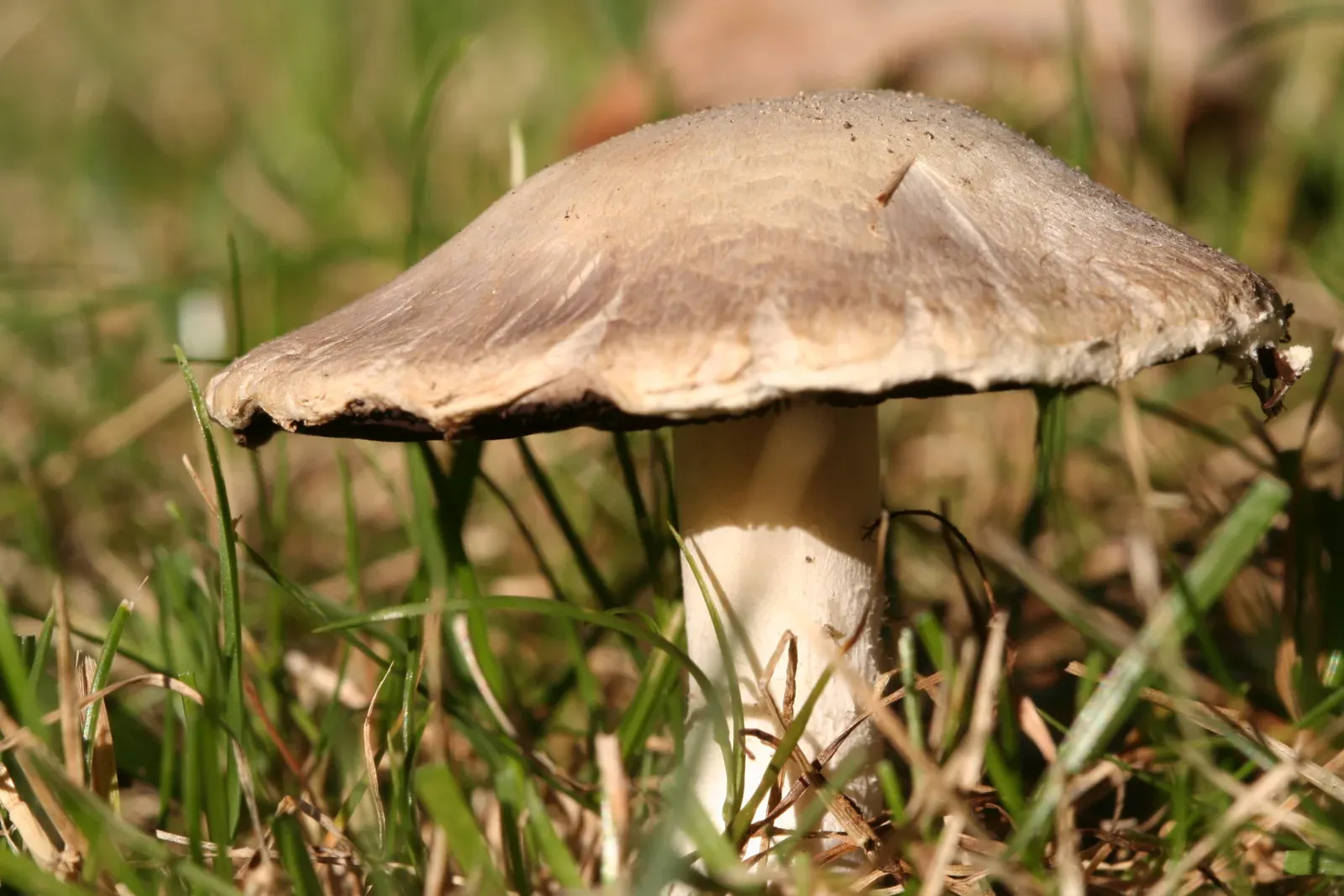 Safety
Wood and field mushrooms: how to tell them from a death cap
A wild Agaricus is tastier than a store-bought one, but a young white one is easy to confuse with the death ca…
June 11, 2026·3 min
Frequently asked questions
Why is it one of the most dangerous mushrooms?
Because of a combination of three traits: (1) it looks innocent — entirely white, like a young field mushroom or parasol; (2) a single mushroom contains a lethal dose of amatoxin; (3) symptoms are delayed by 6-24 h (most often 8-12), so people don't link feeling worse to the mushroom, and medical help comes late. After 36-72 hours comes the "deceptive improvement phase", when it seems to be over, but the liver is already destroyed. Without treatment, about half of those poisoned die.
How do you tell it apart from an Agaricus mushroom?
Three critical features. (1) Gills: in Agaricus mushrooms the young gills are pink, turning dark brown with age. The destroying angel's gills are always white. This is the most important and most reliable difference. (2) Volva: the amanita has, at the base of the stem, a sac-like, eggshell-like volva. To see it, you need to dig up the stem, not cut it! Agaricus mushrooms have no volva. (3) Habitat: Agaricus mushrooms grow in meadows, on lawns and in parks on humus. The destroying angel grows in the forest near trees. If you have even the slightest doubt — do NOT pick it. Buying button mushrooms at the store is safer than a single poisoning.
How do you tell it apart from a parasol?
The parasol mushroom (Macrolepiota procera) has brown scales on the cap and a snakeskin-like pattern on the stem (the "snake"). The destroying angel is entirely white, with no scales. The parasol's ring is movable (you can slide it), while the amanita's ring is fixed. The parasol has no volva. If you see a white "parasol" without scales — it is not a parasol. Don't pick it.
What if I just touched the mushroom?
Touching it through the skin won't do anything — amatoxins act only when they get inside the body (when eaten). It's still worth washing your hands after your walk, as after any contact in the forest. Don't bring the mushroom to your mouth, nose or eyes. Cutting or digging it up without gloves is not critical.
What should you do if someone eats it by accident?
Call an ambulance immediately. Call 112 or your local emergency number right away — don't wait for symptoms. Don't induce vomiting at home; give activated charcoal only if a doctor tells you to. But this is a temporary measure — medical care is needed as soon as possible to start treatment (intravenous silibinin, a sorbent, IV drips). Keep the mushroom remains — anything: soil from where it was found, a bit of cap skin, photos — to identify the toxin. Don't rinse your mouth with charcoal water on your own as a substitute for medical care. Time is critical: the best results come from treatment started within the first 36 hours after eating. But you should still go later — late does not mean pointless.
Where does it grow?
In conifer and mixed forests — mostly with spruce, pine and birch. It likes mossy spots, forest edges and shady slopes. It forms mycorrhiza with conifers and birch.
In which regions of Ukraine does it occur?
Mainly in the forest zone: Carpathians (especially in spruce forests), Prykarpattia, Polissia (pine and mixed forests), partly the forest-steppe. In the steppe it is practically absent because the right partner trees are missing. It can be anywhere in the forest — it is not exotic. Finding one in the Carpathians or near Kyiv is an ordinary part of mycological reality.
When should you look for it?
Better to ask "when to avoid it". July — October, peaking in August-September. Its season coincides with the main season for porcini and Agaricus mushrooms, so the risk of confusion is highest in exactly these months.
Which white edible mushrooms is it confused with?
Most often — with a young field mushroom (Agaricus campestris) — a fatal mistake. Among forest species — with the blushing wood mushroom (A. silvaticus) and a mature Macrolepiota mastoidea, with Caesar's mushroom (Amanita caesarea) in its immature "egg" stage. The cautious forager's ground rule: no white mushroom with a ring and a volva goes into the basket. Period. Agaricus mushrooms can be bought safely at the store, but a mistake with an amanita is fatal.
Is Destroying angel edible or poisonous?
Does Destroying angel have gills or pores?
What does the cap of Destroying angel look like?
Sources
- [1]Вікіпедія (українська)
- [2]Атлас грибів України, Зеров Д.К. (1979)
- [3]MycoBank Database
- [4]Index Fungorum
- [5]GBIF
- [6]iNaturalist Ukraine