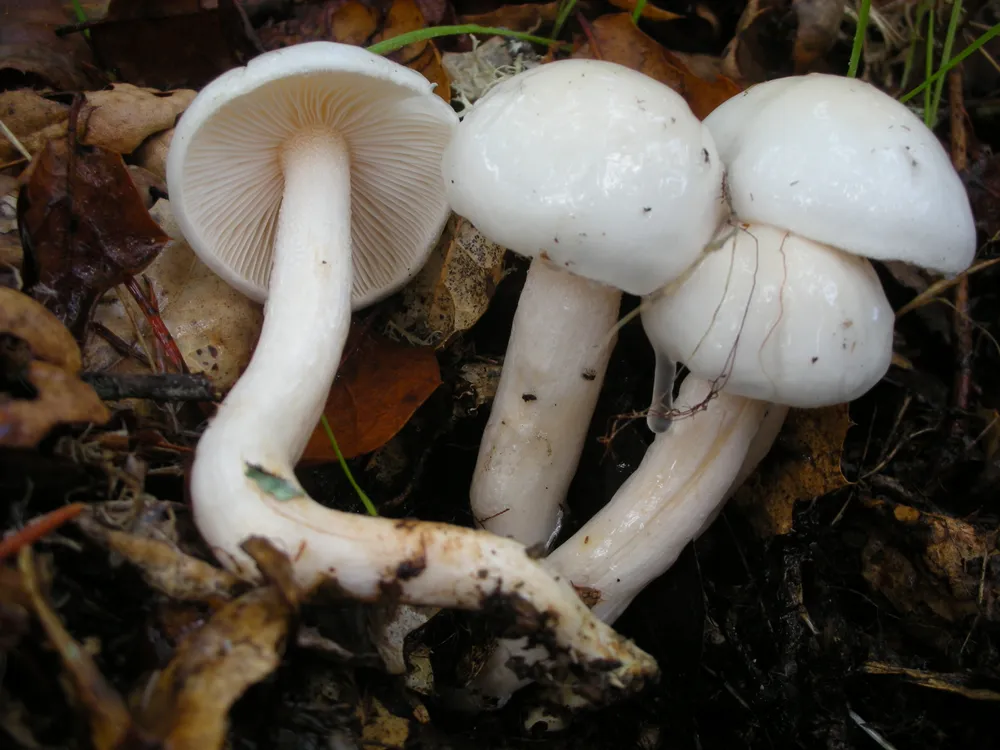
Ivory woodwaxHygrophorus eburneus
Expert-verifiedUpdated October 3, 2026
Passport
- Edibility
- Edible
- Season
- Sep — Oct
- Hymenophore
- Gilled
- Cap color
- White
- Size
- Medium (5–15 cm)
- Smell
- Odorless
- Reviewed
- Yes ✓
Quick answers
Where to look?
Deciduous forest, Mixed forest
When does it appear?
Sep — Oct
Active months: September, October.
How to recognize it? Three signs
- Cap color: White, Cream
- Cap shape: Convex
- Smell: Odorless
Fruiting season
September – October
Description
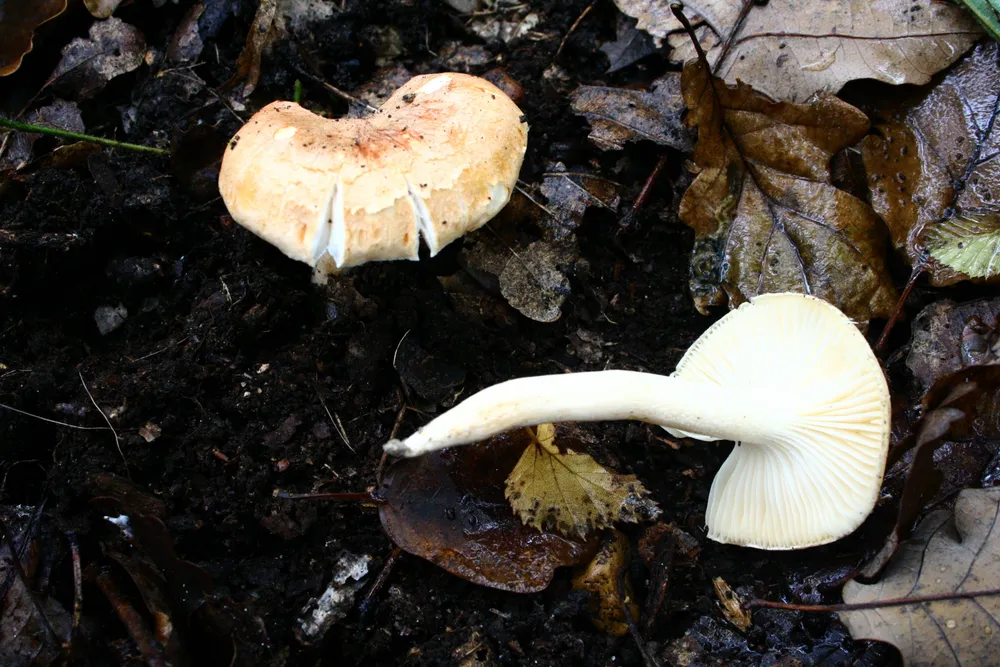
The Ivory woodwax is a modest but charismatic autumn mushroom. Almost entirely white: a white cap with a faint yellowish tint, a white slimy stem, cream decurrent gills. In wet weather the cap and stem are coated in thick slime — hence the folk name «soplyushka» («little snotty»). Don't be put off by the slime — it is a hallmark of the genus Hygrophorus, not a sign the mushroom has gone bad.
This is a category-four edible mushroom. Not a delicacy, but it works well salted, pickled, and in soups. The flesh contains about 5% protein fresh (22% dried) — it is nutritious. Before cooking, clean the slime off the cap, otherwise the dish takes on a jelly-like quality. Safe even for beginners — there are no deadly poisonous species among the woodwaxes.
In Ukraine it grows in deciduous and mixed forests as a mycorrhizal partner of beech, oak, and hornbeam. Finds are regular throughout the forest and forest-steppe zones. The season runs September–October, peaking in the first half of October, especially after cool rains.
Cap
Cap 4-8 cm (young ones 4-5 cm), hemispherical at first, then convex-flattened with a small umbo. White or creamy white, with a faint yellowish tint, especially at the center. The surface is moist AND slimy in wet weather — a thick layer of clear slime. In dry weather it dries out and becomes smooth.
Hymenophore
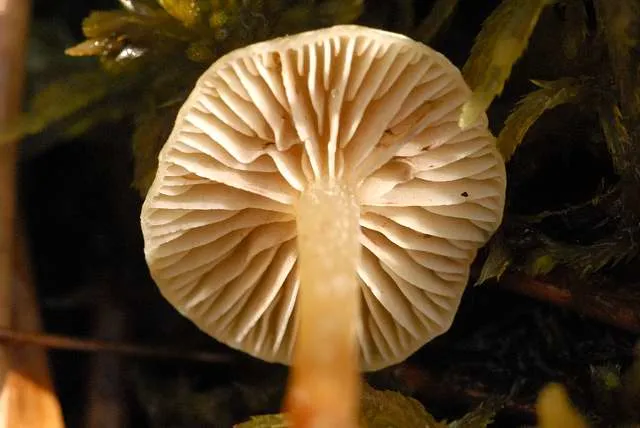
Gilled hymenophore. The gills are widely spaced, thick, and decurrent (a typical feature of the genus). White at first, taking on a cream tint with age. Spore print white.
Stem
Stem up to 10 cm tall, 0.5-1.5 cm thick, cylindrical or tapering toward the base. White; the surface is slimy in wet weather, with a white mealy coating at the top. Hollow inside. No ring.
Flesh
The flesh is white, firm in young mushrooms, becoming watery with age. Does not change color when cut. A faint, unremarkable mushroomy taste.
Smell
Faint mushroomy smell, mildly pleasant. Some sources describe a hint of almond or resin. Taste bland, mild.
›Scientific synonyms (3)
Agaricus eburneus Bull., Gymnopus eburneus (Bull.) Gray, Limacium eburneum (Bull.) P.Kumm.
Lookalikes
Related species
Mushrooms of the same genus and habitat — to study side by side and never mix up.
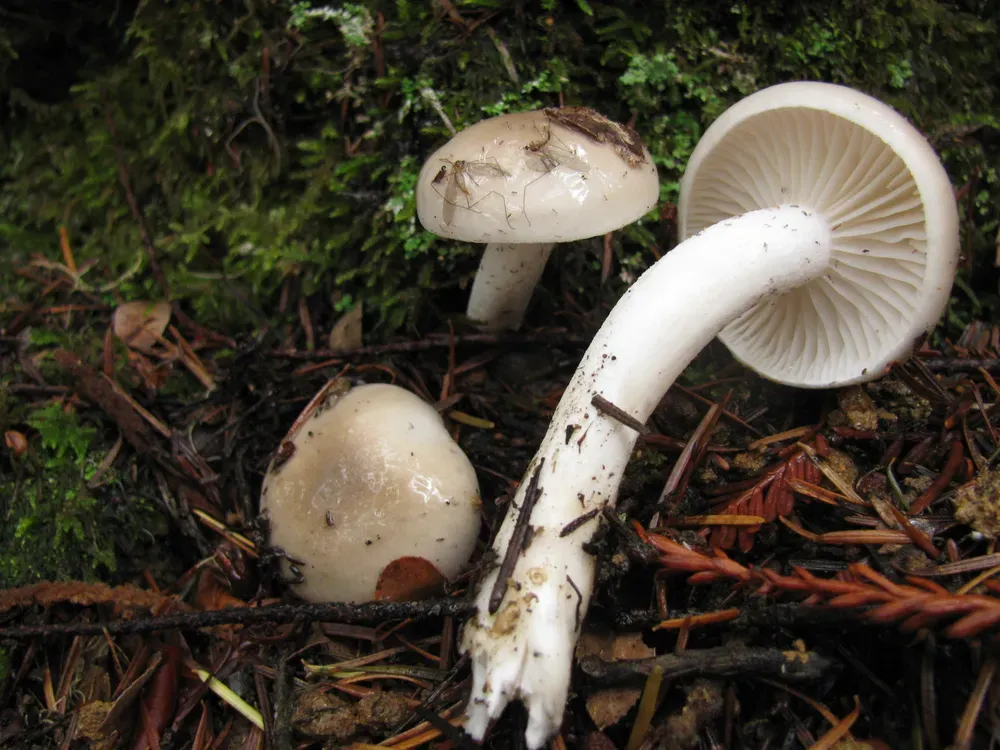
Almond woodwax
Hygrophorus agathosmus
.webp)
March mushroom
Hygrophorus marzuolus
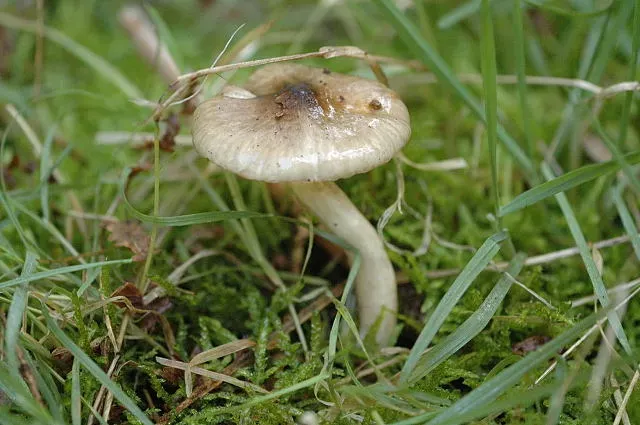
Olive wax cap
Hygrophorus olivaceoalbus
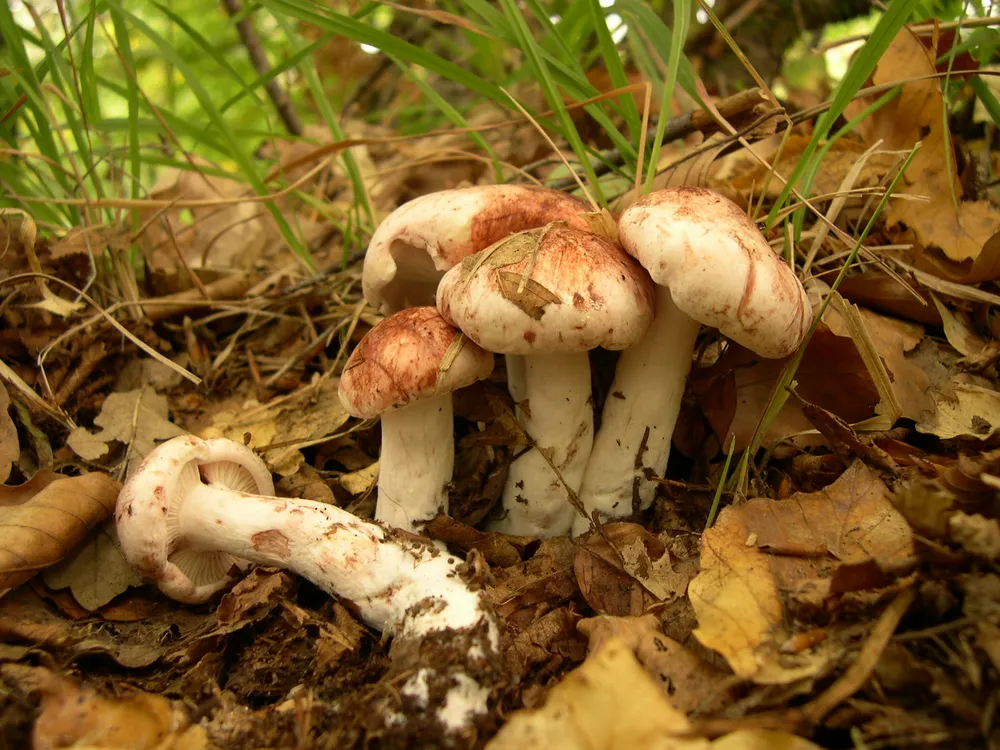
Pinkmottle woodwax
Hygrophorus russula
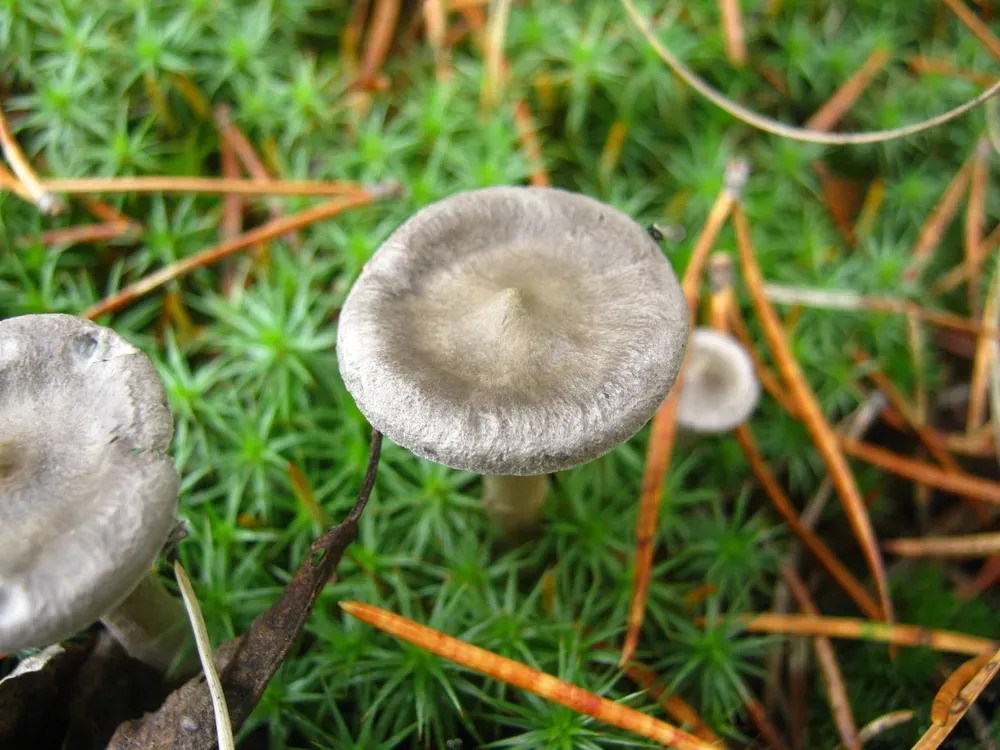
Grayling
Cantharellula umbonata
._Locatie,_Hortus_(Haren,_Groningen)_01.webp)
Vermilion waxcap
Hygrocybe miniata
_1.webp)
Blackening waxcap
Hygrocybe conica
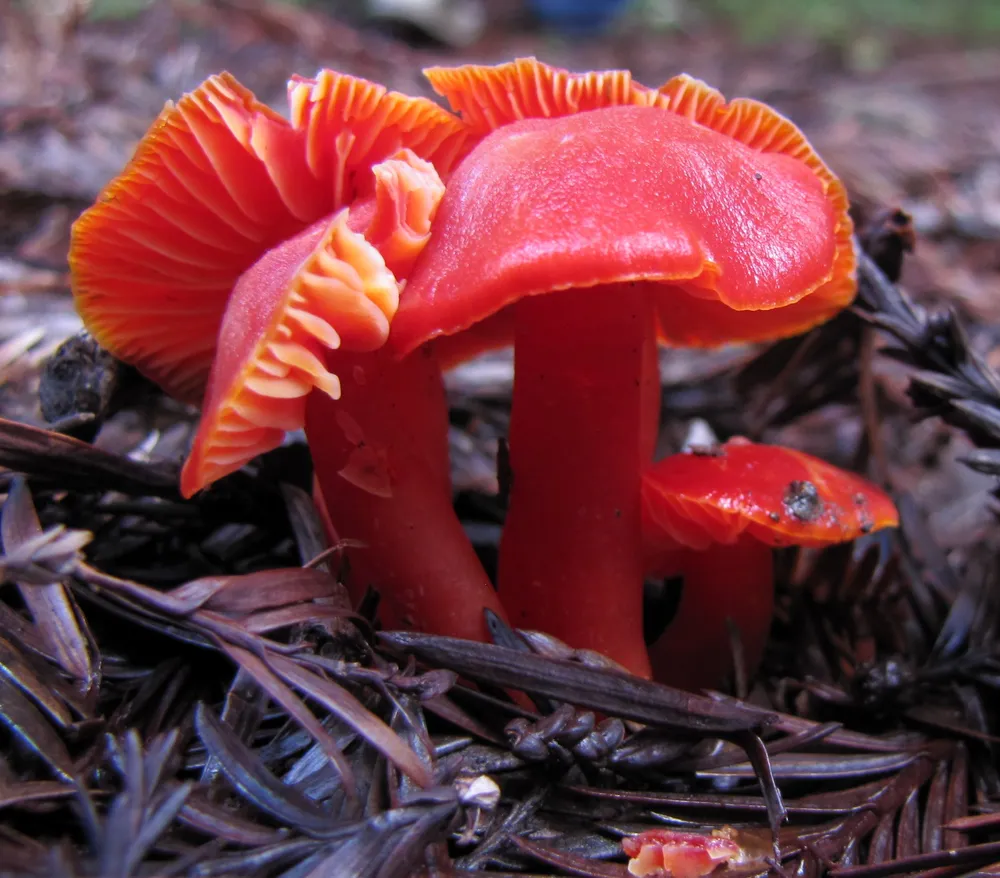
Scarlet waxcap
Hygrocybe coccinea
Frequently asked questions
Can you eat it?
Yes, the mushroom is edible. It belongs to the fourth (lowest) category — not a delicacy, but perfectly fine for salting, pickling, and soups. Before cooking, clean the slime off the cap.
Is slime on the cap normal?
Yes, absolutely. Slime is a hallmark of the whole genus Hygrophorus (that's where the name comes from: hygros — moist, phoreo — to carry). It does not mean the mushroom is rotten or spoiled. Before cooking, just rinse the slime off under the tap or peel the skin.
Where should you look for it?
In deciduous and mixed forests, with beech, oak, and hornbeam. A mycorrhizal partner of these trees. It likes damp spots with well-decomposed litter and shady places. Solitary or in small groups.
Which regions of Ukraine does it grow in?
Throughout the forest and forest-steppe zones. Especially rich harvests in the Carpathians and Prykarpattia (where there is beech), in Polissia and the Forest-Steppe (where there is oak and hornbeam). In the steppe and Crimea — only in planted stands.
When should you look for it?
September–October. Peak fruiting is the first half of October, after cool autumn rains. In a warm autumn it can keep fruiting until the end of October.
Does it appear in November?
Very rarely. As a cool, damp-autumn species, it usually finishes its season before the first hard frosts. Occasional finds at the very start of November are possible in warm years.
What is it confused with?
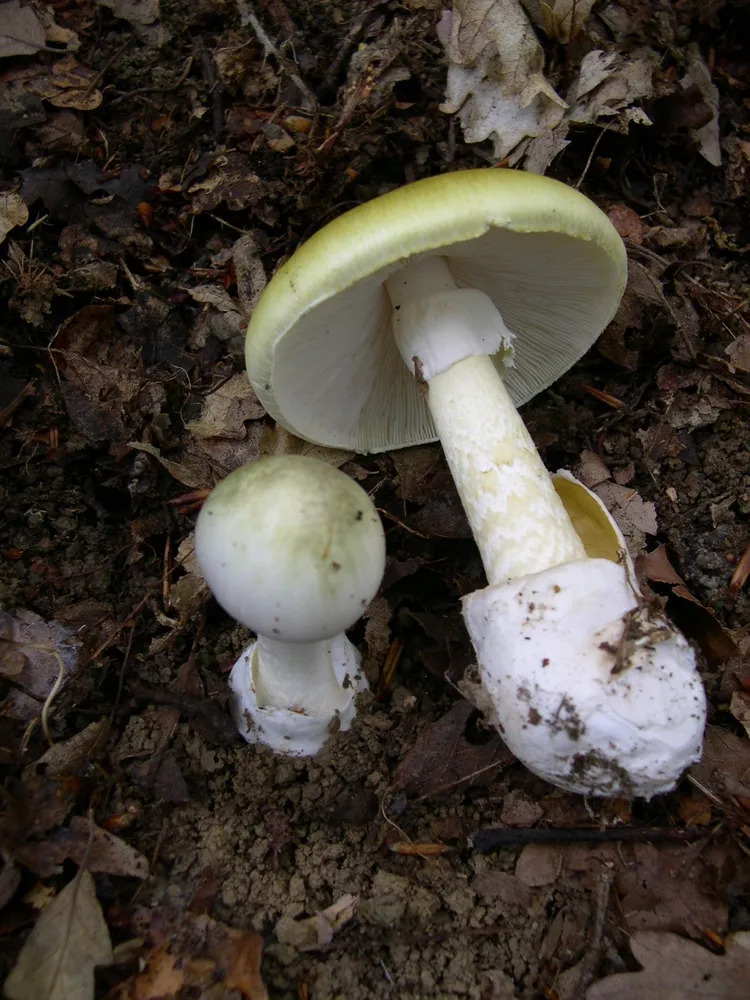
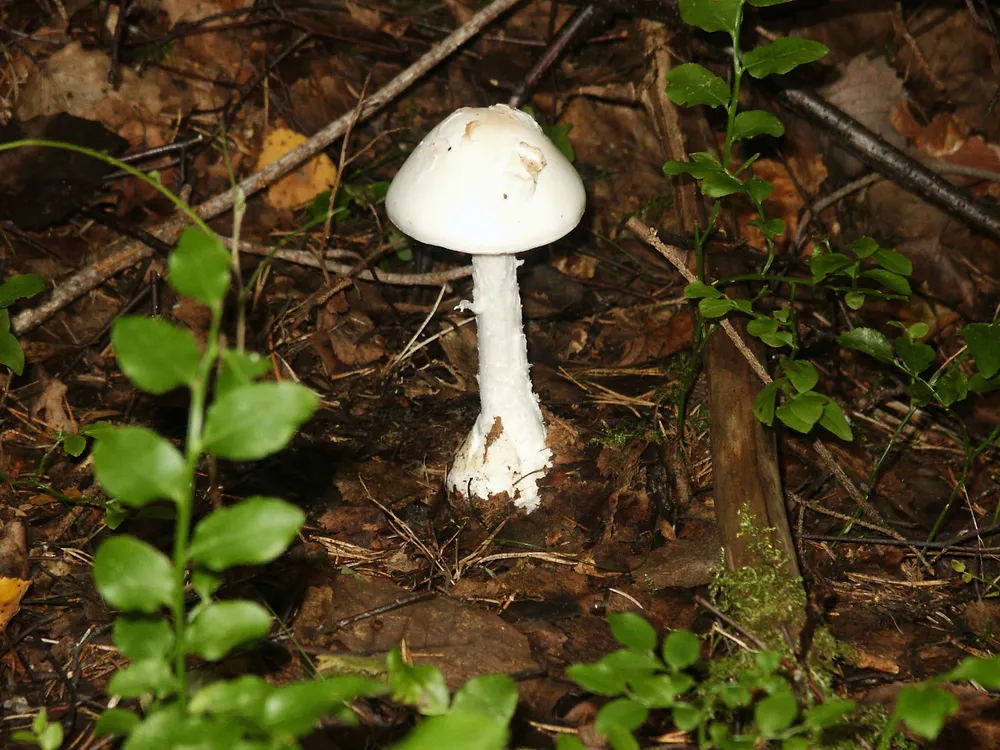
The most dangerous confusion is with the death cap (Amanita phalloides) in its white form and the destroying angel (Amanita virosa). They also have a white cap and gills. The critical differences: amanitas have a ring on the stem and a volva (sac) at the base. In the woodwax these features are absent. If even one is present — do NOT take it.
How do you tell it from other white woodwaxes?
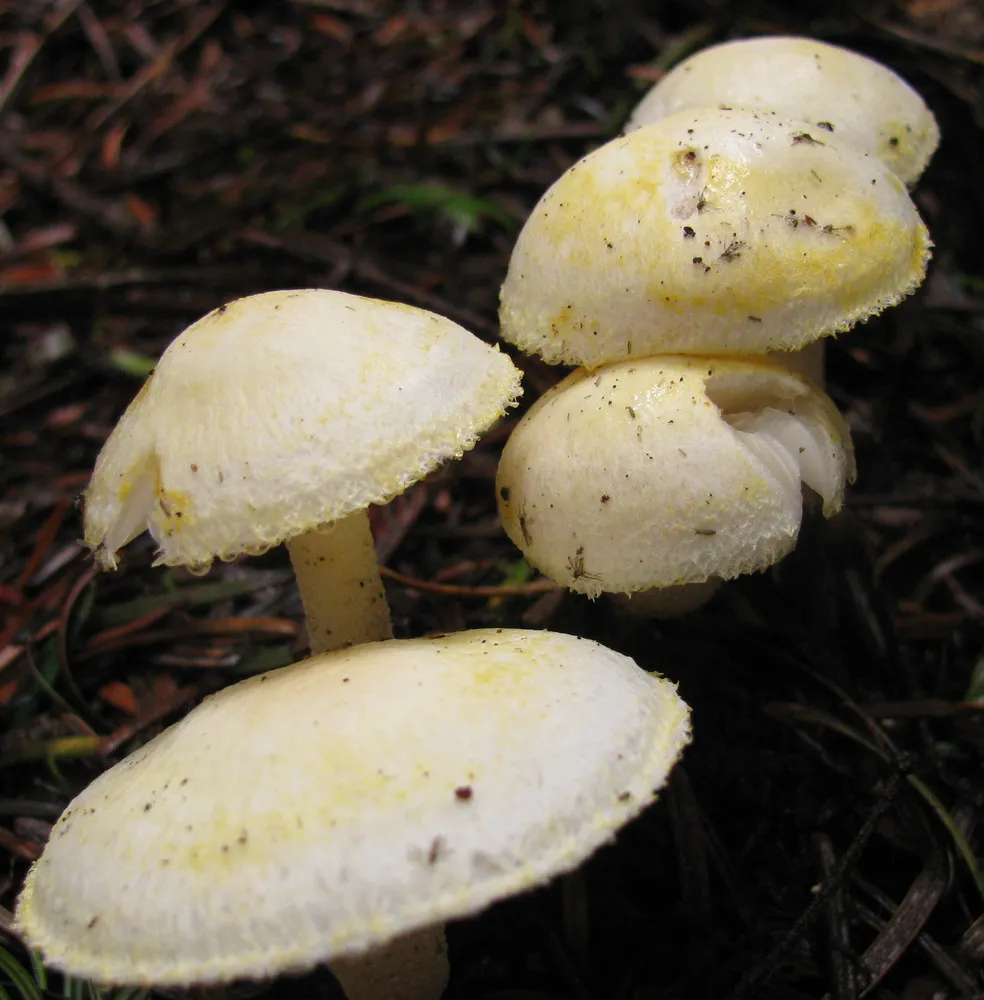
The Ivory woodwax is entirely white with a faint yellow tint. The Gold flecked woodwax (H. chrysodon) has distinct yellow granules on the stem and a yellow cap margin. The snowy waxcap (H. niveus) is even whiter, with no yellowish tint. The color of the lower stem and the presence of yellow granules are the main clues.
Is Ivory woodwax edible or poisonous?
Does Ivory woodwax have gills or pores?
What does the cap of Ivory woodwax look like?
What does the stem of Ivory woodwax look like?
Sources
- [1]Вікіпедія (українська)
- [2]Атлас грибів України, Зеров Д.К. (1979)
- [3]MycoBank Database
- [4]Index Fungorum
- [5]GBIF
- [6]iNaturalist Ukraine