THIS DATA HAS NOT BEEN VERIFIED BY AN EXPERT. Use at your own risk.
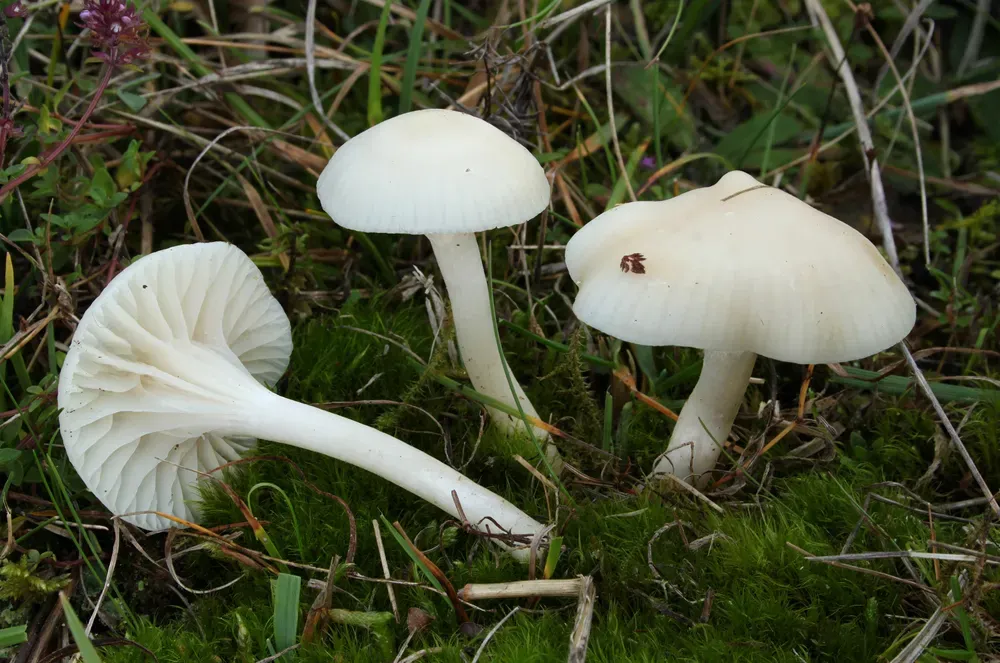
Snowy waxcapCuphophyllus virgineus
Under reviewUpdated October 3, 2026
Passport
- Edibility
- Edible
- Season
- Sep — Nov
- Hymenophore
- Gilled
- Cap color
- White
- Size
- Small (up to 5 cm)
- Smell
- Pleasant
- Reviewed
- Under review
Quick answers
Where to look?
Meadow, Field
When does it appear?
Sep — Nov
Active months: September, October, November.
How to recognize it? Three signs
- Cap color: White, Cream
- Cap shape: Convex, Flat, Umbonate
- Smell: Pleasant
Fruiting season
September – November
Description
The snowy waxcap, known to science as Cuphophyllus virgineus (formerly Hygrocybe virginea or Camarophyllus niveus), is a small snow-white waxy mushroom of meadows and pastures that catches your eye among the autumn grass with its pure white attire and waxy gills. It belongs to the Hygrophoraceae family — the group of "waxcaps", known for their thick gills that feel waxy to the touch. It is a grassland saprotroph that settles in old unplowed meadows, lawns, pastures and glades.
In Ukraine, the snowy waxcap occurs in meadows, pastures and grassy glades across the country. Its fruiting season falls in autumn — September through November, often right up to the first frosts, when most meadow mushrooms are already gone. The mushroom appears in groups among the grass.
In terms of edibility, the snowy waxcap is an edible mushroom, but because of its small size and thin flesh its culinary value is modest — it is more of a pleasant addition to the basket. Its taste is mild, without bitterness. People mostly pick young, clean specimens. Keep in mind that many waxcaps (Hygrocybe) are indicators of valuable old meadows and in some places need protection, so pick them in moderation.
Cap
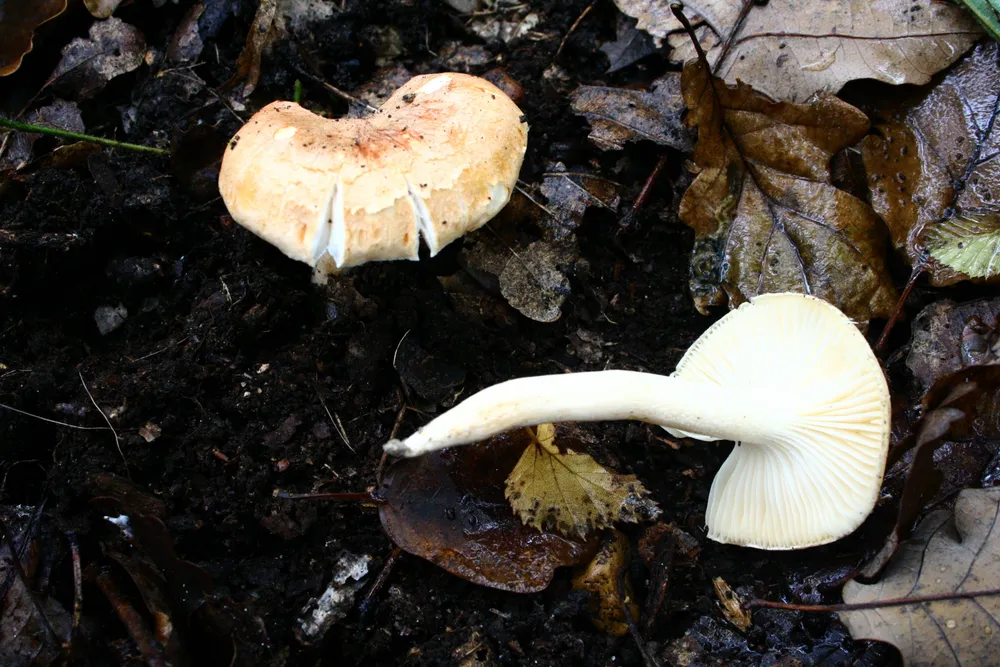
The cap of the snowy waxcap is small — 1 to 4 centimeters across. When young it is convex to bell-shaped, opening with age to flat, often with a small knob and a wavy, sometimes cracked margin. The surface is smooth, slightly slippery in wet weather, white, cream or with a faint ochre tint in the center. Its pure white coloring is what gave the mushroom its name.
Hymenophore
The hymenophore is gilled. The gills are thick, widely spaced, waxy to the touch, running noticeably down the stem (decurrent), white or cream. The spore print is white. Thick, waxy, decurrent white gills are a typical family trait of the Hygrophoraceae (waxcaps).
Stem
The stem is thin, white, 2 to 6 centimeters tall, cylindrical, often narrowing toward the base, dry or slightly slippery. There is no ring and no volva. The surface is smooth. The stem is fragile, like the whole structure of the mushroom.
Flesh
The flesh is white, thin, waxy, and does not change color when cut. The taste is mild, without bitterness, but generally bland. Because of the thin flesh and small size its culinary value is modest, so the mushroom rounds out the basket rather than forming the basis of a dish.
Smell
The smell is faint, pleasant or almost imperceptible, with no sharp notes. The aroma is not a defining feature, so for identification you rely on the pure white, slightly slippery cap, the thick waxy decurrent gills and its growth in groups in meadows in autumn.
›Scientific synonyms (3)
Hygrocybe virginea (Wulfen) P.D. Orton & Watling (1969), Camarophyllus virgineus (Wulfen) P. Kumm. (1871), Hygrophorus niveus (Scop.) Fr. (1838)
Lookalikes
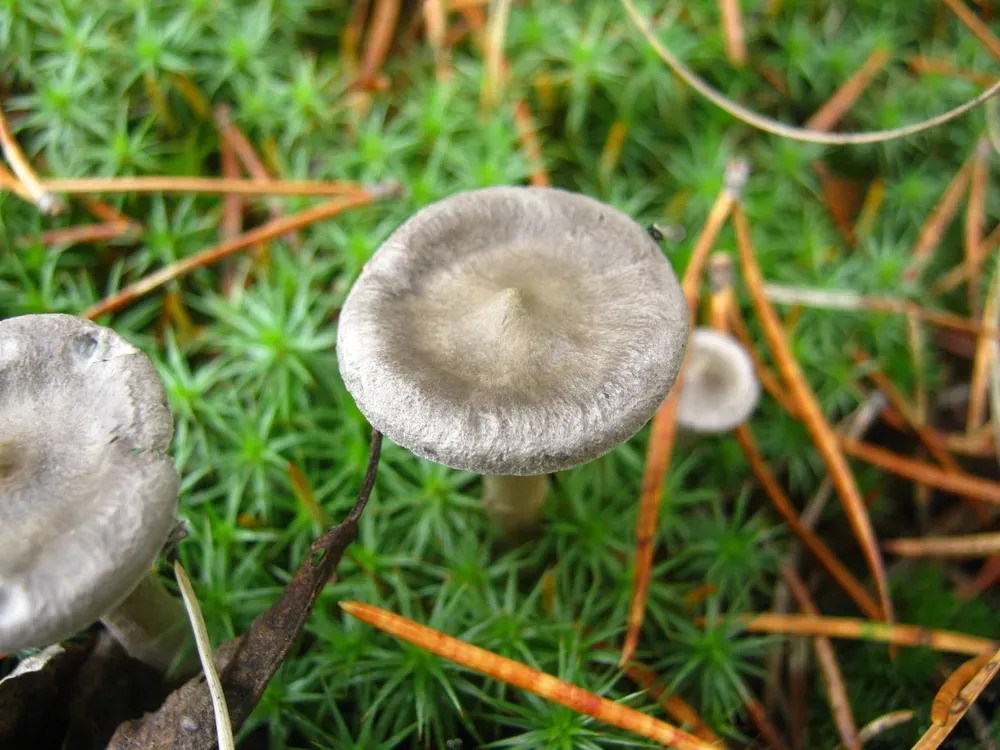
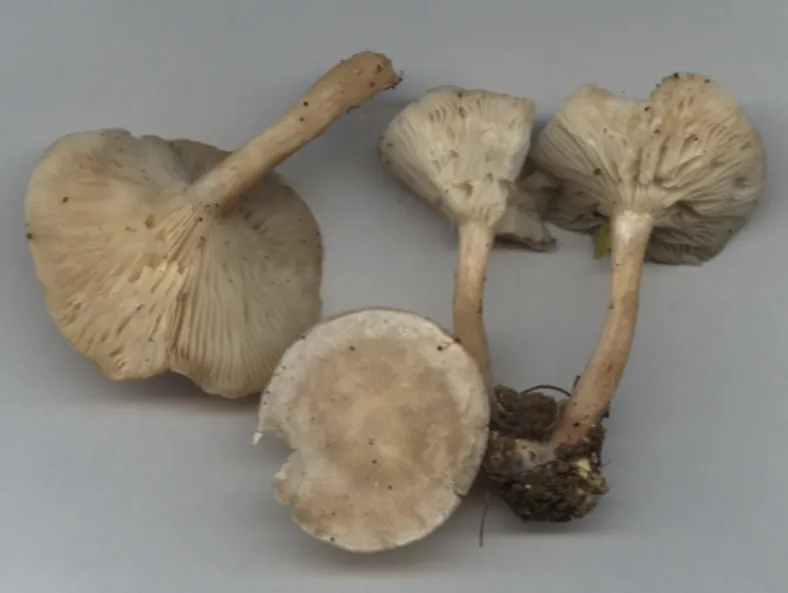
Related species
Mushrooms of the same genus and habitat — to study side by side and never mix up.
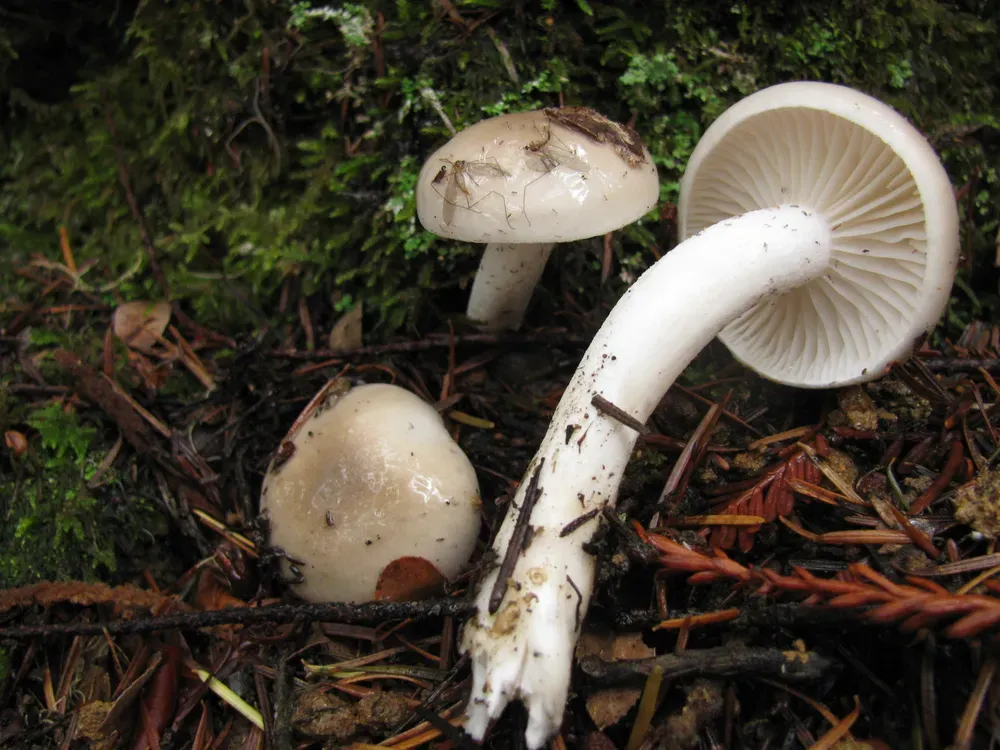
Almond woodwax
Hygrophorus agathosmus
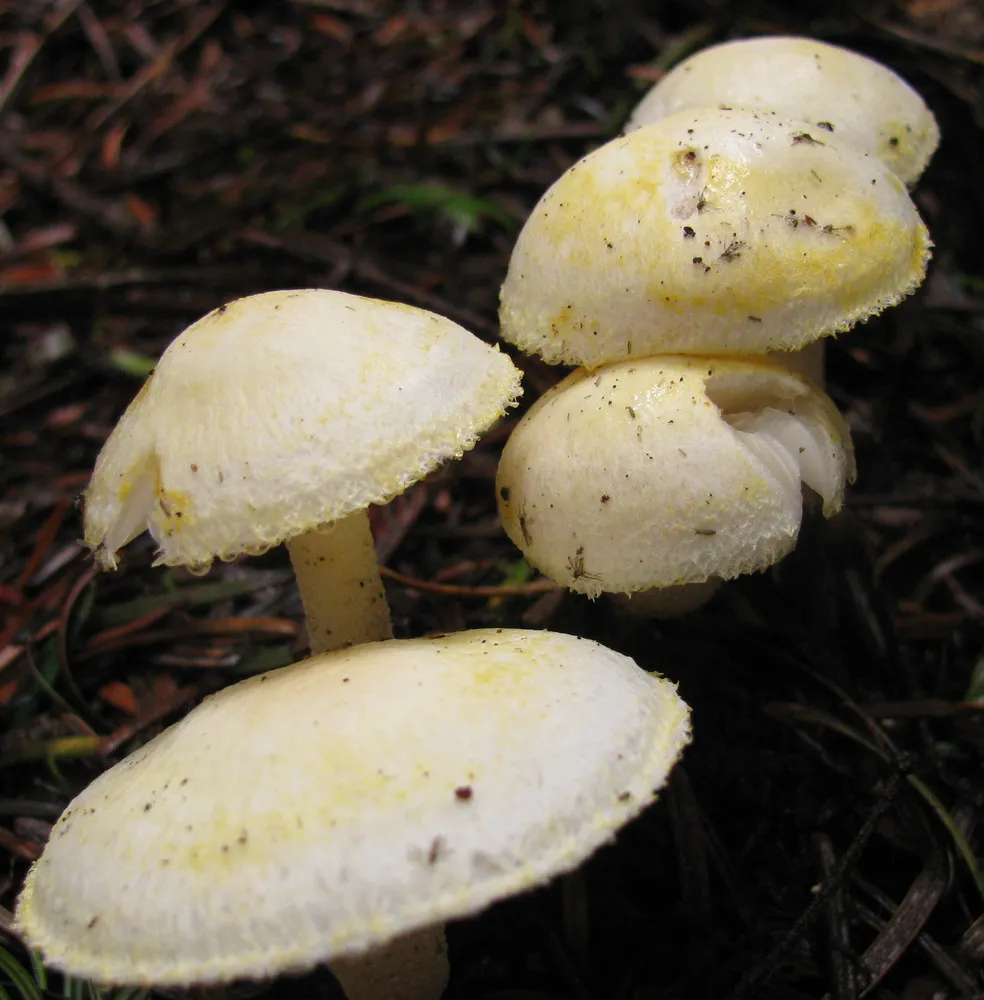
Gold flecked woodwax
Hygrophorus chrysodon
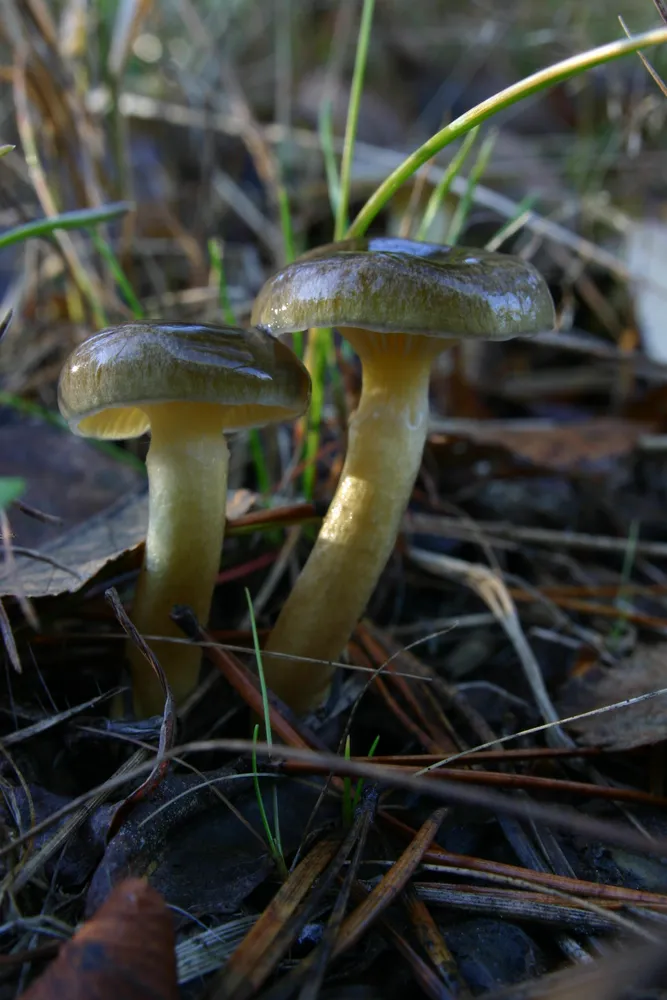
Herald of winter
Hygrophorus hypothejus
Hygrophorus leucophaeus
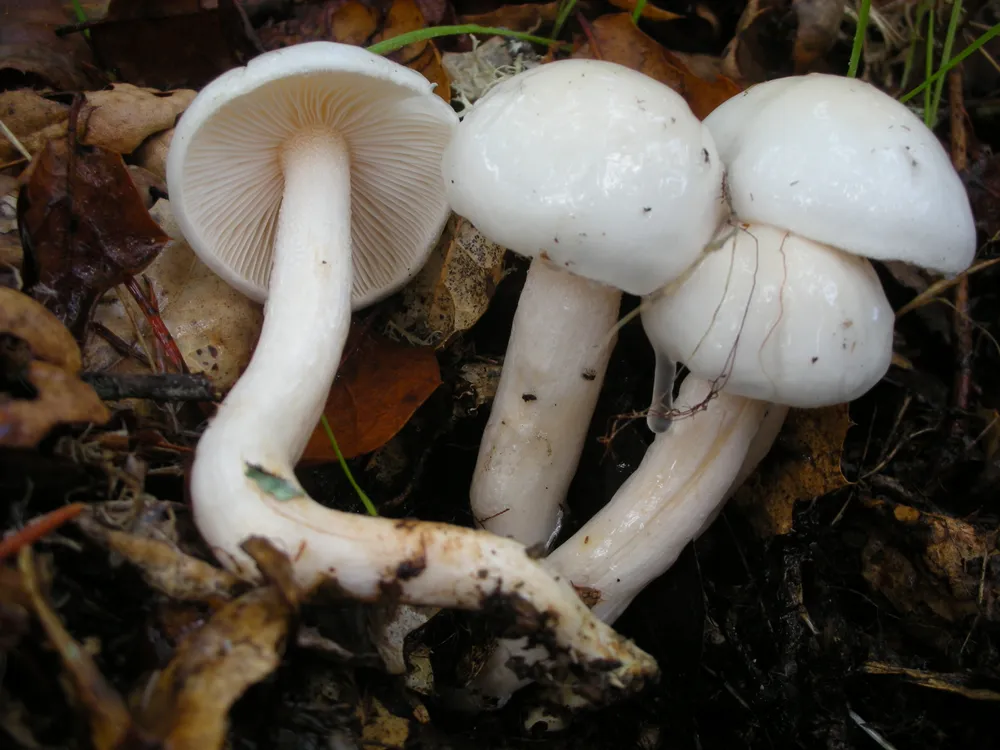
Ivory woodwax
Hygrophorus eburneus
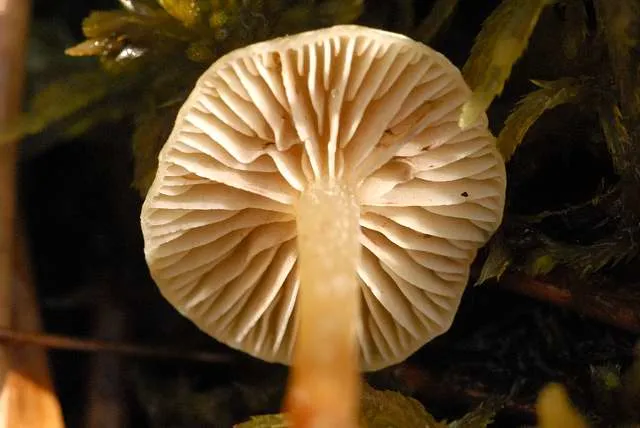
Larch woodwax
Hygrophorus lucorum
.webp)
March mushroom
Hygrophorus marzuolus
Oak woodwax
Hygrophorus nemoreus
Frequently asked questions
Is Snowy waxcap edible or poisonous?
Does Snowy waxcap have gills or pores?
What does the cap of Snowy waxcap look like?
What does the stem of Snowy waxcap look like?
What do Snowy waxcap smell and taste like?
Where does Snowy waxcap grow?
When should you pick Snowy waxcap?
What can Snowy waxcap be confused with?
How do you cook Snowy waxcap?
Can you dry Snowy waxcap?
What is the scientific name of Snowy waxcap?
Sources
- [1]Вікіпедія (українська)
- [2]Атлас грибів України, Зеров Д.К. (1979)
- [3]MycoBank Database
- [4]Index Fungorum
- [5]GBIF
- [6]iNaturalist Ukraine