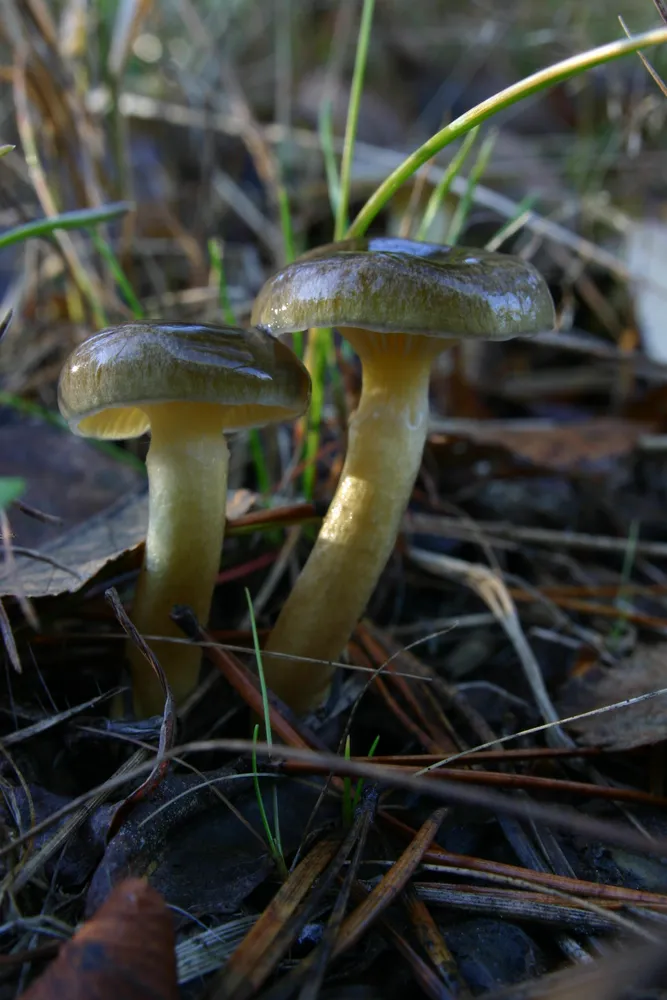
Herald of winterHygrophorus hypothejus
Expert-verifiedUpdated October 3, 2026
Passport
- Edibility
- Edible
- Season
- Oct — Nov
- Hymenophore
- Gilled
- Cap color
- Brown
- Size
- Medium (5–15 cm)
- Smell
- Pleasant
- Reviewed
- Yes ✓
Quick answers
Where to look?
Conifer forest, Mixed forest
When does it appear?
Oct — Nov
Active months: October, November.
How to recognize it? Three signs
- Cap color: Brown, Olive, Yellow
- Cap shape: Convex
- Smell: Pleasant
Fruiting season
October – November
Description
The Herald of winter is a truly hardy late-autumn mushroom. It appears when most species have already finished fruiting: late September, October, and even after the first frosts in November. That's why it's also called "frost-resistant" — it calmly withstands below-zero temperatures and keeps fruiting as if it doesn't notice the cold.
It's a good edible mushroom, valued precisely for its late season — when there's nothing left in the basket to compete with it. Flesh firm, with a pleasant mushroomy taste. Suitable for frying, stewing and pickling. Because the cap is slimy, it's worth wiping it or scalding it with boiling water before cooking. Safe to pick — the combination of an olive-brown cap, yellow gills and a late season is rarely repeated in dangerous species.
In Ukraine it grows in pine and mixed forests and is a mycorrhizal partner of pine. Harvests are especially rich in Polissia and the Carpathians. It likes mossy spots under pines and often grows in groups. Season: October–November, peaking after the first cold nights.
Cap
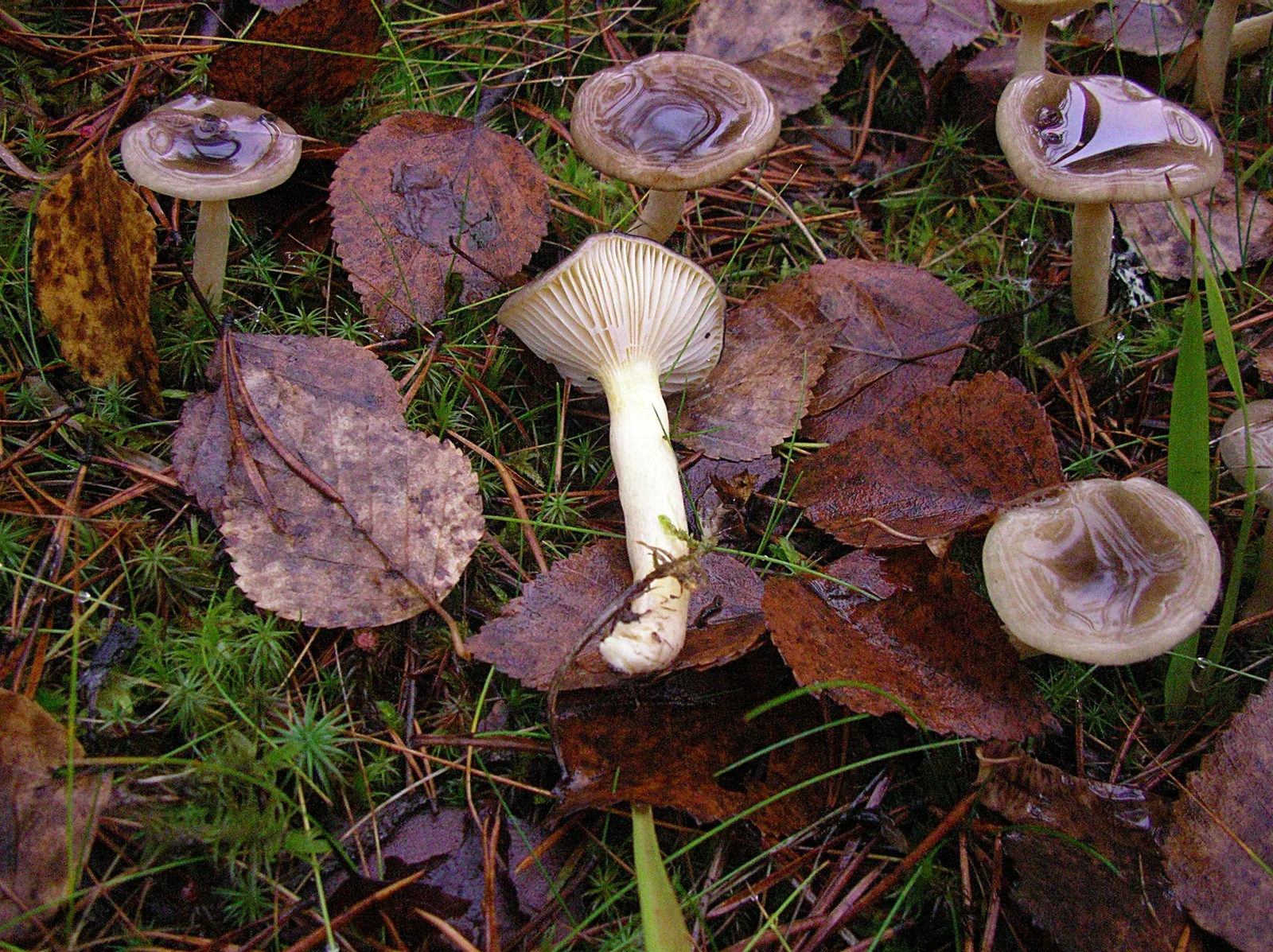
Cap 3-7 cm, at first hemispherical with an inrolled margin, then convex-flattened with a broad umbo. Color olive-brown or yellowish-olive in the center, paler and yellowish toward the margin. Surface very slimy, especially in wet weather, glossy.
Hymenophore
Gills. The gills are widely spaced, thick, waxy, decurrent on the stem. Color yellow or yellowish-golden — this is the key feature. Spore print white.
Stem
Stem 4-9 cm tall, 0.5-1 cm thick, cylindrical, often curved. Yellowish to yellow-orange, paler in the upper part. Surface slimy, especially in young mushrooms. No ring.
Flesh
Flesh pale yellow, firm in young mushrooms, softer with age. Doesn't change color when cut. Handles frying and stewing well.
Smell
Faint pleasant mushroomy smell, without sharp notes. Mild, pleasant taste.
›Scientific synonyms (4)
Agaricus hypothejus Fr. 1821, Limacium hypothejum (Fr.) P. Kumm., Hygrophorus aureus Arrh., Limacium aureum (Arrh.) Ricken
Lookalikes
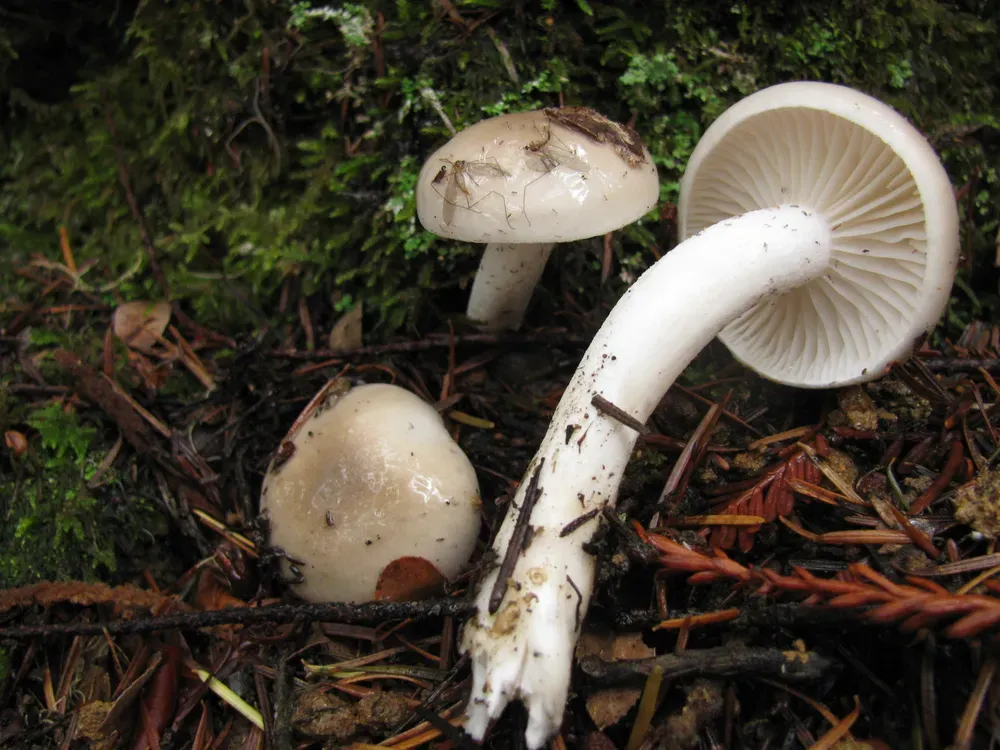
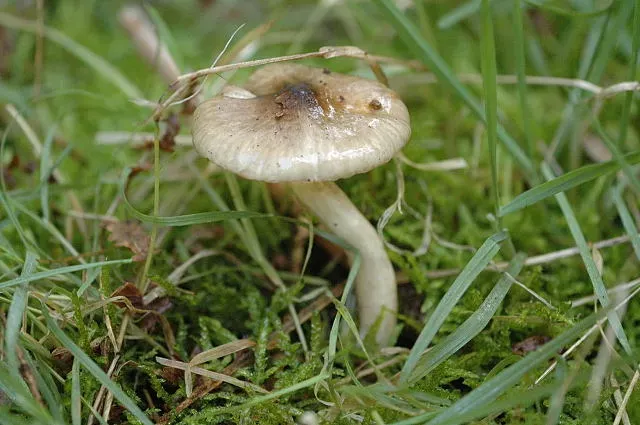
Related species
Mushrooms of the same genus and habitat — to study side by side and never mix up.
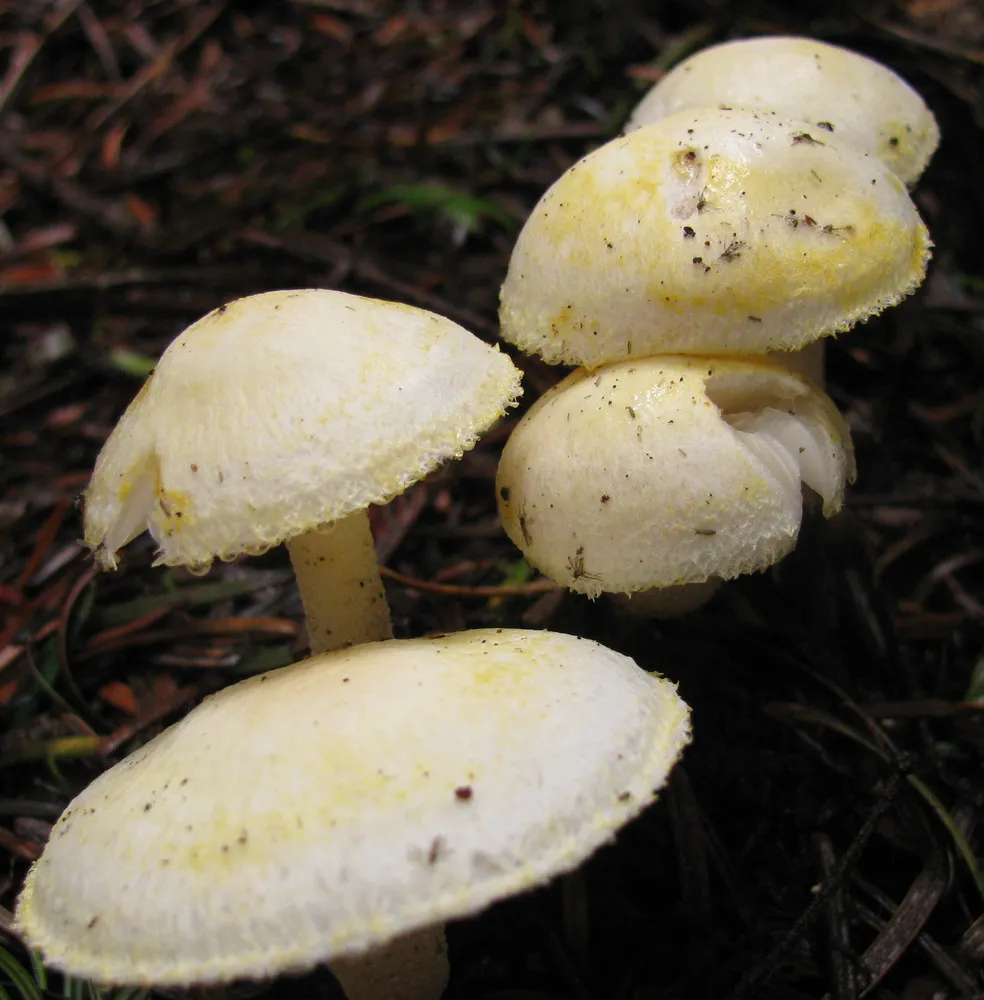
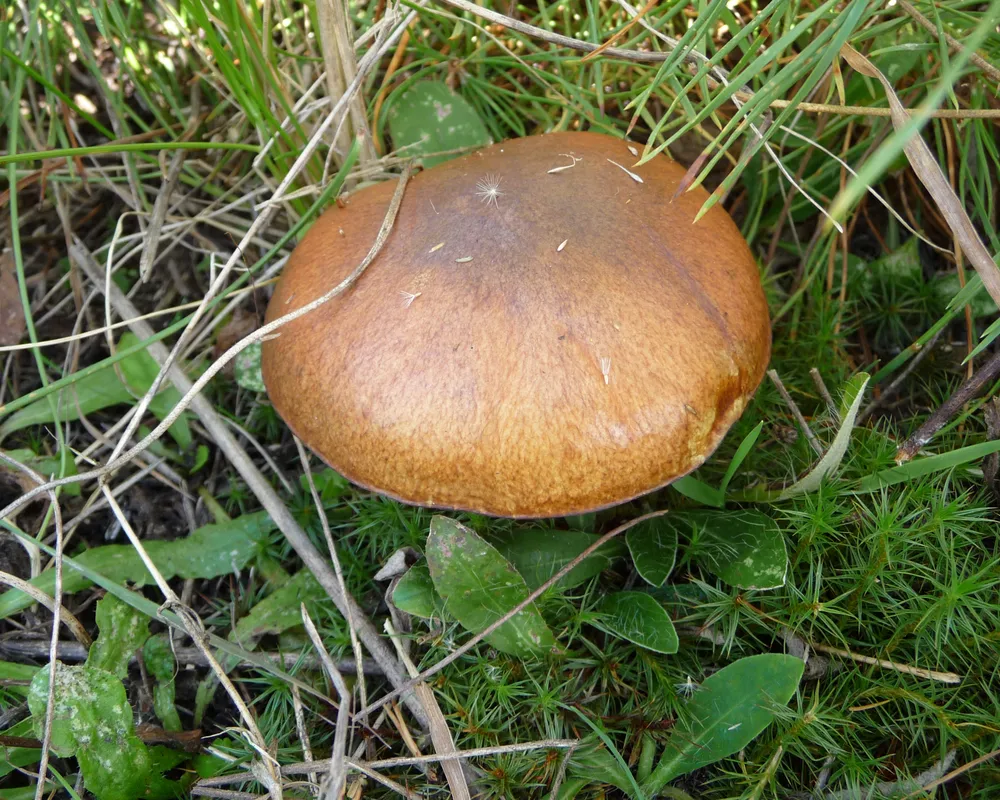
Gold flecked woodwax
Hygrophorus chrysodon
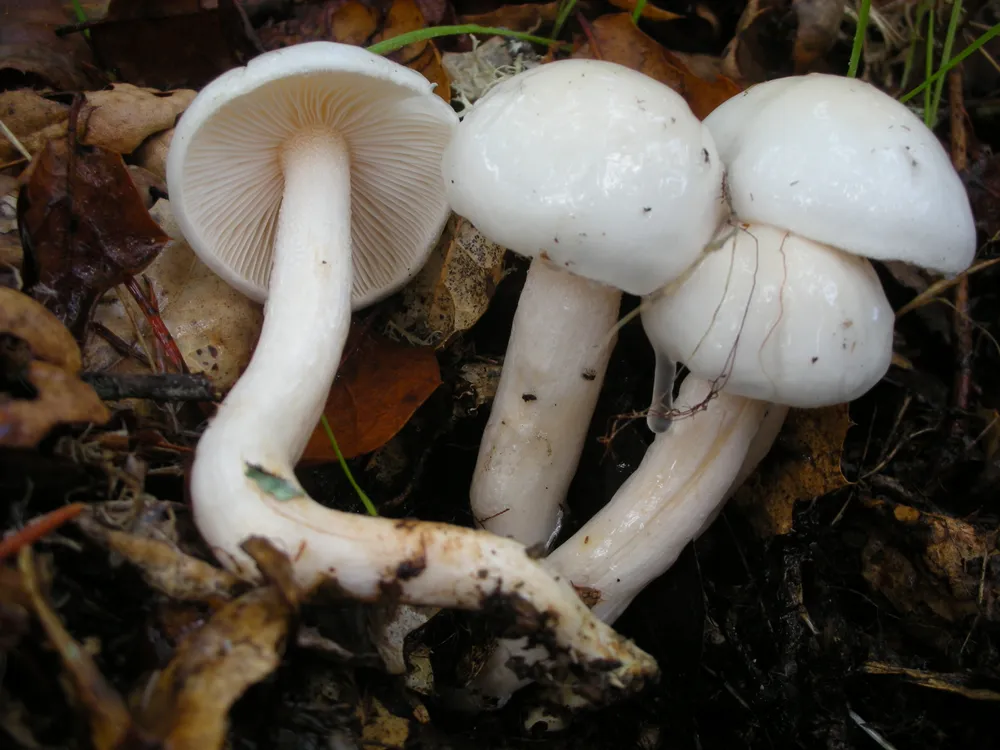
Hygrophorus leucophaeus
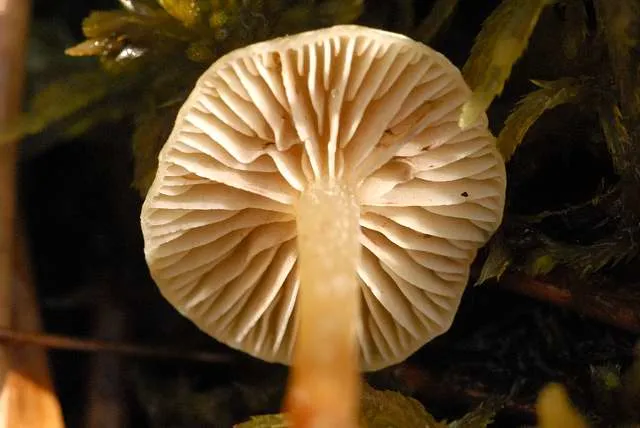
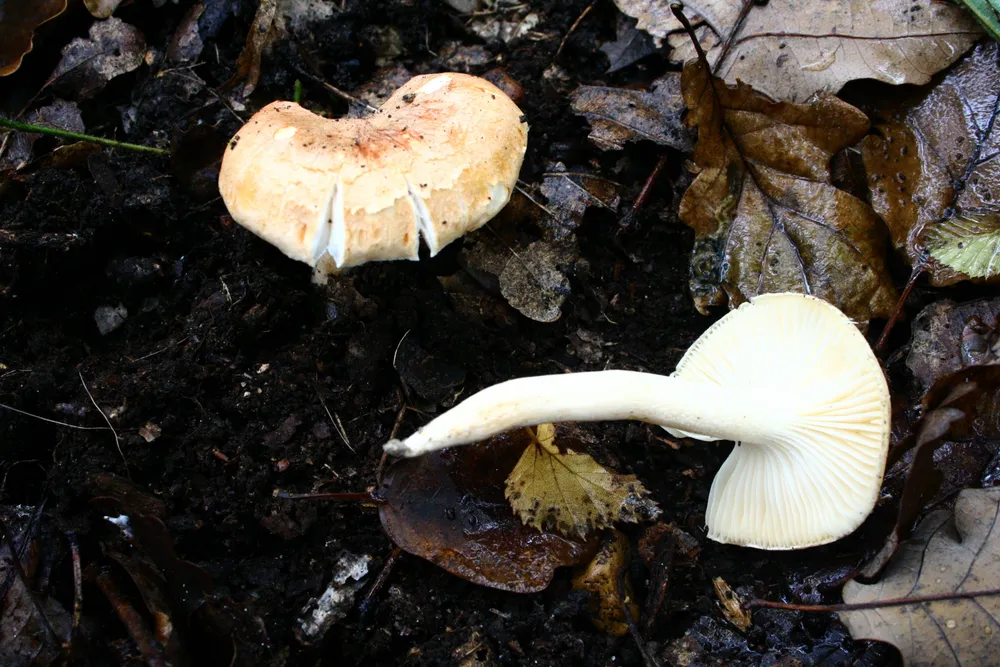
Larch woodwax
Hygrophorus lucorum
.webp)
March mushroom
Hygrophorus marzuolus
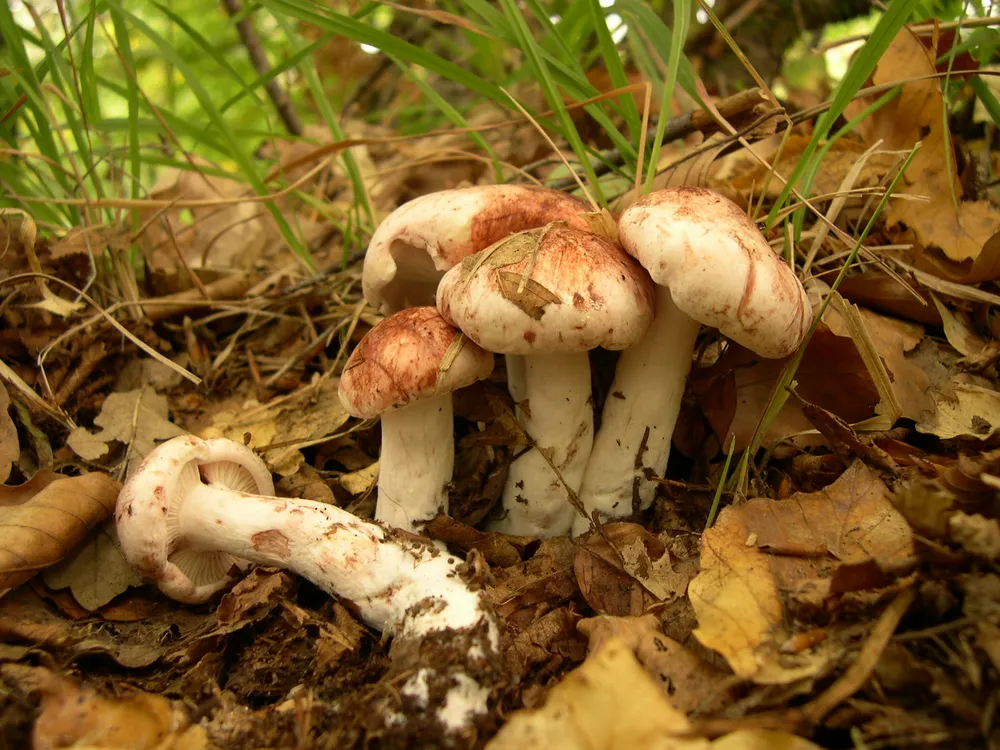
Pinkmottle woodwax
Hygrophorus russula
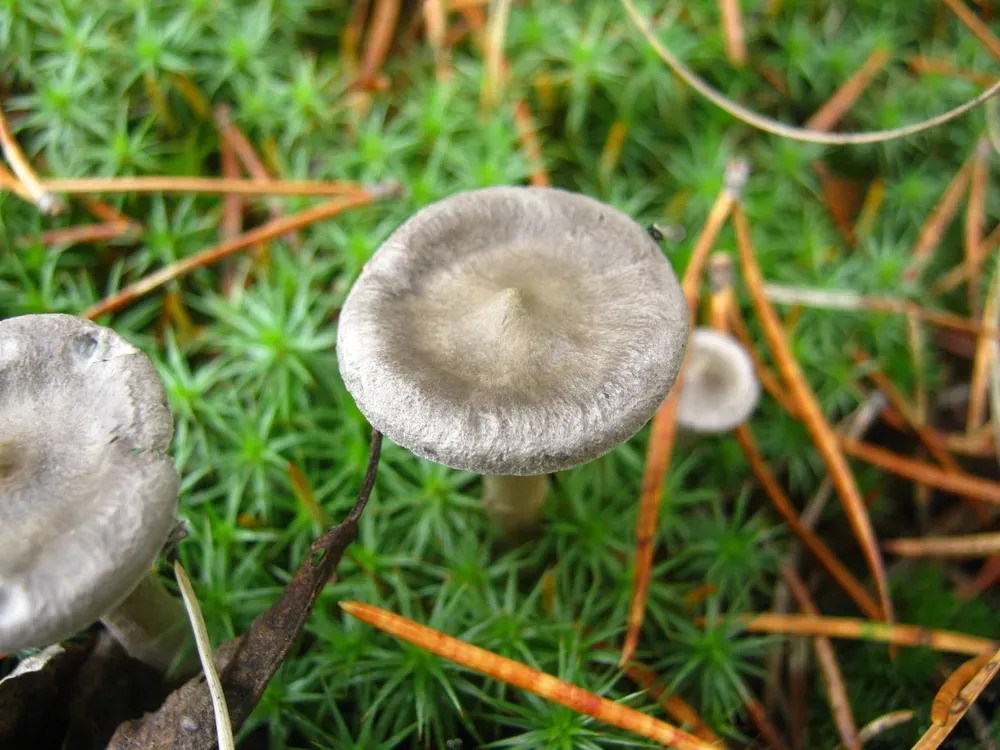
Grayling
Cantharellula umbonata
._Locatie,_Hortus_(Haren,_Groningen)_01.webp)
Vermilion waxcap
Hygrocybe miniata
_1.webp)
Blackening waxcap
Hygrocybe conica
Related reading
Frequently asked questions
Is it safe to eat?
Yes, it's a good edible mushroom. Its combination of features — an olive-brown cap with a yellow margin, yellow gills, a very late season (October–November) and mycorrhiza with pine — is easy to recognize and rarely repeated in dangerous species.
Does it need any pre-treatment?
Before cooking, it's worth wiping the slimy cap with a paper towel or scalding it with boiling water — it'll be easier to handle. Boiling isn't required. You can fry, stew or pickle it straight away, or add it to soups.
Where should you look for it?
In pine and mixed forests with pine — it's an obligate mycorrhizal partner of pine. It likes mossy spots, forest edges and clearings. It often grows in groups of 5-10 fruiting bodies. It doesn't occur without pine.
In which regions of Ukraine does it grow?
Mainly in Polissia (Volyn, Rivne, Zhytomyr, Kyiv, Chernihiv and Sumy oblasts), in the Carpathians and Prykarpattia, and in pine plantations of the western and right-bank Forest-Steppe. In the steppe — only in planted pine stands.
When should you look for it?
Late September — November. It's the latest of the woodwaxes. Peak fruiting comes after the first night frosts, in the second half of October. It often grows alongside snowfall-season species and withstands frost for a long time.
Can it grow after frosts?
Yes, that's its strong point. The Herald of winter is resistant to light frosts and can fruit even in November, when the first snow is already falling. Mushrooms picked after a frost are perfectly fine and don't spoil.
What is it confused with?
With other woodwaxes and some slippery jacks (Suillus). It differs from slippery jacks in having gills (not pores). From other woodwaxes — by the characteristic yellow color of its gills and its late season.
How do you tell it from a slippery jack?
Look under the cap. Slippery jacks and their kin (Suillus, Bovine bolete) have tubes like a sponge, while the Herald of winter has gills. This is a fundamental difference between the genera. Plus, the woodwax fruits much later than most slippery jacks.
Is Herald of winter edible or poisonous?
Does Herald of winter have gills or pores?
What does the cap of Herald of winter look like?
What does the stem of Herald of winter look like?
Sources
- [1]Вікіпедія (українська)
- [2]Атлас грибів України, Зеров Д.К. (1979)
- [3]MycoBank Database
- [4]Index Fungorum
- [5]GBIF
- [6]iNaturalist Ukraine