_1.webp)
Blackening waxcapHygrocybe conica
Expert-verifiedUpdated October 3, 2026
Passport
- Edibility
- Poisonous
- Season
- Jun — Oct
- Hymenophore
- Gilled
- Cap color
- Orange
- Size
- Small (up to 5 cm)
- Smell
- Odorless
- Reviewed
- Yes ✓
POISONOUS
Eating it causes poisoning. Do not pick it unless you have identified it with certainty.
This mushroom has a controversial reputation. Older European sources called it edible, but modern research (especially from Asia) has documented serious poisonings, sometimes fatal. The exact toxin has not been identified. Symptoms described in the literature: nausea, vomiting and abdominal pain a few hours after eating; in severe cases — rhabdomyolysis (breakdown of muscle fibers) and kidney failure. Because of this data, the current consensus among mycologists is to treat the mushroom as poisonous and not pick it. In any case it has no culinary value. If you suspect poisoning — see a doctor immediately and keep any leftover mushrooms for identification.
If you suspect poisoning, call an ambulance immediately: 112 (the European emergency number) or your local emergency number
Quick answers
Where to look?
Mixed forest, Deciduous forest
When does it appear?
Jun — Oct
Active months: June, July, August, September, October.
How to recognize it? Three signs
- Cap color: Orange, Red, Yellow, Black
- Cap shape: Conical
- Smell: Odorless
Fruiting season
June – October
Description
The Blackening waxcap is the best-known and most suspicious of the waxcaps. It's easy to recognize by one very distinctive trait: when damaged, rubbed or simply with age, the whole mushroom (cap, gills, stem) turns black. At first the fruiting body is bright orange, red-orange or yellow with a cone-shaped cap. Then — at the slightest touch — it starts to blacken, first in patches, then it turns completely coal-black. Older sources considered it edible, but modern data cast serious doubt on that.
This is a suspicious or potentially poisonous species. The literature records several documented poisonings, including data from China and Japan, where this mushroom caused serious, sometimes fatal intoxications. In Europe there is less direct evidence, but mycologists unanimously recommend that you don't pick it and don't eat it. If you find a bright mushroom with a conical cap in a meadow that turns black when touched — that's the one. Leave it be.
In Ukraine it grows throughout the forest and forest-steppe zones, in meadows, pastures, mossy glades and forest edges. Season: July–October. It's the most common species of the genus Hygrocybe in Ukraine — photogenic and recognizable, but not for the basket.
Cap
Cap 2-7 cm, at first cone-shaped or sharply pointed, with age becoming conical-flattened with a sharp umbo. Color bright orange, red-orange, sometimes with yellow tones. Surface moist, waxy, slimy in wet weather. Key feature: when damaged it turns black.
Hymenophore
Gills. The gills are widely spaced, waxy and free. At first yellowish to orange in color, when damaged they turn black. In old mushrooms they are completely black. Spore print white.
Stem
Stem 4-10 cm tall, 0.4-1 cm thick, slender, cylindrical, hollow inside, sometimes twisted. Orange-yellow to reddish, with lengthwise fibers. With damage and age it turns black completely. No ring.
Flesh
Flesh thin, brittle, yellowish. When cut and when touched it turns black — this is the key diagnostic feature of the group (subgenus Pseudohygrocybe).
Smell
No distinctive smell, or faintly mushroomy. Mild taste, but tasting it is not a good idea.
›Scientific synonyms (2)
Godfrinia conica (Schaeff.) Maire 1902, Hygrophorus conicus (Schaeff.) Fr. 1838
Lookalikes
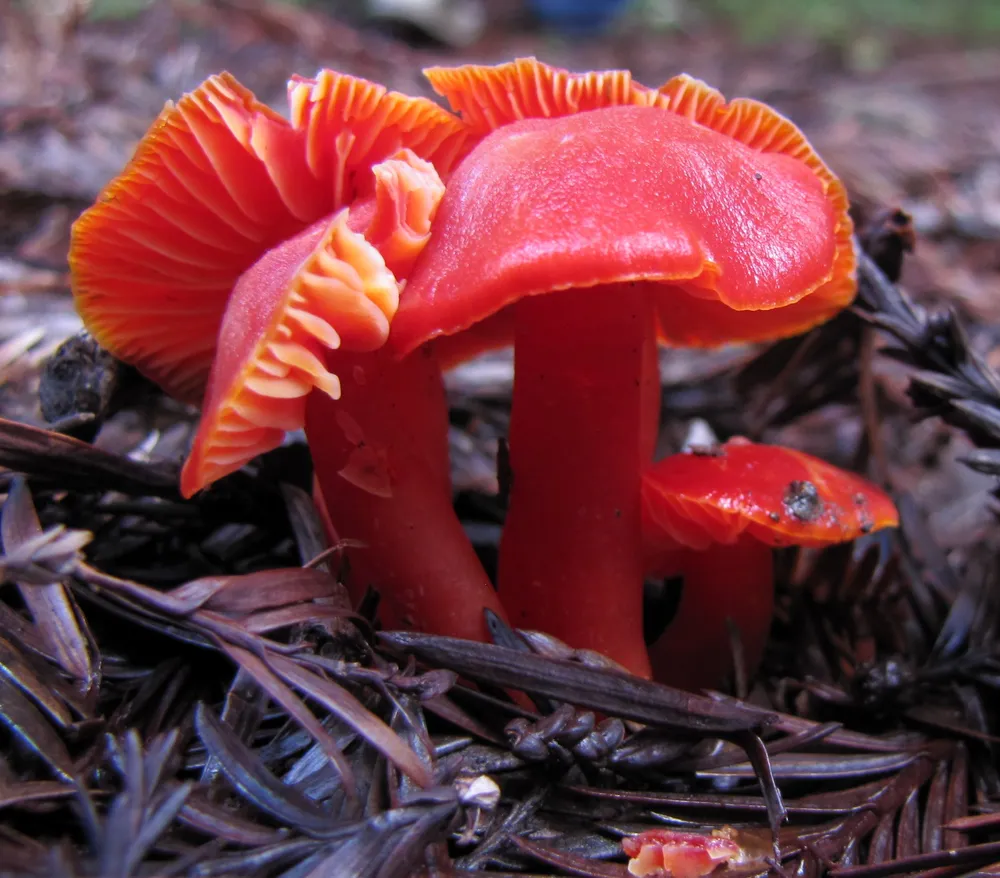
._Locatie,_Hortus_(Haren,_Groningen)_01.webp)
Related species
Mushrooms of the same genus and habitat — to study side by side and never mix up.
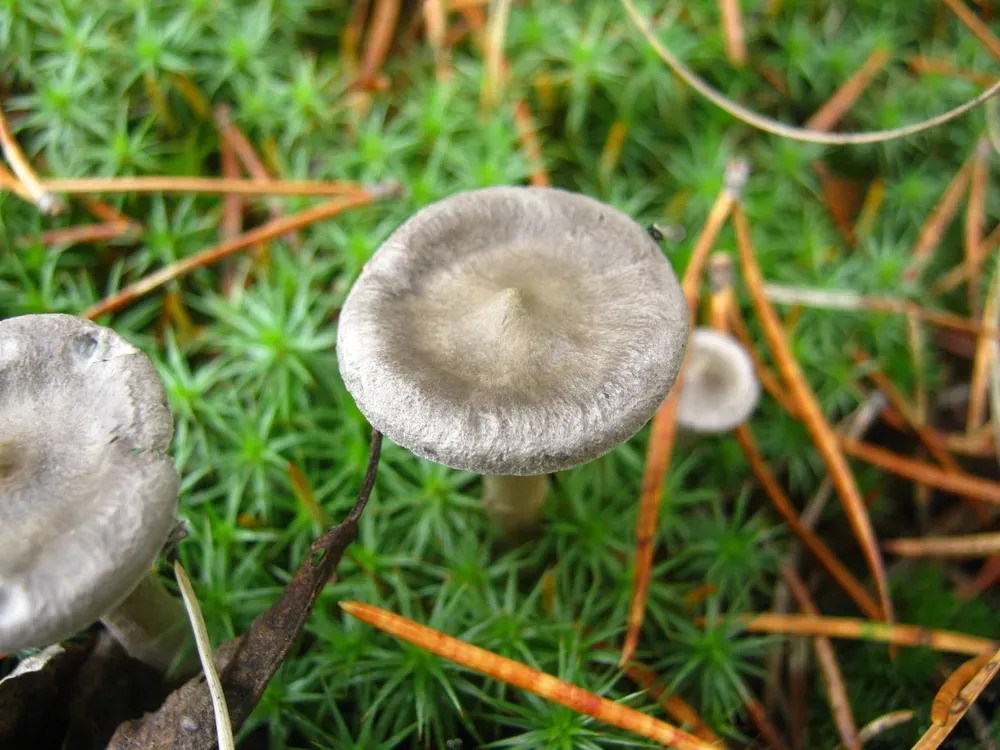
Grayling
Cantharellula umbonata
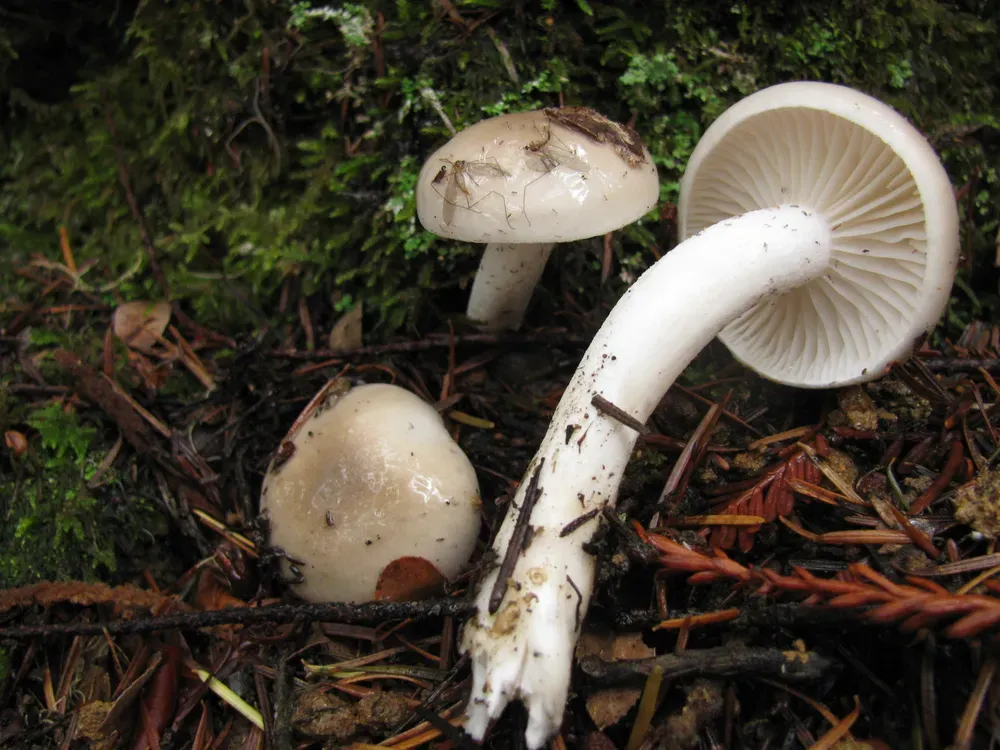
Almond woodwax
Hygrophorus agathosmus
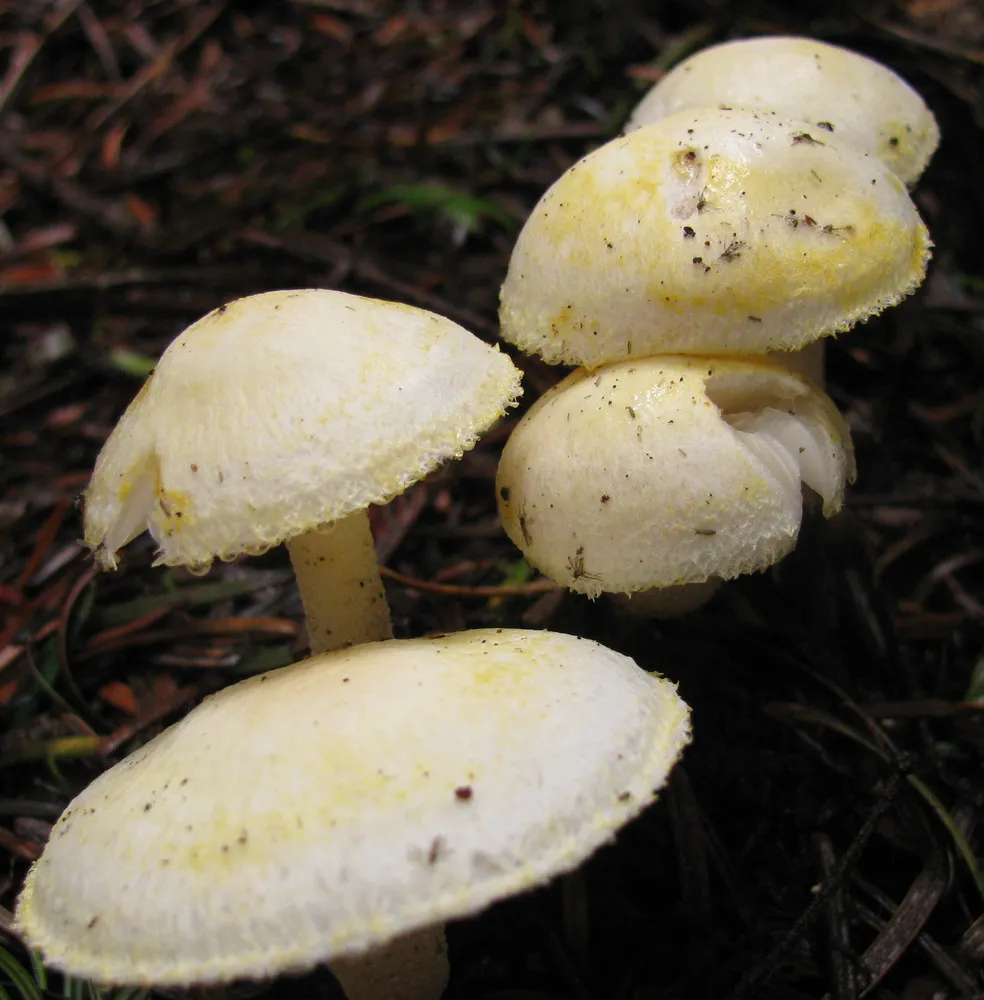
Gold flecked woodwax
Hygrophorus chrysodon
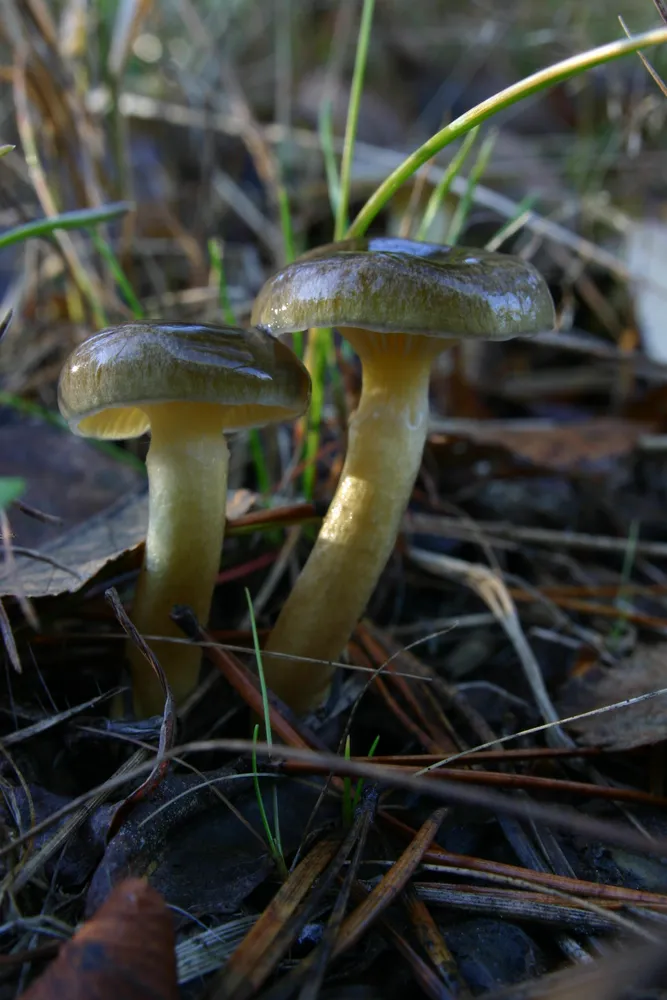
Herald of winter
Hygrophorus hypothejus
Hygrophorus leucophaeus
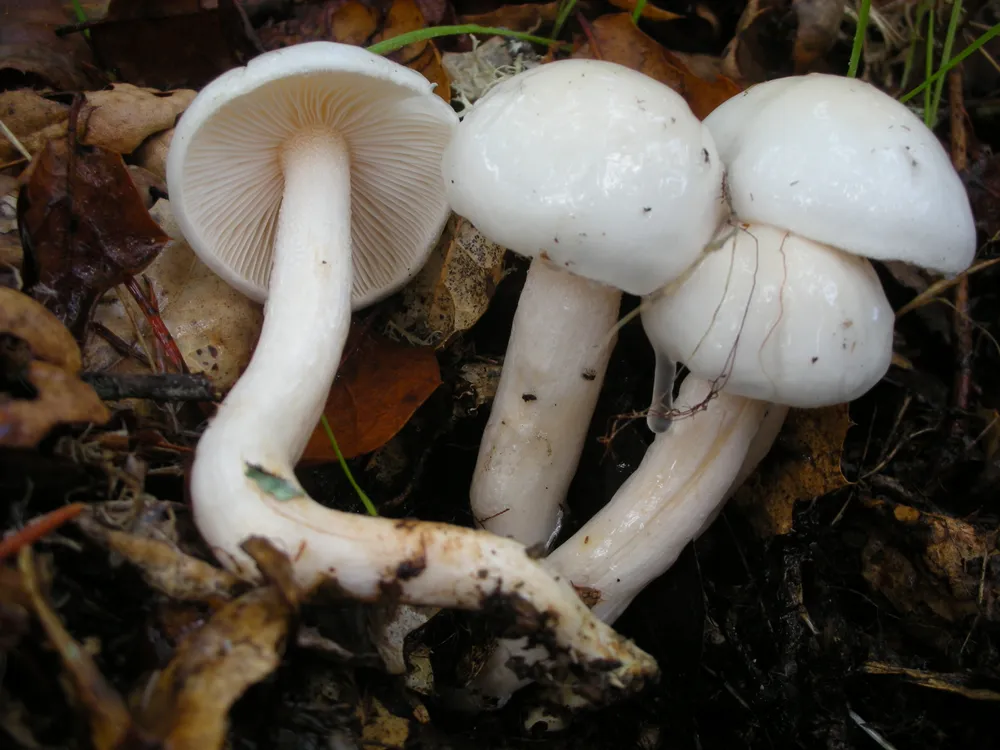
Ivory woodwax
Hygrophorus eburneus
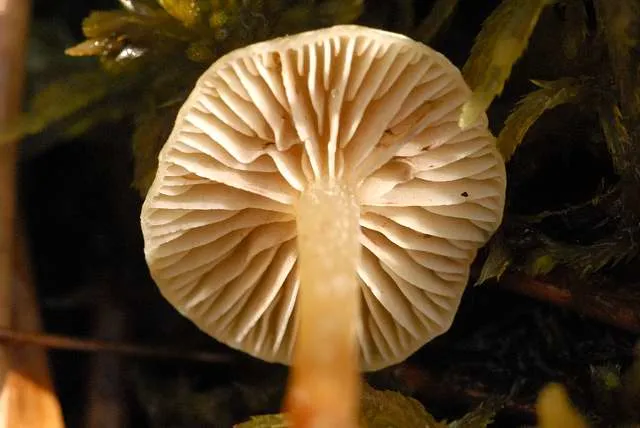
Larch woodwax
Hygrophorus lucorum
.webp)
March mushroom
Hygrophorus marzuolus
Frequently asked questions
Can you eat it?
No, you shouldn't. Old books called it edible, but modern data have documented serious poisonings with fatal outcomes (especially in Asia). The exact toxin has not been identified, but the mycological community unanimously recommends that you don't pick it and don't eat it. If you find it — leave it be.
What should you do if you suspect poisoning?
If you've eaten this mushroom and symptoms have appeared (nausea, vomiting, abdominal pain a few hours later) — immediately call 112 or your local emergency number, or go to the emergency room. Keep any leftover mushrooms for identification by a toxicologist. Don't wait for it to "pass on its own": with rhabdomyolysis and kidney failure, every hour counts.
How will I know it's this one?
The key sign: the mushroom turns black when touched. Press a finger on the cap, gills or stem — within a few minutes a black spot will appear where you pressed. Add to that the cone-shaped bright orange cap, the slender fibrous stem and meadows/mossy spots. If it turns black — it's definitely this one, don't taste it.
Where should you look for it?
In meadows, pastures, mossy forest glades, at forest edges and on park lawns. It likes damp spots with not-too-dense grass. It's a soil saprotroph and doesn't need trees — it grows out in the open on grassy areas.
In which regions of Ukraine does it grow?
Throughout the forest and forest-steppe zones — the Carpathians, Prykarpattia, Polissia, and the Western and Right-Bank/Left-Bank Forest-Steppe. It's the most common member of the genus Hygrocybe in Ukraine. Rarer in the steppe — it needs moist soils.
When does it appear?
July–October. Peak fruiting is August–September, especially after heavy rains. In a wet summer it can fruit as early as June.
What is it confused with?
With other bright waxcaps — the Scarlet waxcap (Hygrocybe coccinea), Hygrocybe punicea. The critical difference: only the Blackening waxcap turns black when touched. All the others keep their color. If a red/orange mushroom in a meadow turns black when pressed — it's the Blackening waxcap, not edible. If it stays bright — it's another species (also not worth picking, but not poisonous).
Can it be mistaken for a chanterelle?
Unlikely. The chanterelle grows in the forest under trees, has a funnel-shaped cap and false gills (blunt folds). The Blackening waxcap grows in a meadow, with a cone-shaped cap and true thin gills. Plus, the chanterelle doesn't turn black. Completely different mushrooms.
Is Blackening waxcap edible or poisonous?
Does Blackening waxcap have gills or pores?
What does the cap of Blackening waxcap look like?
What does the stem of Blackening waxcap look like?
Sources
- [1]Вікіпедія (українська)
- [2]Атлас грибів України, Зеров Д.К. (1979)
- [3]MycoBank Database
- [4]Index Fungorum
- [5]GBIF
- [6]iNaturalist Ukraine