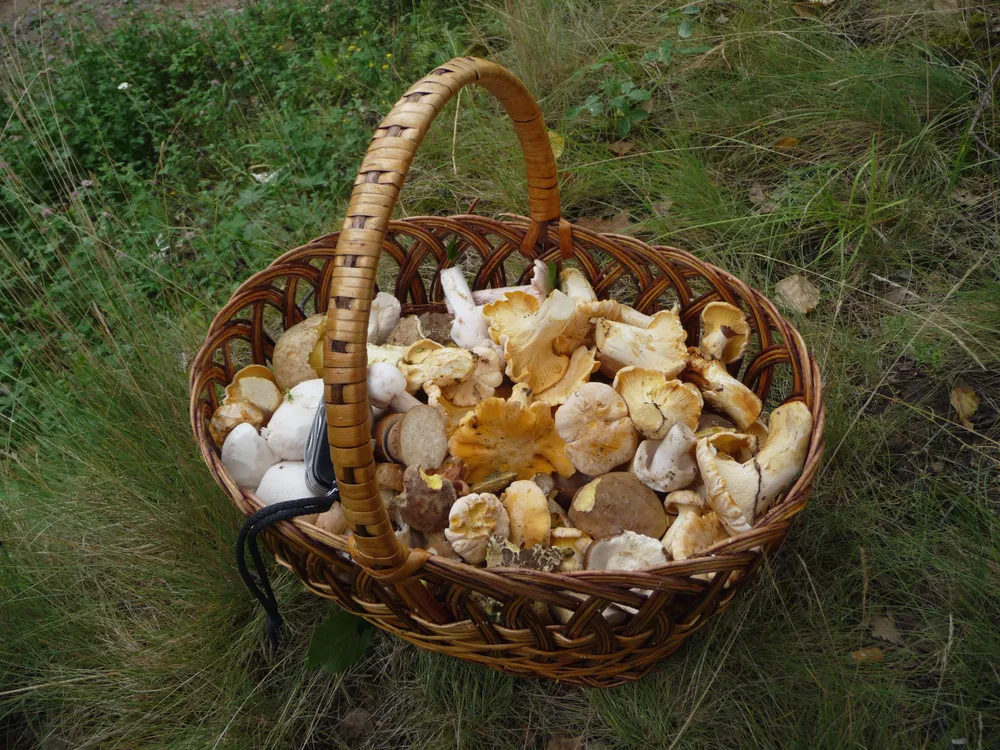
ChanterelleCantharellus cibarius
Expert-verifiedUpdated October 3, 2026
Passport
- Edibility
- Edible
- Season
- Jun — Oct
- Hymenophore
- Ridged
- Cap color
- Yellow
- Size
- Medium (5–15 cm)
- Smell
- Fruity
- Reviewed
- Yes ✓
Quick answers
Where to look?
Deciduous forest, Mixed forest, Conifer forest
When does it appear?
Jun — Oct
Active months: June, July, August, September, October.
How to recognize it? Three signs
- Cap color: Yellow, Orange
- Cap shape: Funnel-shaped, Concave
- Smell: Fruity
Fruiting season
June – October
Description
The chanterelle (Cantharellus cibarius) is one of the most recognizable and warmest mushrooms of Ukrainian forests. Its yellow-orange cap among moss and rotting leaves looks like tiny forest lanterns — hence its Ukrainian folk name, related to the word for "fox". This species forms mycorrhiza with birches, oaks, beeches and pines, so you can find it in the most varied forests — from Carpathian spruce woods to the mixed forests of Polissia.
The first fruiting bodies appear at the end of June, but the real wave comes in July–August, when after long summer rains the forest floor warms up to 18–20 °C. The chanterelle doesn't like being alone — look for it in clusters on well-drained ground, especially along old forest roads. And one more happy trait: this mushroom is almost never wormy — specific polyacetylene compounds in the flesh repel insects.
Chanterelles are prized for their dense, springy flesh and light peppery taste. They're fried in butter with onions, added to sour cream sauces, and pickled. Unlike most mushrooms, the chanterelle needs no pre-boiling — you can cook it right away.
Cap
The chanterelle's cap is 3–10 cm across. In young mushrooms it's convex with an inrolled margin; with time it becomes flattened and spread out and noticeably funnel-shaped — the margin lifts upward and takes on a wavy outline.
The color is bright yellow-orange or egg-yolk yellow, more rarely paler — from light ochre to almost whitish in shady spots. The surface is smooth and dry, slightly velvety to the touch, like apricot skin. In mature specimens the cap often merges into the stem with no visible transition — the mushroom looks as if carved from a single piece of ochre wax.
Hymenophore
The chanterelle's hymenophore is its main identifying feature. These are neither gills nor tubes, but characteristic forked ridges (false gills) that run far down the stem. The ridges are the same color as the cap: an even yellow-orange or egg-yolk yellow.
The ridges are widely spaced, thick, and joined by cross-veins — creating the impression of a three-dimensional net. The color doesn't change when pressed. It's by this feature that the true chanterelle is easy to tell from the false chanterelle, which has regular, thin gills.
Stem
The chanterelle's stem is short and sturdy: 3–7 cm tall, 1–3 cm thick. Cylindrical, often narrowing toward the base, often flattened and bent or slightly off-center. The surface is smooth and dry, the same yellow-orange as the cap or slightly lighter.
There's no ring and no volva — the chanterelle belongs to a family without veils. The stem is springy, dense and fleshy to the touch, with no hollows. Often several mushrooms grow together at the base into a single shared stalk.
Flesh
The chanterelle's flesh is dense and fleshy, cream or pale yellow when fresh. When cut or damaged, the color barely changes — it just yellows slightly over time. This is an important diagnostic feature: a true chanterelle doesn't "blue" or "redden".
The taste of the fresh flesh is mild, with a light peppery bite that's especially noticeable in the cap. In old specimens the flesh becomes a bit tough and fibrous but keeps its aroma.
Smell
The smell of a fresh chanterelle is one of the most distinctive among edible mushrooms. Warm, fruity, apricot-like, with noticeable notes of dried fruit and a light hint of pepper. Some tasters detect something like dried apricots or sun-dried cherries in it.
When cut, the aroma becomes deeper and richer. Dried, the chanterelle keeps a light fruity tone but loses its freshness — so it's rarely dried, and more often pickled or frozen fresh.
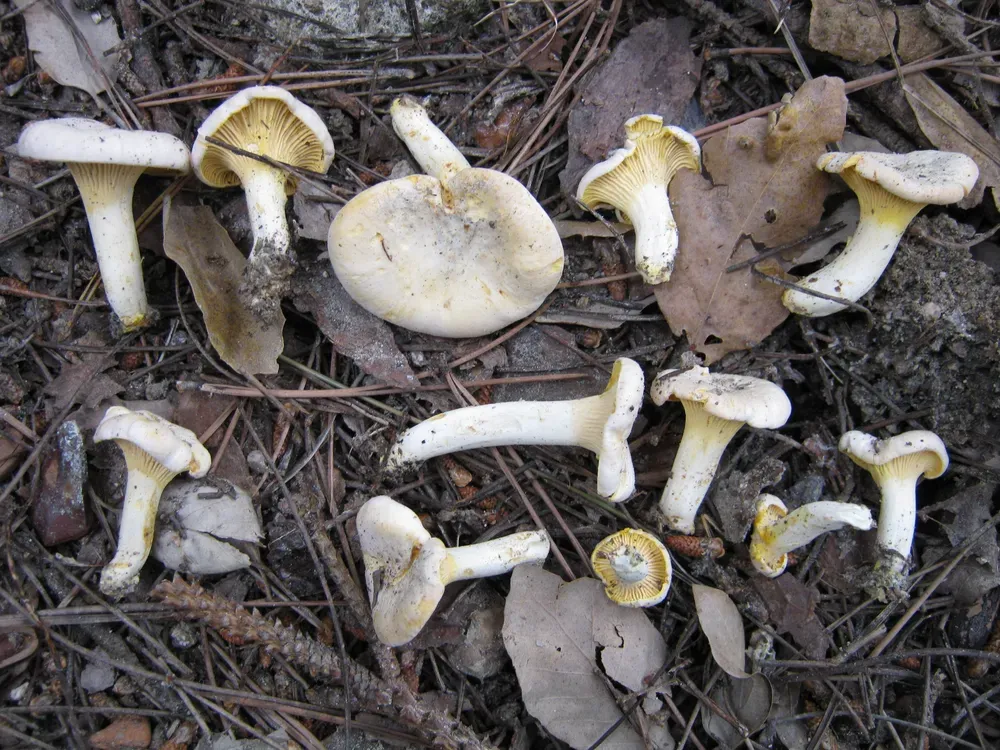
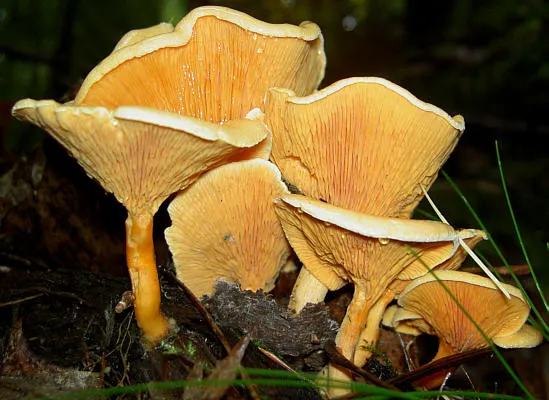
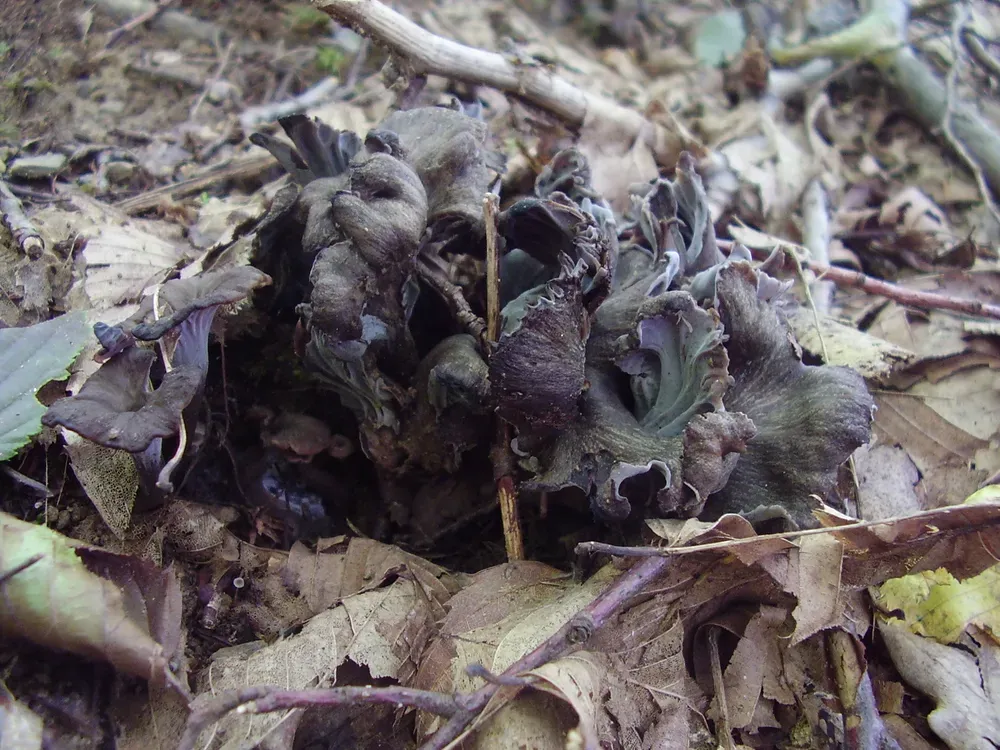
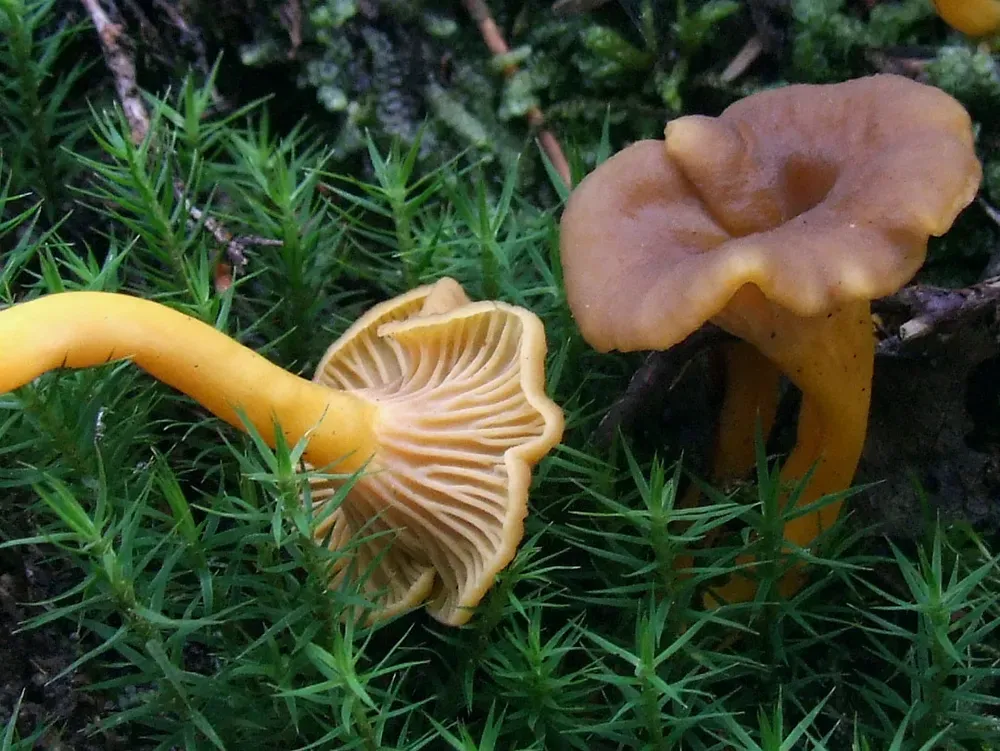
Lookalikes
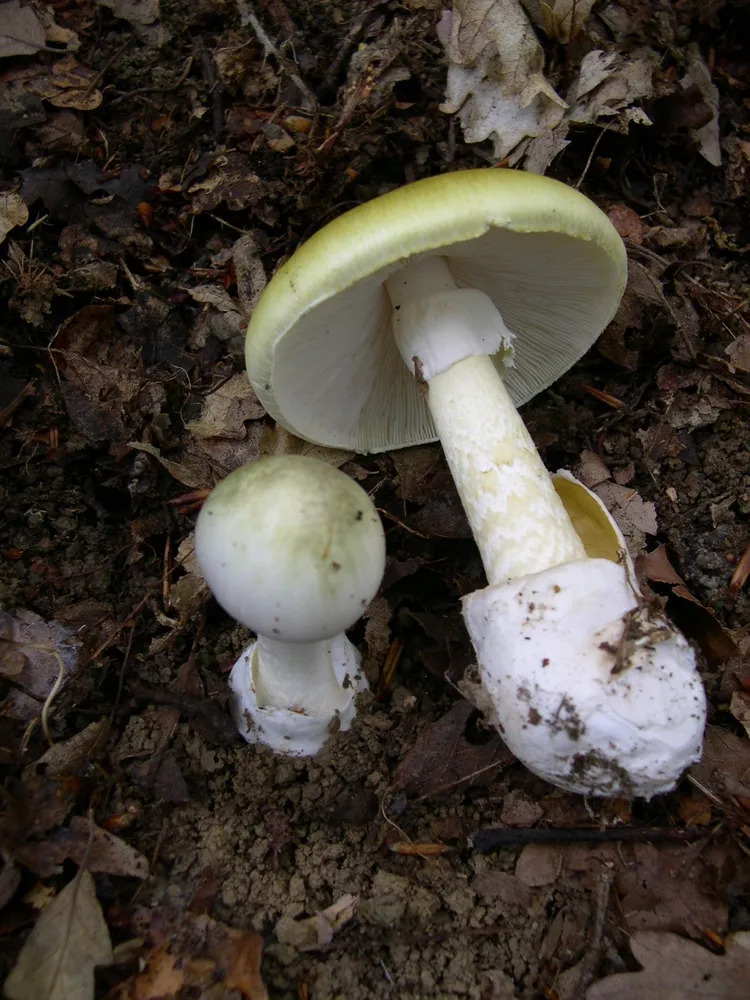
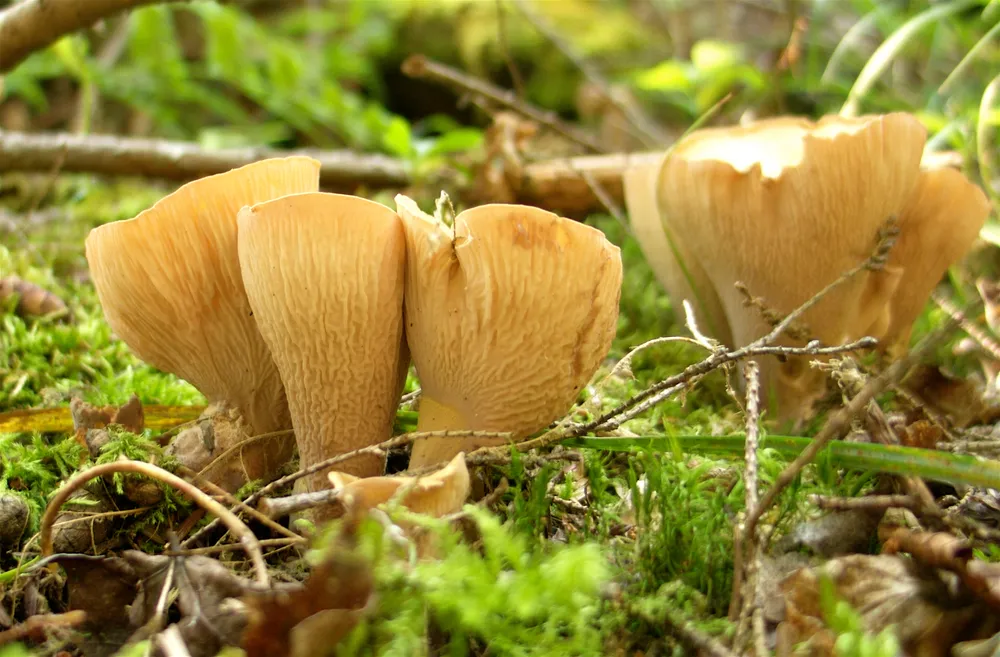
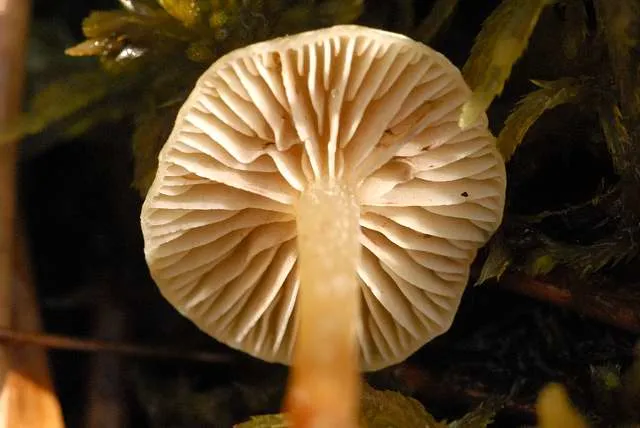
_1.webp)
Related species
Mushrooms of the same genus and habitat — to study side by side and never mix up.
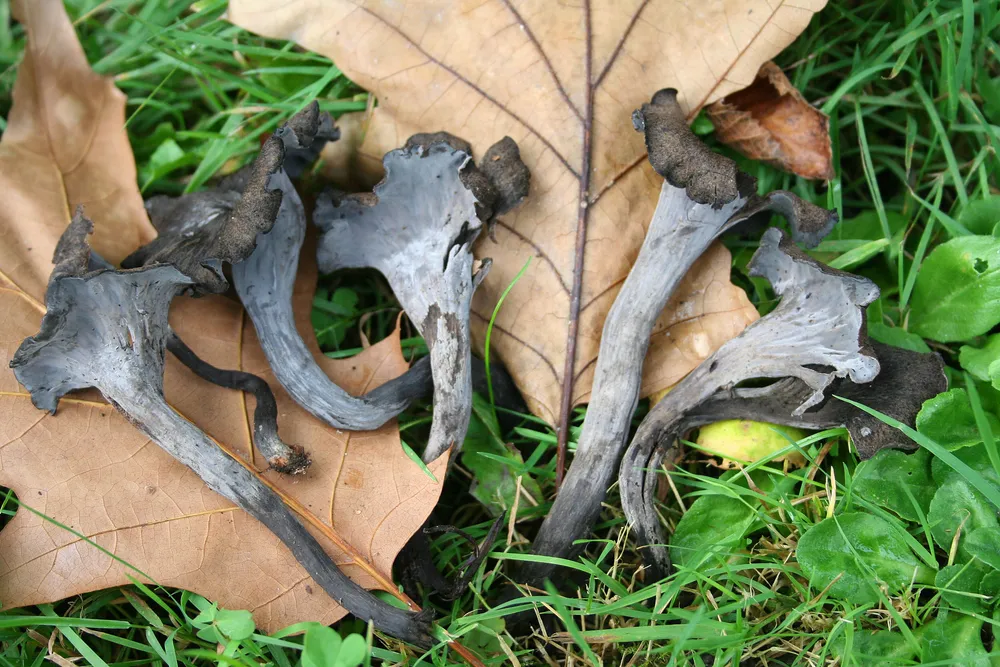
Horn of plenty
Craterellus cornucopioides
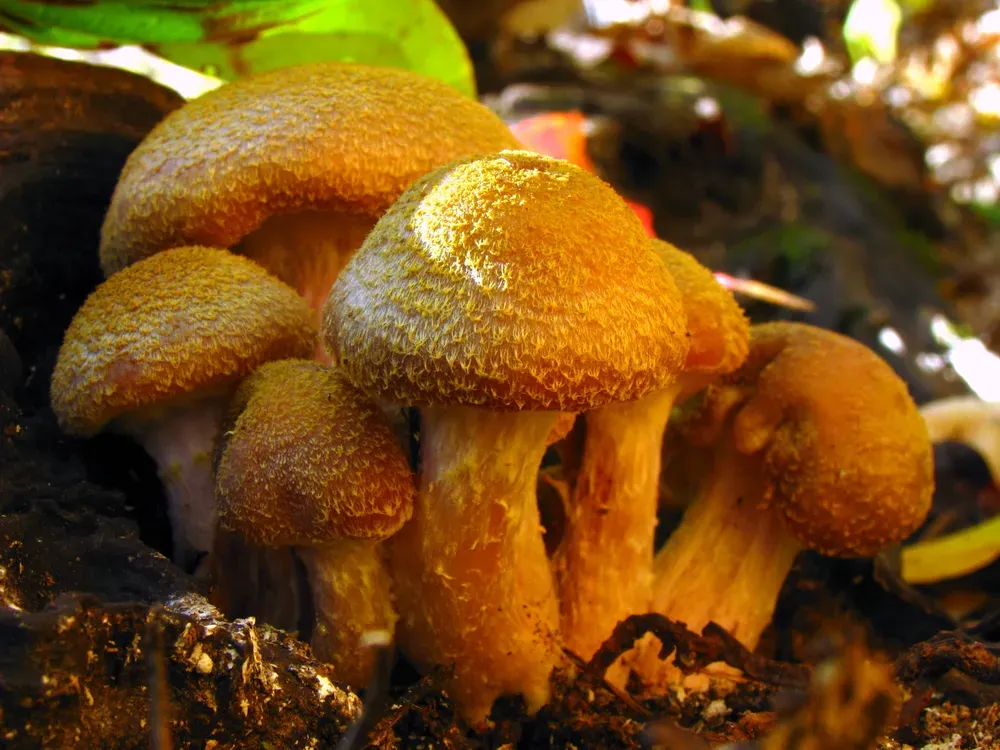
Bulbous honey fungus
Armillaria gallica
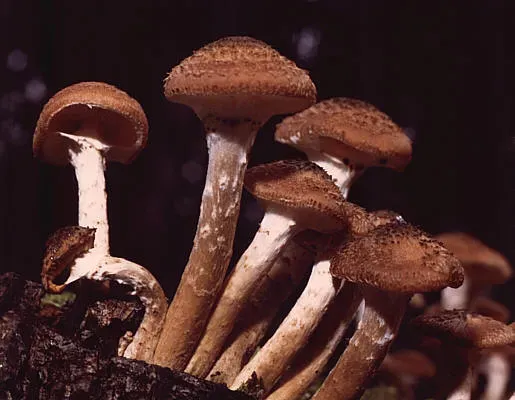
Dark honey fungus
Armillaria ostoyae
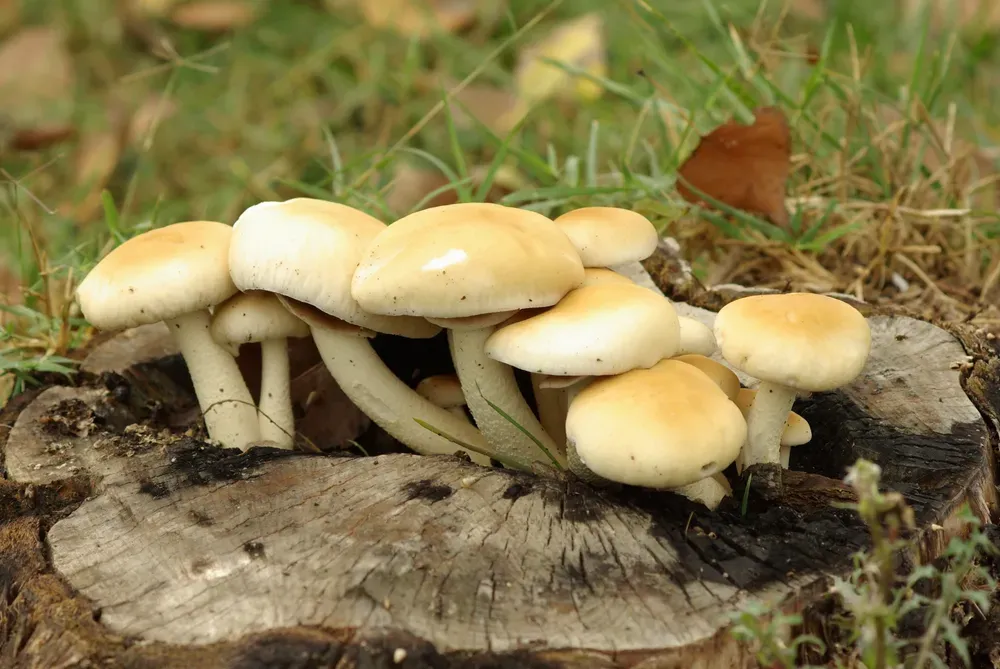
Poplar fieldcap
Cyclocybe aegerita
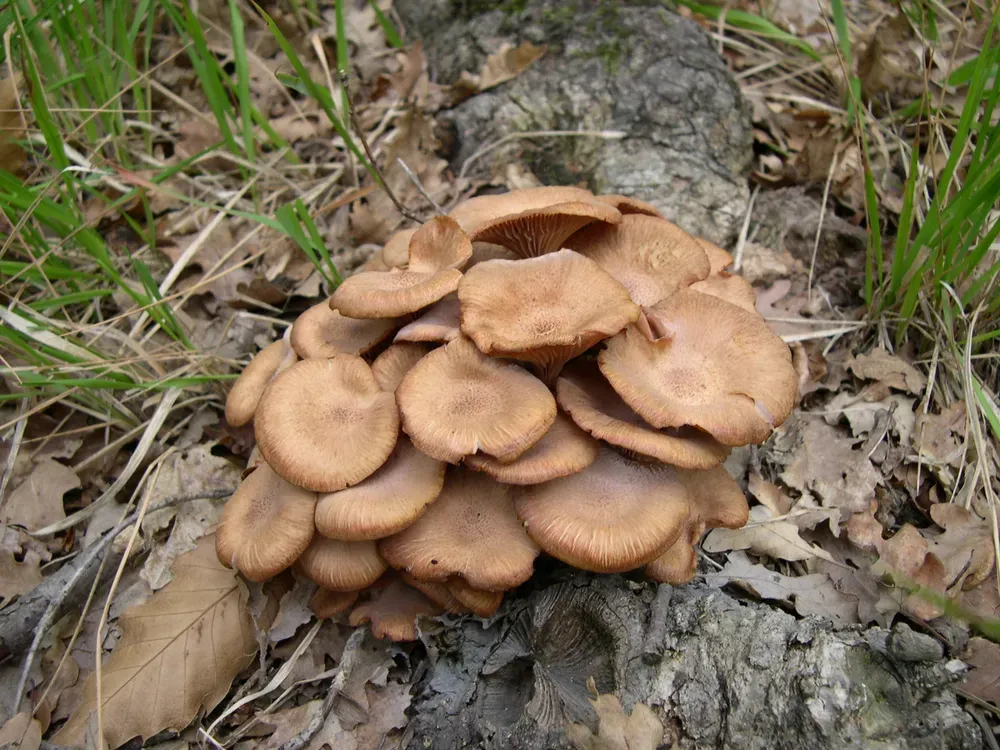
Ringless honey fungus
Desarmillaria tabescens
Agaricus abruptibulbus
Agaricus haemorrhoidarius
Agaricus haemorroidarius
Blushing bolete
Leccinum roseofractum
Related reading
 How to identify
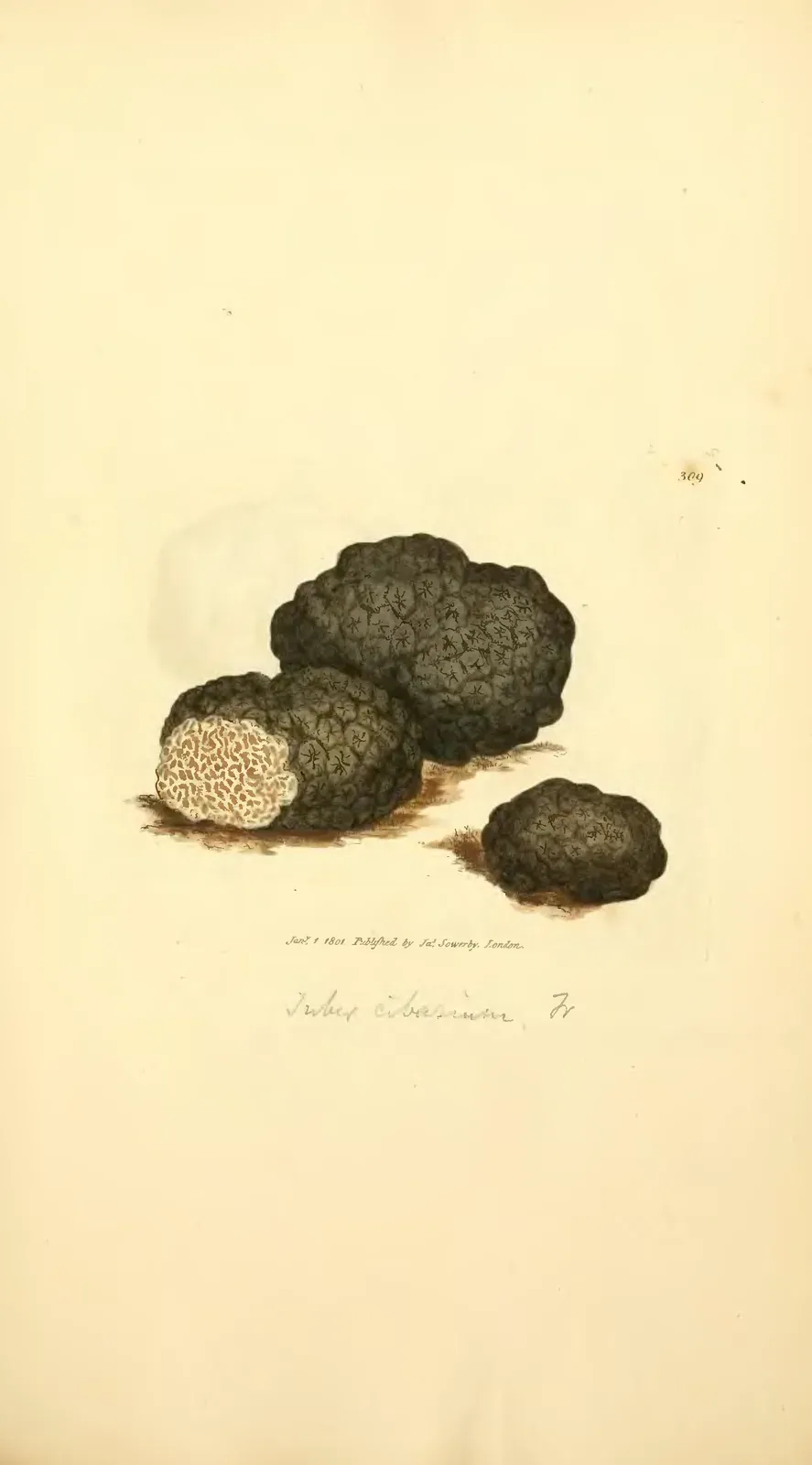
Truffles in Ukraine: do they grow here, and where to look
Truffles aren't just a French delicacy. Several species grow in Ukraine too. Here's which ones, where they occ…
August 24, 2026·2 min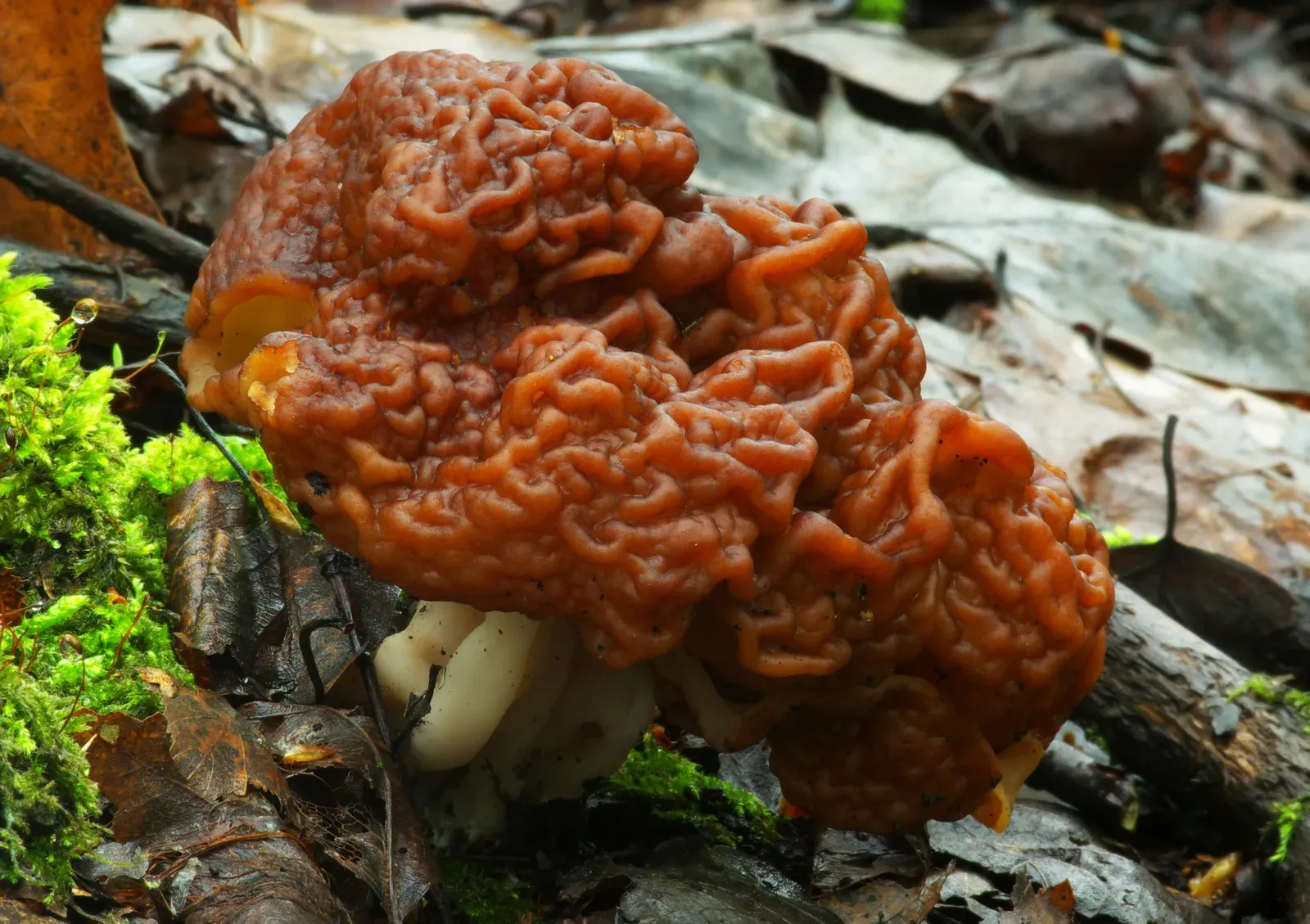 Safety
False morel: why this spring mushroom is dangerous
The false morel looks like a morel, but it contains a poison. Here's how to recognize it, why it's dangerous a…
August 24, 2026·2 min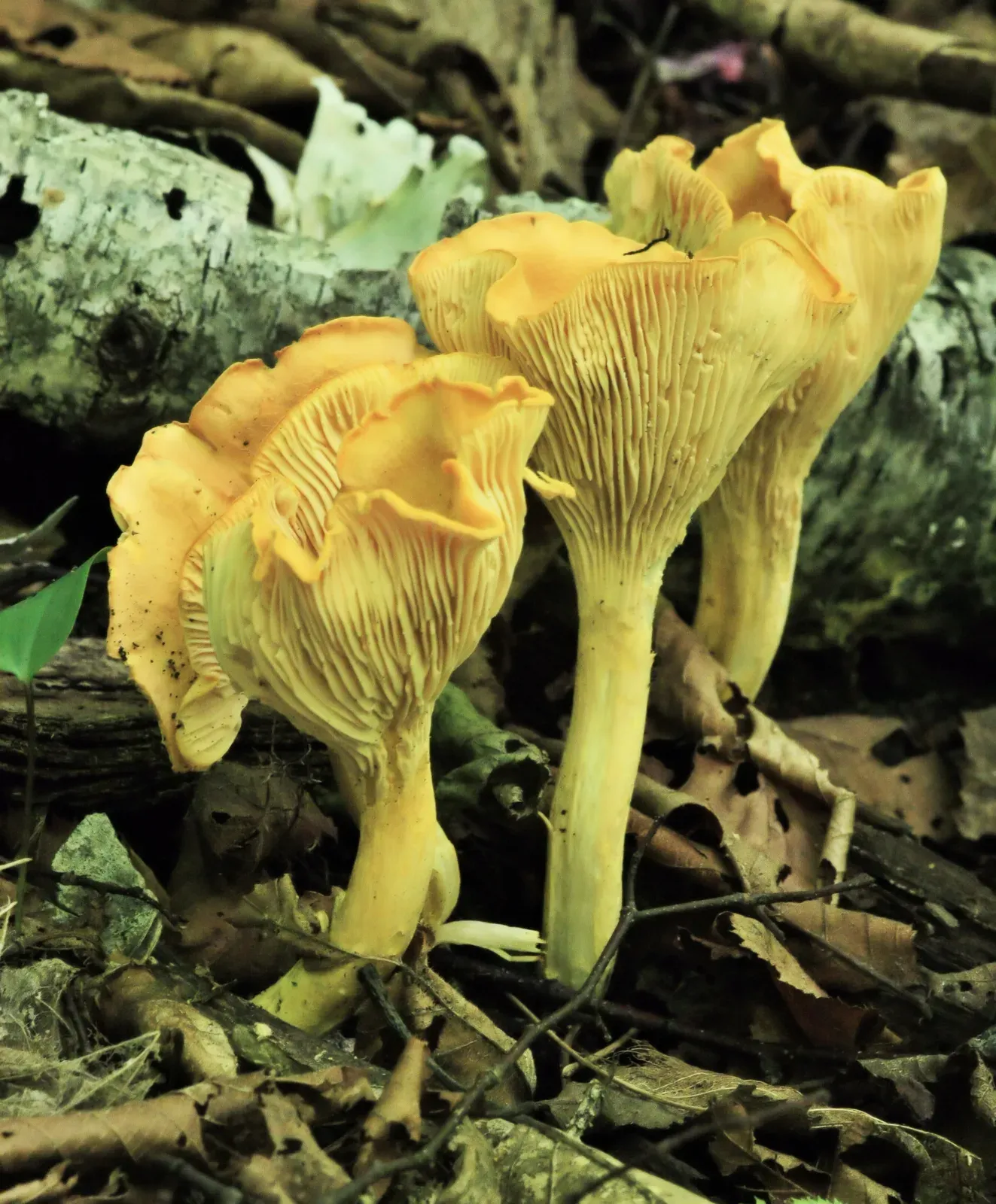 Science & taxonomy
Chanterelles: medicinal properties and health benefits
Chanterelles are credited with plenty of health-giving properties. Here's what really makes them valuable, wha…
August 23, 2026·2 min
Frequently asked questions
Can you eat chanterelles without boiling them first?
Yes, the chanterelle needs no boiling before frying — unlike most mushrooms. You can cook it fresh right away. However, don't eat it raw: cooking is a must. It's best fried in butter or cream for 10–15 minutes until tender.
Why are chanterelles sometimes bitter?
A bitter aftertaste appears in mushrooms picked during a dry summer or a severe heat wave — it's a natural stress response. The bitterness isn't poisonous, but it's unpleasant. Soak the chanterelles in salted water for 30 minutes or boil them for 5 minutes, changing the water.
Which trees does the chanterelle form mycorrhiza with?
The chanterelle is a mycorrhizal partner of birch, oak, beech, pine and spruce. It fruits best in mixed temperate forests where conifers and broadleaf trees grow side by side. In pure pine forests there are fewer of them.
In which regions of Ukraine is the chanterelle most common?
The chanterelle occurs throughout Ukraine — from the Carpathians to Left-Bank Polissia. Volhynian, Rivne and Zhytomyr Polissia, the Carpathian foothills and the Chernihiv region are considered especially rich in this mushroom. In the steppe zone it's almost never found.
When does chanterelle season start?
The first chanterelles appear at the end of June, but the mass wave comes in July–August after long summer rains. Fruiting can last until the end of October, until night temperatures drop below +5 °C.
How does weather affect the chanterelle harvest?
The chanterelle loves warmth and moisture: the optimum is 18–20 °C at ground level after 2–3 days of rain. If the summer is dry, the mushroom may not appear at all. The best harvests come after foggy August nights.
How do you tell a true chanterelle from a false one?
The true chanterelle has thick, forked ridges running down the stem and a fleshy, solid stem with no hollows. The false chanterelle (Hygrophoropsis aurantiaca) has regular, thin gills clearly separated from the stem, and a hollow stem. The false one's color is more reddish, while the true one is evenly yellow-orange.
Can a chanterelle be poisonous?
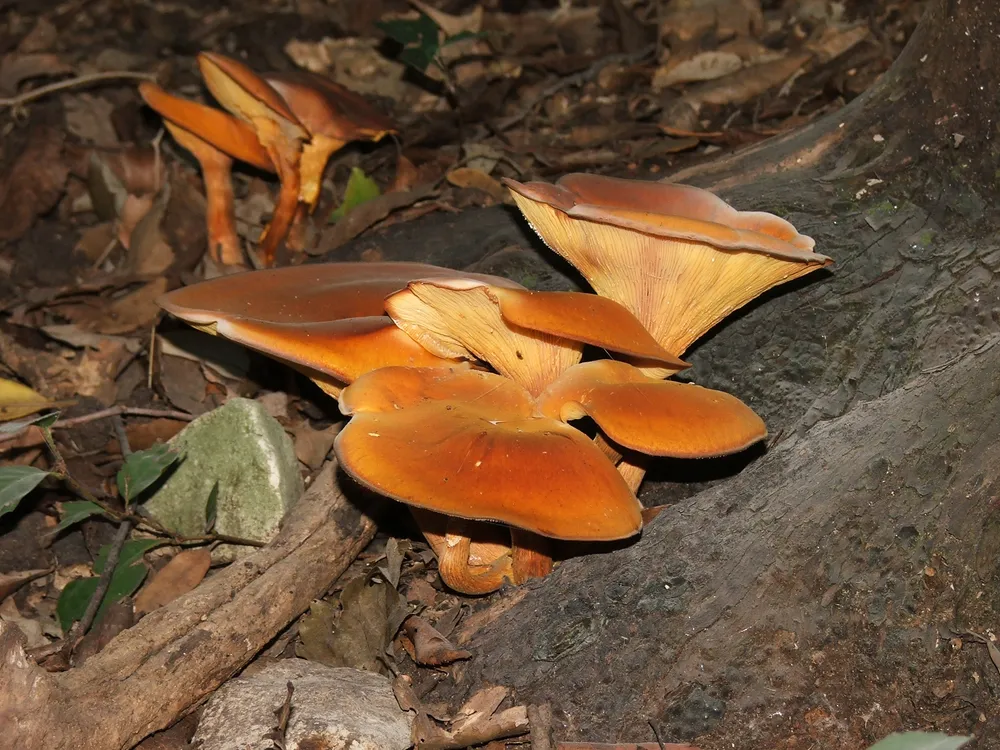
The true chanterelle itself isn't poisonous, but it's sometimes confused with the eastern jack-o'-lantern (Omphalotus illudens) — a species rare in Ukraine that causes digestive upsets. The main difference: the jack-o'-lantern has true gills and glows in the dark.
Is Chanterelle edible or poisonous?
What kind of spore-bearing surface does Chanterelle have?
What does the cap of Chanterelle look like?
What does the stem of Chanterelle look like?
Sources
- [1]Атлас грибів України, Зеров Д.К. (1979)
- [2]GBIF