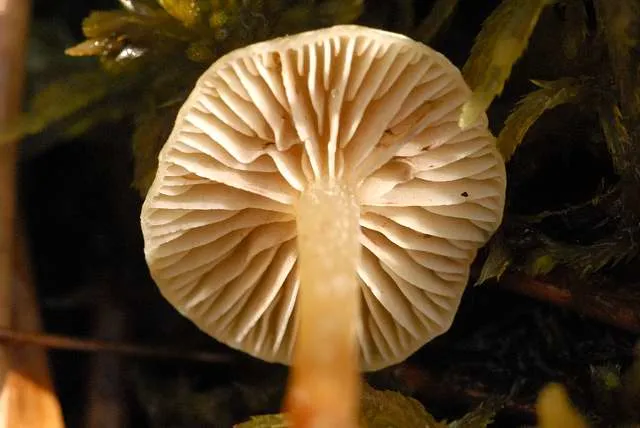
Larch woodwaxHygrophorus lucorum
Expert-verifiedUpdated August 15, 2026
Passport
- Edibility
- Edible
- Season
- Sep — Nov
- Hymenophore
- Gilled
- Cap color
- Yellow
- Size
- Small (up to 5 cm)
- Smell
- Odorless
- Reviewed
- Yes ✓
Quick answers
Where to look?
Conifer forest
When does it appear?
Sep — Nov
Active months: September, October, November.
How to recognize it? Three signs
- Cap color: Yellow, Orange
- Cap shape: Convex
- Smell: Odorless
Fruiting season
September – November
Description
The Larch woodwax is a sunny-yellow resident of larch plantings. A small lemon-yellow slimy cap, a white stem with lemon-yellow tints, and pale flesh under the bright skin. On a carpet of fallen larch needles it looks stunning — like a little sun amid the russet autumn forest litter.
This is a good edible mushroom with real culinary value. It is eaten fresh — fried, stewed, in soups. The flesh is tender with a pleasant aroma and pairs well with sour cream sauce and potatoes. Before cooking, rinse the slime off the cap — otherwise the dish takes on a jelly-like quality. Safe to pick: bright lemon color + a tie to larch = an almost unambiguous ID.
In Ukraine it grows exclusively in larch and spruce-larch plantings — it is an obligate mycorrhizal partner of larch. Larch barely grows wild in Ukraine, so finds are recorded in planted stands in the Carpathians and other regions. The season runs September–November, peaking in October after cool rains.
Cap
Cap 2-5 cm, hemispherical at first, then flattened-convex with a small umbo. Color: bright lemon yellow, sometimes slightly orange at the center. The surface is slimy in wet weather — a thick layer of slime. In dry weather it dries out, turning glossy and waxy yellow.
Hymenophore
Gilled hymenophore. The gills are widely spaced, thick, and decurrent (a typical feature of the genus). White or cream at first, turning yellowish with age. Spore print white.
Stem
Stem 4-6 cm tall, 0.5-1 cm thick, cylindrical. Whitish or pale lemon yellow, with yellow scales or granules. Paler at the top, a more intense yellow toward the base. The surface is moist or slimy. No ring.
Flesh
The flesh is white, under the yellow skin — intensely yellow. Thin and tender. Hardly changes color when cut. Firm texture, not watery.
Smell
Smell faint, barely mushroomy, with no sharp notes. Taste mild, pleasantly mushroomy, not bitter.
Lookalikes
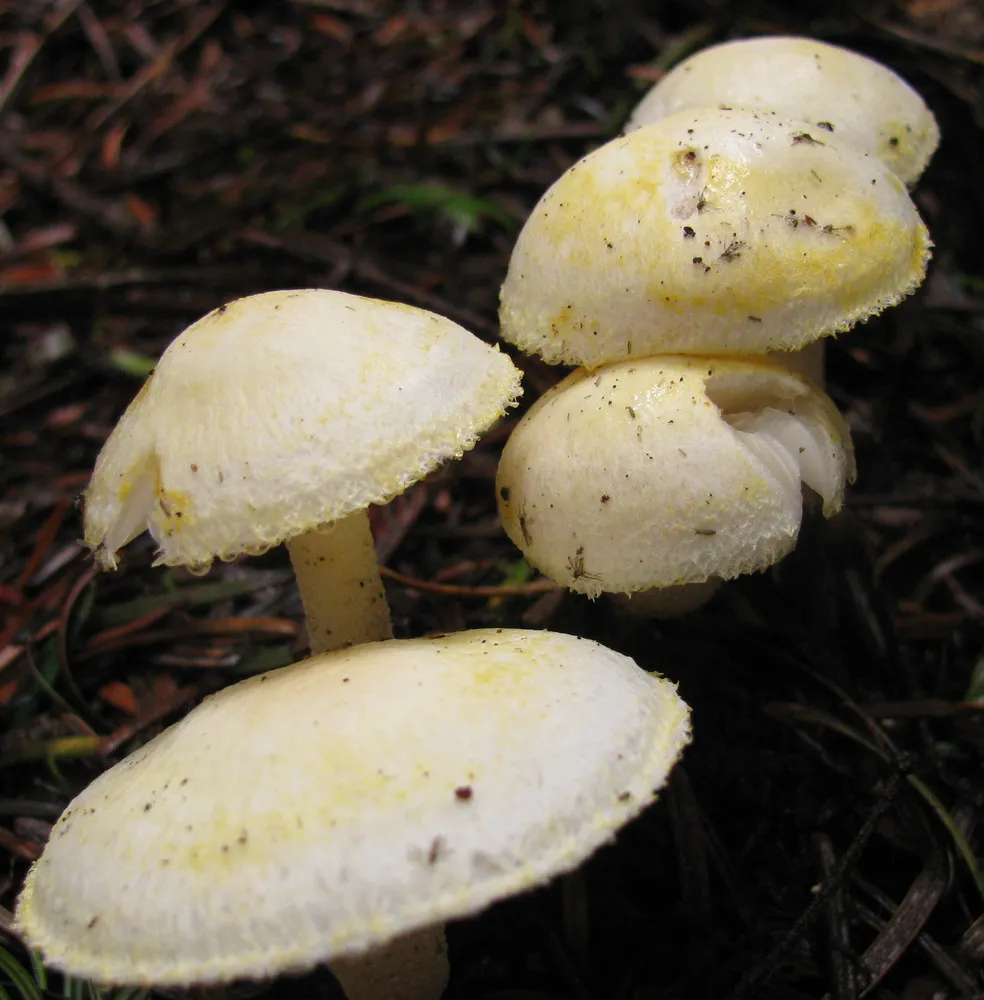
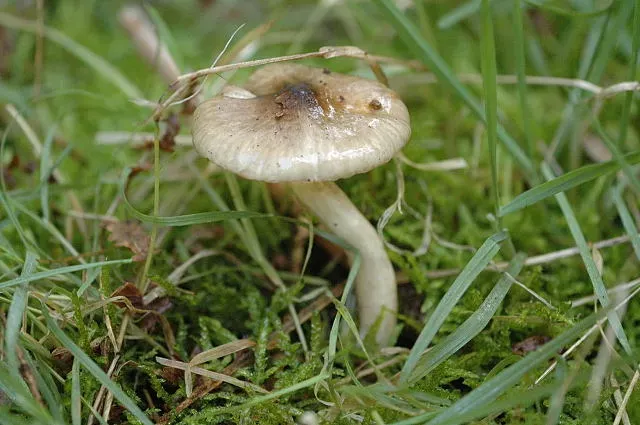
Related species
Mushrooms of the same genus and habitat — to study side by side and never mix up.
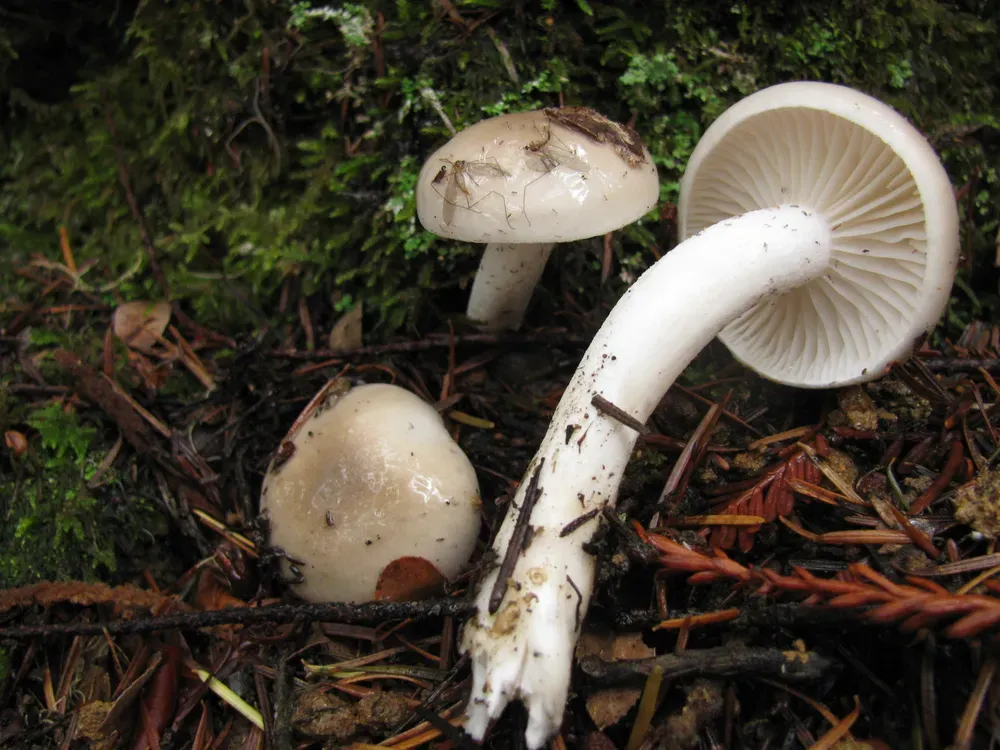
Almond woodwax
Hygrophorus agathosmus
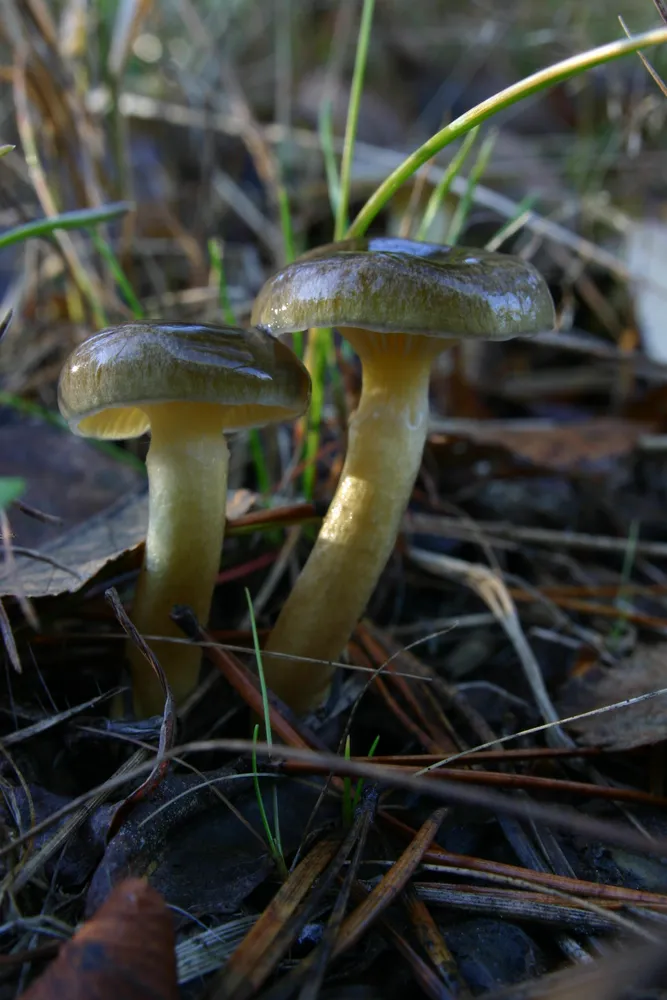
Herald of winter
Hygrophorus hypothejus
Hygrophorus leucophaeus
.webp)
March mushroom
Hygrophorus marzuolus
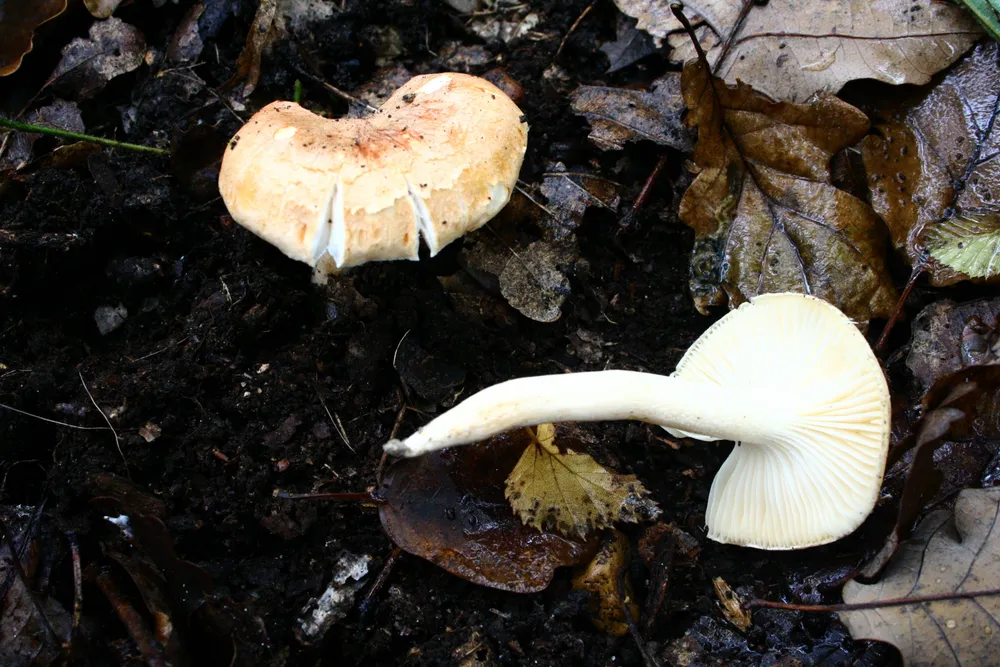
Oak woodwax
Hygrophorus nemoreus
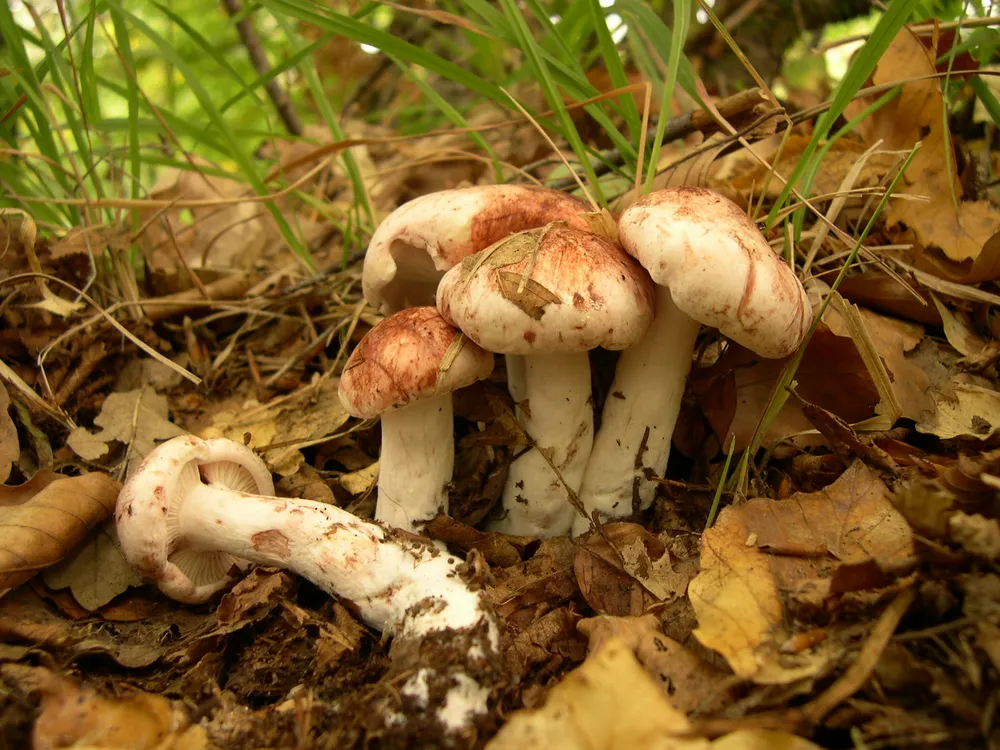
Pinkmottle woodwax
Hygrophorus russula
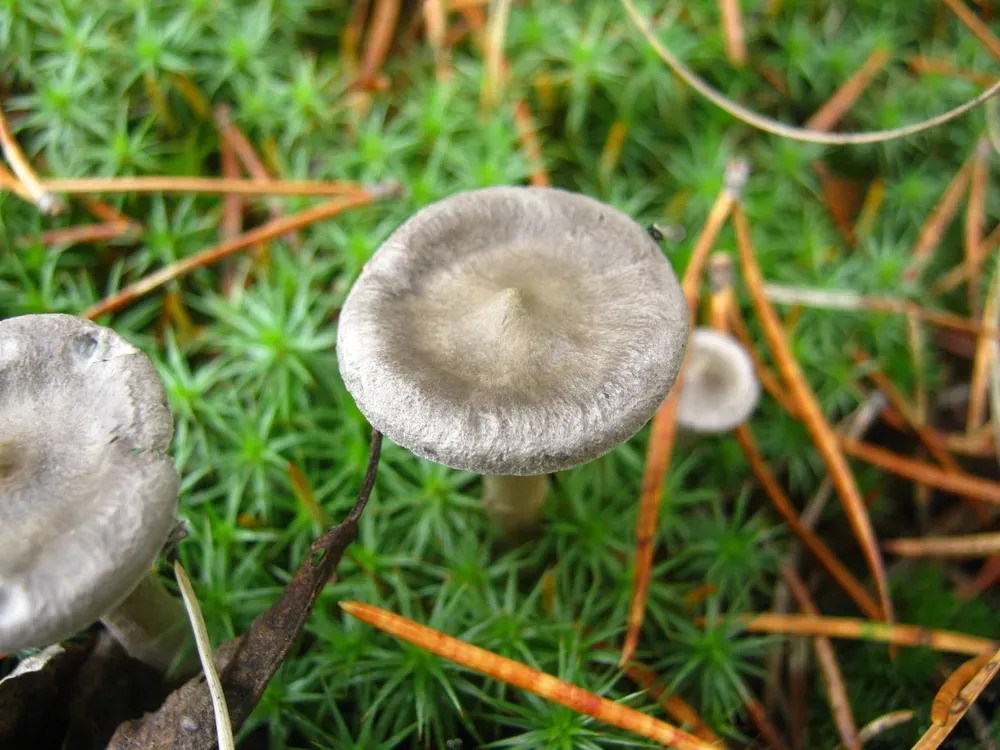
Grayling
Cantharellula umbonata
._Locatie,_Hortus_(Haren,_Groningen)_01.webp)
Vermilion waxcap
Hygrocybe miniata
Frequently asked questions
Is it safe to eat?
Yes, it is a good edible mushroom. Safe to pick: bright lemon-yellow color + a tie to larch = an almost unambiguous ID. None of its lookalikes are deadly poisonous.
Does it need parboiling first?
No. You can fry, stew, or add the Larch woodwax to soups right away. Before cooking, rinse the slime off the cap under the tap — otherwise the dish takes on a jelly-like quality. Young mushrooms are the best.
Where should you look for it?
Only in larch and spruce-larch plantings. An obligate mycorrhizal partner of larch — it does not grow without it. You won't find it in ordinary pine, oak, or beech forests. Look under larch boughs, among the fallen needles.
Which regions of Ukraine does it grow in?
Only where there are larch plantings. Larch barely grows wild in Ukraine — so search planted stands: parks, forestry plantations, botanical gardens. Regular finds are recorded in the Carpathians, Zakarpattia, Prykarpattia, and in some parks of the Forest-Steppe.
When should you look for it?
September–November. Peak fruiting is the first half of October, after cool autumn rains. In a warm, drawn-out autumn it can keep fruiting until the first hard frosts in mid-November.
Does it appear in summer?
No. This is a clearly autumn species tied to cool weather. In summer (June–August) you will hardly ever find it. The first fruiting bodies appear in mid-September at the earliest in the Carpathians, and from late September in other regions.
What is it confused with?
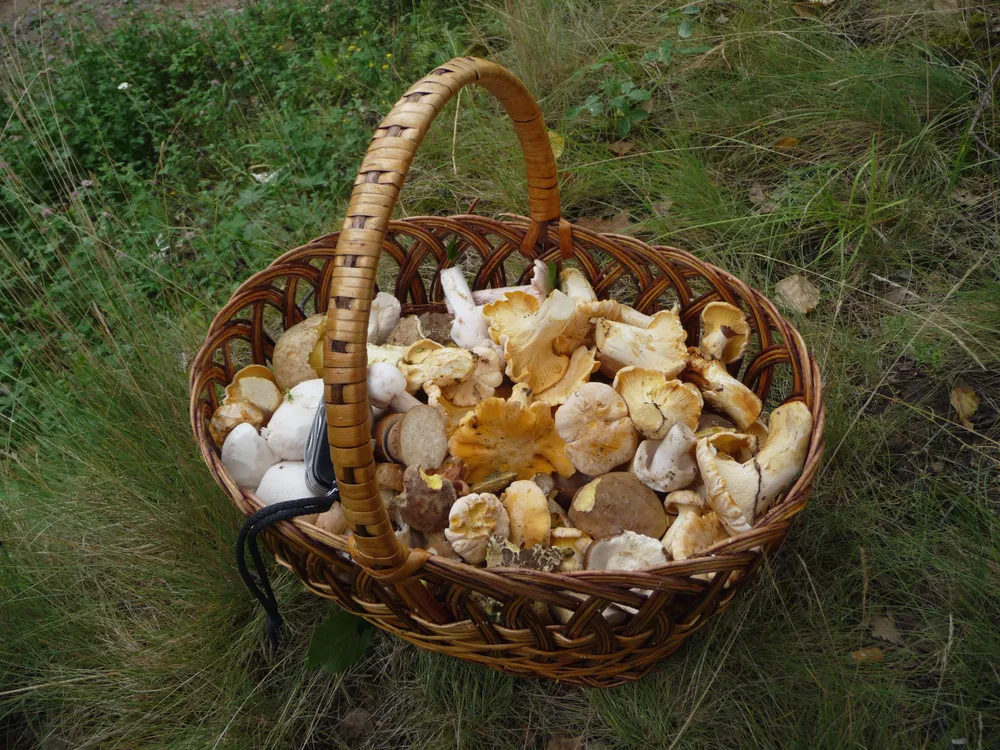
With other yellow woodwaxes and young chanterelles (Cantharellus cibarius). Key differences: in chanterelles, true gills are absent — instead they have ridges running down the stem. The woodwax has true, widely spaced, thick gills. Plus the tie to larch — chanterelles don't grow with larch.
How do you tell it from other yellow larch mushrooms?
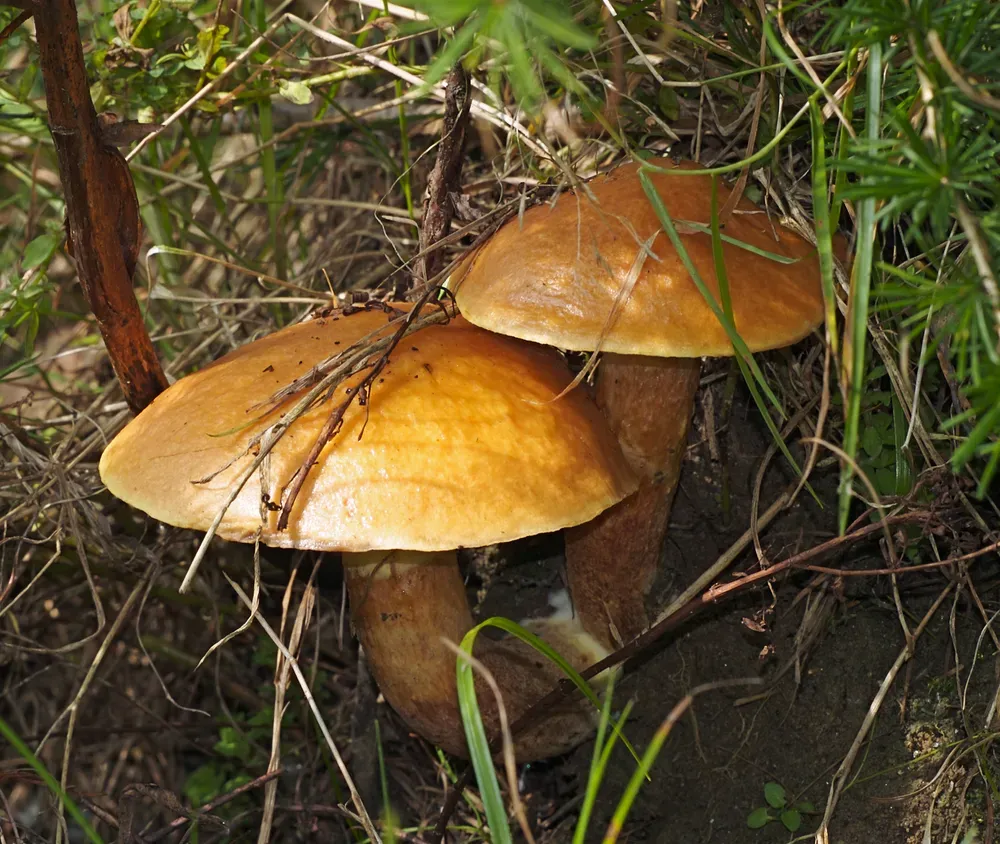
Its closest companion is Suillus grevillei (larch bolete). But Suillus has a spongy tube layer underneath, while the woodwax has gills. That is a foolproof difference: tubes vs. gills. Both are edible, both are tied to larch, both grow in autumn.
Is Larch woodwax edible or poisonous?
Does Larch woodwax have gills or pores?
What does the cap of Larch woodwax look like?
What does the stem of Larch woodwax look like?
Sources
- [1]Вікіпедія (українська)
- [2]Атлас грибів України, Зеров Д.К. (1979)
- [3]MycoBank Database
- [4]Index Fungorum
- [5]GBIF
- [6]iNaturalist Ukraine