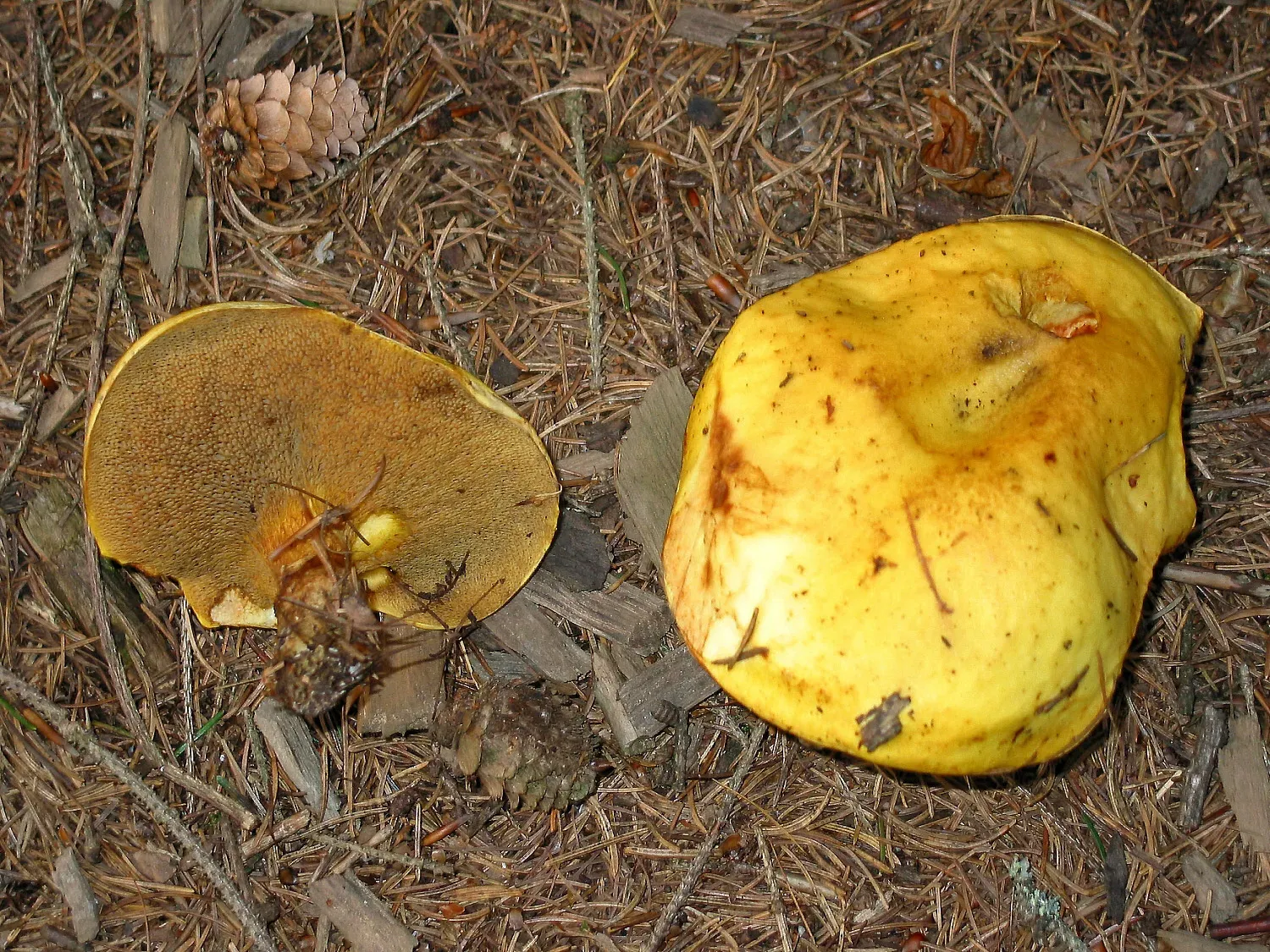
Among the slippery jacks, one catches your eye with a bright sunny-yellow or orange cap. This is the larch bolete (Suillus grevillei, listed in our catalog as larch bolete), a faithful companion of larch. Find a larch, and you'll find this mushroom too.
It's closely tied to a single tree, so finding it is easy: wherever larch grows, it's worth scanning the ground. That makes the larch bolete a handy mushroom for anyone learning to read the forest.
A mushroom tied to larch
All slippery jacks live in partnership with conifers, but the larch bolete has chosen larch alone. This bond is called mycorrhiza: the mycelium wraps around the tree's rootlets and trades nutrients with it.
For a forager, that's a real gift. Larch is an easy tree to spot, with soft needles that turn yellow and drop for the winter, and you'll find it in parks, shelterbelts and conifer plantations. Spotted a larch? Slow down and look at the ground beneath it.
Without larch, this slippery jack doesn't grow, so there's no point looking for it in a pure pine stand. Under larch, though, it often comes up in whole families.
How to recognize the larch bolete
You recognize it by a combination of features, not by any single one. Look the mushroom over from top to bottom.
- Cap. Bright yellow, golden or orange-brown, with a slimy, glossy skin. The color is noticeably warm and rich.
- Ring. The stem has a ring, the remains of the veil that covered the young pores. Above the ring the stem is yellow, below it often brownish.
- Pores. The tubular layer underneath: yellow, darkening with age to rusty olive.
- Flesh. Yellowish, soft; when cut it may turn slightly pinkish or brownish.
The key clue is always twofold: a bright yellow slippery jack plus a larch nearby. If both conditions are met, there's hardly any doubt.
How it differs from other slippery jacks
The larch bolete is easy to tell apart from its relatives.
- Compared with the slippery jack, it has a rich yellow-orange color instead of chocolate brown and is tied to larch rather than pine.
- Compared with the grayish sticky bolete, which also grows under larch, it stands out with the bright, warm color of its cap.
Still, the most reliable guide is the tree: under larch, a bright yellow slippery jack is almost certainly a larch bolete.
Where and when to look for it
The best spots are:
- conifer plantations and mixed forests with larch;
- parks, avenues and shelterbelts where larch has been planted;
- sunny edges of conifer forest with some larch mixed in.
The season runs from June to October, in flushes after warm rains. The larch bolete often appears a little earlier than the late slippery jack. It's best to go out a day or two after rain, because slippery jacks grow fast. You can easily watch for these windows with our mushroom radar: it shows when moisture and warmth line up well for mushrooms to appear.
Caution never hurts
The larch bolete is safe and has no dangerous look-alikes. The main rule stays the same: pick only mushrooms with pores, not gills, underneath. The slimy skin is usually peeled off the cap. And, as always: if you're not sure, don't pick it.
Sources
- “Key to the Fungi of Ukraine” (Kyiv, Naukova Dumka publishing house).
- Suillus grevillei in GBIF, the global biodiversity database.
- Suillus grevillei in MycoBank, the international fungal nomenclature database.
- Suillus grevillei on Wikipedia.
Frequently asked questions
What is the larch bolete?
It's a bright yellow slippery jack (*Suillus grevillei*) that grows only under larch. It has a slimy golden cap, a ring on the stem and yellow pores. It's also called the yellow slippery jack.
What does the larch bolete look like?
A bright yellow, golden or orange-brown slimy cap, a yellow stem with a ring, yellow pores underneath. The flesh is yellowish and may turn slightly pinkish when cut.
Why does the larch bolete grow only under larch?
Because it lives in mycorrhiza specifically with larch, that is, in a mutually beneficial partnership with its roots. Without this partner tree the fungus doesn't form fruiting bodies, so you won't find it in a pure pine stand.
How does the larch bolete differ from the slippery jack?
By color and by tree. The larch bolete is bright yellow and grows under larch, while the is chocolate brown and favors pine. Both have a ring on the stem.
Where should you look for the larch bolete?
Anywhere larch grows: in conifer plantations, , parks, avenues and shelterbelts. Find the larch first, then look over the ground beneath it.
When should you pick the larch bolete?
The season runs from June to October, in flushes after warm rains. It often appears a little earlier than the late slippery jack. It's easy to keep an eye on the weather with the .
Is the larch bolete edible?
Yes, it's a tasty and prized mushroom. Pick young, firm specimens; the skin is usually peeled off the cap. Good for frying and pickling.
Does the larch bolete have dangerous look-alikes?
No. The main thing is to make sure the underside of the cap has pores, not gills, and that a larch is growing nearby. All true slippery jacks have tubes and are edible.
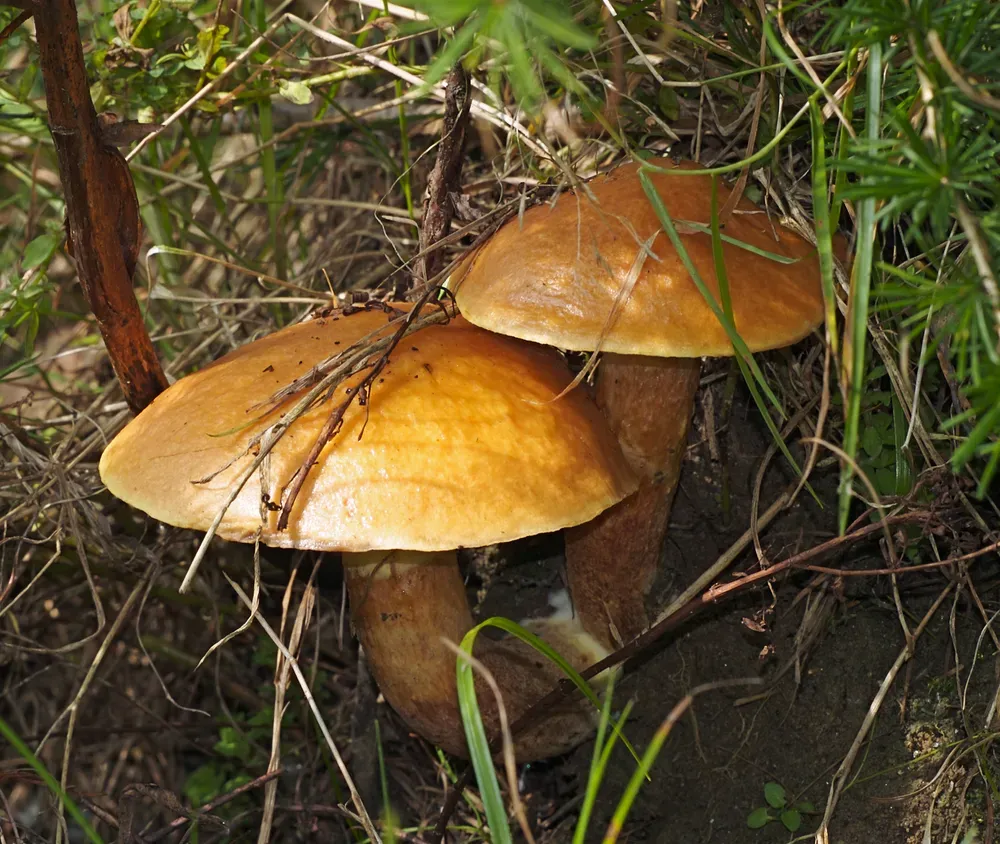
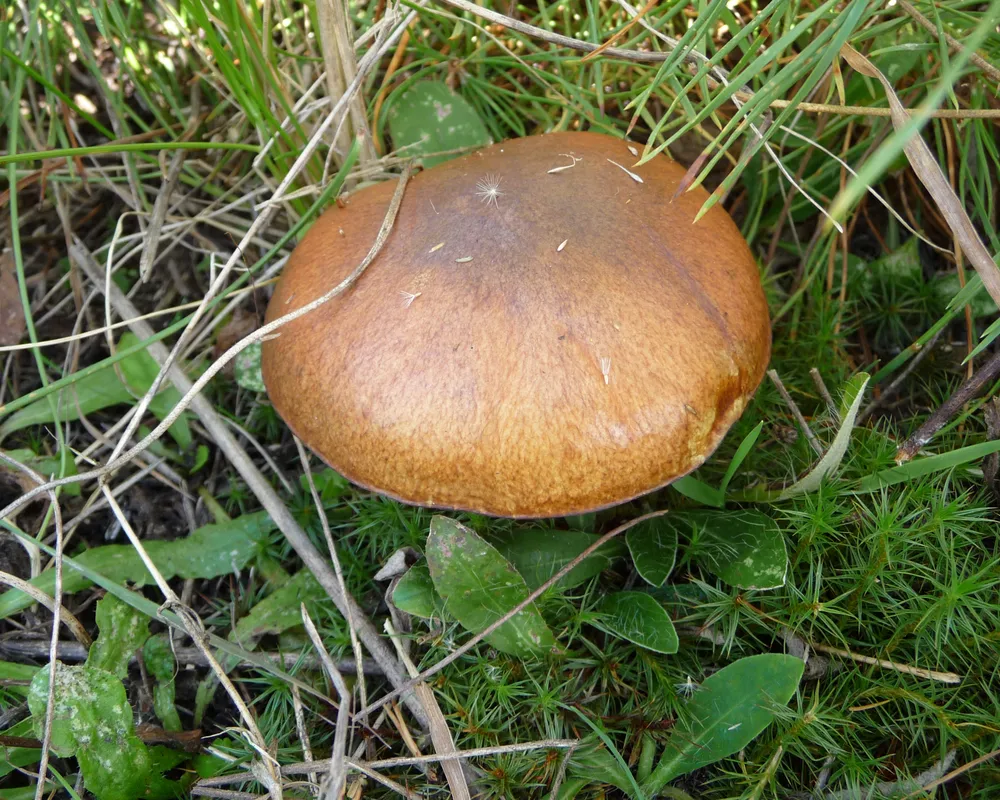
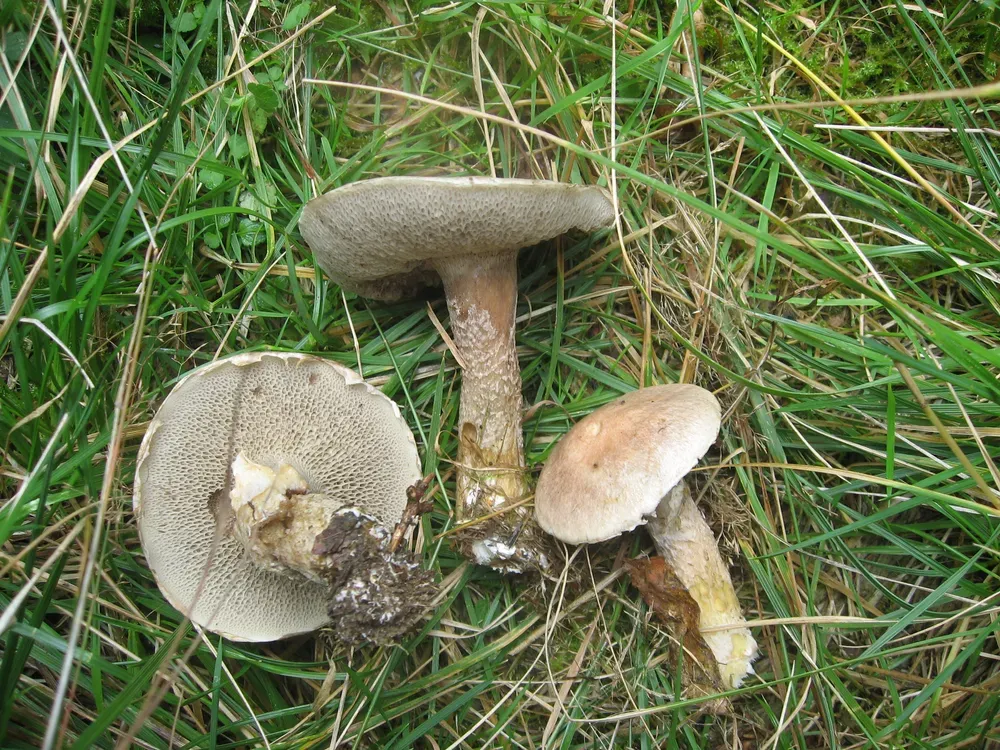
Mushrooms in this article
Related articles
 Recipes & cooking
How to store fresh mushrooms, and for how long
Fresh mushrooms spoil faster than you might think. Here's how long they keep in the fridge, how to store them…
August 21, 2026·4 min How to identify
Truffles in Ukraine: do they grow here, and where to look
Truffles aren't just a French delicacy. Several species grow in Ukraine too. Here's which ones, where they occ…
August 24, 2026·2 min Recipes & cooking
How long to boil mushrooms
Boiling time depends on the type of mushroom and on what you're cooking next. Here's a clear cheat sheet: how…
August 22, 2026·4 min