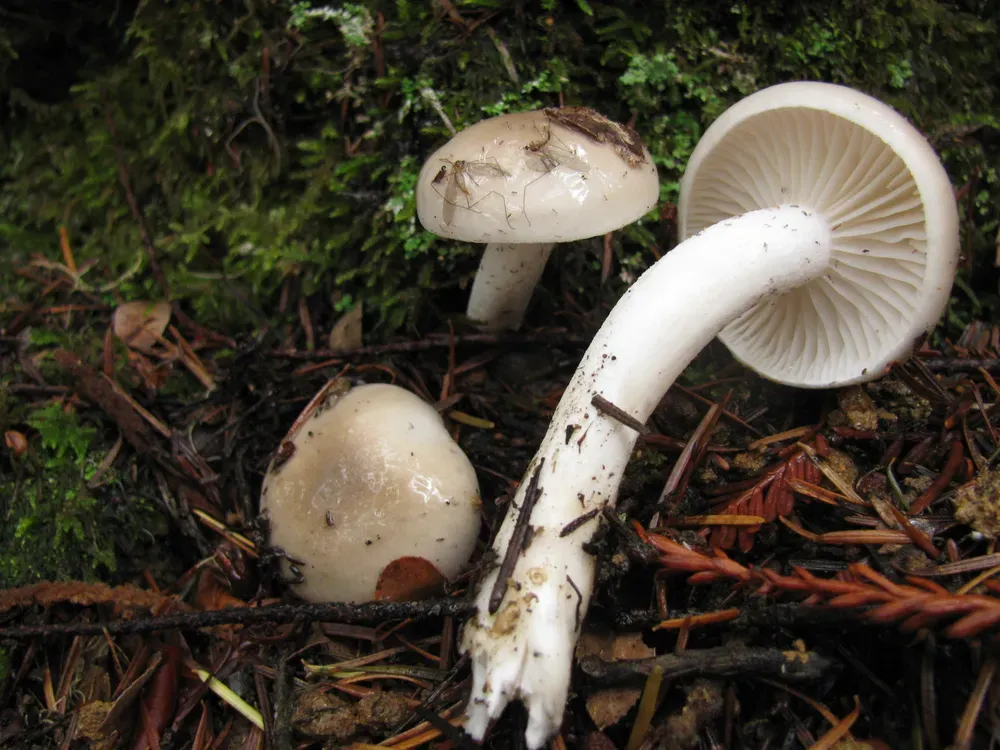
Almond woodwaxHygrophorus agathosmus
Expert-verifiedUpdated October 3, 2026
Passport
- Edibility
- Edible
- Season
- Sep — Dec
- Hymenophore
- Gilled
- Cap color
- Grey
- Size
- Medium (5–15 cm)
- Smell
- Almond
- Reviewed
- Yes ✓
Quick answers
Where to look?
Conifer forest, Mixed forest
When does it appear?
Sep — Dec
Active months: September, October, November, December.
How to recognize it? Three signs
- Cap color: Grey
- Cap shape: Convex
- Smell: Almond, Pleasant
Fruiting season
September – December
Description
The almond woodwax (Hygrophorus agathosmus) is a mushroom you can’t mistake once you’ve smelled it. Its grayish cap looks a lot like dozens of other mushrooms, but the aroma is distinct and unmistakable: sweetish, with a note of almond or raw cherry kernel. In the literature it is also called the “almond waxcap” (almond waxy cap) — for exactly this feature.
This is a mycorrhizal species that partners with conifers — mainly pine and spruce, more rarely with broadleaf trees in mixed woods. In Ukraine it grows in conifer and mixed forests of the Carpathians, the Carpathian foothills, Polissia and the Western Forest-Steppe. Its season is later than that of most summer mushrooms — the main fruiting falls in October–November; it survives the first frosts and often appears when there are no other mushrooms left in the forest.
Edibility is good, but the taste is unremarkable (sources describe it as “bland”). The aroma defines this mushroom more than its taste on the plate. The almond note partly survives cooking, especially when braised with cream. You can dry it, but the aroma fades considerably. This is more a mushroom for enthusiasts who appreciate its distinctive smell than for gourmets. Peel off the slimy skin before cooking.
Cap
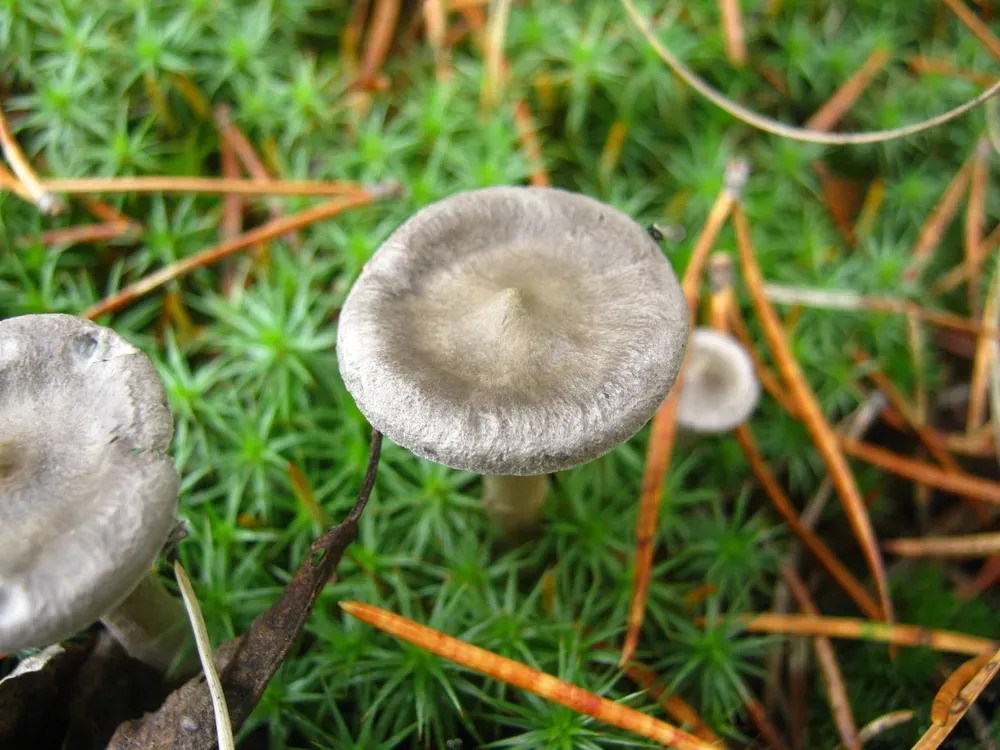
Cap 3–10 cm, hemispherical in young mushrooms, then flattening out to flat-convex, often with a small central depression in old ones. Dull gray to ash gray, with a slightly darker center. The surface is sticky in wet weather and dry in dry weather. The skin peels off easily in moist specimens.
Hymenophore
The gills are attached to the stem, later attached and running down it. White when young, turning gray with age. Not crowded, with a fine waxy texture (a typical feature of the genus Hygrophorus). Spore print white.
Stem
Stem 4–15 cm tall, 0.6–2 cm thick, cylindrical. Whitish, pale gray with age, in mature ones with a faint scaly grayish pattern near the top. No ring and no volva. Dry, without a slimy coating.
Flesh
The flesh is soft, whitish or watery gray. It does NOT change color when cut. The texture is moist and tender — typical of waxcaps.
Smell
The most distinctive feature of the species is its strong, pleasant aroma, reminiscent of bitter almond, cherry pits and sweet dough. Sometimes faint in very young or very old mushrooms. The taste is mild and neutral.
›Scientific synonyms (5)
Agaricus agathosmus Fr., Agaricus cerasinus Berk., Hygrophorus cerasinus (Berk.) Berk., Limacium agathosmum (Fr.) Wünsche, Limacium pustulatum var. agathosmum (Fr.) P. Kumm.
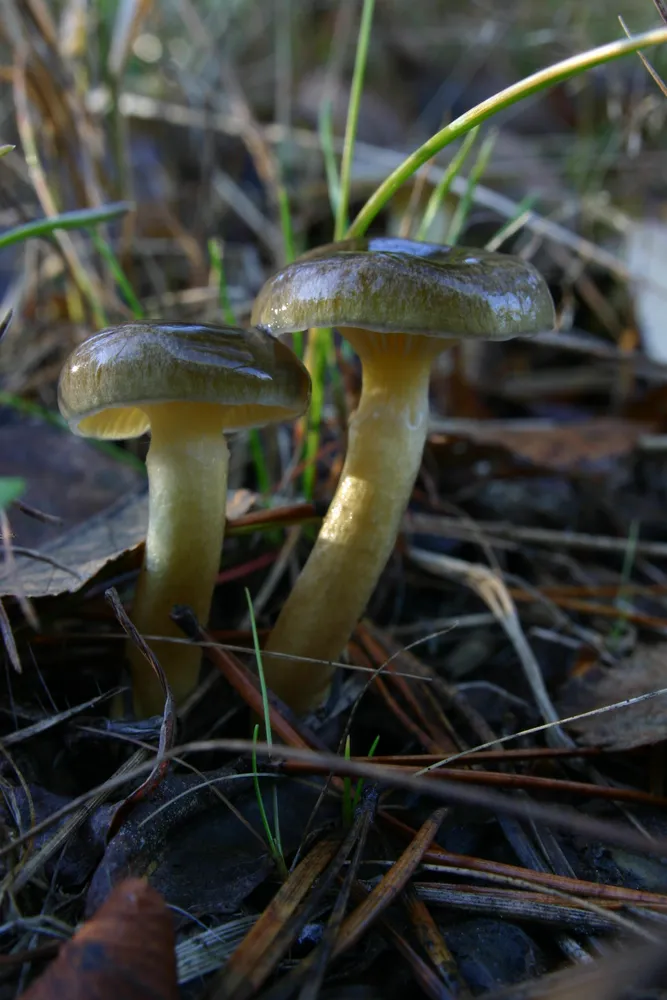
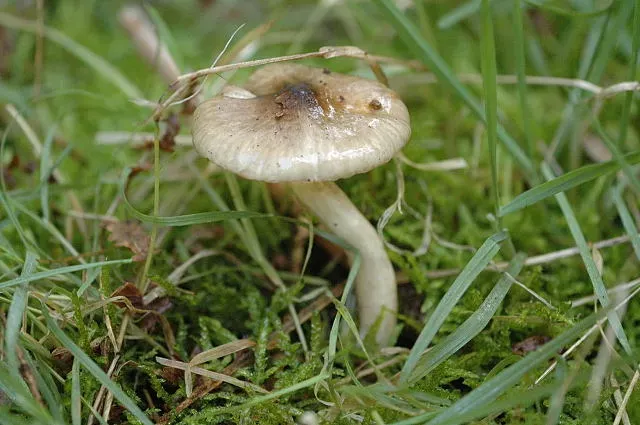
Lookalikes
.webp)
Related species
Mushrooms of the same genus and habitat — to study side by side and never mix up.
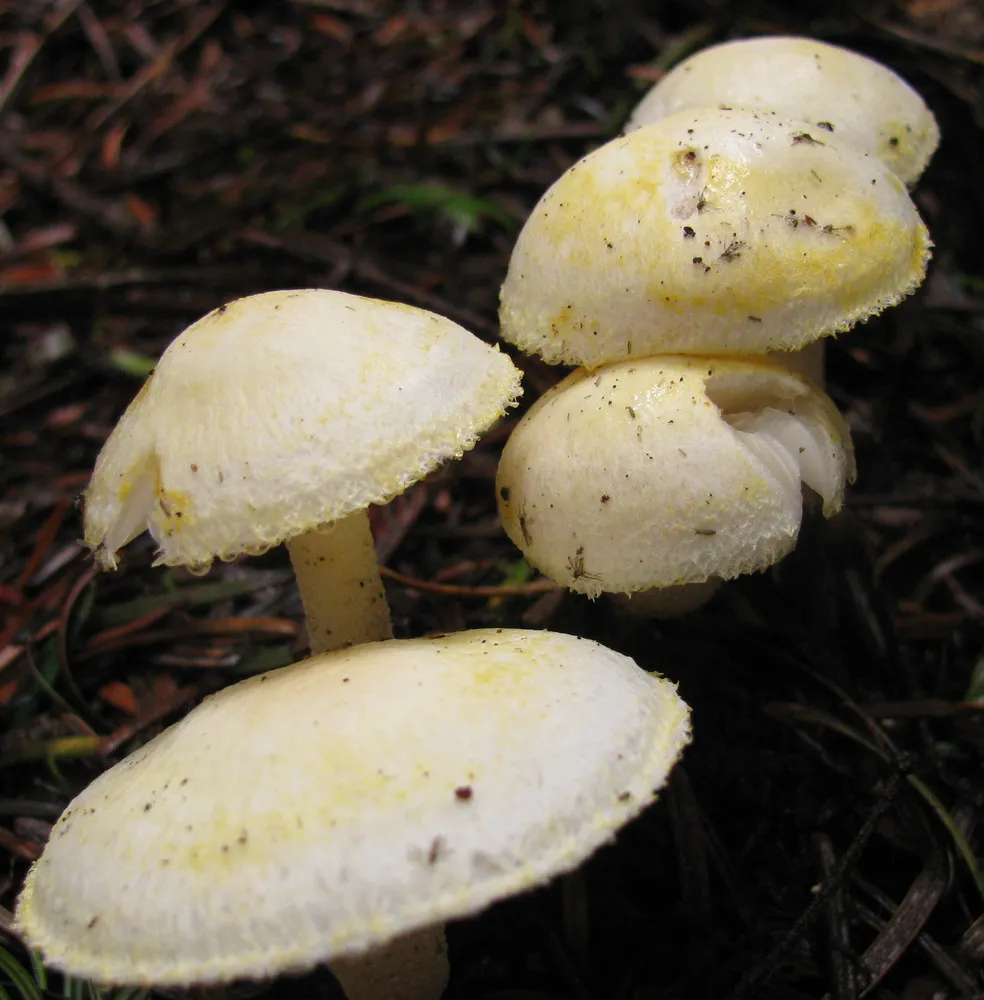
Gold flecked woodwax
Hygrophorus chrysodon
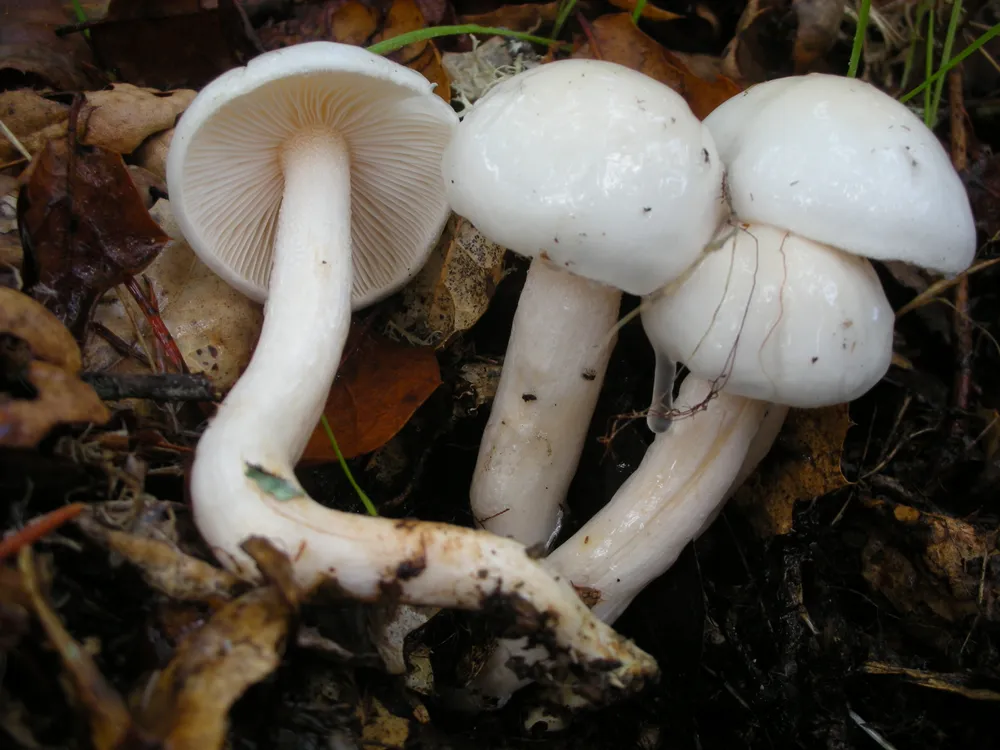
Ivory woodwax
Hygrophorus eburneus
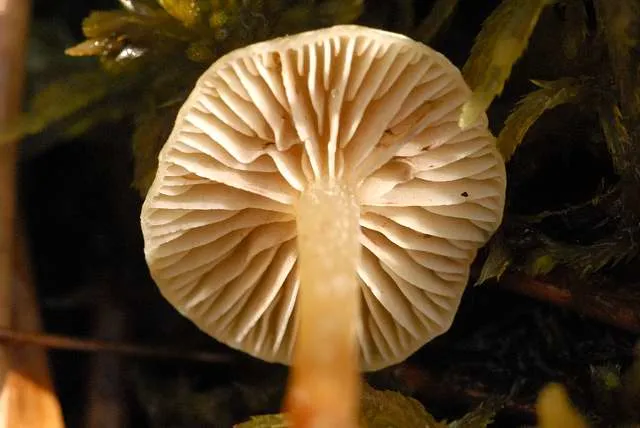
Larch woodwax
Hygrophorus lucorum
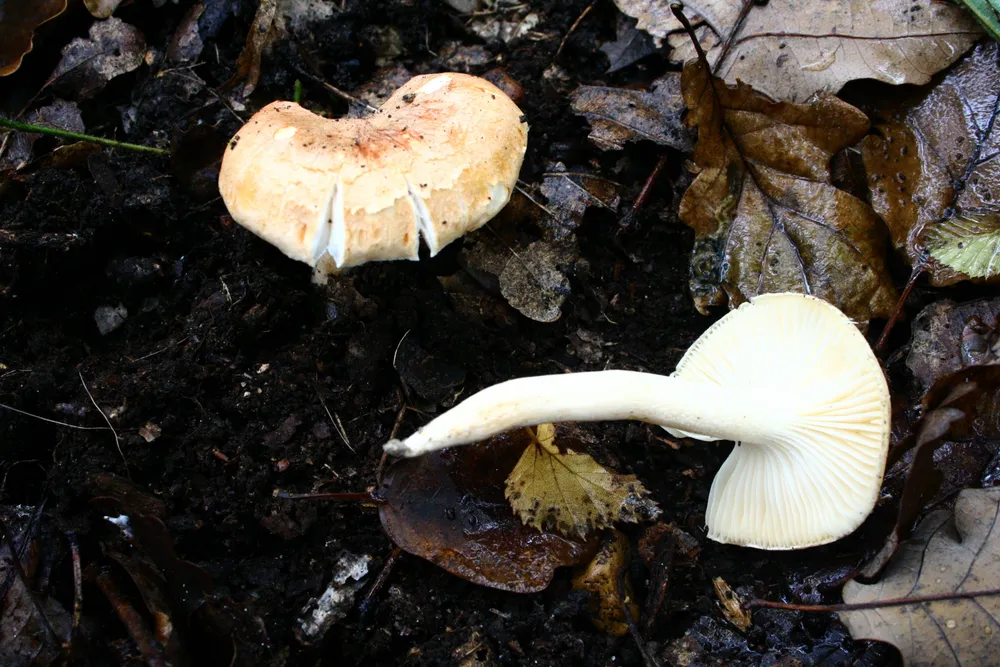
Oak woodwax
Hygrophorus nemoreus
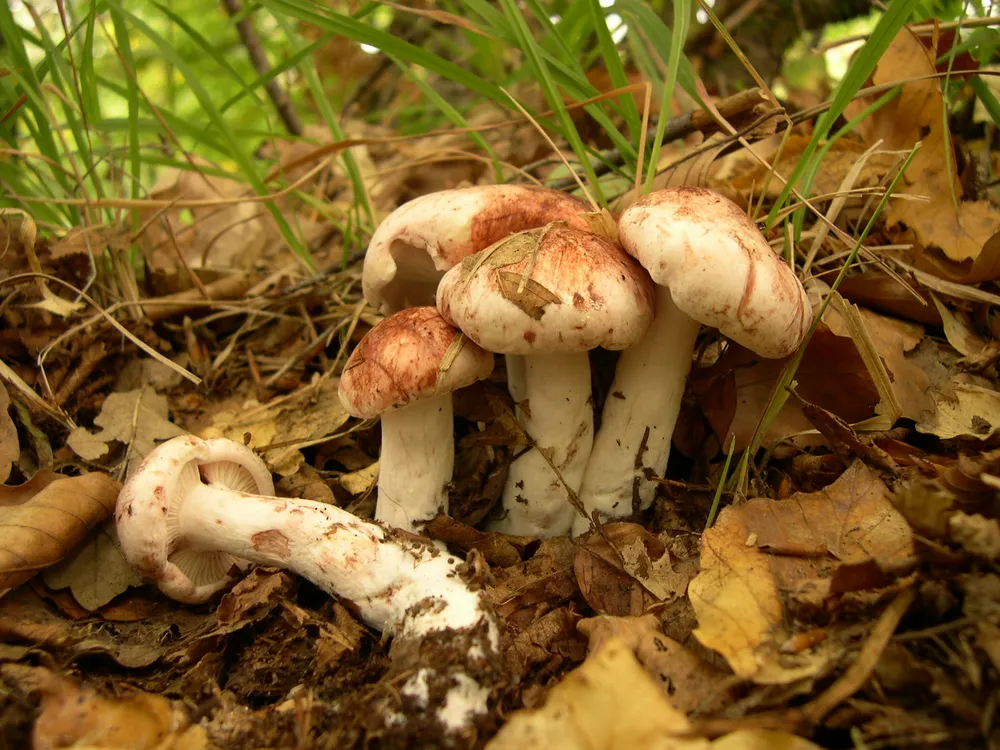
Pinkmottle woodwax
Hygrophorus russula
Grayling
Cantharellula umbonata
._Locatie,_Hortus_(Haren,_Groningen)_01.webp)
Vermilion waxcap
Hygrocybe miniata
_1.webp)
Blackening waxcap
Hygrocybe conica
Frequently asked questions
How to recognize the almond woodwax?
Four features together: a gray sticky cap 3–10 cm, white gills, no ring, and a strong almond/cherry aroma. If the smell is NOT almond-like, it’s a different waxcap. The aroma is the most reliable diagnostic feature.
Can it be confused with a poisonous mushroom?
There are no serious dangerous look-alikes among the waxcaps. The biggest risk is confusing it with some gray funnels (Clitocybe), some of which are conditionally poisonous. In funnels the gills run far down the stem; in the almond woodwax only moderately. The smell settles it: funnels have no almond note.
Where to look in Ukraine?
In conifer and mixed forests with pine and spruce: the Carpathians, the Carpathian foothills, Polissia, the Western Forest-Steppe. It likes older woods with a thick layer of needle litter. It does not occur in purely broadleaf woods or the steppe.
When does it fruit?
A late-fall mushroom: the main peak is October–November, sometimes lasting until the first serious frosts. It survives frosts down to -3 °C. It often appears when there are hardly any other mushrooms left in the forest.
How is it different from other waxcaps?
Aroma is the main criterion. The herald of winter (H. hypothejus) is also a late-fall species, but has no almond smell and has yellow tones in the cap. The March mushroom (H. marzuolus) fruits in spring and has no almond smell. Hygrophorus pustulatus is smaller, with no distinct aroma.
Which trees does it form mycorrhiza with?
Mainly pine (Pinus sylvestris) and spruce (Picea abies), more rarely larch. In mixed woods it can partner with several conifer species at once.
How to cook it?
Peel the slimy skin off the cap (optional, but good for the taste). Braise with cream and onion — this brings out the almond note. You can add it to soups. You can dry it, but the aroma fades considerably. Pickling — so-so, the texture is watery.
Why does it smell of almonds?
The flesh contains benzaldehyde compounds — the same ones behind the scent of almonds, cherry pits and a distinctive vanilla-like note. In nature they signal the mushroom’s presence to many animals, especially foraging insects. For people, it’s a pleasant sensory trait, and a safe one.
Is Almond woodwax edible or poisonous?
Does Almond woodwax have gills or pores?
What does the cap of Almond woodwax look like?
What does the stem of Almond woodwax look like?
Sources
- [1]Вікіпедія (українська)
- [2]Атлас грибів України, Зеров Д.К. (1979)
- [3]MycoBank Database
- [4]Index Fungorum
- [5]GBIF
- [6]iNaturalist Ukraine