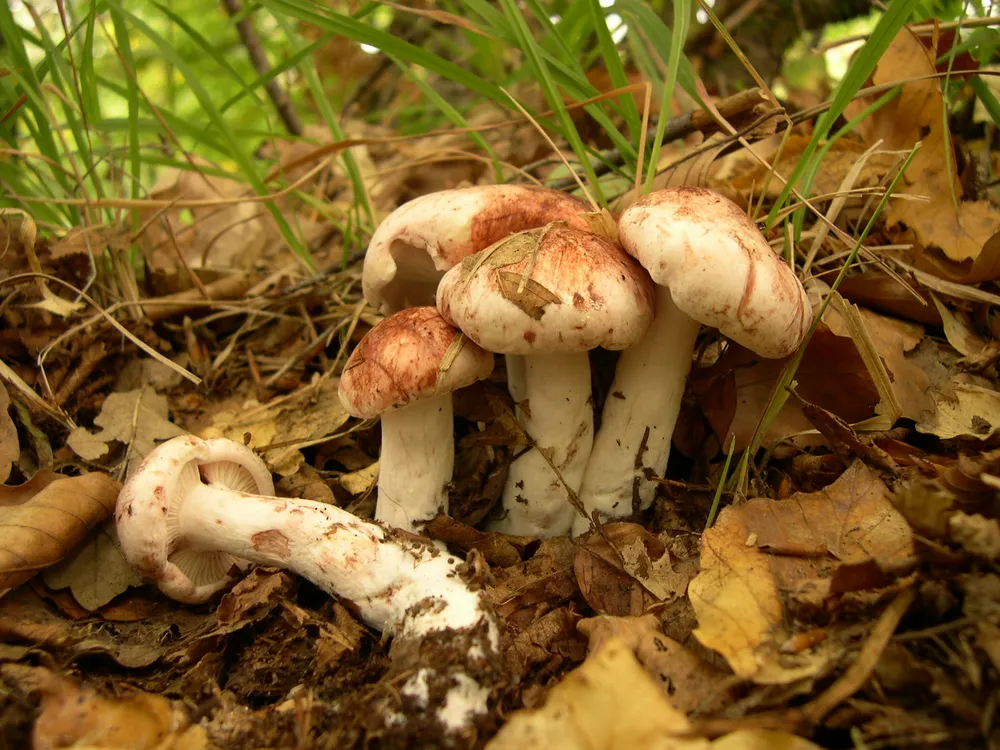
Pinkmottle woodwaxHygrophorus russula
Expert-verifiedUpdated October 3, 2026
Passport
- Edibility
- Edible
- Season
- Aug — Oct
- Hymenophore
- Gilled
- Cap color
- Pink
- Size
- Medium (5–15 cm)
- Smell
- Pleasant
- Reviewed
- Yes ✓
Quick answers
Where to look?
Deciduous forest, Mixed forest
When does it appear?
Aug — Oct
Active months: August, September, October.
How to recognize it? Three signs
- Cap color: Pink, Red, Violet
- Cap shape: Convex
- Smell: Pleasant
Fruiting season
August – October
Description
The Pinkmottle woodwax is the most "untypical" of the woodwaxes. Instead of the delicate, pale look of its relatives, it's fleshy and reddish-pink, and at first glance resembles a brittlegill or even a Tricholoma. Hence the scientific name russula — "brittlegill-like." The cap ranges from pink to wine-red with darker blotches, the stem is pinkish, and the gills are white at first, picking up pink tints with age.
It's a good edible mushroom, valued in the kitchen for its dense, fleshy flesh. Suitable for frying, stewing, pickling and salting. It holds its shape when cooked and doesn't fall apart. Safe for foragers — the combination of a dense red-pink cap with gills and mycorrhiza with oak is a distinctive sign.
In Ukraine it grows in deciduous, mostly oak forests. It's an obligate mycorrhizal partner of oak. Its distribution is patchy — mainly in the Forest-Steppe and the southern part of the forest zone, less often in the Carpathians. Season: August–October, peaking in September. It often grows in groups, sometimes in rings.
Cap
Cap 5-12 cm, fleshy, at first hemispherical, then convex-flattened. Color pink, pinkish red to wine-red, with darker blotches and streaks. In old mushrooms it turns brownish. Surface dry or slightly sticky, smooth, may become slightly scaly with age.
Hymenophore
Gills. The gills are crowded, thick, waxy, decurrent on the stem. Color at first white, with age pinkish to pinkish wine, with darker droplets and spots. Spore print white.
Stem
Stem 4-8 cm tall, 1.5-3 cm thick, cylindrical or slightly thickened toward the base, firm, solid. Whitish to pale pink, with pink spots, especially in the upper part. Surface dry. No ring.
Flesh
Flesh white, firm, fleshy. Barely changes color when cut (may turn very faintly pink). Holds its shape well when cooked.
Smell
Faint pleasant mushroomy smell, without sharp notes. Mild, pleasant taste, sometimes with a slightly bitter aftertaste in old mushrooms.
›Scientific synonyms (4)
Agaricus russula Schaeff. 1774, Gymnopus russula (Schaeff.) Gray 1821, Tricholoma russula (Schaeff.) Gillet 1874, Limacium russula (Schaeff.) Ricken 1910
Lookalikes
Related species
Mushrooms of the same genus and habitat — to study side by side and never mix up.
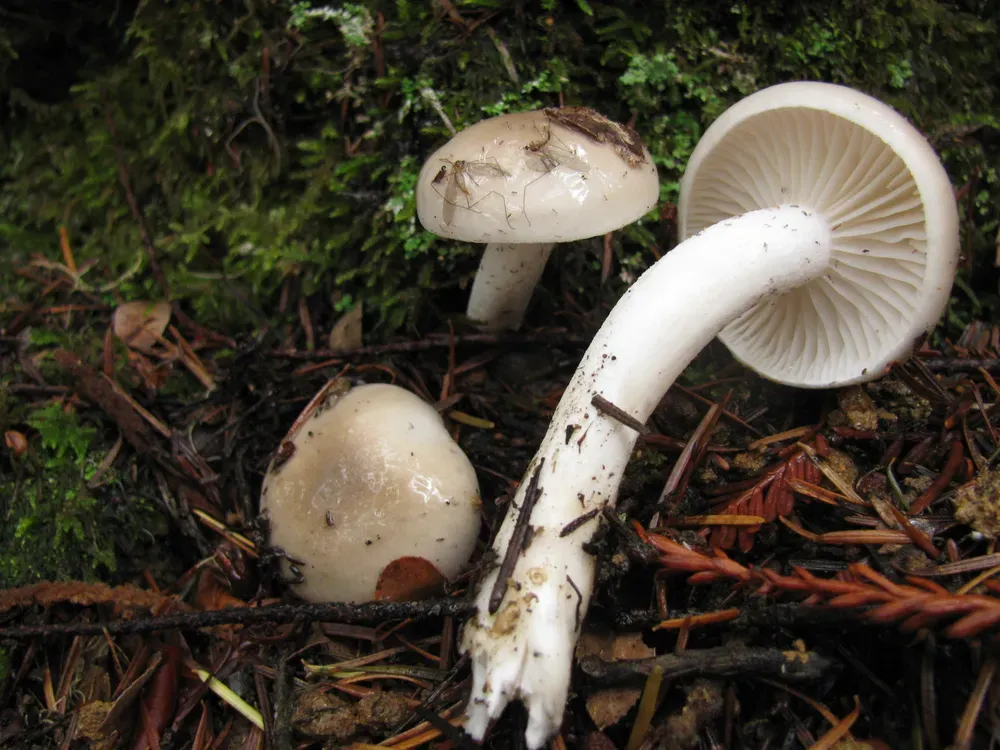
Almond woodwax
Hygrophorus agathosmus
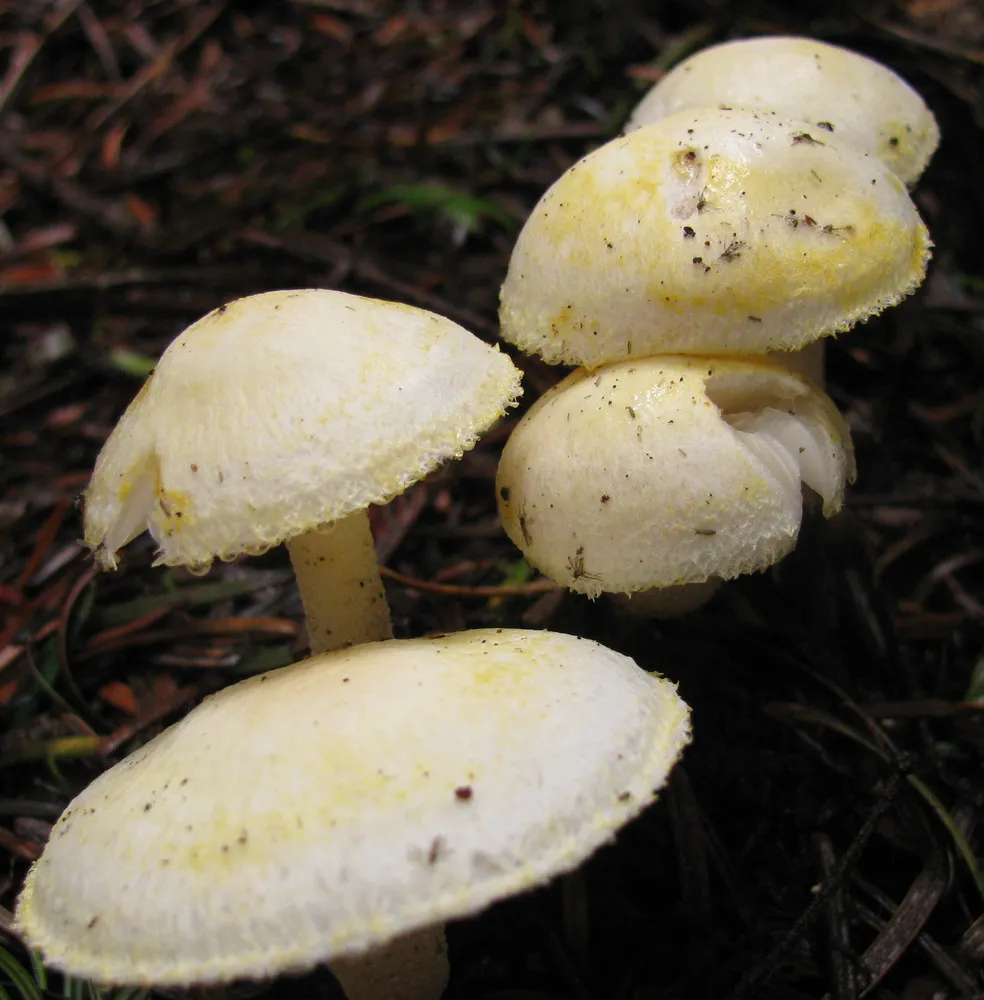
Gold flecked woodwax
Hygrophorus chrysodon
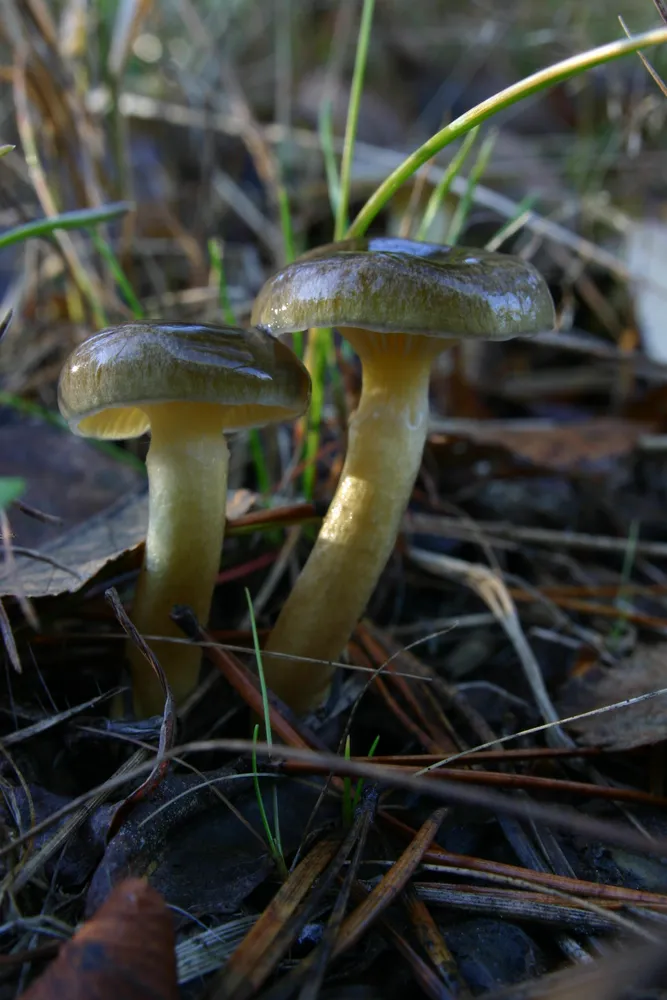
Herald of winter
Hygrophorus hypothejus
Hygrophorus leucophaeus
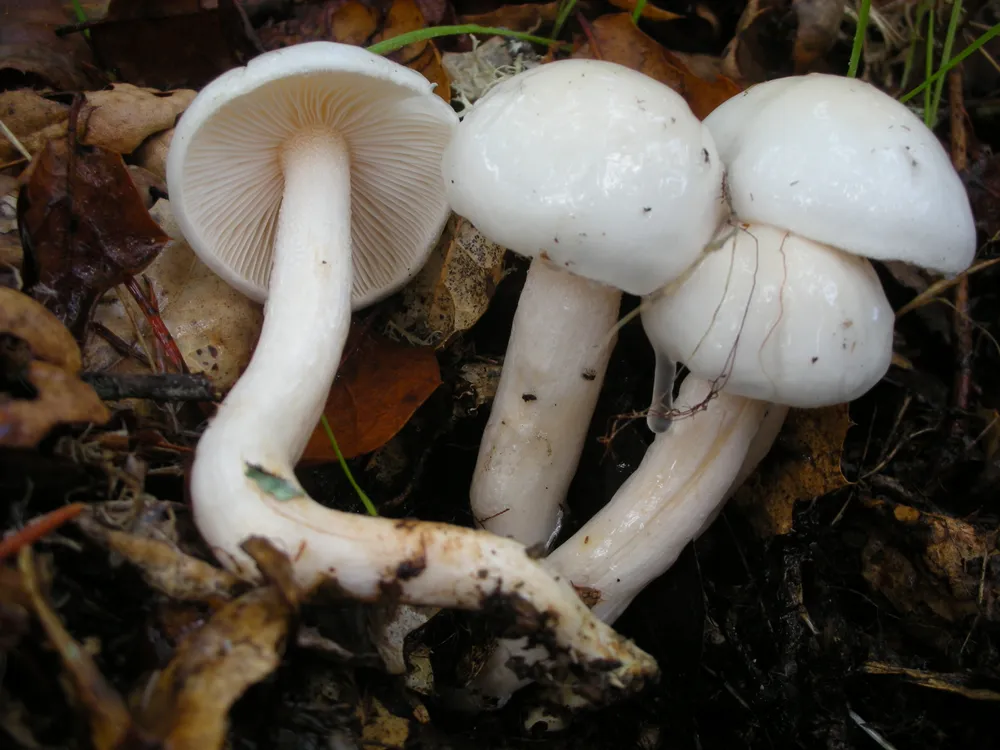
Ivory woodwax
Hygrophorus eburneus
Larch woodwax
Hygrophorus lucorum
.webp)
March mushroom
Hygrophorus marzuolus
Olive wax cap
Hygrophorus olivaceoalbus
Frequently asked questions
Is it safe to eat?
Yes, it's a good edible mushroom. The combination of a fleshy pinkish-red cap, white gills with a pink tint and mycorrhiza with oak is a recognizable set with no serious dangerous lookalikes.
Does it need boiling first?
No, not necessarily. You can fry, stew or pickle the Pinkmottle woodwax straight away. Flesh firm, holds its shape well. Young mushrooms are especially tasty.
Where should you look for it?
In oak and mixed forests with oak — it's an obligate mycorrhizal partner of oak. It likes sunny spots, forest edges and clearings. It often grows in groups, sometimes in partial rings. It doesn't occur without oak.
In which regions of Ukraine does it grow?
Mainly in the Forest-Steppe and the southern part of the forest zone — Khmelnytskyi, Vinnytsia, Cherkasy, Kyiv, Poltava, Sumy, Kharkiv, Chernihiv and Zhytomyr oblasts. Less common in the Carpathians and Prykarpattia. In the steppe — only in oak plantations.
When should you look for it?
August–October. Peak fruiting is in September. In a warm autumn it can fruit until mid-October. It's a typical early-autumn mushroom of oak forests.
Does it appear in summer?
The first fruiting bodies sometimes appear in late July to early August, especially in rainy years. But the main season is August–September.
What is it confused with?
With brittlegills (Russula) — hence the name. The critical difference: brittlegills have a brittle stem that crumbles like chalk; the Pinkmottle woodwax has a firm, fibrous stem that doesn't crumble. Plus, the woodwax's gills feel waxy to the touch, while brittlegills' gills are ordinary. Don't confuse it with Tricholoma (knights) either.
How do you tell it from the Wood blewit?
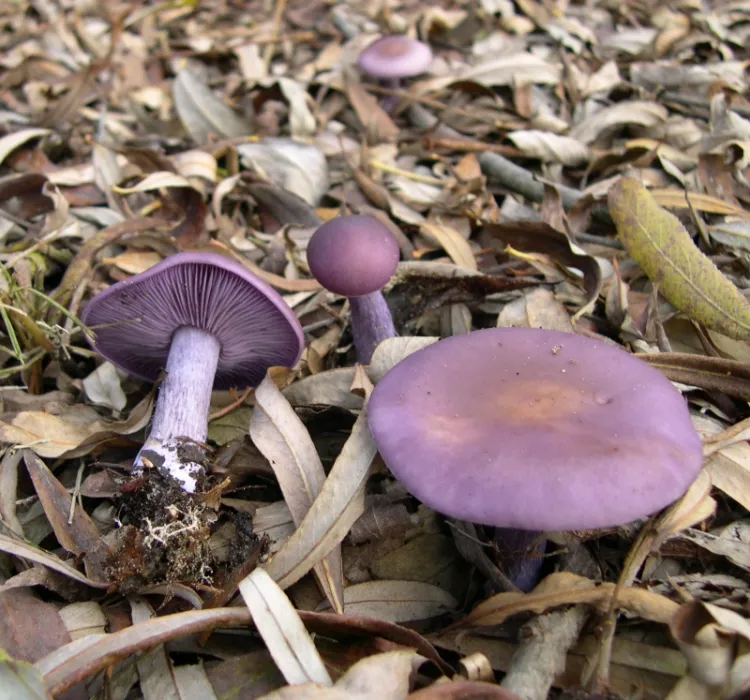
The Wood blewit (Lepista nuda) has a violet or lilac-violet cap and stem, with violet gills. The Pinkmottle woodwax is pinkish red, with no violet tints, and has white gills (with pink droplets). A completely different palette.
Is Pinkmottle woodwax edible or poisonous?
Does Pinkmottle woodwax have gills or pores?
What does the cap of Pinkmottle woodwax look like?
What does the stem of Pinkmottle woodwax look like?
Sources
- [1]Вікіпедія (українська)
- [2]Атлас грибів України, Зеров Д.К. (1979)
- [3]MycoBank Database
- [4]Index Fungorum
- [5]GBIF
- [6]iNaturalist Ukraine