.webp)
March mushroomHygrophorus marzuolus
Expert-verifiedUpdated October 3, 2026
Passport
- Edibility
- Edible
- Season
- Mar — May
- Hymenophore
- Gilled
- Cap color
- Grey
- Size
- Medium (5–15 cm)
- Smell
- Pleasant
- Reviewed
- Yes ✓
Quick answers
Where to look?
Conifer forest
When does it appear?
Mar — May
Active months: March, April, May.
How to recognize it? Three signs
- Cap color: Grey, Dark brown
- Cap shape: Convex
- Smell: Pleasant
Fruiting season
March – May
Description
The March mushroom is one of the very first spring mushrooms. It's also called the "March" mushroom (hence the scientific name marzuolus — "of March") because it fruits while snow still lies in the mountains — late March, April, early May. It often grows right out from under the snow, in thawed patches beneath spruce boughs. A real joy for a forager after a long winter.
It's a good edible mushroom, valued in the kitchen. A gray or grayish-black cap with whitish gills, firm flesh with a pleasant mushroomy taste. Suitable for frying, stewing, pickling and drying. Safe to pick — in March–April in the coniferous mountains there are almost no dangerous lookalikes.
In Ukraine it occurs mainly in the Carpathians, Zakarpattia and Prykarpattia — in mountain spruce and fir forests at 800-1500 m. Occasional finds are made in pine forests of the lowlands. It's an uncommon species — it needs specific conditions: a mountain coniferous forest with a deep enough snow cover in winter.
Cap
Cap 4-10 cm, at first hemispherical, then convex to flat. Color gray, ash-gray, with age dark gray or grayish-black in the center. Surface dry or slightly moist, smooth, sometimes with radial streaks.
Hymenophore
Gills. The gills are widely spaced, thick, waxy, decurrent on the stem. Color white in young mushrooms, with age grayish to gray-black. Spore print white.
Stem
Stem 3-8 cm tall, 1-2 cm thick, cylindrical or slightly tapering toward the base, firm. Whitish, grayish with age, especially in the lower part. Surface dry. No ring.
Flesh
Flesh white, firm, somewhat fibrous in the stem. Barely changes color when cut (may turn slightly gray). Holds its shape when cooked.
Smell
Faint pleasant mushroomy smell. Mild, pleasantly mushroomy taste.
›Scientific synonyms (3)
Agaricus marzuolus Fr. (1821), Limacium camarophyllum subsp. marzuolum (Fr.) Herink (1949), Clitocybe marzuolus (Fr.) Sacc. (1887)
Lookalikes
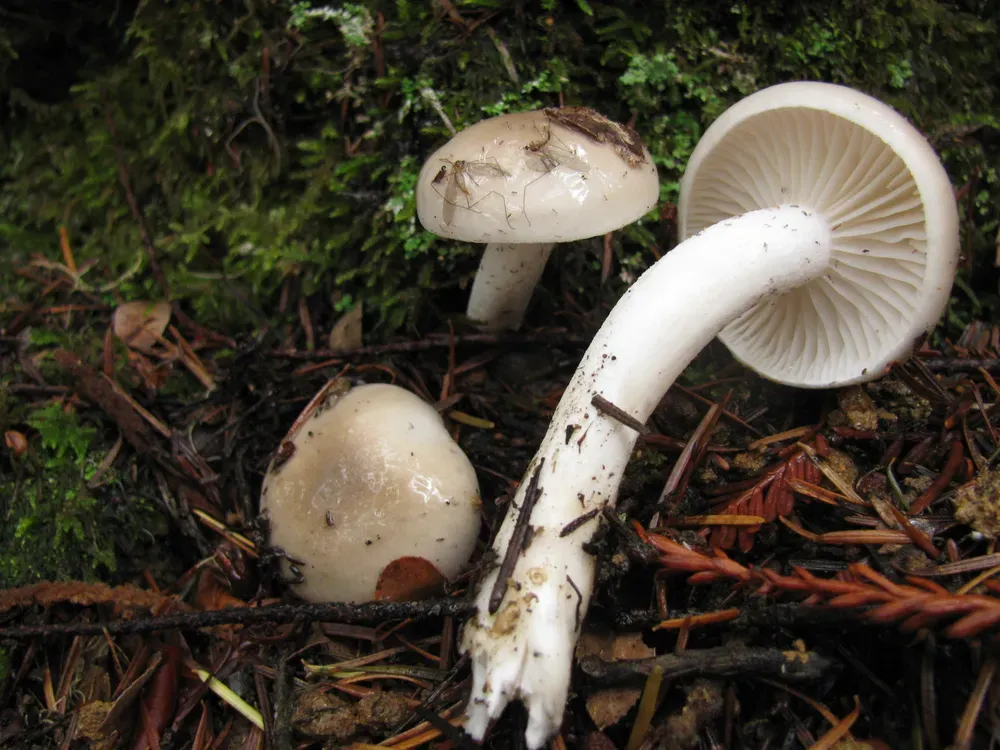
Related species
Mushrooms of the same genus and habitat — to study side by side and never mix up.
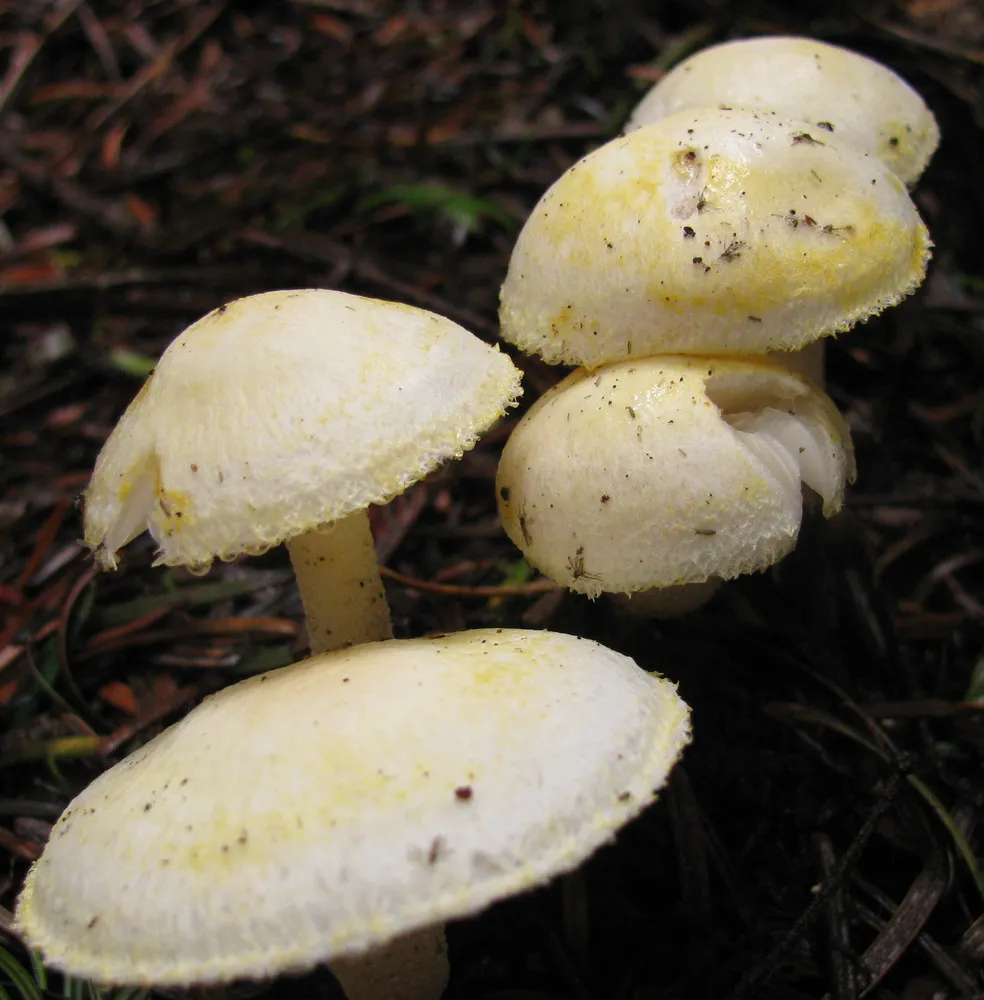
Gold flecked woodwax
Hygrophorus chrysodon
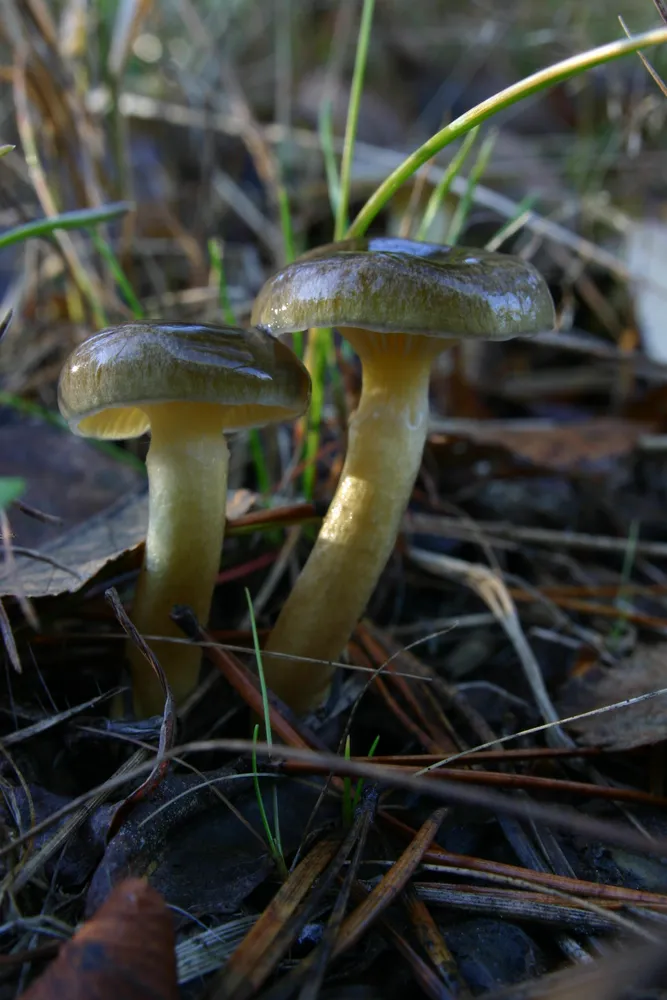
Herald of winter
Hygrophorus hypothejus
Hygrophorus leucophaeus
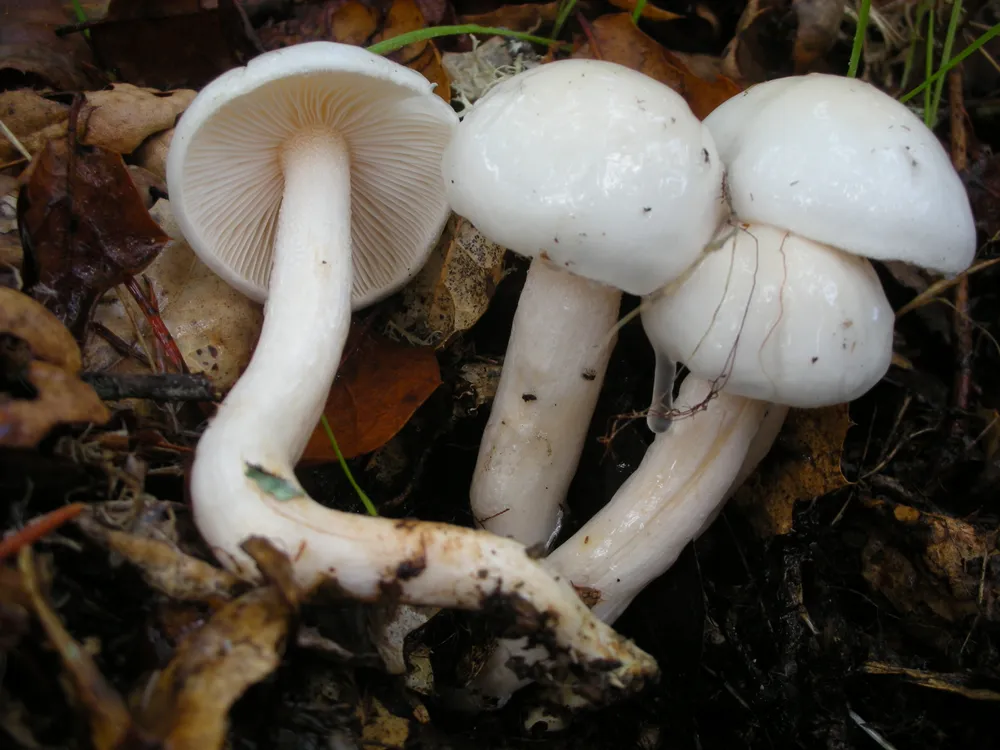
Ivory woodwax
Hygrophorus eburneus
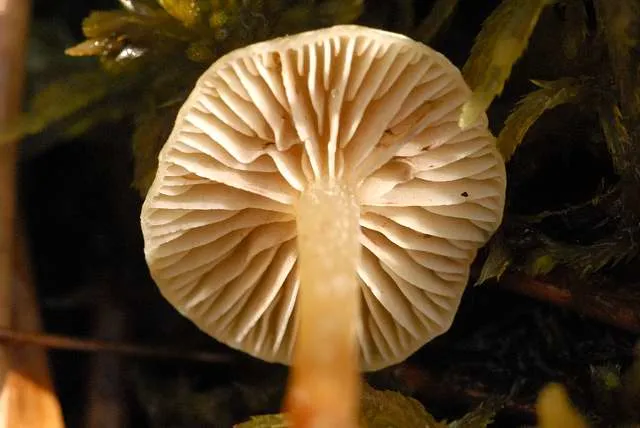
Larch woodwax
Hygrophorus lucorum
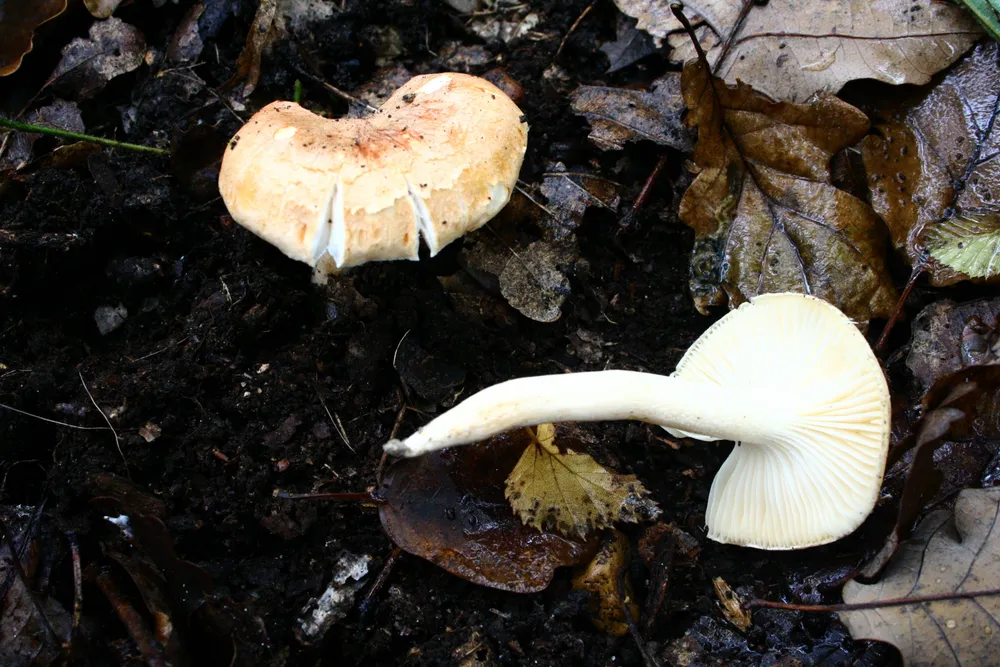
Oak woodwax
Hygrophorus nemoreus
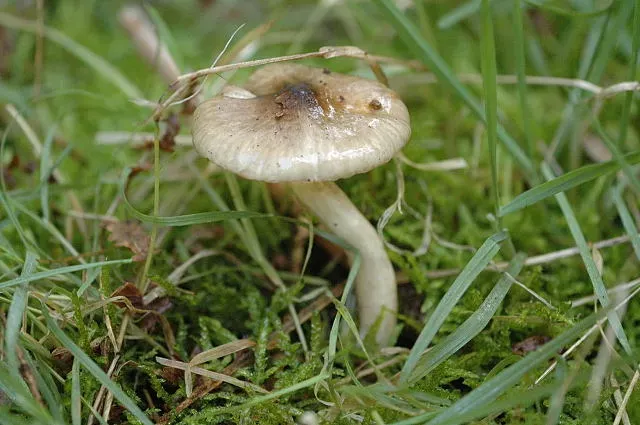
Olive wax cap
Hygrophorus olivaceoalbus
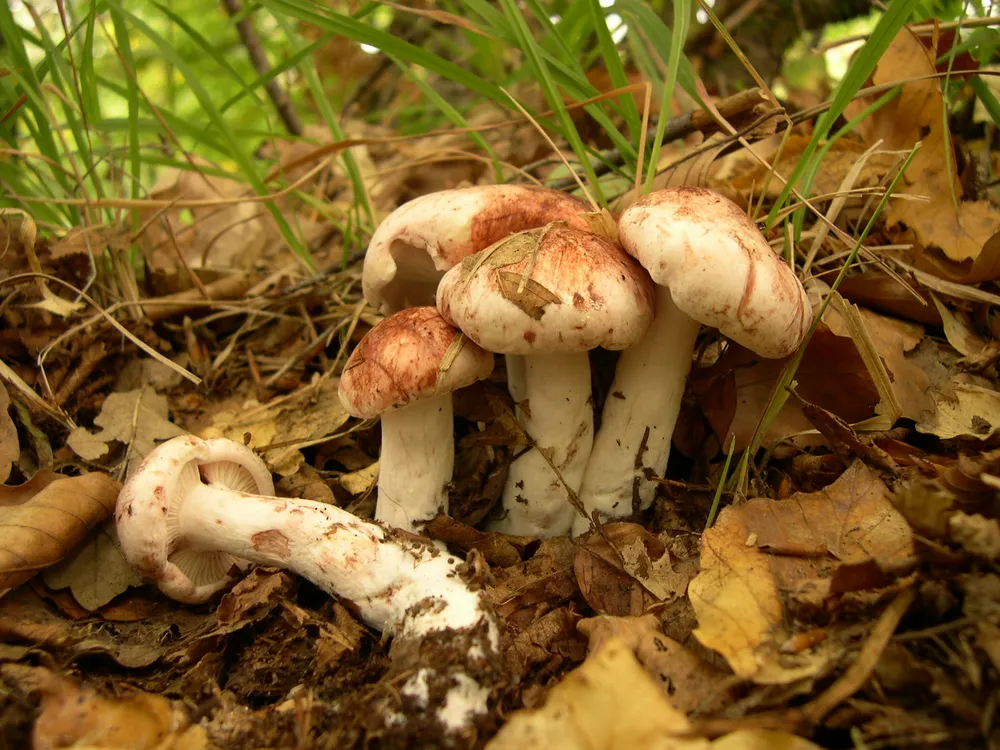
Pinkmottle woodwax
Hygrophorus russula
Frequently asked questions
Is it safe to eat?
Yes, it's a good edible mushroom. In early spring in mountain coniferous forests there are almost no dangerous lookalikes. A gray cap with white gills + fruiting under the snow in March–April + spruce/fir as a partner — a fairly reliable set of features.
Can you pick it from under the snow?
Yes. The March mushroom often fruits right in thawed patches in the snow. Mushrooms that have pushed through the snow are perfectly fine and edible. Clean, rinse and cook as usual.
Where should you look for it?
In mountain spruce and fir forests at 800-1500 m. It likes mossy spots under spruces, forest edges and glades. Look in thawed patches where the snow melts earlier — south-facing slopes warmed by the sun. A mycorrhizal partner of spruce and fir.
In which regions of Ukraine does it grow?
Mainly the Carpathians: Lviv, Ivano-Frankivsk, Zakarpattia and Chernivtsi oblasts — at 800-1500 m in spruce-fir and spruce forests. Occasional finds in the pine forests of Prykarpattia.
When should you look for it?
Late March — May. It's one of the very first spring mushrooms. Peak fruiting is in April, in thawed patches in mountain forests. In the lowlands the season may shift to February–March.
Does it appear in summer?
No, it's a strictly spring species. Fruiting usually ends in May. The March mushroom doesn't appear in summer — other woodwax species and spring morels take its place.
What is it confused with?
With other gray woodwaxes and some funnels (Clitocybe). In spring there are very few dangerous gray mushrooms in mountain coniferous forests — so the risks are low. The main thing is to make sure it's a woodwax (widely spaced thick gills, no ring, no volva).
How do you tell it from other woodwaxes?
The March mushroom is the only spring member of the genus in Ukraine. Its season (March–May) on its own rules out summer and autumn relatives. Add the characteristic gray cap and high-mountain spruce forest — a typical combination.
Is March mushroom edible or poisonous?
Does March mushroom have gills or pores?
What does the cap of March mushroom look like?
What does the stem of March mushroom look like?
Sources
- [1]Вікіпедія (українська)
- [2]Атлас грибів України, Зеров Д.К. (1979)
- [3]MycoBank Database
- [4]Index Fungorum
- [5]GBIF
- [6]iNaturalist Ukraine