THIS DATA HAS NOT BEEN VERIFIED BY AN EXPERT. Use at your own risk.
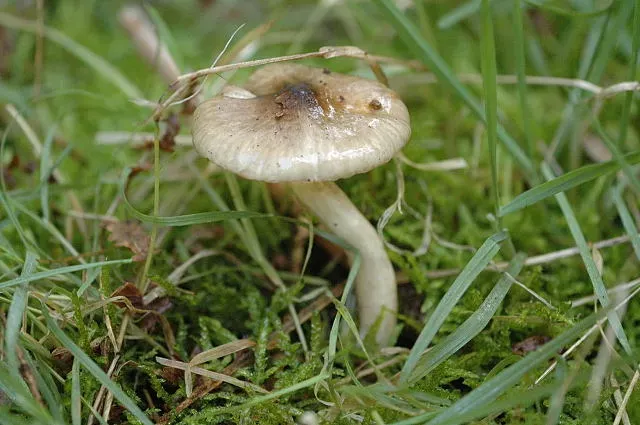
Olive wax capHygrophorus olivaceoalbus
Under reviewUpdated October 3, 2026
Passport
- Edibility
- Edible
- Season
- Aug — Oct
- Hymenophore
- Gilled
- Cap color
- Olive
- Size
- Medium (5–15 cm)
- Smell
- Pleasant
- Reviewed
- Under review
Quick answers
Where to look?
Conifer forest, Mixed forest
When does it appear?
Aug — Oct
Active months: August, September, October.
How to recognize it? Three signs
- Cap color: Olive, Brown, Grey
- Cap shape: Convex, Umbonate
- Smell: Pleasant
Fruiting season
August – October
Description
The olive wax cap, known to science as Hygrophorus olivaceoalbus, is an elegant late-autumn mushroom of coniferous forests with a remarkably slimy olive-brown cap and white waxy gills. It is easy to recognize by its double slime — a sticky cap and a sticky stem, the lower part of which is covered in characteristic dark bands and scales that resemble snakeskin. It is a mycorrhizal mushroom: it partners with conifers, most often spruce, so look for it in damp coniferous and mixed forests.
In Ukraine, the olive wax cap turns up in coniferous and mixed forests, preferring damp, shady spruce woods with a carpet of moss. As a true member of the Hygrophorus genus, it fruits late — from late summer to late autumn, August through October, and in mild years right up to the first frosts, when most mushrooms are already gone.
In terms of edibility, the olive wax cap is an edible mushroom, but its taste is mediocre and not everyone likes its slimy texture. Its firm, waxy flesh has a mild flavor without bitterness; before cooking, it is best to peel the slimy skin off the cap, which keeps the dish from being overly sticky. Mostly young, firm specimens are picked; as an extra in a late-autumn basket the mushroom is perfectly fine, though it is rarely the main prize.
Cap
The cap of the olive wax cap reaches 3 to 8, occasionally up to 12 centimeters across. When young it is hemispherical or convex with an inrolled margin; with age it flattens out, usually with a small bump (umbo) in the center. The surface is very slimy and sticky, especially in wet weather. The color is olive-brown, gray-olive or dark brown, with darker radial fibrous streaks spreading from the center; the margin is paler. The slimy, streaked olive cap is a recognizable feature of the species.
Hymenophore
The spore-bearing surface is made of gills. The gills are thick, widely spaced and waxy to the touch, attached to the stem or running slightly down it (decurrent). They are pure white, sometimes with a faint grayish tint near the base. The spore print is white. Thick, waxy, decurrent white gills are a typical hallmark of the Hygrophorus genus.
Stem
The stem is cylindrical, 4 to 12 centimeters tall and white. Its defining feature is its slimy coating: above a ring-like zone the stem is white and dry, while below it is covered with a sticky layer with dark gray-olive bands and scales arranged in tiers, like snakeskin. This pattern makes the species easy to recognize. There is no volva, and no true ring either — only a slimy ring zone remains.
Flesh
The flesh is white and firm, waxy in the cap, and does not change color when cut. The taste is mild, without bitterness, but generally bland. Because of the slimy cap skin and mediocre taste, the mushroom is only moderately valued for the table; people choose young, firm specimens and peel the sticky skin off the cap.
Smell
The smell is faint, pleasant or nearly indistinct, with no sharp notes. Aroma is not a defining feature, so for identification rely on the slimy, streaked olive cap, the white waxy gills, the banded slimy stem and its growth next to spruce.
›Scientific synonyms (2)
Agaricus olivaceoalbus Fr. (1815), Limacium olivaceoalbum (Fr.) P. Kumm. (1871)
Lookalikes
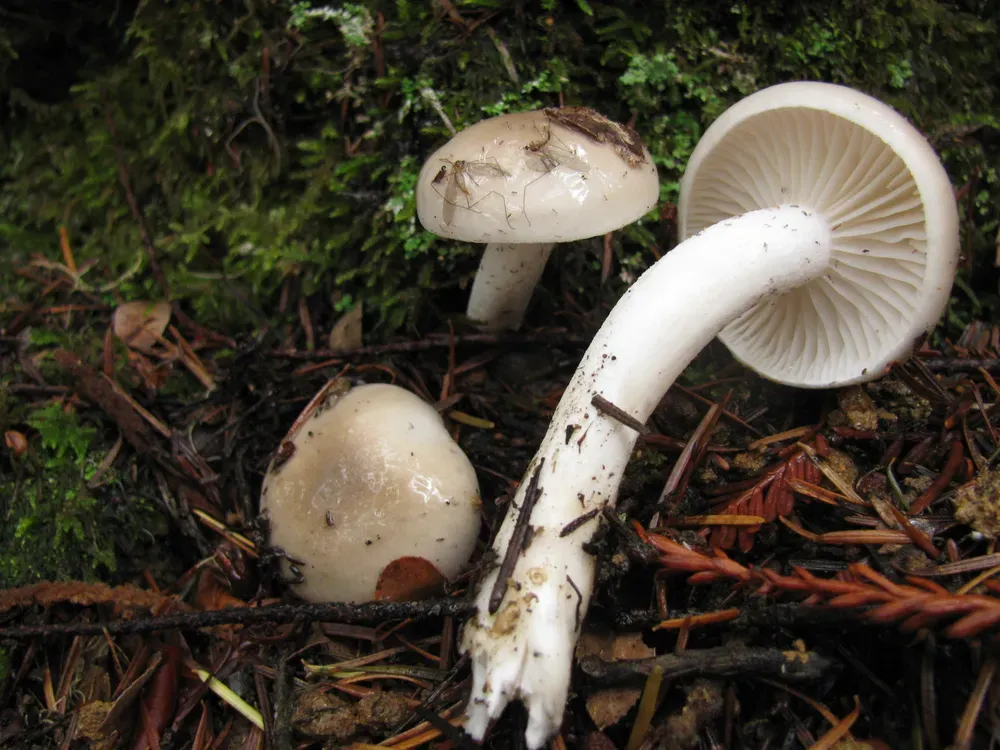
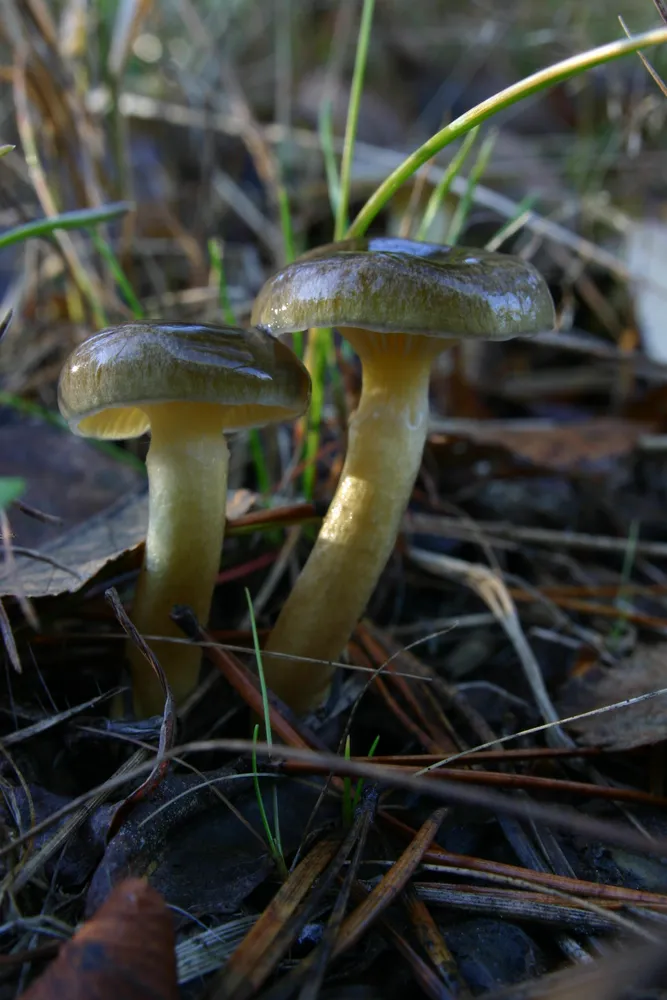
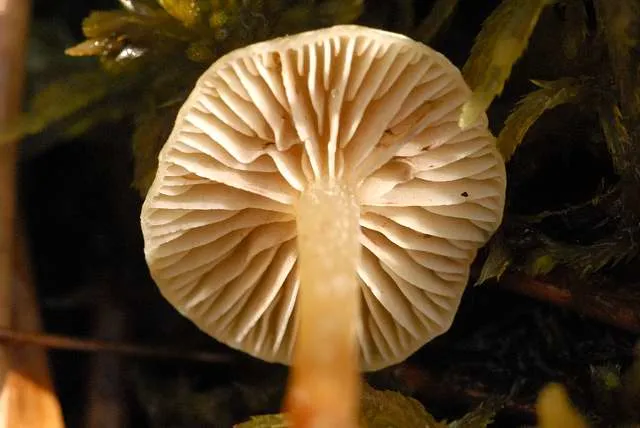
Related species
Mushrooms of the same genus and habitat — to study side by side and never mix up.
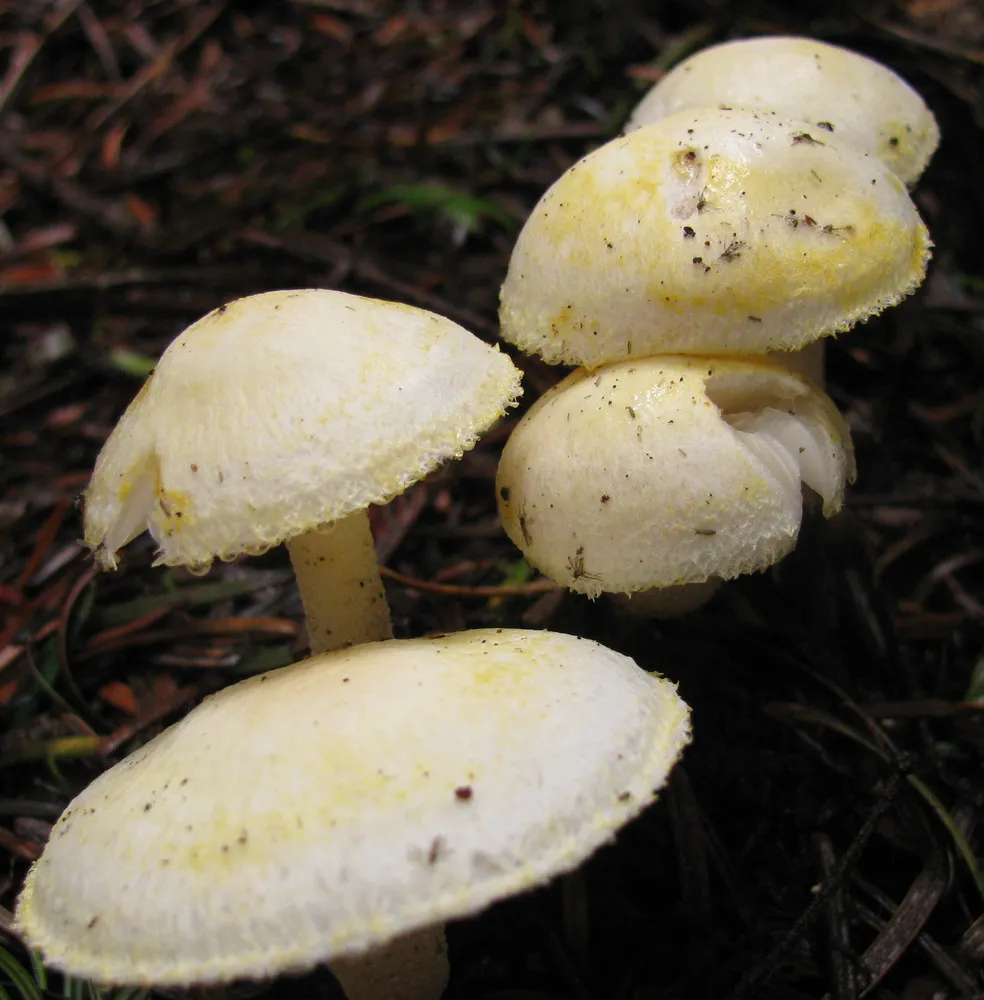
Gold flecked woodwax
Hygrophorus chrysodon
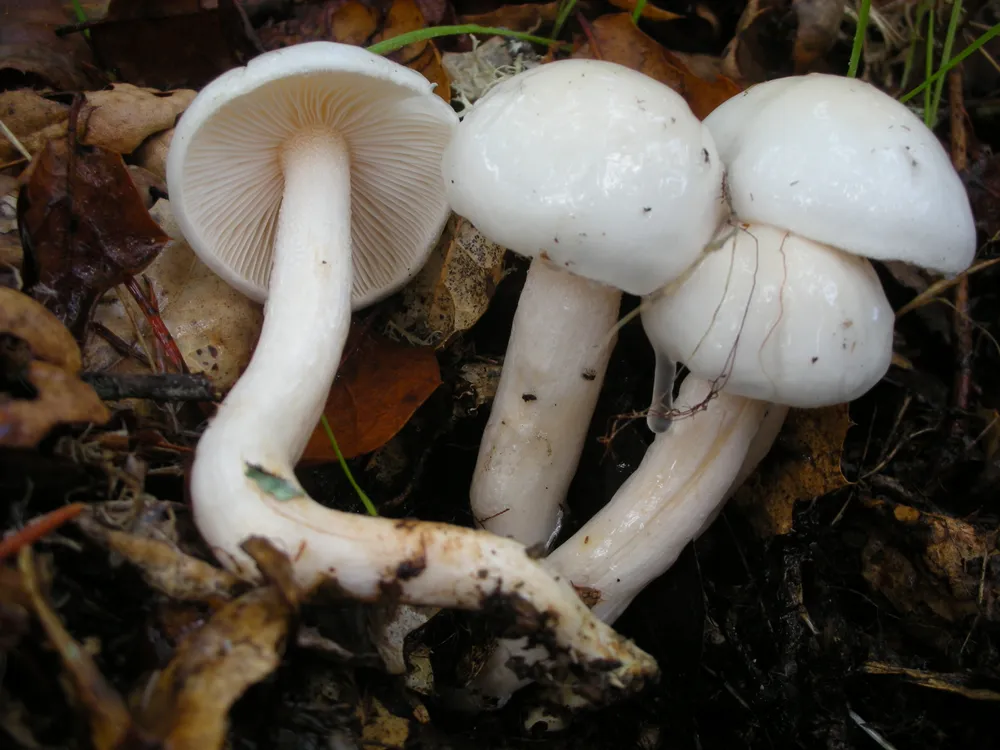
Ivory woodwax
Hygrophorus eburneus
.webp)
March mushroom
Hygrophorus marzuolus
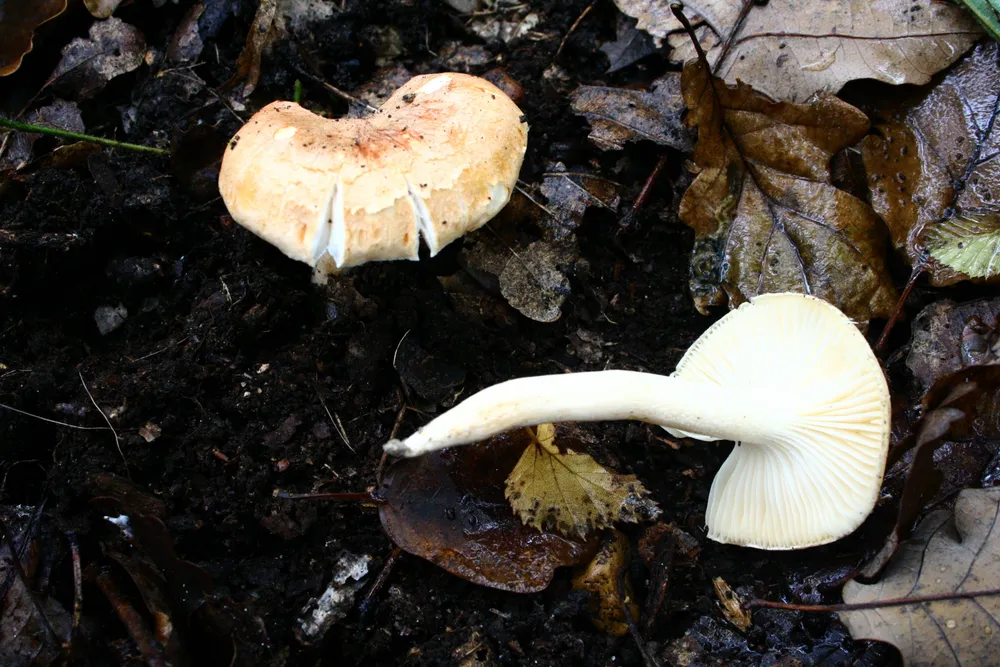
Oak woodwax
Hygrophorus nemoreus
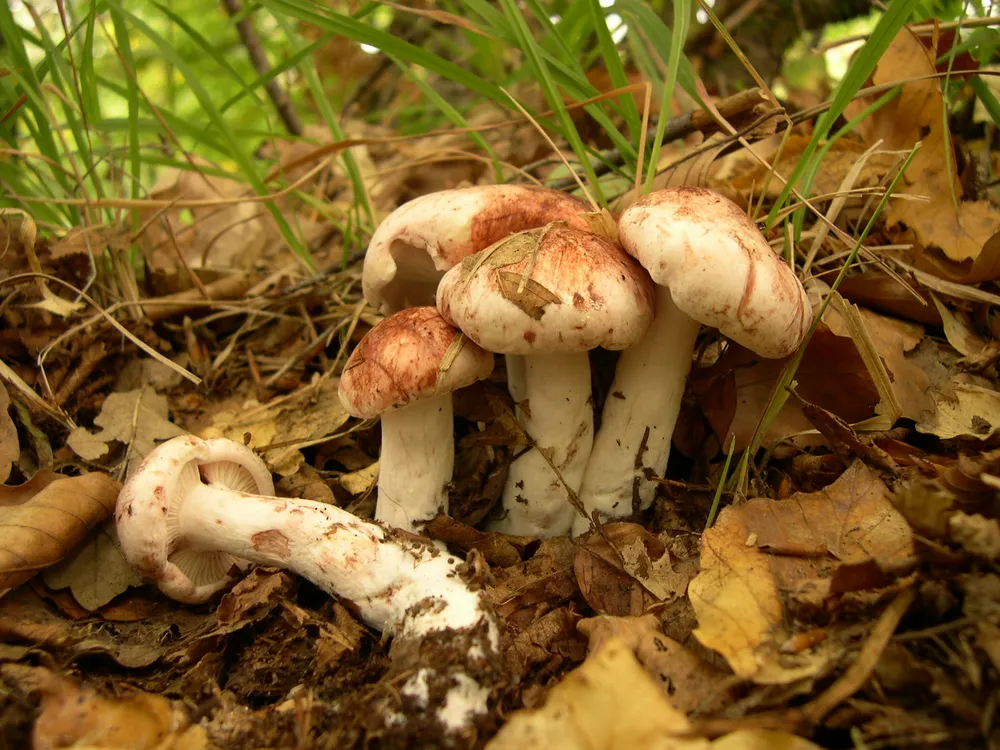
Pinkmottle woodwax
Hygrophorus russula
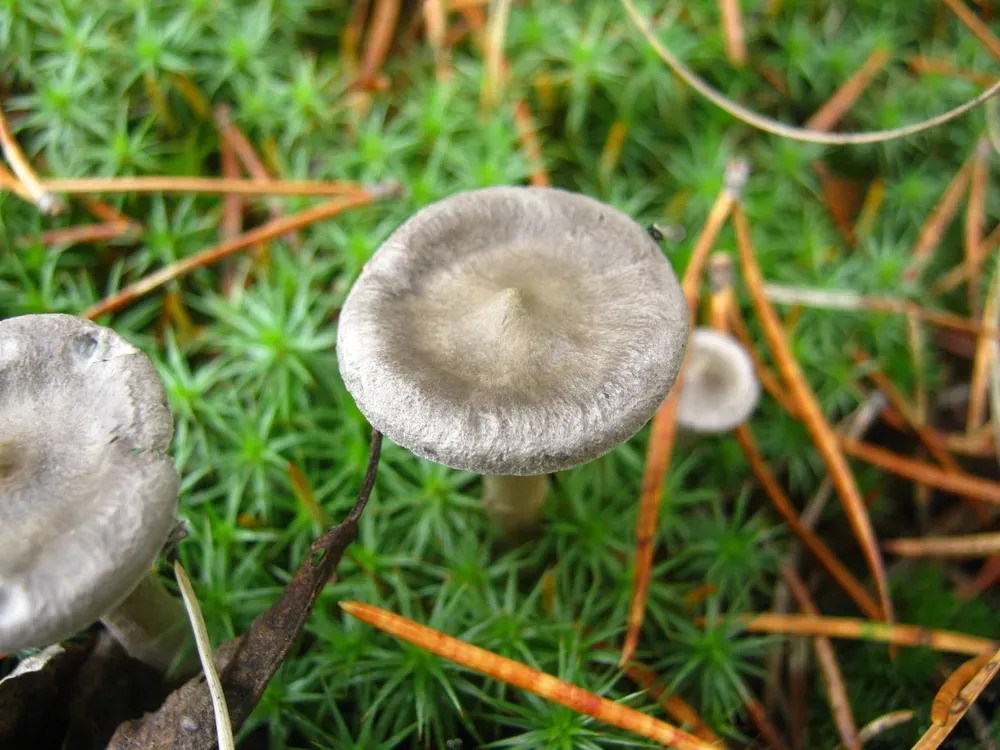
Grayling
Cantharellula umbonata
._Locatie,_Hortus_(Haren,_Groningen)_01.webp)
Vermilion waxcap
Hygrocybe miniata
_1.webp)
Blackening waxcap
Hygrocybe conica
Frequently asked questions
Is Olive wax cap edible or poisonous?
Does Olive wax cap have gills or pores?
What does the cap of Olive wax cap look like?
What does the stem of Olive wax cap look like?
What do Olive wax cap smell and taste like?
Where does Olive wax cap grow?
Which trees does Olive wax cap grow under?
When should you pick Olive wax cap?
What can Olive wax cap be confused with?
How do you cook Olive wax cap?
Can you dry Olive wax cap?
What is the scientific name of Olive wax cap?
Sources
- [1]Вікіпедія (українська)
- [2]Атлас грибів України, Зеров Д.К. (1979)
- [3]MycoBank Database
- [4]Index Fungorum
- [5]GBIF
- [6]iNaturalist Ukraine