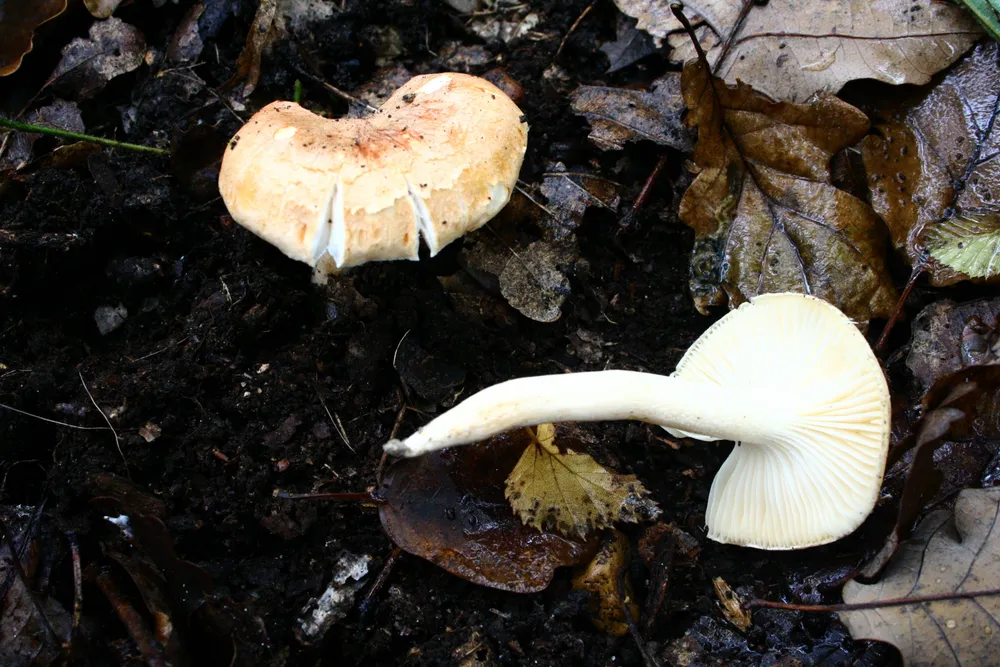
Oak woodwaxHygrophorus nemoreus
Expert-verifiedUpdated October 3, 2026
Passport
- Edibility
- Edible
- Season
- Sep — Nov
- Hymenophore
- Gilled
- Cap color
- Orange
- Size
- Medium (5–15 cm)
- Smell
- Floury
- Reviewed
- Yes ✓
Quick answers
Where to look?
Deciduous forest, Mixed forest
When does it appear?
Sep — Nov
Active months: September, October, November.
How to recognize it? Three signs
- Cap color: Orange, Red, Brown
- Cap shape: Convex
- Smell: Floury
Fruiting season
September – November
Description
The Oak woodwax is a mushroom for those who love oak forests. An orange-reddish cap up to 10 cm, white-cream decurrent gills, a sturdy pale stem. Its silhouette is unassuming, but in the basket it shows its worth: firm, fragrant with mealy notes, and it holds its shape well in cooking.
This is an edible mushroom with real culinary value. It is eaten fresh (fried, stewed), dried, pickled, and salted. The flesh is not watery — it holds up well to all kinds of cooking. Safe even for beginners, because in Ukraine it has no obvious dangerous lookalikes among the woodwaxes. When picking, identify it by the combination «orange cap + oak forest + mealy smell».
In Ukraine it grows in deciduous and mixed forests, always with oak (its mycorrhizal partner). It does NOT occur in conifer forests — a clear diagnostic feature. A regular but not abundant species. Finds are recorded in the Carpathians, Polissia, the Forest-Steppe, around oak woodlands. The season runs September–November, peaking in October.
Cap
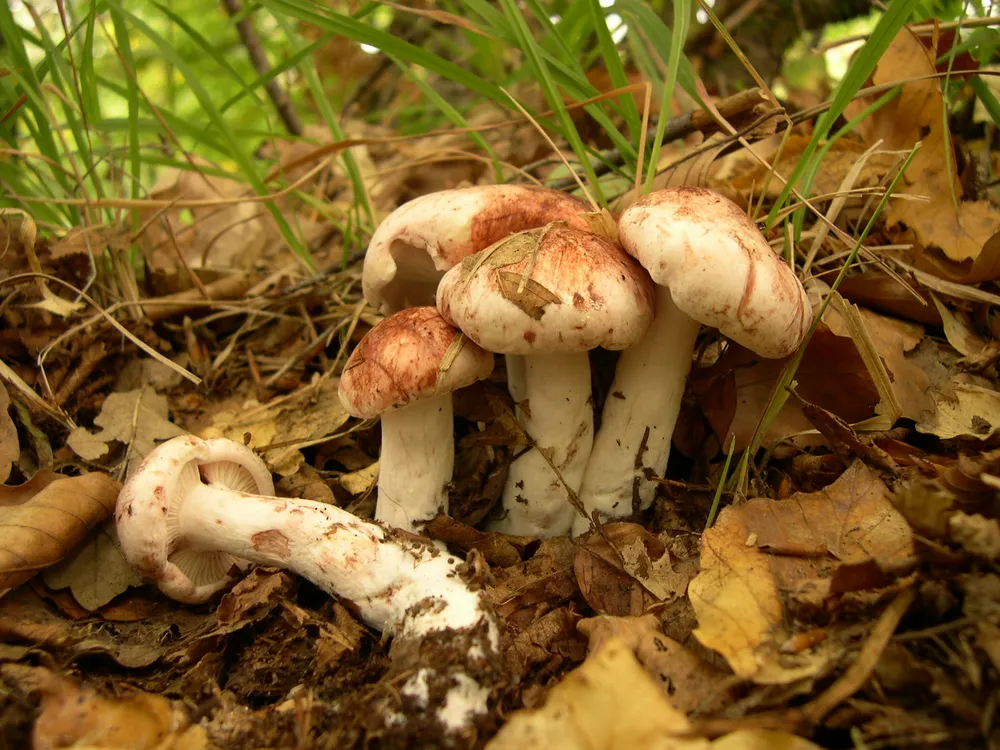
Cap 4-10 cm, hemispherical at first, then flattened-convex with a broad umbo. Orange-reddish, brick orange, darker at the center. The surface is dry or slightly slimy in wet weather, smooth. The margin is thin and often split in mature specimens.
Hymenophore
Gilled hymenophore. The gills are widely spaced, thick, and decurrent (a typical feature of the genus Hygrophorus). White or cream at first, taking on a yellowish or pinkish tint with age. Spore print white.
Stem
Stem 4-8 cm tall, 1-2 cm thick, cylindrical, slightly tapering toward the base. White or cream, with a pinkish tint at the top. The surface is dry, with a fine white mealy coating at the top. No ring.
Flesh
The flesh is white, firm, thick at the center of the cap. Does not change color when cut. Springy texture, not watery — good for cooking.
Smell
A distinct mealy smell — a diagnostic feature. Taste mild, pleasantly mushroomy, with a barely noticeable fresh, mealy note.
›Scientific synonyms (1)
Agaricus nemoreus Pers. (1801)
Lookalikes
Related species
Mushrooms of the same genus and habitat — to study side by side and never mix up.
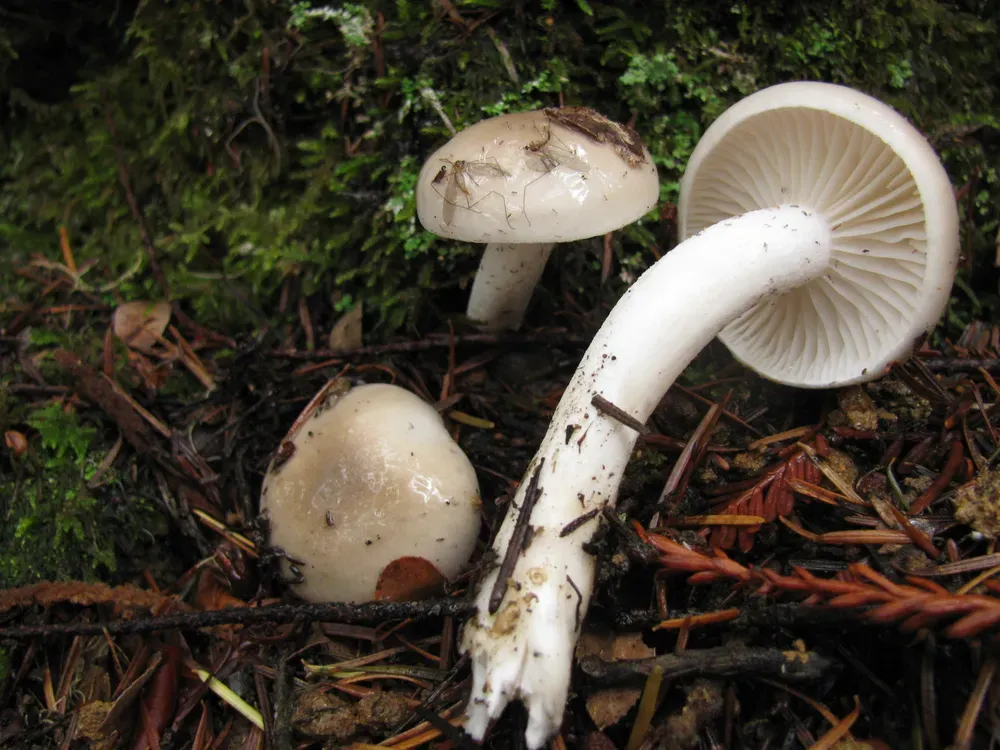
Almond woodwax
Hygrophorus agathosmus
Hygrophorus leucophaeus
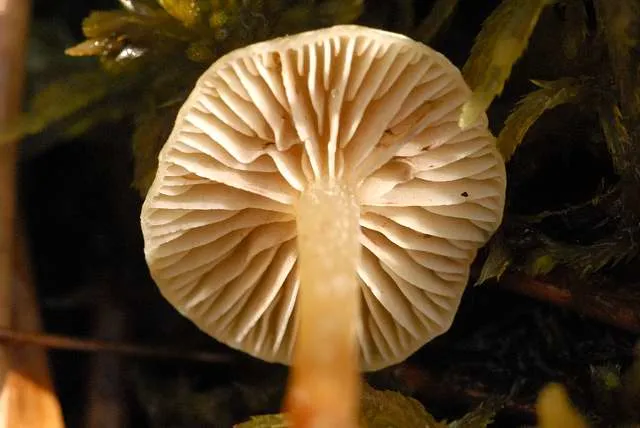
Larch woodwax
Hygrophorus lucorum
.webp)
March mushroom
Hygrophorus marzuolus
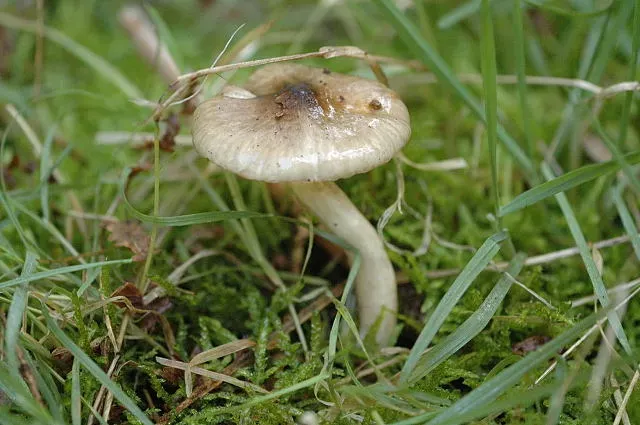
Olive wax cap
Hygrophorus olivaceoalbus
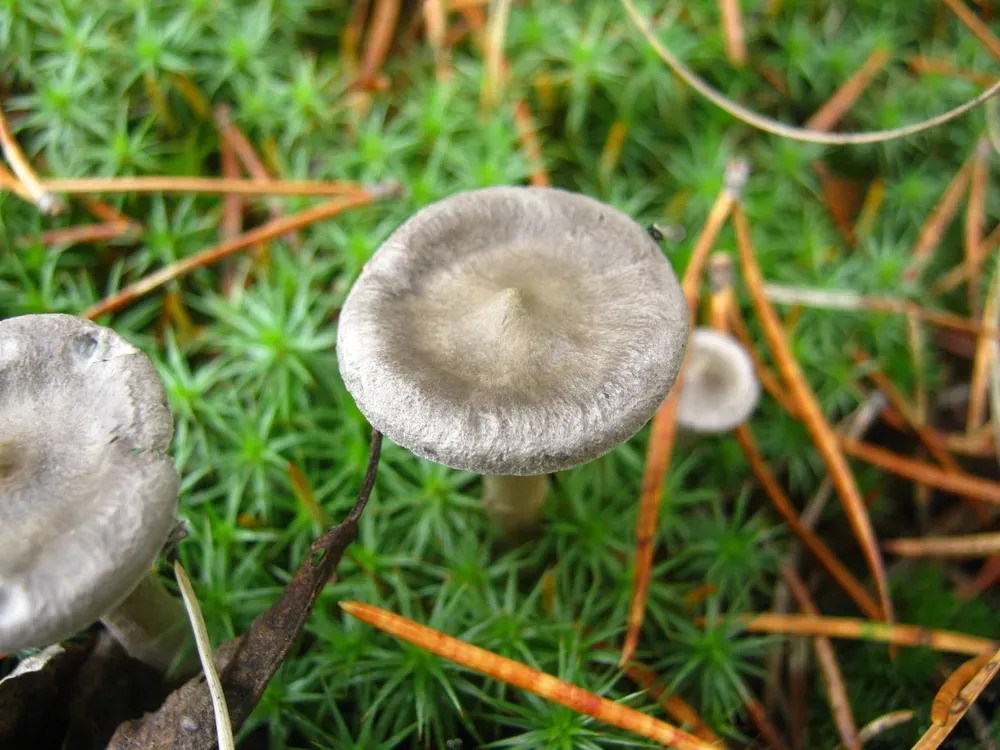
Grayling
Cantharellula umbonata
._Locatie,_Hortus_(Haren,_Groningen)_01.webp)
Vermilion waxcap
Hygrocybe miniata
_1.webp)
Blackening waxcap
Hygrocybe conica
Frequently asked questions
Is it safe to eat?
Yes, it is a classic edible mushroom. Safe even for beginners — there are no deadly poisonous species among the woodwaxes, and the characteristic combination «orange cap + oak + mealy smell» is easy to recognize.
Does it need parboiling first?
No, it isn't necessary. You can fry, stew, or add the Oak woodwax to soups right away. Young mushrooms just need cleaning of needles/leaves and a good rinse. For pickling and salting — the standard recipes, as for any wild mushroom.
Where should you look for it?
Only in deciduous or mixed forests with oak. It is an obligate mycorrhizal partner of oak — it does not grow without it. It never occurs in conifer forests. It likes old oak groves, oak woodland edges, and mixed forests with some oak.
Which regions of Ukraine does it grow in?
Throughout the forest and forest-steppe zones wherever there is oak — the Carpathians, Prykarpattia, Polissia, the Forest-Steppe. Especially rich harvests in the Carpathians, Podillia, and the Chernihiv and Kyiv regions. In the steppe and Crimea — only in oak plantings.
When should you look for it?
September–November. Peak fruiting is late September to mid-October, especially after good autumn rains. In a warm, drawn-out autumn it can keep fruiting into the first days of November.
Does it appear in summer?
Occasional finds happen as early as late August, but the main flush starts in September. In summer (June–July) there is practically none — it is an autumn species clearly tied to cool weather.
What is it confused with?
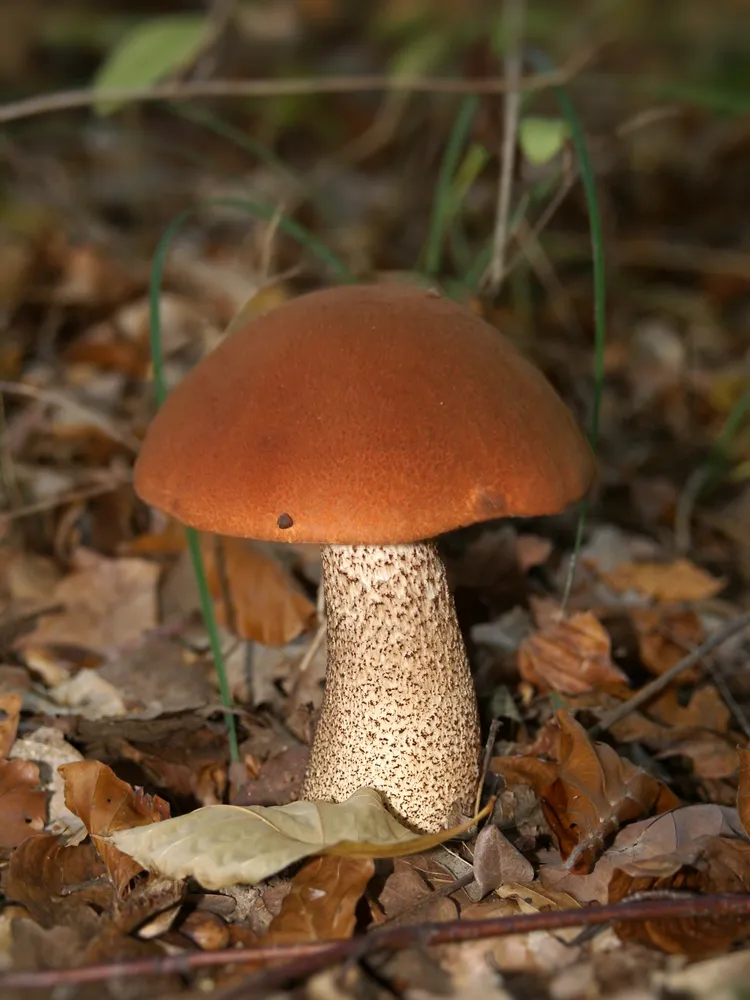
With other orange forest mushrooms — especially young red-capped scaber stalks (Leccinum aurantiacum) and the field mushroom. The key feature of the woodwax: widely spaced, thick, decurrent gills and a mealy smell. Red-capped scaber stalks have a spongy layer underneath, and field mushrooms have pink or chocolate-brown gills.
How do you tell it from other woodwaxes?
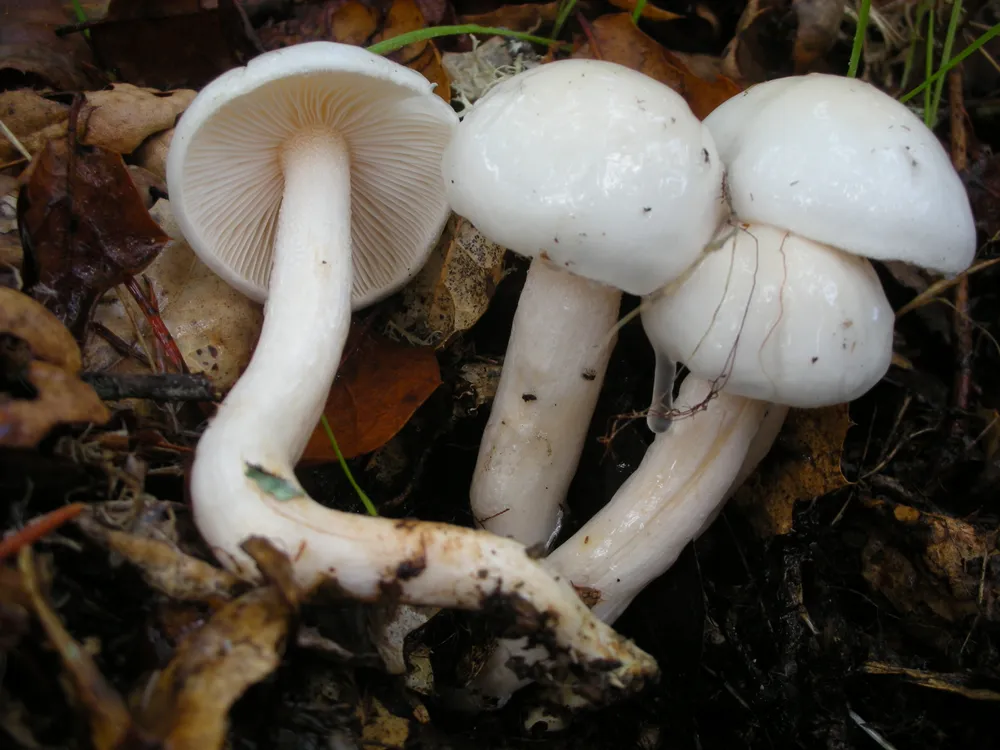
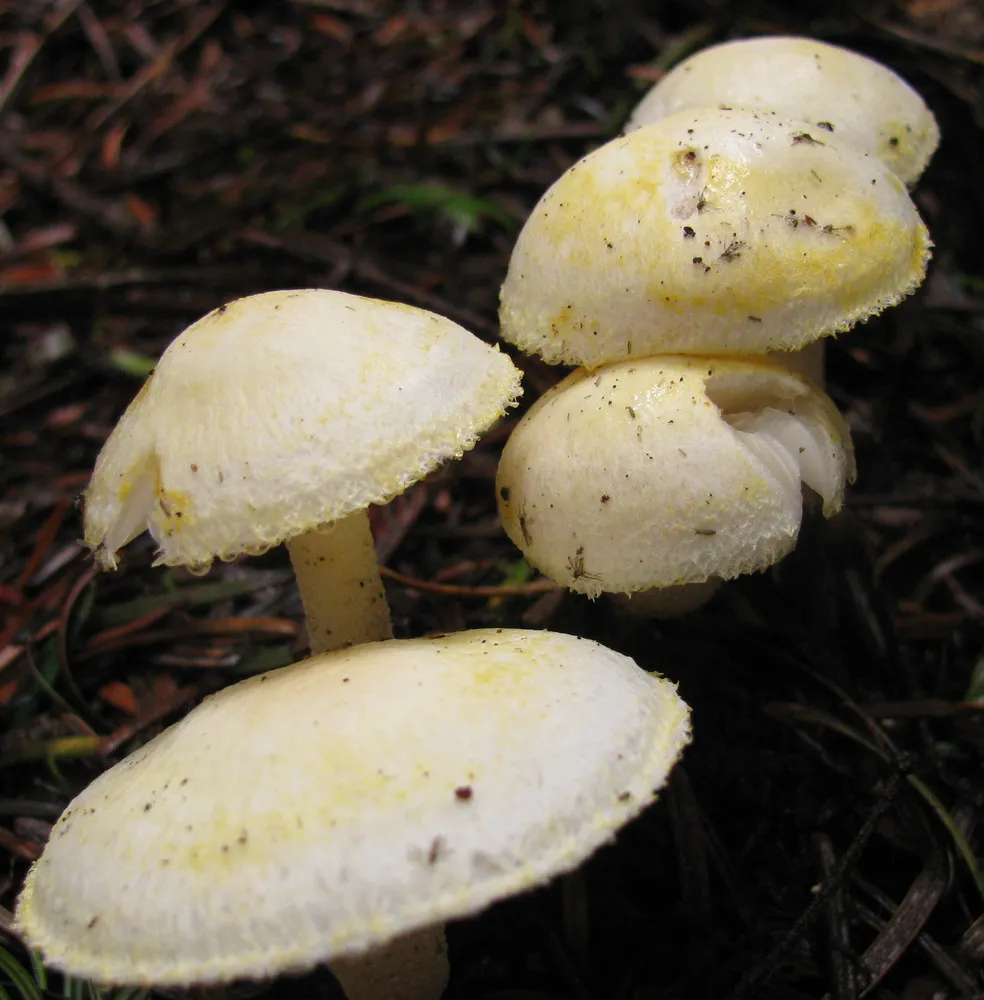
The Oak woodwax is the largest and brightest: orange-reddish, up to 10 cm, only with oaks. The Ivory woodwax is entirely white and smaller. The Gold flecked woodwax is white with a yellow margin and yellow granules on the stem. The Larch woodwax is lemon yellow and grows with larch. The combination «color + partner tree» usually gives a clear answer.
Is Oak woodwax edible or poisonous?
Does Oak woodwax have gills or pores?
What does the cap of Oak woodwax look like?
What does the stem of Oak woodwax look like?
Sources
- [1]Вікіпедія (українська)
- [2]Атлас грибів України, Зеров Д.К. (1979)
- [3]MycoBank Database
- [4]Index Fungorum
- [5]GBIF
- [6]iNaturalist Ukraine