THIS DATA HAS NOT BEEN VERIFIED BY AN EXPERT. Use at your own risk.
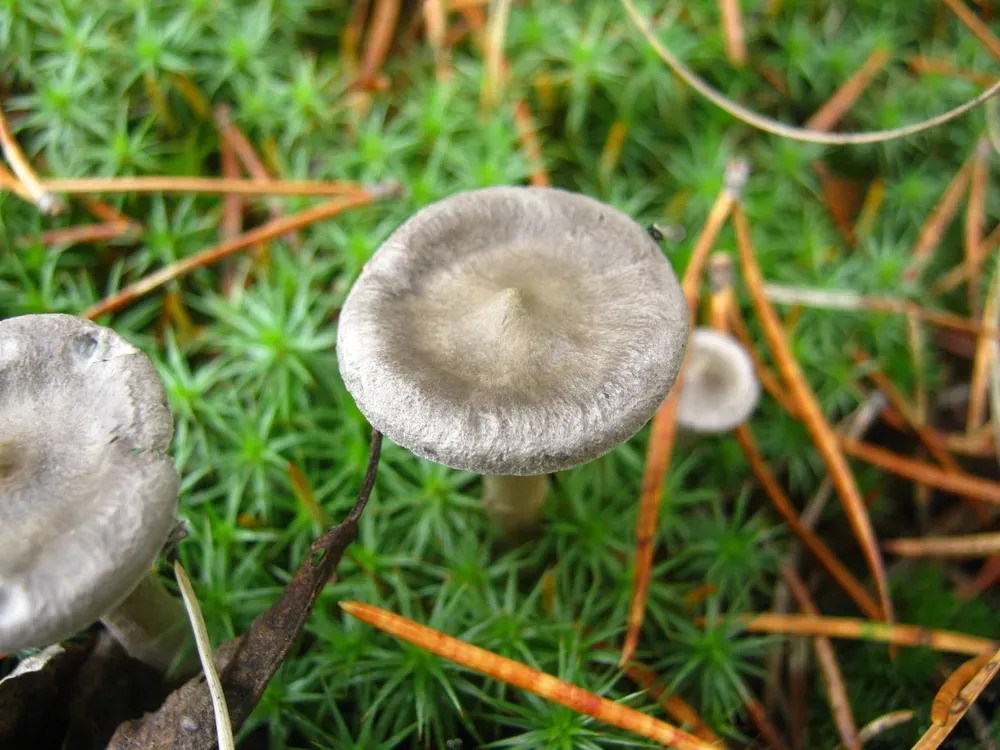
GraylingCantharellula umbonata
Under reviewUpdated October 3, 2026
Passport
- Edibility
- Edible
- Season
- Aug — Oct
- Hymenophore
- Gilled
- Cap color
- Grey
- Size
- Small (up to 5 cm)
- Smell
- Pleasant
- Reviewed
- Under review
Quick answers
Where to look?
Conifer forest, Mixed forest
When does it appear?
Aug — Oct
Active months: August, September, October.
How to recognize it? Three signs
- Cap color: Grey, Brown
- Cap shape: Umbonate, Depressed
- Smell: Pleasant
Fruiting season
August – October
Description
The grayling, known to science as Cantharellula umbonata, is a small gray mushroom that, despite its Ukrainian name "лисичка" (little chanterelle), is only a distant relative of true chanterelles. It got its folk name from the prominent pointed knob (umbo) in the center of its ash-gray cap and from its forked, decurrent gills, which from a distance resemble the ridges of chanterelles. It is a saprotroph inseparably tied to haircap mosses (Polytrichum): it almost always grows among their cushions in damp coniferous and mixed forests.
In Ukraine, the grayling occurs in coniferous and mixed forests, on damp mossy patches, peat bogs and the edges of swamps where haircap moss grows. Its fruiting season falls in late summer and autumn — August through October, often right up to the frosts. The mushroom appears in groups among the moss.
In terms of edibility, the grayling is an edible mushroom. Its thin, springy flesh has a mild taste; young mushrooms are fried and added to dishes. A characteristic feature is the reddening of the flesh and gills when damaged and with age, which is perfectly normal. Because it is not very fleshy, the mushroom rounds out the basket rather than making up the main haul, yet among the late-autumn moss carpets it is a familiar and pleasant find.
Cap
The cap of the grayling is small — 2 to 5 centimeters across. When young it is convex, becoming funnel-shaped and depressed with age, yet it almost always keeps a prominent pointed knob (umbo) in the center, to which the mushroom owes its name. The surface is finely fibrous, dry, matte. The coloring is gray, gray-brown or ashy brown, often darker in the center.
Hymenophore
The hymenophore is gilled. The gills are white or grayish-white, narrow, very crowded, running noticeably down the stem (decurrent) and characteristically forked (splitting in two), reminiscent of the ridges of chanterelles. When damaged and with age, they may develop reddish-pink spots. The spore print is white. Forked decurrent gills are the key feature of the species.
Stem
The stem is thin, cylindrical, 3 to 8 centimeters tall, grayish or light brown, matching the cap or slightly paler, springy, with whitish felty mycelium at the base. The surface is smooth or finely fibrous. There is no ring and no volva. When cut, the stem may also turn slightly red.
Flesh
The flesh is thin, springy, whitish or grayish, and when cut or damaged slowly takes on a reddish-pink tint. The taste is mild, without bitterness. Because of its thin texture, the mushroom rounds out the basket rather than anything else; for the table, choose young, firm specimens.
Smell
The smell is faint, pleasant or almost imperceptible, with no sharp notes. The aroma is not a defining feature, so for identification you rely on the gray knobbed cap, the forked decurrent gills that turn red, and its growth among haircap moss.
›Scientific synonyms (2)
Cantharellus umbonatus (J.F. Gmel.) Pers., Merulius umbonatus J.F. Gmel. (1792)
Lookalikes
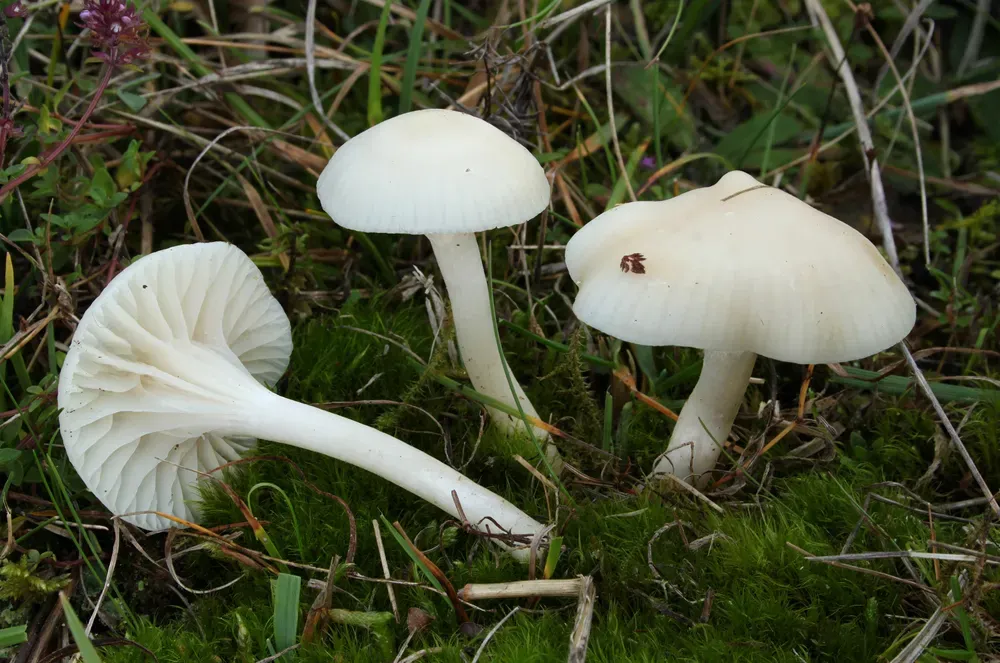
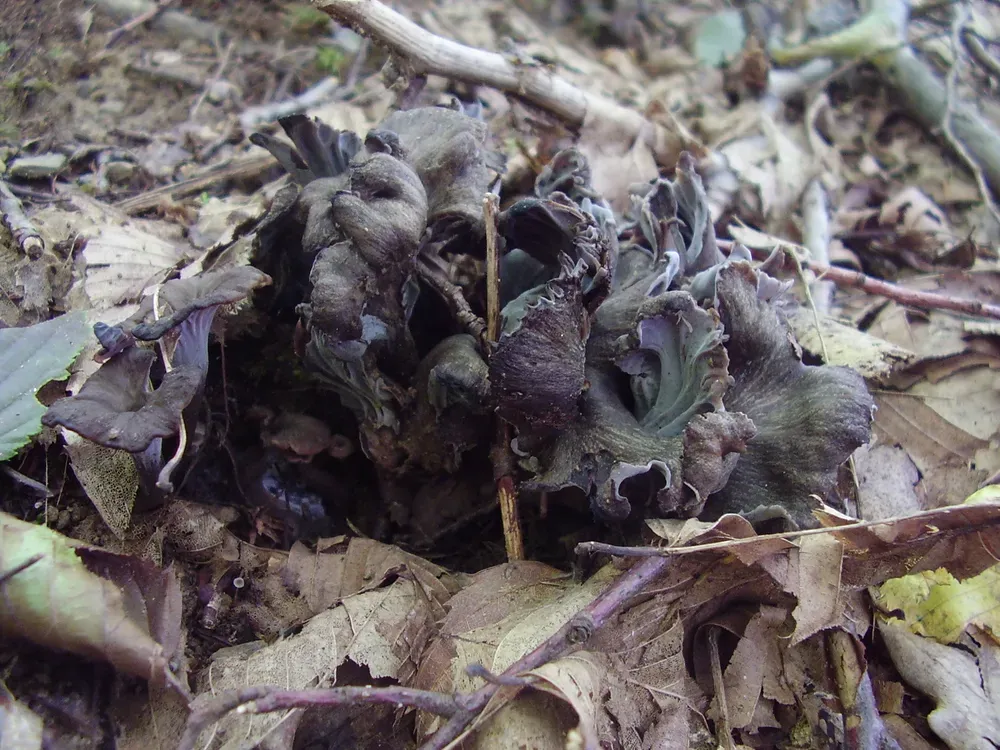
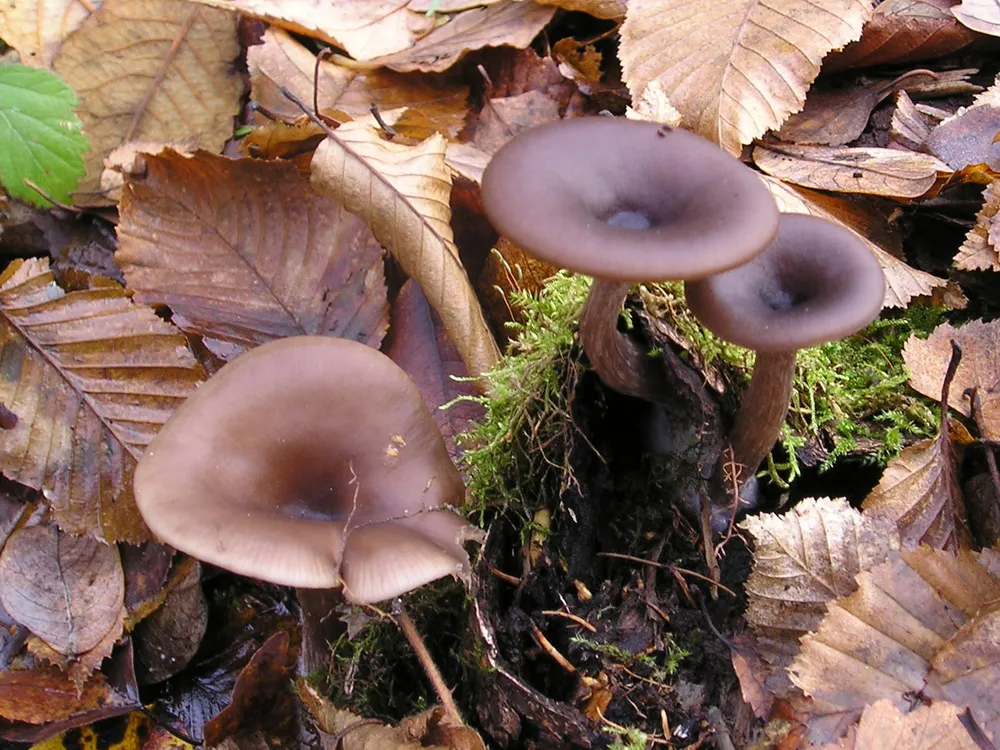
Related species
Mushrooms of the same genus and habitat — to study side by side and never mix up.
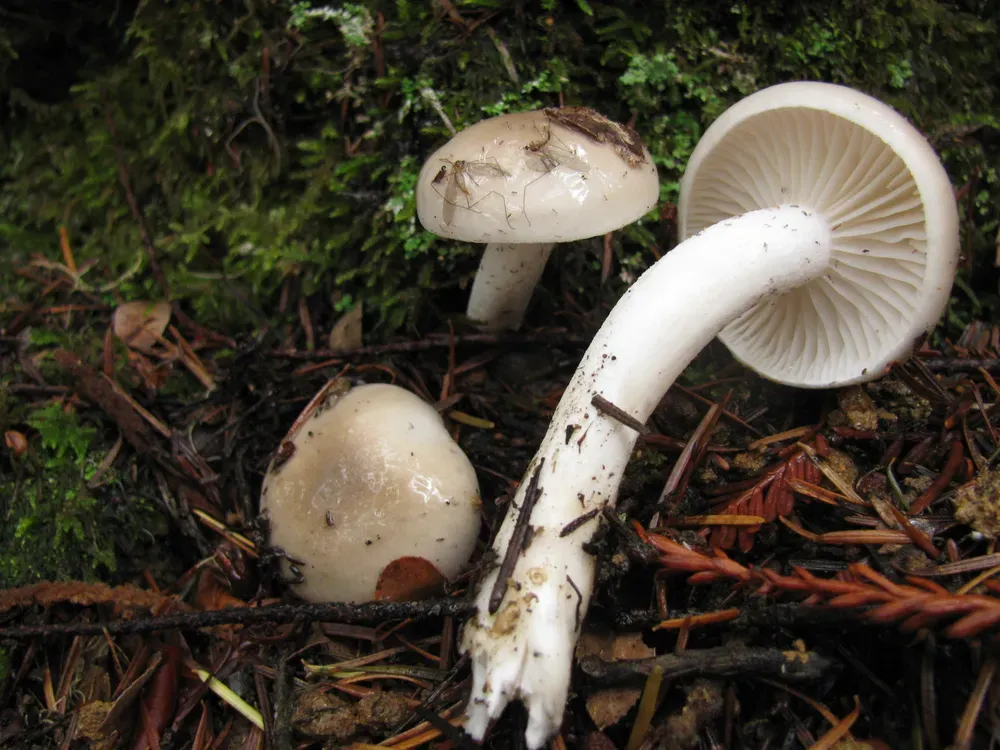
Almond woodwax
Hygrophorus agathosmus
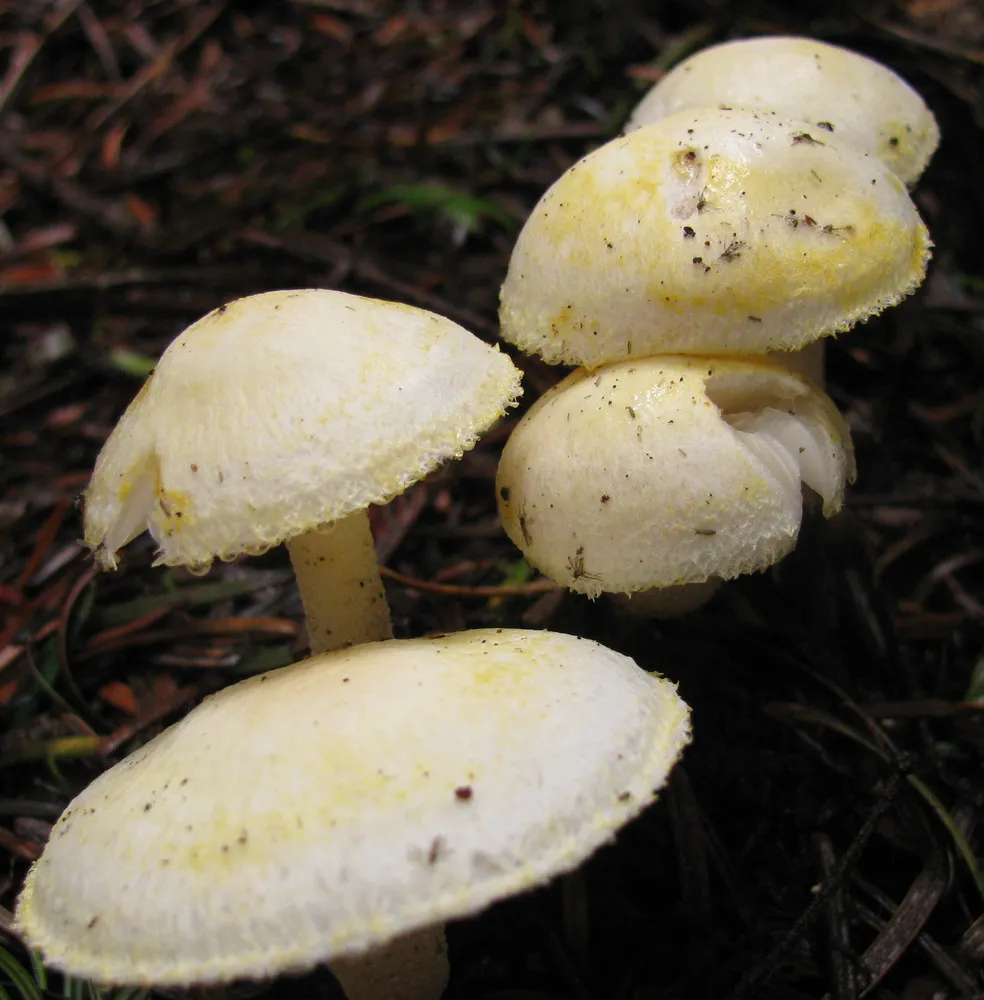
Gold flecked woodwax
Hygrophorus chrysodon
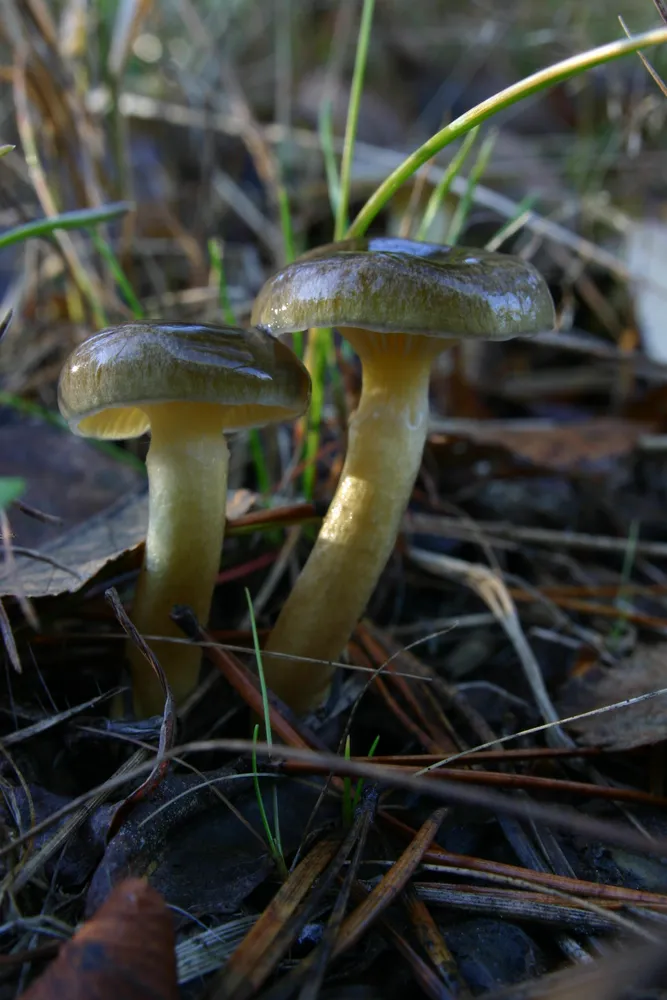
Herald of winter
Hygrophorus hypothejus
Hygrophorus leucophaeus
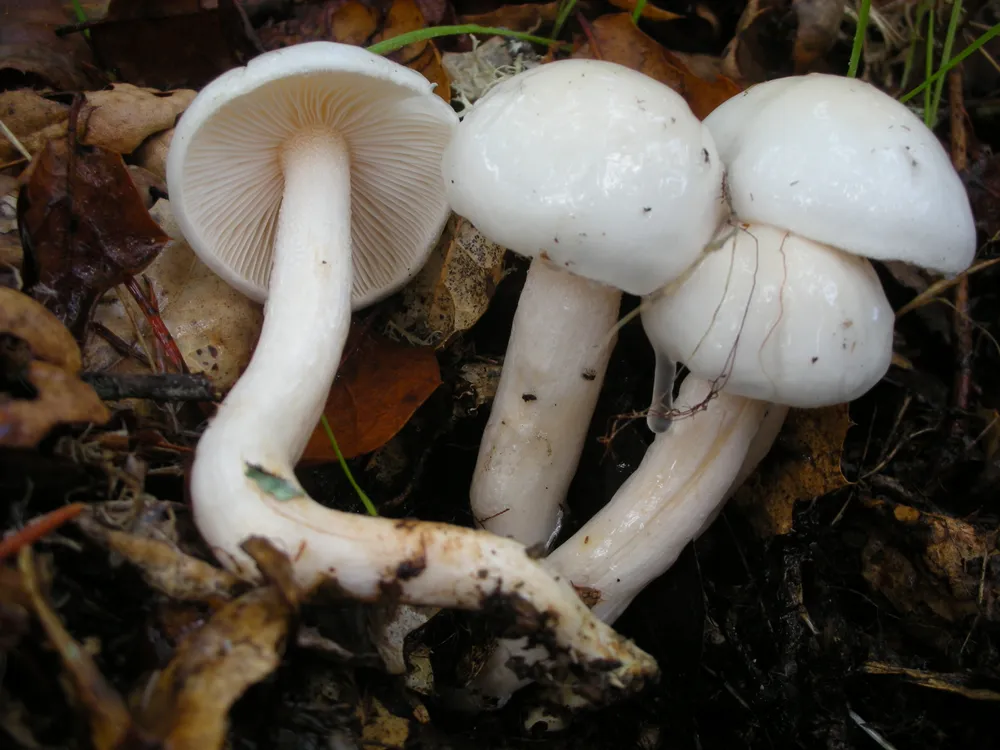
Ivory woodwax
Hygrophorus eburneus
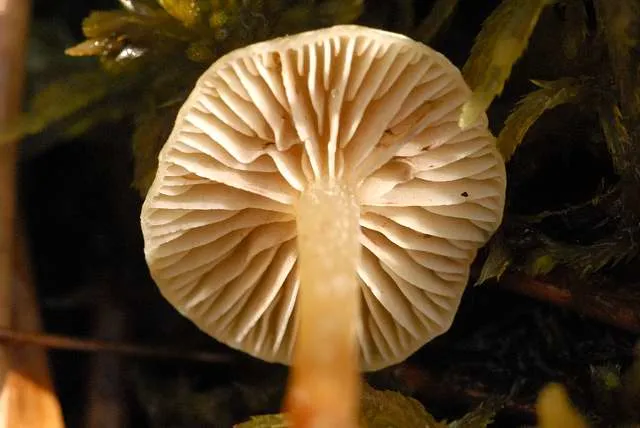
Larch woodwax
Hygrophorus lucorum
.webp)
March mushroom
Hygrophorus marzuolus
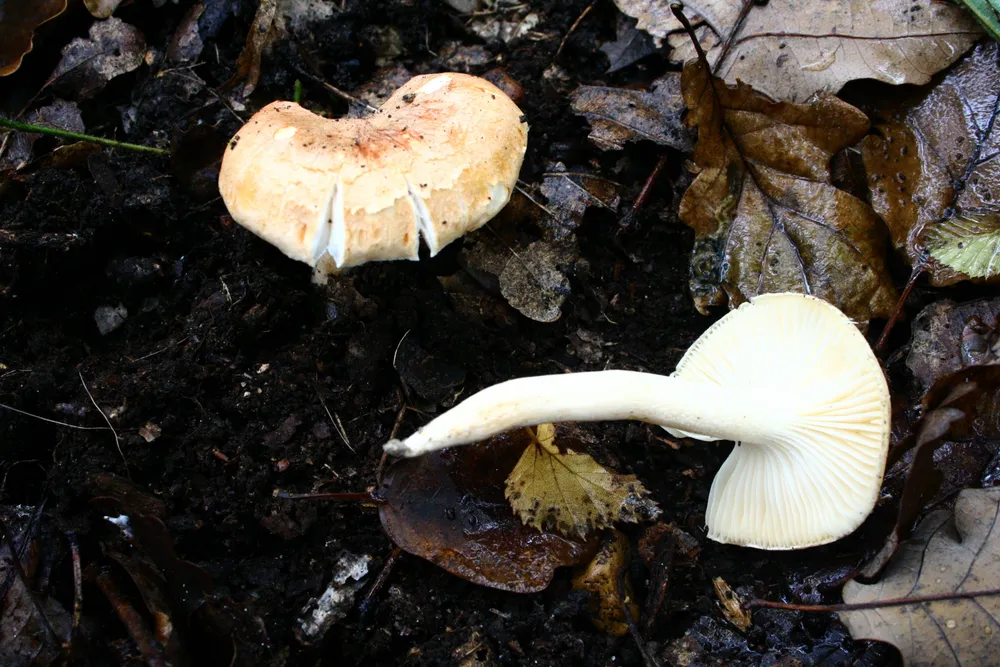
Oak woodwax
Hygrophorus nemoreus
Frequently asked questions
Is Grayling edible or poisonous?
Does Grayling have gills or pores?
What does the cap of Grayling look like?
What does the stem of Grayling look like?
What do Grayling smell and taste like?
Where does Grayling grow?
When should you pick Grayling?
What can Grayling be confused with?
How do you cook Grayling?
Can you dry Grayling?
What is the scientific name of Grayling?
Sources
- [1]Вікіпедія (українська)
- [2]Атлас грибів України, Зеров Д.К. (1979)
- [3]MycoBank Database
- [4]Index Fungorum
- [5]GBIF
- [6]iNaturalist Ukraine