THIS DATA HAS NOT BEEN VERIFIED BY AN EXPERT. Use at your own risk.
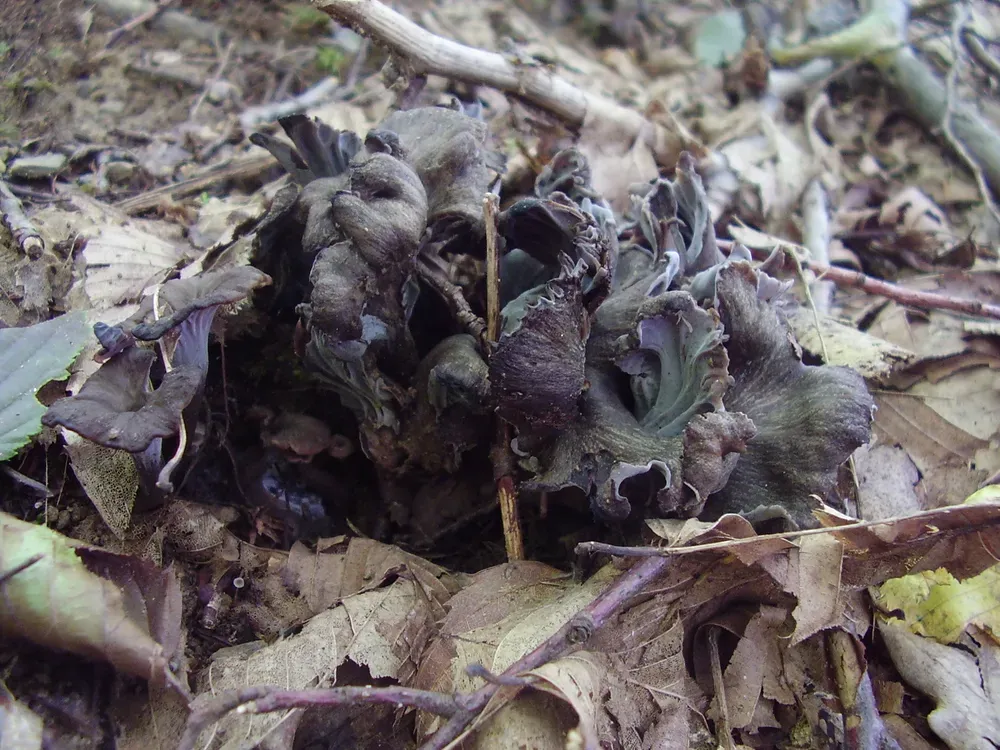
Ashen chanterelleCantharellus cinereus
Under reviewUpdated October 3, 2026
Passport
- Edibility
- Edible
- Season
- Aug — Oct
- Hymenophore
- Ridged
- Cap color
- Grey
- Size
- Small (up to 5 cm)
- Smell
- Pleasant
- Reviewed
- Under review
Quick answers
Where to look?
Deciduous forest, Mixed forest
When does it appear?
Aug — Oct
Active months: August, September, October.
How to recognize it? Three signs
- Cap color: Grey, Black, Brown
- Cap shape: Funnel-shaped, Depressed
- Smell: Pleasant
Fruiting season
August – October
Description
The ashen chanterelle, known to science as Cantharellus cinereus (and often as Craterellus cinereus), is a modest ash-gray cousin of the golden chanterelle, and with its dark, almost blackish-gray coloring it looks more like a horn of plenty or a trumpet chanterelle. Like all chanterelles, it has no true gills: the underside of the cap is covered with low, forked, vein-like ridges that run down the stem. It's a mycorrhizal mushroom that partners with both broadleaf trees and conifers, which is why it turns up in a wide variety of forests.
In Ukraine, the ashen chanterelle grows in broadleaf and mixed forests, preferring damp, shady spots with moss cover and rich leaf litter. Its dark coloring makes it easy to miss among fallen leaves, so a sharp eye pays off. It fruits in late summer and fall, from August to October, often in small, tight groups.
In terms of edibility, the ashen chanterelle is a good edible mushroom. Its thin, fragrant flesh has a pleasant flavor similar to the horn of plenty (Craterellus cornucopioides) and really comes into its own in soups, sauces and sautés. It also dries beautifully, and drying only intensifies its aroma. Like the golden chanterelle, the ashen one is practically never wormy, which makes it a welcome find.
Cap
The cap of the ashen chanterelle is small, from 1.5 to 5 centimeters across. When young it is convex with a depressed center; with age it opens into a deep funnel, often with a hollow that connects to the hollow stem, and a wavy, uneven margin. The surface is finely scaly-fibrous and dry. The color is dark: blackish-brown to gray-black in wet weather, ash-gray to grayish-brown when dry. The dark color and funnel shape make the mushroom look like a small horn of plenty.
Hymenophore
There are no true gills. The underside of the cap is covered with low, thick, forked and interconnected vein-like ridges that run noticeably down the stem. They are dark gray or ash-gray, with a bluish-gray bloom from the spores. The spore print is whitish or cream. Vein-like ridges instead of gills are the hallmark of chanterelles.
Stem
The stem is short, 2 to 8 centimeters long, fairly thin, often hollow and connected to the hollow in the cap. It is gray, the same shade as the cap or slightly paler, sometimes with whitish felty mycelium at the base. The surface is smooth or faintly velvety. There is no ring and no volva. The stem flows smoothly into the cap with no sharp boundary.
Flesh
The flesh is thin, brittle, grayish or gray-brown, and barely changes color when cut. The taste is mild and pleasant, with no bitterness. Despite its thin texture, the flesh is fragrant, holds its shape well in cooking, and is especially prized dried.
Smell
The smell is pleasant and mild, fruity and mushroomy, a little fainter than the distinctive aroma of the golden chanterelle. When dried, the aroma grows stronger and becomes similar to that of the horn of plenty. For identification, rely first of all on the dark funnel-shaped cap, the gray vein-like ridges and the hollow stem.
›Scientific synonyms (3)
Craterellus cinereus (Pers.) Pers. (1825), Pseudocraterellus cinereus (Pers.) Kalamees (1963), Merulius cinereus (Pers.) Pers. (1798)
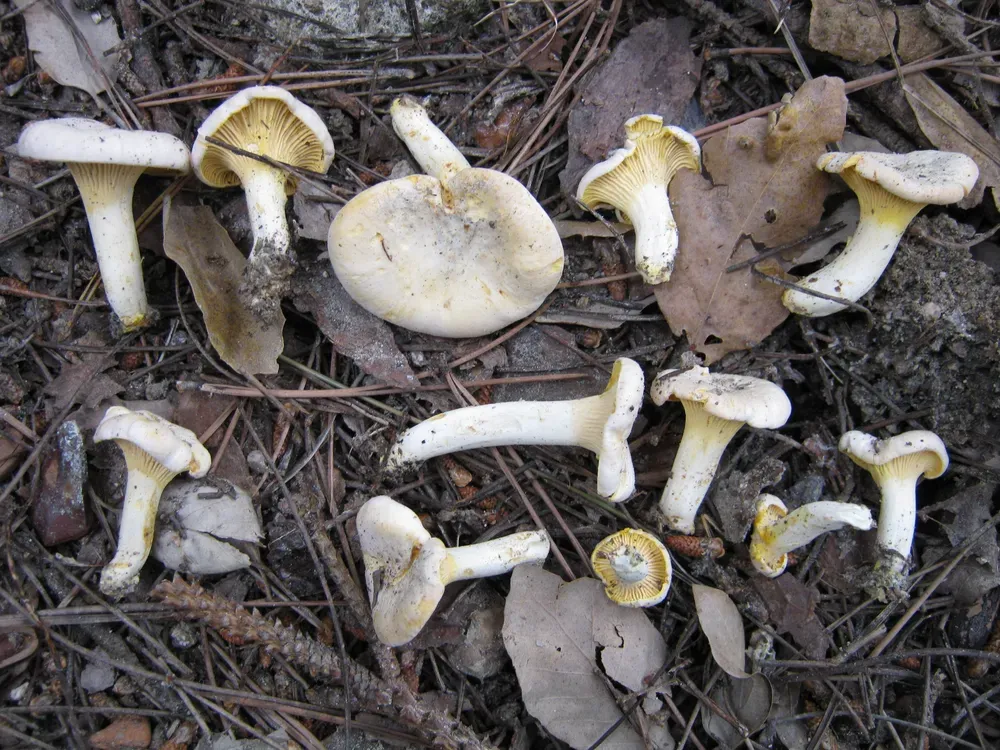
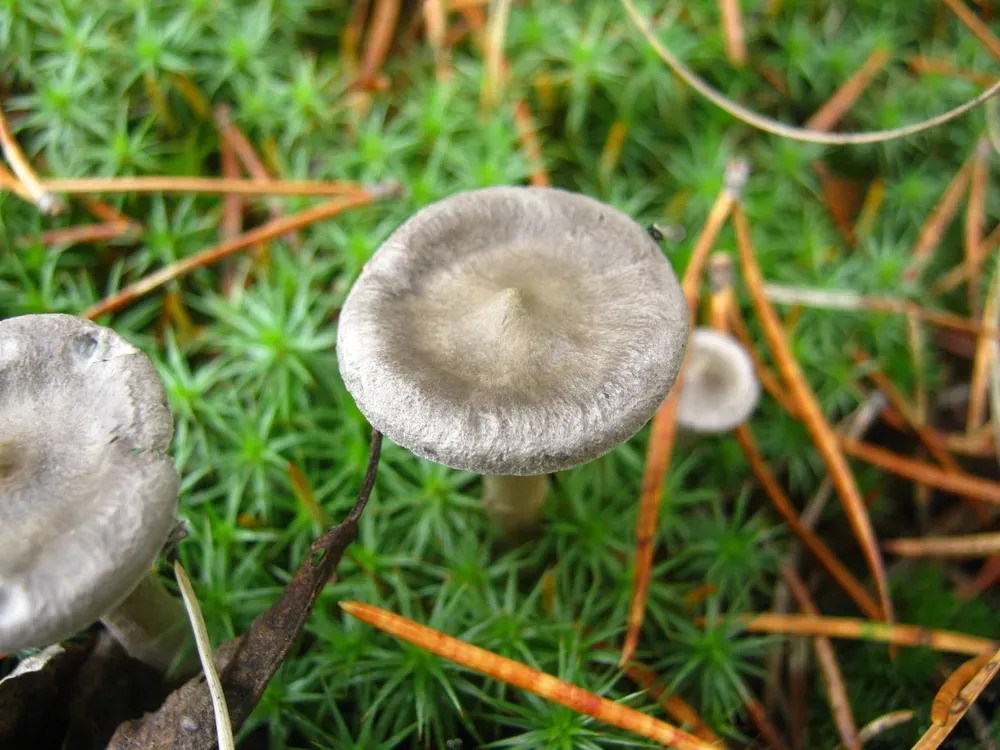
Lookalikes
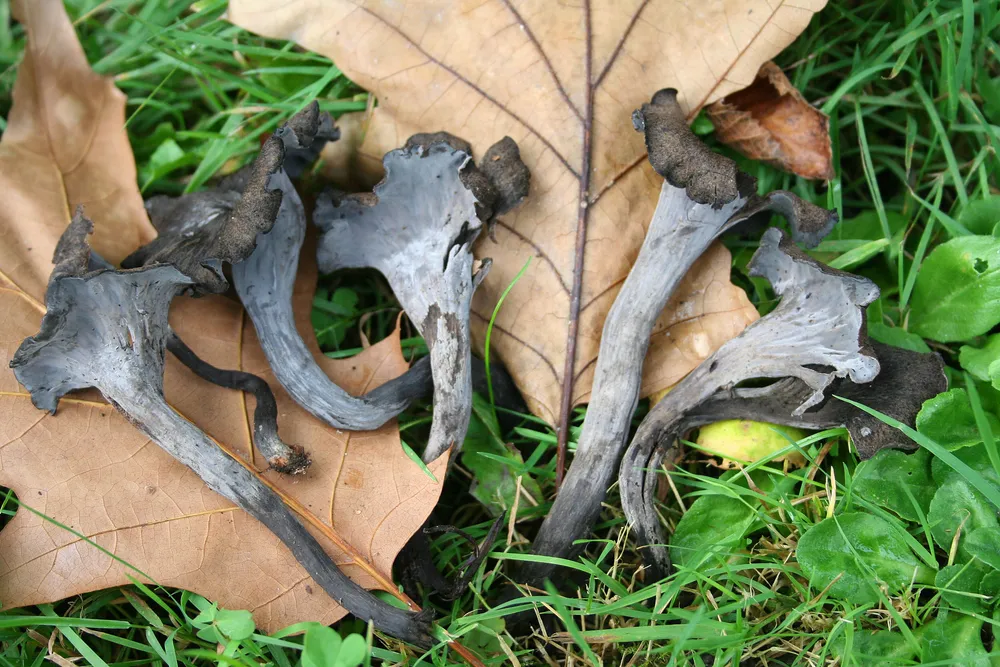
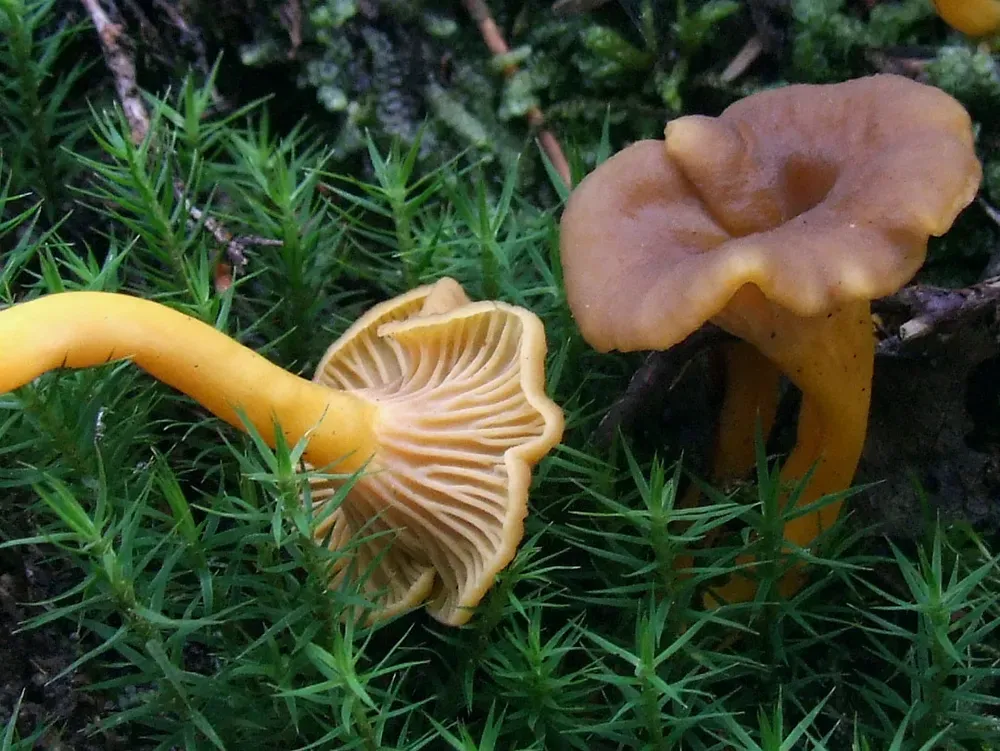
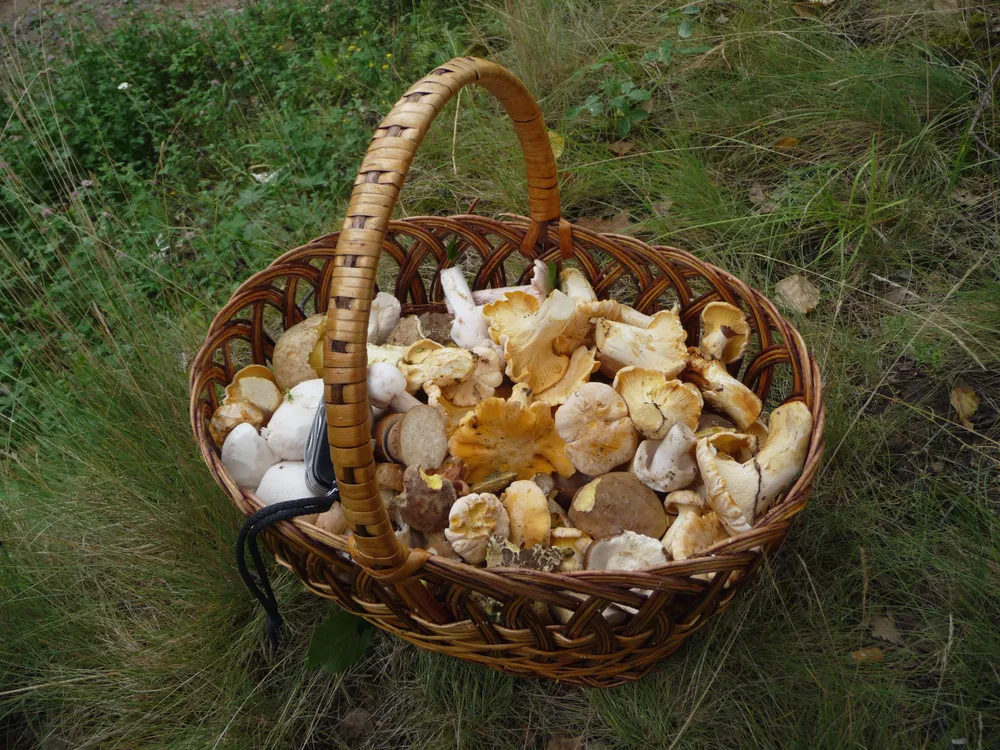
Related species
Mushrooms of the same genus and habitat — to study side by side and never mix up.
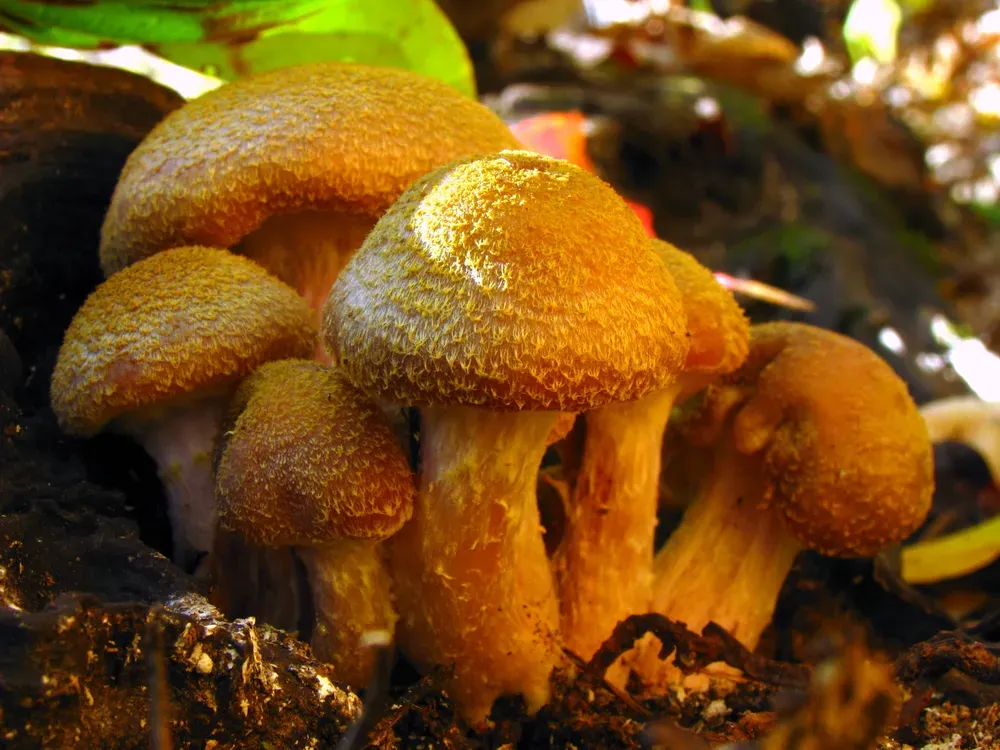
Bulbous honey fungus
Armillaria gallica
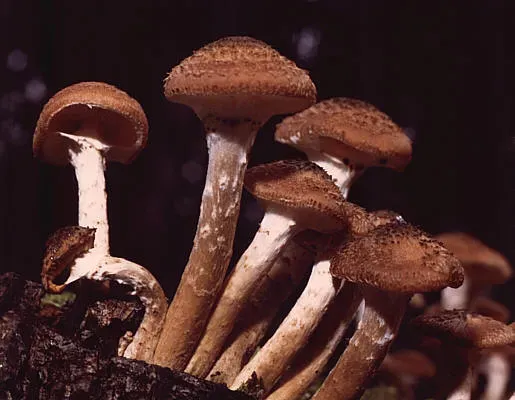
Dark honey fungus
Armillaria ostoyae
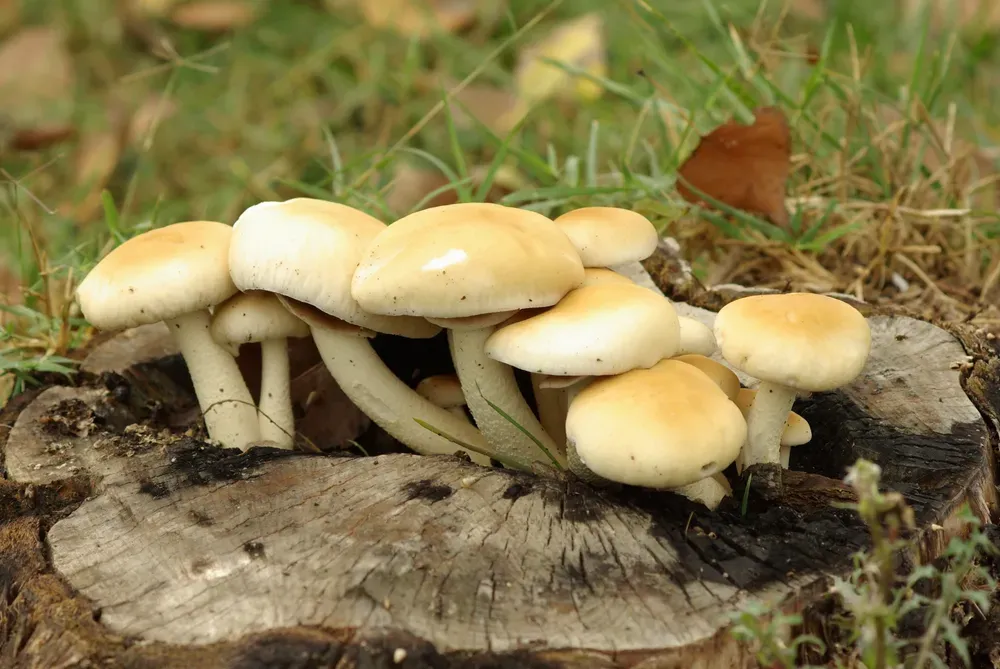
Poplar fieldcap
Cyclocybe aegerita
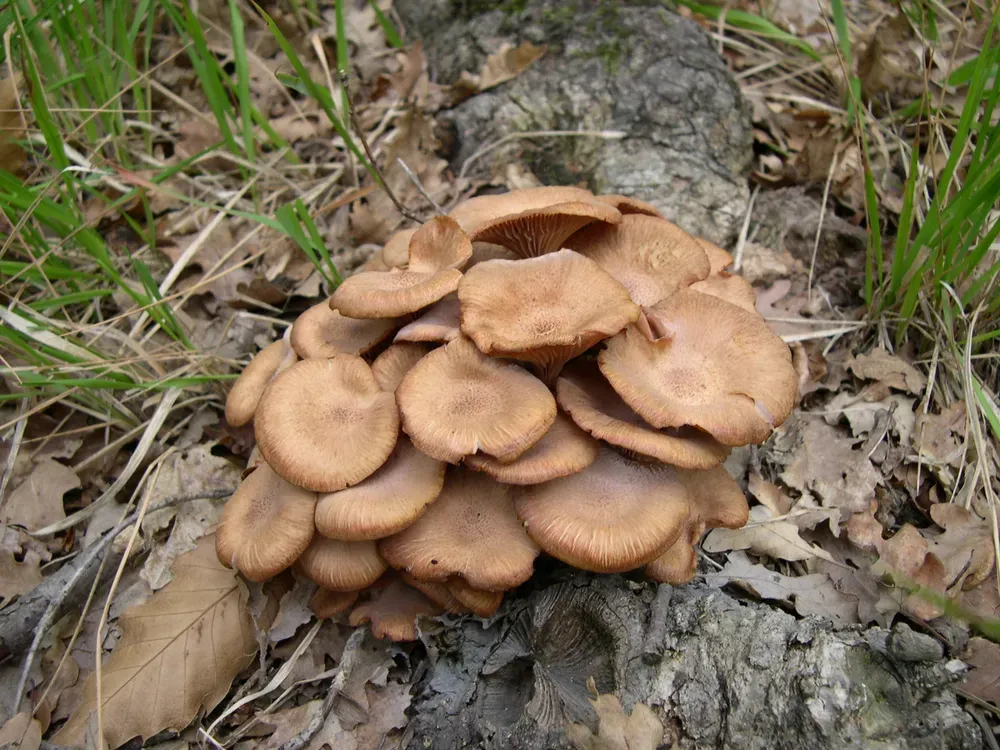
Ringless honey fungus
Desarmillaria tabescens
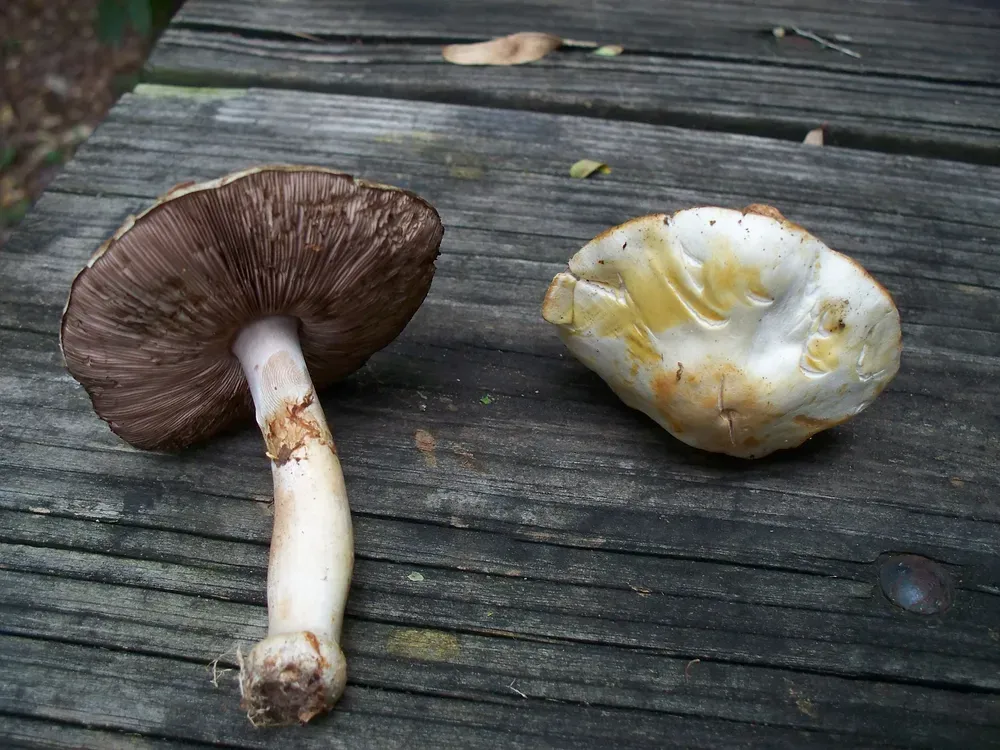
Agaricus abruptibulbus
Agaricus haemorrhoidarius
Agaricus haemorroidarius
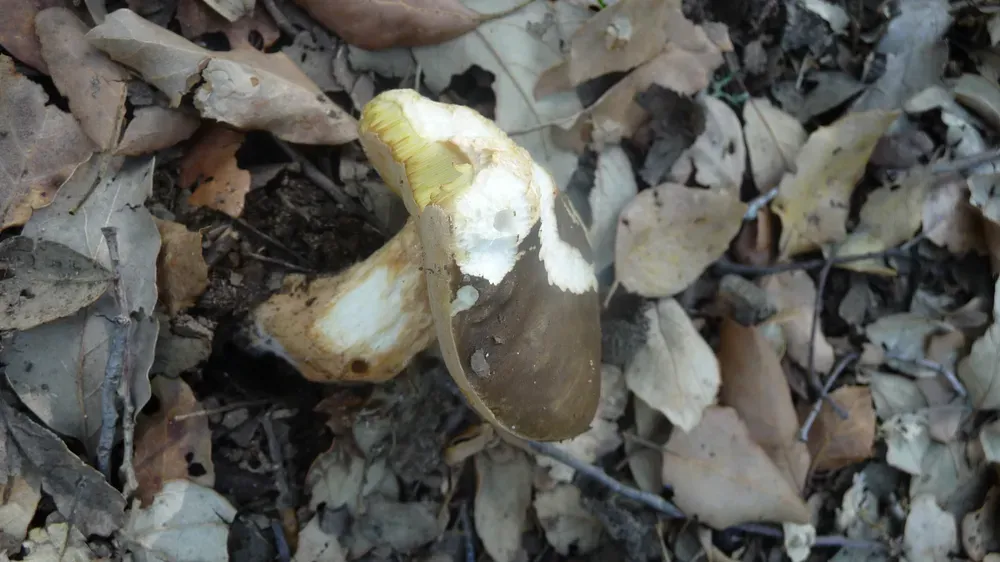
Blushing bolete
Leccinum roseofractum
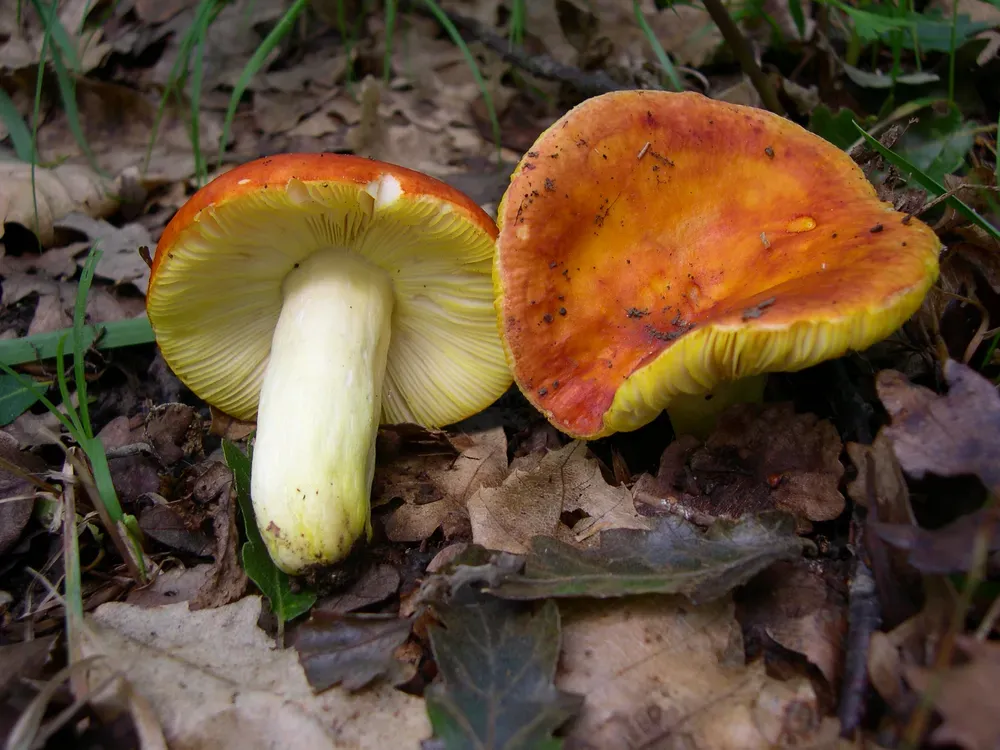
Gilded brittlegill
Russula aurea
Related reading
 Recipes & cooking
How to cook and preserve chanterelles
The chanterelle is delicious fresh and keeps well for winter. Here's how to clean, fry, freeze and dry it with…
June 9, 2026·3 min Science & taxonomy
Why chanterelles are good for you, and why they're never wormy
The chanterelle is valuable for more than its taste. Here's which vitamins it contains, why its flesh repels w…
June 9, 2026·3 min How to identify
The golden chanterelle: portrait of a favorite mushroom
Bright, fragrant and almost never wormy, the chanterelle wins foragers over. Here's what it looks like, where…
June 9, 2026·3 min
Frequently asked questions
Is Ashen chanterelle edible or poisonous?
What kind of spore-bearing surface does Ashen chanterelle have?
What does the cap of Ashen chanterelle look like?
What does the stem of Ashen chanterelle look like?
What do Ashen chanterelle smell and taste like?
Where does Ashen chanterelle grow?
Which trees does Ashen chanterelle grow under?
When should you pick Ashen chanterelle?
What can Ashen chanterelle be confused with?
How do you cook Ashen chanterelle?
Can you dry Ashen chanterelle?
What is the scientific name of Ashen chanterelle?
Sources
- [1]Вікіпедія (українська)
- [2]Атлас грибів України, Зеров Д.К. (1979)
- [3]MycoBank Database
- [4]Index Fungorum
- [5]GBIF
- [6]iNaturalist Ukraine