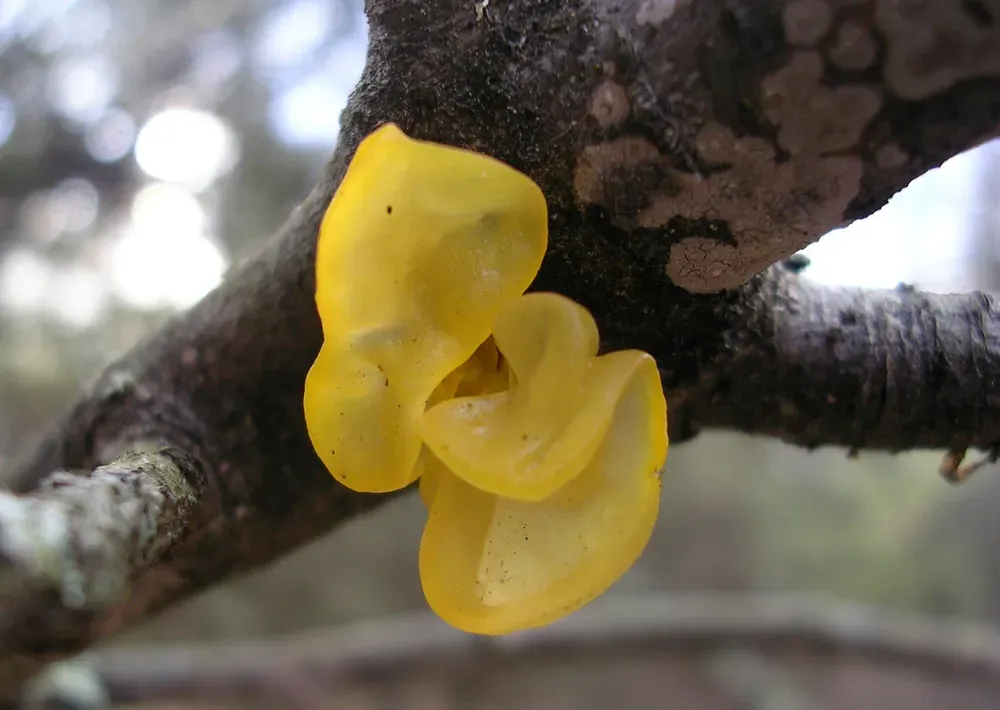
Tripe fungusAuricularia mesenterica
Expert-verifiedUpdated August 15, 2026
Passport
- Edibility
- Conditionally edible
- Season
- Jan — Dec
- Hymenophore
- Ridged
- Cap color
- Brown
- Size
- Small (up to 5 cm)
- Smell
- Odorless
- Reviewed
- Yes ✓
Quick answers
Where to look?
Deciduous forest, Mixed forest
When does it appear?
Jan — Dec
Active months: January, March, April, May, June, July, August, September, October, November, December.
How to recognize it? Three signs
- Cap color: Brown, Grey, Olive
- Cap shape: Irregular
- Smell: Odorless
Fruiting season
January, March, April, May, June, July, August, September, October, November, December
Description
The tripe fungus (Auricularia mesenterica) is a close relative of the famous jelly ear, but far more modest in looks and fame. Instead of a distinct ear shape, it has flatter, wrinkled fruiting bodies with a distinctive upper surface: zoned, hairy, often with a greenish film (from algae that settle in the damp hairy coat).
In Ukraine it grows throughout the forest belt and the Forest-Steppe on rotting trunks and stumps of broadleaf trees — mostly elm, poplar, willow and elder. It is especially noticeable in floodplain plantings and in parks and gardens. Like its close relative the jelly ear, the tripe fungus is active over a wide stretch of the year — from spring to late autumn, and it tolerates frost and thaw.
Edibility is conditional, only young soft specimens. The mushroom isn't highly valued in the kitchen because of its tougher texture and weak flavor. What's more, recent research shows it tends to accumulate heavy metals from the soil — so it's best to eat only specimens growing far from roads and industrial areas. Its interest is less gastronomic than pharmaceutical: the mushroom contains active antioxidants and phenolic compounds.
Cap
The fruiting body is a flattened, side-attached bracket, 3–7 cm (sometimes up to 10) across. The upper surface is gray-brown to dull grayish, with distinct concentric zones and a hairy/bristly coat, often with a film of green algae. The edges are wavy, rounded in young ones and often cracked in mature ones.
Hymenophore
The lower (concave) surface is strongly folded and convoluted, reddish-brown or violet-brown, gelatinous. The folds radiate out from the point of attachment. The spore print is white.
Stem
There is no stem, or it is very short and lateral. The fruiting body is attached by its side to the substrate with a broad base. Several bodies often merge into a shared colony.
Flesh
The flesh of young mushrooms is gelatinous and springy; when it dries it becomes hard and leathery, and when soaked it regains its shape (like the jelly ear). Old fruiting bodies harden and darken irreversibly.
Smell
The smell is faint and neutral. The taste is bland — the mushroom soaks up the flavor of the seasonings.
Lookalikes
.webp)
Related species
Mushrooms of the same genus and habitat — to study side by side and never mix up.
Bulbous honey fungus
Armillaria gallica
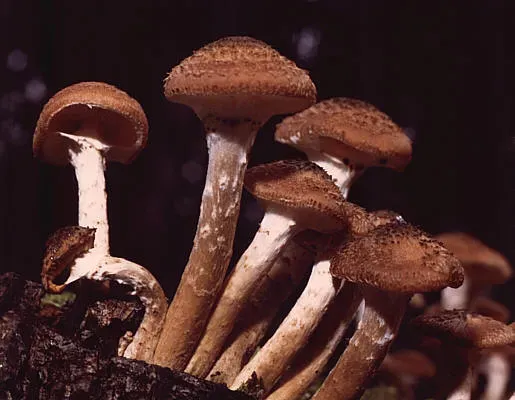
Dark honey fungus
Armillaria ostoyae
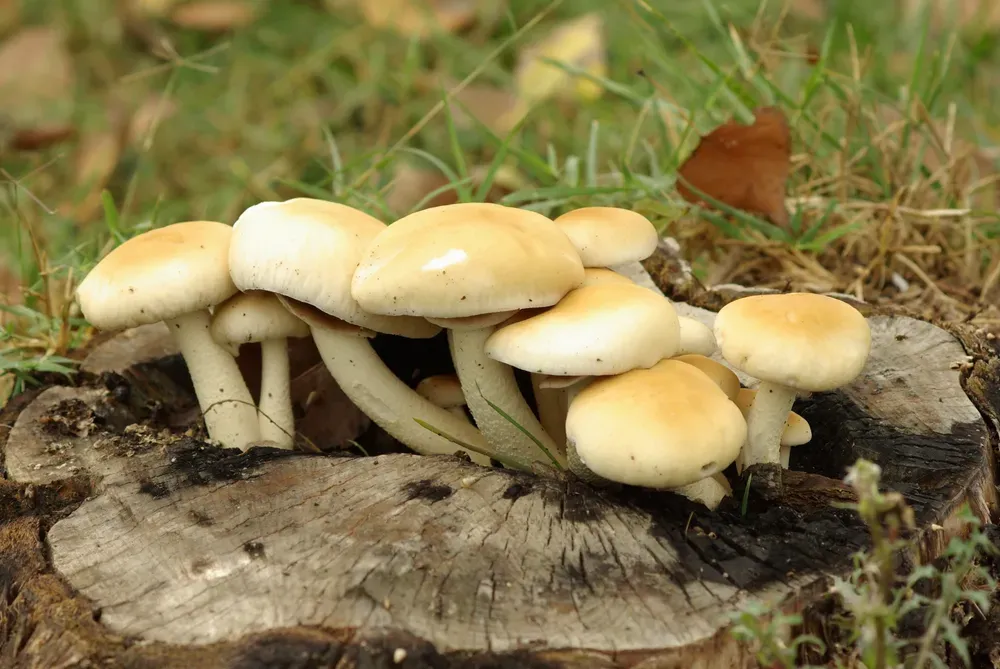
Poplar fieldcap
Cyclocybe aegerita
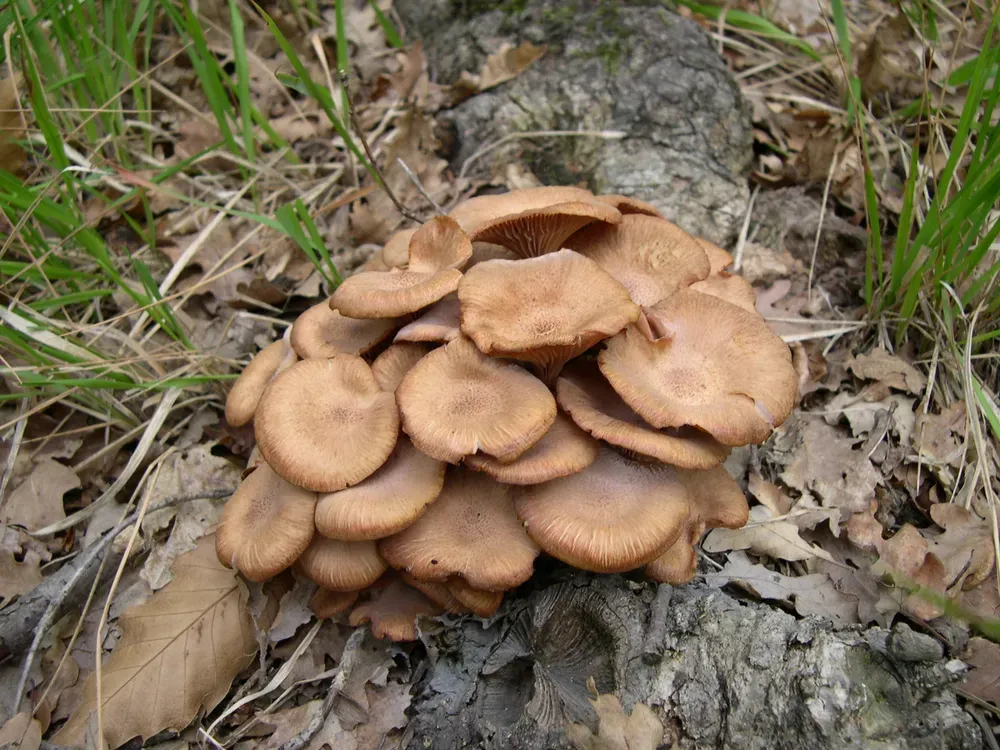
Ringless honey fungus
Desarmillaria tabescens
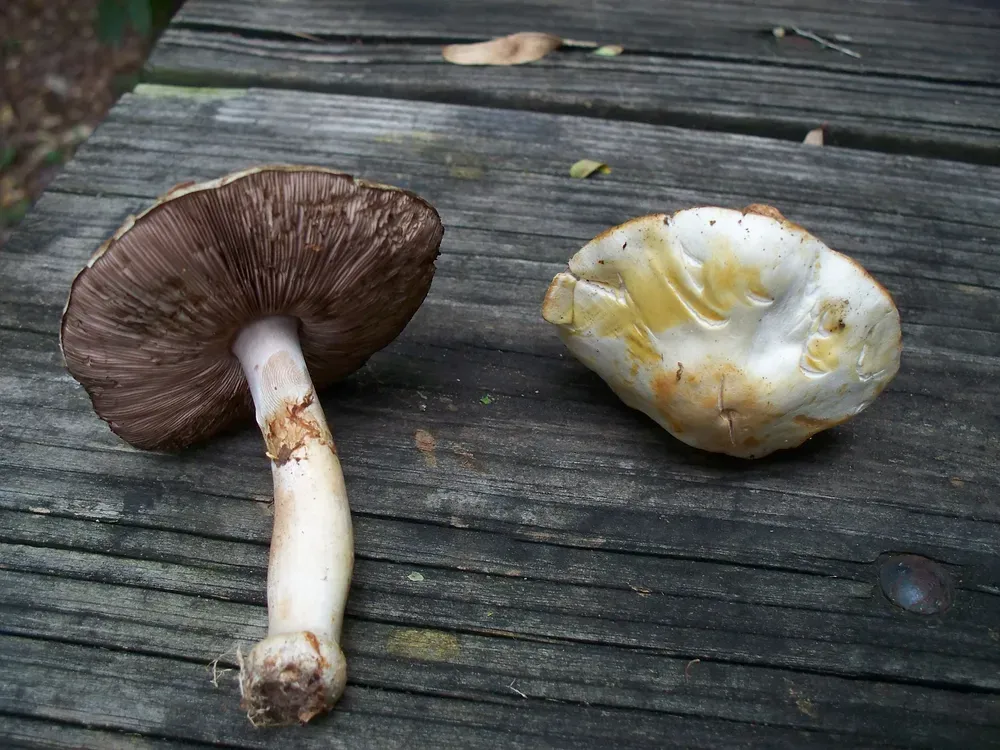
Agaricus abruptibulbus
Agaricus haemorrhoidarius
Agaricus haemorroidarius
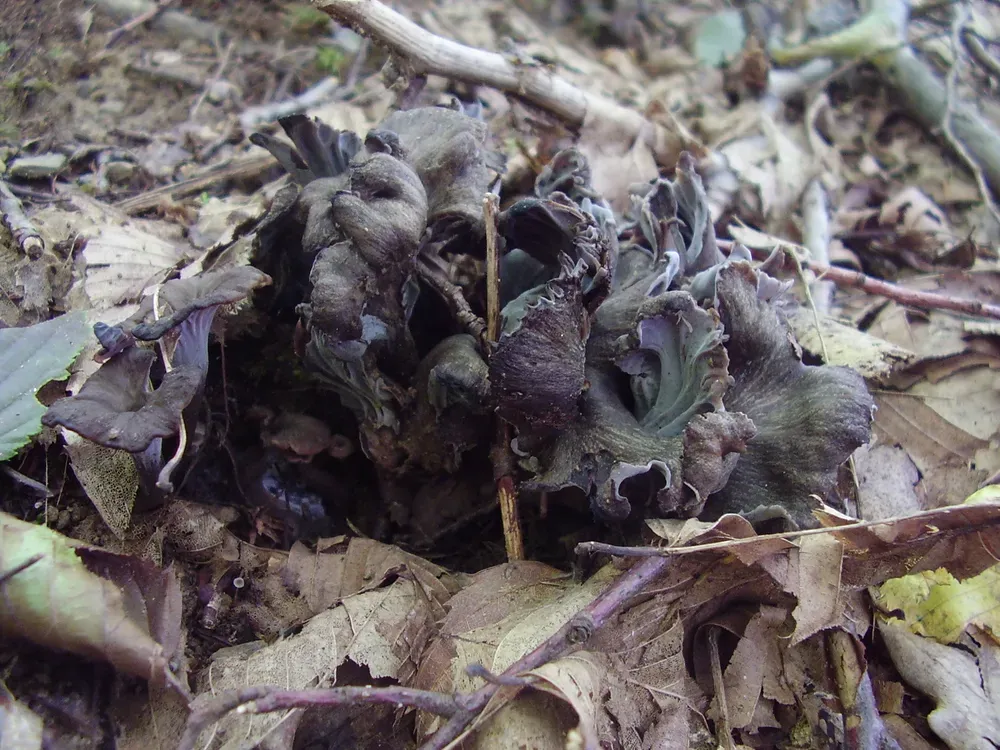
Ashen chanterelle
Cantharellus cinereus
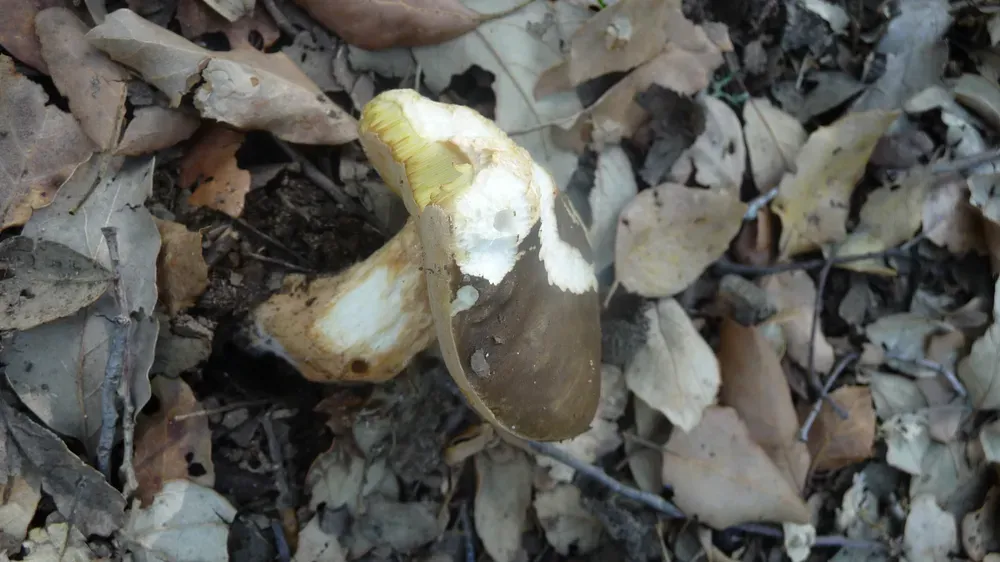
Blushing bolete
Leccinum roseofractum
Frequently asked questions
Is it safe to eat?
Only young soft specimens after cooking (boiling or stewing for 5–10 min). A caveat: the mushroom accumulates heavy metals — don't collect it near roads (at least 50 m away) or industrial areas. Do not eat it raw.
Can it be confused with a dangerous mushroom?
There are no serious dangerous lookalikes. Other Auricularia (the jelly ear) are edible too. Stereum is leathery (not gelatinous) — inedible, but not poisonous. If the fruiting body is gelatinous and soft when wet, it's Auricularia, and it's safe.
Where to look for it in Ukraine?
On rotting trunks and stumps of broadleaf trees — elm, poplar, willow, elder, less often oak and maple. In floodplain forests, parks, gardens and on riverbanks. Throughout the forest belt and the Forest-Steppe. It does not grow in coniferous forests.
When does it fruit?
From April to November, sometimes into December in mild winters. It tolerates frost and thaw: dried-out fruiting bodies absorb moisture and become elastic again. It's most abundant in spring and autumn after prolonged rain.
How does it differ from the jelly ear?
The jelly ear (A. auricula-judae) has a distinct ear shape, and its upper surface is dark, without zoned rings and without a greenish film. The tripe fungus is flatter and hairy, with characteristic zoning and often with algae on its surface.
Does it parasitize living trees?
It's mainly a saprotroph (on dead wood), but it sometimes weakly parasitizes weakened living broadleaf trees. Usually a tree on which these mushrooms have appeared is already in poor condition.
How to cook it?
Only young soft ones. Rinse well (they often carry bark and dust). Cut into strips. Stew with vegetables or add to soups (in Chinese cooking it substitutes for the jelly ear). Soak dried ones for 30 min before cooking. Cooking time is 10–15 min, until tender.
Is there any medical research?
Modern studies have found high levels of phenols and flavonoids and antioxidant activity in the fruiting bodies. Some components show an antimicrobial effect. However, it is not certified as a medicine — it is a subject of scientific interest, not a medicinal product.
Is Tripe fungus edible or poisonous?
What kind of spore-bearing surface does Tripe fungus have?
What does the cap of Tripe fungus look like?
What does the stem of Tripe fungus look like?
Sources
- [1]Вікіпедія (українська)
- [2]Атлас грибів України, Зеров Д.К. (1979)
- [3]MycoBank Database
- [4]Index Fungorum
- [5]GBIF
- [6]iNaturalist Ukraine