.webp)
Jelly earAuricularia auricula-judae
Expert-verifiedUpdated October 3, 2026
Passport
- Edibility
- Edible
- Season
- Jan — Dec
- Hymenophore
- Smooth
- Cap color
- Brown
- Size
- Small (up to 5 cm)
- Smell
- Odorless
- Reviewed
- Yes ✓
Quick answers
Where to look?
Deciduous forest, Mixed forest
When does it appear?
Jan — Dec
Active months: January, March, April, May, June, July, August, September, October, November, December.
How to recognize it? Three signs
- Cap color: Brown, Dark brown, Violet
- Cap shape: Irregular
- Smell: Odorless
Fruiting season
January, March, April, May, June, July, August, September, October, November, December
Description
Jelly ear (Auricularia auricula-judae) is one of the strangest mushrooms in Ukraine's flora. Its jelly-like brown fruiting body really does look like a human ear: folds, hollows, fine "veins" on the surface. The old folk name echoes a Gospel story — legend has it that Judas hanged himself on an elder tree, and ever since these "ears" have grown on elder. And indeed: black elder is this mushroom's favorite tree in Ukraine.
In Ukraine, jelly ear grows throughout the country — on weakened and dead elder branches, less often on lilac, elm, oak and alder. Unlike many mushrooms, it is active not only in the warm season but in winter too, during thaws: dried-out fruiting bodies soak up water and turn elastic again. As a result, you can find jelly ear from March to November, and in mild winters even in December–January.
It is fully edible, and not just on paper. In China and Japan, jelly ear has been cultivated for over 1400 years and features in classic dishes: soups, salads, hot vegetable stir-fries. In Western Europe, wild foraging for it has grown noticeably in recent years. The flesh is gelatinous and has little flavor of its own, but it soaks up seasonings beautifully — which is why Asian cuisine uses it as a "carrier" for soy sauce, sesame and ginger. Do not eat it raw — always boil or braise it for at least 5–10 minutes.
Cap
The fruiting body is ear-shaped, cup-shaped or wavy, 2–10 cm across, attached sideways to the substrate. The inner (lower) surface is smooth, dark grayish-violet to brown. The outer (upper) surface is paler, with a fine felty down. A young body is gelatinous and springy; when it dries it turns hard and dark, and when wet it regains its shape and elasticity.
Hymenophore
The spore-bearing layer is on the lower (concave) surface of the fruiting body, smooth or with barely visible wavy folds. Spore print white.
Stem
There is no stem, or it is very short and lateral, a small bump at the base of the cup. The body is attached directly to tree bark or wood.
Flesh
The flesh is gelatinous, translucent brown, very elastic when moist — it bends rather than breaks. When dried it shrinks 5–10 times in volume and becomes as hard as leather. Fresh, it keeps 2–3 days in the fridge.
Smell
The smell is faint, neutral, with no distinct notes. The taste is bland — the mushroom takes on the flavor of seasonings and sauces.
Lookalikes
Related species
Mushrooms of the same genus and habitat — to study side by side and never mix up.
Bulbous honey fungus
Armillaria gallica
Dark honey fungus
Armillaria ostoyae
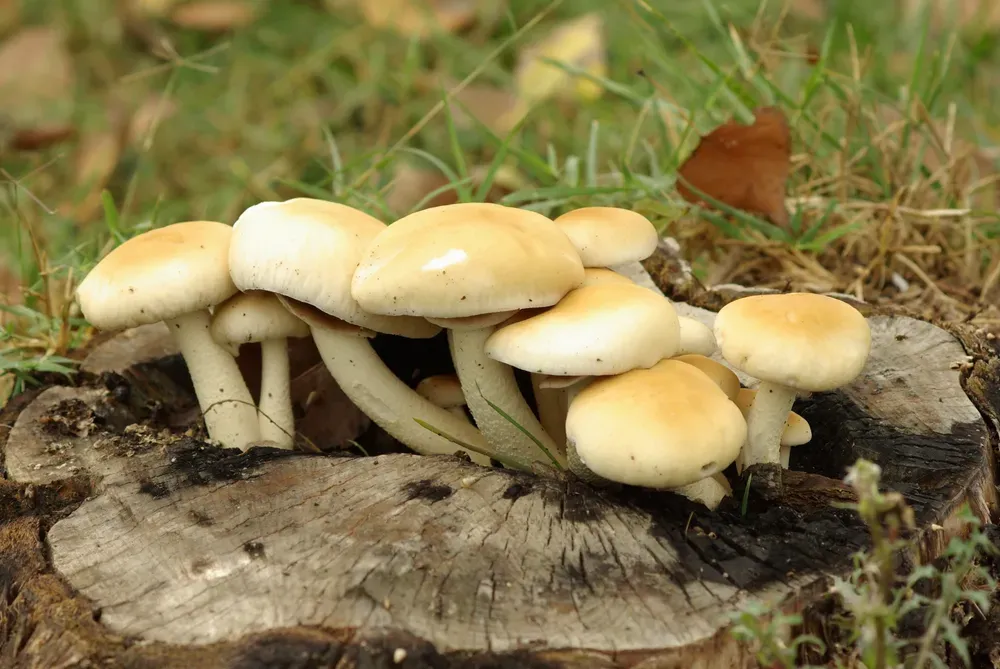
Poplar fieldcap
Cyclocybe aegerita
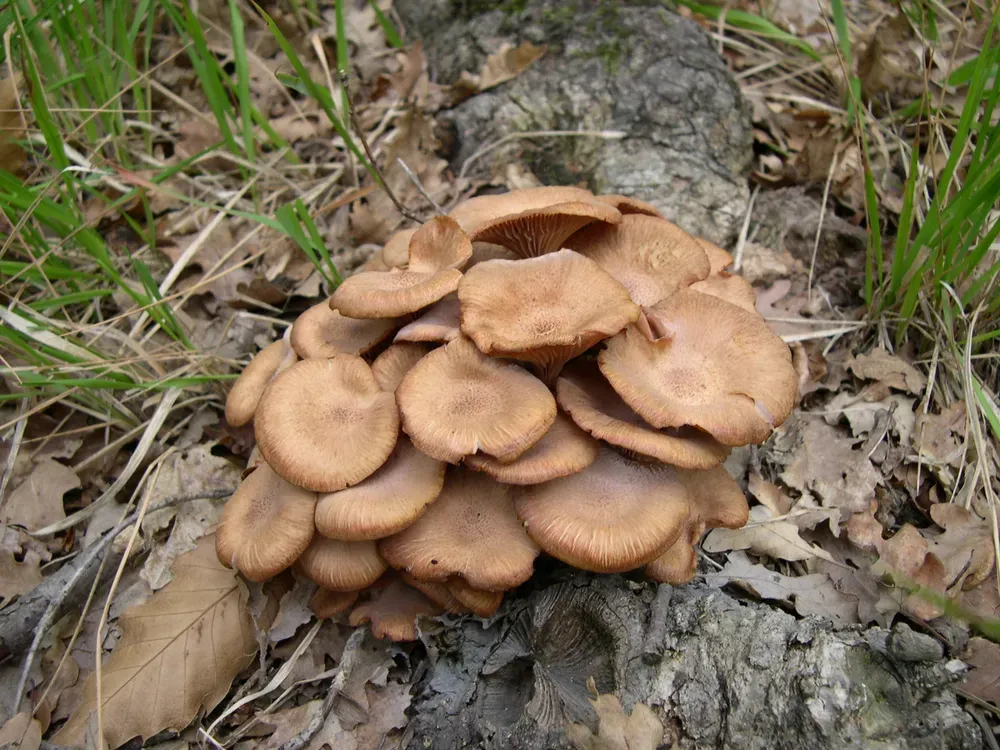
Ringless honey fungus
Desarmillaria tabescens
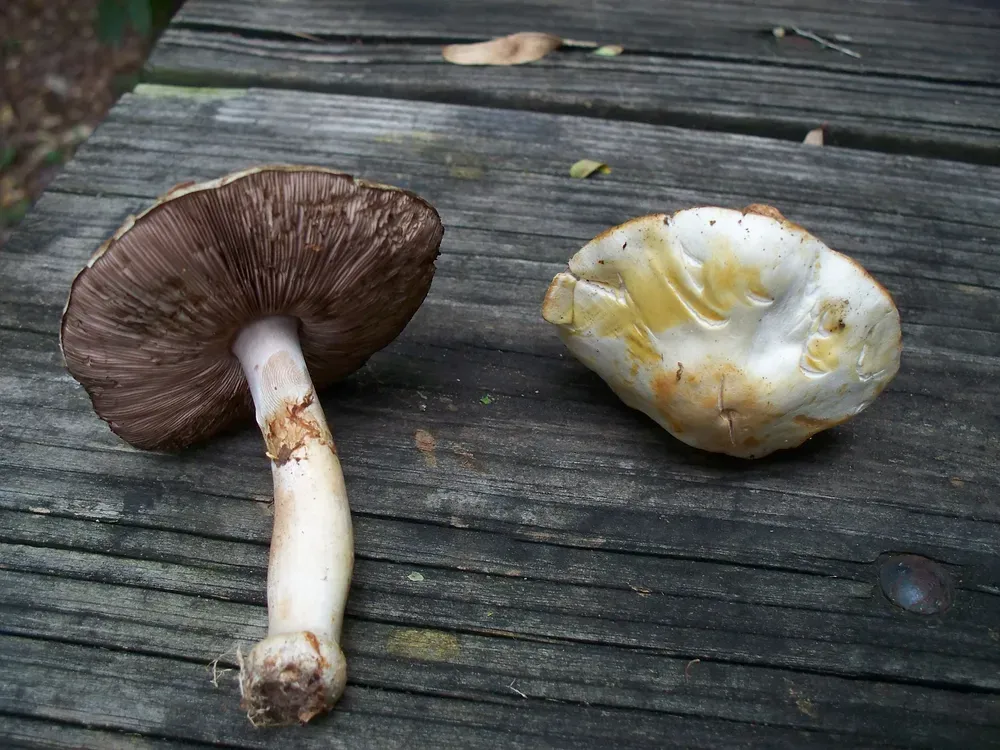
Agaricus abruptibulbus
Agaricus haemorrhoidarius
Agaricus haemorroidarius
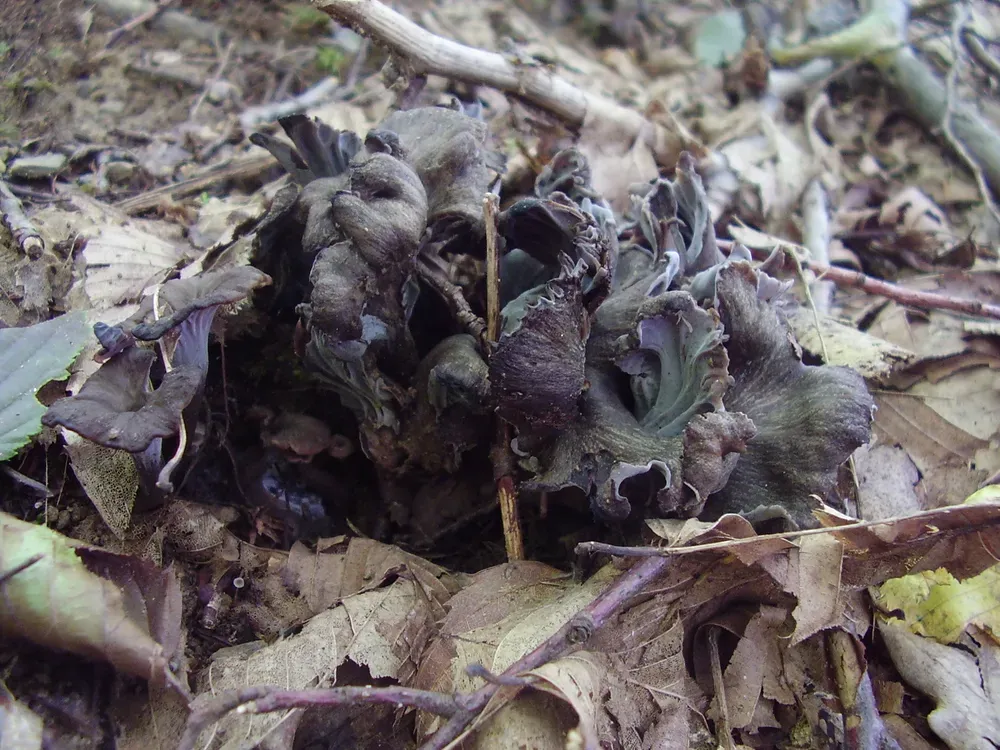
Ashen chanterelle
Cantharellus cinereus
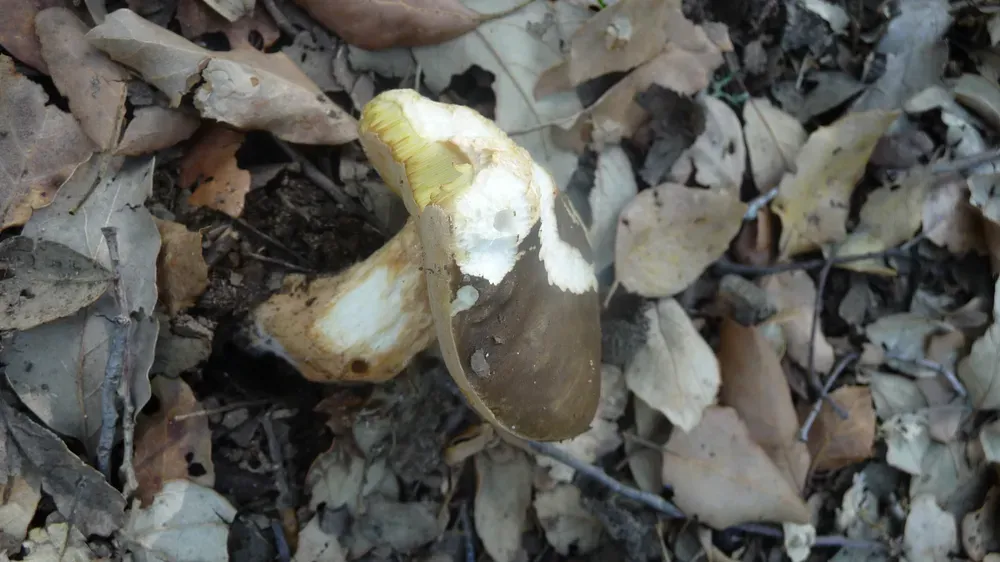
Blushing bolete
Leccinum roseofractum
Frequently asked questions
Is jelly ear safe to eat?
Yes, it is safe as long as you always cook it — boil, braise or fry it for at least 5–10 minutes. Do not eat it raw. Long-standing cultivation and consumption in Asia confirm it is safe when properly prepared.
Are there dangerous lookalikes?
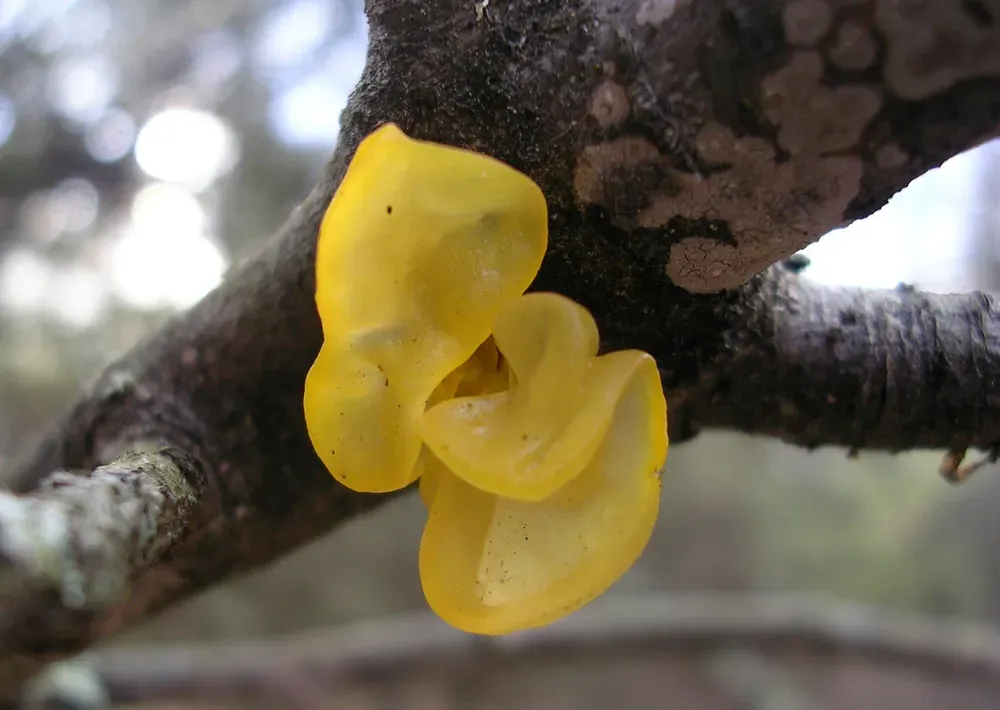
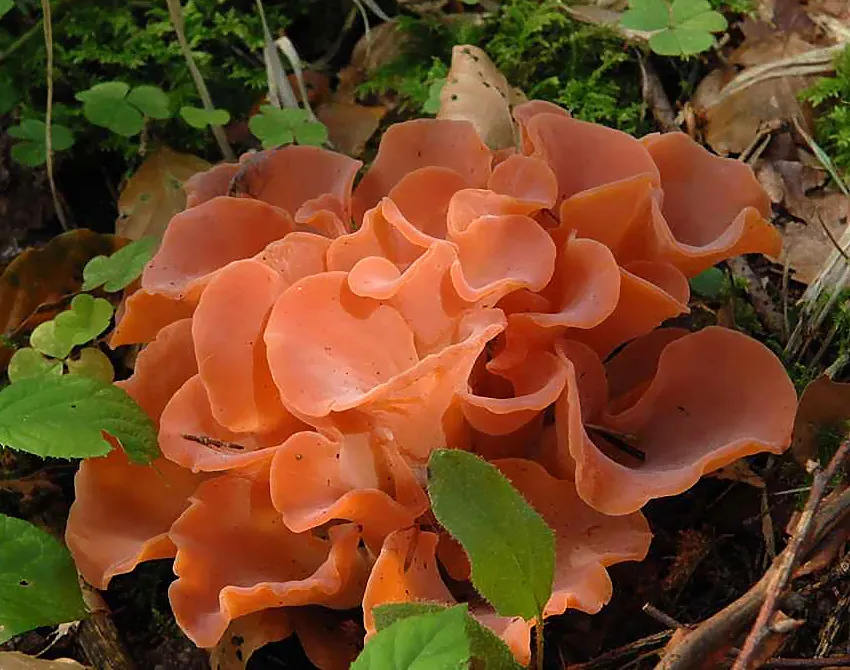
There are no serious dangerous lookalikes. You could confuse it with its close relative A. mesenterica (tripe fungus), which has zones and a greenish down on the upper surface from algae. Both are conditionally edible. There are no other similar jelly fungi of this color and shape in Ukraine.
Where to look in Ukraine?
Most often on dead or weakened branches of black elder (Sambucus nigra). Also on lilac, elm, oak and alder. It loves damp, shady spots — forest edges, wooded ravines, riverbanks. Throughout Ukraine.
When does it appear?
Almost year-round, from March to November, and in mild winters in winter too. The mushroom tolerates frost: it dries out, and during a thaw it takes up moisture again and becomes edible. It is most abundant in spring and fall after prolonged rain.
How do you cook jelly ear?
Slice fresh or rehydrated dried mushrooms into thin strips. Braise with vegetables, add to soups (Chinese, Japanese), stir-fry with ginger and soy sauce. Before cooking, soak dried ones for 30–60 min in warm water. They swell 5–10 times in volume.
Does it grow on living trees?
Mostly on weakened and dead branches, less often on old living trees. It is a saprotroph and facultative parasite — it attacks a weakened tree but leaves a healthy one alone.
Does it have medicinal value?
Traditional Chinese medicine has used it for millennia as a tonic and blood-cleansing remedy. Modern research confirms an antithrombin effect (it thins the blood) and an ability to lower cholesterol. But it is not a medicine — eat it as a cooking ingredient, not as "medication."
Can you grow it at home?
Yes, the mushroom is widely cultivated on oak and elder logs, as well as on sterilized sawdust substrate. A log fruits for 4–6 years. In China it is the second most cultivated mushroom by volume after the oyster mushroom.
Is Jelly ear edible or poisonous?
What kind of spore-bearing surface does Jelly ear have?
What does the cap of Jelly ear look like?
What does the stem of Jelly ear look like?
Sources
- [1]Вікіпедія (українська)
- [2]Атлас грибів України, Зеров Д.К. (1979)
- [3]MycoBank Database
- [4]Index Fungorum
- [5]GBIF
- [6]iNaturalist Ukraine