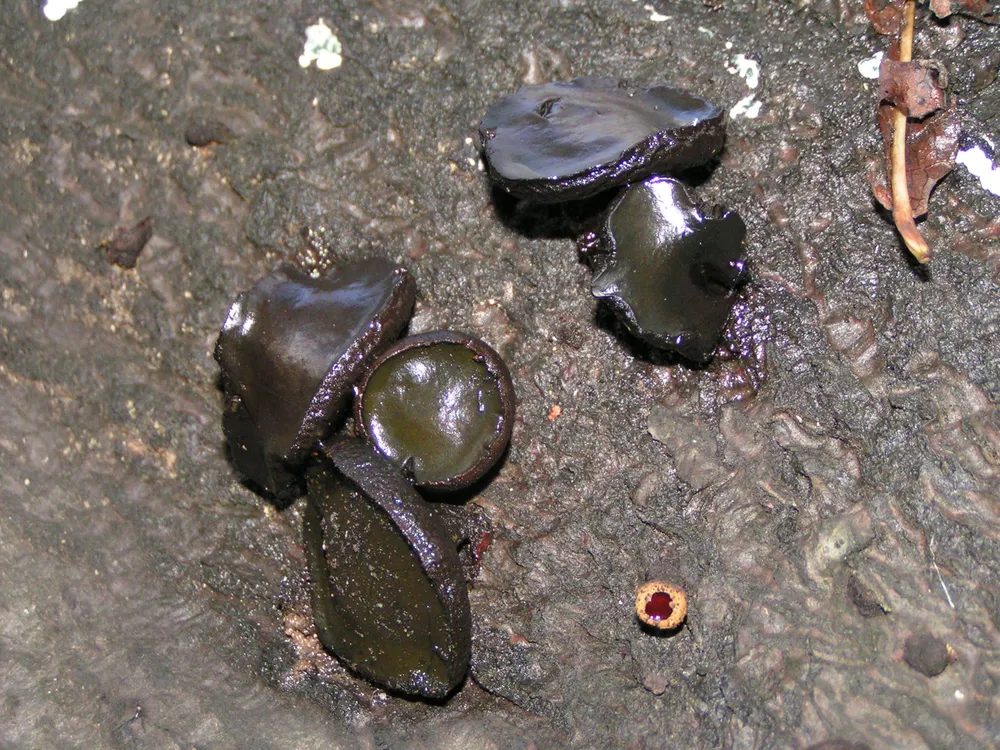
Black bulgarBulgaria inquinans
Expert-verifiedUpdated October 3, 2026
Passport
- Edibility
- Inedible
- Season
- Sep — Nov
- Hymenophore
- Smooth
- Cap color
- Black
- Size
- Small (up to 5 cm)
- Smell
- Odorless
- Reviewed
- Yes ✓
Quick answers
Where to look?
Deciduous forest, Mixed forest
When does it appear?
Sep — Nov
Active months: September, October, November.
How to recognize it? Three signs
- Cap color: Black, Dark brown
- Cap shape: Depressed
- Smell: Odorless
Fruiting season
September – November
Description
The black bulgar is neither a gilled mushroom nor a bolete, but an ascomycete. On fallen trunks it looks like a cluster of black jelly buttons or little cups. Touch a mature fruiting body and your fingers are instantly covered in black spore powder — hence its Ukrainian name, "the staining one."
This is not a mushroom for the basket. It has no culinary value, and some sources mention it as suspected of toxicity — in particular, cases of photodermatitis (a skin rash under sunlight) were recorded in China in people who ate closely related species. For us, the black bulgar is a wonderful marker of old deciduous forest and something to observe calmly.
In Ukraine, it grows in deciduous and mixed forests on fallen trunks and stumps of oak, beech and aspen, less often walnut. The season is late, from September to November, so it is easy to spot when most "normal" mushrooms are already gone.
Cap
Fruiting bodies 1.5–4 cm across, 1–4 cm tall. Young ones are rounded and closed, like black buttons or drops of resin. With age they open into shallow cups or discs. The outer surface is dark brown and rough; the inner one (where the hymenium lies) is smooth, black and shiny.
Hymenophore
Smooth, forming the shiny black upper surface of the cup. The spore print is black — this is what "stains" your hands on contact. Spores dark brown, 12–14 × 6–7 µm, smooth.
Stem
The stem is practically absent. The fruiting body is sessile — attached to the substrate by a broad base.
Flesh
Flesh rubbery, gelatinous, black-brown. Neither firm nor brittle — rather elastic. Does not change color when cut.
Smell
No distinct smell. Taste indistinct; we do not taste it — the mushroom is inedible.
›Scientific synonyms (1)
Peziza inquinans Pers. (1794)
Related species
Mushrooms of the same genus and habitat — to study side by side and never mix up.
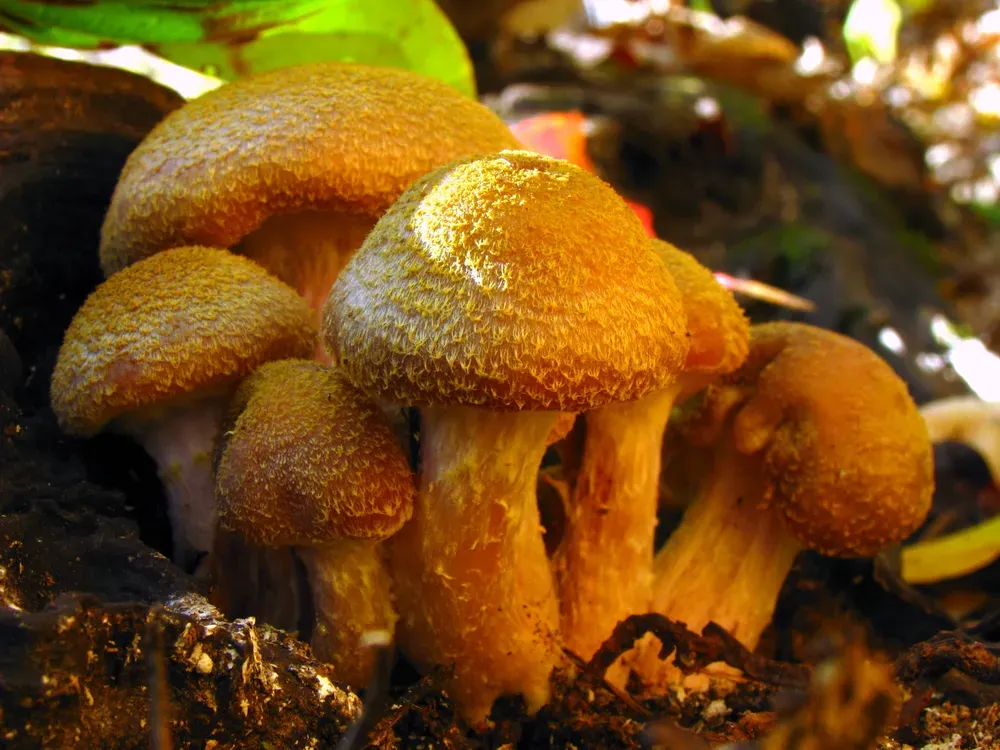
Bulbous honey fungus
Armillaria gallica
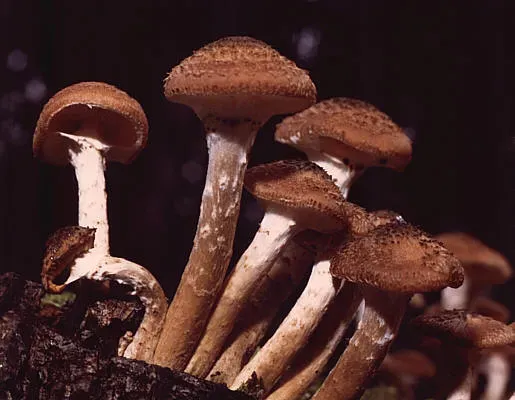
Dark honey fungus
Armillaria ostoyae
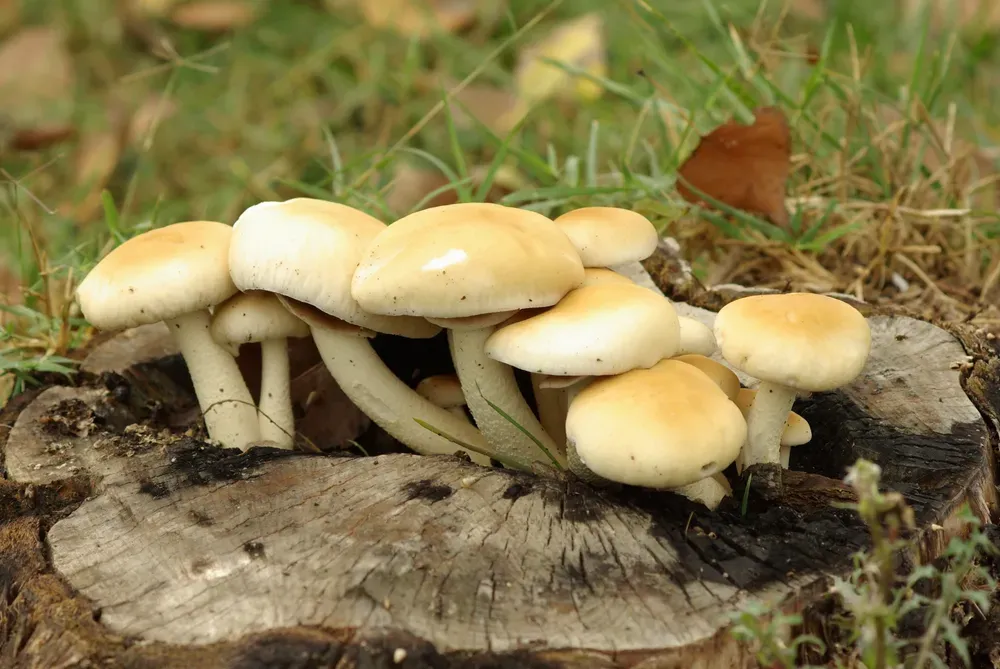
Poplar fieldcap
Cyclocybe aegerita
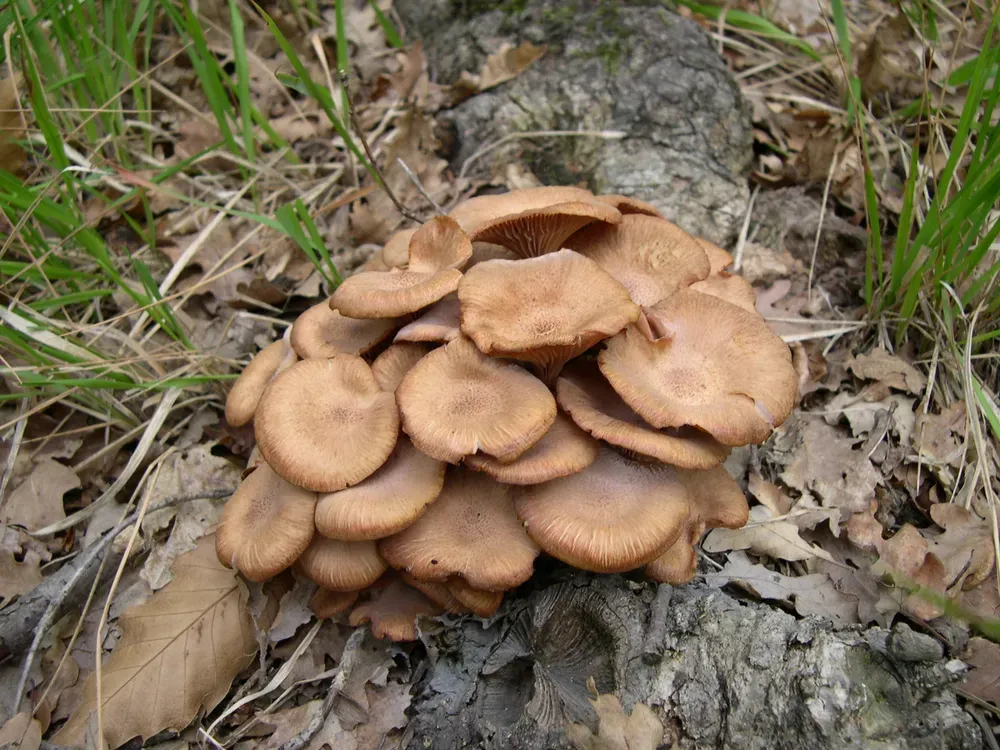
Ringless honey fungus
Desarmillaria tabescens
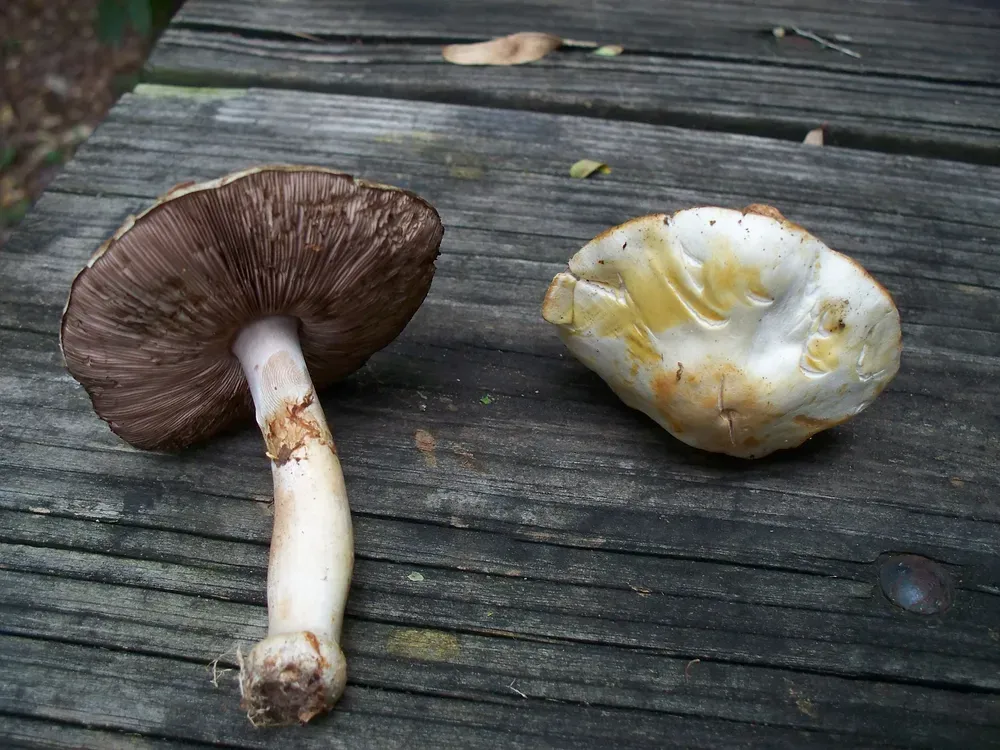
Agaricus abruptibulbus
Agaricus haemorrhoidarius
Agaricus haemorroidarius
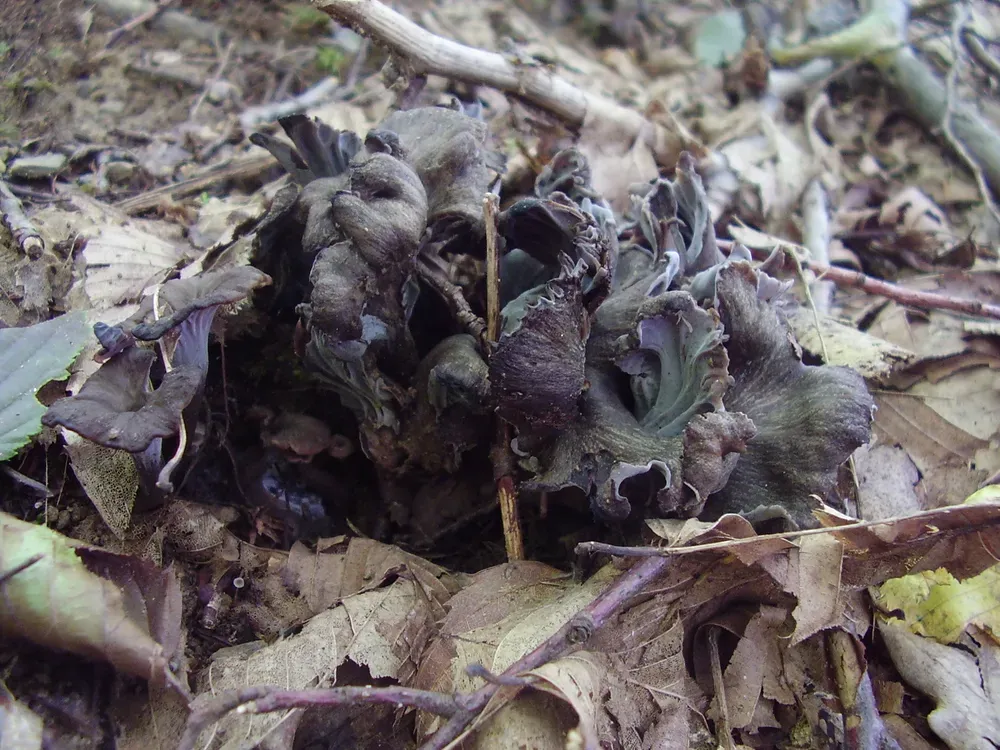
Ashen chanterelle
Cantharellus cinereus
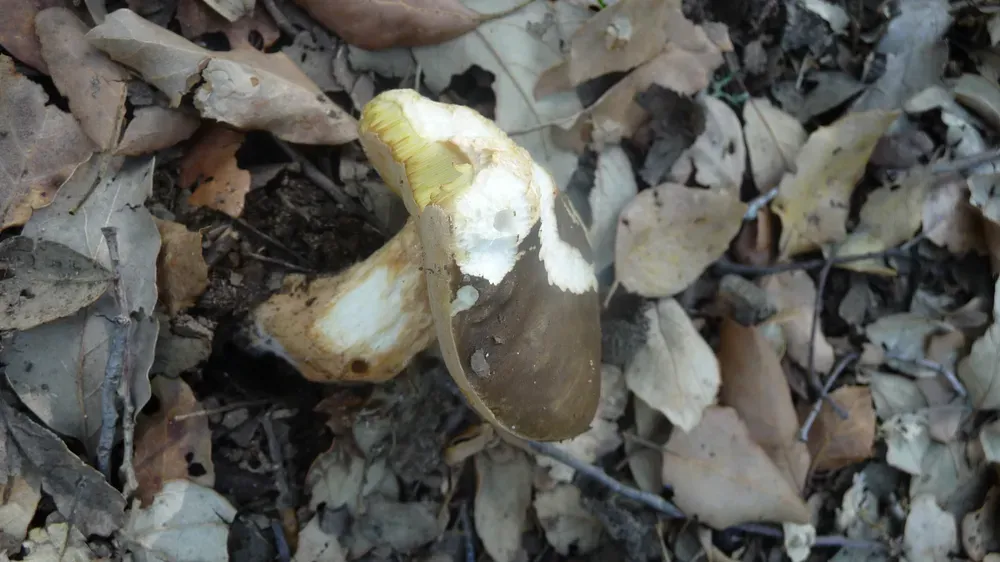
Blushing bolete
Leccinum roseofractum
Frequently asked questions
Can you eat it?
No. The black bulgar is an inedible mushroom with no culinary value at all. Closely related species in Asia have caused photodermatitis (skin reactions after eating and sun exposure), so it is better not to take the risk.
Is it dangerous just to touch it?
No, touching it is safe. The black spore powder washes off your hands easily with water — it is just spores, not a toxin. But if you have sensitive skin, wash your hands after contact.
Where should you look for it?
On fallen trunks and large branches of deciduous trees — oak, beech, aspen, less often walnut. It loves damp rotting wood in shady parts of the forest.
Which regions of Ukraine does it grow in?
Throughout Ukraine wherever there are deciduous forests — the Carpathians, Polissia, the Forest-Steppe, the Crimean Mountains. Not a mass species, but it turns up regularly in old oak and beech forests.
When does it appear?
From mid-September to the end of November. This is a late-autumn mushroom that is easy to spot after the first night frosts, when the other mushrooms disappear.
Can it overwinter on the trunk?
Yes. Dried black cups often stay on the wood until spring — they turn hard, like a lacquered crust. Rain soaks them back up, and even in spring you can see them releasing spores.
What is it confused with?
With Exidia glandulosa ("witches' butter") — a black jelly fungus that also grows on rotting deciduous wood. The difference: Exidia is jelly-soft, has no clear cup shape, and does not puff black powder when touched.
Nothing to do with truffles, then?
No. Truffles grow underground, are rounded without a cup, and have a completely different smell. The black bulgar is always on wood, flat or cup-shaped, with no aroma at all.
Is Black bulgar edible or poisonous?
What kind of spore-bearing surface does Black bulgar have?
What does the cap of Black bulgar look like?
What does the stem of Black bulgar look like?
Sources
- [1]Вікіпедія (українська)
- [2]Атлас грибів України, Зеров Д.К. (1979)
- [3]MycoBank Database
- [4]Index Fungorum
- [5]GBIF
- [6]iNaturalist Ukraine