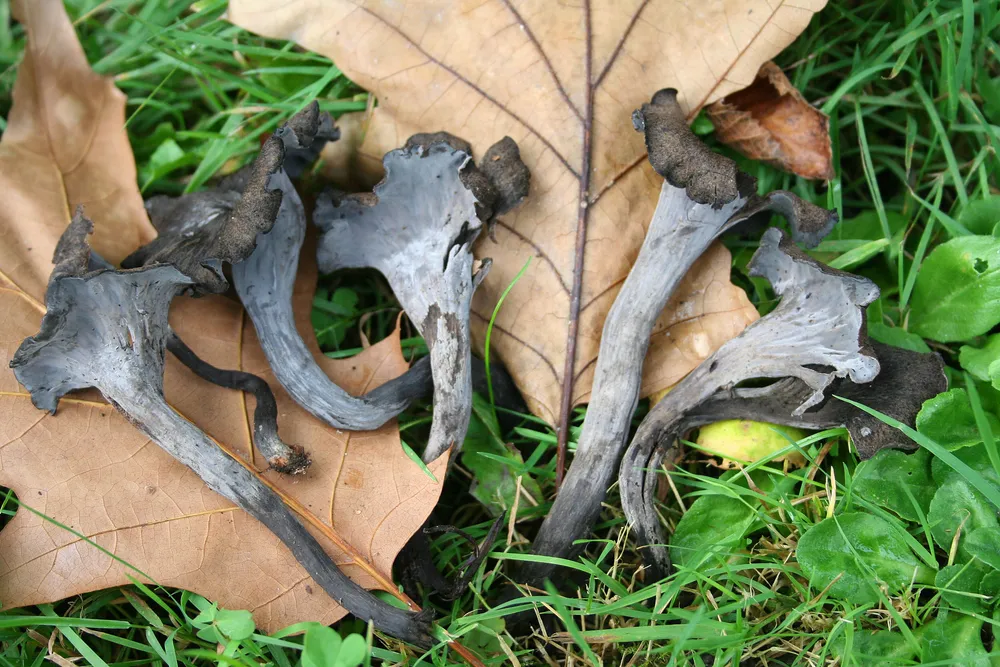
Horn of plentyCraterellus cornucopioides
Expert-verifiedUpdated October 3, 2026
Passport
- Edibility
- Edible
- Season
- Jul — Oct
- Hymenophore
- Ridged
- Cap color
- Black
- Size
- Small (up to 5 cm)
- Smell
- Fruity
- Reviewed
- Yes ✓
Quick answers
Where to look?
Deciduous forest
When does it appear?
Jul — Oct
Active months: July, August, September, October.
How to recognize it? Three signs
- Cap color: Black, Dark grey
- Cap shape: Funnel-shaped
- Smell: Fruity, Pleasant, mushroomy
Fruiting season
July – October
Description
The horn of plenty, or black trumpet (Craterellus cornucopioides), is an edible mushroom with an unusual dark coloring that hides it among the leaf litter in woods. Despite its unappealing look, it is a true delicacy of French cuisine, where it is known as the "trumpet of the dead" (trompette de la mort).
It grows in broadleaf woods, especially often under beech and oak, in large colonies, but is almost invisible because of its dark color and small size. Fruits in August–November.
Edible without restrictions. Used in sauces, risottos, pastas and as a side dish. When dried, it develops an intense, truffle-like aroma.
Cap
Fruit body funnel-shaped or tubular, 3–10 cm tall and 2–6 cm across, with no clear boundary between cap and stem. The outer (upper) surface is dark gray or blackish brown, slightly scaly. Margin wavy or irregularly lobed.
Hymenophore
The hymenophore is on the outer surface of the fruit body — smooth or slightly wrinkled, with no true gills or false gills. Gray or bluish gray, with a powdery bloom of spores. This feature sets it apart from the hymenophore of true chanterelles.
Stem
There is no stem in the classic sense — the fruit body is one continuous cone-shaped tube. The lower part is narrowed, hollow inside, and the whole structure is open from top to bottom. Grayish or brownish black.
Flesh
Flesh very thin, brittle, gray or blackish. Taste delicate, pleasant, slightly nutty. When dried it concentrates, taking on a rich, intense, truffle-like flavor.
Smell
Smell unobtrusive, pleasant, slightly floral and woodsy in fresh mushrooms. When dried, the aroma intensifies sharply and becomes deep, earthy and truffle-like. That's exactly what makes the dried horn of plenty such a valuable culinary ingredient.
Lookalikes
Related species
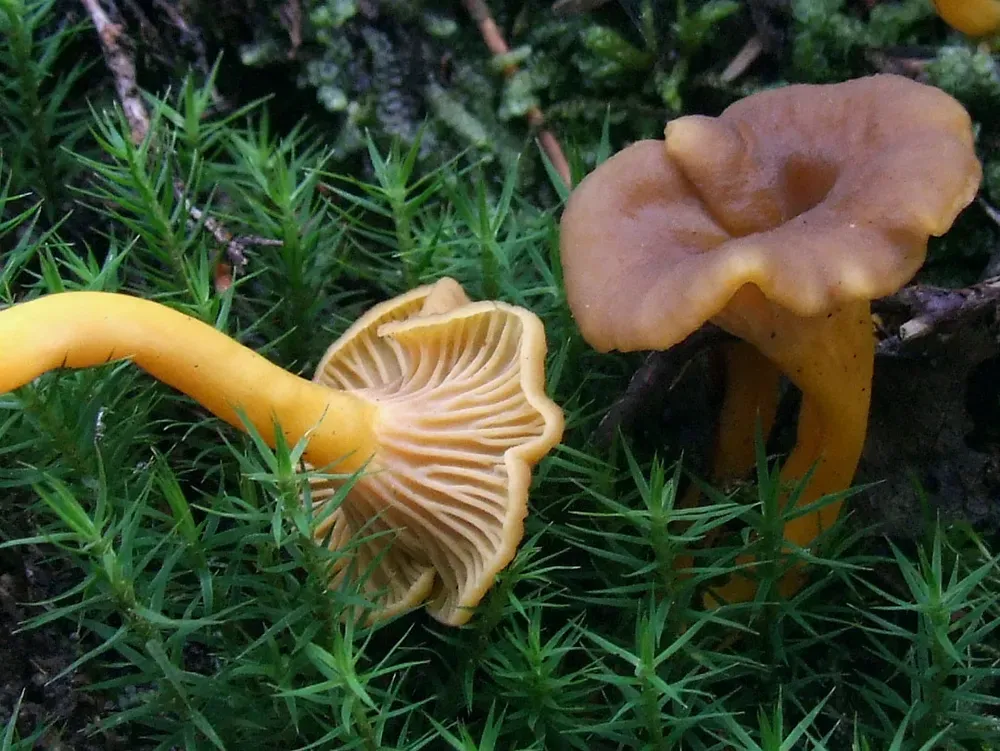
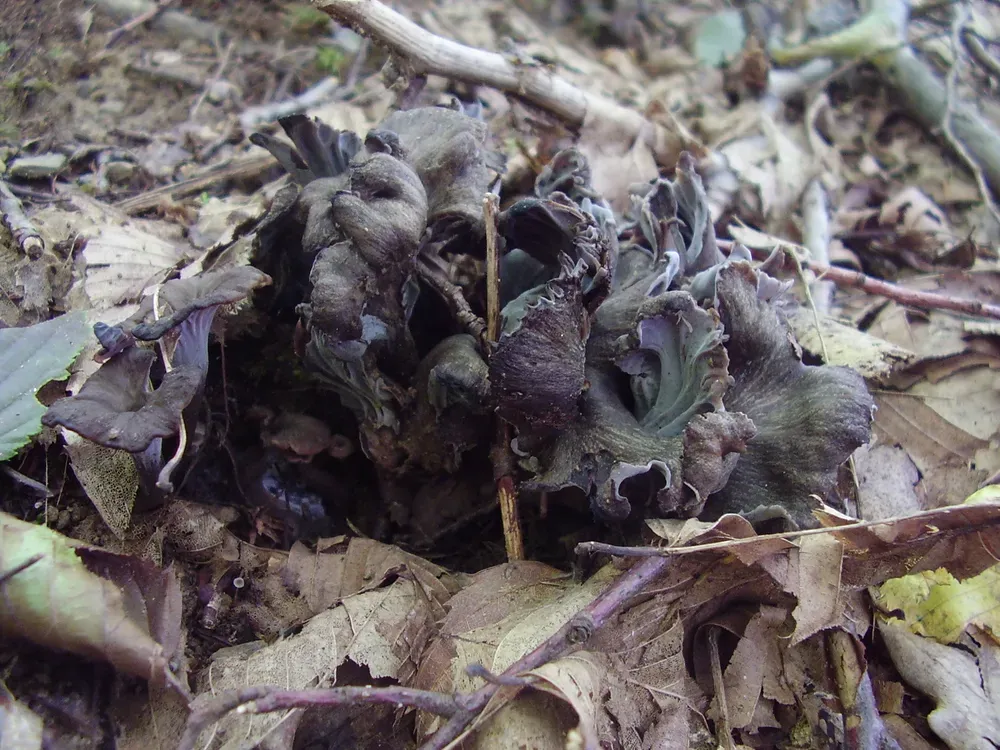
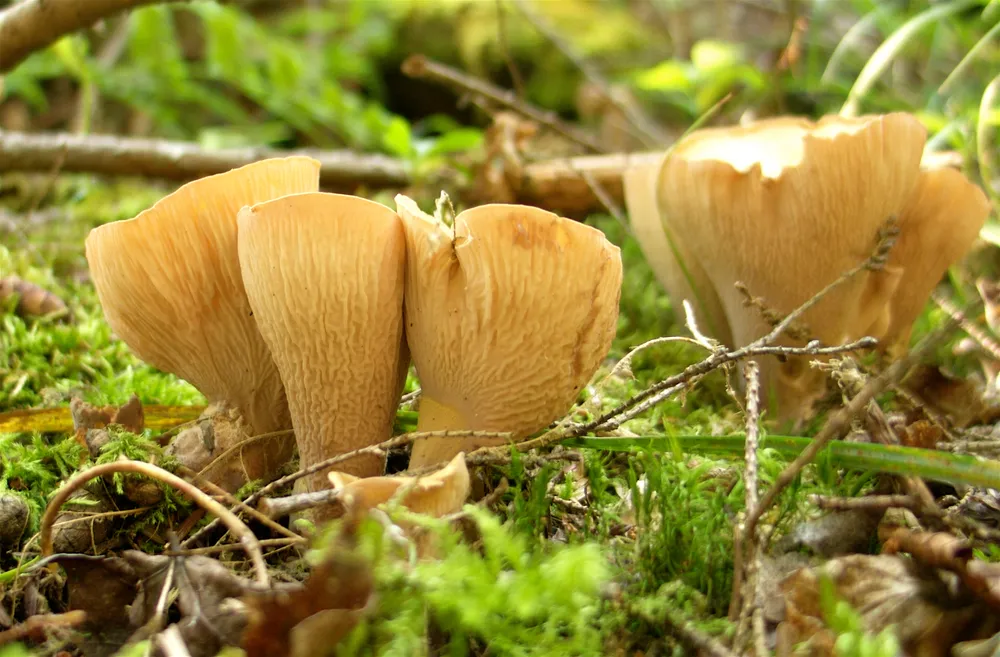
Mushrooms of the same genus and habitat — to study side by side and never mix up.
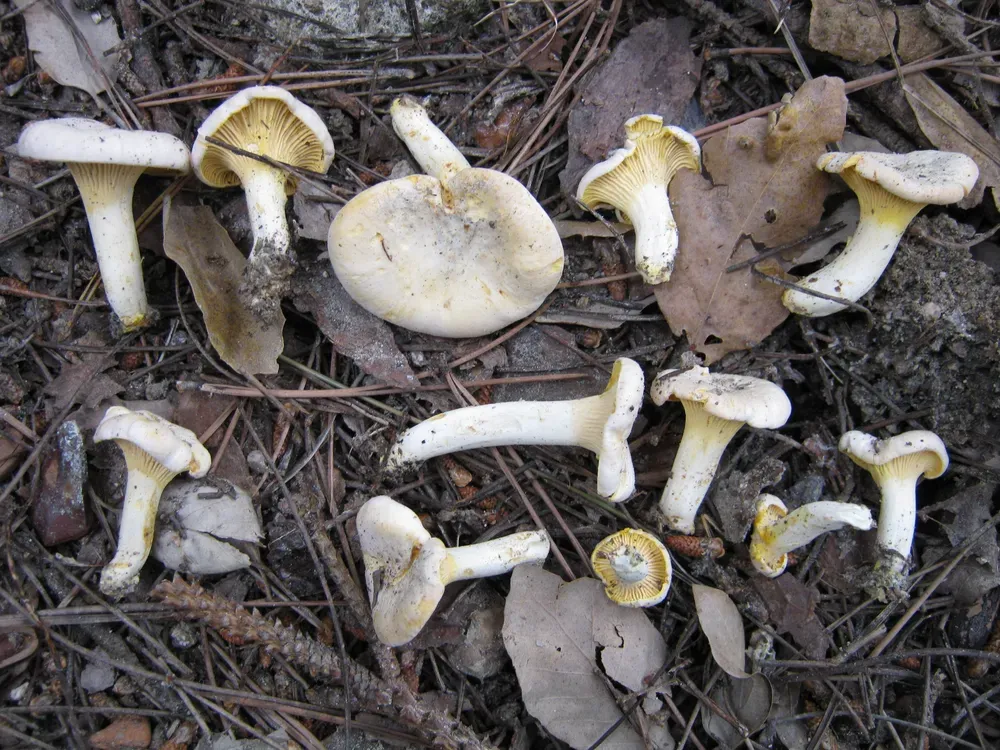
Cantharellus pallens
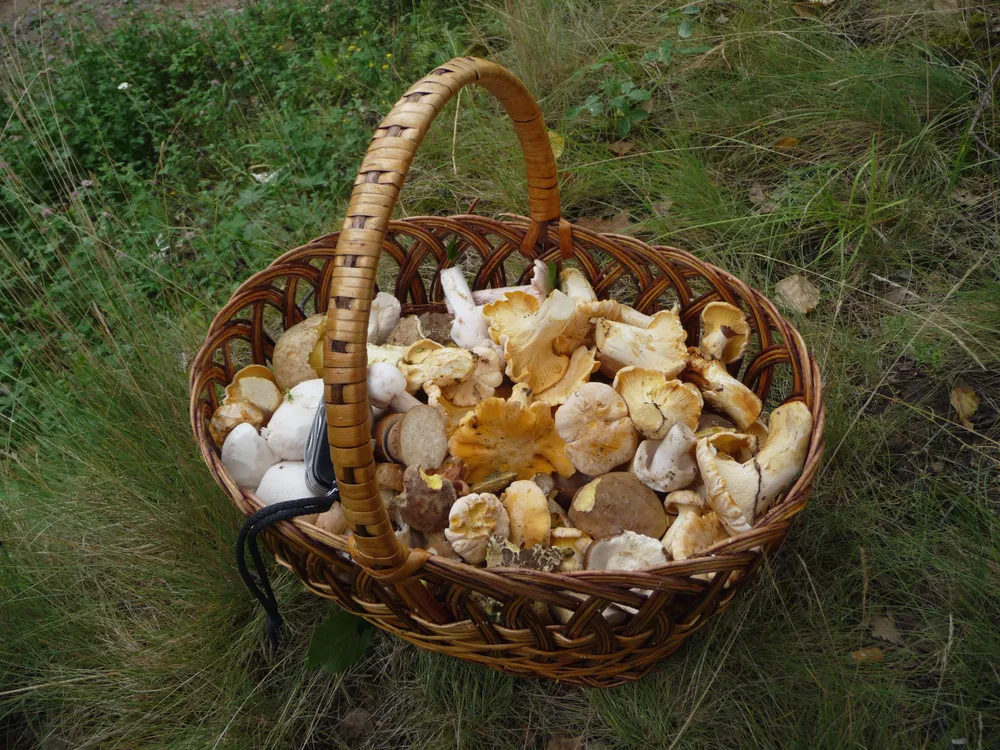
Chanterelle
Cantharellus cibarius
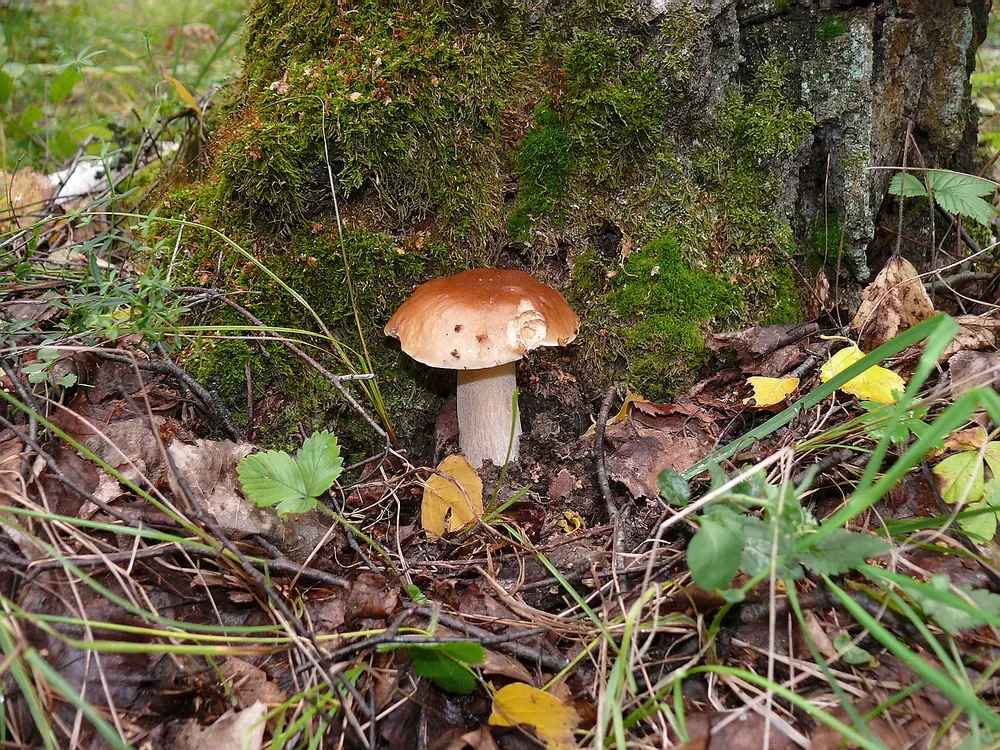
Boletus betulicola
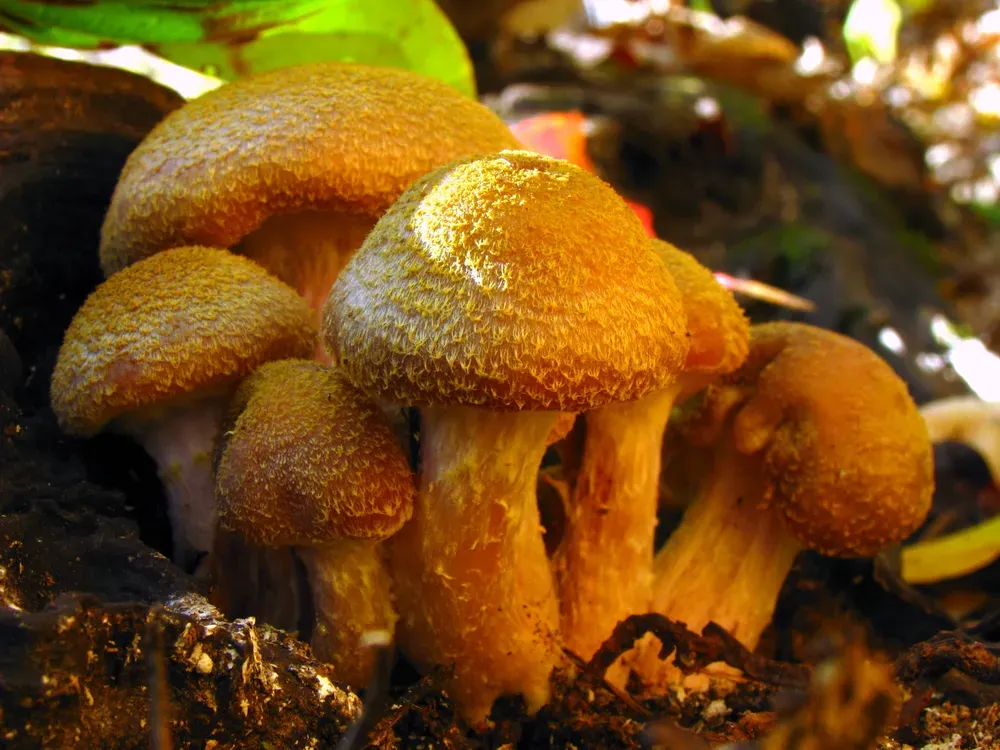
Bulbous honey fungus
Armillaria gallica
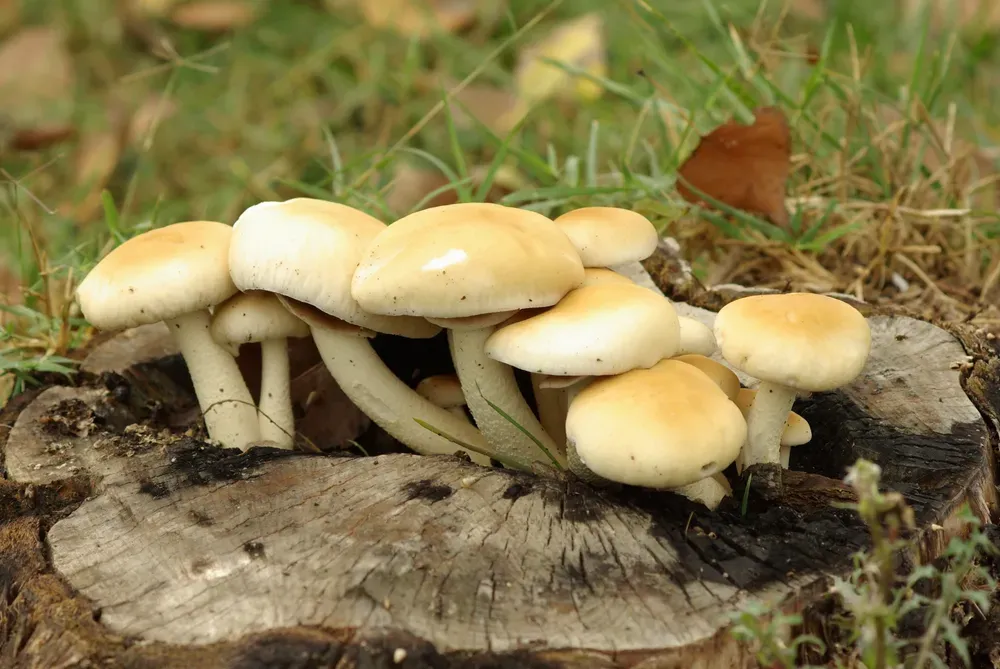
Poplar fieldcap
Cyclocybe aegerita
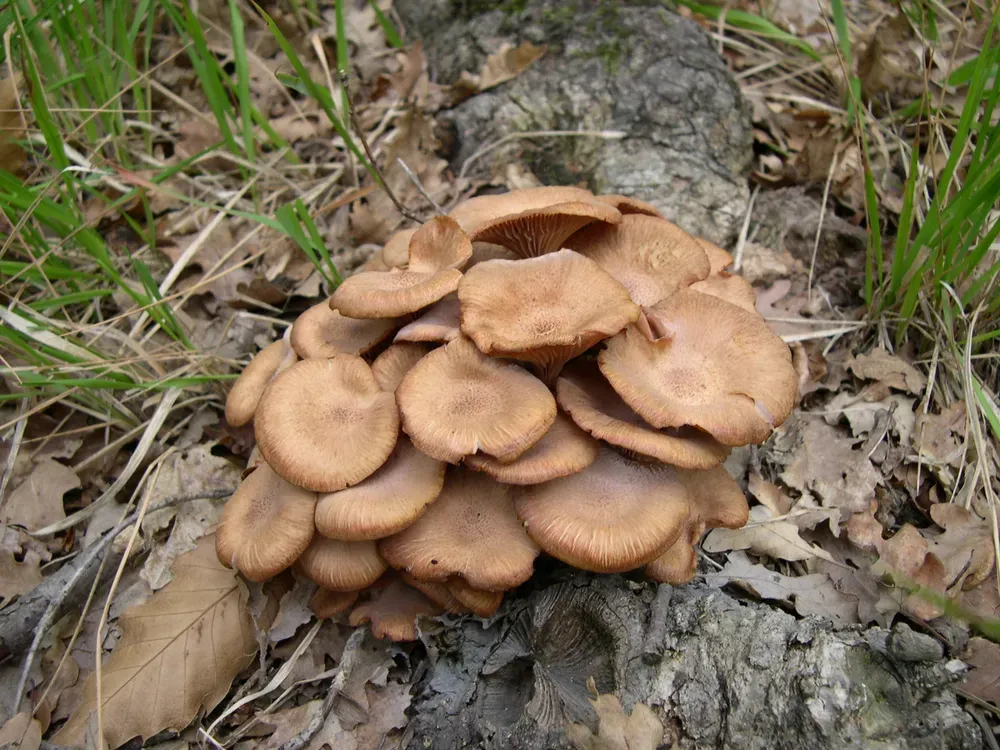
Ringless honey fungus
Desarmillaria tabescens
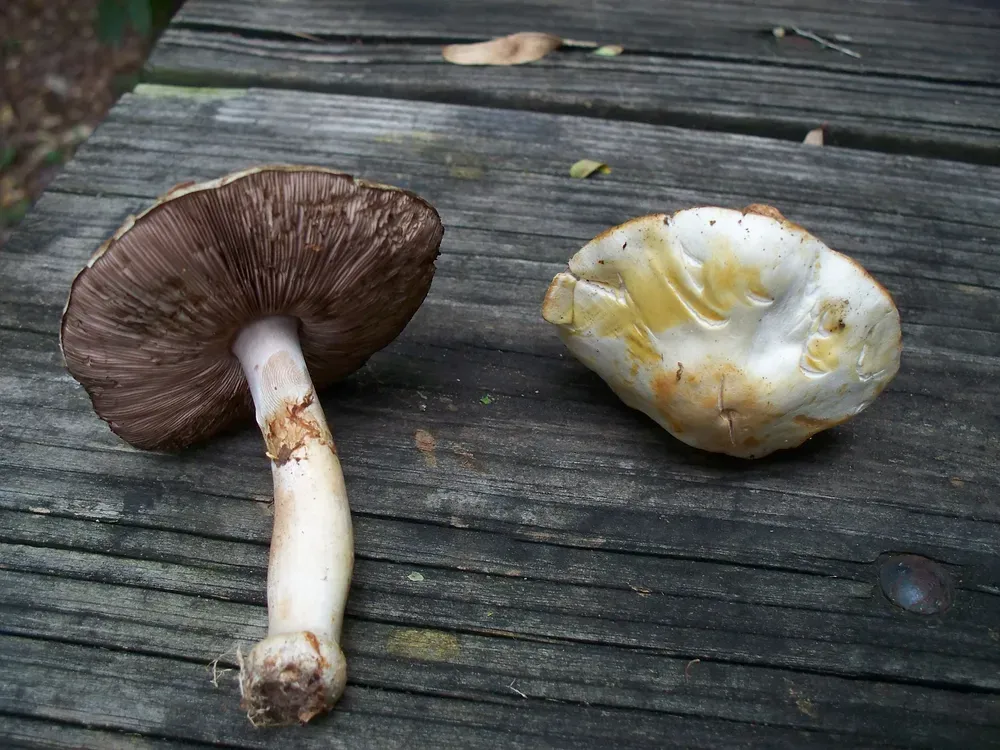
Agaricus abruptibulbus
Agaricus haemorrhoidarius
Agaricus haemorroidarius
Frequently asked questions
Is Horn of plenty edible or poisonous?
What kind of spore-bearing surface does Horn of plenty have?
What does the cap of Horn of plenty look like?
What does the stem of Horn of plenty look like?
What do Horn of plenty smell and taste like?
Where does Horn of plenty grow?
Which trees does Horn of plenty grow under?
When should you pick Horn of plenty?
What can Horn of plenty be confused with?
How do you cook Horn of plenty?
Can you dry Horn of plenty?
What is the scientific name of Horn of plenty?
Sources
- [1]Атлас грибів України, Зеров Д.К. (1979)
- [2]GBIF