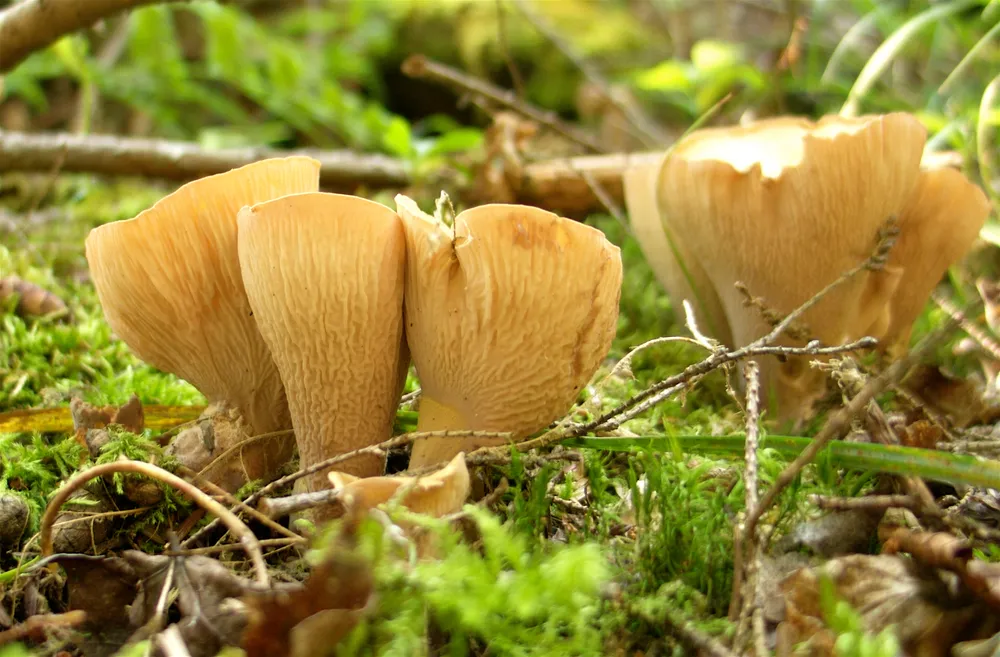
Pig's earGomphus clavatus
Expert-verifiedUpdated October 3, 2026
Passport
- Edibility
- Edible
- Season
- Jul — Sep
- Hymenophore
- Ridged
- Cap color
- Violet
- Size
- Medium (5–15 cm)
- Smell
- Pleasant
- Reviewed
- Yes ✓
Quick answers
Where to look?
Conifer forest, Mixed forest
When does it appear?
Jul — Sep
Active months: July, August, September.
How to recognize it? Three signs
- Cap color: Violet, Brown
- Cap shape: Funnel-shaped
- Smell: Pleasant
Fruiting season
July – September
Description
Pig's ear, aptly named for its shape, is a rare and very recognizable mushroom. The fruiting body has a distinctive funnel or lobed, spatula-like shape, with an uneven wavy edge, sometimes as a cluster of “ears” fused on a common base. The upper surface ranges from violet-lilac to purplish brown; the underside (hymenophore) is paler, with decurrent folds and wrinkles instead of true gills. It is neither a gilled mushroom nor a bracket fungus — a typical chanterelle-like hymenophore with blunt folds.
Pig's ear is listed in the Red Data Book of Ukraine and those of several European countries. It is rare in the wild — it grows in old coniferous and mixed forests on poor sandy or mossy soils, mostly in the Carpathians. You must not pick it — that breaks nature protection law. Technically the mushroom is edible when young and has a mild, pleasant taste; in some European countries it is valued in the kitchen. But in Ukraine it is protected, so a find is a reason to take a photo and tell mycologists, not to put it in your basket.
Found mainly in the mountain spruce and fir forests of the Carpathians (Lviv, Ivano-Frankivsk, Zakarpattia and Chernivtsi regions), with occasional finds in Prykarpattia and Polissia. Season: July–September, peaking in August. It often grows in clusters from fused bases — a characteristic feature of the species.
Cap
Fruiting body funnel-shaped or spatula-like, 4-15 cm tall and wide, with an uneven wavy or deeply cleft edge. It often grows as a cluster of “ears” fused on a common base. Upper surface color: young ones are violet-lilac, turning purplish brown to brown with age; the center is darker, the edge paler. The surface is smooth, faintly shiny in wet weather and matte in dry.
Hymenophore
The hymenophore is not gilled and not tubed — it consists of folds and wrinkles running down the “stem”, uneven, forked and blunt (like a chanterelle's but coarser). Color violet-lilac to purplish brown, paler than the top of the cap. Spore print yellowish ocher.
Stem
There is no separate stem — the fruiting body is one piece, funnel-shaped. The lower part narrows into a sterile base 2-5 cm high, the color of the hymenophore or slightly paler.
Flesh
The flesh is whitish to yellowish, firm in young ones, fibrous in old ones. It doesn't change color when cut. It has a pleasant, mild taste.
Smell
A faint, pleasant mushroomy smell, sometimes with a fruity note. The taste is mild, with nothing sharp.
›Scientific synonyms (12)
Elvela purpurascens Schaeff. (1774), Agaricus purpurascens (Schaeff.) Batsch, Merulius clavatus Pers., Merulius purpurascens (Schaeff.) Pers., Cantharellus clavatus (Pers.) Fr., Gomphora clavata (Pers.) Fr., Craterellus clavatus (Pers.) Fr., Thelephora clavata (Pers.) P. Kumm., Nevrophyllum clavatum (Pers.) Pat. (1886), Neurophyllum clavatum (Pers.) Pat., Trombetta clavata (Pers.) Kuntze, Helvella carnea Schaeff.
Lookalikes
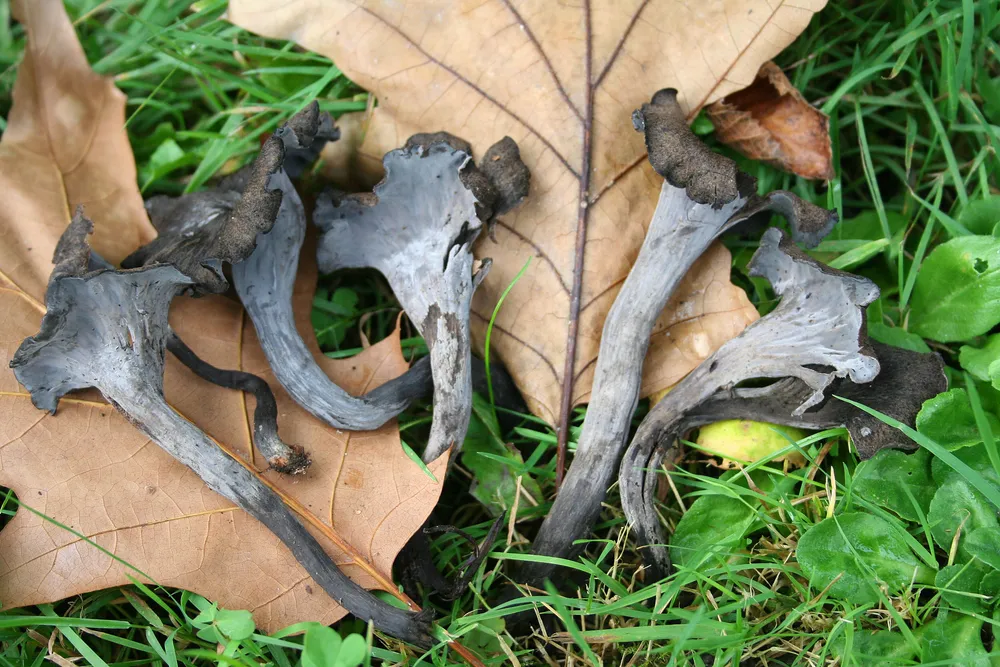
Related species
Mushrooms of the same genus and habitat — to study side by side and never mix up.
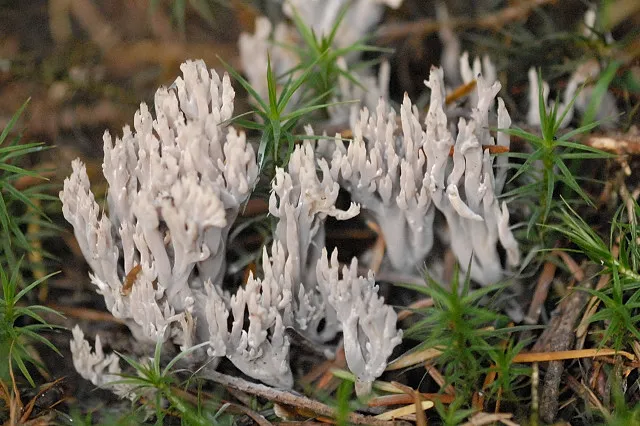
Bitter coral
Ramaria fennica
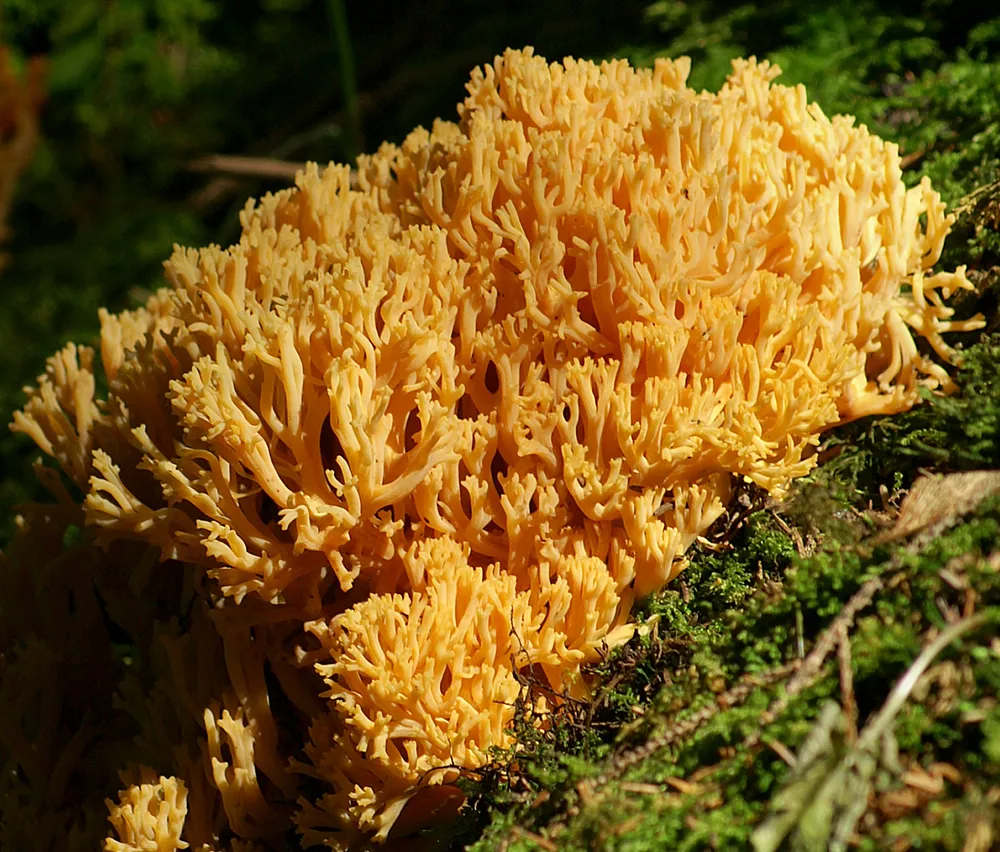
Ramaria aurea
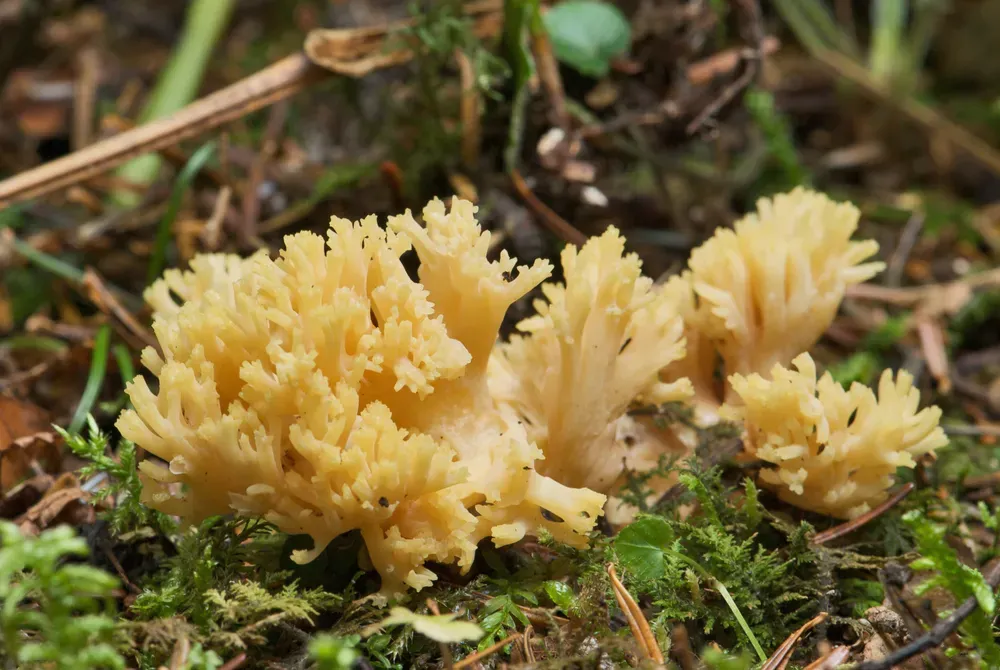
Ramaria flava
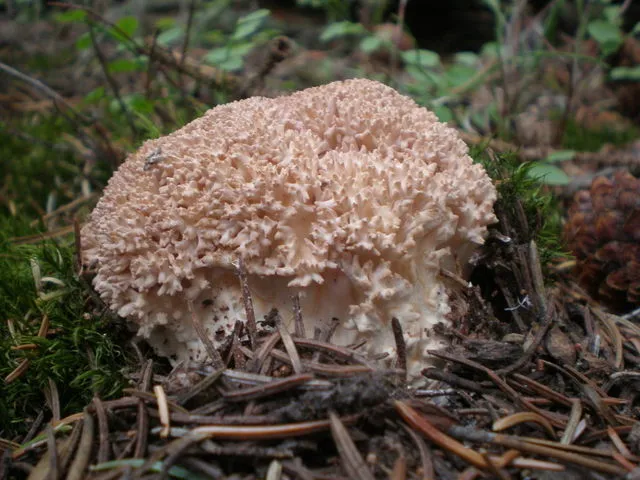
Rosso coral
Ramaria botrytis
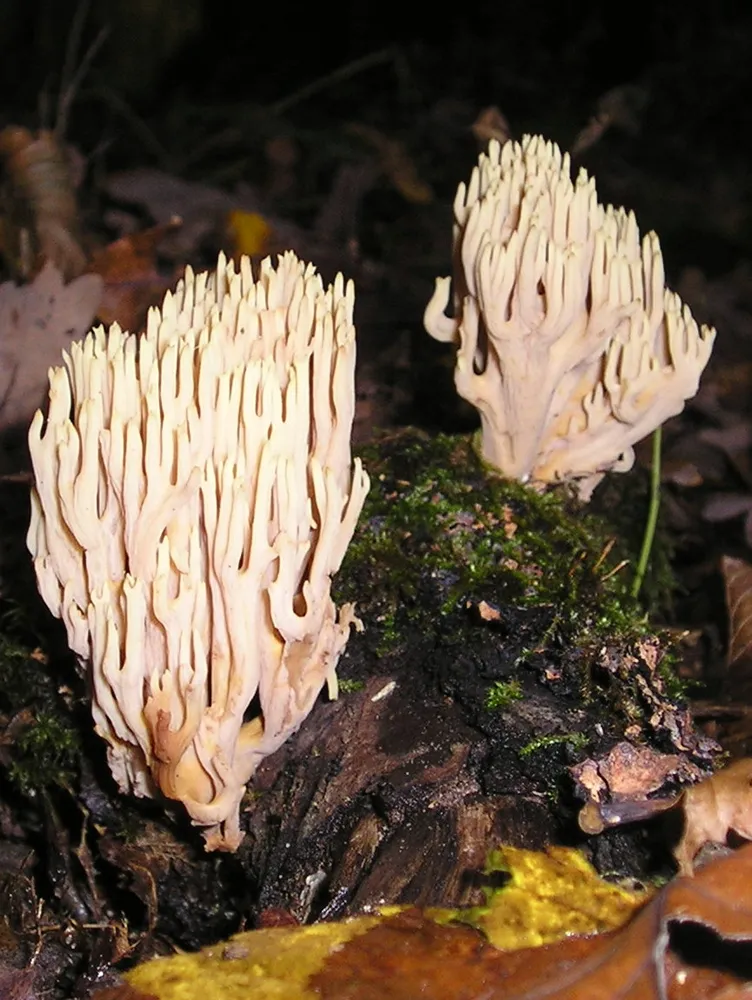
Upright coral
Ramaria stricta
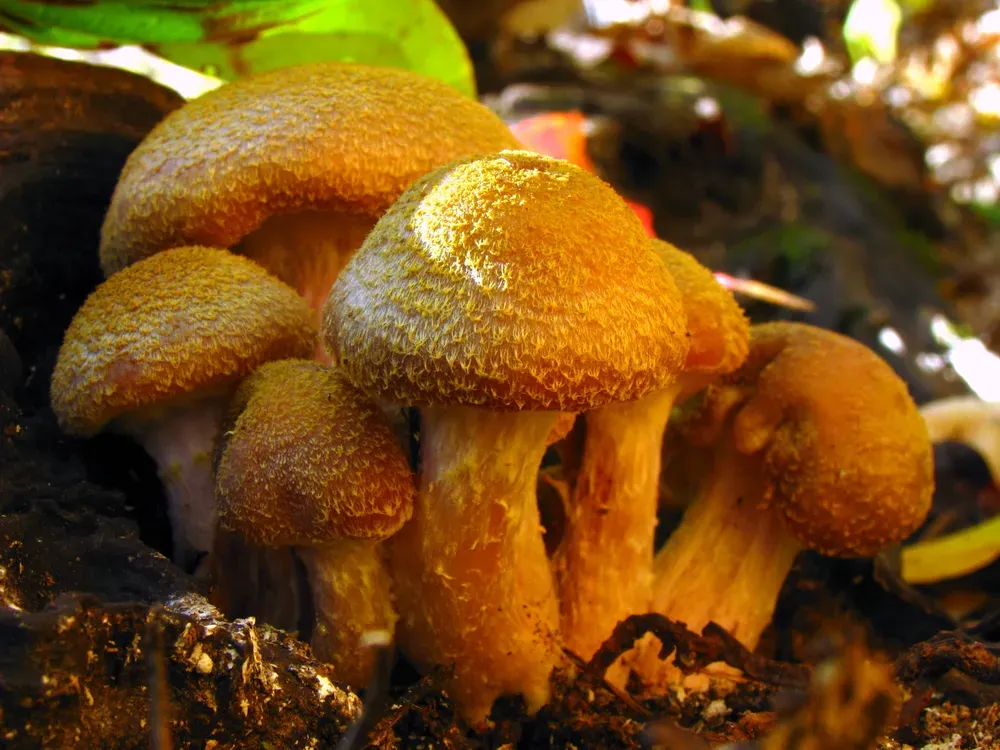
Bulbous honey fungus
Armillaria gallica
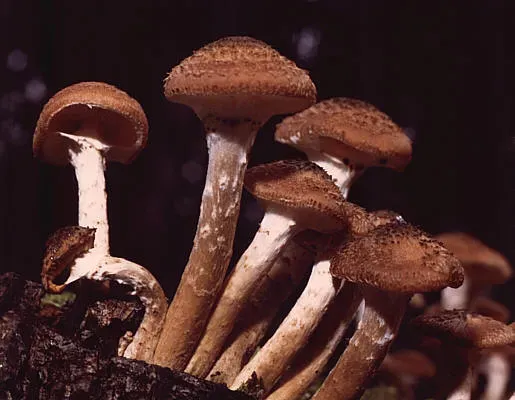
Dark honey fungus
Armillaria ostoyae
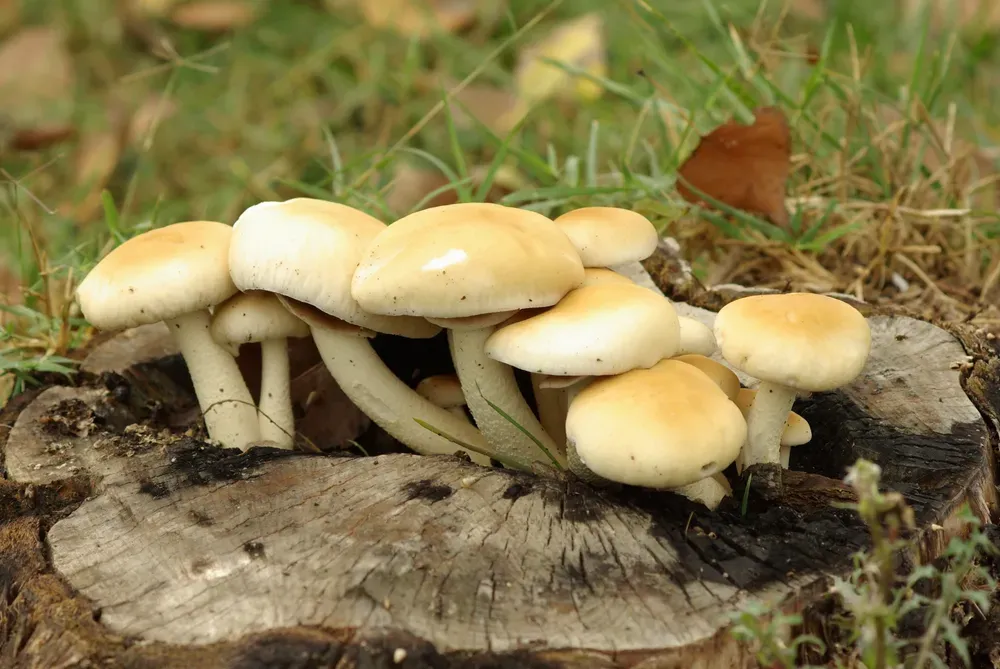
Poplar fieldcap
Cyclocybe aegerita
Frequently asked questions
Can you pick it?
NO. Pig's ear is listed in the Red Data Book of Ukraine — picking it is prohibited by law. Even if you come across it by chance, don't cut it. Photograph the find with its location and report it to mycologists via iNaturalist or to the National Academy of Sciences of Ukraine — this is valuable data for monitoring the population.
What if I didn't know and cut it?
The mushroom is technically edible and not poisonous — your health won't suffer. But don't pick it again. Remember the spot and the telltale features (a violet-lilac “pig's ear” with folds underneath) — next time you'll leave it in nature. A find is a result in itself: you can report it to mycologists.
Where does it grow?
In old coniferous and mixed forests on poor sandy or mossy soils. An obligate mycorrhizal partner of conifers — mainly fir and spruce. It likes shady spots with a thick moss cover. It often grows in clusters from fused bases — a characteristic feature.
Which regions of Ukraine is it found in?
Mainly in the Carpathians (Lviv, Ivano-Frankivsk, Zakarpattia and Chernivtsi regions) — in mountain spruce and fir forests at 600-1400 m. Occasional finds in Prykarpattia and Polissia. Overall a very rare species.
When should you look for it?
July–September. Fruiting peaks in August. The season is short; fruiting bodies last 2-3 weeks. In a warm autumn there are occasional finds in September.
Does it appear later in the year?
Unlikely. By October fruiting is usually over. Pig's ear is a typical mushroom of the mountain summer — it needs warm nights and damp moss.
What is it confused with?
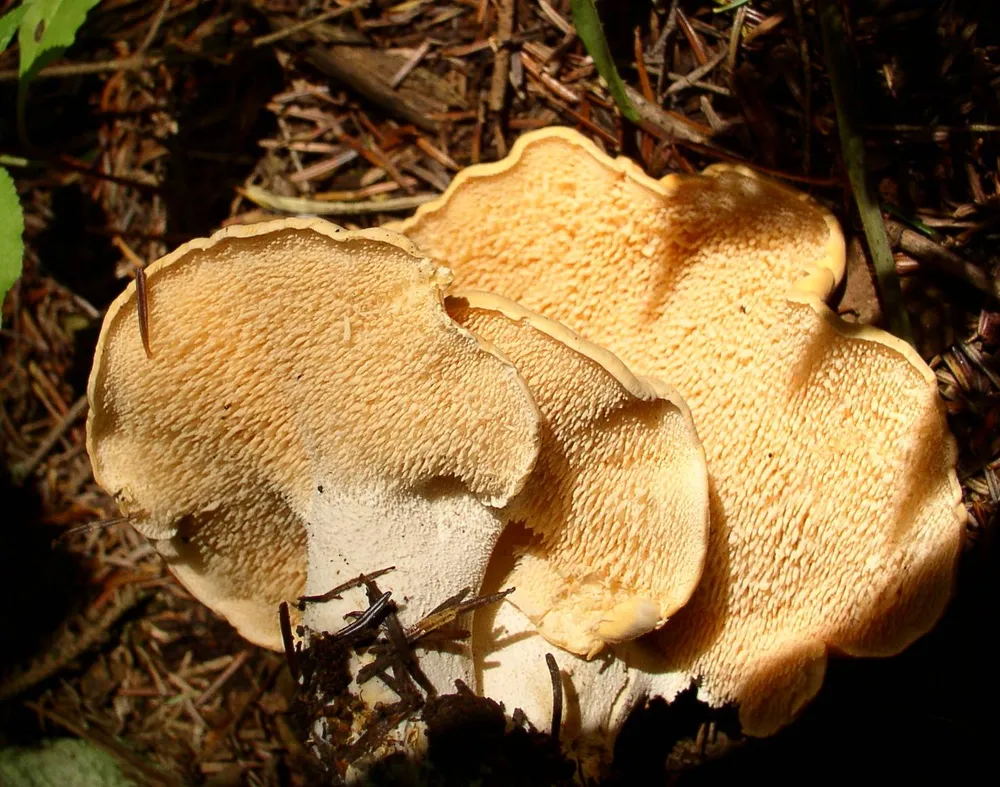
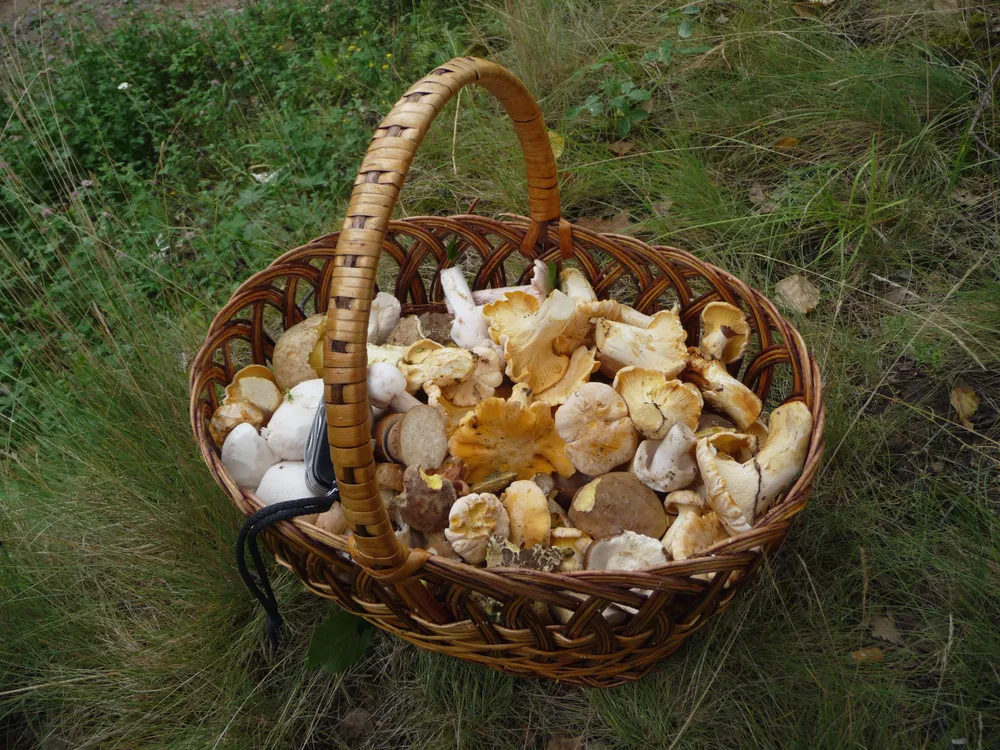
With hedgehog mushrooms (Hydnum) — the shared “pig's ear” funnel shape of the fruiting body, but hedgehogs have spines underneath, while pig's ear has folds. Plus, hedgehogs are yellowish cream, with no violet tones. It is also confused with chanterelles — they have folds too, but they are bright yellow, not violet.
How do you tell it from other violet mushrooms?
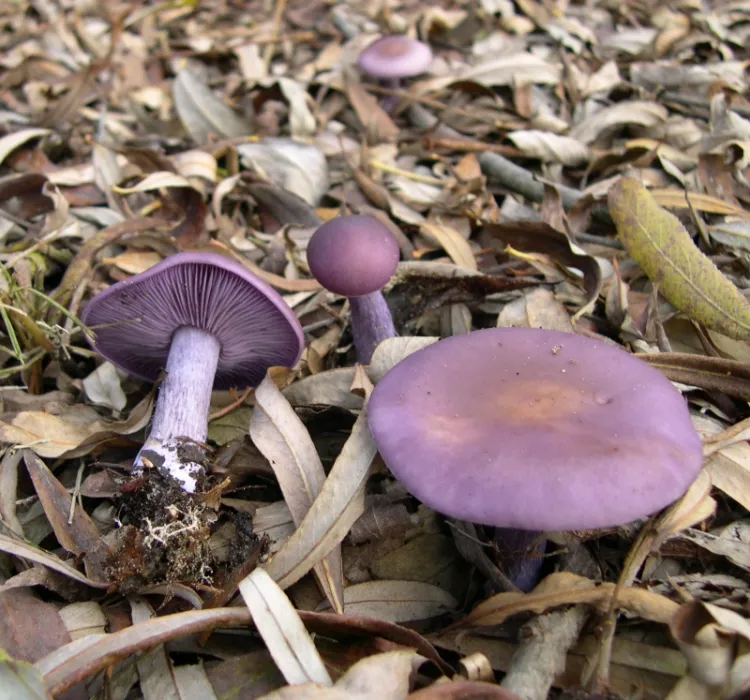
Two key features of pig's ear: (1) a funnel-shaped or “ear-like” form, often in fused clusters; (2) folds instead of gills underneath. The wood blewit (Lepista nuda) has an ordinary mushroom shape with gills, not folds. The violet webcap is also gilled, with cobwebby veil remnants on the stem.
Is Pig's ear edible or poisonous?
What kind of spore-bearing surface does Pig's ear have?
What does the cap of Pig's ear look like?
What does the stem of Pig's ear look like?
Sources
- [1]Вікіпедія (українська)
- [2]Атлас грибів України, Зеров Д.К. (1979)
- [3]MycoBank Database
- [4]Index Fungorum
- [5]GBIF
- [6]iNaturalist Ukraine