Bitter coralRamaria fennica
Expert-verifiedUpdated October 3, 2026
Passport
- Edibility
- Inedible
- Season
- Aug — Oct
- Hymenophore
- Smooth
- Cap color
- Grey
- Size
- Medium (5–15 cm)
- Smell
- Radish-like
- Reviewed
- Yes ✓
Quick answers
Where to look?
Conifer forest, Mixed forest
When does it appear?
Aug — Oct
Active months: August, September, October.
How to recognize it? Three signs
- Cap color: Grey, Violet, Yellow
- Cap shape: Irregular
- Smell: Radish-like
Fruiting season
August – October
Description
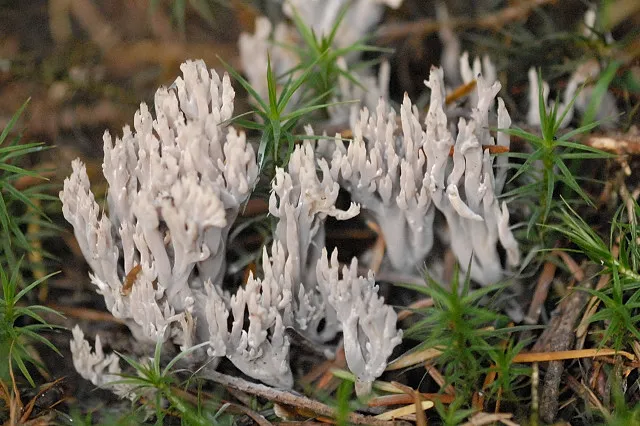
Bitter coral (Ramaria fennica) is a coral fungus that's rare in Ukraine, with characteristic dark violet-gray to dingy lilac branches and flesh that darkens to blue-violet when damaged. The Latin epithet fennica — "Finnish, northern" — reflects that the species was described from Finland and has a mostly boreal range (Scandinavia, northern Europe, the Carpathians).
The coral bush is medium-sized (8-12 cm tall), branches thicker than in R. stricta, lacy, with a characteristic violet-gray tone at the base and yellowish tips. Smell faint, with a hint of radish or damp soil, taste bitter, astringent.
Inedible because of its bitterish, tough flesh and possible gastrointestinal upset in some people. Older literature lists it as conditionally edible after boiling, but given how rare the species is and how unpredictably people react to it, it's not worth picking. In some countries (Finland, Sweden) it's on regional red lists because old-growth forests are shrinking.
In Ukraine bitter coral is very rare, known from a few finds in old spruce-beech forests of the Carpathians (Zakarpattia, Lviv and Ivano-Frankivsk regions). Its mycorrhizal partners are spruce and beech. The season runs August — October. If you find it, that's an event for iNaturalist UA, not for your basket.
Cap
A bushy fruiting body with no cap. Size 8-12 cm tall, 6-10 cm across. Branches lacy, moderately thick, with a characteristic violet-gray to dingy lilac color near the base; higher up yellowish-cream with ochre tips. The dark color of the base is a diagnostic feature.
Hymenophore
The spore-bearing layer covers the surface of the branches. Spore print ochre-yellow.
Stem
Shared base short, 2-4 cm tall, 1-2 cm across, violet-gray to dingy lilac, dividing into numerous forked branches.
Flesh
Flesh firm, whitish at first, quickly darkening to blue-violet or violet-black when damaged — a characteristic reaction and an important diagnostic. Taste bitter, astringent.
Smell
Faintly mushroomy with a hint of radish or damp soil.
›Scientific synonyms (1)
Clavaria fennica P.Karst. (1868)
Lookalikes
Related species
Mushrooms of the same genus and habitat — to study side by side and never mix up.
Ramaria aurea
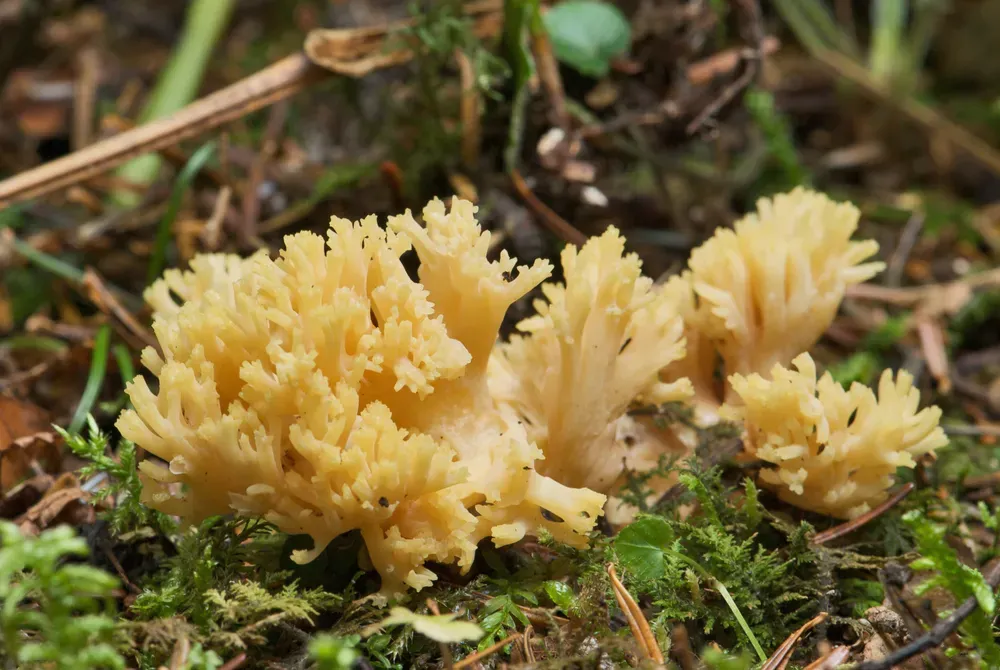
Ramaria flava
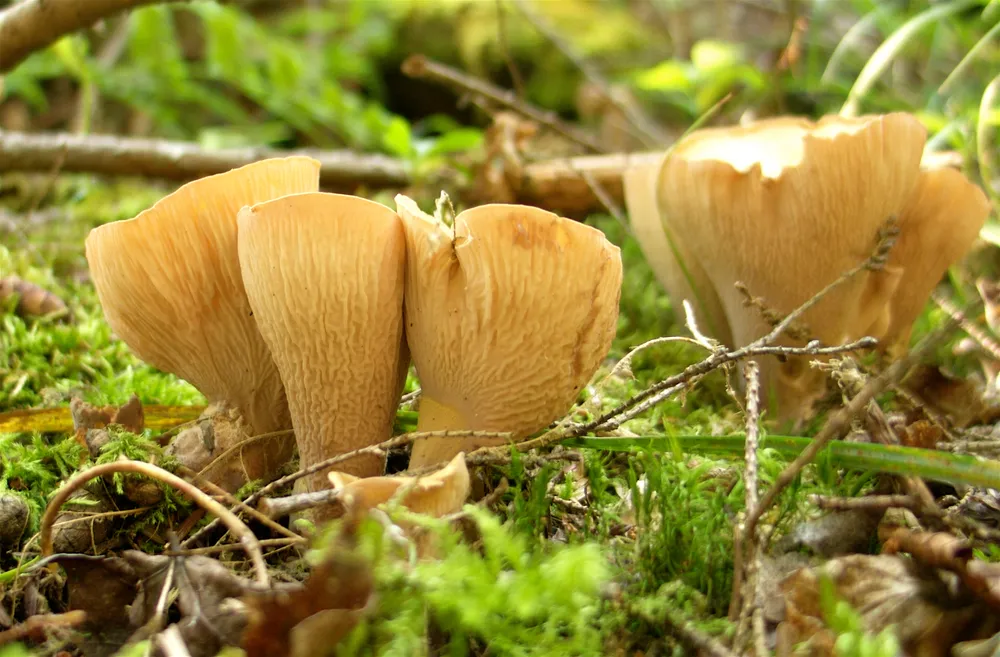
Pig's ear
Gomphus clavatus
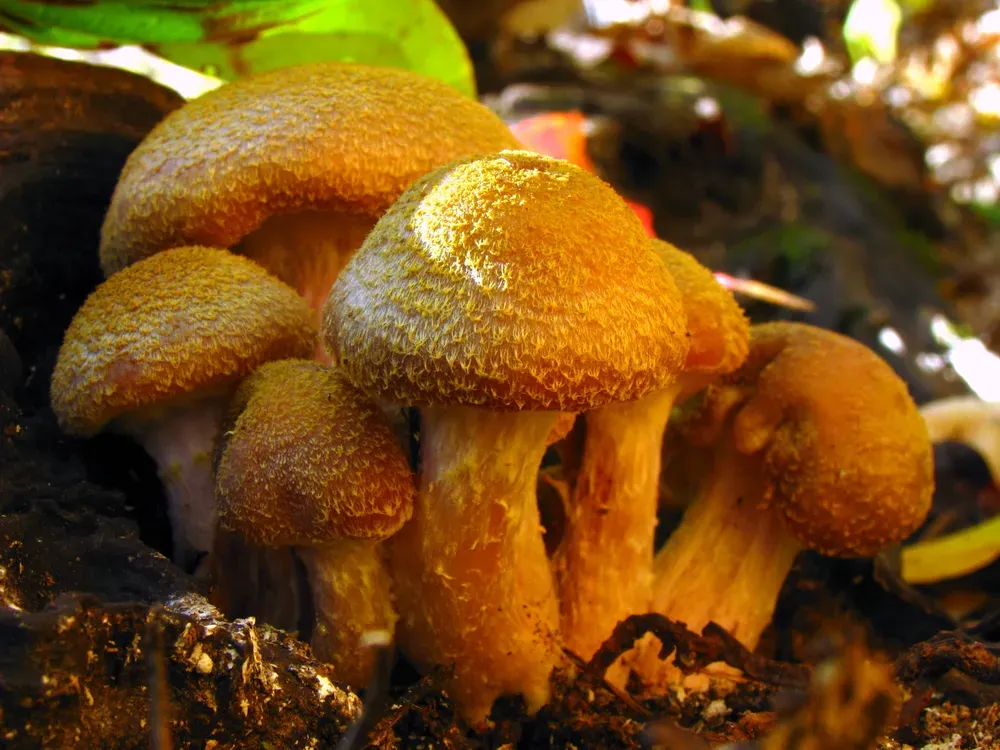
Bulbous honey fungus
Armillaria gallica
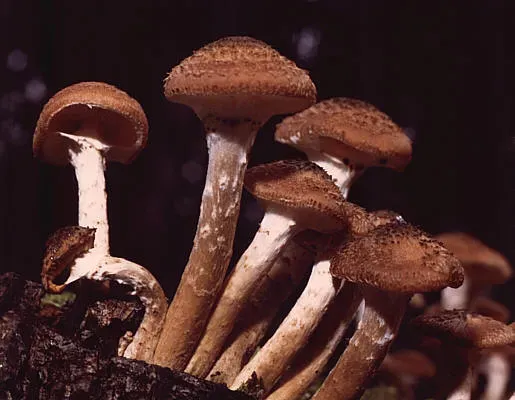
Dark honey fungus
Armillaria ostoyae
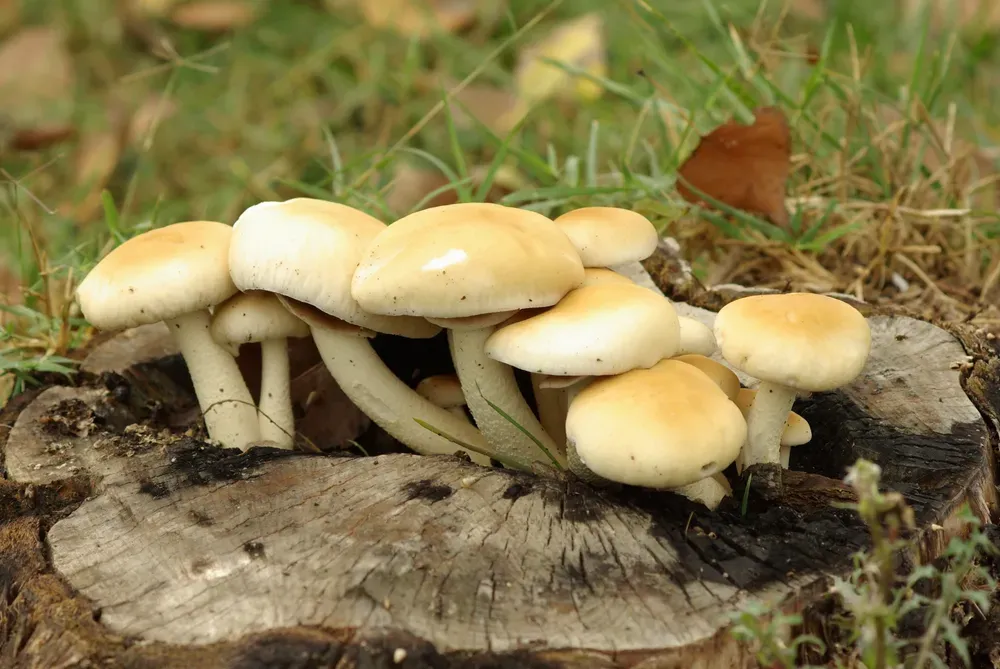
Poplar fieldcap
Cyclocybe aegerita
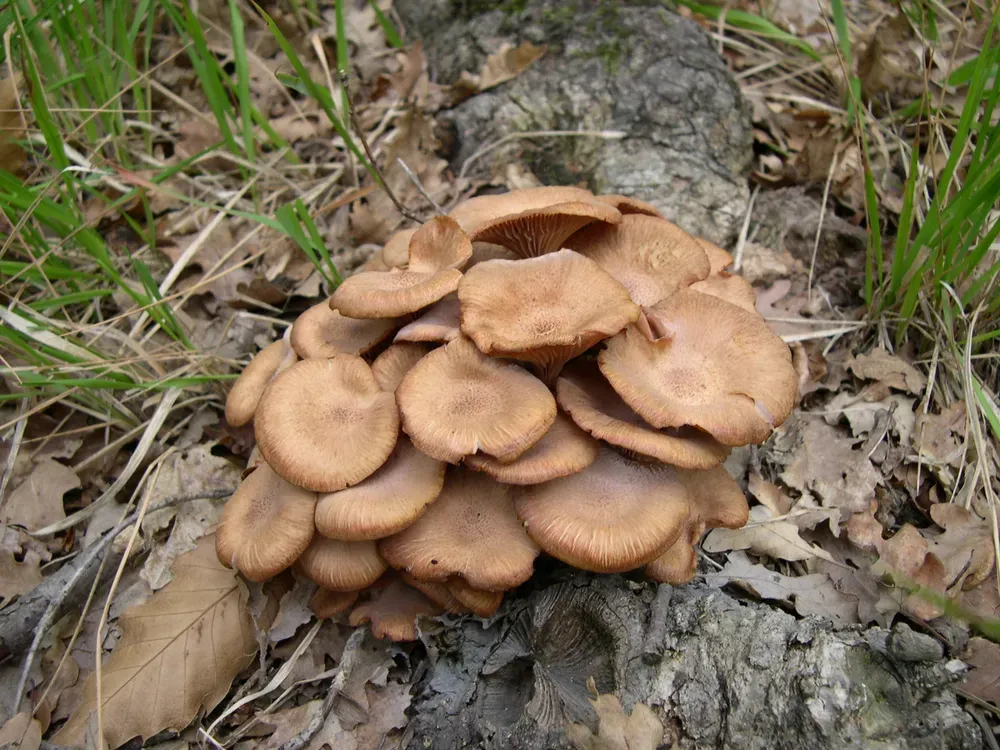
Ringless honey fungus
Desarmillaria tabescens
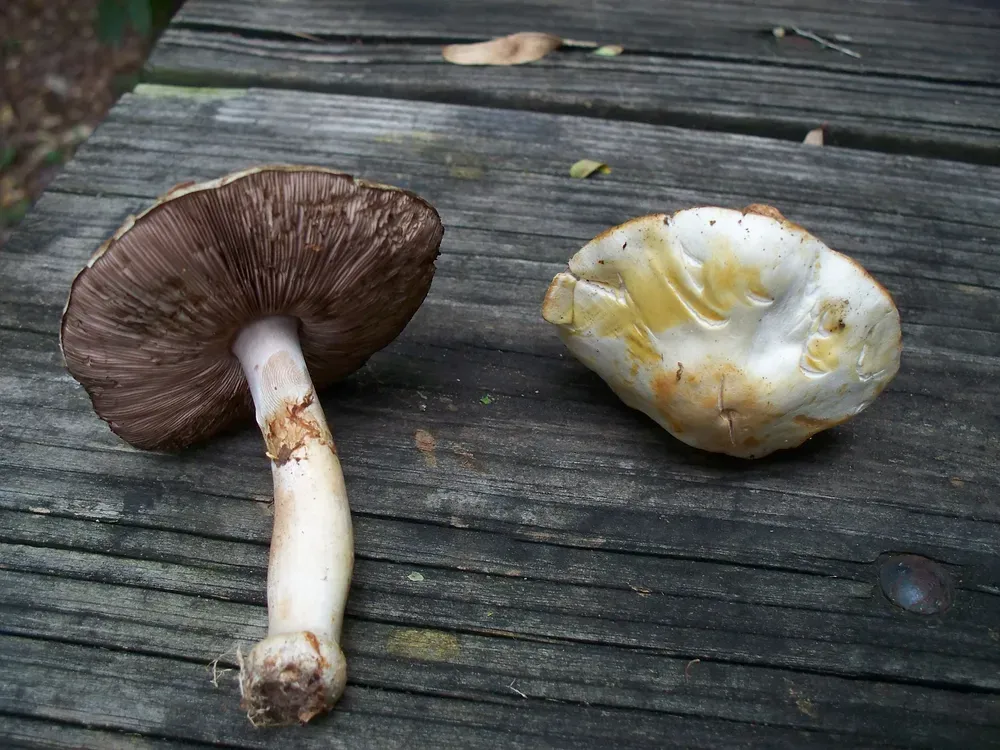
Agaricus abruptibulbus
Frequently asked questions
Is it poisonous?
Not poisonous, but inedible — bitter, and some people react unpredictably (it can cause diarrhea). When in doubt with a rare species — leave it to grow, this isn't the coral worth taking a risk for.
How do you tell it from other corals?
Key features of R. fennica: (1) a violet-gray to dingy lilac base of the bush and lower branches; (2) flesh darkens to blue-violet when pressed; (3) lacy branches of moderate thickness; (4) a smell with a hint of radish/damp soil; (5) mountain conifer-beech forest as habitat.
Where should you look for it?
In old spruce-beech forests of the Carpathians, on a thick forest floor among moss, near old trees. It loves damp, shady spots with a well-developed forest floor. Very sporadic — a group of 1-3 bushes over a large area.
Where in Ukraine does it grow?
Only in the Carpathians (Zakarpattia, Lviv and Ivano-Frankivsk regions) — in mixed spruce-beech forests above 800 m. Outside the Carpathians there are few reliable records in Ukraine.
When should you look for it?
August — October, peaking in September. It likes a cool, damp autumn.
What is it confused with?
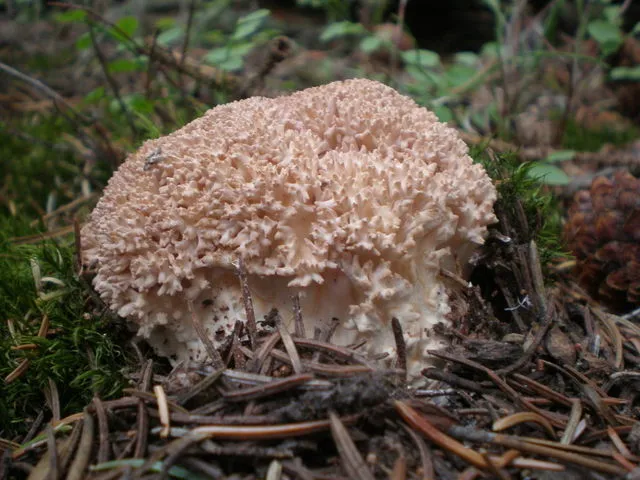
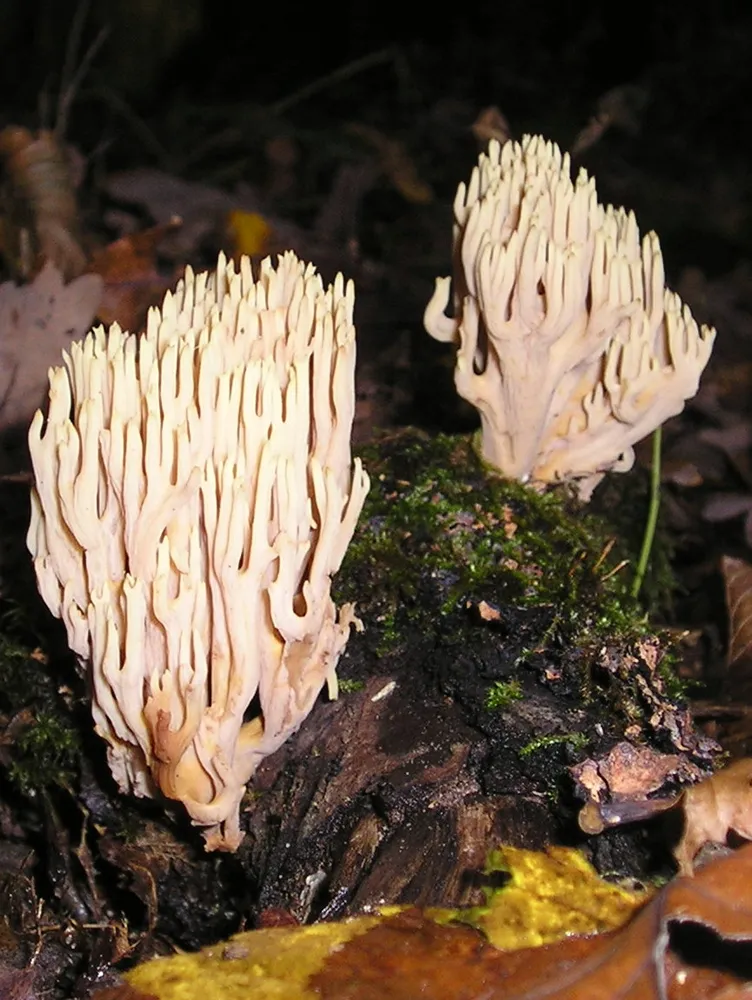
With other dark-colored corals (R. fumigata, R. fuscobrunnea) — you can't reliably tell them apart without a microscope. With young R. botrytis with wine-colored tips (though it looks completely different — a compact, fleshy bush with a pure white base and no violet-gray tone). With Lentaria byssiseda — a small coral fungus on wood (a completely different growth form).
Is it worth going after?
No. A rare species with an unreliable culinary reputation. If you find it, photograph it for iNaturalist UA with coordinates and leave it to grow. In Scandinavia it's on regional red lists, and in Ukraine it may also belong among species in need of protection.
Is Bitter coral edible or poisonous?
What kind of spore-bearing surface does Bitter coral have?
What does the cap of Bitter coral look like?
What does the stem of Bitter coral look like?
What do Bitter coral smell and taste like?
Sources
- [1]Вікіпедія (українська)
- [2]Атлас грибів України, Зеров Д.К. (1979)
- [3]MycoBank Database
- [4]Index Fungorum
- [5]GBIF
- [6]iNaturalist Ukraine