THIS DATA HAS NOT BEEN VERIFIED BY AN EXPERT. Use at your own risk.
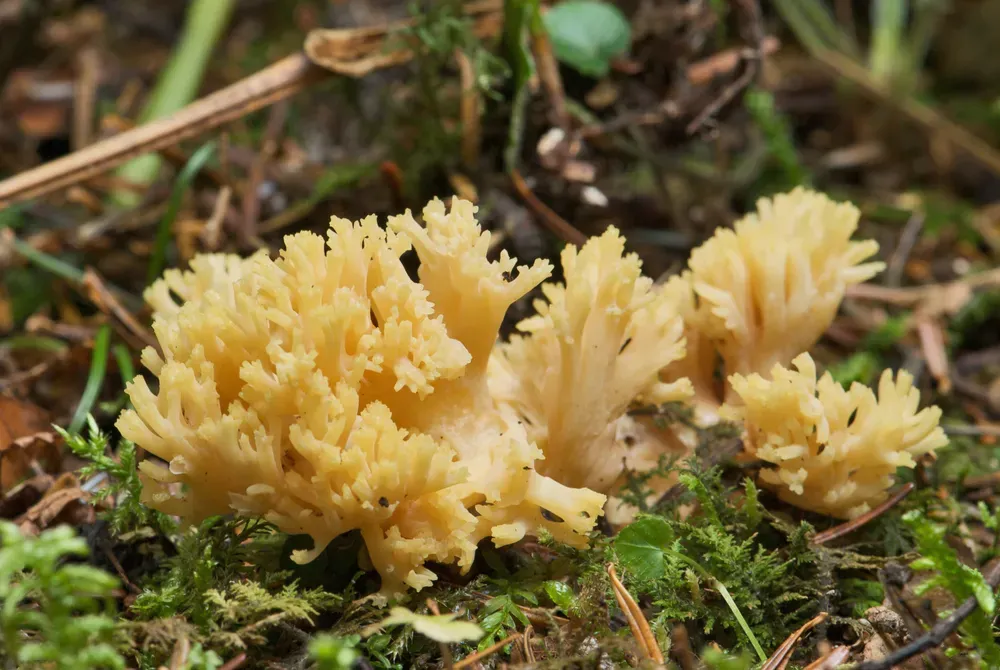
Ramaria flava
Under reviewUpdated October 3, 2026
Passport
- Edibility
- Conditionally edible
- Season
- Aug — Oct
- Hymenophore
- Smooth
- Cap color
- Yellow
- Size
- Medium (5–15 cm)
- Smell
- Pleasant
- Reviewed
- Under review
Quick answers
Where to look?
Deciduous forest, Conifer forest, Mixed forest
When does it appear?
Aug — Oct
Active months: August, September, October.
How to recognize it? Three signs
- Cap color: Yellow, Cream
- Cap shape: Irregular
- Smell: Pleasant
Fruiting season
August – October
Description
Ramaria flava is a large coral mushroom that looks like sea coral or a branching lemon-yellow head of cauliflower. Instead of the usual cap and stem, it has a thick whitish base from which many tightly packed, branching twigs reach upward, ending in blunt forked tips. It is a mycorrhizal mushroom that partners with beech, spruce and other trees, so you'll find it in broadleaf, conifer and mixed forests.
In Ukraine, Ramaria flava grows in beech, spruce and mixed forests, mostly in the western and mountain regions, on rich forest litter. It fruits in late summer and autumn — August through October; it appears singly or in groups among fallen leaves and moss, where its yellow “bushes” are easy to spot.
Ramaria flava is classed as conditionally edible and calls for caution. Young, pale specimens are edible after boiling, but in some people the mushroom upsets digestion (it has a laxative effect), and old, darkened fruiting bodies turn bitter and unusable. On top of that, Ramaria flava is easy to confuse with other bitter or laxative corals. So only take young, pale branches, always boil them first, and if in doubt, it's better not to pick at all.
Cap
There is no true cap. The fruiting body is coral-like and bushy, 5 to 20 centimeters tall and wide, made of a thick, fleshy whitish base from which many tightly bunched branches reach upward. The branch tips are blunt, forked or many-toothed. The branches are sulfur-yellow, lemon-yellow or golden, with a paler, whitish base; when handled and with age the mushroom turns brown or develops reddish spots.
Hymenophore
The spore-bearing surface is smooth and covers the entire surface of the branches, where the spores form. There are no gills, tubes or spines. The spore print is ochre-yellow. A smooth fertile layer on yellow branching arms is a typical trait of coral Ramaria species.
Stem
There is no distinct stem; its role is played by a thick, fleshy whitish base (trunk) from which the branches spread. The base is dense and may turn brown or pinkish when touched or damaged. The whole structure is fleshy and rather brittle, especially in mature mushrooms.
Flesh
The flesh is whitish, fleshy and brittle, and may slowly turn brown or pinkish when cut or handled. Young mushrooms taste mild; with age the taste turns slightly bitter. Because of its laxative effect in some people and the bitterness of old specimens, only young, pale fruiting bodies are fit for the table — and always boiled.
Smell
The smell is faint, pleasant or grassy-mushroomy, with no sharp notes. Scent isn't a defining feature; the mushroom is recognized by its yellow coral-like body with blunt forked branch tips and its whitish fleshy base.
›Scientific synonyms (2)
Clavaria flava Schaeff. (1774), Corallium flavum (Schaeff.) G. Hahn (1883)
Lookalikes
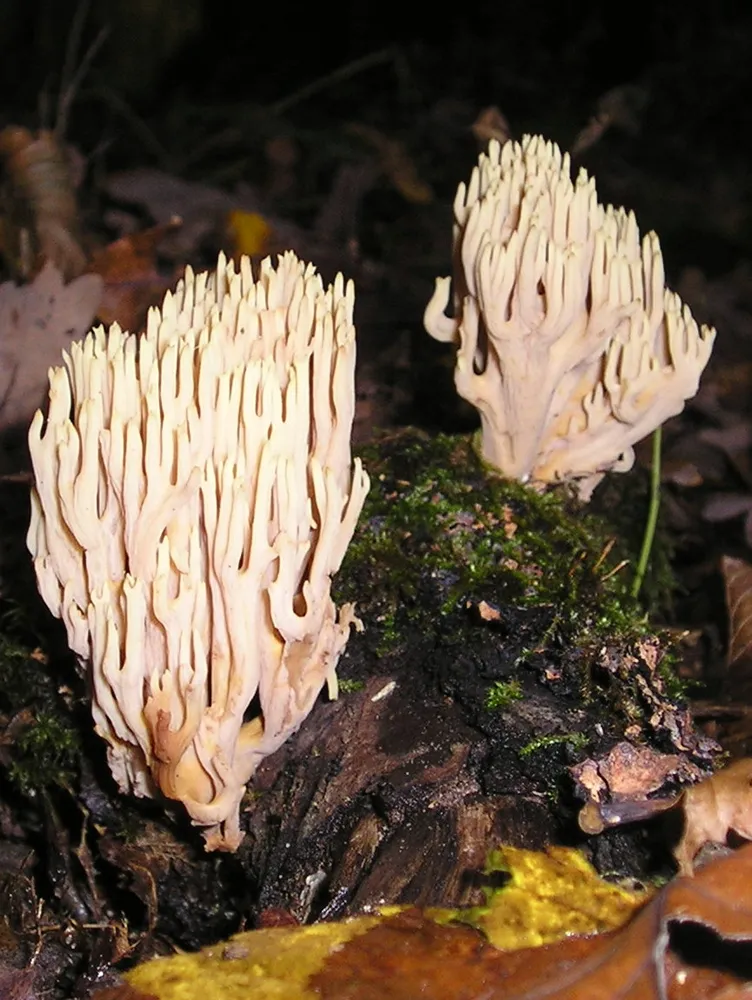
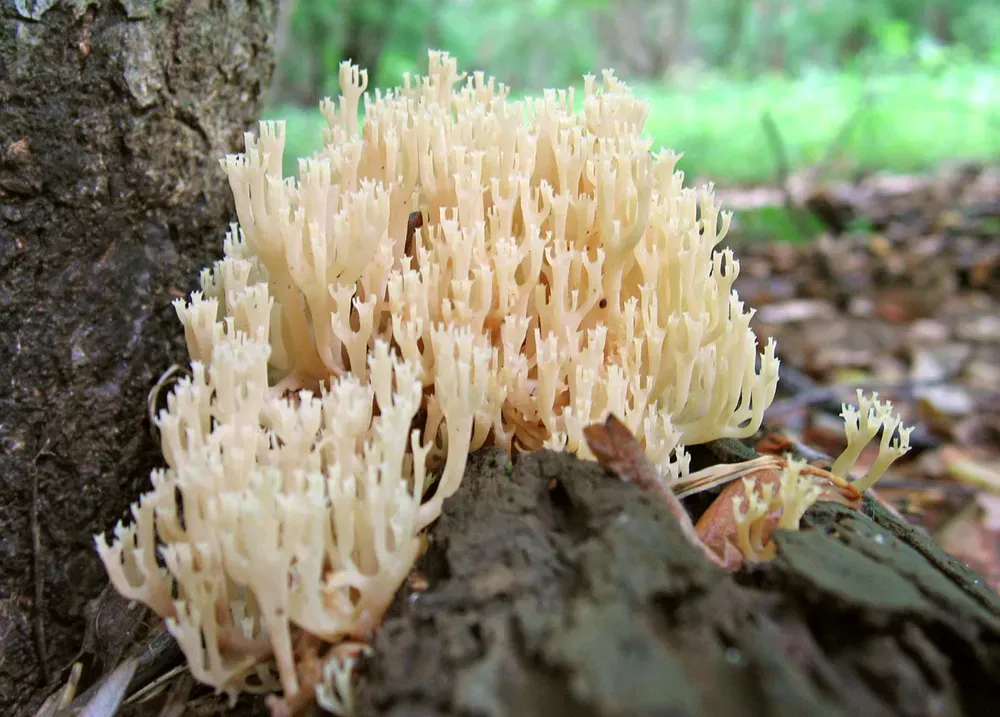
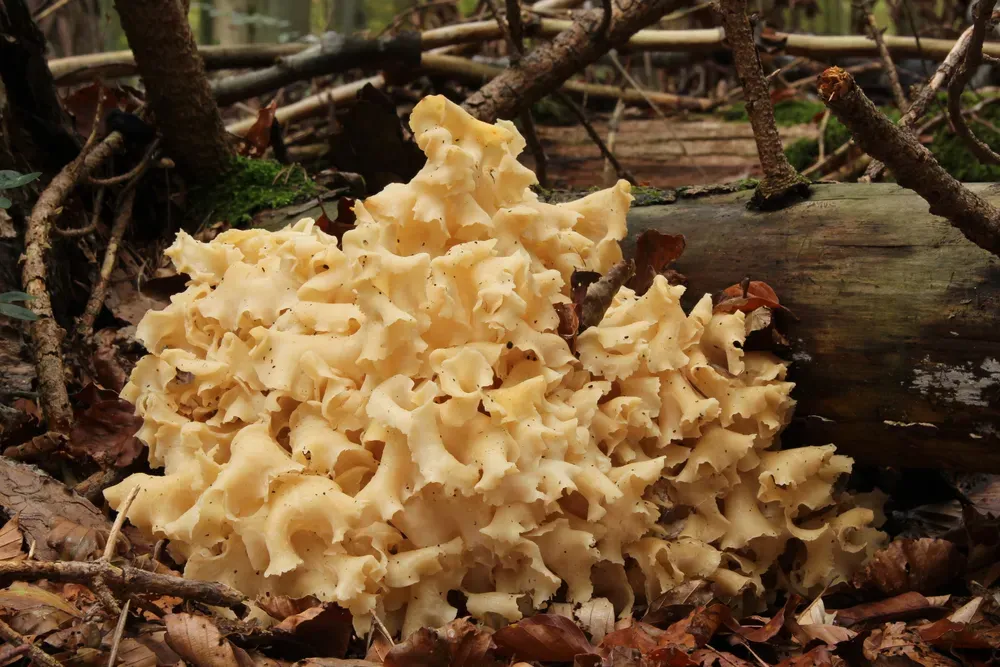
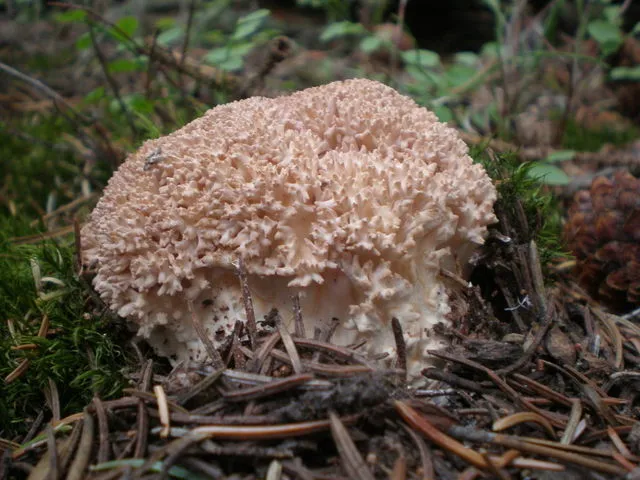
Related species
Mushrooms of the same genus and habitat — to study side by side and never mix up.
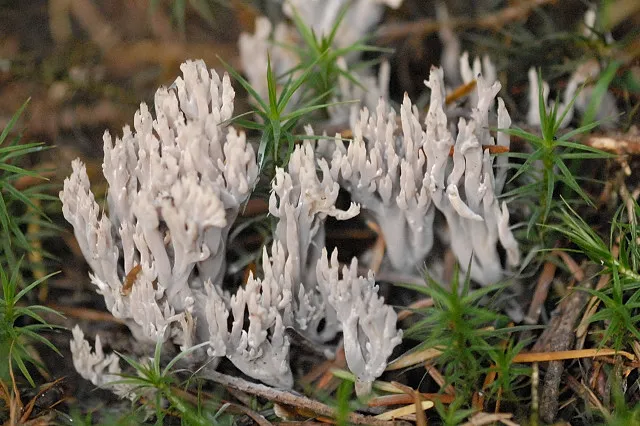
Bitter coral
Ramaria fennica
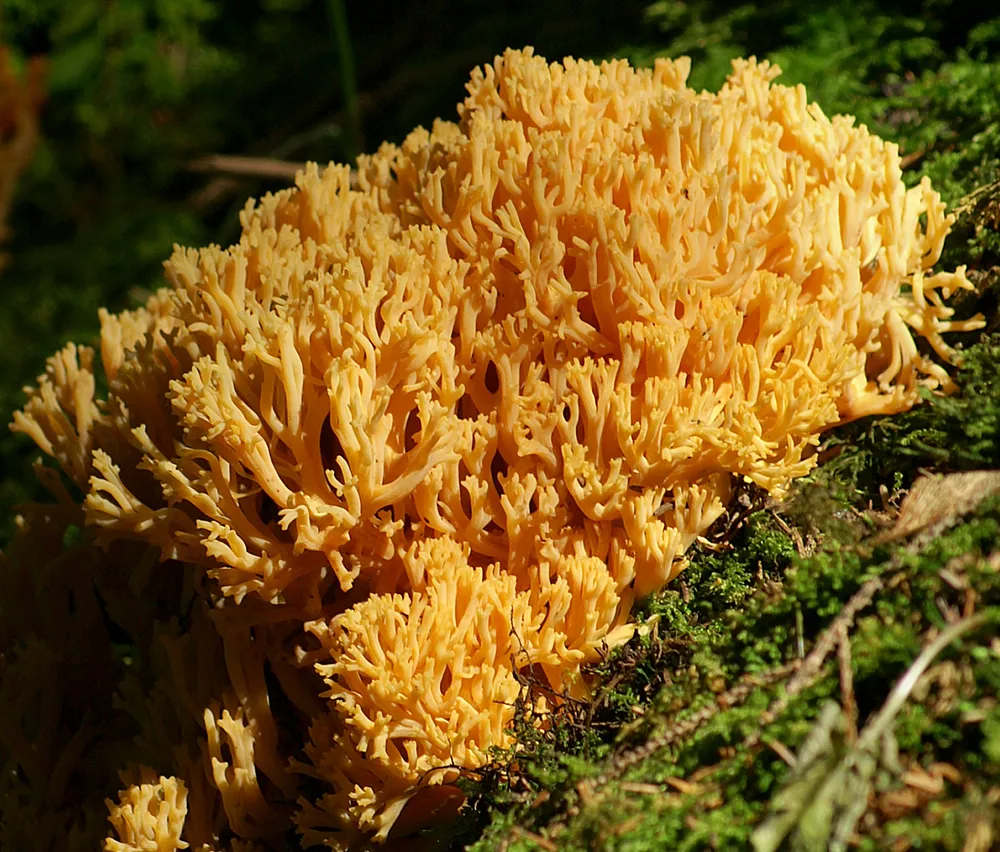
Ramaria aurea
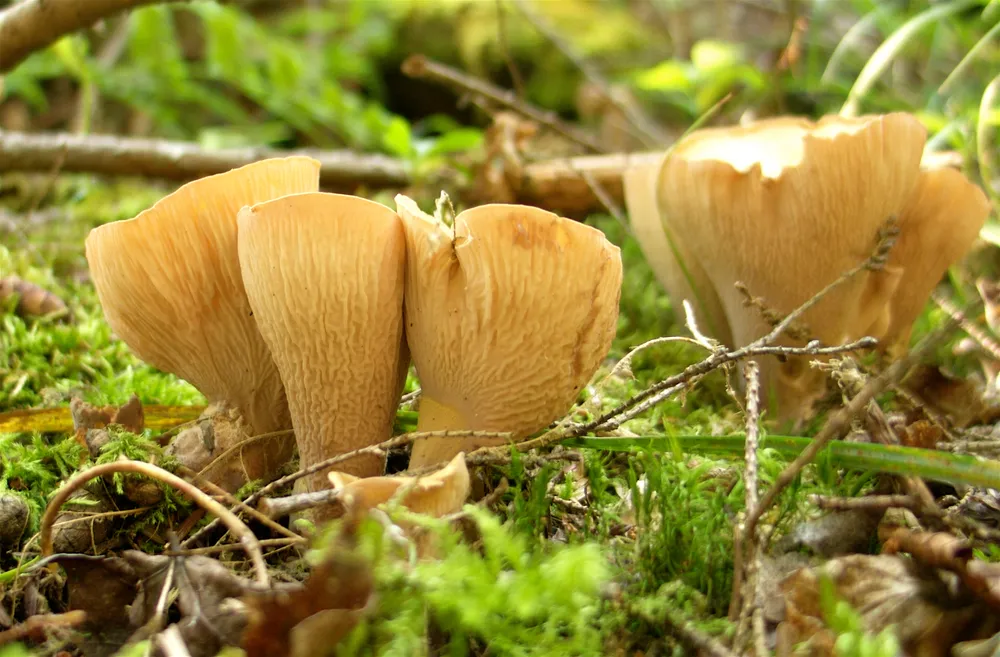
Pig's ear
Gomphus clavatus
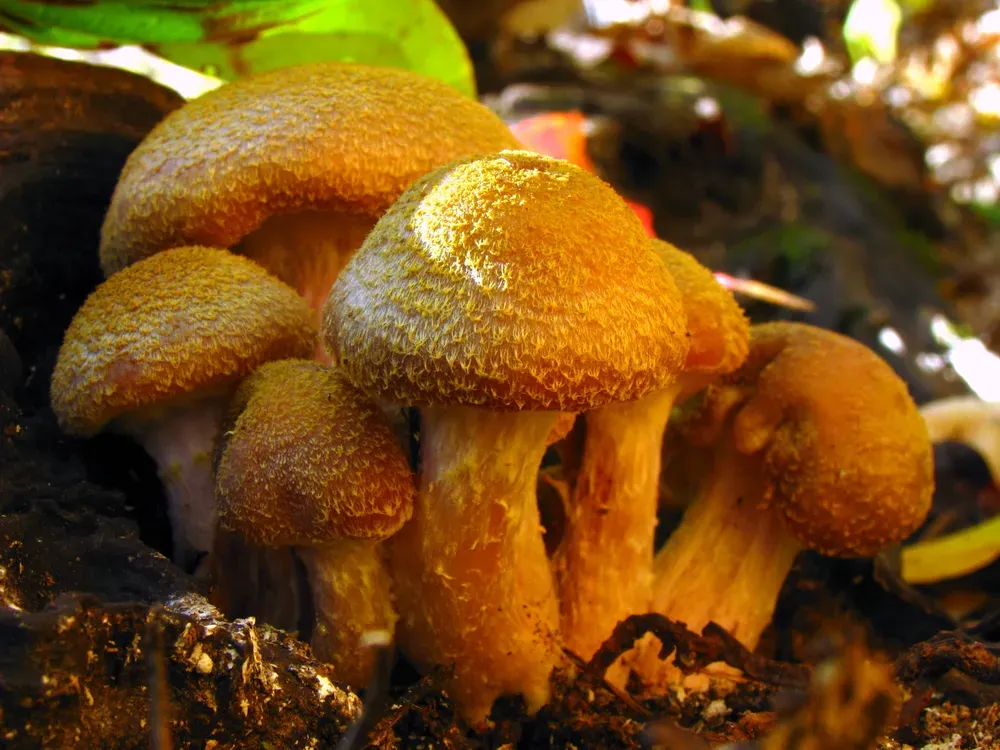
Bulbous honey fungus
Armillaria gallica
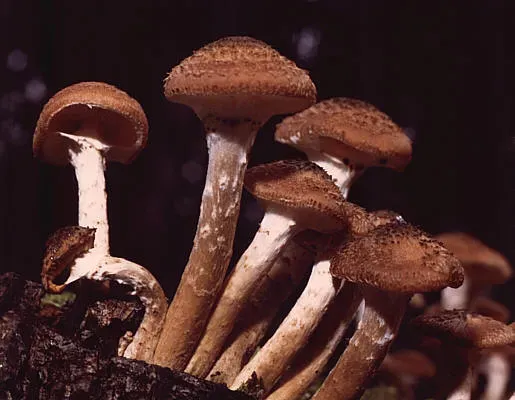
Dark honey fungus
Armillaria ostoyae
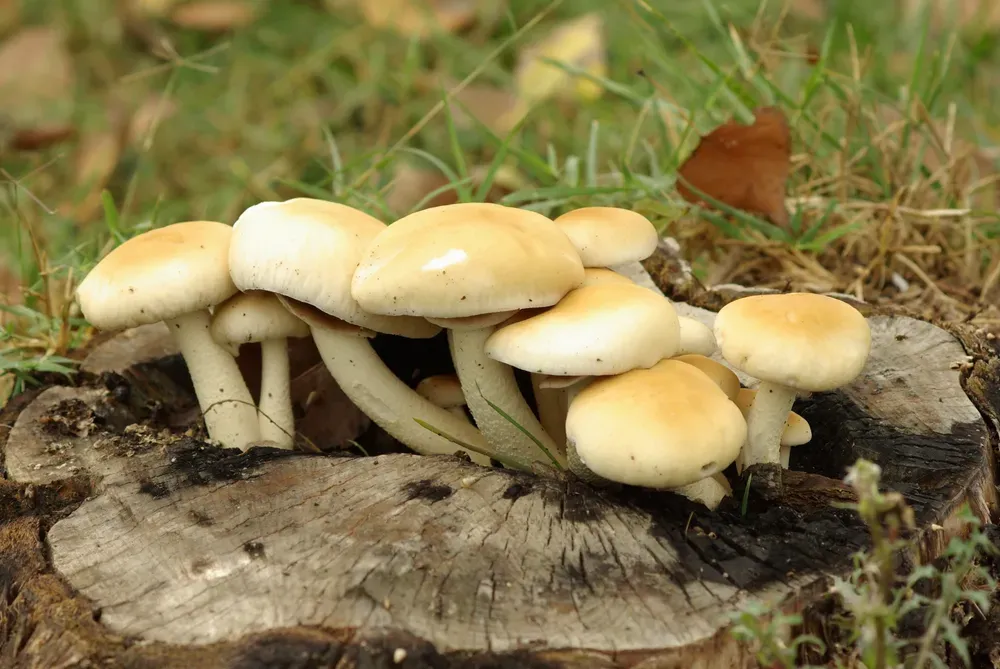
Poplar fieldcap
Cyclocybe aegerita
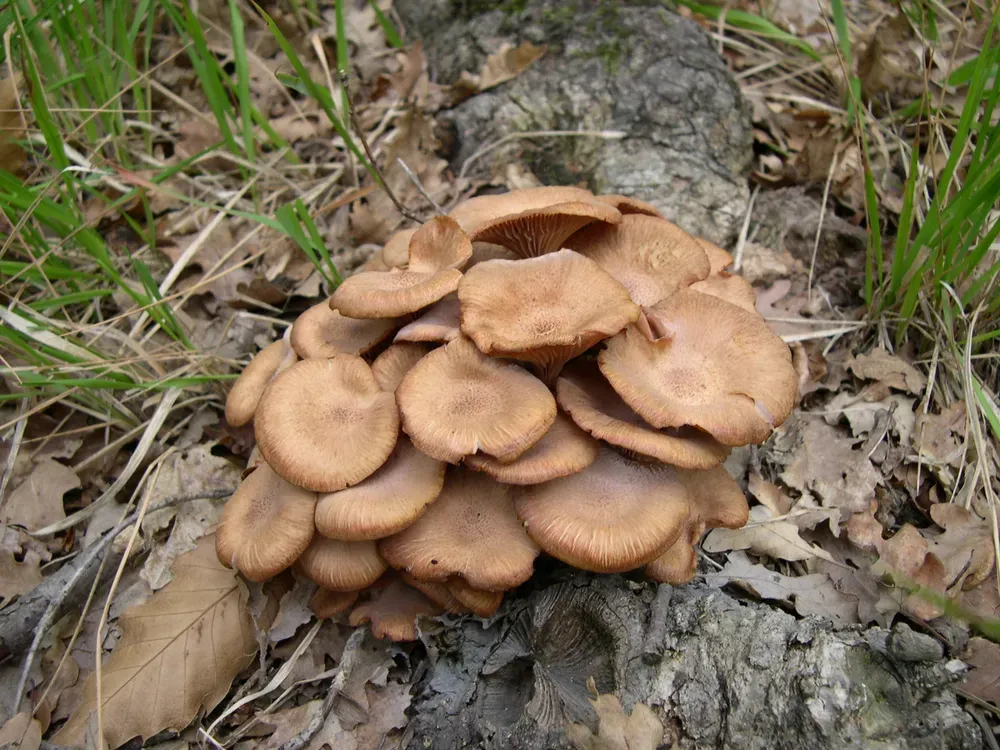
Ringless honey fungus
Desarmillaria tabescens
Agaricus abruptibulbus
Frequently asked questions
Is Ramaria flava edible or poisonous?
What kind of spore-bearing surface does Ramaria flava have?
What does the cap of Ramaria flava look like?
What does the stem of Ramaria flava look like?
What do Ramaria flava smell and taste like?
Where does Ramaria flava grow?
Which trees does Ramaria flava grow under?
When should you pick Ramaria flava?
What can Ramaria flava be confused with?
How do you cook Ramaria flava?
Can you dry Ramaria flava?
What is the scientific name of Ramaria flava?
Sources
- [1]Вікіпедія (українська)
- [2]Атлас грибів України, Зеров Д.К. (1979)
- [3]MycoBank Database
- [4]Index Fungorum
- [5]GBIF
- [6]iNaturalist Ukraine