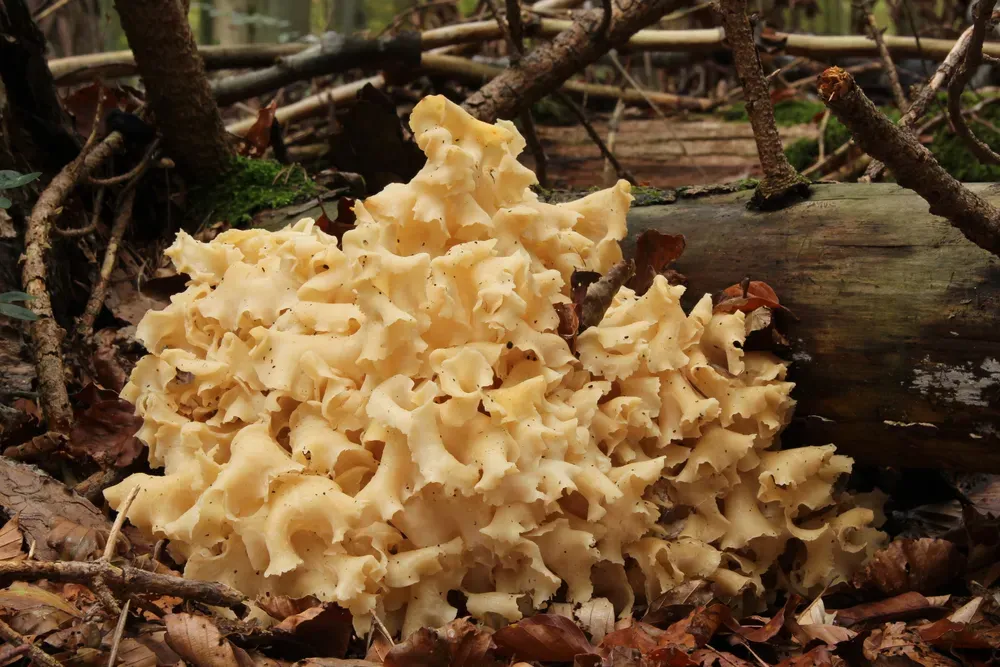
Cauliflower fungusSparassis crispa
Expert-verifiedUpdated October 3, 2026
Passport
- Edibility
- Edible
- Season
- Aug — Oct
- Hymenophore
- Smooth
- Cap color
- White
- Size
- Giant (>25 cm)
- Smell
- Pleasant
- Reviewed
- Yes ✓
Quick answers
Where to look?
Conifer forest, Mixed forest
When does it appear?
Aug — Oct
Active months: August, September, October.
How to recognize it? Three signs
- Cap color: White, Cream, Yellow
- Cap shape: Irregular
- Smell: Pleasant
Fruiting season
August – October
Description
The cauliflower fungus (Sparassis crispa), or “mushroom cabbage,” is one of the strangest and most beautiful mushrooms in Ukraine’s flora. A large, rounded mass of countless flat, curly lobes really does look like a head of cauliflower or a sea sponge. Finding one is a stroke of great luck: the mushroom is rare, listed in the Red Data Book of Ukraine, and turns up only as isolated finds across the country’s forest belt.
Sparassis is a parasite and saprotroph on the roots and stumps of conifers — mostly pine and spruce. The fruiting body appears at the base of living or dead trees, on stumps, and less often on roots that reach the surface. In Ukraine it has been found in the Carpathians, in the pine forests of Polissia and the Western Forest-Steppe, and in Crimea. Locally, the mushroom can return to the same spot several years in a row, until the mycelium exhausts the wood.
Quality — the highest, a delicacy. The flesh of young specimens is white and springy, with a nutty smell and mild taste. In Europe it’s expensive: in Germany, Poland and Japan it’s cultivated commercially. In Ukraine, picking it in the wild is banned (Red Data Book). If you find one, leave it in nature, take photos and let mycologists know. Buying cultivated specimens from Poland, the Czech Republic or specialized farms is allowed.
Cap
The fruiting body is shaped like a large, fluffy “head” 10–30 cm across, sometimes up to 50 cm and 5 kg in weight. It’s made up of countless flat, wavy, curly lobes — “petals” — branching off a short common trunk. Young ones are white or cream; with age they turn yellow to brownish-ochre, and in old mushrooms the edges of the lobes darken and dry out.
Hymenophore
The spore-bearing layer is smooth and sits on the lower (concave) surface of the “petals.” No gills, no tubes. The spore print is white.
Stem
There’s no stem in the usual sense — instead there’s a short, thick base-trunk that sinks into the substrate (root or stump). The visible part is 3–8 cm, with the curly lobes spreading out from it.
Flesh
The flesh of a young mushroom is white, dense, springy and brittle. With age it becomes tough and waxy, and in very old specimens it’s like dry cardboard. Only young individuals are fit to eat — white, clean, without brown spots.
Smell
The smell is distinct, pleasantly nutty, with a note of forest litter and fresh wild berries. One of the most pleasant aromas among Ukrainian mushrooms. The taste is mild and slightly sweet.
Lookalikes
Related species
Mushrooms of the same genus and habitat — to study side by side and never mix up.
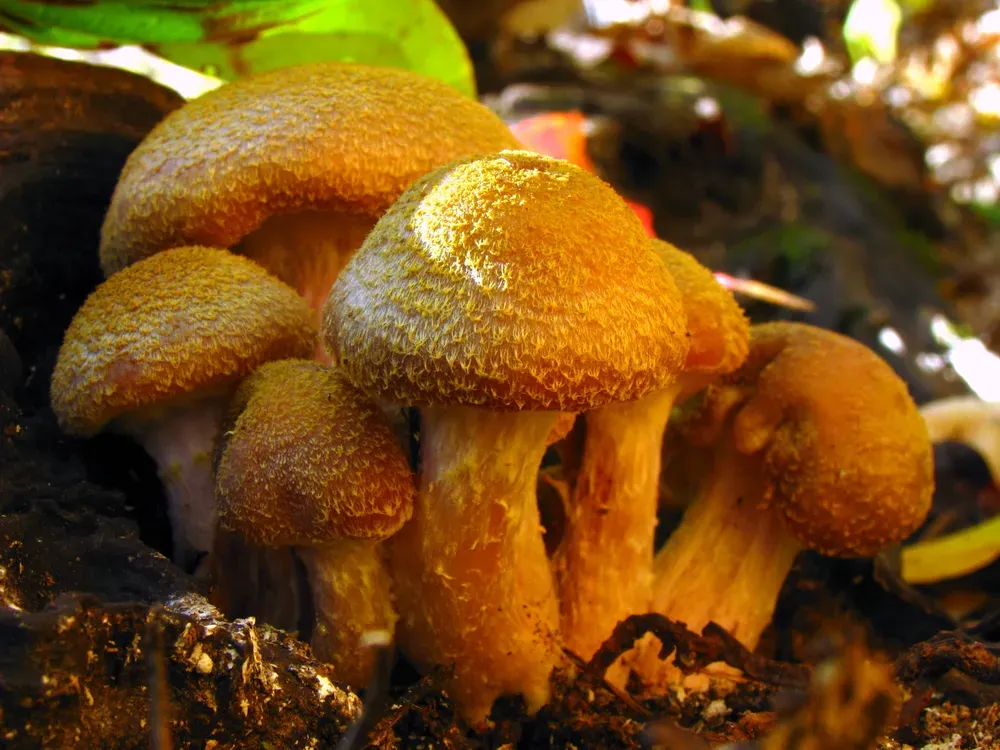
Bulbous honey fungus
Armillaria gallica
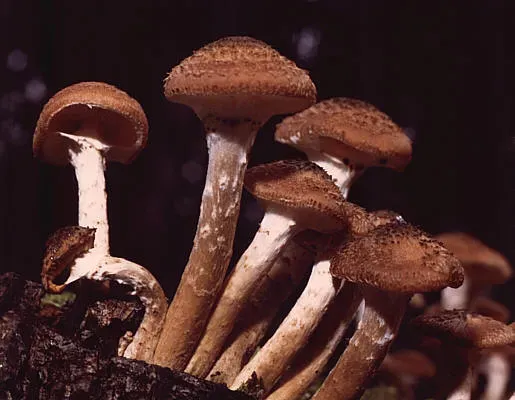
Dark honey fungus
Armillaria ostoyae
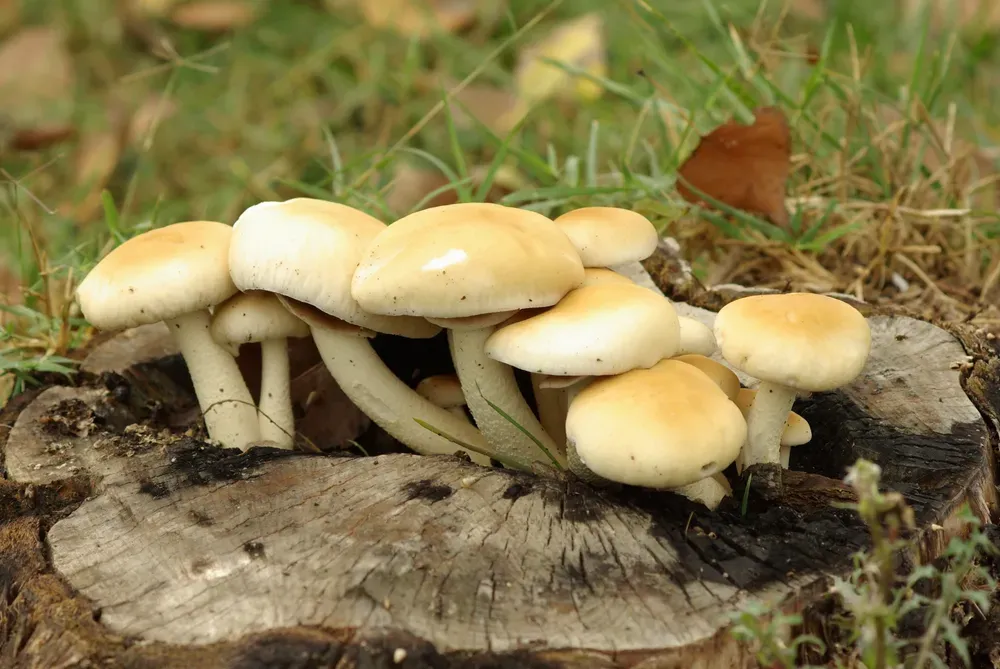
Poplar fieldcap
Cyclocybe aegerita
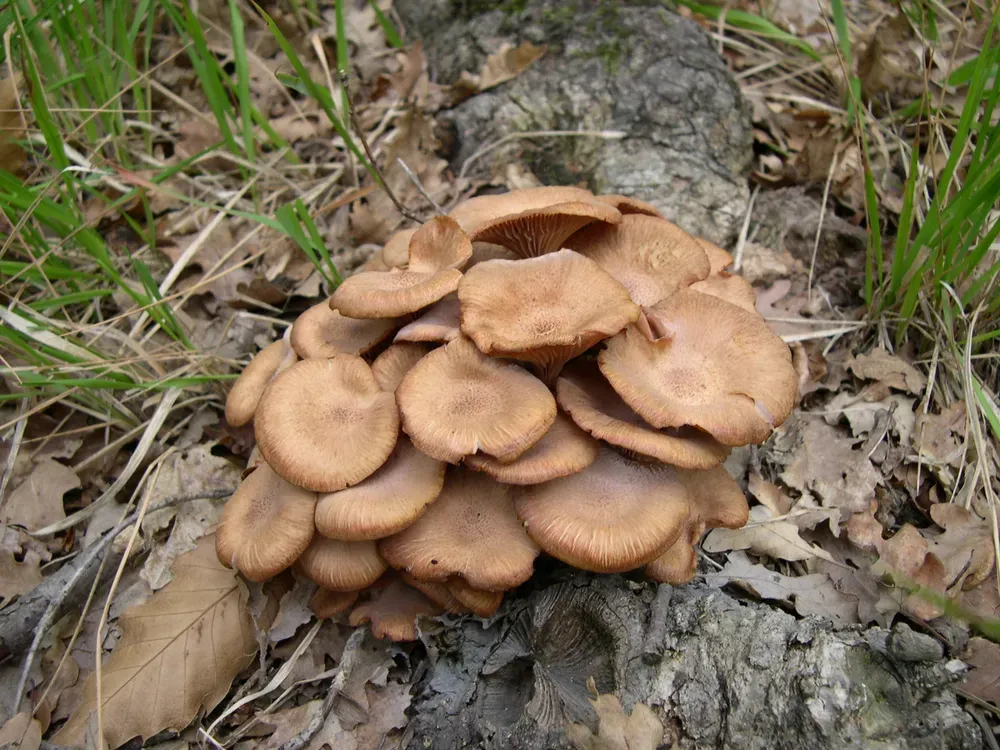
Ringless honey fungus
Desarmillaria tabescens
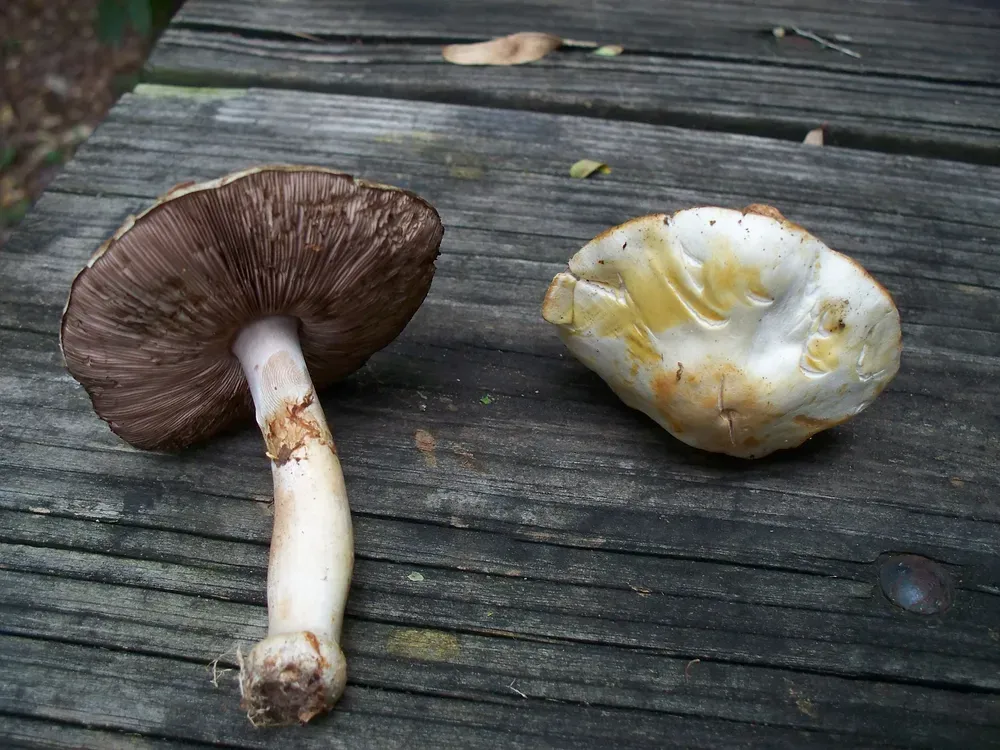
Agaricus abruptibulbus
Agaricus haemorrhoidarius
Agaricus haemorroidarius
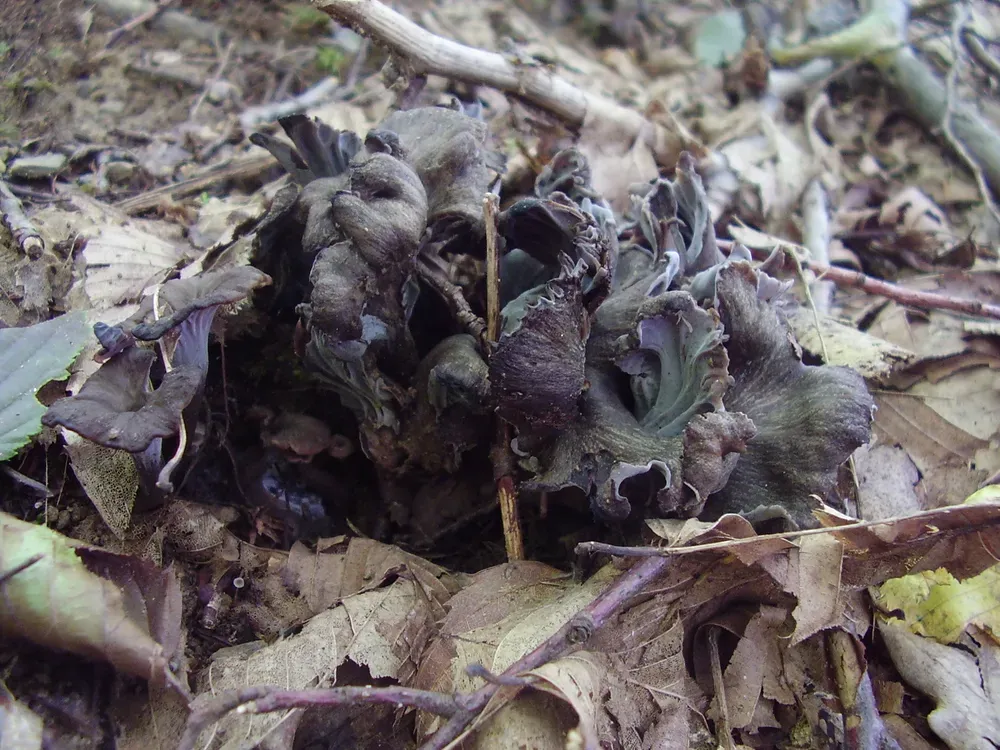
Ashen chanterelle
Cantharellus cinereus
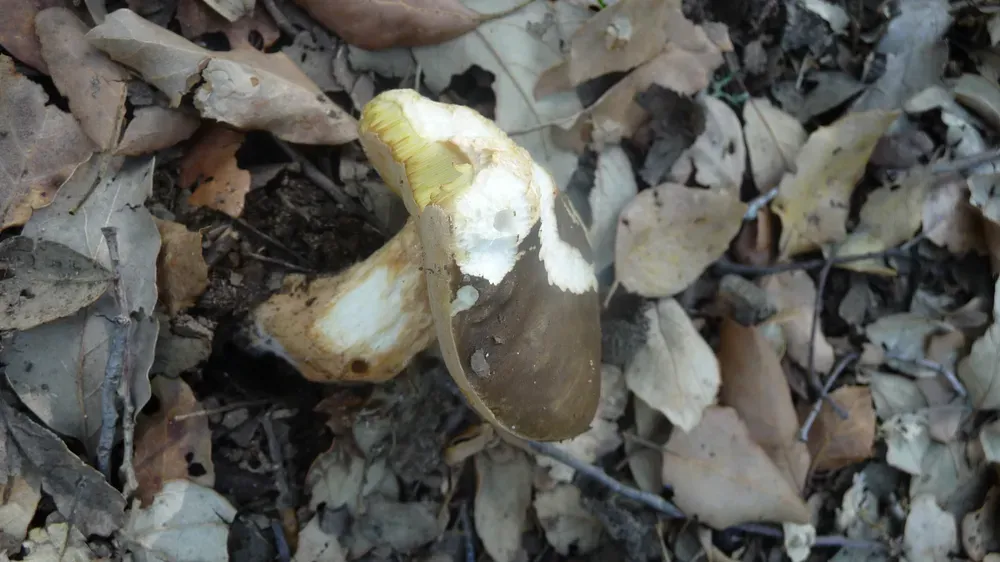
Blushing bolete
Leccinum roseofractum
Frequently asked questions
Is it allowed to pick it in Ukraine?
No. The cauliflower fungus is in the Red Data Book of Ukraine. Picking wild specimens is prohibited by law. If you find one, take photos and let local mycologists know via iNaturalist Ukraine. Buying cultivated specimens is allowed (from Poland, the Czech Republic, home farms).
Does it have dangerous look-alikes?
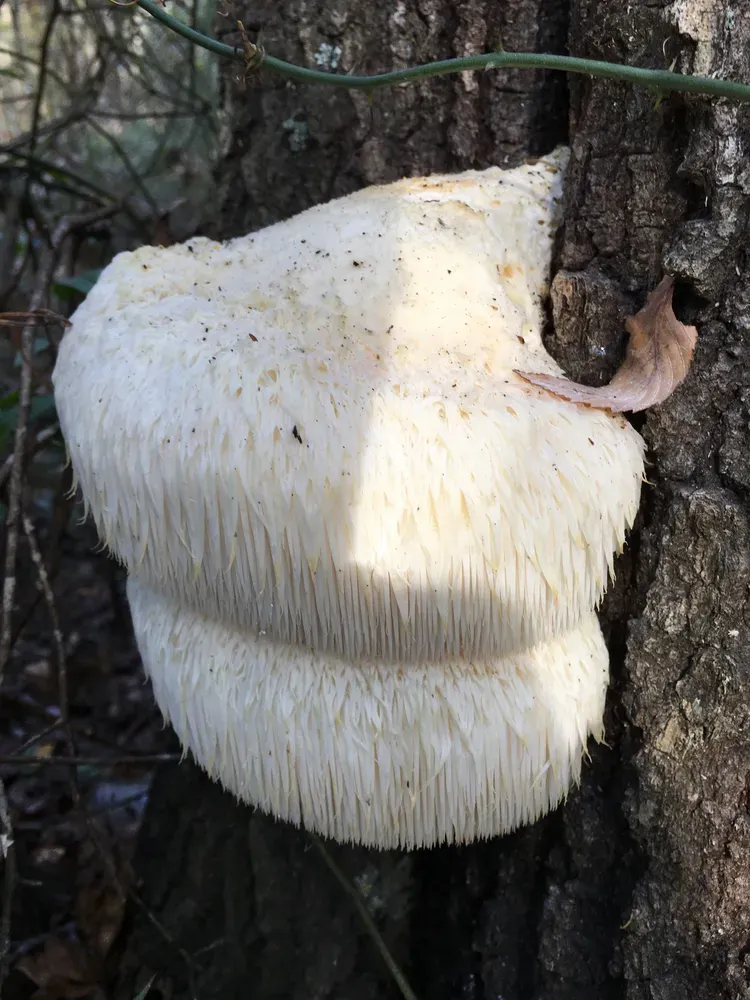
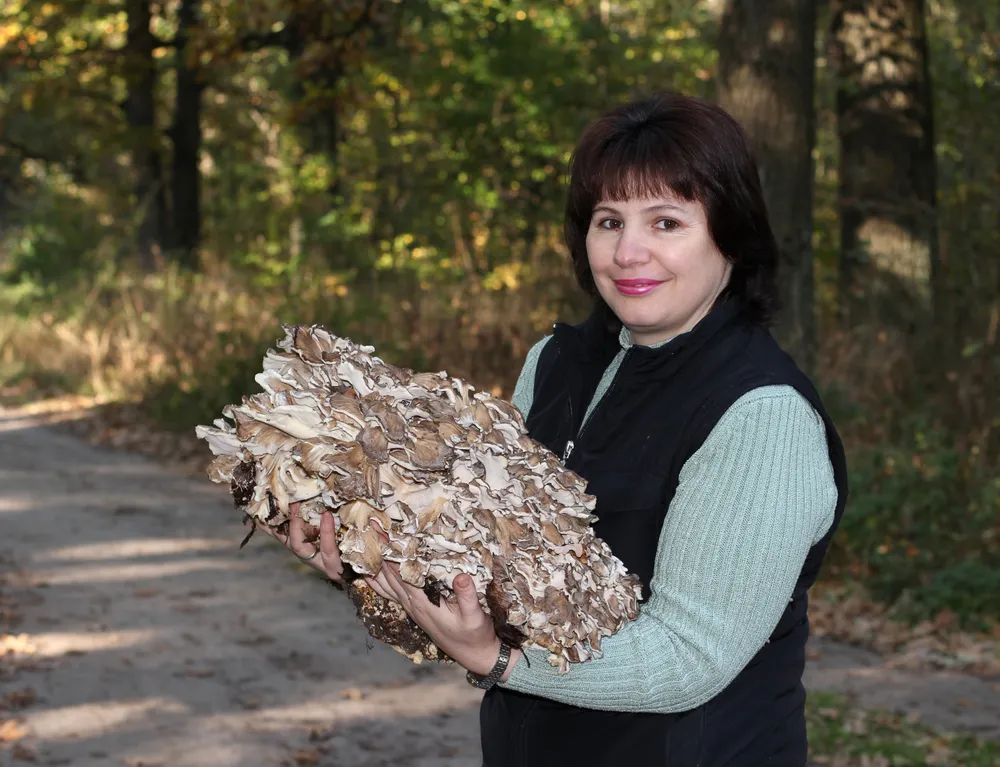
Not at all — the mushroom is so distinctive that confusing it with anything dangerous is practically impossible. Its close relative Sparassis brevipes is also edible (it grows with oak). Other similar “cabbage-like” mushrooms — Hericium (tooth fungi), Grifola frondosa (hen of the woods) — are edible too.
Where should you look in Ukraine?
At the base of living or dead pines (sometimes spruces), on stumps and exposed roots. The Carpathians, the pine forests of Polissia, the Western Forest-Steppe, mountainous Crimea. The mushroom often returns to the same spot 2–5 years in a row — note down the coordinates of your finds.
When does it fruit?
August to October, peaking in September. It loves a moderately damp, warm autumn. After the first serious frosts, fruiting stops. A single fruiting body lives 2–4 weeks.
How is it different from other “mushroom cabbages”?
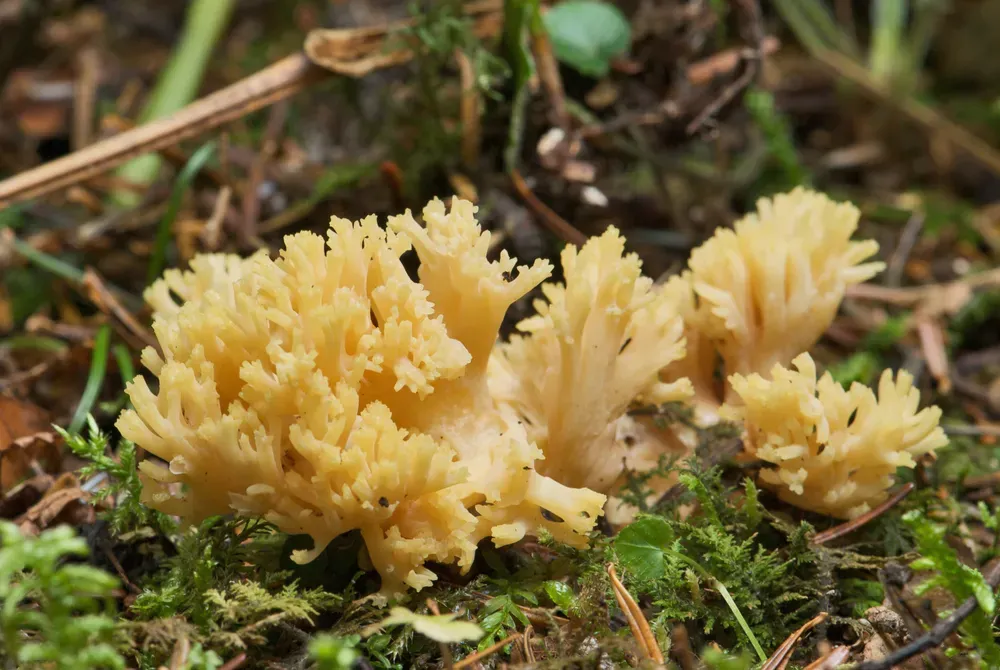
Sparassis crispa grows with conifers (especially pine) and has cream-colored curly lobes. Its close relative S. brevipes grows with oak and is darker. Tooth fungi (Hericium) grow on rotting wood and have vertical “icicles” rather than petals.
Why did the mushroom end up in the Red Data Book?
Because it’s rare and reproduces slowly. The mycelium grows for 5–10 years before forming its first fruiting body; one fruiting body can give rise to only 1–2 subsequent generations. Picking quickly depletes a local population. That’s why it’s protected.
How do you cook cauliflower fungus?
(For cultivated specimens.) Rinse under running water — the lobes often hide pine needles and sand. Cut into 2–4 cm pieces. Braise with vegetables for 20–30 min, add to soups, fry with cream. Drying is tricky: the mushroom is thin and easily overdries. It pickles well.
Can you grow it at home?
Yes, in Europe and Japan Sparassis is cultivated on pine wood (logs, sawdust with fallen spruce needles). The growing cycle is long — 2–3 years, but one log yields 4–6 years of fruiting. In Ukraine there are few commercial growers; people more often buy mycelium from Poland.
Is Cauliflower fungus edible or poisonous?
What kind of spore-bearing surface does Cauliflower fungus have?
What does the cap of Cauliflower fungus look like?
What does the stem of Cauliflower fungus look like?
Sources
- [1]Вікіпедія (українська)
- [2]Атлас грибів України, Зеров Д.К. (1979)
- [3]MycoBank Database
- [4]Index Fungorum
- [5]GBIF
- [6]iNaturalist Ukraine